Plantingschedule10 min read
Best Herbs to Grow Indoors for Real Harvests, Not Spindly Pots
Choose indoor herbs that can actually produce in your light, temperature, and container setup, then match each one to the right harvest rhythm and watering style.
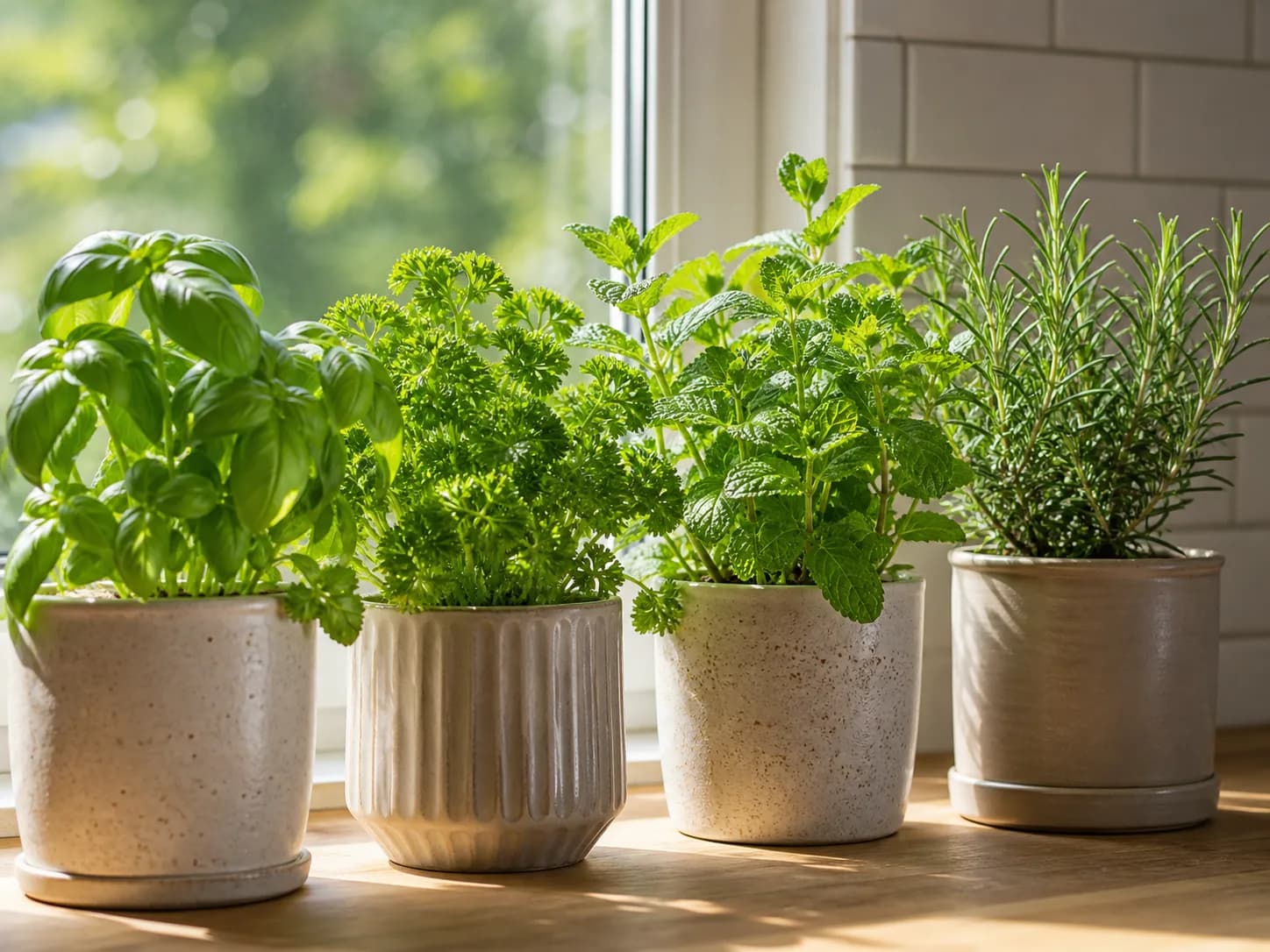
Indoor herbs only work when you match the plant to the setup. A sunny kitchen window can keep a few compact herbs productive for months; a dim shelf usually cannot, no matter how often you water or how expensive the pot looks.
The best indoor herbs are the ones that stay compact, rebound after regular harvests, and tolerate container life; basil, mint, parsley, and rosemary all ask for slightly different versions of that setup. Once you choose the right group and give them enough light, the rest is mostly about steady trimming, sane watering, and not crowding too many roots into one pot.
wb_sunnyStart with your light, not with the herb list
Indoor herb success is mostly a light problem. A bright south-facing window can carry herbs that demand stronger growth, while an average east window or cloudy kitchen often needs help from a grow light.
If you already know low light is a problem indoors, use low-light plant guidance as a reminder that herbs are not built like tough shade foliage.
Most kitchen herbs want much more sun than Pothos. Even ZZ Plant tolerance is the wrong model for edible herbs.
Aim for 6+ hours of strong light for the hungriest indoor herbs. Without that, you get pale, stretched growth that tastes weak and flops over after one harvest.
- fiber_manual_recordBest natural setup: South or west window with long bright exposure
- fiber_manual_recordSecond-best setup: East window plus supplemental grow light
- fiber_manual_recordWeak setup: Dim counters and deep interior rooms
ecoThe easiest indoor herbs for beginners
Chives, mint, thyme, and compact parsley are usually the easiest starts. They handle repeated cutting, stay usable in moderate containers, and do not collapse from one missed day the way fussier herbs can.
Chives are especially forgiving; they regrow fast after snips and tolerate cooler rooms. Mint grows aggressively enough that the main job is containing it, not convincing it to live. Thyme stays compact and works well where air stays bright and dry.
Parsley is a solid middle ground. It wants good light and even moisture, but it behaves better indoors than many people expect when the pot is deep enough.
- fiber_manual_recordBest beginner picks: Chives, mint, thyme, parsley
- fiber_manual_recordWhy they work: Compact habit, reliable regrowth, container tolerance
- fiber_manual_recordMain watchpoint: Give each one enough space and do not mash them together
Guide — See AlsoIndoor Plant Care Calendar: What Changes Through the YearUse a practical indoor plant care calendar so watering, feeding, repotting, and propagation line up with the season inst
chevron_rightyardHerbs that need stronger indoor conditions
Some herbs can grow indoors, but only if the setup is stronger. Basil needs warmth, strong light, and steady trimming to stay leafy instead of tall and weak. Rosemary wants bright light, sharp drainage, and more airflow than many kitchens naturally give it.
Dill and cilantro can work indoors for short runs, but they are often less satisfying long term. They stretch quickly, bolt faster in warm rooms, and usually perform better as short-cycle sowings than as permanent windowsill plants.
If you are deciding between kitchen utility and novelty, pick the herbs you will actually trim every week. A productive pot of chives or parsley beats a sulking rosemary stick that never thickens.
- fiber_manual_recordNeeds stronger light: Basil and rosemary
- fiber_manual_recordShort-run indoor herbs: Dill and cilantro
- fiber_manual_recordBest decision rule: Grow what matches both your light and your cooking habits
Email Updates
Join the KnowTheYard update list
Zone-specific advice, seasonal reminders, and new plant guides — no filler.
potted_plantContainer size and pot depth change the whole harvest
Shallow decorative pots are where a lot of indoor herb plans go sideways. Small root zones dry too fast, heat up too fast, and leave herbs stalling after a few cuts.
Parsley appreciates more depth than people expect because its roots run lower than a little basil starter from the grocery store. Cilantro behaves the same way in containers. Dill also appreciates that extra root depth. Mint spreads wide enough that it also benefits from its own pot instead of sharing.
Use drainage holes every time. If the pot traps water, you are just setting up root stress and fungus gnats. Check drainage-hole basics before buying decorative cachepots. That often prevents emergency gnat cleanup later.
- fiber_manual_recordMinimum rule: Real drainage holes, not decorative sealed pots
- fiber_manual_recordDeeper pots help: Parsley, cilantro, dill
- fiber_manual_recordOwn pot helps: Mint and other spreaders
Guide — See AlsoHow to Grow Raspberries for Big Summer HarvestsStep-by-step guide to growing raspberries at home, from choosing canes and preparing soil to trellising, pruning, and wa
chevron_rightwater_dropWatering indoor herbs is a balancing act, not a tropical schedule
Herbs hate two extremes: bone-dry neglect and constant damp soil. The trick is to match water to how fast the pot dries under your actual indoor light.
Soft-leaved growers like Basil and Parsley usually want more even moisture than woody herbs. Rosemary and Thyme should dry more between waterings, much closer to the rhythm in houseplant watering frequency for drier growers.
If the surface stays wet for days, the mix is too heavy or the light is too weak. If pots go bone dry every day, the container is too small or the plant mass is too crowded.
Water by soil feel, not by "every Sunday." Indoor herbs respond fast enough that wrong habits show up within a week or two.
- fiber_manual_recordMore even moisture: Basil, parsley, chives
- fiber_manual_recordDrier rhythm: Rosemary, thyme, oregano
- fiber_manual_recordBad sign: Wet soil lingering long after watering
content_cutHarvesting is what keeps indoor herbs productive
Indoor herbs stay useful when you cut them often and correctly. Regular light harvests encourage branching; ignoring the pot for weeks and then scalping it usually sets it back.
Pinch Basil above a leaf pair so it forks instead of stretching upward. Snip Chives from the outside of the clump first. Harvest Mint by cutting stems rather than plucking random leaves.
Woody herbs like Rosemary should be taken in smaller amounts. Think trim-and-use, not half-the-plant at once. If you need shape guidance, the pruning logic in pruning herbs carries over well indoors.
- fiber_manual_recordFrequent light harvests: Better than rare hard cuts
- fiber_manual_recordPinch points matter: Basil branches when cut above nodes
- fiber_manual_recordWoody herbs: Harvest lightly and steadily
Guide — See AlsoHow to Repot Houseplants Without Stressing the RootsLearn when to repot houseplants, how much bigger the new pot should be, which mixes fit different plant types, and how t
chevron_rightwarningThe most common indoor herb failures
The first failure is weak light. The second is crowding five herbs into one cute planter and expecting them all to want the same water, root room, and harvest pace. The third is forgetting that grocery-store herbs are often dense temporary plantings, not permanent long-term setups.
Another common mistake is treating every herb like basil. Rosemary does not want the same moisture as Basil. Mint will bully slower neighbors if you let it share space.
If a pot keeps declining, simplify the system. Fewer herbs, stronger light, and separate containers beat a crowded mixed planter almost every time.
- fiber_manual_recordMain failure: Not enough light
- fiber_manual_recordSecond failure: Shared containers with mismatched herbs
- fiber_manual_recordBest reset: Separate pots and a brighter setup
tips_and_updates
Pro Tips
- check_circlePick two or three herbs you actually use every week instead of building a crowded indoor mini-farm.
- check_circleIf you want basil indoors year-round, plan on a grow light instead of hoping a dim winter window carries it.
- check_circleKeep mint in its own pot unless you want it stealing the whole planter.
- check_circleHarvest lightly and often so stems branch instead of stretching thin.
- check_circleWhen a pot declines, check light before you assume it needs more water.
quiz
Frequently Asked Questions
What is the easiest herb to grow indoors?expand_more
Chives are one of the easiest. They regrow well after cutting, tolerate containers, and are less fussy than many stronger-sun herbs.
Can basil grow indoors all year?expand_more
Yes, but it usually needs strong light, warmth, and regular pinching. In many homes, a grow light makes the difference between productive basil and weak stems.
Should I grow several herbs in one pot?expand_more
Only if they want the same light, root space, and watering rhythm. In practice, separate pots are usually easier and more productive.
Why do indoor herbs get leggy?expand_more
Usually from weak light, crowded planting, or not harvesting correctly. Stronger light and regular pinching fix more legginess than fertilizer does.
Related Guides

Air Purifying Plants for Cleaner Indoor Air
Learn how to pick, place, and care for air purifying plants so they help your indoor air instead of just looking pretty.
11 min read
Best Indoor Plants for Every Room and Light Level
A practical guide to choosing the best indoor plants for your home, covering beginner-friendly picks, low light champions, bright light lovers, watering basics, and how to avoid the most common mistakes.
13 min read
Best Shade Plants for Gardens That Get Little Sun
A practical guide to choosing the best shade plants for outdoor gardens, covering perennials, shrubs, ground covers, and design tips for partial, full, and dappled shade.
12 min read