
Rubber Tree Indoor Care Guide
Rubber Tree is a Ficus elastica grown as a future indoor tree, not just a glossy tabletop plant. The main care job is to match leaf color, light, watering, pot weight, pruning, and latex safety to a plant that can become tall and top-heavy indoors.
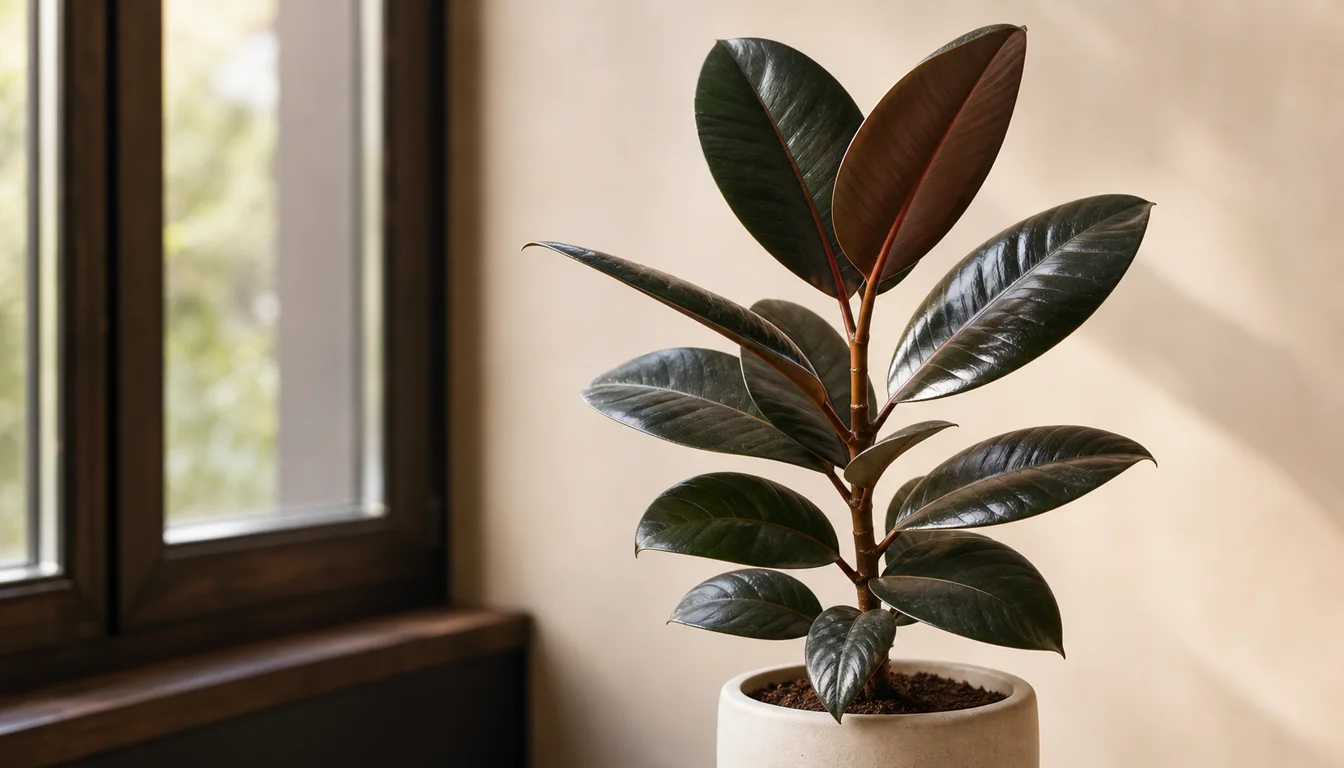
Buy It as a Future Tree
A small glossy Rubber Tree can become a floor plant with a woody trunk, so the first question is not whether it fits the table today. The question is whether the room can handle a taller ficus later.
This guide focuses on growing Rubber Tree as an upright indoor tree, with trunk height, branching, pot weight, and latex handling at the center. For the broader glossy-ficus houseplant profile, see Rubber Plant.
If you want a ficus tree with softer leaf texture, Ficus Audrey is the better comparison.
If you want a drama plant that hates movement even more, Fiddle Leaf Fig is the stricter version.
Expect roughly 10 to 12 inches of new growth a year under good indoor conditions, faster if light and warmth are close to ideal. That pace means a young plant typically needs several years, not one summer, to become the floor-height tree the quick stats describe.
A single mature specimen usually needs a spot with at least 7 to 8 feet of ceiling clearance and room to widen 2 to 5 feet, so measure the corner before falling for a small plant at the store.
Rubber Tree earned its air-purifying reputation from a NASA chamber study that measured it removing formaldehyde under sealed lab conditions. Real rooms have windows, doors, and foot traffic, so treat the effect as a genuine bonus rather than a replacement for ventilation.
In genuinely frost-free spots, roughly Zone 10 to 12, this same plant can go in the ground and grow into a large outdoor tree rather than staying container-bound. Give it real room to spread before planting, since an in-ground specimen loses the size limits a pot naturally imposes.
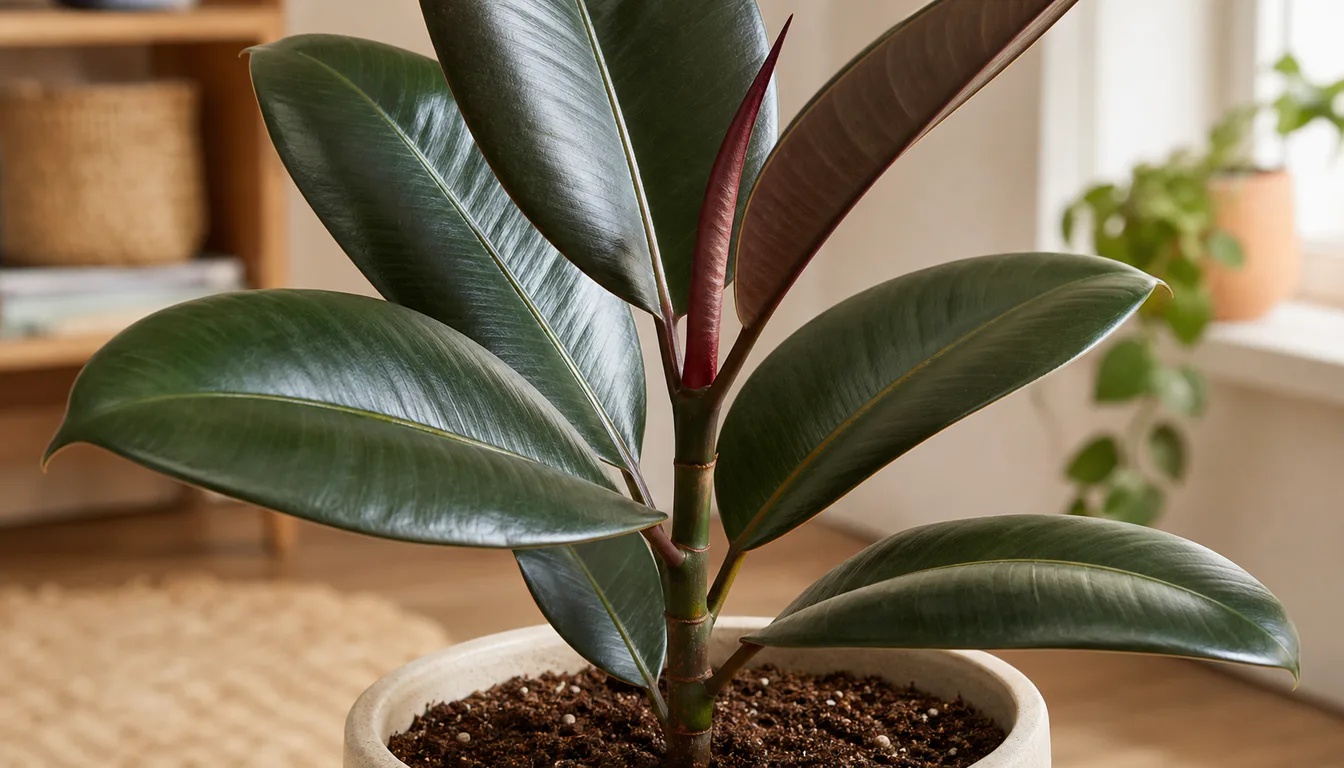
Know This Isn't the Tree That Makes Real Rubber
Despite the common name, Rubber Tree is not the plant that makes the rubber in tires, gloves, or hoses.
Commercial natural rubber comes from Hevea brasiliensis, the Pará rubber tree, an unrelated species in the Euphorbiaceae family grown on plantations across Southeast Asia.
In the 1800s, Ficus elastica really was tapped for its latex and shipped as a rubber source, which is exactly where the common name came from. Hevea brasiliensis eventually took over the entire rubber trade because its latex yields more and taps more easily, and Ficus elastica has been purely ornamental ever since.
The white sap this plant still produces, covered in the pruning and safety sections above, is the same latex family, just no longer commercially useful, so treat it as a skin and pet caution rather than a raw material.
That old rubber connection is also why some nurseries and older plant books still list this species under the nickname India Rubber Plant, a name that predates its current life as a common houseplant by well over a century.
- Ficus elastica (this plant)
- Moraceae family, grown today as a houseplant, latex no longer used commercially
- Hevea brasiliensis (Pará rubber tree)
- Euphorbiaceae family, the actual source of natural rubber today
Choose Leaf Color by Light You Can Actually Give
Burgundy, green, and variegated forms do not ask the same thing from a room.
Dark green types are the most forgiving, while cream or pink variegated leaves need brighter, steadier light to hold color.
- Burgundy or dark green
- Best for bright rooms with some distance from glass
- Variegated
- Best for the brightest filtered light and slower growers
- Small tabletop starter
- Good only if you plan for height and pot upgrades
Avoid buying a variegated plant for a dim corner. It may stay alive, but it will shed lower leaves and lose the clean color that made you choose it.
'Tineke' carries cream and grey-green patterning with a pink midrib, 'Ruby' opens with wine-red new growth that settles into pink and cream, and 'Burgundy' darkens toward near-black, sometimes sold under the names 'Abidjan' or 'Black Prince'. 'Decora' is the classic wide-leafed dark green form most tabletop starters actually are.
- Firm upright leader or intentional branching, not a leggy or leaning stem.
- Glossy, undamaged leaves with no sticky scale residue.
- Roots holding the mix together without a sour smell.
Place It Once in Bright Stable Light
Stable light matters because ficus leaves are slow to forgive change. Give Rubber Tree bright indirect light with gentle morning sun if possible, then leave the plant to adapt.
A sudden move from a dim store corner to a hot west window can drop a noticeable share of leaves within days, since the plant cannot adjust its internal chemistry that fast.
A slow move toward better light works better than one dramatic upgrade.
Once the plant is settled, give the pot a quarter turn every few weeks so growth does not lean permanently toward the window. This matters more on a tall single-trunk specimen than on a small bushy start, since an established lean is hard to correct later without heavy pruning.
If new growth stretches and lower leaves yellow, light is often the first suspect, since a starved plant reaches for a brighter angle and sheds the leaves it can no longer afford to feed. If sun-facing leaves scorch instead, pull the plant back a few feet from the glass before changing anything about water or feeding.
This light-first reading differs from Monstera, where leaf fenestration and climbing support can complicate the diagnosis.
Humidity matters less than light, but rubber trees still do best in the 50 to 60 percent range tropical ficus species evolved in. Below that, expect small brown leaf tips rather than a dying plant, and a light misting, a pebble tray under the pot, or a nearby humidifier during dry winter heating months usually helps close the gap.
Water the Whole Root Ball, Then Let It Breathe
A tall Rubber Tree needs full-root watering. Pour until water drains, then wait until the top 1-2 inches dry and the pot feels lighter.
Partial watering leaves dry pockets inside a large pot, since a splash on top rarely reaches the mix packed around the deepest roots.
Constant small pours keep the top wet and invite fungus gnats while deeper roots never get a proper cycle.
For routine timing, best time to water indoor plants matters less than pot weight. A heavy ficus pot tells the truth better than the calendar, since a plant that dries faster one week than the last is responding to real light and temperature changes, not breaking a schedule.
An established indoor Rubber Tree in a bright room typically wants a deep soak every 7 to 10 days, though a sunnier or warmer spot can push that closer to every 5 days. Stretch the interval in winter when growth and light both drop, since the same schedule that suited an active summer plant will overwater a resting one.
Use Weight and Drainage Together
The container must hold a tall trunk without trapping water, since a top-heavy plant in a light pot can tip and a sealed cache pot can quietly drown the roots. A heavy pot with a drainage hole is better than a light nursery pot hidden inside a tight decorative sleeve.
Use a chunky indoor mix with perlite, bark, and enough organic matter to hold moisture between deep waterings, roughly two parts potting soil to one part each of perlite and bark.
The roots should get air after each soak, which is exactly what a chunky, well-draining mix is built to allow between waterings.
- Tree support
- Heavy pot, broad base, room for trunk clearance
- Root support
- Drainage hole, airy mix, no standing saucer water
- Repot signal
- Top-heavy plant, fast dry-down, tight roots at the edge
Step up one pot size at a time, meaning roughly 2 inches wider in diameter rather than doubling the container. Too much wet mix around a modest root ball causes the same yellow-leaf pattern people often blame on low humidity.
Loosen circling roots gently before repotting the tree, since roots left coiled in their old shape can keep growing in a tight circle instead of spreading into the new mix. Add fresh mix underneath so the trunk sits at the same depth it grew before.
Water thoroughly right after repotting to settle the mix around the roots and close air pockets, then hold off on fertilizer for about a month while the roots recover from the disturbance.
Prune Before Height Becomes the Problem
The best pruning cut happens before the plant reaches the ceiling. Cutting above a node can encourage branching, but the response is easier to manage while the trunk is still reachable.
Wear gloves because the white latex sap can irritate skin and drip on floors, and it keeps flowing for a few minutes after each cut rather than stopping right away. Wipe the cut and keep pets away from fresh sap until it dries and darkens.
- Choose a node below the height where you want branching.
- Make a clean cut in warm active growth.
- Keep the plant in the same bright spot while it responds.
- Root the removed tip only if it has firm leaves and a healthy node.
Air layering is another option for thick stems that have gone too woody to root easily as a plain cutting, but it is slower and fussier than simple tip cuttings from younger growth.
To root that cutting, let the cut end callus for 30 to 60 minutes before setting it in water or a moist mix, since fresh latex can seal the wound too fast and block root growth if it goes straight into wet soil. A dip in rooting hormone before planting is optional but can speed things along, especially in a cooler room, and expect roots in 4 to 10 weeks at a warm 70 to 75°F in bright indirect light.
Soil propagation roots faster and more reliably than water for this species, so use water mainly to watch root progress rather than as the permanent method.
Move a water-rooted cutting into its own pot once roots reach about an inch long, since roots grown in water need time to adjust to soil and transplanting too late can shock them. Keep the new pot's mix consistently moist for the first couple of weeks while the roots finish that transition.
Read Leaf Drop Before You Panic
Leaf drop is a message, not a diagnosis. The pattern tells you whether to look at light, water, pests, or recent movement.
- Lower yellow leaves after wet soil: check roots and drainage.
- Leaves dropping after a move: hold care steady and improve light gradually.
- Sticky leaves or bumps on stems: inspect for scale.
Scale is the pest to respect on glossy ficus leaves.
It can look like small brown bumps clustered along a stem or leaf midrib, leaving sticky residue long before the plant looks badly damaged.
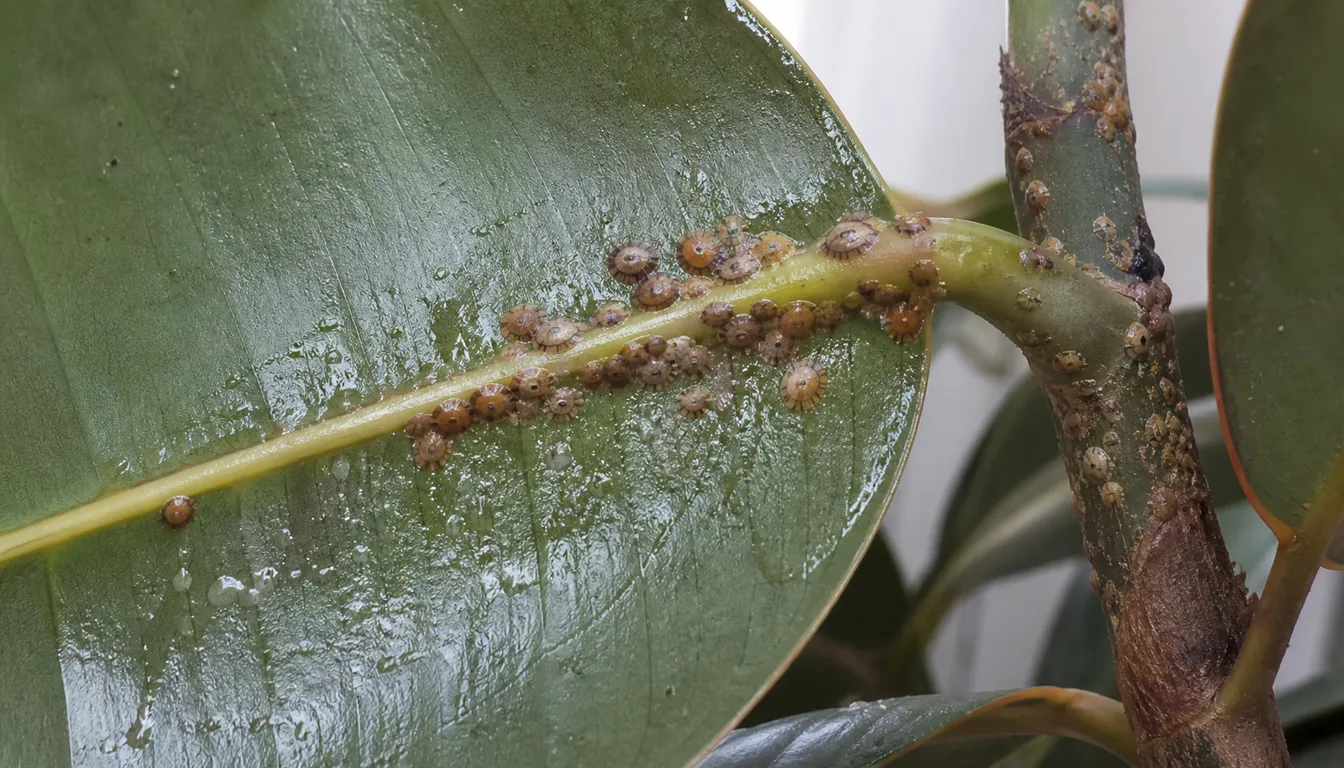
Spider mites show up as fine speckling or stippling on leaves, sometimes with faint webbing between leaf and stem in hot, dry rooms. Mealybugs cluster as small cottony tufts in leaf joints and along the midrib, leaving the same sticky honeydew residue scale does.
Scrub scale off with a cotton swab dipped in 70 percent rubbing alcohol every 3 to 4 days for about two weeks, since one pass misses crawlers that have not yet grown their protective shell.
Pour a small amount into a separate container to dip from rather than dunking the swab straight into the bottle, which keeps the rest of the alcohol clean for the next pass.
Horticultural oil works on all three pests when the infestation is heavier. Coat stems and the undersides of leaves every 6 to 7 days for at least three rounds, since a single spray only kills the stages it actually touches, not eggs sheltered under a shell or in a leaf joint.
For yellowing patterns on other houseplants, Dracaena yellow leaves is a useful comparison.
Pothos yellow leaves can look similar from across the room, but Rubber Tree needs the added check for trunk stability and scale.
Slow Winter Means Fewer Big Moves
Winter is not the time to reshape a large ficus unless the plant is unsafe or damaged. Short days slow recovery, and a hard prune can leave bare stems for months since the plant lacks the light budget to push new growth quickly.
Reduce watering pace, keep the plant away from cold drafts, and wipe dust from leaves so the limited light reaches the surface. Growth does not fully stop, it just slows with the shorter days, so the plant still needs its bright spot even though it is using less water and food.
A light feeding plan from indoor plant fertilizer supports new growth, but fertilizer cannot fix low winter light.
From spring through early fall, a balanced liquid fertilizer diluted to half the label strength every 2 to 4 weeks is plenty, though a slightly nitrogen-heavier formula suits the leafy growth this tree is actually making. Stretch that to every 6 to 8 weeks in winter, or skip it entirely while the plant is barely growing.
Latex Sap and Pet Placement Matter
The milky sap is the safety issue.
Rubber Tree can irritate skin and is not a chew-safe plant for pets.
Place it where leaves do not brush faces, doorways, or pet paths, since repeated contact is how skin irritation and curious chewing actually happen. A tall ficus also needs enough clearance that people are not constantly bending stems out of the way.
After pruning, clean tools with rubbing alcohol and wipe any sap that drips on the pot, floor, or furniture before it sets.
If you need a tough plant for a busy pet-access room, ZZ Plant is easier to place, or browse pet-safe houseplants built for that exact constraint from the start.
People with a natural rubber latex allergy carry extra risk here. Cross-reactivity between latex and Ficus sap proteins is documented in the closely related Ficus benjamina, and the same family of proteins runs through the genus, so a latex-sensitive household is a real reason to place this tree out of casual reach, not just a theoretical caution copied from a plant label.
Check for a latex-allergy history before placing a specimen in a shared space such as a classroom or waiting room, where an unexplained skin reaction would be hard to trace back to a plant nobody thought to suspect.
Related Plants
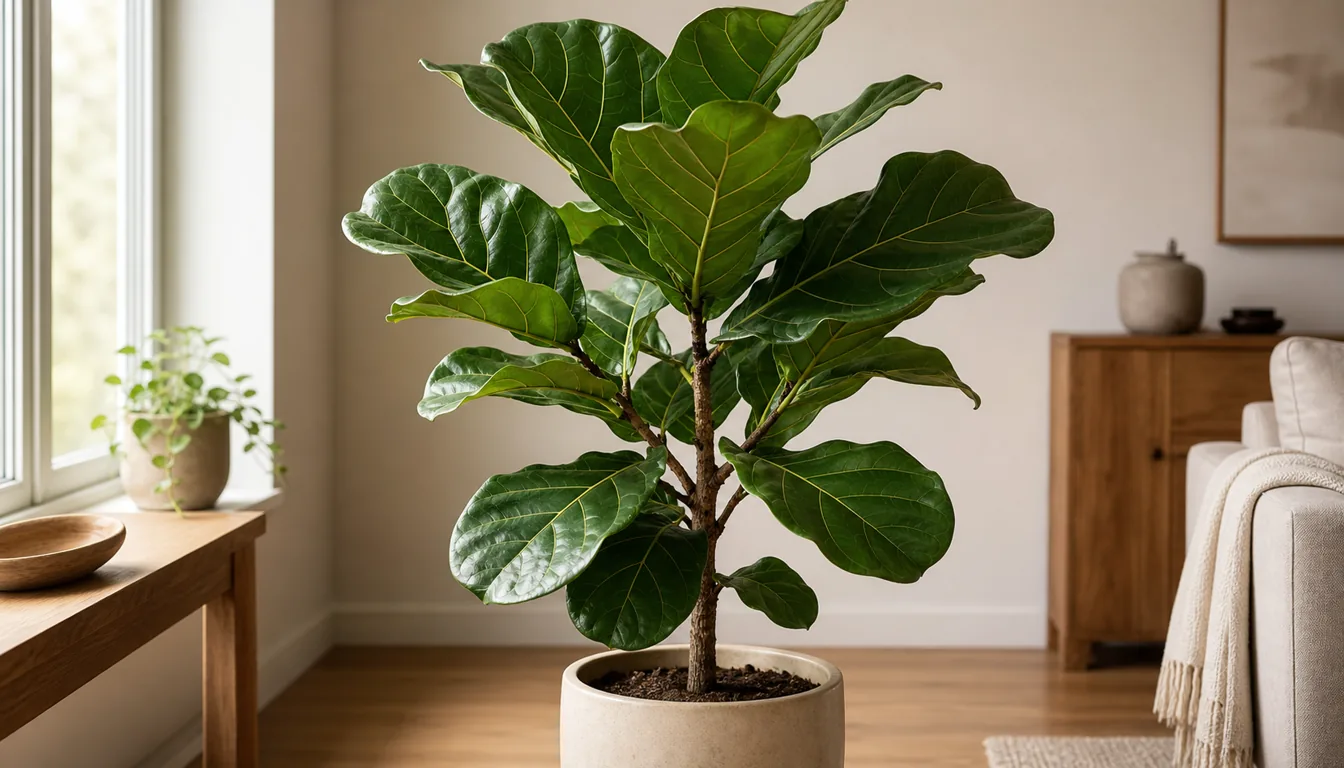
Fiddle Leaf Fig
Another bold Ficus with big leaves, but fussier about humidity and drafts than Rubber Tree.
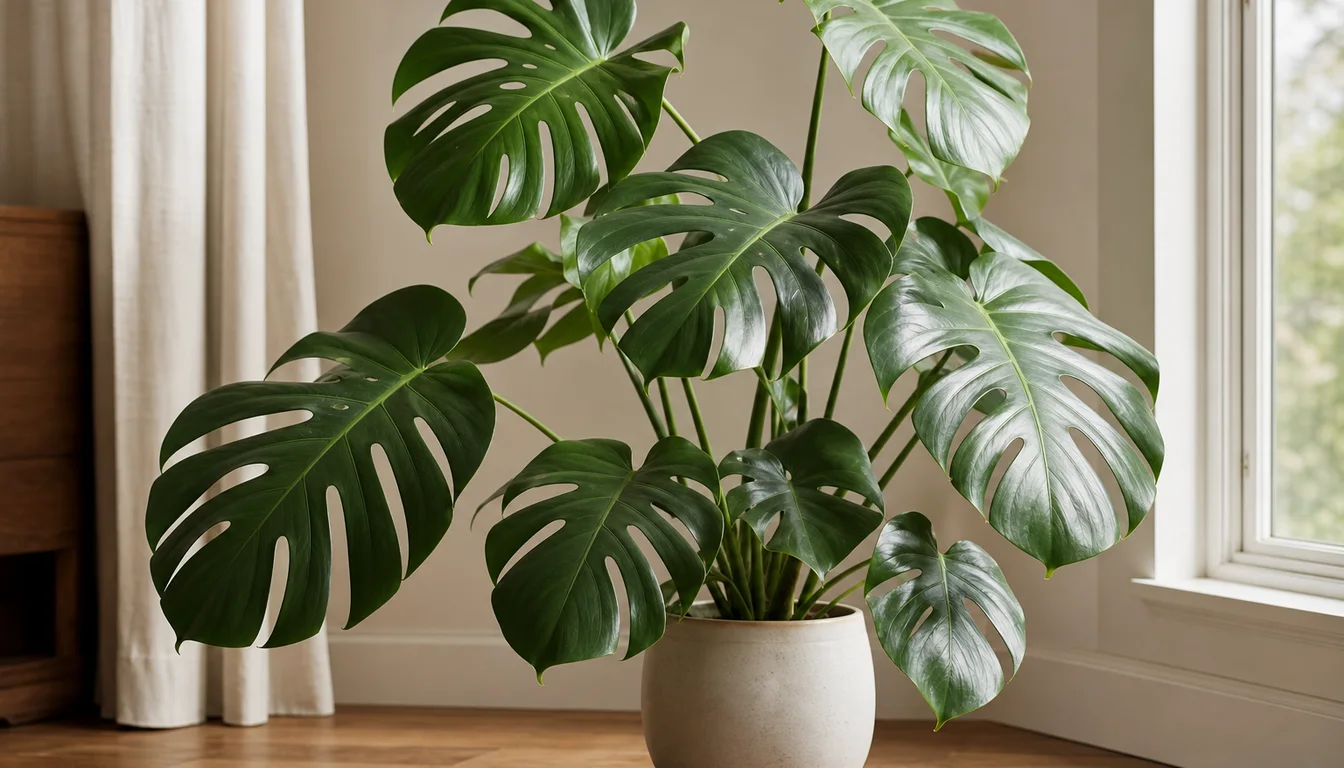
How to Grow a Monstera Deliciosa With Larger, Split Leaves
A tropical climber with split leaves that fills a similar "indoor tree" role with a softer look.
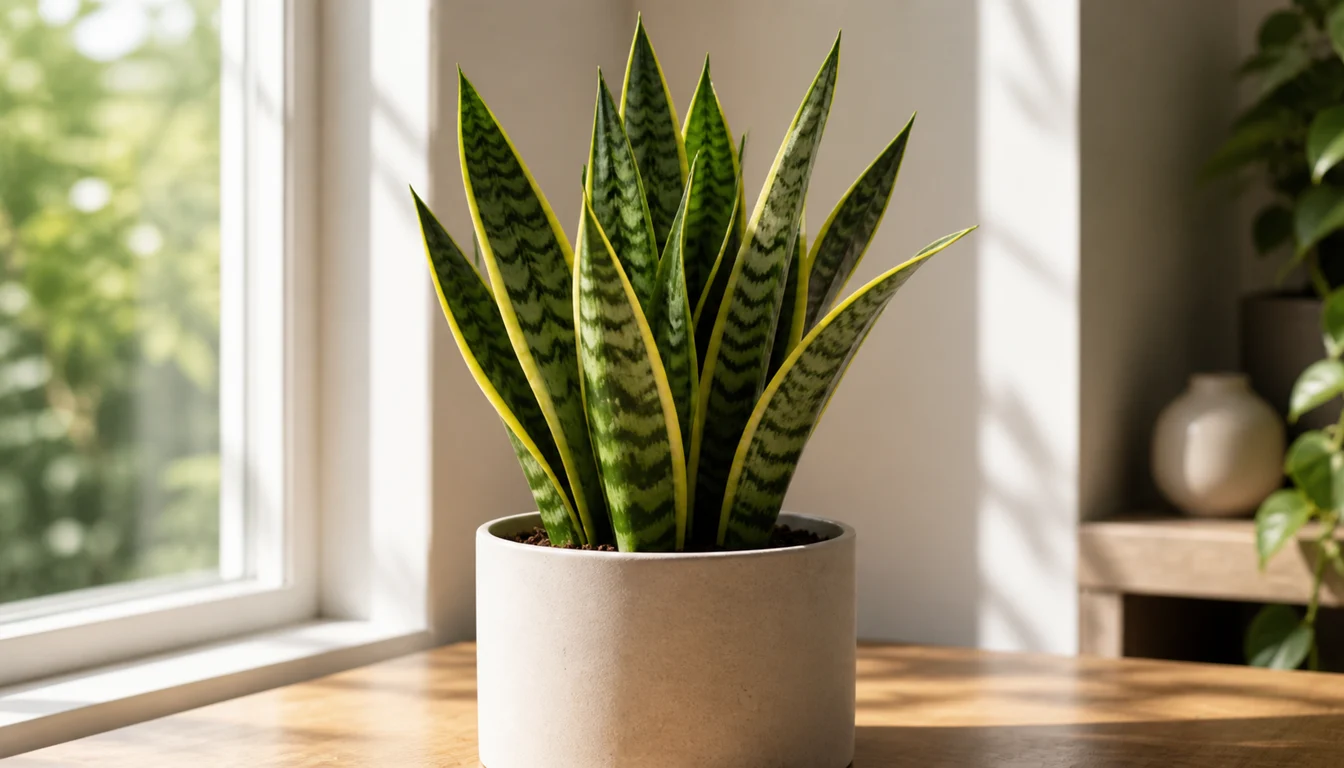
Snake Plant
A tough structural houseplant that tolerates lower light than Rubber Tree, good for dimmer rooms.
Frequently Asked Questions
How tall can Rubber Tree get indoors?
Many indoor plants reach 6-10 feet when light, pot size, and pruning allow it. Plan the floor space before it gets heavy.
Why is my Rubber Tree dropping leaves?
Look at the pattern. Wet soil and yellow lower leaves point to root stress, while drop after moving points to light and placement shock.
Can Rubber Tree grow in low light?
It may survive in lower light, but it grows thinner and drops more lower leaves. Bright indirect light gives the best tree form.
When should I prune Rubber Tree?
Prune in spring or early summer before the plant reaches the height you cannot manage. Cut above a node and protect skin from sap.
Is Rubber Tree pet safe?
No. Keep it away from chewing pets because the latex sap can irritate the mouth and stomach.
Sources & References
- Missouri Botanical Garden Plant Finder: Ficus elastica
- University of Vermont Extension, Growing Ficus Indoors
- Royal Horticultural Society (RHS), Ficus elastica profile
- Ficus elastica, Rubber Plant Profile
- Rubber Plant Care Indoors
- Toxic and Non-Toxic Plants List, Rubber Plant
- Managing Houseplant Pests