verifiedSource Reviewed
Ponytail Palm: Bottle-Trunk Desert Houseplant
Beaucarnea recurvata
Family: Asparagaceae
wb_sunnyLight
Bright indirect to some direct sun
water_dropWater
Low; let soil dry deeply
heightHeight
Indoor 2–6 ft
publicZone
Outdoors in Zone 10-12
Native Region
Eastern Mexico
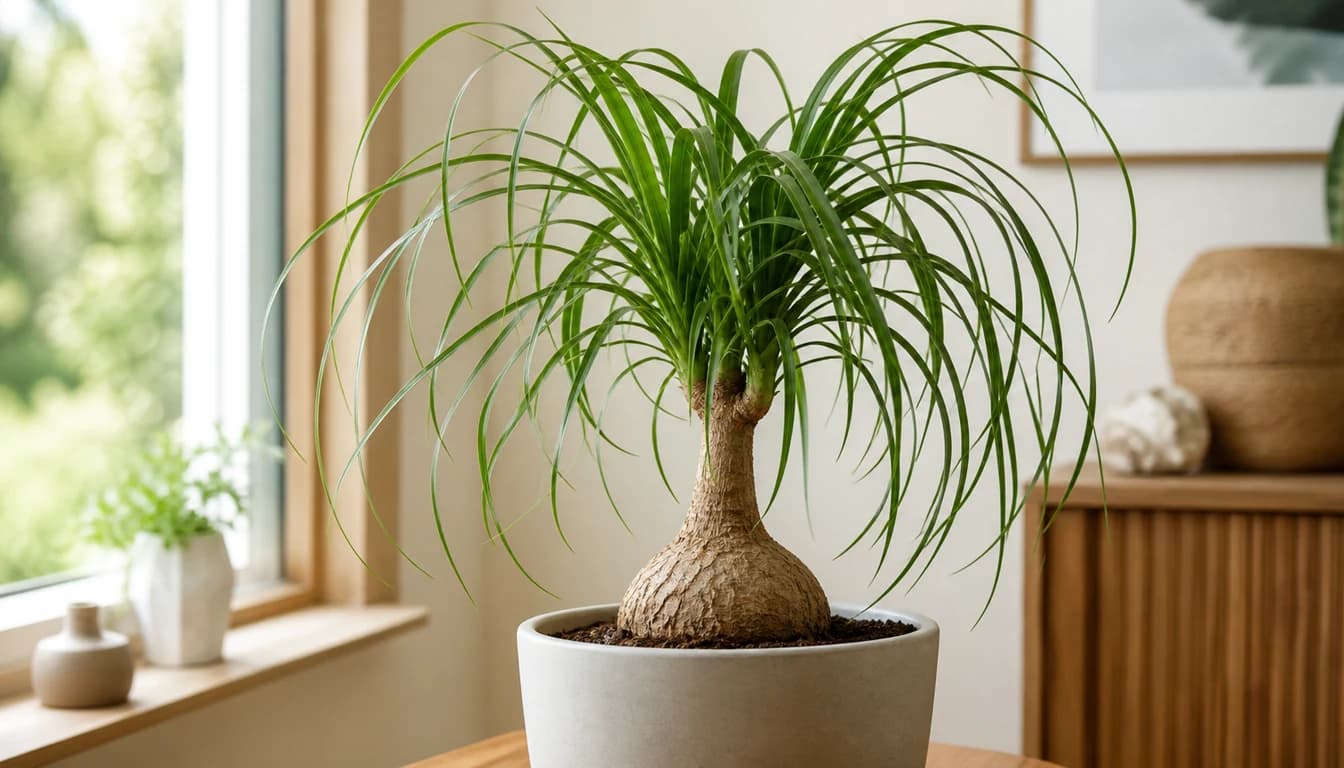
waterThe Bottle Trunk Is the Water Rule
The swollen base is the whole care manual. That caudex stores water, so Ponytail Palm can look calm while the soil dries far deeper than a normal leafy houseplant would tolerate.
warningDo not water it like a palm
A true indoor palm such as Parlor Palm has fine roots that dislike deep drought. Ponytail Palm has a storage trunk that rots when the collar stays wet.
A firm caudex means the plant still has reserves. A soft, wrinkled, or dark base is more serious than brown leaf tips because it points to storage tissue failing.
This page treats the plant as a dry-room sculpture with living leaves, not a tropical frond plant. If you want a humid palm look, Majesty Palm owns that different job.
shopping_bagBuy the Trunk Shape You Already Like
Growth is slow indoors, so the trunk height you buy may be the trunk height you live with for years. Choose the silhouette before you choose the pot.
Desktop sizeBest for bright shelves, slow change, easy lifting
Floor sizeBest for a sunny corner, heavier pot, stronger visual shape
Multi-head plantMore leaf movement, but harder to clean and rotate evenly
The crown should feel centered and firm. If all leaves lean one way, the plant has probably been starved for light and will need a long correction period.
- check_circleFirm caudex with no dark soft spots.
- check_circleLeaves emerging from the center, not only old outer leaves.
- check_circlePot heavy enough that the plant does not tip when touched.
Guide — See AlsoAir Purifying Plants for Cleaner Indoor AirLearn how to pick, place, and care for air purifying plants so they help your indoor air instead of just looking pretty.
chevron_rightwb_sunnyStrong Light Keeps the Fountain Stiff
Weak light turns the leaf fountain into limp ribbons. Give Ponytail Palm bright indirect light with some direct morning or late-day sun when you can.
A sunny window works better than a dim decorative corner. The leaves may tolerate lower light for a while, but the crown thins and the plant stops using water quickly.
Move it toward stronger sun in steps. Leaves grown indoors can scorch if you suddenly put them against hot glass or outside in full summer sun.
This is where it overlaps more with Aloe Vera than with soft palms. Both need light strong enough to keep stored water moving through the plant.
Email Updates
Join the KnowTheYard update list
Zone-specific advice, seasonal reminders, and new plant guides — no filler.
opacitySoak It, Then Make Yourself Wait
Use deep watering, not frequent sips. Wet the whole root ball, let water drain, then wait until the mix dries deeply before you water again.
- 1Lift the pot or tilt it slightly before watering.
- 2Water fully only when the pot feels much lighter.
- 3Empty the saucer within a few minutes.
- 4Wait longer in winter, even if the leaf tips look dry.
Brown tips do not automatically mean thirst. They can come from old leaves, dry air, mineral buildup, or a pot that stayed wet long enough to damage roots.
lightbulbRead the base first
A firm caudex plus brown tips usually asks for cleanup, not panic watering. A soft base asks for immediate drainage and root inspection.
Guide — See AlsoBest Herbs to Grow Indoors for Real Harvests, Not Spindly PotsChoose indoor herbs that can actually produce in your light, temperature, and container setup, then match each one to th
chevron_right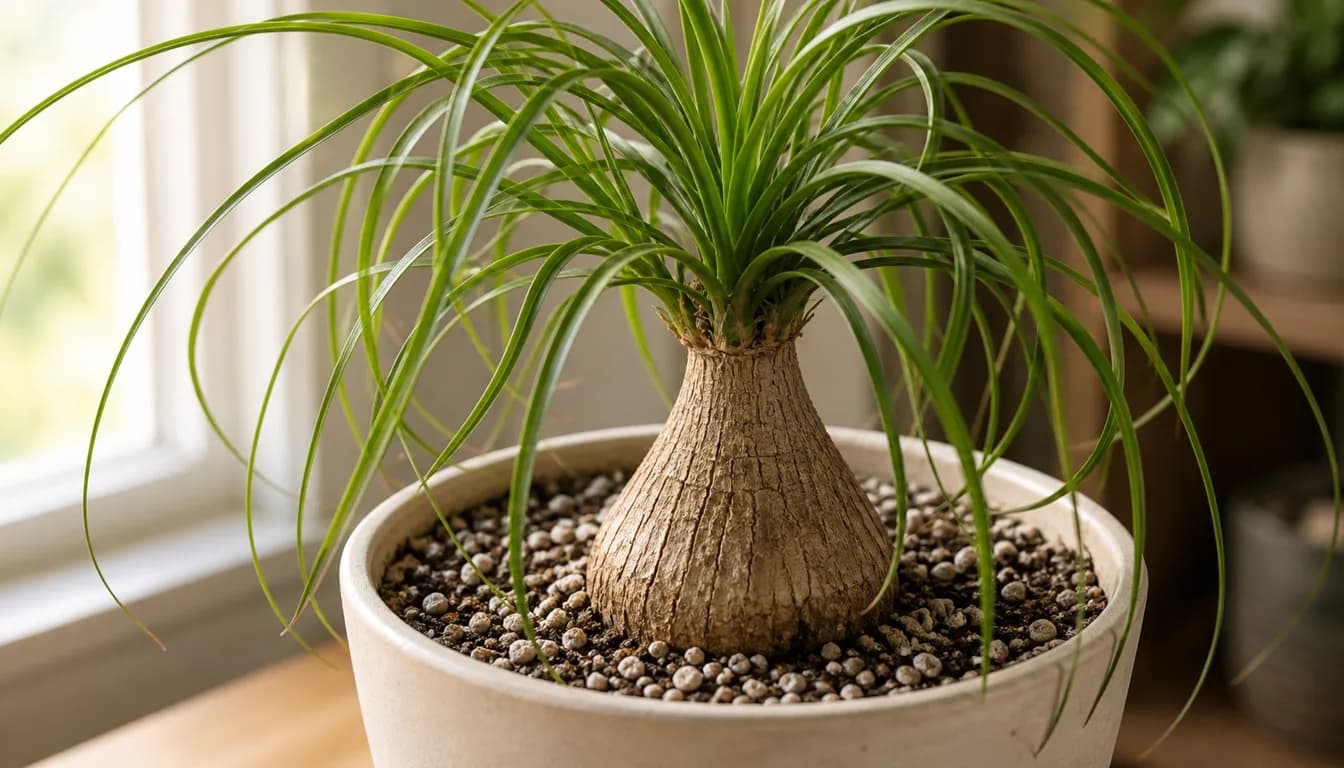
potted_plantUse a Shallow, Heavy Pot That Drains
The pot has two jobs that fight each other: it must drain fast, and it must hold a top-heavy plant upright. A shallow clay or ceramic pot with a hole often solves both.
Use cactus mix improved with pumice or perlite. Heavy indoor potting mix holds water at the caudex collar, and that wet ring is where rot starts.
Good containerWide, stable, drainage hole, no tight decorative sleeve
Good mixCactus mix plus pumice or coarse perlite
Bad setupDeep cachepot, wet peat mix, saucer left full
If you already grow Snake Plant, the drainage instinct is similar. Ponytail Palm still needs stronger light because its crown has to keep a living fountain of leaves above the caudex.
The same dry-room patience helps with ZZ Plant, but Ponytail Palm shows mistakes through the base before the leaves look dramatic.
grassOffsets Are Slow, Not a Weekend Project
Small pups sometimes form near the base, but they are not guaranteed. Wait until an offset has its own small root start before you remove it.
Cutting the top off a healthy plant to force branching is usually not worth the risk indoors. The caudex is the feature; a bad cut can ruin the shape you bought.
infoBest home method
Remove only a rooted side offset in warm active growth, pot it into a gritty mix, and keep it barely moist until new leaves prove it has roots.
Seed propagation is possible, but it is slow enough that most home growers should treat it as a curiosity.
Guide — See AlsoBest Indoor Plants for Every Room and Light LevelA practical guide to choosing the best indoor plants for your home, covering beginner-friendly picks, low light champion
chevron_rightbug_reportBrown Tips Need Sorting Before Spraying
The long leaves collect dust and hide early pests near the crown. Wipe leaves gently before you decide the plant has a pest problem.
Spider mites make fine speckling and weak new growth. Scale looks like small bumps on leaf bases and can sit unnoticed because the plant already grows slowly.
- check_circleDry crispy tips only: trim the brown edge and review water quality.
- check_circleSpeckles plus webbing: rinse leaves and isolate the plant.
- check_circleSoft base plus yellowing leaves: stop watering and check roots.
If the symptom is just brown tips, compare your watering rhythm with indoor watering timing before adding sprays.
calendar_monthSummer Can Help, Winter Punishes Wet Soil
Warm bright months let Ponytail Palm use water faster and build a stronger crown. That is the season for repotting, gradual outdoor time, and light feeding.
Winter changes the rule. Short days mean the caudex still holds water while the soil dries slowly, so the gap between waterings should stretch.
- fiber_manual_recordSpring: resume deeper watering as light improves.
- fiber_manual_recordSummer: use outdoor shade-to-sun transition if nights stay warm.
- fiber_manual_recordFall: bring it in before cold nights.
- fiber_manual_recordWinter: keep it bright, cool-to-warm, and dry.
The indoor plant care calendar can help you time these seasonal shifts without turning them into a fixed watering schedule.
petsPet-Safer, But Still Awkward in Traffic
Ponytail Palm is commonly listed as non-toxic for cats and dogs, which makes it easier to place than many dramatic houseplants.
Use it in a bright corner with floor space around the crown. If you need a smaller pet-safe foliage plant, Peperomia fits tighter shelves with less tipping risk.
eco
Keep Exploring
Related Plants
 Houseplants
Rubber Tree
Rubber Tree is a Ficus elastica grown as a future indoor tree, not just a glossy tabletop plant. The main care job is to match leaf color, light, watering,
 Houseplants
Bird Of Paradise
Bold, paddle-shaped leaves and crane-like orange and blue flowers make the Bird of Paradise a statement houseplant. With strong light, warm indoor temperatu
 Houseplants
String Of Dolphins
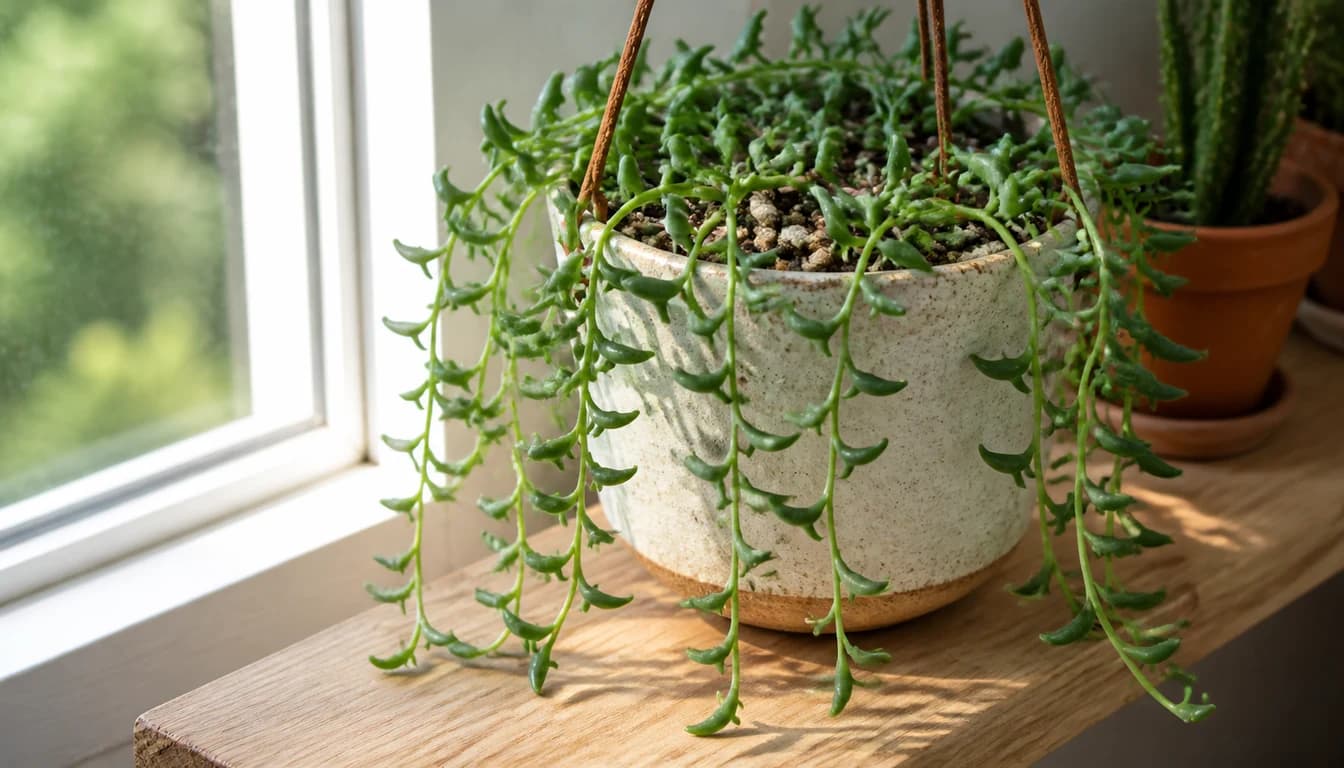
String of Dolphins is a trailing succulent grown for plump leaves that look like tiny leaping dolphins. The care goal is to keep each leaf full and shaped,
quiz
Frequently Asked Questions
How often should I water Ponytail Palm?expand_more
Water deeply, then wait until the pot dries far down and feels light. In winter, that can mean several weeks between waterings.
Is Ponytail Palm a true palm?expand_more
No. It is closer in care behavior to dry-climate succulents because the swollen base stores water.
Why are the leaf tips turning brown?expand_more
Brown tips can come from age, dry indoor air, mineral buildup, or root stress. Check the caudex and soil moisture before you water more.
Can Ponytail Palm sit in low light?expand_more
It may survive, but the crown thins and the leaves soften. Give it the brightest window you can provide.
Is Ponytail Palm safe for pets?expand_more
It is generally treated as pet-safe, but keep the pot stable because the plant can be top-heavy.
menu_book
Sources & References
- 1.Beaucarnea recurvata, Missouri Botanical Garden Plant Finderopen_in_new
- 2.Ponytail Palm, University of Florida IFAS Extensionopen_in_new
- 3.Houseplants: Care and Selection, Clemson Cooperative Extensionopen_in_new
- 4.Beaucarnea recurvata, Missouri Botanical Garden Plant Finderopen_in_new
- 5.Beaucarnea recurvata, University of Florida IFAS Extensionopen_in_new
- 6.Non-toxic houseplants list, ASPCAopen_in_new