yard
KnowTheYard

databasePlant Database

Browse by category

potted_plant

Houseplants

Indoor & tropical species

nutrition

Vegetables

Edible garden crops

spa

Herbs

Culinary & medicinal

local_florist

Flowers

Ornamental blooms

water_drop

Succulents

Drought-tolerant species

park

Trees

Arboreal species

forest

Shrubs

Bushes & hedges

nature

Perennials

Garden flowers

grass

Lawn Grasses

Turf varieties

local_dining

Fruits

Fruit-bearing plants

Best Indoor Plantsarrow_forwardBest Shade Plantsarrow_forward

menu_bookGarden Guides

Step-by-step guides by task type

grass

Lawn Care

Seasonal checklists and year-round maintenance guides for a championship lawn.

yard

Planting

When, where, and how to plant — from seed to transplant for every garden type.

water_drop

Watering

Deep-watering techniques, schedules by plant type, and drought management.

compost

Fertilizing

Feeding schedules, NPK ratios, and organic vs synthetic options by plant.

pest_control

Pest Control

Identify, prevent, and treat common garden pests without harming beneficial insects.

content_cut

Pruning

Pruning timing, techniques, and tools for trees, shrubs, and flowering plants.

Popular Guides

parkFall Lawn Carelocal_floristSpring Lawn Carecalendar_monthFull Calendar
All Guidesarrow_forwardLawn Care Hubarrow_forward
ToolsCompareRegional GuidesPlant ProblemsPet SafetyAbout
searchPlant Finder
yardKnowTheYard

Published plant profiles, practical care guides, problem diagnosis pages, and side-by-side comparisons for home gardeners.

chatphoto_camera

databaseBrowse Plants

  • arrow_forwardHouseplants
  • arrow_forwardVegetables
  • arrow_forwardHerbs
  • arrow_forwardFlowers
  • arrow_forwardTrees

menu_bookResources

  • arrow_forwardGarden Tools
  • arrow_forwardRegional Guides
  • arrow_forwardPlant Problems
  • arrow_forwardPet Safety
  • arrow_forwardCare Calendar
  • arrow_forwardPlant Finder

infoCompany

  • arrow_forwardAbout Us
  • arrow_forwardOur Team
  • arrow_forwardMethodology
  • arrow_forwardEditorial Policy
  • arrow_forwardContact Us

mailEmail Updates

Join the list for new guides, seasonal notes, and launch updates.

No spam. Request removal anytime.

fact_check

Reviewed Pages

77 pages currently attributed to public review lanes

public

USDA Zone Coverage

Zone-aware recommendations and regional growing context

database

230 Published Plant Profiles

555 public pages across profiles, guides, comparisons, and problem pages

© 2026 KnowTheYard. All rights reserved.

Privacy PolicyTerms of ServiceContactSitemap
Home/houseplants/Alocasia: Bold Indoor Elephant Ear Foliage/Aloe Vera Yellow Leaves
scienceEditorial DiagnosisUpdated Feb 20, 2026

Aloe Vera Yellow Leaves

Yellowing leaves on **Aloe vera** most commonly point to watering or light problems, with overwatering and root rot the usual culprits. This guide helps you diagnose whether yellowing is from too much water, not enough water, sunburn, pests, or normal leaf aging, then gives clear steps to fix the issue and prevent it from returning.

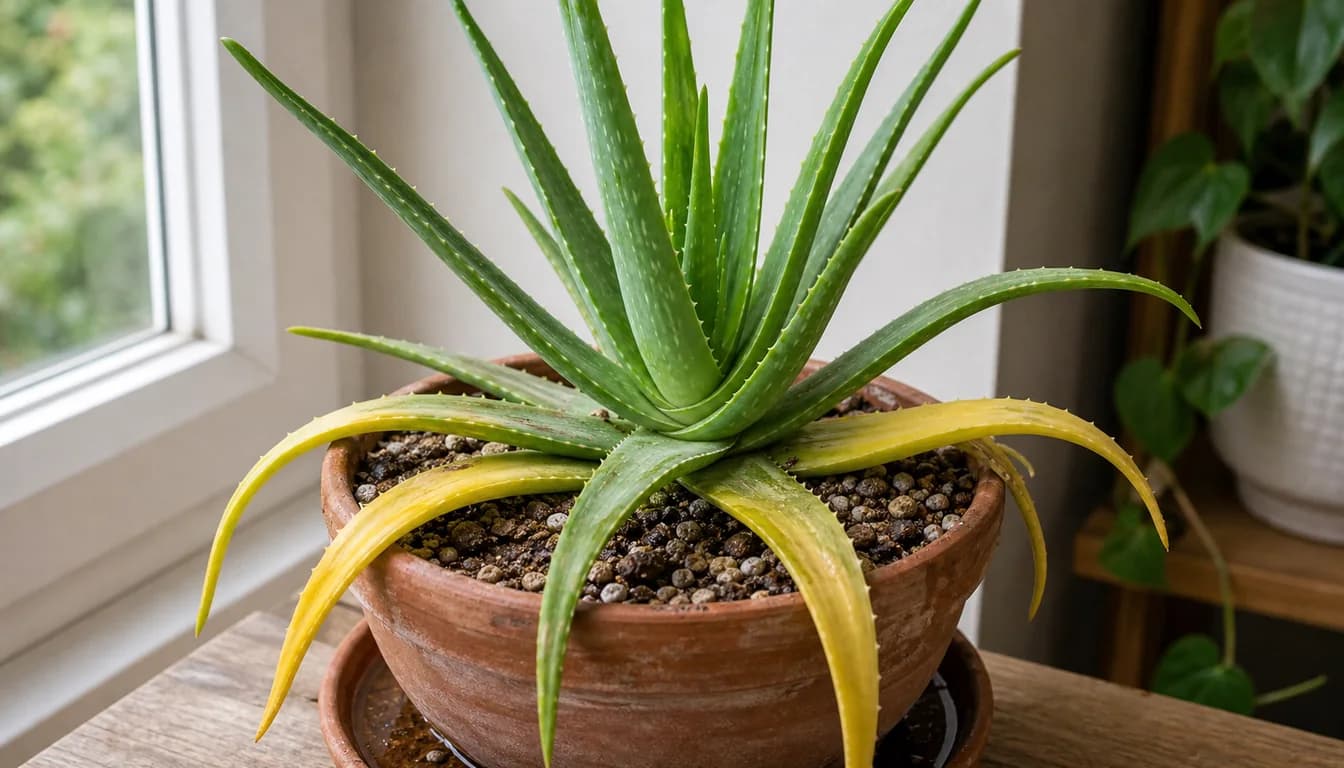
Potted Aloe vera near a bright window with yellowing lower leaves, green center growth, gritty succulent mix, and water in the saucer.

Potted Aloe vera near a bright window with yellowing lower leaves, green center growth, gritty succulent mix, and water in the saucer.

lightbulb
bolt

Quick Diagnosis

Most Likely Cause: Overwatering or poor drainage.

Check whether the yellowing starts with soft lower leaves or with bleached, stressed outer tissue. If leaves are thin and shriveled instead, the issue is likely underwatering, which needs a very different response-watering deeply and then letting the soil dry.

Jump to fix steps arrow_downward

On Aloe vera, yellowing is usually a root-zone message before it is a leaf-color problem. Because Aloe stores water in fleshy leaves, color and texture tell you a lot: plump, firm leaves are healthy; yellow, soft, or translucent leaves usually mean overwatering, while thin, crispy yellow leaves point to underwatering or cold stress. Light plays a second role: too little light causes pale leaves, and sudden exposure to intense sun can cause sunburned yellow or brown patches. Pests and normal leaf aging are less common but still important-use simple checks (soil touch, root inspection, and leaf feel) to differentiate causes quickly.

menu_book
Guide - See AlsoAir Purifying Plants for Cleaner Indoor Air
chevron_right
psychology

How Aloe biology explains yellow leaves

Aloe vera stores water in thick leaves and relies on oxygen in the root zone; saturated soil cuts off oxygen and triggers root death, which quickly shows as yellowing leaves because water transport fails.

Because Aloe vera is drought-tolerant, symptoms from underwatering are often slower to develop and are reversible with deep watering. Sunburn and pests produce distinct patterns you can spot without unpotting the plant.

Normal aging causes lower leaves to yellow and die over time; this is a natural process and not a sign of overall decline when new growth looks healthy.

thermostat

Environmental Baseline

Before diagnosing specific failures, confirm your Alocasia: Bold Indoor Elephant Ear Foliage's environment matches its core care requirements.

forestAlocasia: Bold Indoor Elephant Ear Foliage Care Needs

  • Light: Bright indirect, brief gentle morning sun
  • Water: Moderate, keep soil lightly moist, never soggy
  • Temp: Ideal **65–85°F**, protect from drafts

homeTypical Indoor Home

  • Humidity: 30-50% (Low)
  • Temp: 65-72°F variable
  • Light: Often too dim or direct
biotech

Possible Causes

Sorted by likelihood

1. Overwatering and poor drainage

Likelihood: High

Soil that stays wet for long periods suffocates roots. Root tissues rot, leaves take up less water and turn yellow, then soft and translucent. This is the single most common cause of yellowing in Aloe vera grown as a houseplant.

Identification

  • remove_circle_outlineSoil that feels wet or smells sour more than 24-48 hours after watering
  • remove_circle_outlineLeaves are soft, swollen, or translucent and may collapse when pressed
  • remove_circle_outlinePot has no drainage holes or saucer holds standing water
  • remove_circle_outlineRoots that look brown/black and mushy when you unpot the plant

The Fix

  1. 1Stop watering immediately and let the top 1-2 inches of soil dry before any future waterings
  2. 2If signs are severe, gently remove the plant, trim rotten roots with sterile shears, and repot into fresh, well-draining mix
  3. 3Use a pot with drainage holes and a fast-draining soil (mix with coarse sand or perlite) to prevent recurrence
  4. 4Discard waterlogged soil; never reuse contaminated potting mix without sterilizing
  5. 5For mild cases, improve airflow and place plant where light is brighter to speed drying

2. Underwatering and drought stress

Likelihood: Medium

Aloe vera stores water but will show thin, wrinkled, or yellow leaves when left too dry for long. Yellowing from underwatering tends to be dry and papery rather than soft.

Identification

  • remove_circle_outlineLeaves are thin, limp, or shriveled and feel papery rather than mushy
  • remove_circle_outlineSoil pulls away from pot edges and is bone dry below the surface
  • remove_circle_outlineOlder leaves may yellow first while newer leaves remain somewhat plump
  • remove_circle_outlinePlant brightens quickly after a careful deep watering if underwatering was the problem

The Fix

  1. 1Give a thorough soak-water until it runs out the drainage holes-then allow soil to dry to about 1-2 inches before the next water
  2. 2Check moisture with a finger, wooden skewer, or a moisture meter instead of fixed schedules
  3. 3Adjust watering frequency seasonally-less in winter, more in active growth
  4. 4If many bottom leaves are shriveled, remove dead tissue and resume a conservative watering routine
  5. 5Consider a slightly larger pot only if roots are crowded; crowded roots dry faster but can stress the plant

3. Sunburn from sudden intense light

Likelihood: Medium

Aloe vera loves bright light but can get sunburned if moved too quickly from low light to direct midday sun. Sunburned areas appear pale yellow to brown and are often dry and leathery.

Identification

  • remove_circle_outlineYellow or brown patches concentrated on leaf faces that faced the window or outdoor sun
  • remove_circle_outlineDamage is localized with crisp edges, not a uniform yellowing across the plant
  • remove_circle_outlineHappens after moving the plant outdoors, onto a brighter windowsill, or during a sudden heatwave
  • remove_circle_outlineNew growth on shaded side remains green while exposed tissue is discolored

The Fix

  1. 1Move the plant to bright indirect light or give morning sun only; avoid hot afternoon sun
  2. 2If moving to brighter light, acclimate over 1-2 weeks by increasing exposure gradually
  3. 3Trim away heavily sunburned tissue with clean scissors; leave partial damage to protect the inner leaf
  4. 4Provide some shade during summer or use sheer curtains to diffuse harsh light
  5. 5Rotate the pot so no single side receives constant intense sun
menu_book
Guide - See AlsoBest Herbs to Grow Indoors for Real Harvests, Not Spindly Pots
chevron_right
potted_plant

Root Health Examination

A direct inspection of the root system distinguishes root rot from drought stress - saving weeks of guesswork.

check_circleHealthy Roots

  • Firm to the touch
  • White or light tan color
  • Earthy, pleasant smell

cancelCompromised Roots

  • Mushy or slimy texture
  • Dark brown or black color
  • Sour, rotting odor

Inspection Step: Gently slide the pot off while supporting the base of the stems. The outer root ball gives sufficient clues without disturbing all the soil.

gpp_bad
warning

When to Worry

A few yellow leaves are normal. If more than 20% of foliage turns yellow within a week, or new growth is affected, act immediately - check the roots first.

timeline

Recovery Protocols

Recovery takes time. Once the root cause is corrected, implement a 30-day stabilization window.

0-1 weekImmediate actions

Stop watering if overwatered, move plant to brighter indirect light, and inspect soil moisture. For suspected pests, isolate the plant and treat with a gentle insecticidal soap or neem oil following label rates.

1-4 weeksStabilize roots and soil

If you repotted, keep the soil barely moist only if roots are fresh and healthy; otherwise let the mix dry more between waterings. New growth may be slow but leaf yellowing should stop and remaining leaves firm up.

4-12 weeksNew growth appears

Healthy new leaves form from the center if root issues are resolved. Full visual recovery takes longer-expect steady improvement over multiple months; if yellowing continues, recheck roots and drainage.

menu_book
Guide - See AlsoBest Indoor Plants for Every Room and Light Level
chevron_right
shield

Preventing Future Issues

Prevent future yellowing with a fast-draining mix, a pot with drainage holes, and a simple watering habit tied to moisture, not a date-use watering frequency cues so you water less in winter and more during active growth. Pair that with reliable drainage, stable indoor temperatures, and gradual light changes when relocating the plant. Bright indirect light keeps color steadier while roots recover. Remove old yellowed leaves and inspect for pests monthly; together these small habits stop most repeat problems before they start. Quick check: Do you see 1) soggy soil, 2) wrinkled leaves, or 3) fading color? These point to watering or aging as the main culprits.

menu_book

Related Reads

menu_book
GuideAir Purifying Plants for Cleaner Indoor Air
chevron_right
menu_book
GuideBest Herbs to Grow Indoors for Real Harvests, Not Spindly Pots
chevron_right
menu_book
GuideBest Indoor Plants for Every Room and Light Level
chevron_right
menu_book
GuideBest Low-Light Plants
chevron_right
menu_book
GuideBest Fertilizer for Indoor Plants
chevron_right
menu_book
GuideHow to Treat Spider Mites on Houseplants
chevron_right
Alocasia: Bold Indoor Elephant Ear Foliage (Alocasia spp.) - full care guideAlocasia spp.

Alocasia: Bold Indoor Elephant Ear Foliage

Araceae Family

wb_sunny

Light

Bright indirect, brief gentle morning sun

water_drop

Water

Moderate, keep soil lightly moist, never soggy

thermostat

Temp

Ideal **65–85°F**, protect from drafts

yardFull Care Guide

On This Page

boltQuick DiagnosispsychologyUnderstandingthermostatEnvironment CheckbiotechPossible Causespotted_plantRoot ExamwarningWhen to WorrytimelineRecovery PlanshieldPreventionmenu_bookRelated Reads