verifiedSource Reviewed
String of Pearls: Trailing Succulent Houseplant
Senecio rowleyanus
Family: Asteraceae
wb_sunnyLight
Bright indirect, some gentle direct sun
water_dropWater
Low, let soil dry deeply
heightHeight
Trails 1–3 ft or more
publicZone
Zone 10–12 outdoors, houseplant elsewhere

Native Region
Southwest Africa
biotechBotanical Profile and Growth Habit
Zone 10–12 homes can treat String of Pearls as a patio plant year-round, while cooler regions rely on bright windowsills. This trailing succulent stores water in round, pea-sized leaves along thin stems.
Zone 10 gardeners will notice String of Pearls behaves more like a groundcover in frost-free rock gardens, but indoors it acts as a hanging or shelf plant with vines that spill over the pot edge.
Zone 11–12 conditions with strong sun and heat mirror its native semi-arid South African habitats. The plant uses its bead-like leaves to reduce surface area and slow water loss, much like jade plant relatives in the wider succulent group.
Zone 10–12 nights rarely dip below 50°F, which keeps growth steady. Indoors in colder zones, you will see moderate growth in spring and summer and slower extension in winter, similar in pace to a well-lit snake plant on a bright.
paletteCultivars and Lookalikes
Zone 10–12 nurseries sometimes stock several "string of" plants together, so it helps to know what you are grabbing. Senecio rowleyanus has round beads, while close relatives and lookalikes show different leaf shapes.
Zone 10 growers often find String of Tears (Curio herreanus) on the same bench. Its leaves are more teardrop-shaped and slightly pointed, and it tends to handle a bit more sun, behaving more like tough outdoor sedum listed in the perennial groundcover group.
Zone 11–12 collections might include variegated String of Pearls, which has cream and light green striping on the beads. Variegation reduces chlorophyll, so these plants need brighter light than the plain green form to avoid thin, stretched growth.
Zone 10 indoor gardeners often pair String of Pearls with String of Hearts for contrast. Hearts has flat, patterned leaves and slightly different hydration needs, but both like well-drained soil and trailing displays in hanging baskets or on high shelves.
Plant Problem — See AlsoString Of Pearls Mushy StemsMushy, water-soaked stems on **String of Pearls** (Senecio rowleyanus) usually point to stem rot triggered by excess moi
chevron_rightwb_sunnyLight: Keeping Trails Full, Not Sparse
Zone 10 windows that face east or bright north usually give String of Pearls just enough sun to stay plump. It wants bright indirect light with a little gentle direct sun, but not all-day harsh rays.
Zone 11 patios can handle this plant in bright shade where it gets filtered morning sun. Strong midday rays in hot climates can scorch beads, similar to how thin-leaved peace lily foliage burns if pressed tight against west-facing glass.
Zone 10 indoor growers often hang it close to a south-facing window, off to the side so the glass diffuses light. Too little light stretches the stems, spacing beads far apart, much like leggy vines on a neglected marble queen pothos under a.
Zone 9 and colder homes, where winter days are darker, benefit from a small grow light hung 12–18 inches above the plant. Aim for 10–12 hours of moderate brightness to copy the levels you would find under bright shade in its native habitat.
- check_circlePlace 2–3 feet from a bright south or west window indoors.
- check_circleGive 1–3 hours of soft morning sun, avoid harsh afternoon blaze.
- check_circleRotate the pot monthly so strings do not lean toward one side.
- check_circleWatch for pale, spaced-out beads as a sign it needs more light.
- check_circleMove back from glass if beads look bleached or sunburned.
Email Updates
Join the KnowTheYard update list
Zone-specific advice, seasonal reminders, and new plant guides — no filler.
water_dropWatering Without Turning Beads to Mush
Zone 10–12 outdoor pots dry much faster than indoor ones, so this plant can handle a deeper soak during warm, dry stretches. Let the soil dry almost completely between waterings to protect those thin roots.
Zone 10 apartments with air conditioning will see slower drying in summer than you expect for a succulent. Always use the finger test and feel at least 1–2 inches down rather than following a weekly schedule you saw in a generic watering frequency chart.
Zone 9 and colder homes in winter should treat String of Pearls almost like a dormant cactus. Water lightly only when the beads start to look a bit wrinkled and the pot feels very light, which might mean every 3–4 weeks instead of every week.
Zone 10–12 growers who combine this plant with thirstier companions, such as herbs grown indoors from indoor herb kits, often kill it with kindness. Give it a separate pot so you can keep its soil drier than basil or mint.
warningAvoid the Number One Killer
More String of Pearls die from overwatering in heavy soil than from underwatering. If in doubt, wait a few extra days before you water again, especially in low light or cool rooms.
Use the checks below together; one damp spot near the bottom of the pot matters more than a dry-looking surface.
- 1Check moisture 1–2 inches down; water only when nearly dry.
- 2Soak thoroughly until water drains from the bottom of the pot.
- 3Empty saucers after 10–15 minutes so roots are not sitting in water.
- 4Reduce watering in winter by about 50% as growth slows.
- 5Watch for mushy beads and black stems as a sign to water less.
Plant Problem — See AlsoString of Pearls - Shriveled PearlsPractical diagnosis and step-by-step fixes for a shriveling Senecio rowleyanus (**String of Pearls**). This guide helps
chevron_right
potted_plantSoil and Potting Mix
Zone 10–12 outdoor containers with rain exposure need extra-fast drainage so String of Pearls does not sit in soggy conditions. A standard houseplant mix is usually too dense on its own.
Zone 10 apartment growers can get away with a good cactus mix, but we still like to lighten it. Aim for roughly 50–60% commercial succulent soil and 40–50% added mineral grit like perlite or pumice.
Zone 9 and cooler indoor homes often have lower evaporation, especially in winter. That is where an airy mix really matters, just as it does for rot-prone houseplants like ZZ plant that often show yellowing leaves in heavy soil.
Zone 10 gardeners who repot this plant too deep in tall pots often see lower stems rot. Use a shallow, wide container with a drainage hole, similar to how you would pot a small bonsai-style jade or low dish of creeping sedum.
Base mix50–60% cactus or succulent potting mix
Drainage amendments30–40% perlite or pumice for air pockets
Organic matterUp to 10–20% compost or fine bark, optional
Pot typeShallow terracotta pot with a drainage hole
Repotting frequencyEvery 2–3 years, or when roots fill the pot
account_treePropagating String of Pearls
Spring cuttings succeed far more often than winter ones, because warm, bright days push new roots faster. Aim to propagate String of Pearls when it is actively growing, not when it is sulking through short, dark days.
Early in the growing season you can often trim and root pieces while you are already tidying other indoor plants or repotting hanging baskets.
Stem cuttings are the easiest method. Choose firm, green strands, not shriveled ones, and avoid very young tips that bend like cooked spaghetti, since they tend to rot before they root.
Lay cuttings on barely moist, gritty mix rather than standing them upright in wet soil. Contact along several nodes gives you many rooting points, and it also keeps those round pearls sitting on top where they can dry quickly.
- 1Take 3-5 inch segments with at least 6-8 pearls on each strand.
- 2Strip the pearls from the bottom 1 inch so bare stems can touch the soil surface.
- 3Let cut ends dry for 12-24 hours indoors so the cut tissue calluses.
- 4Press stems onto a shallow tray of barely moist succulent mix, pinning them down with hairpins or bent wire if needed.
- 5Place in bright, indirect light at 68-75°F, keeping the top just slightly damp with mist, not heavy watering.
- 6After 3-4 weeks, tug gently for resistance, then begin light bottom watering and slowly move to your normal care routine.
Once rooted, resist the urge to flood the tray; the new stems thicken faster when roots get air between light waterings.
lightbulbFastest way to fill a pot
Coil long strands in circles on top of the soil instead of rooting single short pieces. Every node that touches the mix can form roots, so you thicken the plant much faster.
Guide — See AlsoAir Purifying Plants for Cleaner Indoor AirLearn how to pick, place, and care for air purifying plants so they help your indoor air instead of just looking pretty.
chevron_rightpest_controlCommon Pests on String of Pearls
Winter heating season is when most pest problems show up, because dry air and cramped windowsills stress plants. Stressed pearls are far more likely to pick up sap sucking insects from nearby pothos or philodendron vines.
Routine inspections are easier if you group vines with other trailing houseplants in one bright spot, then pick one day a month to check every leaf and stem.
Mealybugs are the classic problem. They look like tiny bits of cotton caught at leaf joints or along stems, and they leave sticky honeydew that can make nearby surfaces grimy and attract black sooty mold.
Spider mites show up in hot, dry rooms, especially if String of Pearls hangs over a heater vent. Watch for fine webbing between strands and a dusty look to the pearls, then compare symptoms with guides for treating spider mites indoors.
pest_controlMealybugs
Check leaf joints for white fuzz. Dab visible insects with cotton swabs dipped in 70% isopropyl alcohol, and repeat each week until no new clusters appear.
pest_controlSpider mites
Look for pale stippling and fine webbing along strands. Rinse under a gentle shower, then treat foliage following steps from spider mite control methods.
pest_controlFungus gnats
Let the top 1-2 inches of soil dry before watering again, and use yellow sticky traps plus methods from controlling fungus gnats if they keep returning.
After you identify the pest, isolate first and treat second; distance slows the spread while you decide how aggressive to be.
infoIsolation buys you time
Any time you spot pests, move that pot away from your monstera, snake plant, or other favorites. Distance slows spread, so you have a better chance of fixing one problem before it jumps across the whole shelf.
calendar_monthSeasonal Care for String of Pearls
Spring growth is when String of Pearls forgives past mistakes and thickens quickly, so this is the season to refresh soil, trim leggy strands, and adjust light before strong sun reaches high summer levels.
If your plant sulked through winter with shriveled beads, combine repotting tips from repotting houseplants safely with a brighter windowsill to get it back on track.
Summer sun can both help and hurt. Bright light fattens pearls and encourages branching, but direct midday rays through glass can scorch tissue, especially in Zone 10-12 where outdoor sun is already intense.
Fall is your time to slow watering and feeding before growth tapers off. Slightly cooler nights and shorter days signal the plant to rest, and forcing fertilizer during this stretch often stretches strands instead of thickening them.
local_floristSpring
Increase light, resume light feeding with a diluted succulent fertilizer, and trim back long bare necks to encourage branching near the pot rim.
wb_sunnySummer
Provide bright, filtered light or a few hours of gentle morning sun. Check hanging baskets more often, since tight pots dry faster in hot rooms.
ecoFall
Space out waterings as evaporation slows. Stop fertilizing 6-8 weeks before your home cools down so new growth firms up before winter.
ac_unitWinter
Give the brightest safe window you have, but pull the pot back a few inches from chilly glass. Water only when pearls just start to soften.
Use those seasonal cues as guardrails; the plant still responds to your room's actual light and drying speed.
lightbulbMatch care to your zone
In mild outdoor climates like Zone 10 and Zone 11, you can summer potted plants outside in bright shade, but treat them more like other succulent types than thirsty tropical vines.
Guide — See AlsoBest Indoor Plants for Every Room and Light LevelA practical guide to choosing the best indoor plants for your home, covering beginner-friendly picks, low light champion
chevron_righthealth_and_safetySafety and Ecology Notes
Pet households often learn the hard way that those dangling pearls look like toys. All parts of String of Pearls are considered toxic if eaten, so curious cats and dogs should not have regular access to the hanging strands.
If you want trailing plants near pets, look at safer options such as spider plants, or keep toxic trailing succulents high enough that paws and small children cannot reach them.
Symptoms in pets are usually drooling, vomiting, or diarrhea after chewing the leaves, sometimes with a bit of lethargy. Any serious reaction or large bite should trigger a quick call to your vet or a poison hotline.
Humans can also have mild skin irritation from the sap. It is smart to wear thin gloves while taking cuttings or repotting, the same way many people do when handling dieffenbachia or peace lily indoors.
warningQuick safety checks
Hang baskets so the lowest strands sit at least 5 feet above the floor in homes with children or pets, and sweep up any fallen pieces after pruning so nobody snacks on fresh cut stems.
eco
Keep Exploring
Related Plants
 Houseplants
Neon Pothos
Neon Pothos is the color-first pothos: its bright yellow-green leaves look best in medium to bright indirect light. Grow it like a durable vine, but judge s
 Houseplants
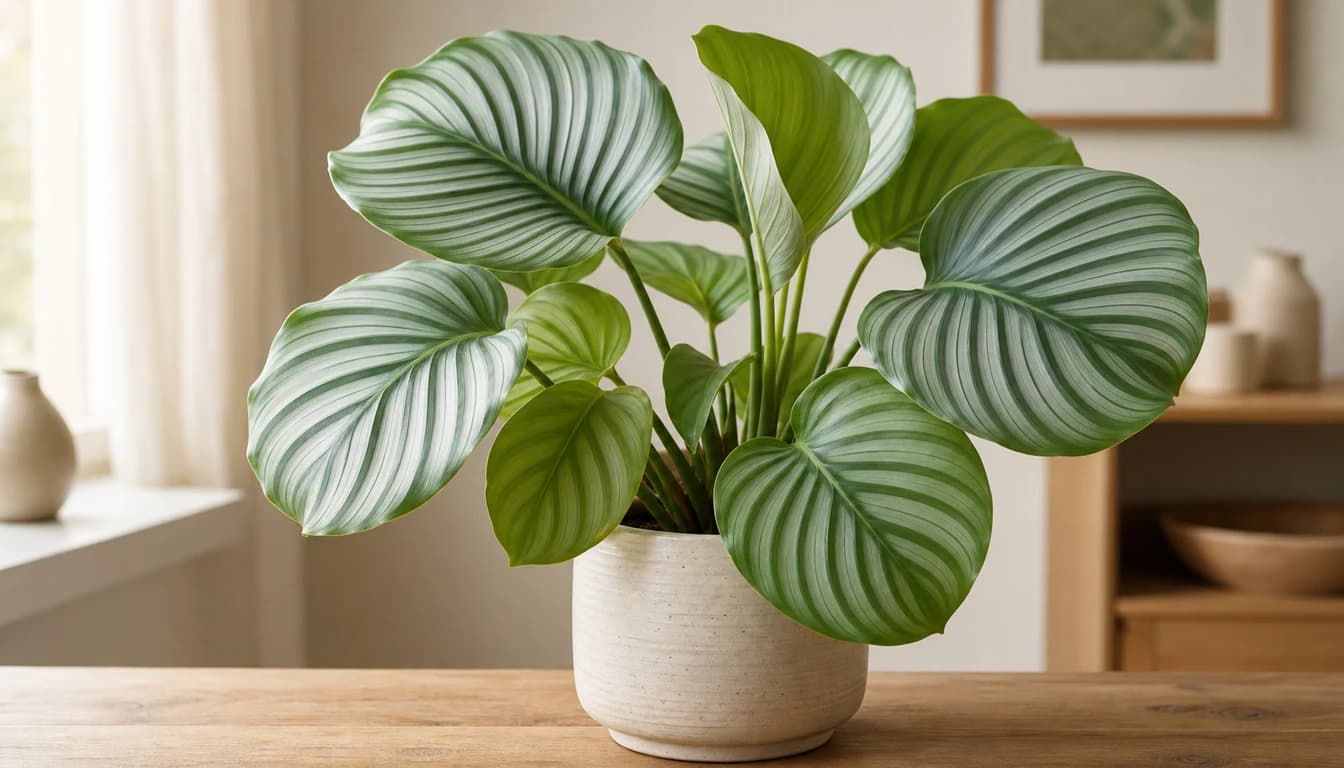
Calathea Orbifolia
Calathea Orbifolia is grown for huge round leaves with soft silver striping, not for forgiving beginner care. It stays beautiful when light is gentle, water
 Houseplants
Philodendron Brasil
Philodendron Brasil is a heartleaf philodendron with lime and chartreuse streaks. Grow it for color on a forgiving vine, but keep enough light on the nodes
quiz
Frequently Asked Questions
Can I grow String of Pearls outside year-round?expand_more
You can grow String of Pearls outdoors year-round only in frost-free areas, usually Zone 10–12. In colder zones, treat it as a houseplant and move it inside before nights drop below 50°F to prevent cold damage.
Why are my String of Pearls beads shriveling?expand_more
Shriveled beads can mean either underwatering or root damage from past overwatering. Check the soil 2 inches down. If it is bone dry, water deeply. If it is still damp and beads are mushy near the base, suspect rot and improve drainage.
How fast does String of Pearls grow indoors?expand_more
In bright light with good soil and careful watering, String of Pearls can add 6–12 inches of trailing growth per year. Growth slows in winter and in low light, similar to other trailing houseplants like pothos kept away from windows.
Can I grow String of Pearls outside year round?expand_more
Only in warm climates like Zone 10-12 should String of Pearls stay outside all year, and even there it does best protected on a covered porch. Frost or a surprise cold snap can quickly turn the pearls mushy and brown.
Why are my String of Pearls cuttings shriveling instead of rooting?expand_more
Cuttings usually shrivel when the mix is too dry or the light is too intense while roots are forming. Keep new cuttings in bright, indirect light, use barely moist gritty soil, and follow moisture guidelines from watering succulents correctly.
How often should I fertilize String of Pearls?expand_more
Feed lightly during spring and summer, about once every 4-6 weeks with a diluted succulent fertilizer. Overfeeding causes weak, stretched growth, so follow product rates or choose gentle options listed in indoor plant fertilizer picks.
menu_book
Sources & References
- 1.Senecio rowleyanus, Missouri Botanical Garden Plant Finderopen_in_new
- 2.Succulent Houseplants, University of Illinois Extensionopen_in_new
- 3.Growing Succulents Indoors, Clemson Cooperative Extensionopen_in_new
- 4.Senecio rowleyanus, Missouri Botanical Garden Plant Finderopen_in_new
- 5.String-of-pearls care, University of Wisconsin-Madison Extensionopen_in_new
- 6.Toxic and Non-Toxic Plants List, ASPCAopen_in_new
- 7.Indoor Succulent Care, Clemson Cooperative Extensionopen_in_new