
How to Grow Christmas Cactus and Encourage Its Winter Buds
Schlumbergera × buckleyi Cactaceae
Christmas cactus has trailing, rounded stem segments and winter flowers. Cooler nights and seasonal darkness encourage buds, while steady moisture and conditions help them develop.
Care snapshot
Rounded Stem Segments Identify the Traditional Christmas Cactus
Christmas Cactus is Schlumbergera × buckleyi, a garden hybrid made from epiphytic cactus species of southeastern Brazil. Its ancestors grew on trees and rocks in humid forest shade rather than open desert soil.
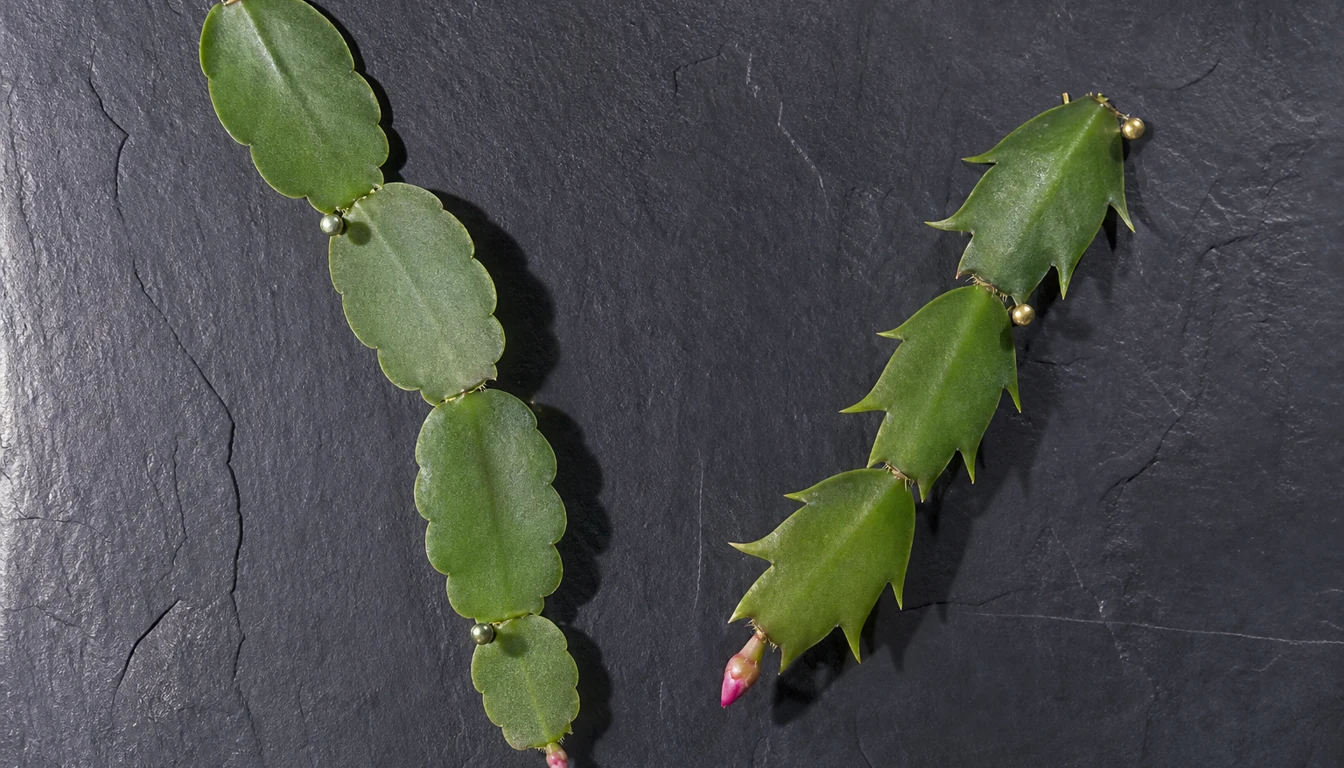
The green chains are flattened, leafless stem segments called cladodes. Each segment has shallow rounded notches, a spineless surface, and a terminal areole where the next segment or flower can form.
Those rounded margins separate the traditional plant from Thanksgiving cactus, Schlumbergera truncata, whose edges form pointed claws even though retail labels often use the same common name for both. Modern holiday-cactus hybrids can have intermediate traits, so segment shape is a useful clue rather than proof of a cultivar.
- Segment edge
- Christmas is rounded, while Thanksgiving has pointed claws
- Stem posture
- Christmas chains arch down as they lengthen
- Flower posture
- Christmas flowers hang more clearly below the tip
- Usual display
- Christmas commonly opens from December into February
- Store supply
- Thanksgiving types are sold more often before the holidays
Filtered light and an airy root zone follow from that forest ancestry. Strong midday sun can yellow or scorch the succulent segments, while permanently wet compost removes oxygen from the fine roots.
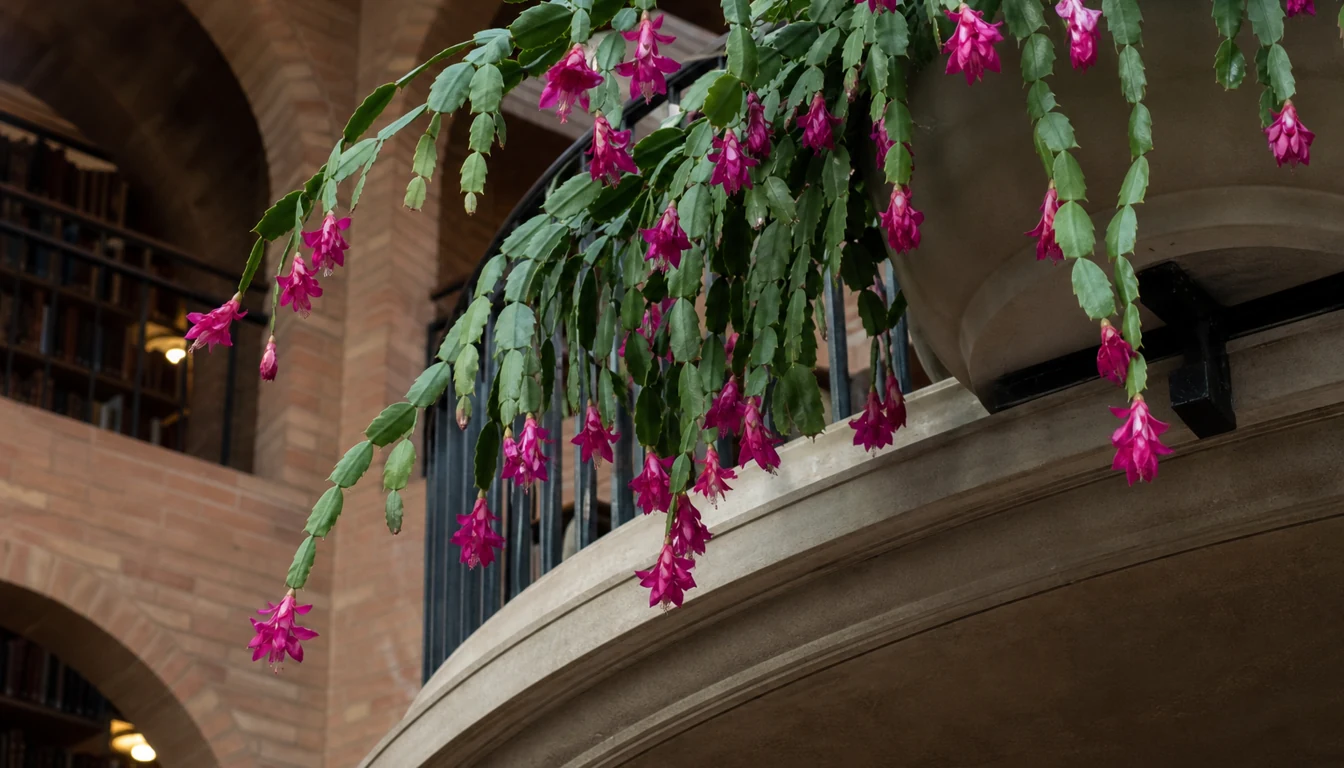
Young stems begin upright, then branch and trail as their chains lengthen. A mature plant can reach about one to two feet high and wide, with pink or magenta flowers hanging from the terminal tips in winter.
Healthy Branch Tips Provide Potential Flower Sites
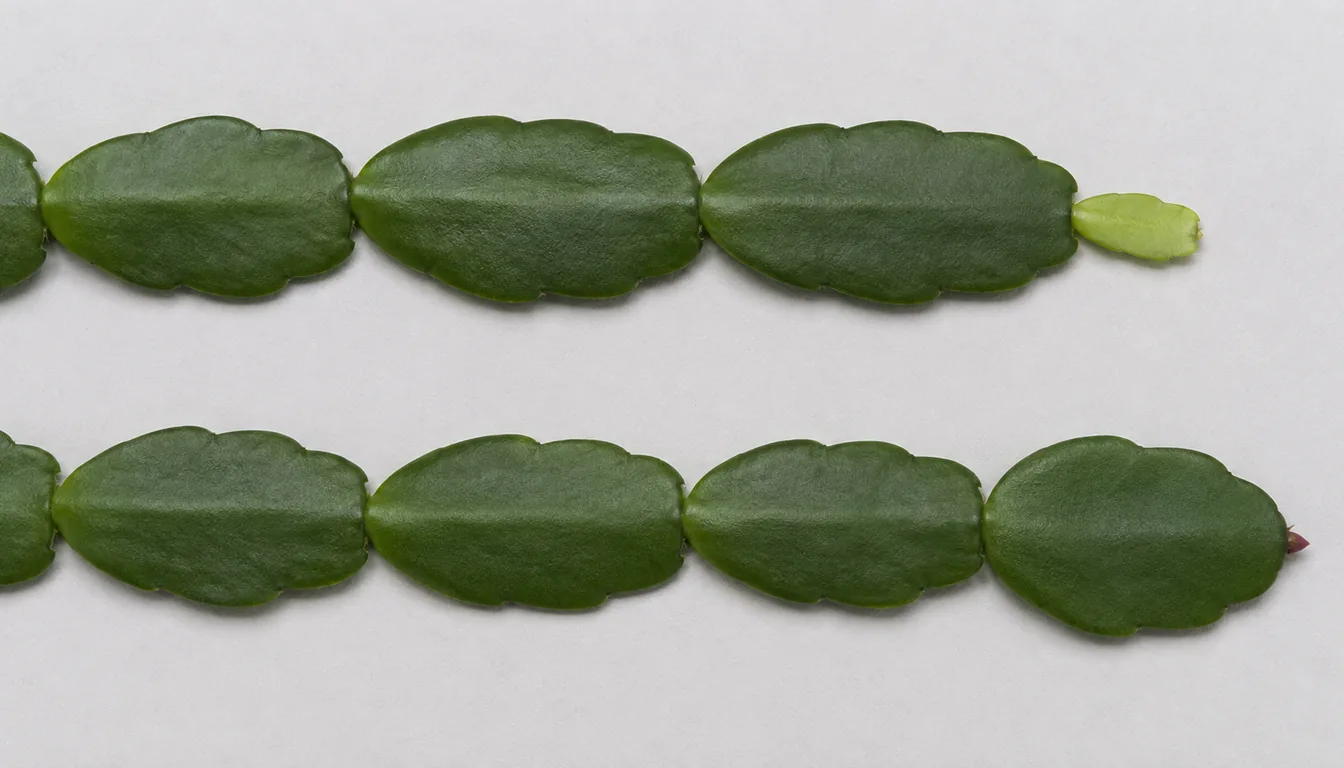
Every healthy terminal tip is a possible flower site, so branch count matters more than one exceptionally long chain.
More branches provide more terminal flower sites, although branch count alone cannot predict bloom. Healthy growth and suitable temperature and light signals still matter. The cascade needs room so brittle joints do not rub against a wall or bear the pot’s weight.
Pruning after flowering can encourage branching. Removing selected tips leaves time for new stems to grow before the next bud-forming season.
New segments often start smaller and paler before expanding. Comparing tips helps distinguish fresh growth from a developing flower bud, but firmness alone does not prove that a tip will flower.
Cooler Nights and Seasonal Darkness Work Together
Christmas cactus responds to both temperature and night length. A plant in a warm room may need a different light routine from one in a cool room, and modern hybrids do not all respond identically.
- Cool nights near 55°F
- UMN reports that some Christmas and Thanksgiving cacti can flower under these conditions regardless of day length.
- Nights around 60–65°F
- UMN describes at least 12 hours of complete darkness nightly for about six weeks.
- Cultivar variation
- Iowa State describes 14–16-hour nights for most holiday cacti, with some responding to 12 hours.
Temperature and cultivar help explain why flowering advice gives different night lengths. A cool location with bright filtered daytime light and reliably dark nights is a practical starting point. Room lamps and streetlights can interrupt the night signal, so a suitable location also needs protection from evening lighting.
The seasonal care pattern matters more than starting on a fixed September date. Bud development, room temperature, and local season are more informative than the holiday printed on a nursery label.
During this cooler period, water use often slows. Allow the upper layer of mix to dry while retaining some moisture deeper down. Reduced watering should not turn into prolonged drying of the whole root ball.
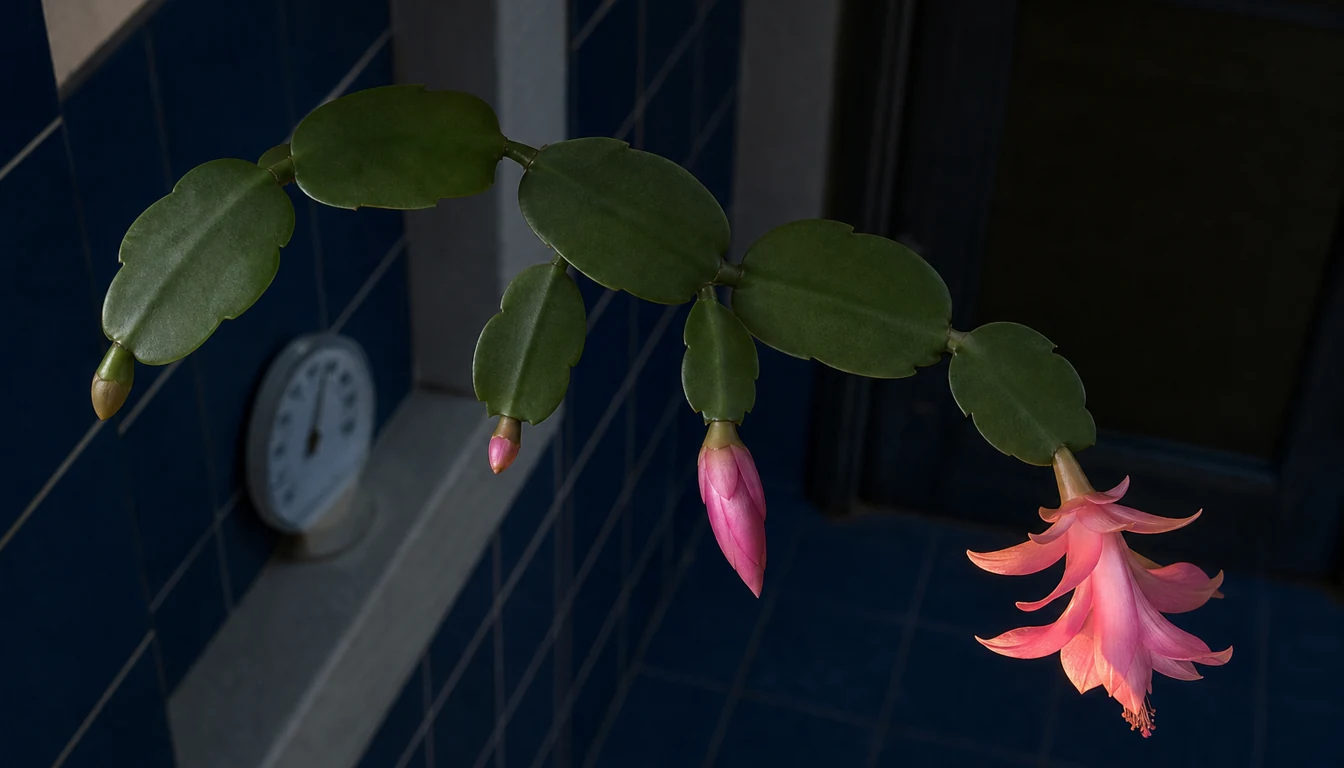
When buds appear, maintain even moisture and avoid abrupt changes in light, heat, or humidity. A location that can support both bud development and flowering avoids repeated moves between a cool room and a hot display area. If a move is necessary, keep the new conditions as similar as practical.
After flowering, reduce watering as growth slows. Regular watering and feeding resume with active growth, rather than because a fixed date has arrived.
Why Christmas Cactus Buds Drop After They Form
Bud drop can follow changes in temperature, light, or root moisture. Reviewing recent conditions helps identify a plausible stress, but a fallen bud does not reveal its cause by itself.
A move from a cool room to a heater can increase both warmth and water loss. Cold drafts, excessive drying, and saturated mix are other possibilities. Some plants also shed more buds than they can support.
Changed location
- Different light exposure or temperature
- New proximity to a heater or door
- A possible stress, not a diagnosis from a dust ring
Warm air
- Air from a vent or radiator reaches the plant
- Mix dries more quickly than before
- Check the actual room conditions
Dry roots
- Pot is unusually light and mix is dry
- Segments may wrinkle
- Rewet the dry mix evenly and drain
Wet roots
- Mix remains wet and heavy
- Wilting despite available water
- Check drainage and root condition before watering again
Pot weight and the condition of the mix help separate thirst from impaired roots. Wrinkled stems can occur in either case because a damaged root system may not supply water even when the pot is wet.
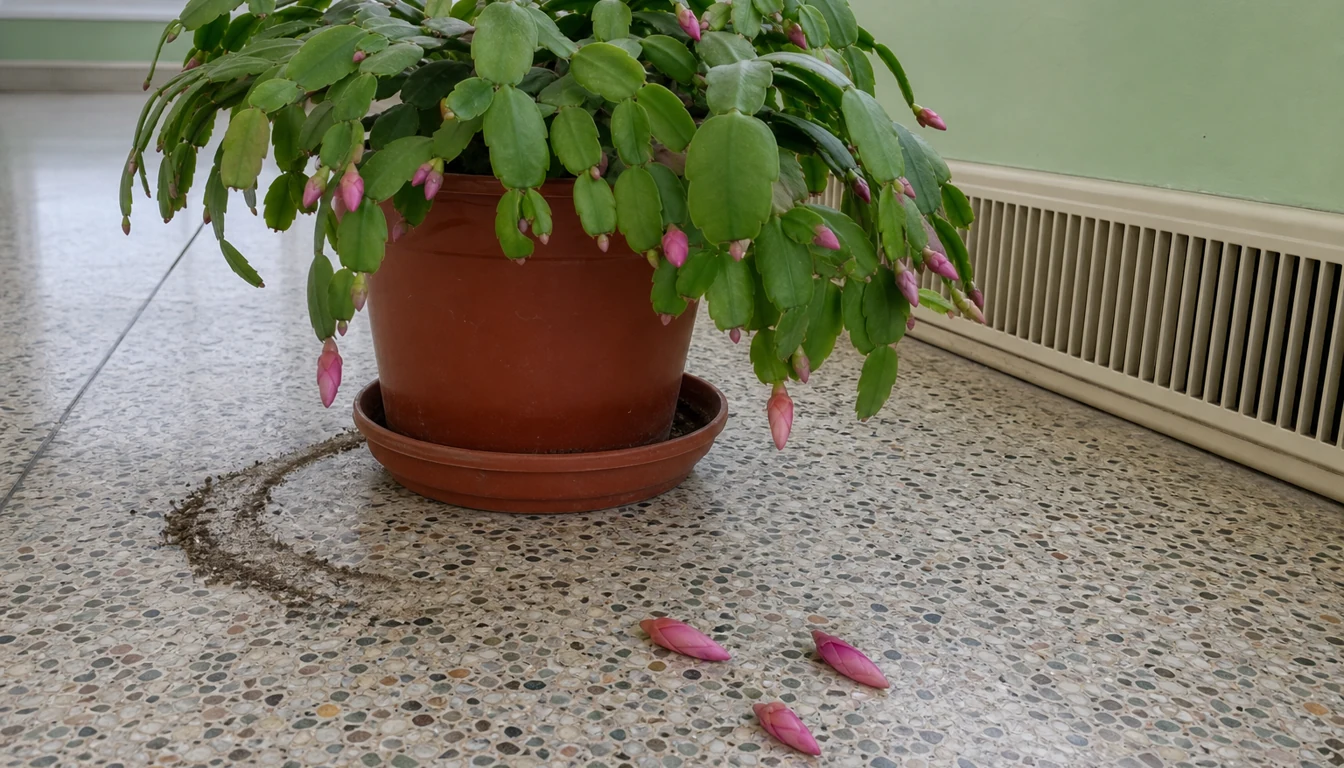
Extra fertilizer is not a remedy for unexplained bud drop. Resolving a moisture or temperature problem comes before increasing feeding.
Leave the remaining buds in one position with filtered light, moderate warmth, and even moisture. Remove dropped flowers from the compost surface so decaying tissue does not remain around the crown.
Rainforest Roots Need Moisture and Air Together
This rainforest epiphyte needs different watering from a desert barrel cactus. During active growth, the root zone stays moderately moist while excess water drains away.
Check the upper mix and pot weight before watering, then wet the root ball evenly and let excess water drain. Water remaining in a saucer or decorative outer pot can keep the lower mix saturated.
- Active growth
- Water as the upper layer begins drying
- Autumn rest
- Let the upper layer dry somewhat; retain moisture deeper down
- Visible buds
- Restore even moisture without saturating the base
- After flowering
- Water less often as growth slows, without prolonged whole-pot drought
A potting mix that retains moisture and drains freely fits these forest roots. A cactus-labeled mix is not automatically required, and dense garden soil is not equivalent to a prepared loam-based potting mix.
Repot after roots fill the current container, usually in early spring as growth resumes. Choose only a slightly wider pot with an open drainage hole because excess unused mix stays wet around a small root system.
Twist Segments in Spring to Branch and Root Them
Healthy segments removed after flowering can become stem cuttings. Diseased or collapsing tissue is unsuitable starting material.
Choose two or three connected firm segments and twist at a natural joint. Keep track of the basal end because that joint enters the rooting mix.
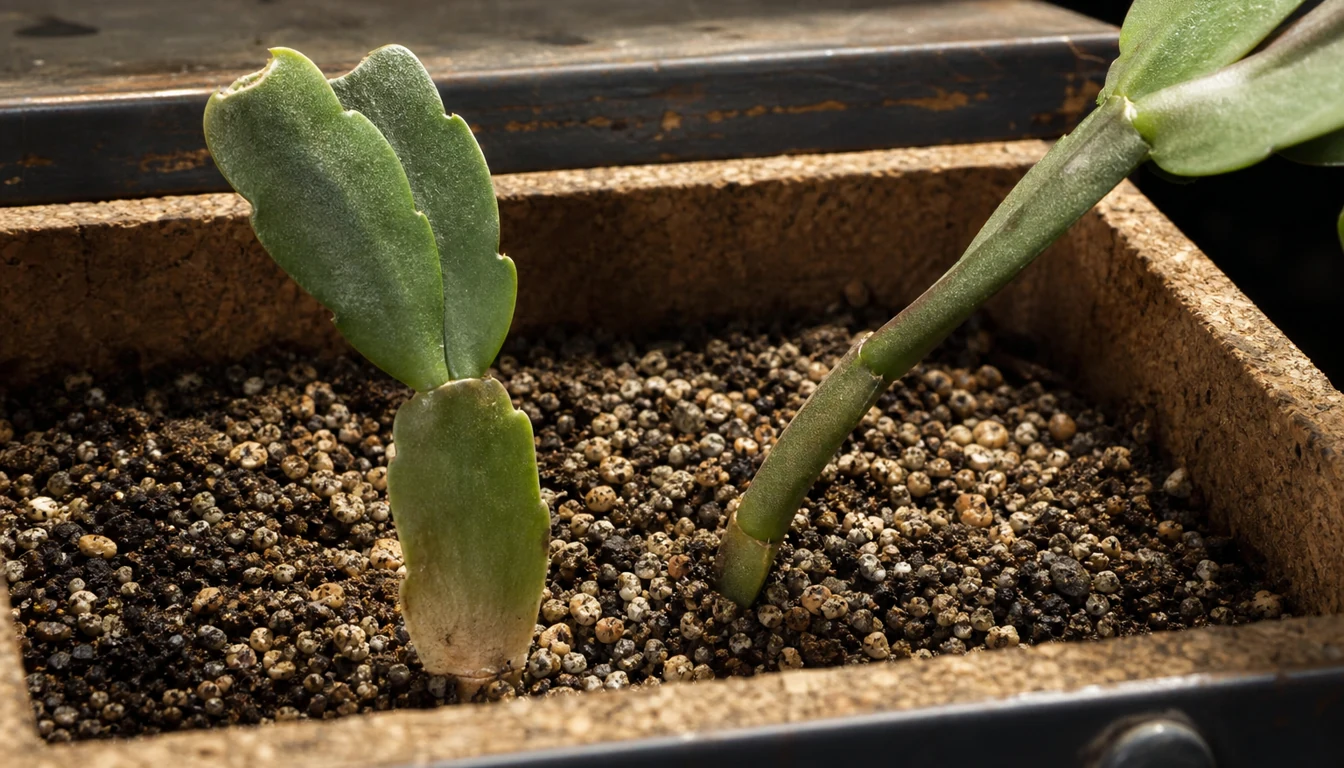
Allow the fresh cut end to dry before inserting it into the rooting mix. Drying the wound helps reduce decay risk, but its appearance cannot certify that the cutting is free of disease.
Set the basal joint shallowly in lightly moist gritty compost under bright filtered light, keeping the small volume barely moist instead of repeatedly soaking it.
- Twist a firm two or three-segment chain cleanly at the joint.
- Dry the basal end until the fresh surface fully loses its shine.
- Insert that end shallowly into open, lightly moist gritty compost.
- Allow roots to develop before potting on. Check a cutting gently when necessary rather than repeatedly tugging it.
New growth and resistance can suggest establishment, but visible roots provide better confirmation. Rooting time varies with conditions. A small, gently lifted cutting can be checked without treating every new segment as proof of a complete root system.
Summer Growth Builds the Next Winter Display
Feeding supports active segment growth. A houseplant fertilizer used at its labeled rate and interval is more appropriate than feeding a stressed plant or following the same schedule through a cool rest.
A warm sheltered outdoor position in bright shade can strengthen summer growth. Protect the chains from full sun, wind, slugs, and snails, then inspect every joint before bringing the pot back indoors.
A sheltered outdoor stay ends before nights fall below 50°F, following the RHS precaution for these frost-tender plants. A cooler indoor location can then support bud initiation without exposure to frost.
Read summer progress at the tips rather than by total plant height. New segments begin tender and lighter green, then firm and deepen in color as they mature.
If growth was weak, light, root health, and feeding are worth reviewing before trying to force flowers. Plenty of firm tips provides potential flower sites, while the temperature and night-length signals determine whether buds develop.
Inspect the Segment Joint Before Treating Damage
Segment joints can hide pests, while damaged tissue can resemble other problems. A close look with good light helps separate an insect from a normal areole or a soft lesion before treatment.
Mealybug wax can appear cottony, and scale may form attached bumps with sticky residue. Firm, corky tissue at the base can also be normal aging. Brown color alone is not a reason to cut into the plant.
Cotton
- White wax hides in joints
- Material lifts from the stem
- New joints may distort
- Isolate and clean visible insects
Brown bumps
- Scale remains firmly attached
- Sticky residue may appear below
- Check nearby chains
Fine stippling
- Surface loses even green color
- Webbing may cross joints
- Damage spreads across exposed surfaces
- Dry rooms speed the outbreak
- Inspect for spider mites
Soft dark joint
- Soft or wet tissue near the mix
- An expanding lesion rather than firm corky bark
- Isolate and assess disease before attempting salvage
Fine pale stippling and webbing point toward spider mites, so isolate the plant before cleaning and prevent movement into neighboring foliage.
Wet, slimy lesions spreading upward from the soil line can indicate serious stem disease. UMN advises discarding plants with diagnosed bacterial soft rot and some other stem rots. A generic trim-and-repot routine is not a reliable cure. Isolate a suspect plant, avoid sharing splash water or cuttings, and seek local Extension diagnosis when the cause is unclear.
Is Christmas Cactus Safe Around Cats and Dogs?
ASPCA lists Christmas cactus under the older name Schlumbergera bridgesii as non-toxic to cats, dogs, and horses. Iowa State identifies that name with the traditional Schlumbergera × buckleyi hybrid.
The listing does not make stems pet food or establish the safety of sprays and fertilizer in the pot. Eating plant material can still cause digestive upset.
If a pet develops symptoms or the plant or treatment is uncertain, contact a veterinarian for advice. A photograph or label can help identify the exposure without delaying that call.
Sources & References
Related Plants
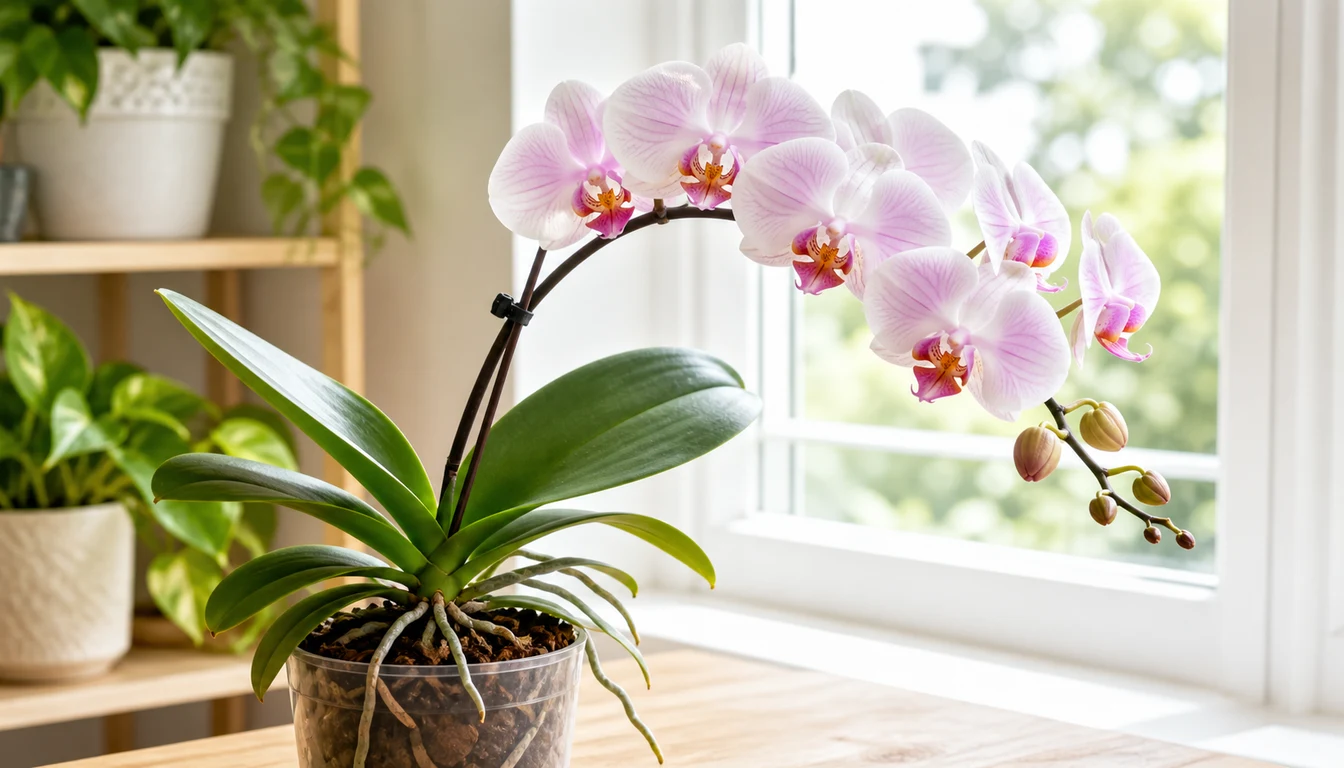
Phalaenopsis Orchid
Another epiphyte whose roots need air and whose flower display depends on steady indoor conditions.
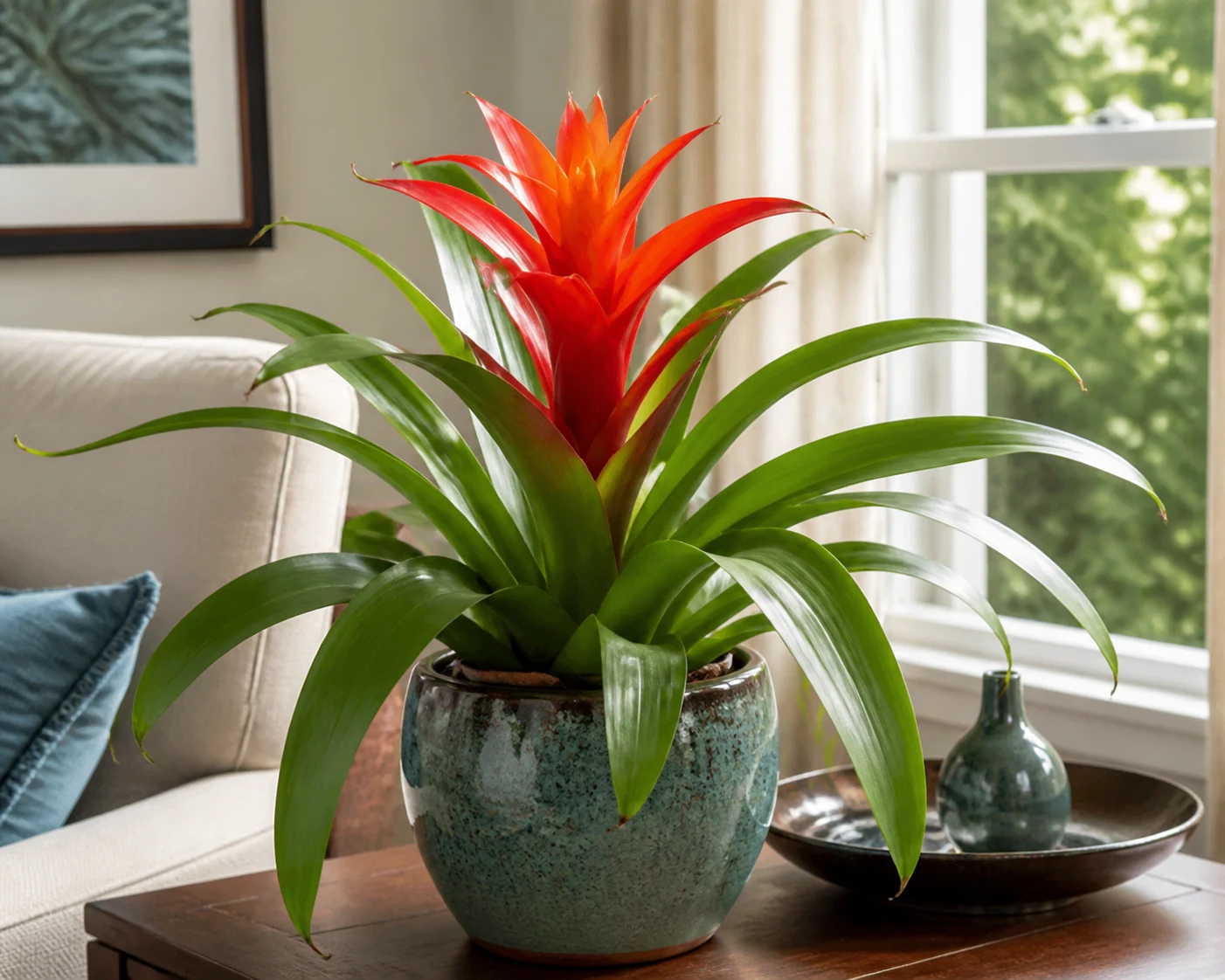
Bromeliad Houseplants
Tropical color rises from a central rosette instead of hanging from segmented stem tips.
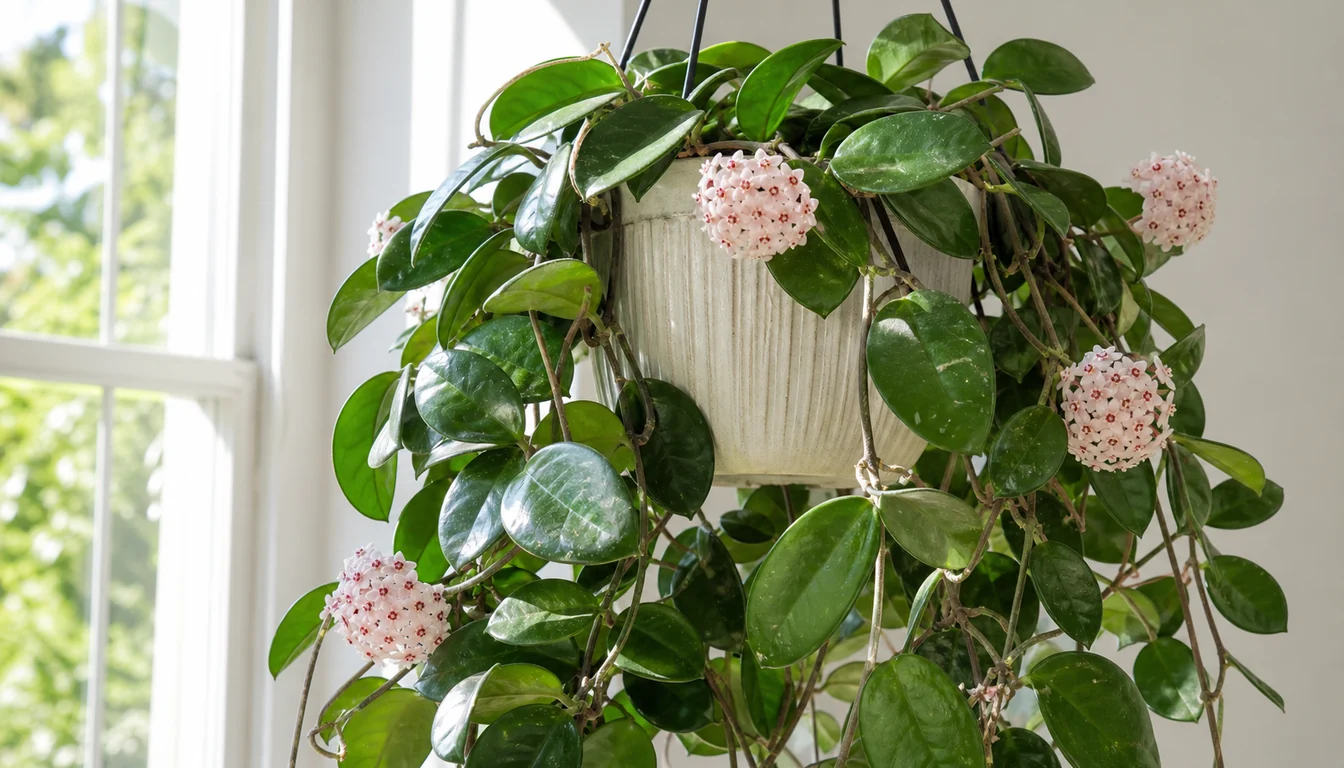
Hoya Carnosa
A longer waxy vine with clustered flowers suits bright rooms but follows a different bloom cycle.
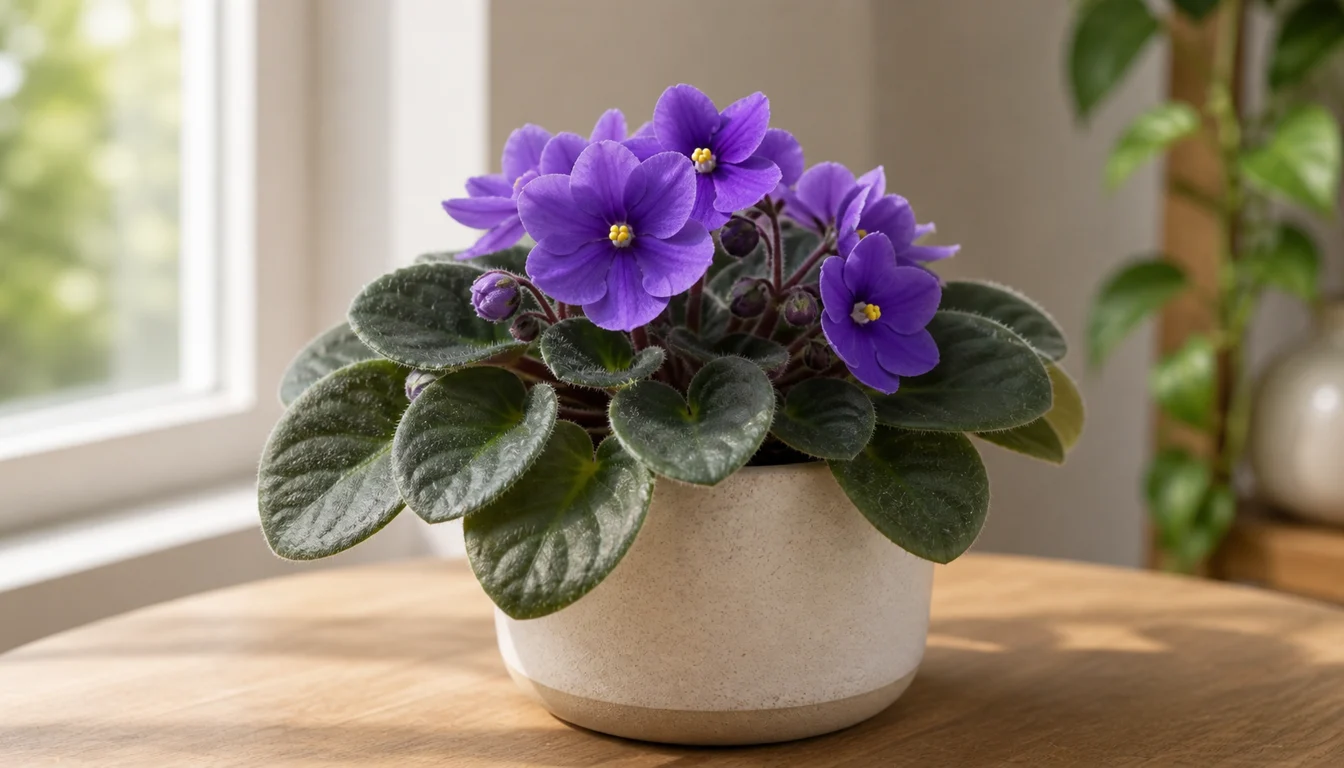
African Violet
African Violet is a windowsill bloomer that rewards steady, small-pot care.
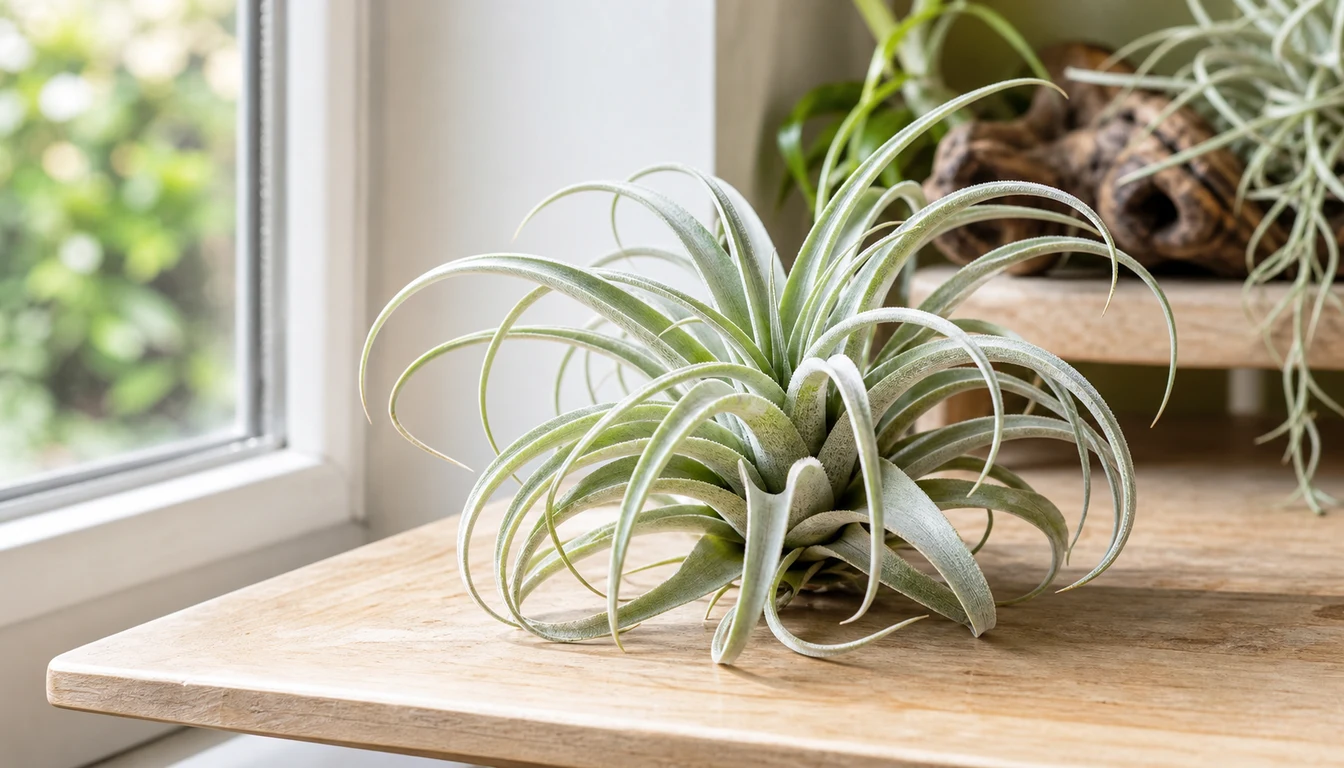
Air Plant
Air plants are living sculptures that thrive without soil, anchoring to driftwood, rocks, or shells while drawing…
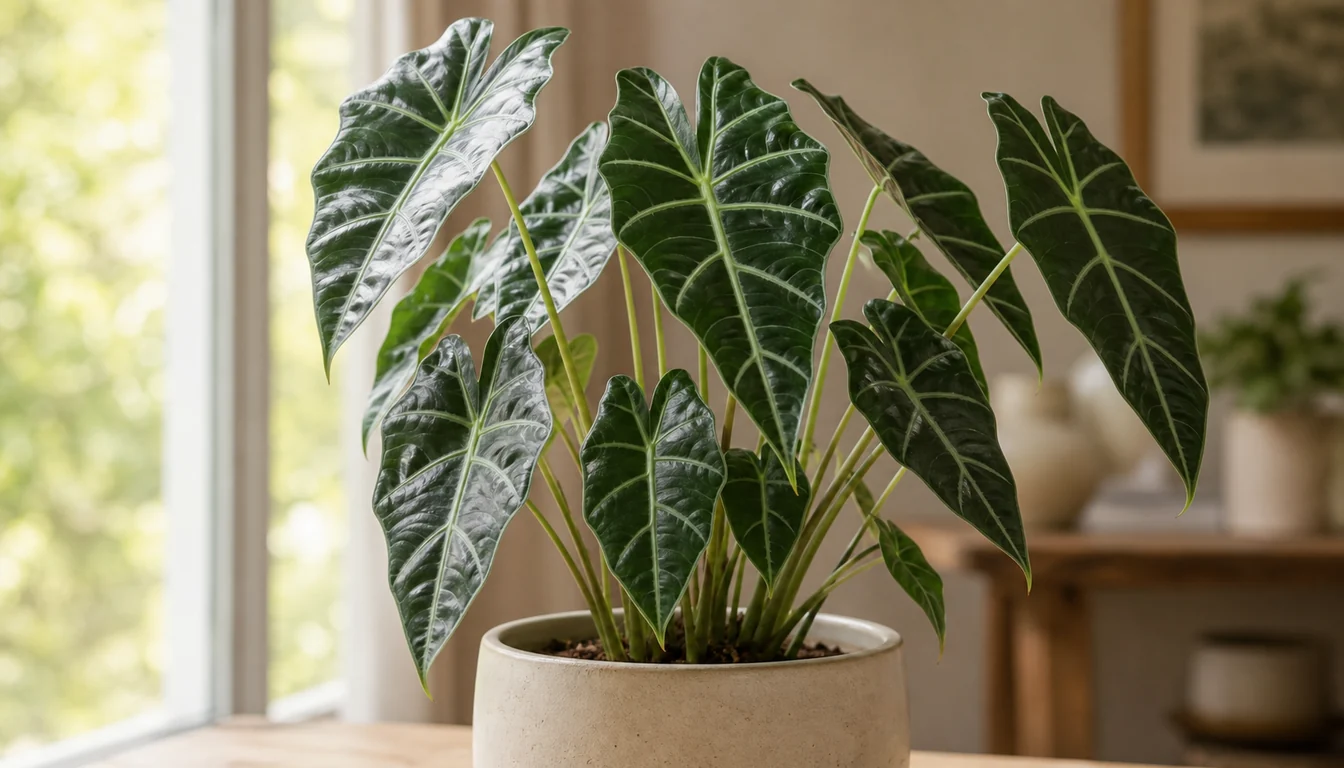
Alocasia
Alocasias include compact, textured houseplants and large elephant ears that need substantial floor space.