
What's a Satin Pothos? How to Keep Its Silver Markings Bright
Scindapsus pictus Araceae
Satin Pothos is a tropical Scindapsus vine with matte green leaves marked by irregular silver patches. Its newest leaves show whether light, moisture, and support are working.
Care snapshot
How Satin Pothos Differs From True Pothos
Satin Pothos is not a true pothos. It is Scindapsus pictus, a tropical evergreen climber in the aroid family, while the familiar Golden Pothos belongs to Epipremnum aureum.
The juvenile leaves give the clearest identification through matte green upper surfaces with irregular silver-gray blotches and paler undersides that lack the silver pattern.
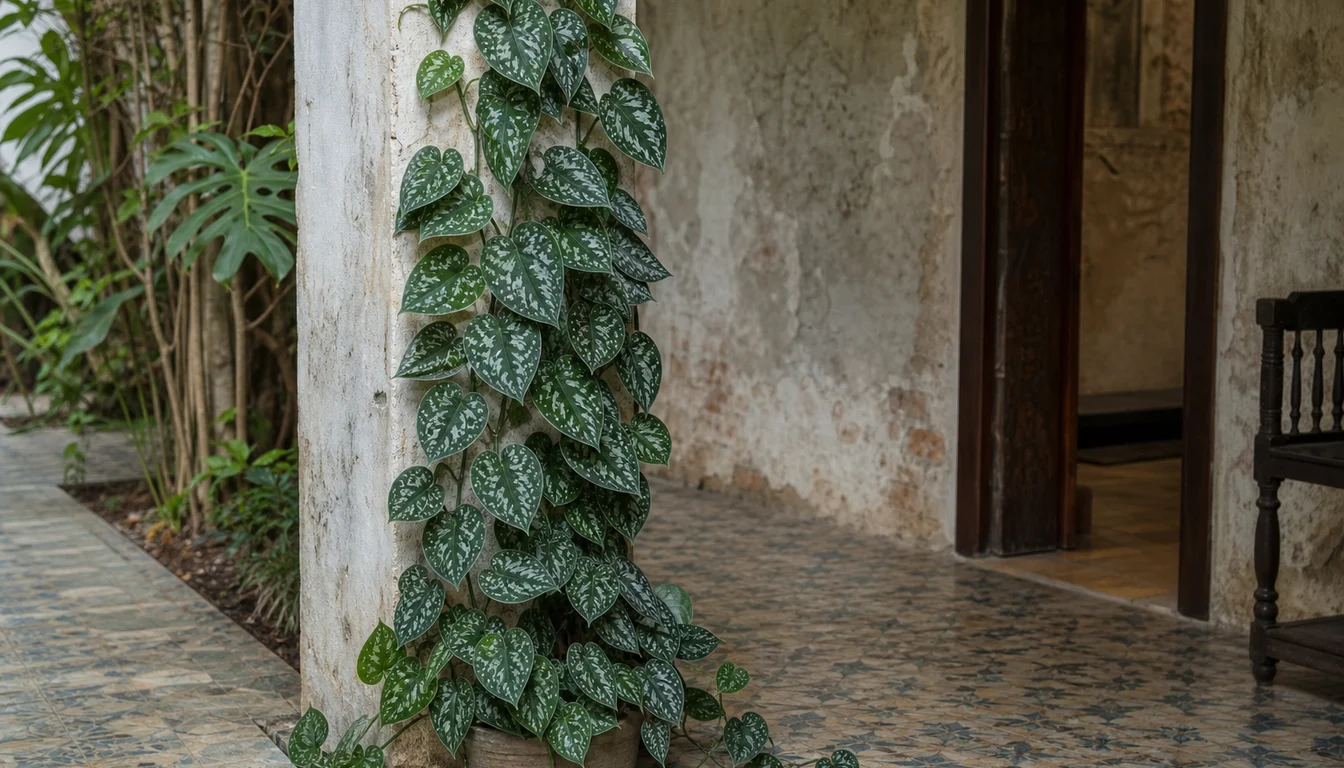
In wet tropical forest, the vine uses aerial rootlets to hold close to tree trunks, so a board or textured pole indoors matches its natural direction better than leaving every stem unsupported. That close contact also explains why an attached vine develops differently from one hanging loose.
Argyraeus
- Smaller leaves on compact vines
- Fine silver spots and edge marks
- Fits narrow shelves and small supports
Exotica
- Broader leaves with wide bases
- Large silver fields across the blade
- Needs room for the wider leaf spread
Silvery Ann
- Pattern varies strongly leaf to leaf
- Heavy silver coverage near the edges
- Inspect several stems before choosing
Most indoor plants stay in the compact silver juvenile stage sold in stores, while mature leaf changes, flowers, and berries remain rare enough indoors that cultivar choice should focus on foliage you can inspect now.
Scindapsus Treubii is the closest KTY lookalike, but its leaves are thicker and usually read as broad silver-blue or very dark panels rather than scattered metallic blotches. Compare the leaf surface before using growth speed or price as an identification clue.
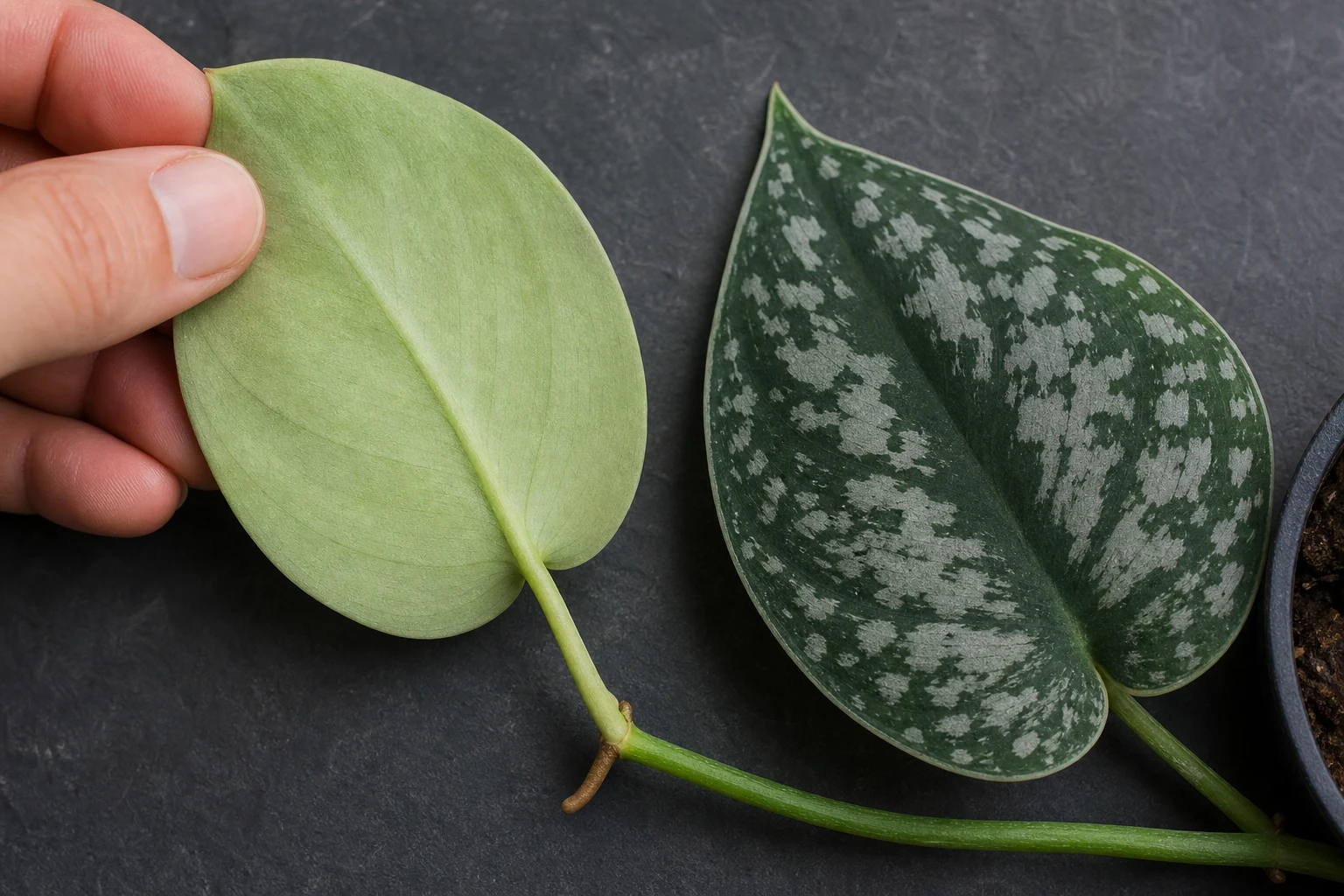
The difference that matters at the till is not botanical. Scindapsus is more prone to pests and disease than true pothos and less tolerant of overwatering, so a plant bought on the strength of a pothos reputation arrives harder than expected.
It also grows much more slowly, on broader leaves. A satin pothos that seems to be doing nothing for a month is often behaving normally rather than sulking.
Use New Leaves to Judge the Light
Bright indirect light gives Satin Pothos enough energy to make compact growth with clear silver contrast. Judge the placement by the newest two leaves because old leaves will not repaint themselves after the pot moves.
A dim position usually produces slower growth, wider gaps between nodes, and smaller new leaves, while direct hot sun can leave dry tan patches that face the window.
Move the plant closer to filtered light when each new leaf is smaller than the last. Pull it back when damage appears only on the brightest side, and rotate the pot when one vine grows strongly while the shaded side stalls.
- Small dark new leaves and long gaps mean the position is too dim.
- Even silver and compact node spacing mean the placement is working.
- Papery window-side patches mean the direct light is too harsh.
- One-sided growth calls for rotation before another major move.
Give a new placement enough time to produce another leaf before moving the pot again. The next opening leaf and its internode length provide cleaner evidence than daily changes in how the older silver catches the room light.
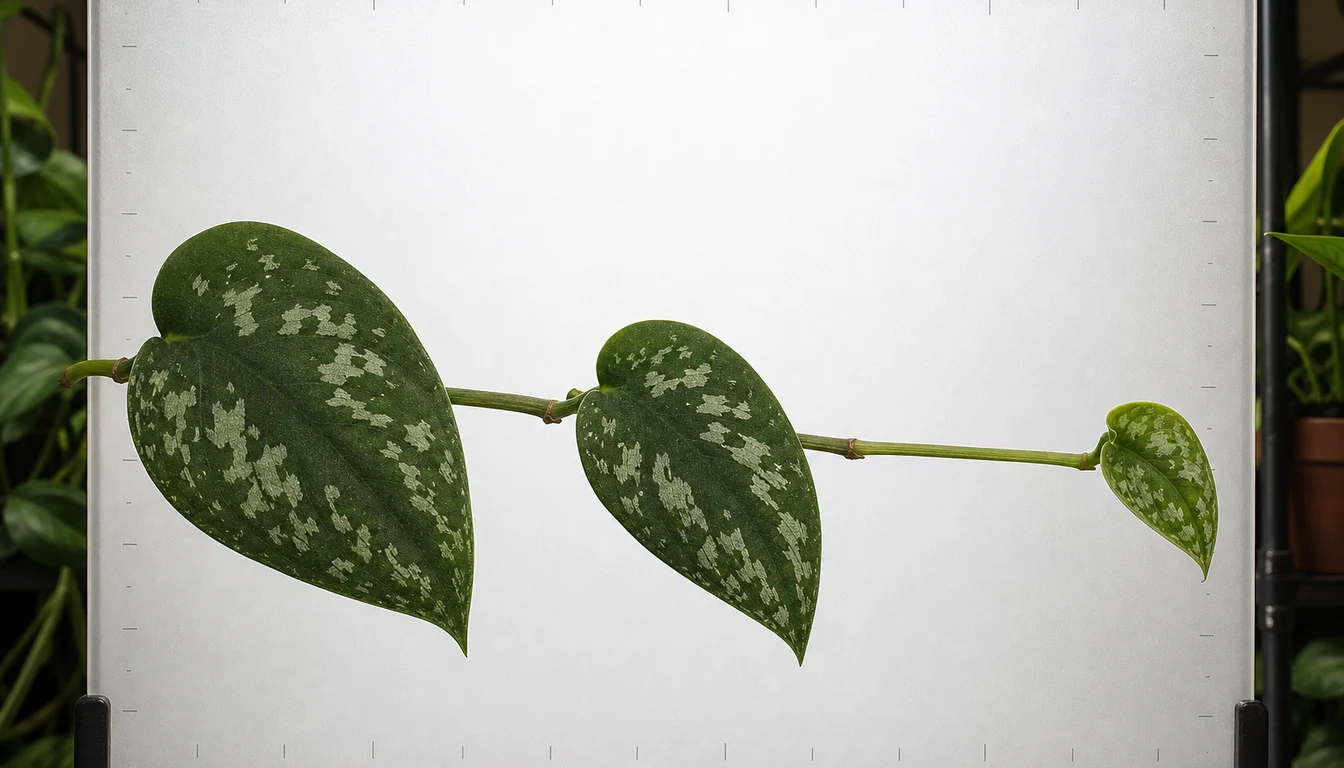
Direct sun is outside the range rather than at the top of it. Bright indirect light is what the plant is built for, and neither direct sunlight nor cool air is tolerated.
Why Curling Leaves Need a Pot Check First
A curled leaf tells you that water movement is wrong, but it does not prove the pot is dry. Satin Pothos may curl after a long dry-down, yet damaged roots in wet mix can also fail to supply the leaf.
Before reaching for the watering can, lift the pot, feel the upper mix, and check whether a light dry root ball supports thirst or a heavy pot with yellowing leaves points toward drainage trouble.
When the root ball is genuinely dry, water across the whole surface until excess drains freely. Empty the saucer, then wait for the upper layer to dry again instead of giving small sips that leave part of the root ball untouched.
Persistent curl in damp mix calls for a root check, removal of soft brown roots, an airy organic mix, and a pot only slightly wider than the healthy root mass.
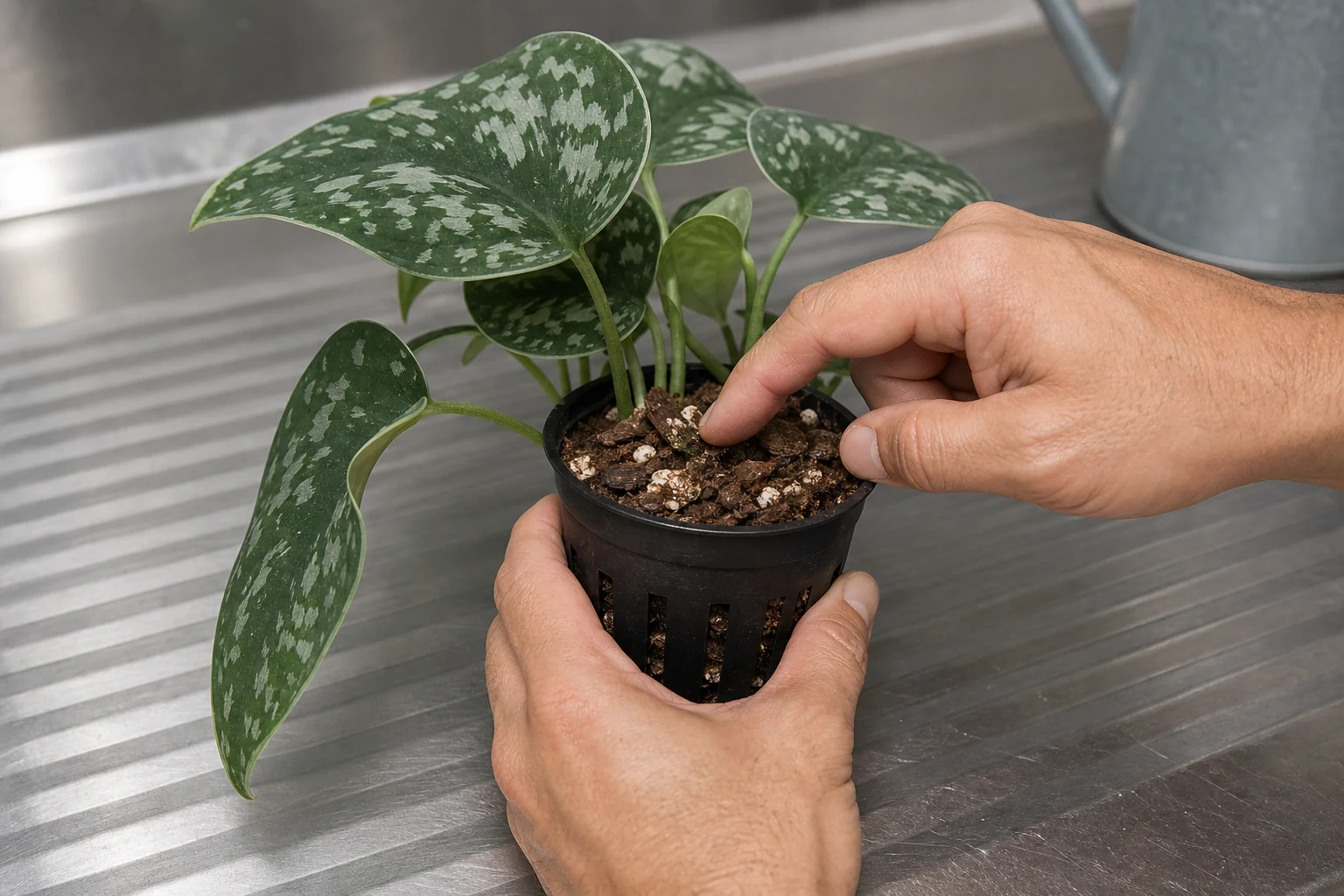
Potting mix can change the answer as it ages. Bark pieces shrink and fine material settles between them, so a mix that once drained quickly may stay wet around the center even when the surface looks dry.
Let It Climb When You Want Larger Leaves
Satin Pothos is built to climb, although a hanging basket keeps it attractive in its juvenile form. Indoor stems commonly reach several feet, and support can encourage tighter attachment and larger leaves when light and moisture remain steady.
- Trail
- Show many small leaves along a shelf edge
- Climb
- Encourage attached growth and larger new leaves
- Pin
- Root healthy nodes into bare crown space
Choose a hanging pot for a soft curtain of silver leaves, or use a cork board, plank, or textured pole when the display should move upward and each node can touch the support.
Pin a flexible node onto the potting mix when the crown looks empty but the vine remains healthy. That node can root beside the mother plant, while a long buried section would hold too much wet stem against the soil.
Fasten a climbing stem loosely across the internode so the next leaf and petiole can move freely, then remove or widen the tie before it presses into the thickening vine. A tie across the petiole can distort the leaf before it opens.
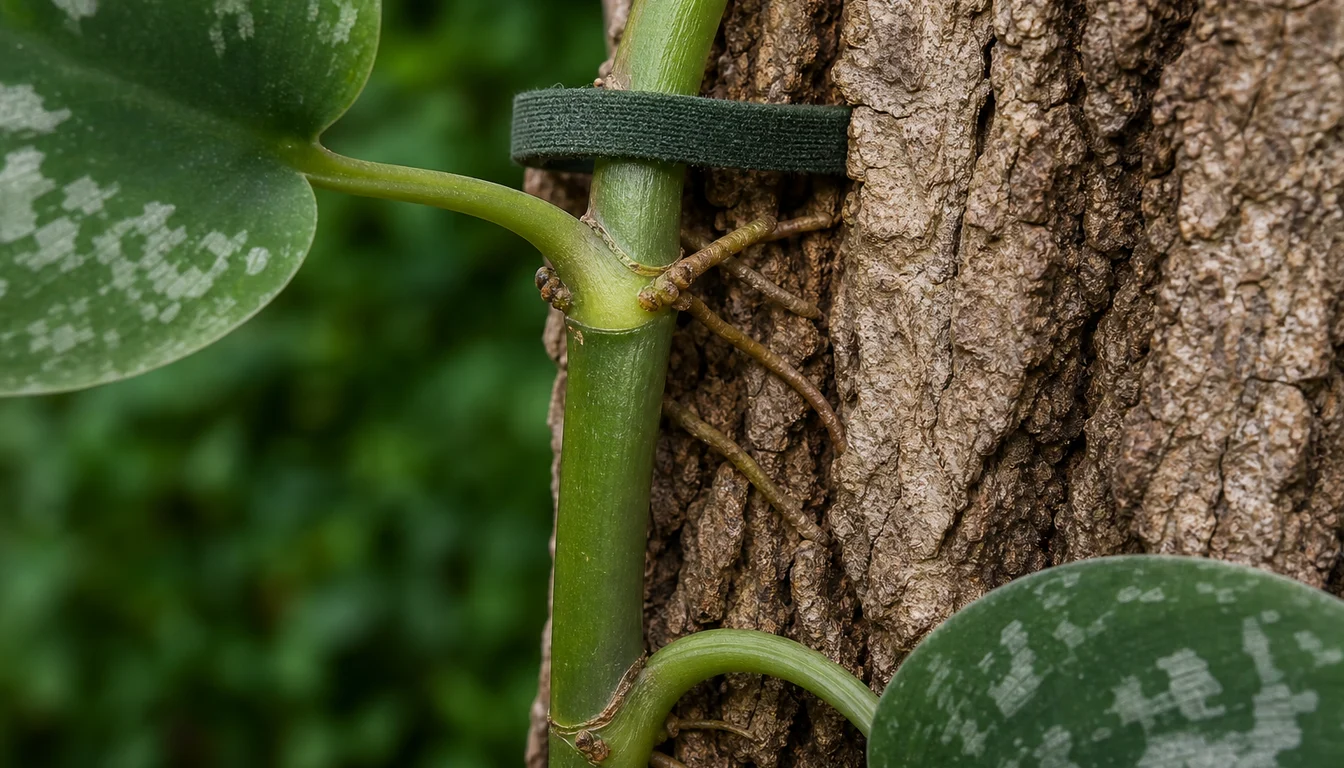
Root the Node, Then Rebuild the Pot
Every useful Satin Pothos cutting needs a node, the small joint where a leaf and aerial root point meet the stem. A detached leaf may stay green for a while, but it has no growing point to rebuild the vine.
Place short cuttings with one or two leaves against moist perlite, chopped sphagnum, or another airy rooting medium where warmth and bright filtered light support the node without burying the leaf blade.
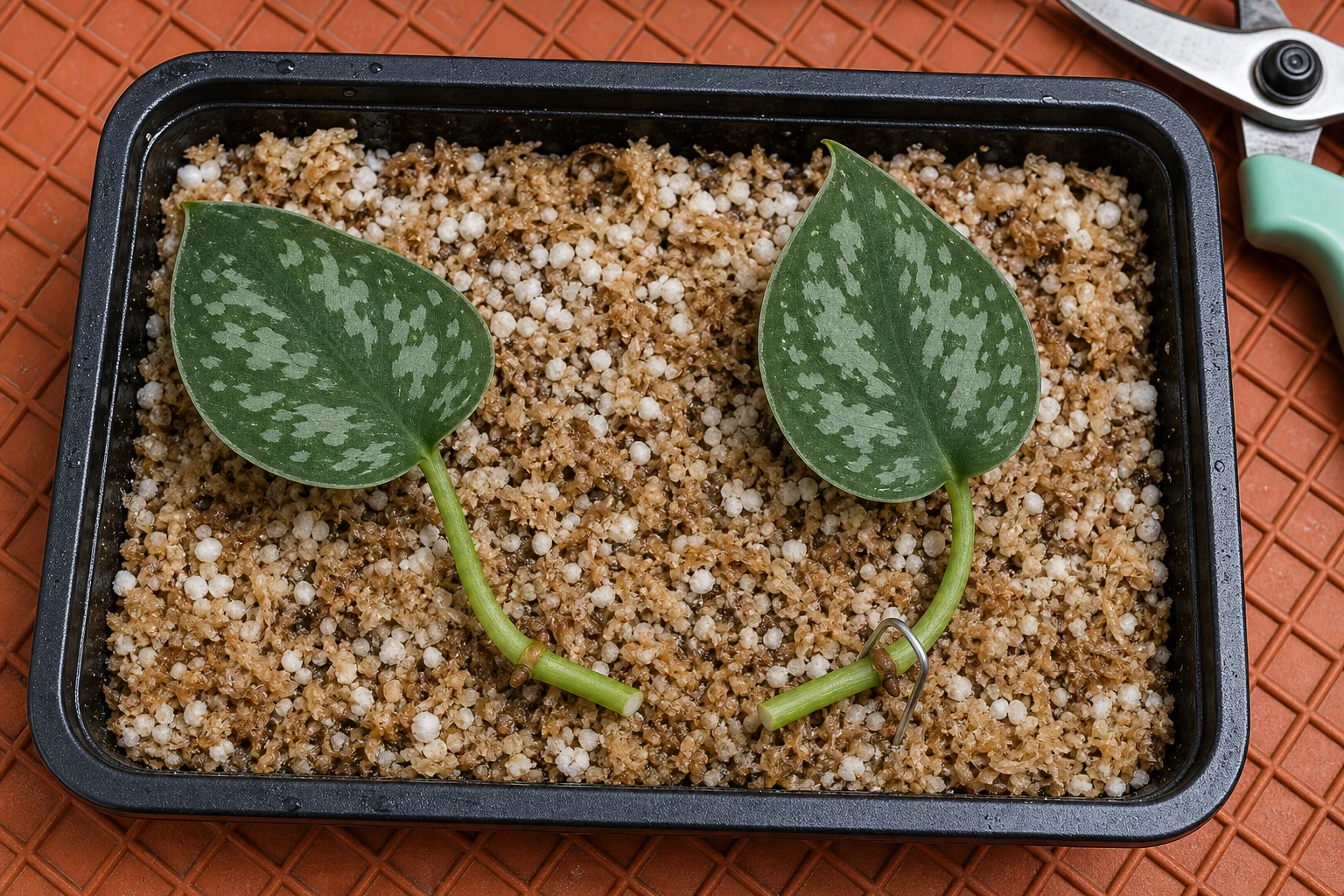
Pot the cutting after it has several branching roots that can hold a small plug of mix together. Moving a cutting with one fragile root too early makes moisture control harder because the new pot stays wet longer than the tiny root system can use.
Place several rooted pieces around the edge and crown of the original pot to rebuild density where old stems became bare and keep the display connected to the mother vine.
- Cut below a firm node with a clean blade and keep the leaf attached.
- Set the node on an airy, evenly moist medium without burying the blade.
- Wait for several branching roots that hold a small plug together.
- Space rooted pieces around the crown so new shoots cover bare soil.
Leave a few healthy leaves on every pruned mother stem so the original root system still has working foliage. Returned cuttings fill the pot later, while those retained leaves support recovery immediately after the trim.
Warmth Sets the Pace for Feeding
Room temperatures from 65 to 85°F suit active Satin Pothos growth, and foliage may suffer below 60°F. Outdoor planting is limited to frost-free Zones 11 and 12, so bring containers inside before cool nights reach that lower boundary.
Feed lightly about once a month only while the vine is making new leaves. Pause when cool temperatures and dim winter light slow growth because unused fertilizer will not correct a light or root problem.
Move an indoor vine outside only after nights remain warm, then introduce partial shade gradually and keep the container where heavy rain cannot leave the root ball saturated. Reverse the move before temperatures approach 60°F.
Room temperatures of 65 to 85F suit it best. Below that the growth stalls, and a plant that has stopped in a cold room will not answer more feeding.
Read Silver Leaf Damage by Its Pattern
The silver pattern can hide damage because a healthy leaf already contains pale irregular marks. Start with the location, texture, and rate of change instead of treating every light patch as a pest or disease.
Dull film
- Wipes away with a damp cloth
- Check ordinary room dust first
- Clean only one test leaf
Fine stippling
- Fine pale dots do not wipe away
- Inspect undersides for mites or webbing
- Compare the newest nearby leaf
Tan dry patch
- Usually faces the strongest light
- Check for dry papery sun injury
- Move the pot behind filtered light
Spreading spot
- Expands while foliage stays humid
- Isolate before trimming affected tissue
- Keep watering off remaining leaves
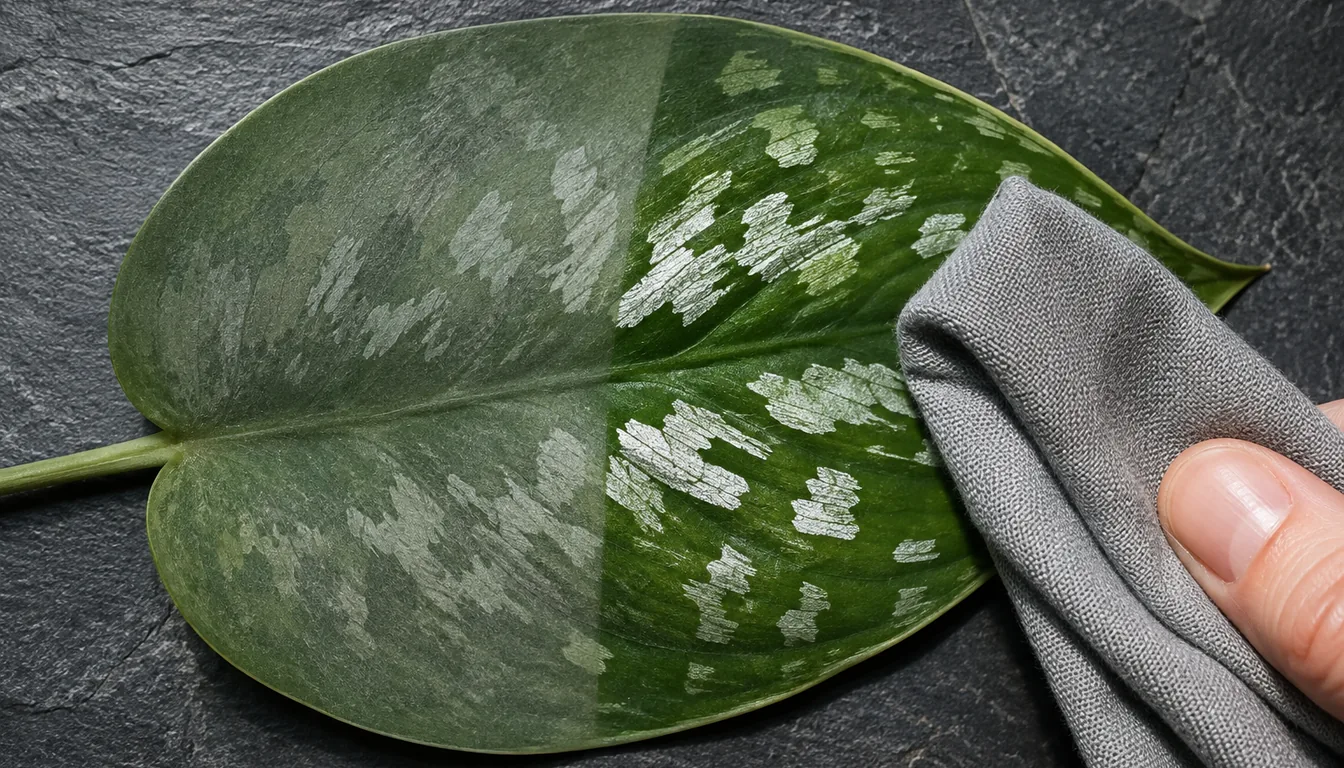
Dust lifts with a barely damp soft cloth while natural silver stays within the leaf, so test one small area gently before cleaning the rest of the vine.
Pest damage has its own evidence. Mites leave fine stippling and may produce webbing, scale forms attached bumps on stems, and mealybugs or thrips often reveal themselves around nodes and tender new growth.
Fungal leaf spot and botrytis become more plausible when marks spread across foliage that stays wet, which calls for removal of badly affected material, better spacing, and routine watering kept off the leaves.
Yellow leaves without a clear surface pattern send the diagnosis back to the pot. Check moisture, drainage, and root firmness before adding pesticide or fertilizer because wet-root stress can weaken the whole vine without leaving a pest trail.
Move a suspect plant away from the collection before treatment and inspect several leaves and nodes under bright light because repeated fresh damage, unlike one old mark, identifies a problem that remains active.
When most roots are soft but several upper nodes remain firm, clean cuttings may save the plant more reliably than keeping the failing root ball. Discard any stem section that is soft, dark, or foul-smelling.
Keep Trailing Stems Above Pet Reach
Satin Pothos contains insoluble calcium oxalate crystals and is toxic to cats and dogs. Chewing can cause mouth irritation, swelling, drooling, vomiting, and difficulty swallowing.
A high pot is not enough when stems trail down to floor level, so trim accessible vines, collect fallen leaves, and clear every fresh propagation piece from tables a pet can reach.
If a pet chews the plant and develops drooling, mouth swelling, vomiting, or trouble swallowing, contact a veterinarian promptly and identify the plant as Scindapsus pictus. Bring a photo or plant label if one is available.
The mechanism is worth knowing because it sets the timing. Insoluble calcium oxalate crystals cause oral irritation with pain and swelling of the mouth, tongue and lips, along with heavy drooling, vomiting and difficulty swallowing.
Frequently Asked Questions
Can Satin Pothos live in low light?
It may persist in medium to low light, but new leaves often become smaller and growth slows. Brighter indirect light gives a better silver display.
Should I mist Satin Pothos leaves?
Misting does not replace root watering and can leave foliage wet, so use normal room humidity, open airflow, and a proper root-zone check.
Why does my Satin Pothos have one long bare vine?
Weak light or missed pruning can stretch the nodes and empty the crown. Root short node cuttings and return them to the mother pot.
Does Satin Pothos need a moss pole?
No, it can trail from a basket, but a textured support helps aerial rootlets attach and can encourage a larger upright display.
Is Satin Pothos safe for cats and dogs?
No, its insoluble calcium oxalate crystals can irritate the mouth if a pet chews the leaves or stems.
Sources & References
Related Plants
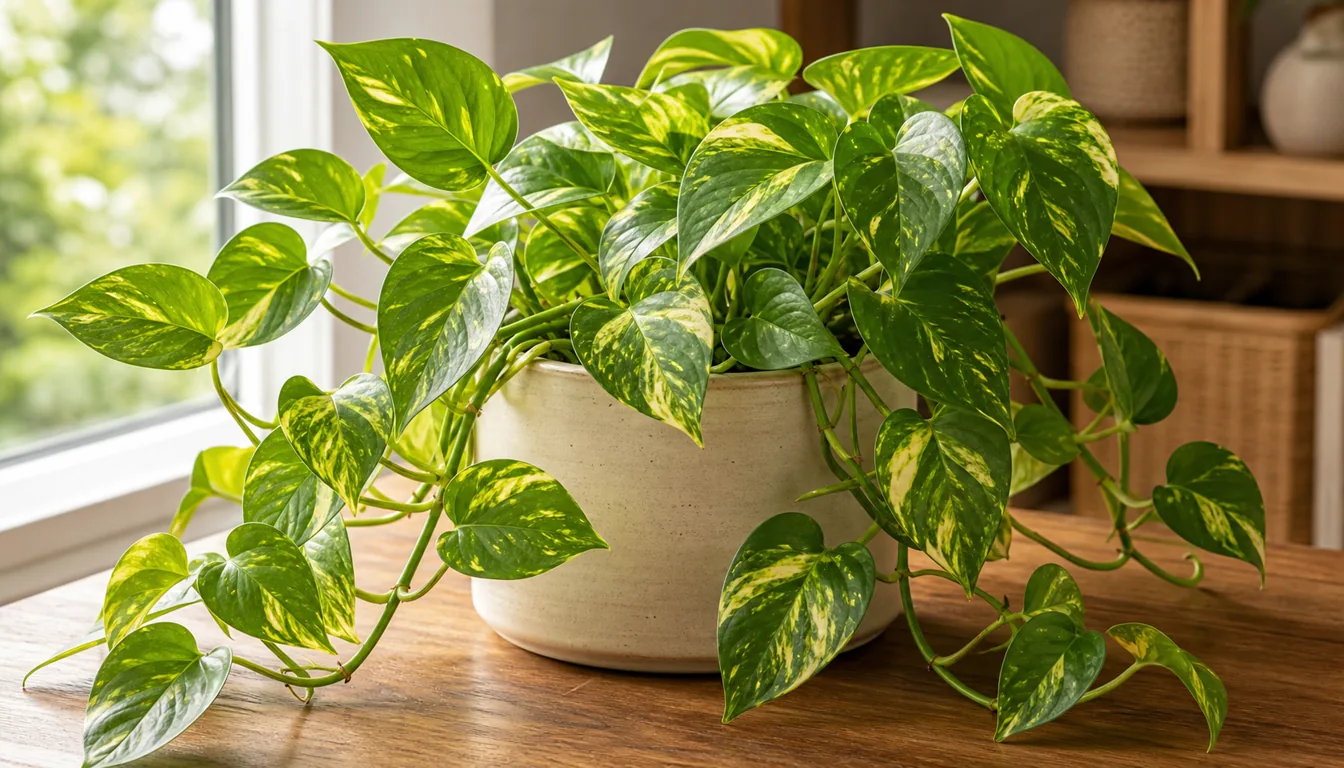
Golden Pothos
A faster Epipremnum vine with glossy green and yellow leaves.
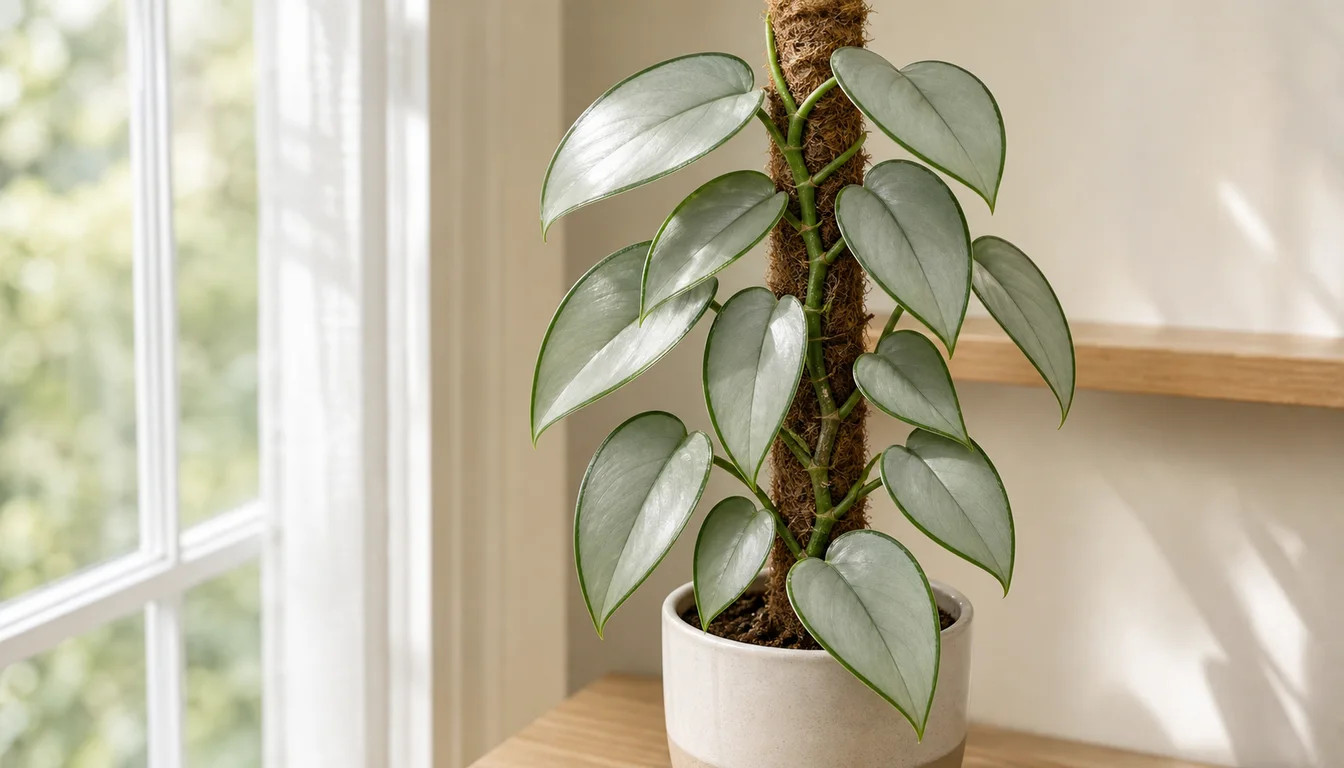
Scindapsus Treubii
A slower Scindapsus with thicker silver-blue or dark foliage.
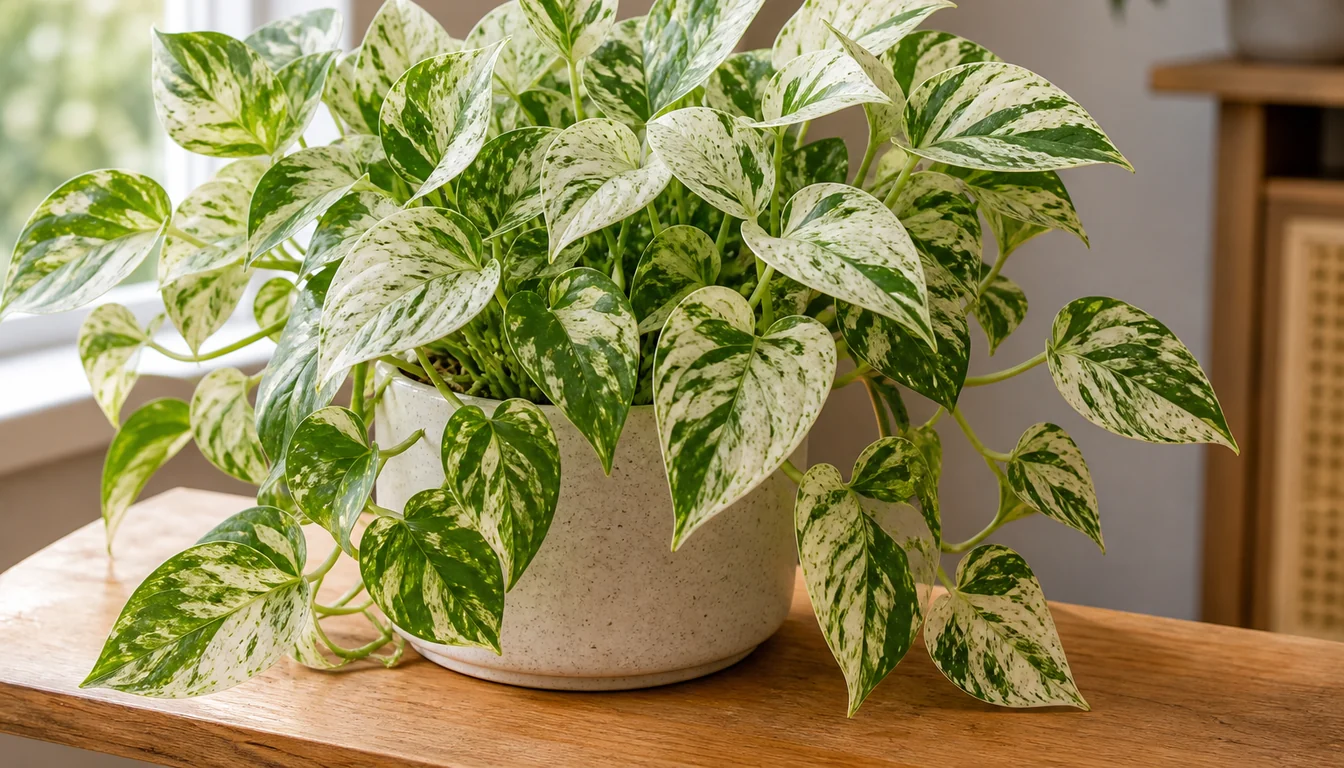
Marble Queen Pothos
An Epipremnum cultivar whose cream marbling needs brighter light.
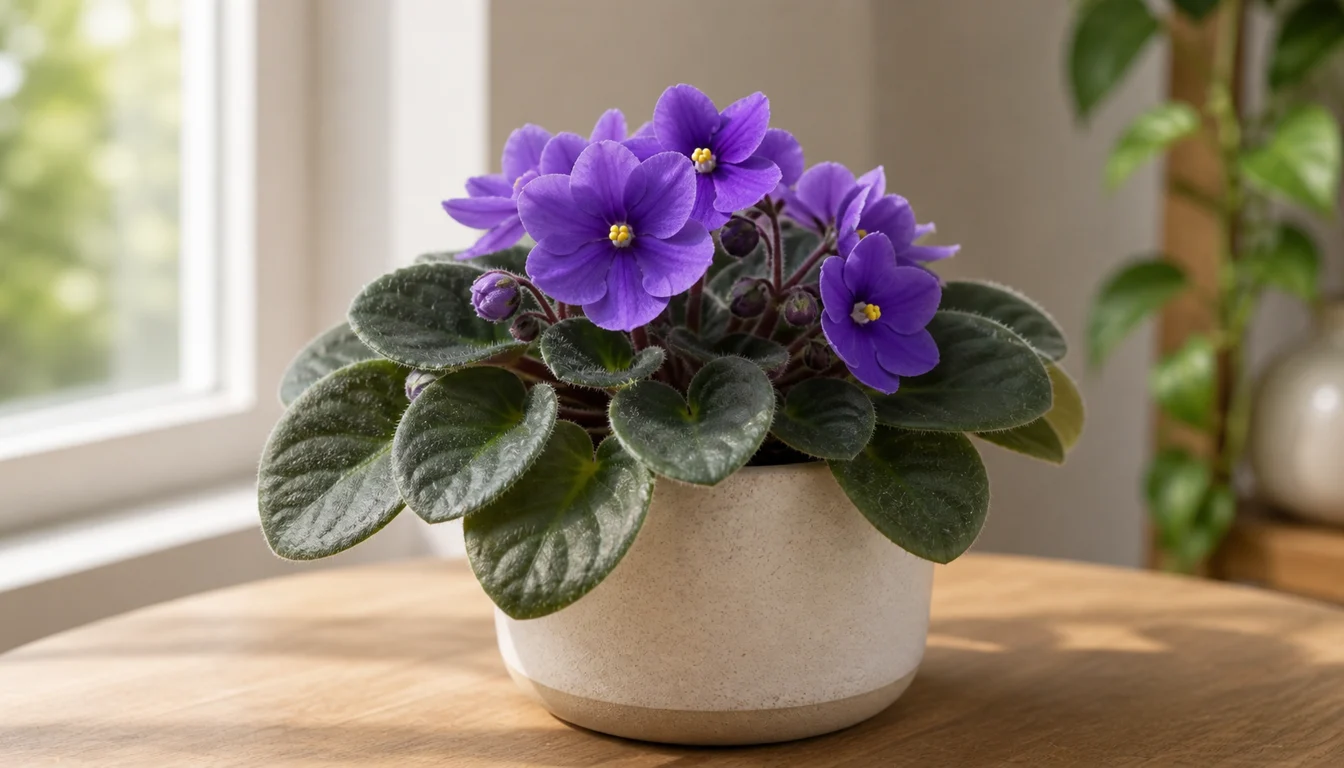
African Violet
African Violet is a windowsill bloomer that rewards steady, small-pot care.
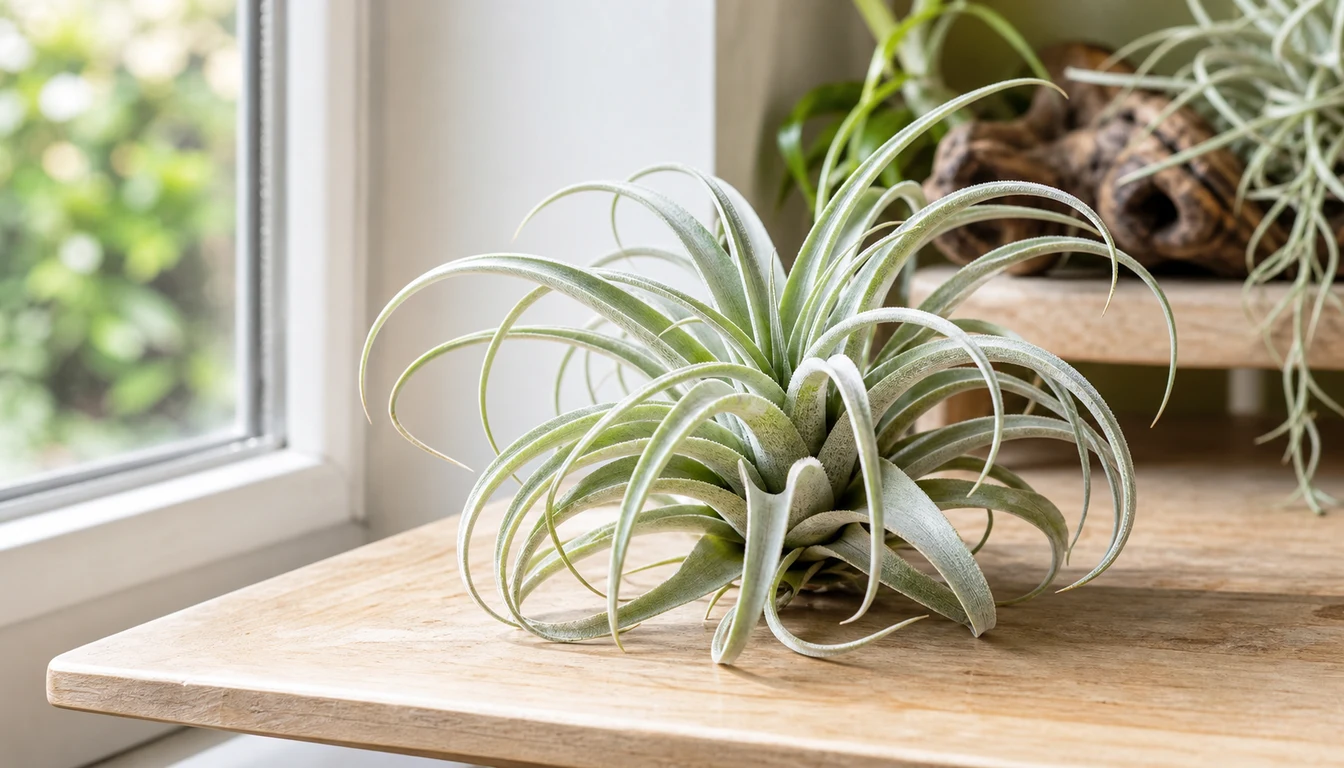
Air Plant
Air plants are living sculptures that thrive without soil, anchoring to driftwood, rocks, or shells while drawing…
Alocasia
Alocasias include compact, textured houseplants and large elephant ears that need substantial floor space.