
How to Water Potted Plants and Check That It Worked
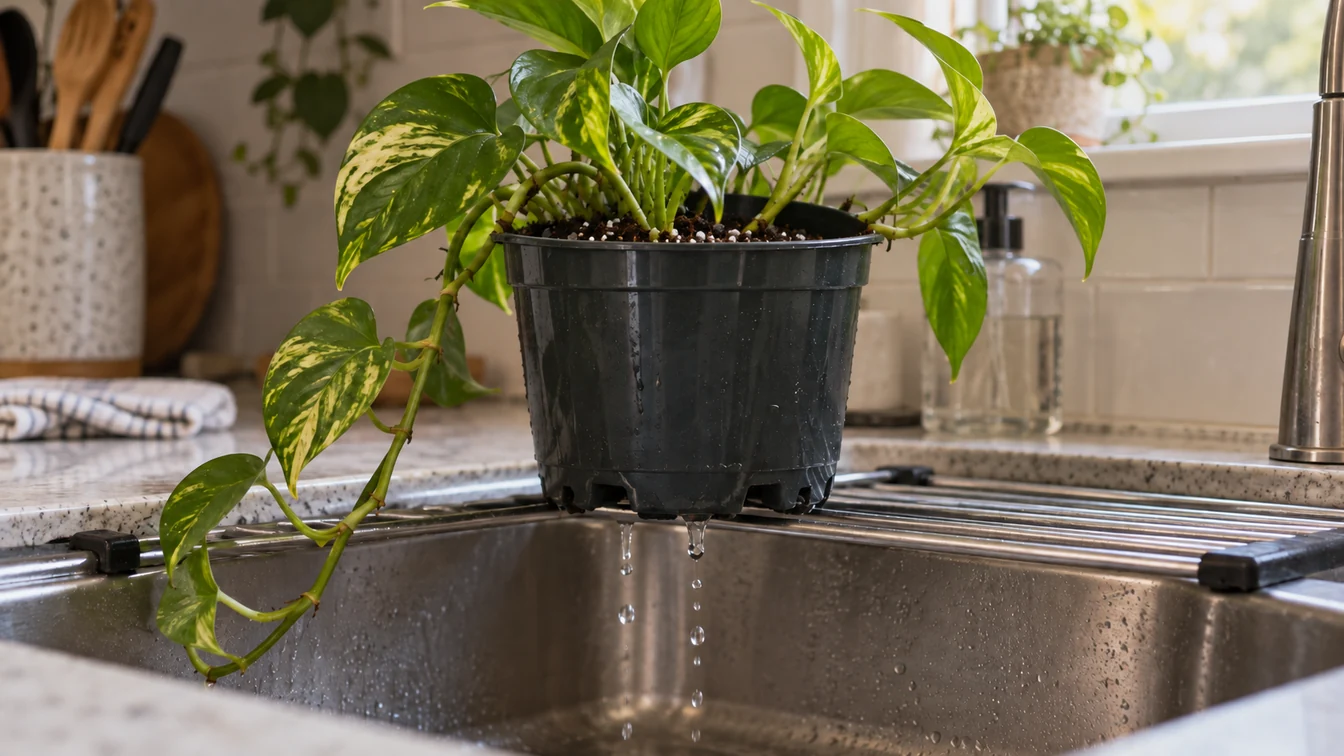
Water a potted plant when its mix has reached the dryness that plant tolerates. Apply water gently across the root ball, let excess water escape, and empty collected runoff.
Drainage is a useful check, but water flowing out does not prove that a dry center absorbed it.
For most ordinary containers, the job is to wet the root ball and then allow the plant its appropriate drying interval. A self-watering planter manages moisture differently, and a decorative pot with no outlet cannot drain like a nursery pot.
Identify the setup before choosing the method.
At a glance
Check the plant and the outlet first
Find out whether the plant prefers even moisture or a more pronounced drying interval. A peace lily and an aloe can stand beside each other while needing different decisions.
The words tropical plant or succulent cover too much variation to replace species-specific care.
Check beneath the exposed surface, using an accessible part of the mix and the pot's recent behavior.
A light nursery pot can be lifted for comparison with its weight after drainage. A heavy floor planter needs a check you can make safely without moving it.
If the mix is already wet, investigate why the plant seems stressed before adding water.
Look underneath an ordinary container for drainage holes. Remove an inner nursery pot from its decorative cover when you can, or make sure you can empty the cover afterward.
A sealed cover can hold runoff that is invisible from above.
Use a suitable potting mix with room below the rim for water to soak in without carrying material over the edge. Do not pack the mix tightly or add a gravel layer as a substitute for drainage.
When filling a new container with very dry mix, moisten the material before planting so the first watering is not fighting a dry, water-repellent mass.
A pot without an outlet needs a different setup. Growing the plant in a draining inner container is often the clearest solution.
Stopping when water pools on the surface does not protect roots from hidden saturation at the bottom.
Water from above in a controlled pass
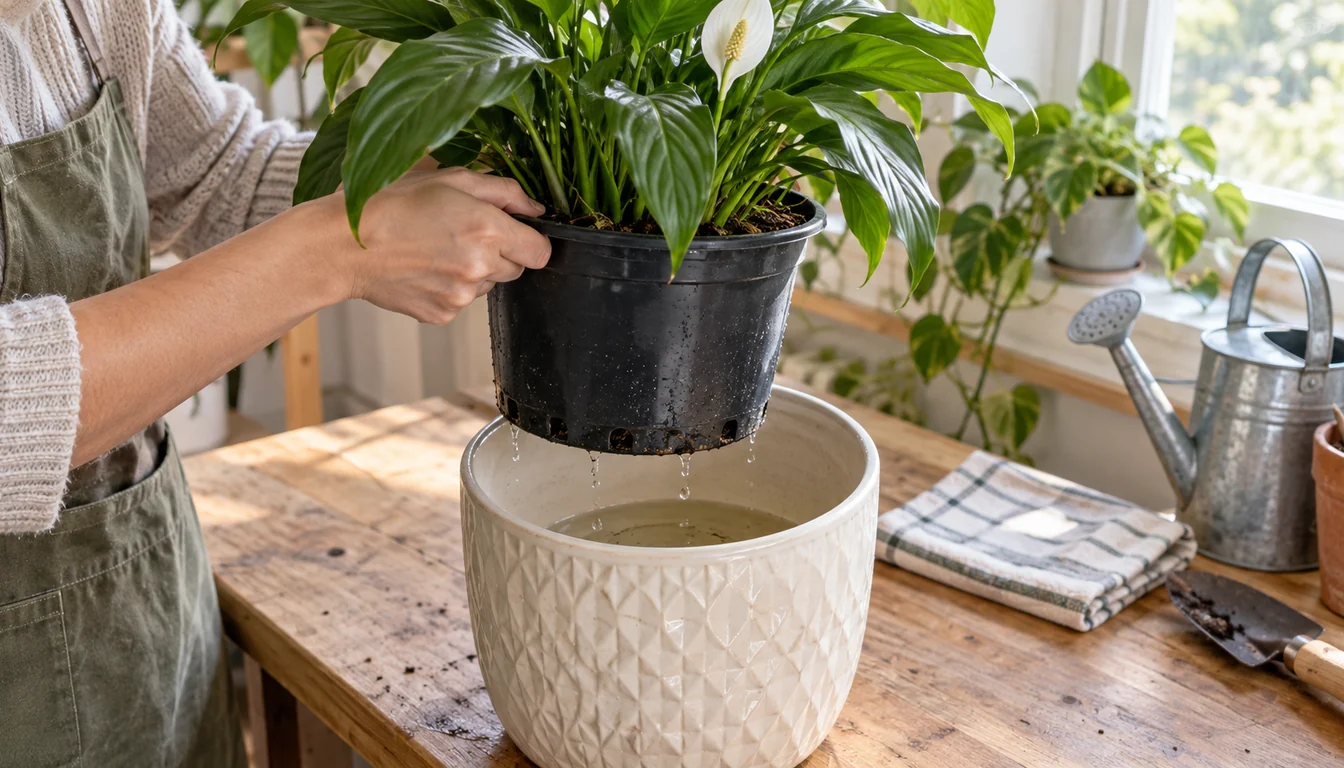
Top watering lets you see where the water enters the mix. A narrow watering-can spout works well around indoor foliage, while a gentle breaker attachment on a hose helps avoid washing material out of an outdoor planter.
Keep the delivery gentle enough that stems and exposed roots stay undisturbed.
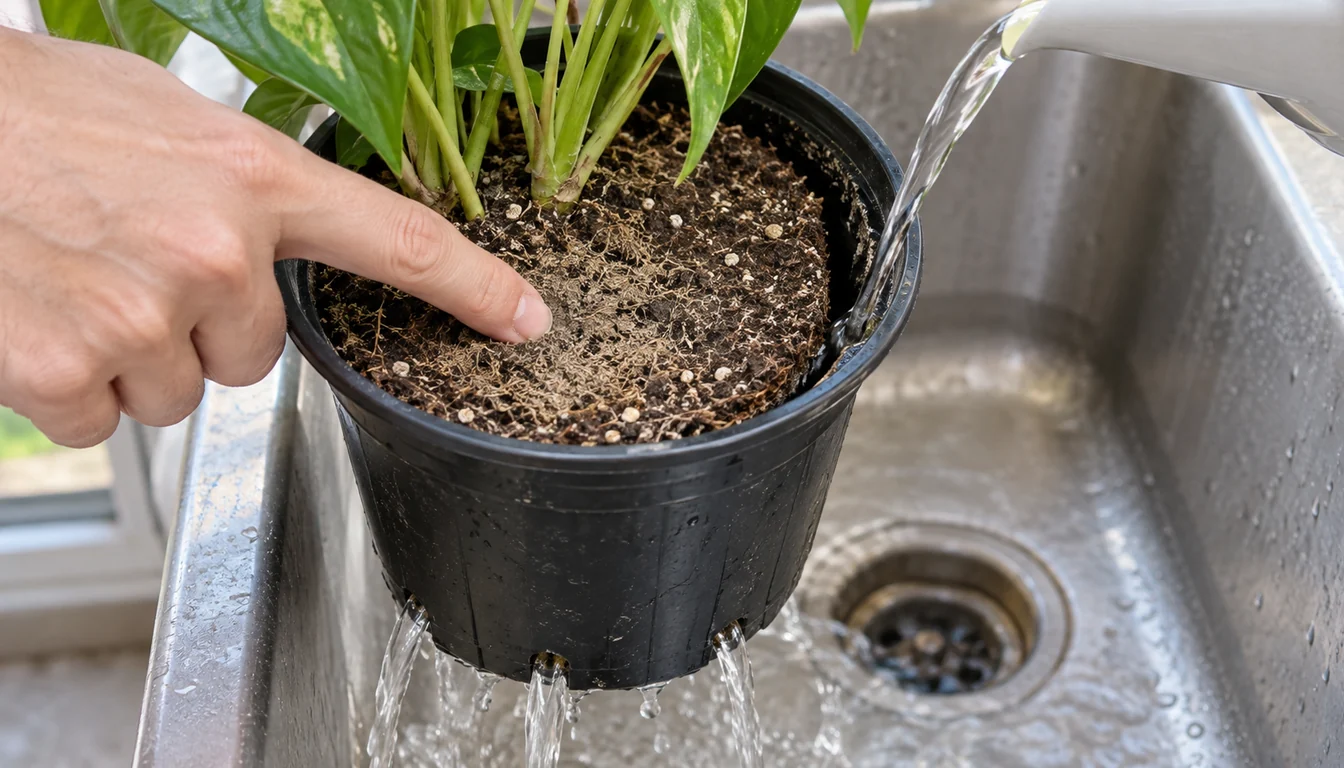
- Set up for runoffPlace a movable pot over a sink or another surface that can receive drainage, then keep trailing foliage clear.
- Cover the surfaceDirect water onto the mix and move around the pot so one channel does not receive the whole pour.
- Pause for absorptionSlow down when water pools faster than the mix can accept it, then continue as the surface clears.
- Confirm the root ballLet surplus drain and check that the center gained moisture and the pot gained the expected weight.
- Empty the collectorRemove water from the saucer or outer pot before returning the plant to its place.
The amount depends on the container and its starting moisture. A patio tub may require far more water than a small houseplant, so a marked cup is useful only after you have observed that particular pot.
It is not a substitute for seeing how the mix responds.
If water races out while the center stays dry, do not declare the job done. Water can follow a gap beside shrunken mix.
Reapply slowly in stages or use a suitable bottom-watering method, then check the center again. The objective is even wetting, not producing the strongest stream from the drain.
When bottom watering helps
Bottom watering can help a small dry root ball absorb moisture or keep water away from sensitive foliage. It still requires a pot with drainage openings and a growing medium that can draw water upward.
A sealed decorative container cannot be bottom-watered through its walls.
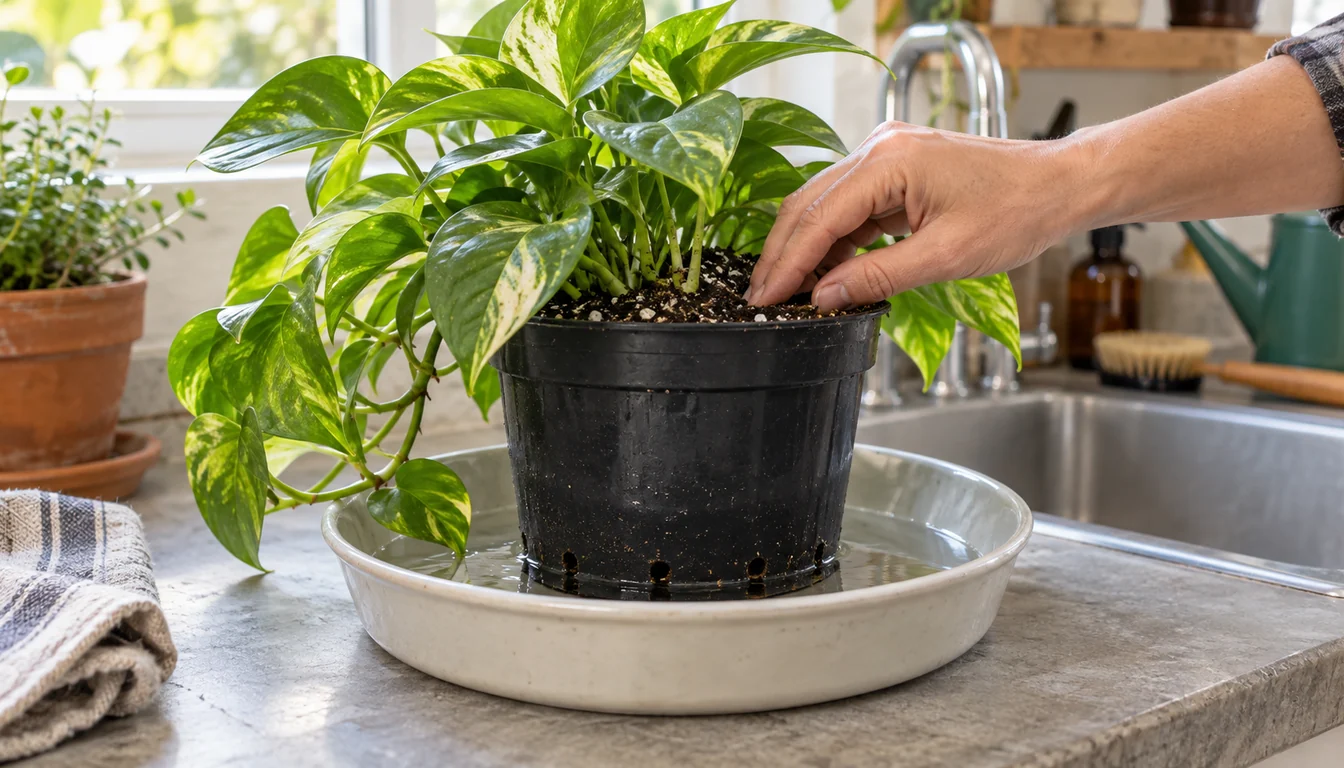
Set the inner pot in a shallow basin so water contacts its lower drainage openings. Watch the mix rather than assuming a fixed number of minutes will suit every container.
As moisture moves upward, check whether the root ball is hydrated. Remove the pot and let excess water drain before replacing it in a cover or on a saucer.
A very dry mix may absorb slowly, and a coarse medium may not wick evenly. If the top or center remains dry, examine what the water actually reached.
Bottom watering is an option to assess, not a requirement to leave the pot submerged until a timer ends.
Do not leave an ordinary pot soaking indefinitely. Bottom watering ends with removal and drainage.
A designed reservoir planter is a separate system with instructions for its medium, fill level, and overflow.
Use top watering when soluble residues need to be carried out of a draining pot. Bottom watering does not wash accumulated salts out through the bottom in the same way.
Investigate fertilizer and water quality if deposits keep returning instead of adding a mandatory monthly flush to every plant's care.
Adapt the method to the container
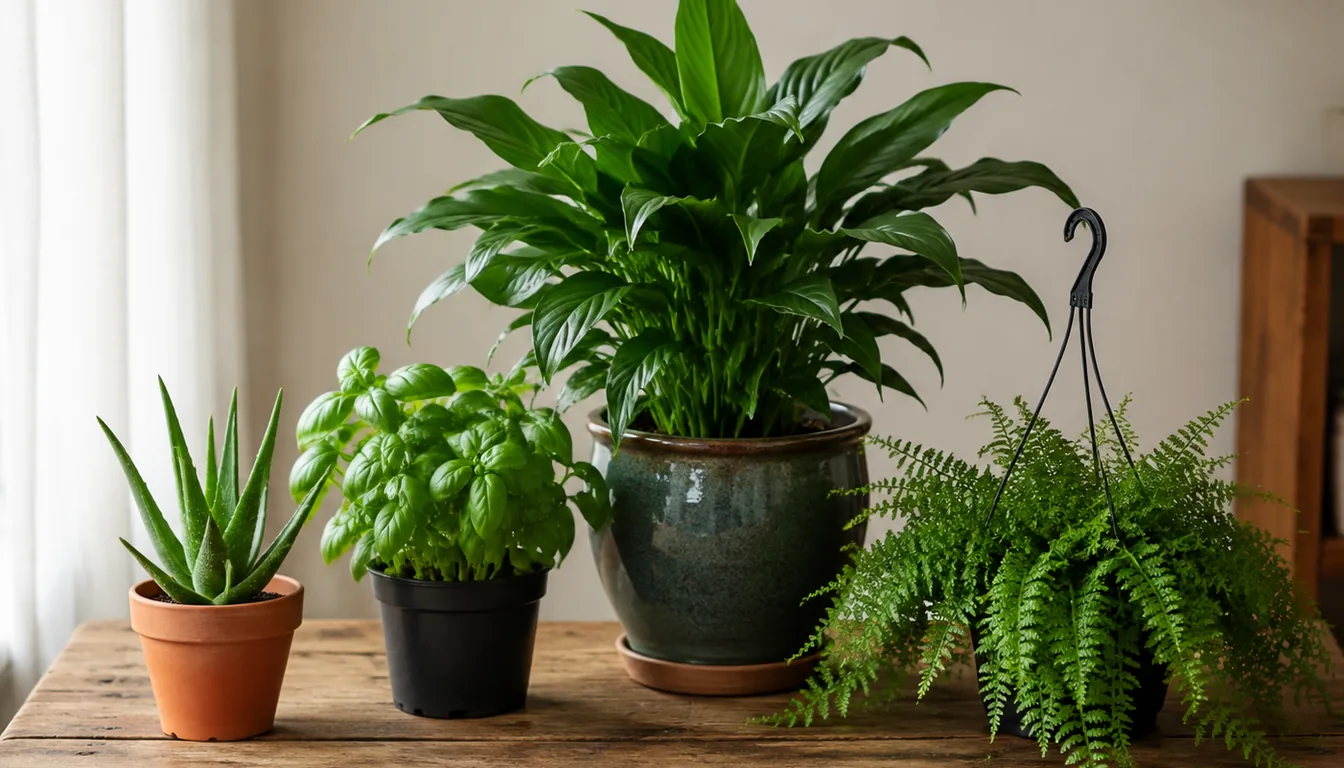
The same watering can serves different root systems, but it should not deliver the same portion to all of them. Look at plant growth, container volume, material, and exposure together.
Unglazed clay can lose moisture through its walls, while plastic or glazed pots behave differently, yet none of those materials decides the watering schedule alone.
| Container | Check | Adjustment |
|---|---|---|
| Small indoor pot | Weight and mix moisture | Drain over a sink and empty its cover |
| Patio crop | Heat and active growth | Inspect often and wet the full root zone |
| Hanging basket | Water deflected by leaves | Reach the mix and control runoff |
| Large tub | Moisture in several spots | Spread the pour around the surface |
| Recently repotted plant | Old root ball and new mix | Check both materials separately |
Container-grown vegetables have a limited supply of water in their mix. Large, actively growing plants can use it quickly, and some exposed pots need more than one check on a hot day.
That does not mean a nearby succulent should follow the vegetable planter's routine.
For hanging baskets, dense foliage can deflect water away from the mix. Bring the spout to an accessible opening and check that the water is entering the container.
Do not rely on the amount that fell over the leaves or on rain that may have been intercepted by an overhang.
For a recently repotted plant, newly added mix and the original root ball may have different moisture levels. A damp outer ring does not prove the old center received water.
Keep that distinction in mind until roots grow into the new material, and avoid repeated full soakings solely because one small patch looks dry.
What to do when watering goes wrong
Use what the pot did during watering to choose the next step. When the behavior is unexpected, inspect the setup before changing the frequency for the whole collection.
| What happens | Check | Next action |
|---|---|---|
| Fast runoff, light pot | Dry center or edge gaps | Rewet slowly and confirm absorption |
| Pooling, little drainage | Outlet and mix condition | Stop pouring and restore drainage |
| Wet mix, wilted leaves | Runoff and root condition | Investigate wet-root stress |
| Very rapid drying | Root crowding and exposure | Correct the cause before upsizing |
| Repeated white deposits | Fertilizer and water source | Address salts and leach appropriately |
A visible obstruction at an outlet may be easy to remove without disturbing the plant. If the mix itself has collapsed or roots fill the container, a repotting decision may be necessary.
Do not push a sharp tool blindly through the base to create a channel through roots.
Leaf symptoms support the investigation, but they cannot replace it. An underwatered plant and a plant with damaged wet roots can both wilt.
Brown edges do not establish a shortage, and a darker-looking mix does not by itself establish excess water.
When you correct a dry root ball, observe the plant and check moisture before watering again. Dead leaf tissue will remain damaged even after successful hydration.
Repeatedly soaking the pot while waiting for every brown mark to disappear can create a new problem.
Use drip and reservoirs as complete systems
A drip line can make a group of patio pots easier to water, but each emitter still has to deliver water to the intended root zone. Check for blocked or displaced outlets and observe the wetted area after a run.
A single point of delivery may leave part of a wide container dry.
Set runtime from the result in the pot, then recheck when weather or growth changes. If one small pot and one large vegetable planter share a line, they may need different emitters or separate control.
Increasing the whole line's runtime to rescue one missed pot can leave others too wet.
A self-watering container uses a reservoir and a designed connection between that water and the growing medium. Some systems include a separating platform and an overflow opening, and roots may grow into the reservoir as part of normal operation.
This differs from leaving an ordinary nursery pot in a bowl of runoff.
Follow the planter's instructions for assembly, initial wetting, suitable mix, filling, and overflow. A reservoir cannot reliably supply a plant if the wicking path never makes contact or the mix cannot draw water through it.
Check the actual moisture in the planted area while the setup establishes.
Match the system to the plant's needs. Reservoirs can work well for suitable vegetables and herbs, but a plant that needs a substantial drying interval may require another approach.
Keep overflow routes clear outdoors so rainfall does not defeat the intended water level.
Test automation while you are home. Look for leaks as well as dry or saturated mix, and give anyone covering your absence instructions for the specific equipment.
The presence of a timer or water-level indicator does not remove the need to inspect the plant.
Choose the next check from this pot
After watering, note anything that changes the next decision. A pot that absorbed water evenly and drained normally needs observation as it dries.
A pot with persistent bypass or trapped runoff needs its delivery or drainage problem resolved.
A short note can record the pot's condition, the method used, and whether runoff was removed. Over several checks, you can learn which pots require closer attention without forcing them onto one calendar.
Grouping similar plants may make inspections easier, but inspect each root zone before watering.
Reassess after moving a plant, changing the container or mix, or seeing a large change in growth. Indoor heating, grow lights, wind, and outdoor weather can change the result in different directions.
The season is a reason to look again, not an instruction to halve or double every pour.
Avoid compensating for a missed day with an arbitrary extra amount.
If the mix is still suitable, leave it alone. If it is too dry, carry out a thorough, controlled watering and confirm absorption.
The next decision starts from the root ball's present condition.
Frequently Asked Questions
Should I mist leaves instead of watering the mix?
No. A mist on foliage does not deliver enough water to the root ball.
Water the growing medium when needed, and address humidity separately if the plant requires it.
Is evening watering always harmful?
No. Root-zone moisture and drainage are the important checks.
Morning watering can be convenient outdoors and gives wet foliage time to dry, but do not leave a genuinely dry plant untreated solely to meet a clock time.
Can I water through the saucer while the pot stays inside its cover?
Only if you can observe absorption and remove surplus water afterward. Taking the inner pot out is often easier to control.
Do not keep refilling a hidden pool beneath an ordinary container.
Sources & References
- University of Maryland Extension - Growing Vegetables in Containers and Salad Tables
- University of Minnesota Extension - Fertilizing and Watering Container Plants
- University of Maryland Extension - Maintaining Container Grown Vegetables
- University of Maryland Extension - Self-Watering Containers
- Illinois Extension - Watering Houseplants
- UC Master Gardeners - Watering Hydrophobic Soil
- University of Maryland Extension - Watering Indoor Plants
- Iowa State University Extension - Watering Plants in Containers and Plug Trays
Related Guides
A Drought Tolerant Plant Is Not Drought Tolerant Yet
Colorado State puts it in one sentence. Drought tolerant plants are not drought tolerant until…
11 min read
An Overwatered Tree Hides It for a Year, Then Thins
A tree gives you almost no warning. Colorado State says the symptoms of root problems may appear…
12 min read
Best Time to Water Flowers for Stronger Blooms
Watering flowers at the wrong time does more damage than skipping a day.
10 min read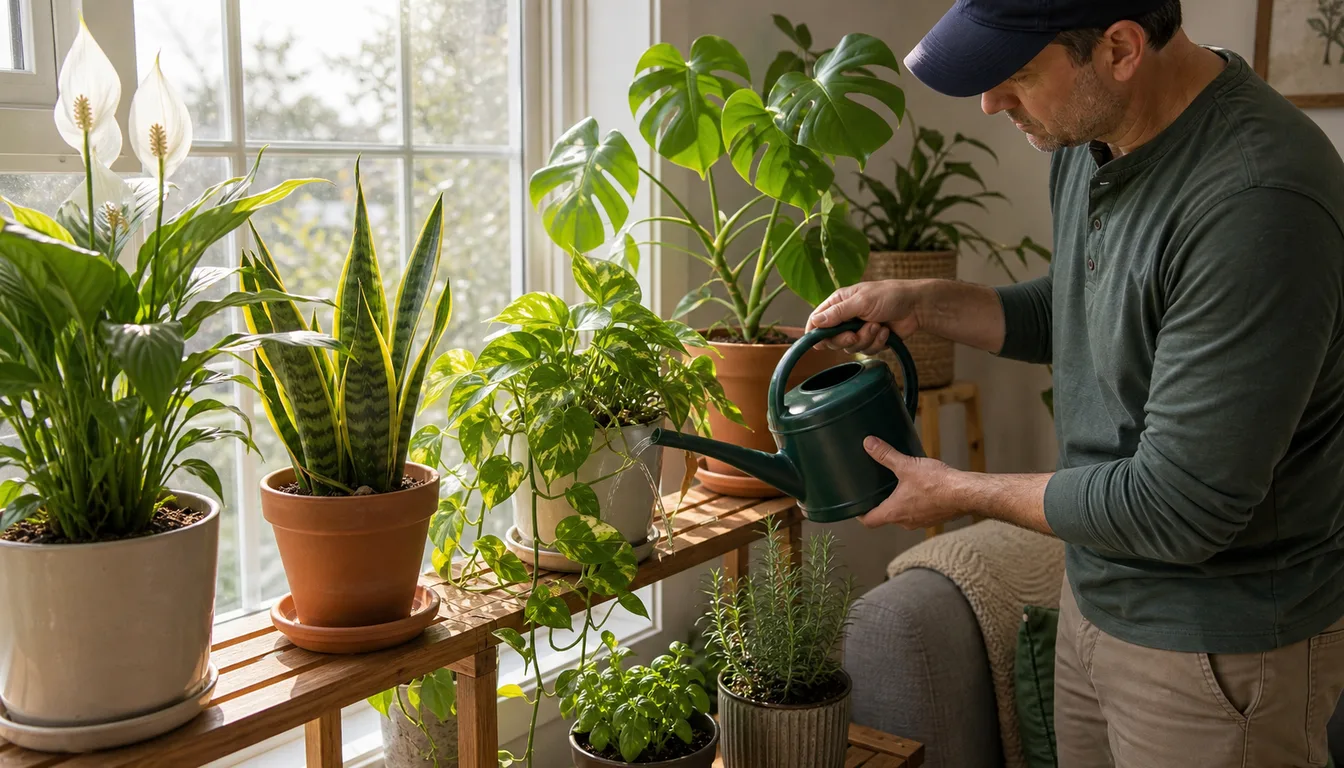
Best Time to Water Indoor Plants: Morning or Evening?
Morning is the better default for watering indoor plants.
6 min read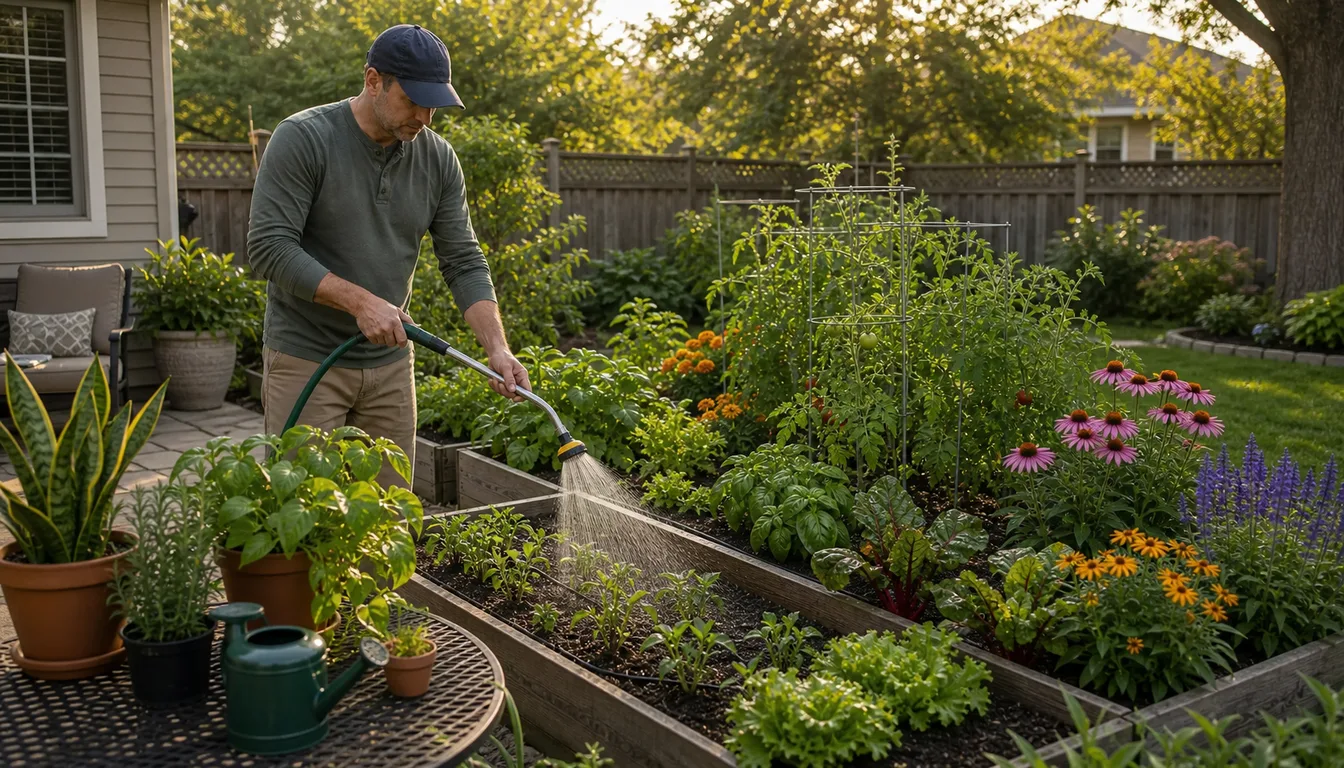
Best Time to Water Plants for Healthier Roots
Watering at the wrong time wastes water and stresses plants, even if you are generous with the…
11 min read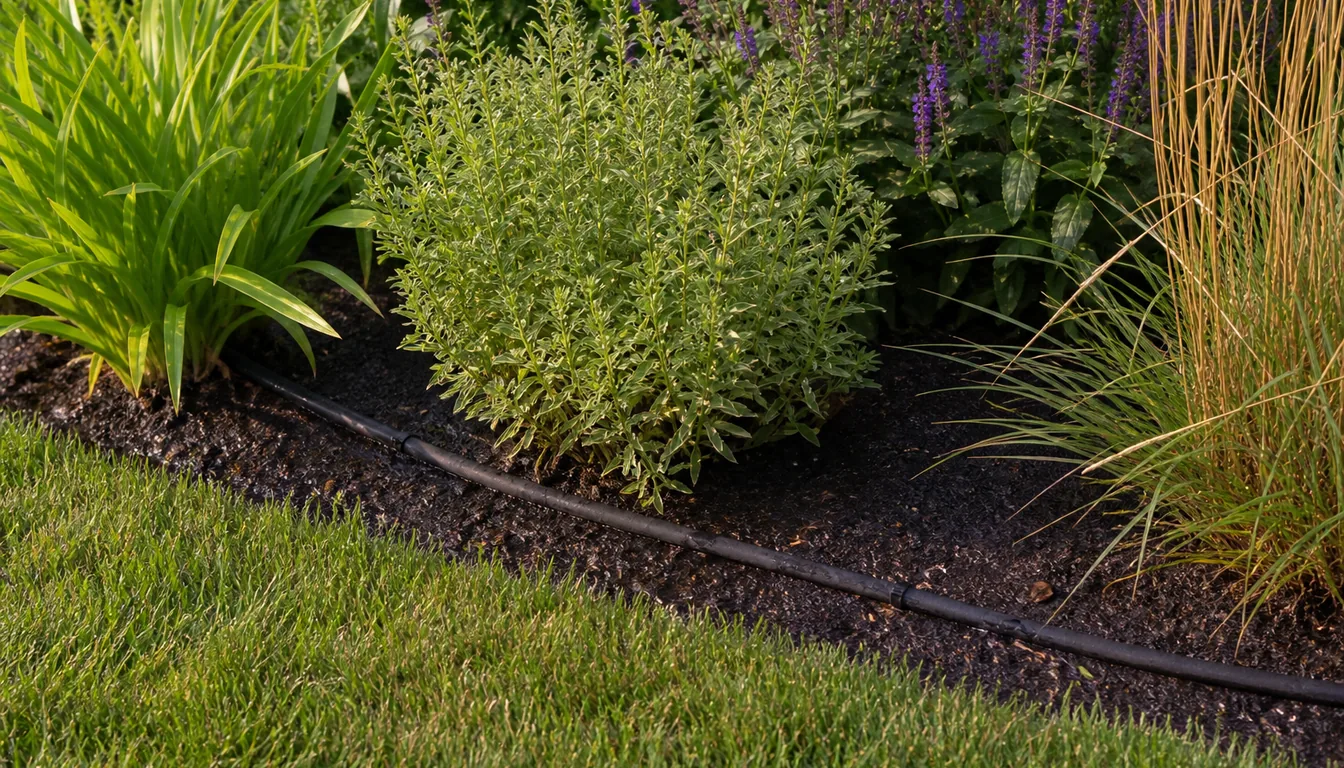
Deep Watering vs Frequent Watering: What Roots Need
Deep watering usually serves established lawns, vegetables, trees, and shrubs better than repeated…
17 min read