
What Is Alocasia Polly and How Do You Keep Its Leaves Healthy?
Alocasia x mortfontanensis 'Polly' Araceae
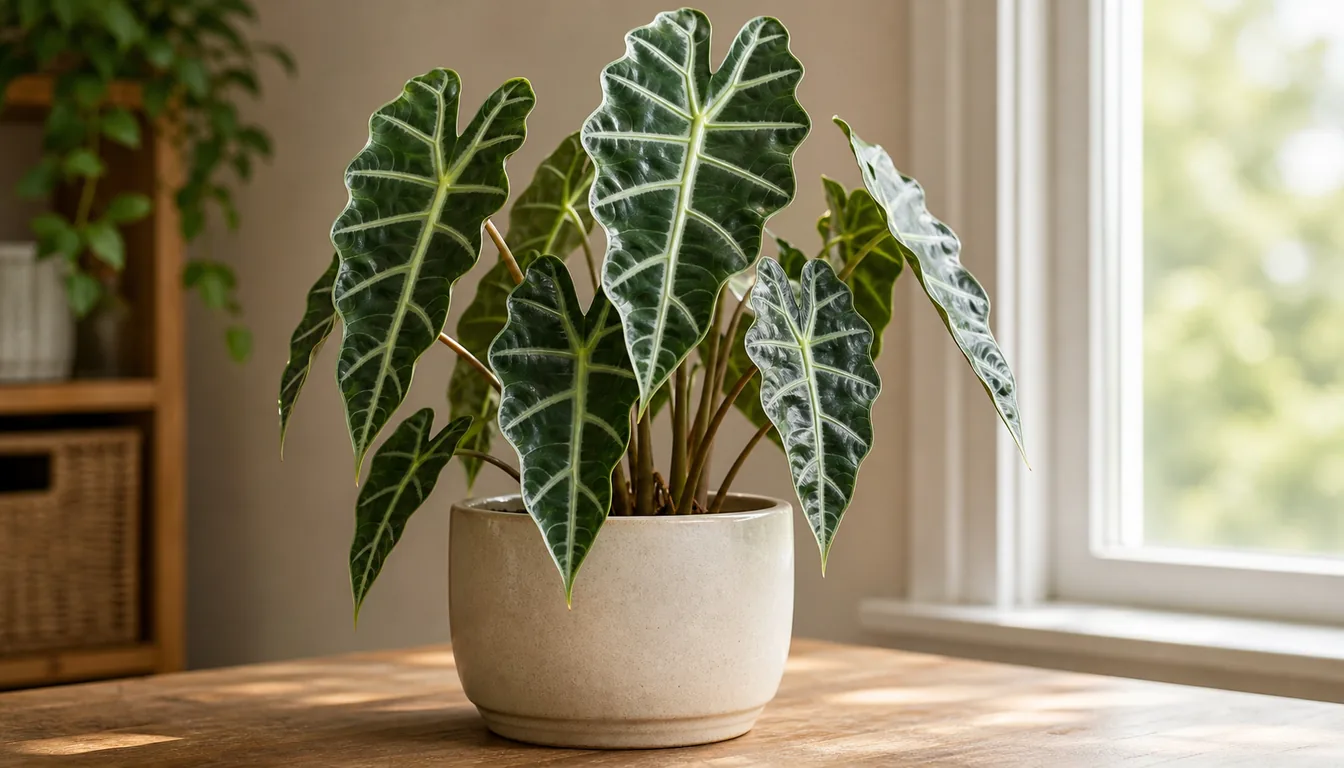
Alocasia Polly is a compact hybrid grown for dark arrow-shaped leaves, pale veins, and wavy edges. Bright indirect light, warm conditions, and moisture around aerated roots support its growth. Leaf drop needs a check of those conditions before it is dismissed as dormancy.
Care snapshot
Recognizing the Polly Hybrid
Alocasia Polly is a compact nursery selection in the hybrid group NC State calls Alocasia x mortfontanensis. The older name Alocasia x amazonica remains common on labels. NC State identifies the parent species as A. longiloba and A. sanderi, so “Amazonica” does not mean this is a species collected from the Amazon rainforest.
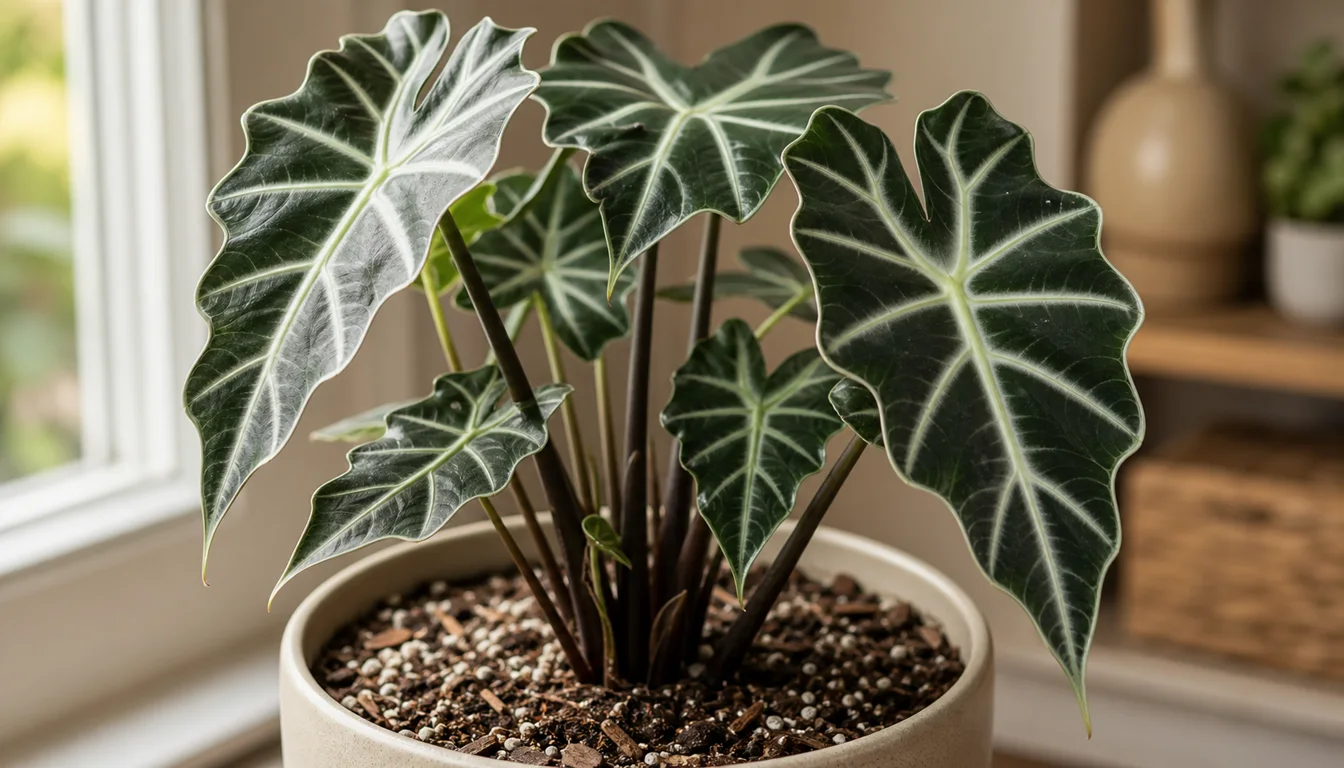
Its arrow-shaped leaves have a smooth dark surface, pale veins, purple-toned undersides, and wavy margins. This is a different effect from Dragon Scale’s thick, quilted-looking foliage. The distinction helps when choosing a plant for its leaves, but it does not establish which plant will tolerate neglect.
UF/IFAS lists Polly at about 1–2 feet in height and width. NC State gives a larger range for the broader hybrid group. Those descriptions can coexist because one addresses a compact selection and the other a wider group of plants.
At purchase, leaf condition and root-zone condition provide different information. Undersides can reveal pests, while a sour-smelling, saturated pot or collapsing crown warrants concern about the roots. An old damaged leaf does not identify the cause, and a firm crown alone does not prove the roots are healthy.
Bright Light Without Abrupt Sun Exposure
Polly suits a bright indoor position with indirect or filtered light. A sheltered east exposure may work, while strong south or west sunlight may need filtering. The view through the window, seasonal sun angle, and nearby buildings matter as much as the compass direction.
A plant grown under protected conditions can scorch when placed suddenly in stronger sun. Existing damaged areas will remain, so later growth is more useful for judging a placement change. An old brown patch cannot tell you whether the current exposure is still causing damage.
Low light can slow growth and water use, leaving the mix damp longer. But a damp pot does not automatically need a brighter window. Container size, blocked drainage, cold conditions, and root injury also affect drying.
A useful placement decision considers the light reaching the leaves and the conditions around the pot together. Moving a struggling plant straight into hot direct sun can add injury without resolving a root problem.
Moisture Around an Aerated Root System
Polly needs moisture available to its roots while the mix still permits air exchange. A plant can wilt because the root ball is dry, or because damaged roots cannot supply water from wet media. Those possibilities require different responses even when the leaves look similar.
Surface drying is one clue. Pot weight and moisture beneath the surface help reveal whether the whole container is approaching dryness or only the top layer has changed. A fixed top-inch rule becomes unreliable when pots differ substantially in depth and root volume.
When watering is needed, the aim is to wet the root ball and let excess water leave. Water escaping immediately through a side channel can bypass dry areas. Conversely, water left in a decorative outer pot can keep the bottom of the root ball saturated after the surface appears dry.
Cooler or dimmer conditions often reduce demand, so the same interval that worked during active growth can become excessive. The interval is an outcome of the plant and its setting, not a permanent instruction attached to the cultivar.
A soft or collapsing base is more serious than an isolated aging leaf. It warrants examination rather than a promise that trimming and fresh soil will save the plant. The extent of injury determines whether any sound material remains suitable for propagation.
Humidity Helps, but Brown Edges Have Several Causes
NC State recommends high humidity for the Amazonica hybrid group. Dry air can contribute to damaged edges, but brown margins alone do not measure humidity or distinguish it from root stress, salt injury, or physical damage.
A humidity reading near the plant provides context. Purdue notes that misting has little lasting effect because the water evaporates quickly. A humidifier can change room air more directly, while grouping plants or trays may affect the immediate surroundings without controlling an entire room.
The pot still needs to drain freely. Raising humidity does not require standing the roots in water, enclosing wet foliage indefinitely, or keeping the mix saturated. Conditions around the leaves and conditions around the roots are related but separate parts of care.
NC State advises keeping this hybrid group above 60°F. A warm room can still contain a cold windowsill or a draft, so the location of the pot matters. A cooler winter temperature suggested for the genus as a whole is not a reason to ignore the more specific hybrid guidance.
A Pot That Matches the Roots
An open, draining houseplant mix gives Polly a better balance of moisture and air than a dense, persistently wet medium. The appropriate amendment depends on the starting mix. A universal bark-perlite-soil ratio cannot account for every product or indoor environment.
A pot much larger than the root system holds additional wet material that the roots are not yet using. Moving up modestly when roots need space is different from giving a small plant a large reservoir of damp mix. Drainage holes and emptying the cachepot remain necessary either way.
Repotting has a cost as well as a benefit. Disturbing roots repeatedly in response to each yellow leaf can make it harder to identify the original problem. Crowding, degraded mix, or a root problem provides a clearer reason to intervene than an automatic calendar date.
Feeding and Keeping Leaves Clear
Fertilizer supports growth when the plant has adequate light and functioning roots. It cannot repair waterlogged roots or compensate for a dark location. A pale leaf is therefore not sufficient reason to increase feeding.
A suitable houseplant fertilizer has a label specifying its concentration and application method. The plant’s growth and any nutrients already in the medium also affect whether feeding is needed. Fresh potting mixes may already contain nutrients. When growth slows, repeatedly adding more fertilizer can leave salts in the root zone without producing better leaves.
Dust can be removed with a soft damp cloth and plain water. That also provides a chance to inspect the leaf underside and petiole. Leaf-shine products and household soap mixtures add no necessary step to this routine and can injure foliage.
Dead or badly damaged leaves can be removed with clean tools. Gloves protect against irritating sap, and discarded pieces belong out of reach of animals and children. Cutting healthy leaves into a shape does not make the plant branch like a woody shrub.
Separating a Rooted Offset
A rooted offset is a small shoot with its own roots attached to the parent’s underground stem system. Separating one preserves a supply of water while it establishes. The RHS also describes rhizome division, so rooted offsets are a useful method rather than the only biologically possible one.
A leaf with a stalk is not equivalent to either of those pieces. The division needs a growing point capable of producing a new shoot. Counting leaves does not establish whether that structure is present.
Division is best considered when the plant has suitable separable growth and conditions support recovery. It can accompany necessary repotting, provided the offset has a sound growing point and roots that can be preserved.
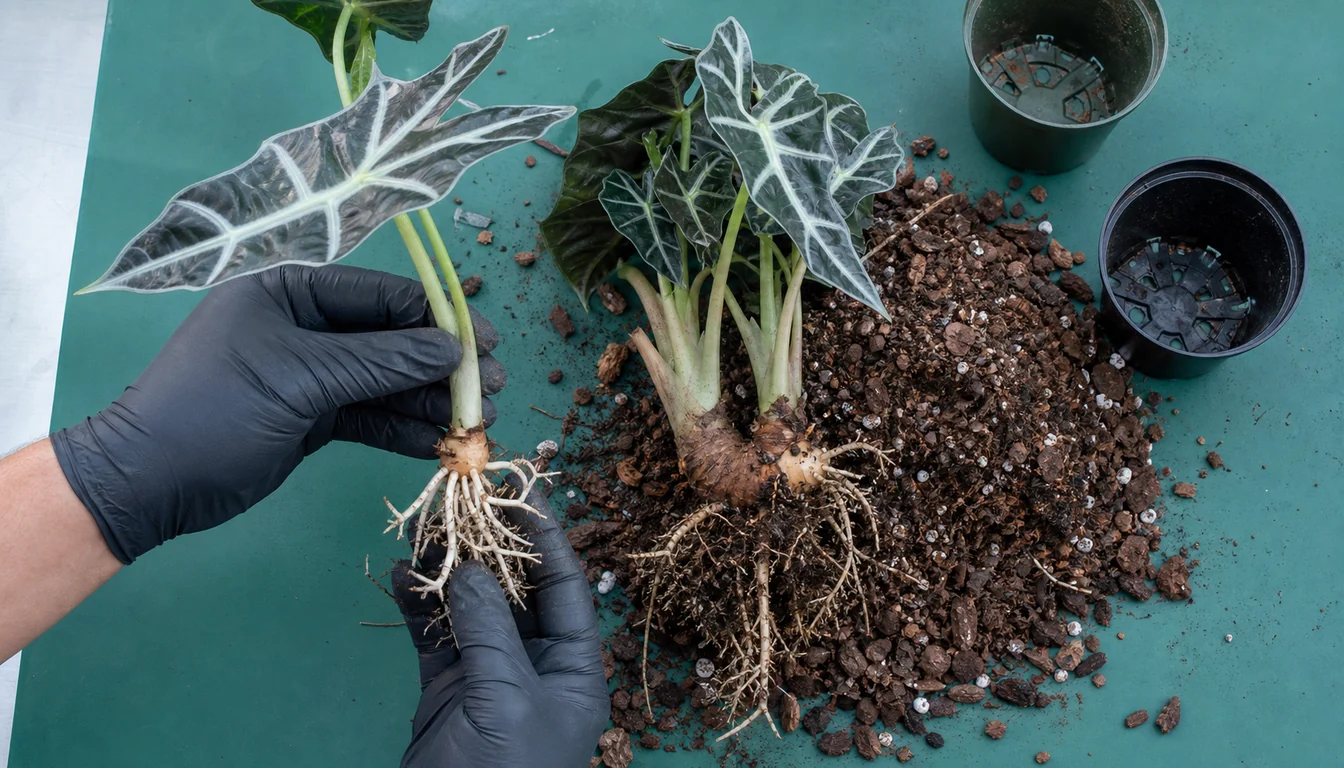
- Wear gloves and ease the plant from its pot. Expose the connection enough to identify the offset and its own roots.
- Separate the offset carefully, using a clean blade if needed. Keep its growing point and as much of its root system as practical.
- Pot it at its previous depth in a draining container suited to the roots. Avoid burying the crown beneath added mix.
- Water to settle the medium, allow drainage, and follow its moisture afterward. Stable warmth and suitable light support recovery without a fixed watering or rooting deadline.
Leaf Drop and a Possible Rest Period
An Alocasia may slow down or lose leaves when its conditions change. The RHS describes a winter rest for the genus, but leaf loss is not proof that Polly is safely dormant. Root injury, cold exposure, inadequate light, and pests can also reduce the canopy.
The recent sequence helps. A plant that has gradually slowed in dimmer conditions presents a different situation from one whose base is collapsing in wet mix. A single old leaf fading while other growth remains steady is also different from rapid loss across the plant.
A firm rhizome or lack of odor cannot clear the fine roots of disease or injury. Those observations may be useful, but they do not justify ignoring continued decline. A wet, collapsing plant needs a closer root assessment rather than a seasonal label.
When growth is quiet, water use generally falls. Reducing watering in response to slower drying avoids keeping the old schedule, but it does not mean allowing all remaining roots to desiccate. Return of growth depends on viable tissue and suitable conditions, not a promised month or recovery deadline.
Separating Symptoms from a Diagnosis
Polly’s contrasting leaves make small changes noticeable. The useful next step is to pair the change with direct observations rather than assign one cause from color alone. Several problems can also occur together, such as low light and a pot that remains wet.
Spider mites may produce stippling and webbing, but the mites themselves need close inspection, often with magnification. Scale-like bumps need inspection too. Soft scales can produce honeydew, whereas armored scales do not, so a dry leaf is not proof that scale is absent.
Thrips can leave silvery marks and dark waste specks. Fungus gnats are associated with moist organic media, but seeing adults does not establish that they caused a mature plant’s collapse. Adult traps help detect them without resolving every larval or watering problem.
Treatment follows the identified problem. Minnesota advises against homemade soap sprays because of plant injury. Any pesticide must be labeled for the indoor setting, plant, and pest, with repeat applications governed by the label rather than a generic schedule.
- Yellowing with a wet pot
- Assess moisture below the surface, drainage, temperature, and roots. The leaf alone cannot prove overwatering or disease.
- Crisp margins
- Consider humidity, root moisture, salts, and physical damage. Raising humidity cannot restore dead tissue.
- Fine stippling or silvery marks
- Inspect both leaf surfaces for mites or insects before choosing a pest treatment.
- Sudden widespread collapse
- Investigate the base and roots promptly. Do not treat firm crown tissue as clearance for the entire root system.
Pet Access and Alternative Foliage
The ASPCA lists Alocasia spp. as toxic to dogs, cats, and horses because of insoluble calcium oxalates. Oral pain and irritation, swelling, drooling, and difficulty swallowing are listed signs. Vomiting applies to dogs and cats, not horses.
This evidence covers the genus rather than a cultivar-specific dose or outcome study. Suspected ingestion warrants prompt veterinary or animal poison-service advice. There is no supported harmless-nibble threshold to use at home.
A plant stand only reduces access if the animal cannot climb, reach, or knock it over. Fallen leaves and discarded divisions also remain accessible. Sap can irritate skin and eyes during handling, regardless of whether the plant is being kept around pets.
For a household where chewing access cannot be prevented, a plant with a supported non-toxic listing is a more suitable choice than another Alocasia. Calatheas and prayer plants offer patterned foliage, but their exact identity and safety listing still matter. “Non-toxic” does not mean edible or guarantee that chewing plant material cannot cause illness.
For someone choosing solely by leaf appearance, Dragon Scale offers a textured surface rather than Polly’s smoother arrow leaves. That change does not remove the genus-level pet concern or the need for suitable indoor conditions.
Sources & References
- NC State Extension: Alocasia
- RHS: How to Grow Alocasias
- ASPCA: Alocasia
- University of Maryland Extension: Diagnose Indoor Plant Problems
- Purdue Extension HO-39: Indoor Plant Care
- University of Minnesota Extension: Managing Insects on Indoor Plants
- UF/IFAS FP033: Alocasia spp., Elephant's Ear, Alocasia, Taro
- NC State Extension: Alocasia x mortfontanensis
- University of Maryland Extension: Root Rots of Indoor Plants
Related Plants
Alocasia
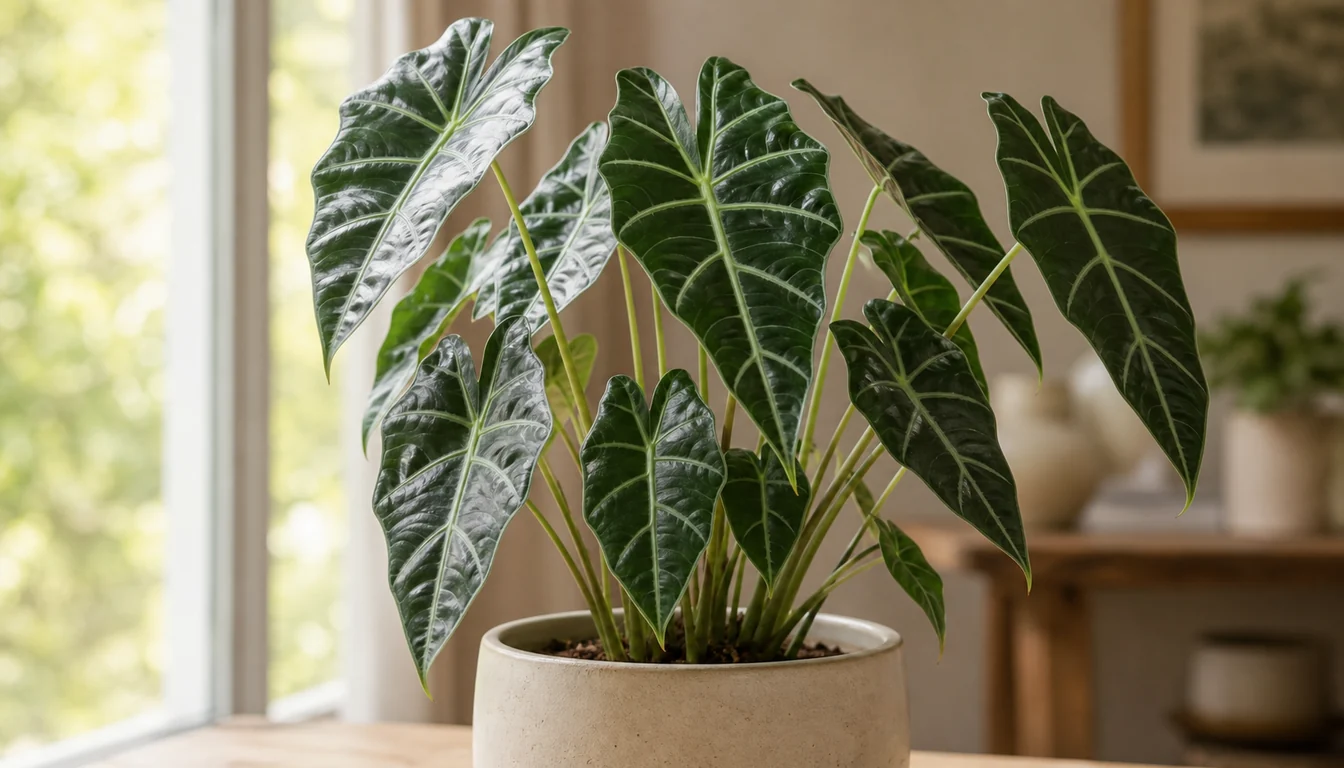
Compare the genus’s compact forms and large elephant ears.
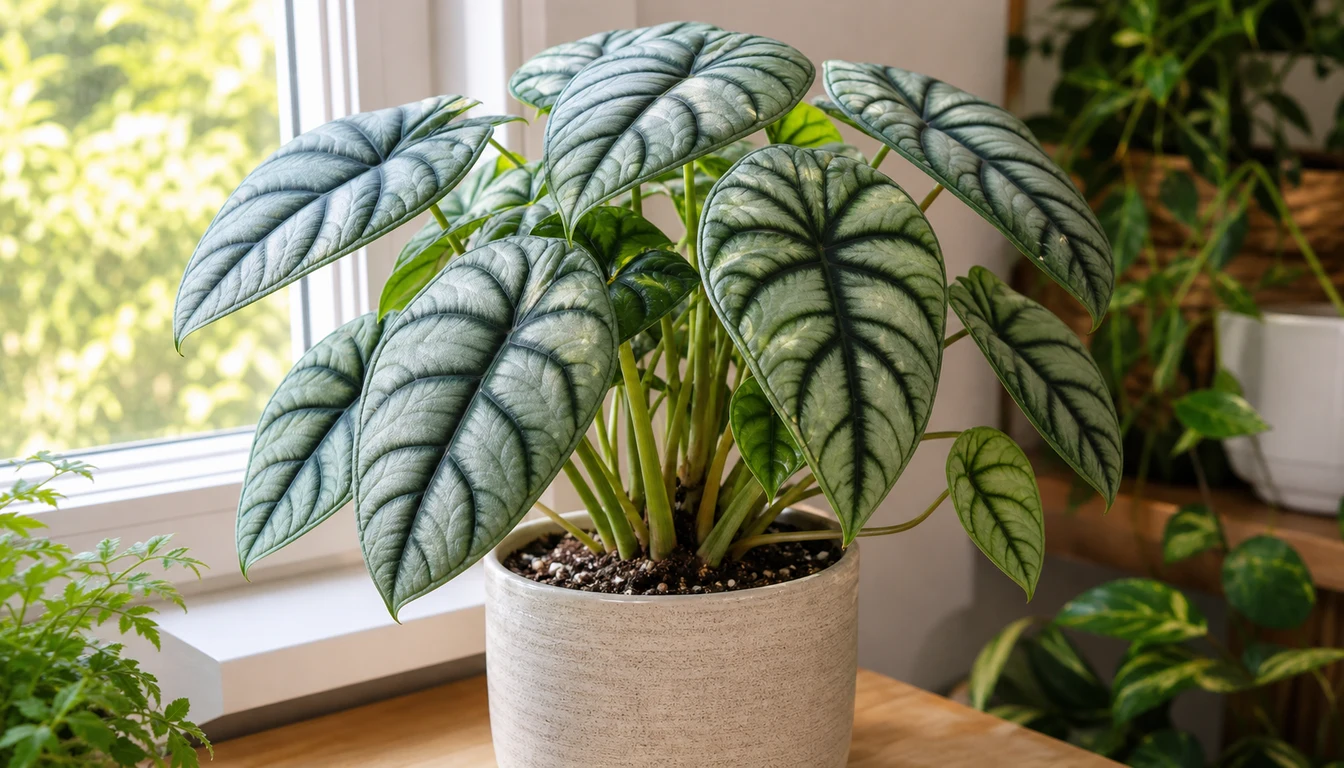
Alocasia Dragon Scale
A compact Alocasia with thick, textured foliage and dark veins.
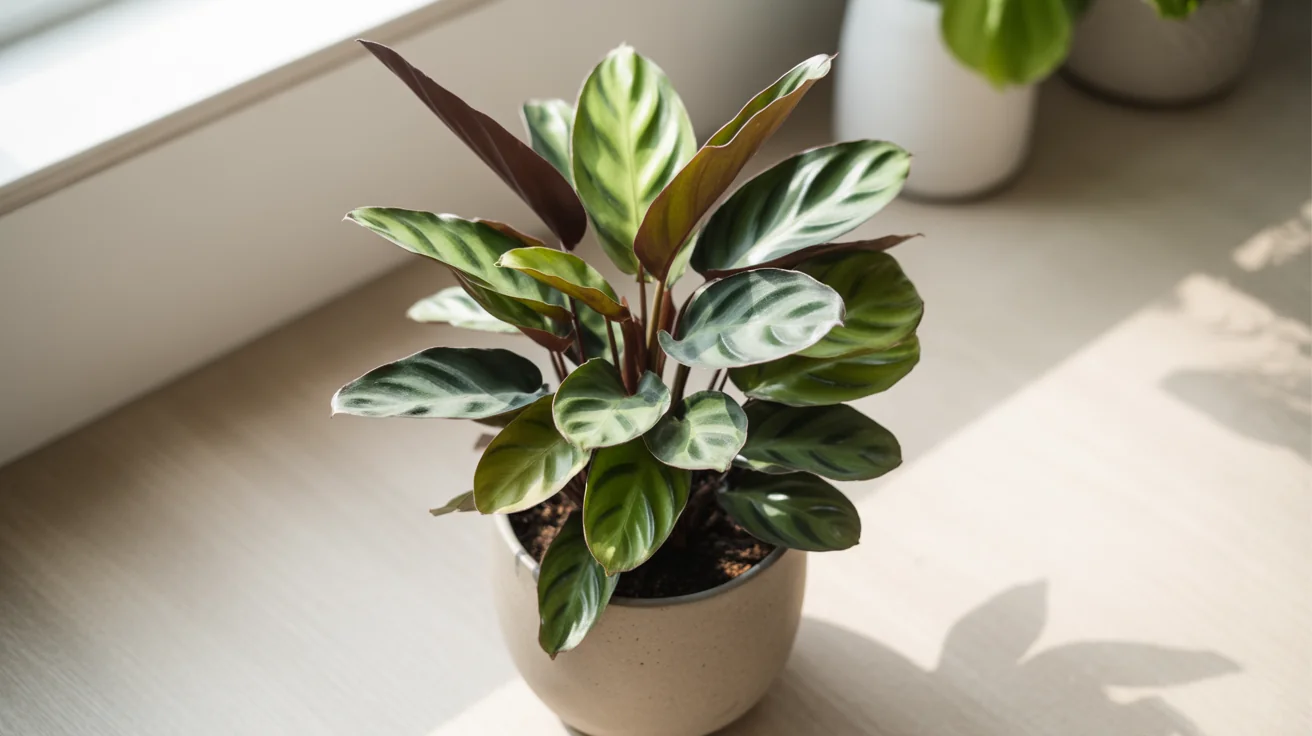
Calathea
Patterned foliage with its own care needs and taxon-specific pet guidance.
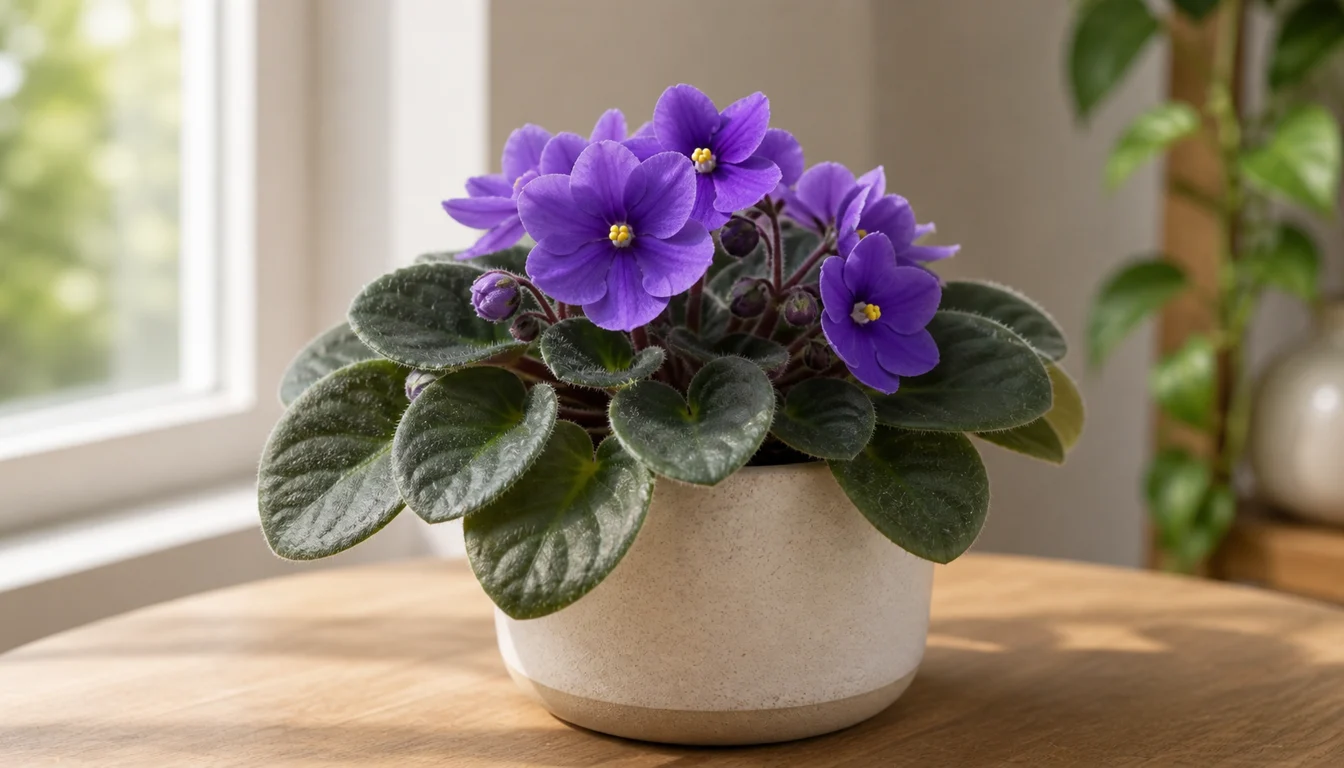
African Violet
African Violet is a windowsill bloomer that rewards steady, small-pot care.
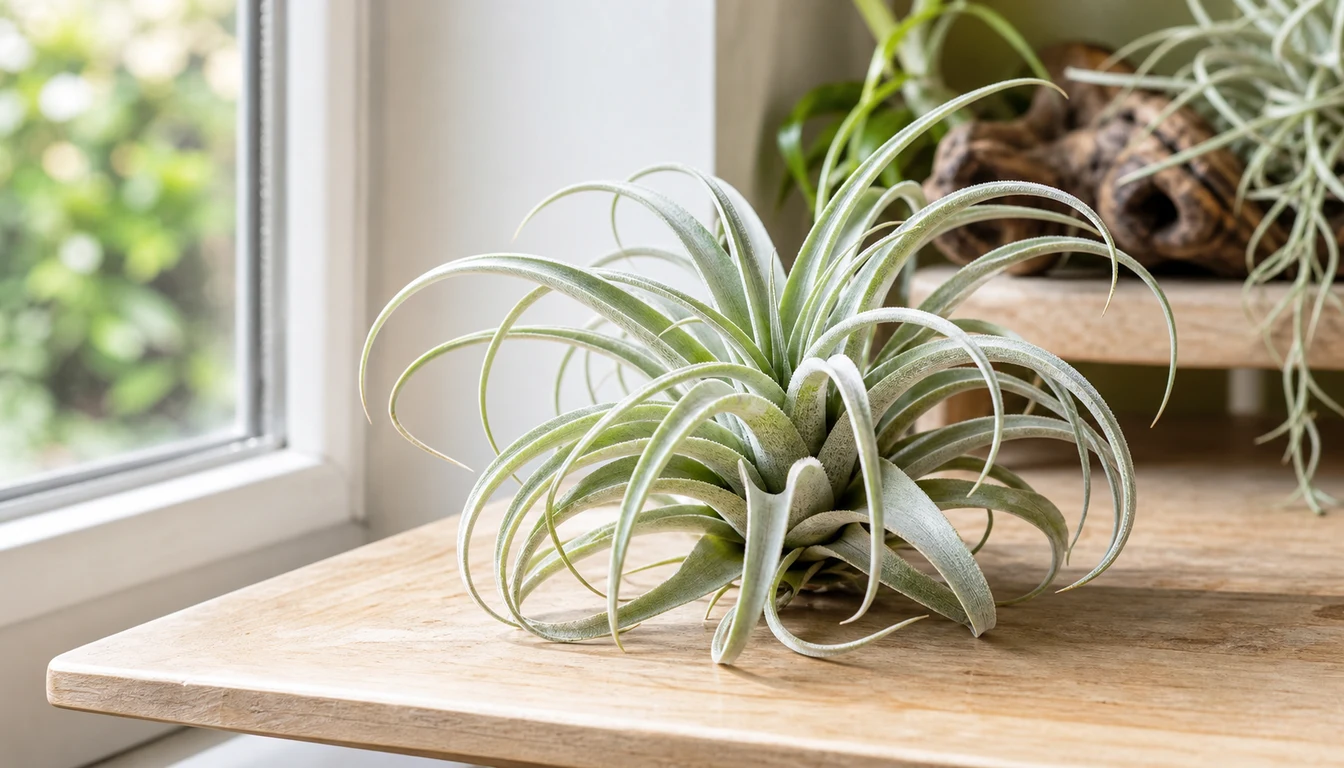
Air Plant
Air plants are living sculptures that thrive without soil, anchoring to driftwood, rocks, or shells while drawing…
Aloe Vera
Aloe vera stores water in its thick, gel-filled leaves and can survive weeks without attention — which makes…