
What Is Alocasia Dragon Scale and How Do You Grow It Indoors?
Alocasia baginda 'Dragon Scale' Araceae
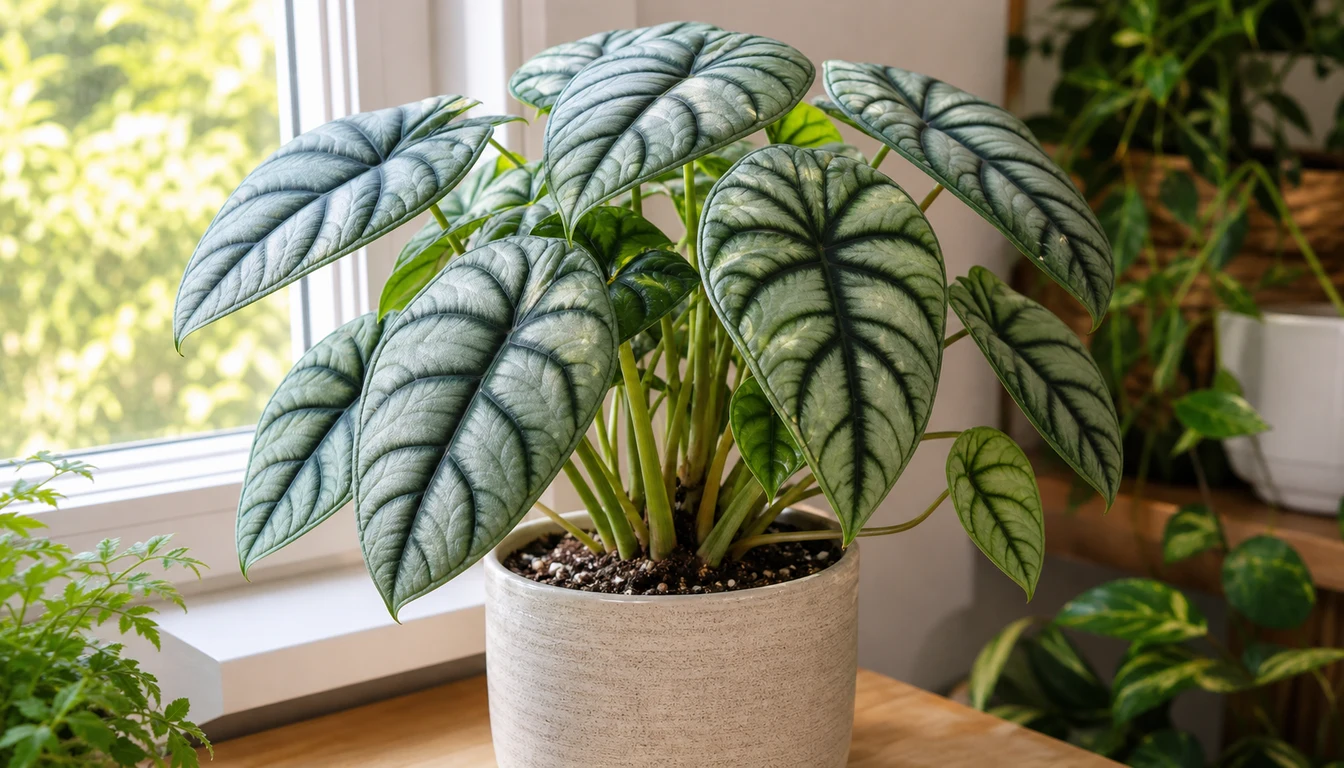
Alocasia Dragon Scale has thick, quilted-looking leaves with dark veins. Warmth, suitable light, humidity, and moisture around aerated roots support the plant, but humidity does not create its distinctive leaf pattern. Identification and care both need more than a single color or texture cue.
Care snapshot
What Makes the Leaves Look Like Scales?
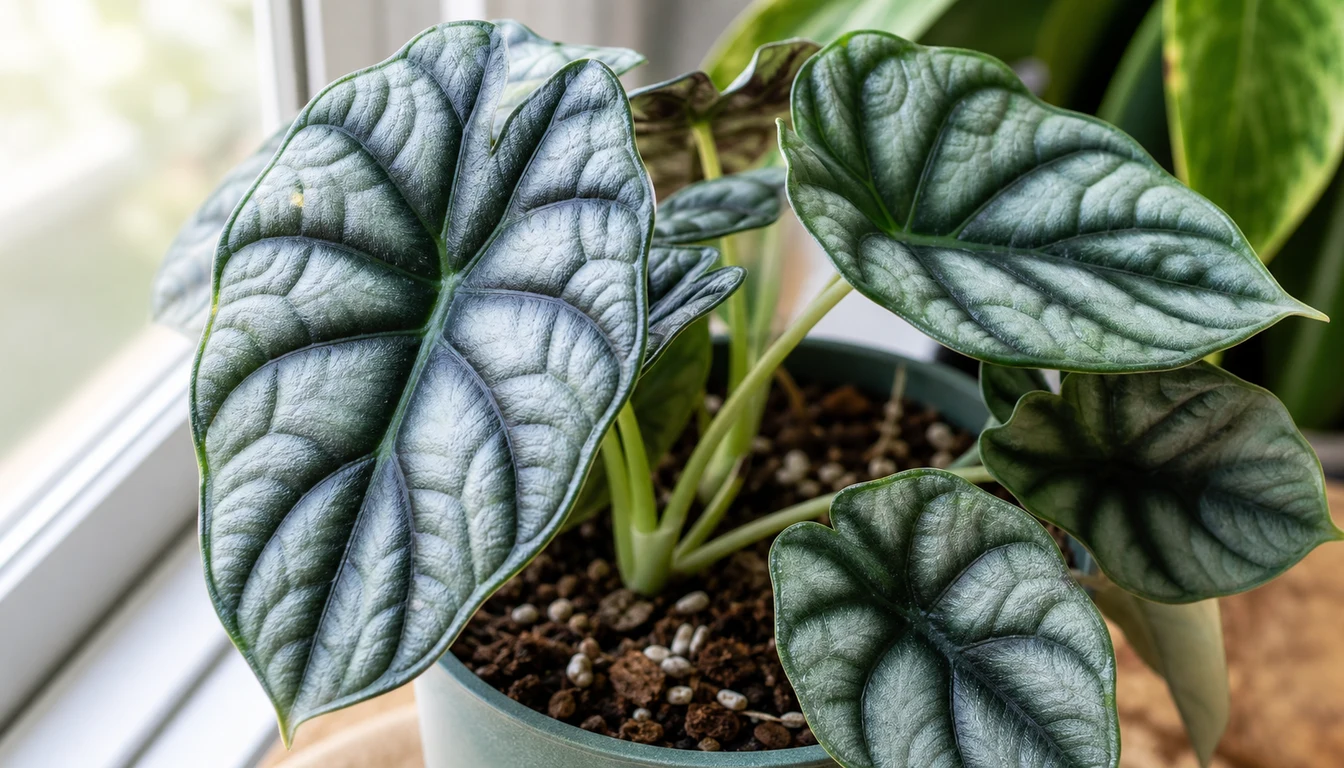
Dragon Scale is grown for a combination of thick leaf tissue, a textured surface, and dark veins. NC State describes the selection as compact, with arrow-shaped, silvery-green foliage. Light and viewing angle affect how strongly the relief shows, so a photograph is not a fixed color standard.
The leaf surface is a feature of the plant. Humidity does not create the scale pattern, and a flatter-looking photograph does not demonstrate that the air is too dry. Leaf age, lighting, identity, and condition all need consideration before a change is treated as a care problem.
The name Alocasia baginda 'Dragon Scale' separates it from the genus’s giant elephant ears, but a nursery label still needs to match the plant offered. A common name containing “dragon” is not enough to establish an identical cultivar, size, or care history.
A compact habit makes this a different display choice from a large floor-standing Alocasia. It still needs room around its leaves and a position where the whole plant receives suitable light. A deep shelf can protect foliage from being knocked while also shading it too heavily.
The visible leaf is only part of the plant. New shoots develop from its underground stem system, and roots supply those shoots. A display that highlights the leaves but traps water around the pot can undermine the structure supporting them.
Dragon Scale, Polly, and Similar-Looking Plants
The leaf forms give these plants different visual effects. NC State describes Dragon Scale’s thick texture, Polly’s dark arrow-shaped foliage, and the velvety surfaces of other selections.
Polly has a smoother blade, pale veins, and wavy margins. Black Velvet has dark, velvety leaves with pale veins, while Frydek has a different, narrower arrow shape with a velvety surface. None of those appearances establishes a simple ranking of how easy the plants are to grow.
“Green Dragon,” “Bambino Dragon Scale,” and similar sales names cannot be assumed to identify the same selection without reliable identification. Even a species label does not prove the cultivar. A clear nursery name, photographs of the actual stock, and visible leaf form together provide a better basis for a purchase than an attractive label alone.
Condition is a separate question from identity. Pests on the undersides, a collapsing base, or persistently saturated media can matter more than a small cosmetic mark. A prescribed number of leaves does not certify that a plant is healthy or ready for a move.
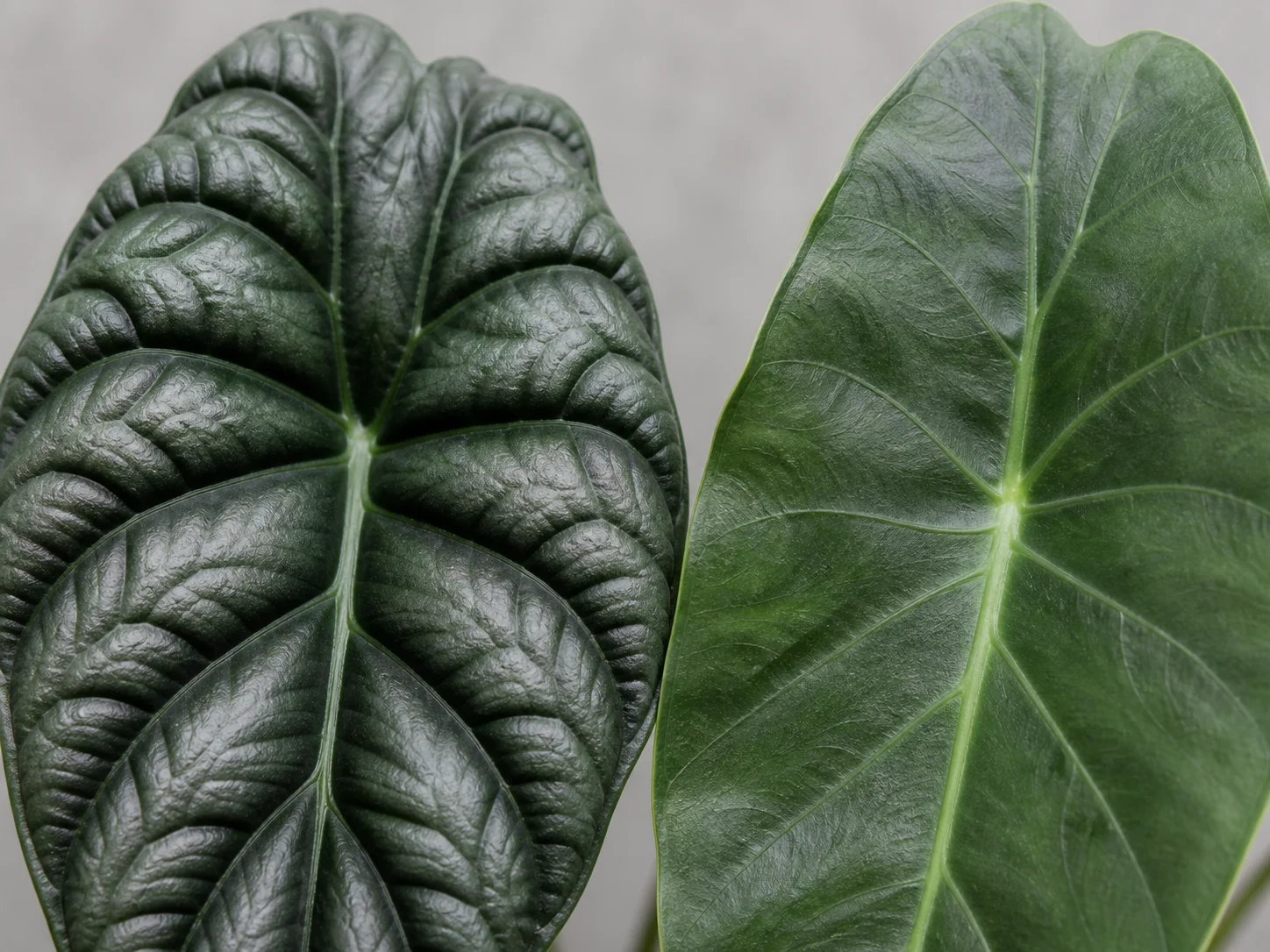
- Dragon Scale
- Thick, textured, arrow-shaped foliage with dark veins.
- Polly
- Smoother dark arrow leaves with pale veins and wavy margins.
- Black Velvet
- Small, thick, dark leaves with a velvety appearance and pale veins.
- Frydek
- Velvety dark foliage with a narrower arrow shape and contrasting veins.
Light Without Using Texture as a Meter
Bright indirect light is the indoor starting point in the RHS Alocasia guide. Strong direct sun can damage foliage, particularly after an abrupt move from protected conditions. A plant that arrived from a shaded nursery does not necessarily tolerate an exposed afternoon window immediately.
Window direction gives only part of the picture. Outdoor shade, glazing, curtains, season, and distance change what reaches the leaves. A universal rule such as a few feet from every west window cannot account for those differences.
In low light, slower growth can reduce water use. That may help explain a pot staying wet longer, but the potting mix, container volume, temperature, and root condition also influence drying. Light and watering therefore need to be considered together without treating either as the only cause.
The depth of the leaf’s apparent grooves is not a reliable light meter. A mature leaf photographed in side lighting can look more sculpted than the same leaf under diffuse light. Moving the plant repeatedly to intensify a photographic effect risks changing conditions without addressing a real problem.
Supplemental lighting can help when the available position is dim. Fixture output and coverage determine an appropriate placement. A single bulb distance or hourly schedule cannot replace the manufacturer’s guidance and observation of the actual plant.
Watering Without a Weekly Deadline
Dragon Scale needs water available to its roots during growth, with drainage that allows air to return to the mix. The root zone should not remain saturated simply because the plant prefers humid air. Air humidity and water held in the container describe different conditions.
A five-day or two-week schedule can be misleading because water use changes with light, temperature, root volume, and growth. Surface moisture is useful when interpreted alongside the pot’s weight and moisture below it. The top can dry while a deeper layer remains wet.
When the root ball needs water, thorough wetting followed by drainage is more useful than a required runoff percentage. Water that races through a channel may bypass dry media. Water that collects in a cachepot can keep the base saturated after the watering itself has ended.
A drooping leaf does not settle the question. Dry roots may lack water, while damaged roots may be unable to absorb it from wet media. Continued collapse in a wet pot needs a root assessment rather than another drink.
Brown margins do not by themselves establish fluoride injury or prove that filtered water will fix the plant. Moisture stress, salts, physical injury, and other conditions can leave similar damage. Changing water sources without examining the rest of the root environment can leave the actual problem unresolved.
An Open Mix and a Suitable Pot
The RHS recommends a free-draining mix for Alocasias. Its purpose is to hold usable moisture while retaining structure around the roots. The starting potting mix matters, so a single percentage of bark, perlite, or other ingredients does not work identically in every container.
A drainage hole is necessary, but it does not make a dense, saturated mix suitable. Nor does water leaving the pot within a particular number of seconds prove that every part of the root ball received moisture and air in the right balance.
A container suited to the existing roots limits unnecessary wet volume. That is especially relevant to a small plant moved into a much larger decorative pot. The roots cannot immediately use water from all the added medium.
The mix also changes over time. Material that has broken down and remains wet around the roots may need replacement, while standing water in an outer pot needs to be emptied. Adding another ingredient to the surface does not correct those conditions throughout the root ball.
Repotting is useful when crowding, poor medium condition, or a root problem justifies it. It is less useful as a repeated reaction to each old leaf mark. Necessary intervention should address an observed problem while limiting avoidable root disturbance.
Propagation from the Underground Stem System
The RHS describes rooted-offset separation and fleshy-rhizome division for Alocasias. Both depend on preserving tissue that can produce new growth. A detached leaf and stalk are not equivalent to an offset or a rhizome piece with a growing point.
A rooted offset is often a practical method when one is already present. Its own roots help supply the new shoot after separation. That is a reason to favor suitable offsets, not evidence that every valid division must already have roots or a prescribed leaf count.
Division is most sensible when the parent has separable growth and the environment supports recovery. Combining it with necessary repotting can avoid repeated disturbance. Neither the calendar nor a humidity percentage guarantees that a small division will establish.
Clean tools limit contamination during division, and gloves protect against irritating sap. Damaged or decaying material needs assessment before propagation. The useful starting point is sound growth with the structures needed to establish a new plant.
- Expose an existing offset gently and identify its connection, growing point, and roots. Do not pull a leaf stalk and assume it is a complete division.
- Separate suitable growth with clean tools where needed, preserving its own roots and growing point. Wear gloves to avoid irritating sap.
- Plant at the previous depth in an open mix and a draining pot sized to the roots. Water to settle the mix and let excess water leave.
- Keep conditions stable and follow moisture as the division establishes. New growth is useful evidence of activity, but it does not guarantee that every root is healthy or establish a fixed recovery time.
Pests and Damage on Textured Leaves
The textured upper surface is only one part of an inspection. Pests can also occur on the undersides, petioles, and new growth. Supporting a leaf while examining it helps reveal those areas without creasing the blade to flatten its relief.
Spider mites can produce fine stippling and webbing. Magnification and looking for movement help separate mites from dust or unrelated marks. Thrips can leave silvery feeding damage and dark waste specks, so a pale patch alone cannot select the treatment.
Scale insects have another appearance. Established scales can look like fixed bumps, while their crawlers move. Soft scales may produce honeydew, but armored scales do not. Sticky material is therefore a useful observation with a limited meaning.
Fungus gnats are associated with moist organic media. Their larvae are largely scavengers, and adults are often a nuisance around established plants. Seeing adults does not prove they caused a collapse, while a sticky trap monitors adults without correcting persistent saturation or every larval problem.
Minnesota recommends plain water and physical cleaning where appropriate and warns against homemade soap recipes that can injure foliage. If a pesticide is needed, it must be labeled for the plant, pest, and indoor use. An automatic sequence of neem or soap sprays at fixed intervals can expose the leaves repeatedly without establishing what is being treated.
Humidity, Feeding, and Slower Growth
Warm, humid conditions suit Alocasias, but humidity is not the sole explanation for a leaf’s condition. A damaged margin may reflect root moisture, salts, physical injury, or pests as well as dry air. Existing dead tissue will not recover its original appearance after conditions improve.
Purdue notes that misting evaporates too quickly to maintain humidity. Plant grouping or trays can influence a local space, while a humidifier can change room air more directly. Measuring conditions near the foliage is more informative than assuming a pebble tray keeps the whole room at a particular humidity.
The RHS describes a cooler, drier resting period for the genus. Indoor plants do not all follow one calendar, however. A warm plant under adequate light can remain active while one in a dim, cool position slows down.
Feeding belongs with active growth and suitable root conditions, following the product label and accounting for nutrients already present in the mix. Adding fertilizer to a declining plant does not resolve root injury or inadequate light.
Leaf loss accompanied by a firm underground stem is not sufficient proof of harmless dormancy. Fine roots can be injured before the crown shows an obvious problem. Continued collapse, soft tissue, or a persistently wet pot calls for investigation, with watering adjusted to actual demand rather than a promised spring restart.
Pet Safety and What a Nursery Label Cannot Prove
The ASPCA lists Alocasia spp. as toxic to dogs, cats, and horses because of insoluble calcium oxalates. Oral irritation, pain and swelling, drooling, and difficulty swallowing are listed signs. Vomiting applies to dogs and cats, not horses.
This is genus-level evidence, not a Dragon Scale dose study. It cannot support a claim that small exposures are harmless or that serious outcomes require a large amount. Contact a veterinarian or animal poison service promptly after suspected ingestion.
Sap can irritate skin and eyes during handling. Gloves and careful disposal of cut material reduce exposure, while placing a plant high up only helps if animals cannot reach it or fallen pieces. The safety question includes discarded offsets and leaves, not just the pot.
A nursery label also does not prove how a plant was propagated or where it was collected. Claims about nursery production, responsible sourcing, or wild collection need evidence from the supplier. Leaf appearance alone cannot establish that history.
For outdoor use, the exact plant and local conditions matter. General Alocasia landscape hardiness or wet-soil tolerance should not be assigned automatically to this compact indoor selection. Ornamental plants sold under taro or elephant-ear names are not thereby identified as food crops.
Sources & References
- NC State Extension: Alocasia
- RHS: How to Grow Alocasias
- ASPCA: Alocasia
- University of Maryland Extension: Diagnose Indoor Plant Problems
- Purdue Extension HO-39: Indoor Plant Care
- University of Minnesota Extension: Managing Insects on Indoor Plants
- University of Maryland Extension: Root Rots of Indoor Plants
Related Plants
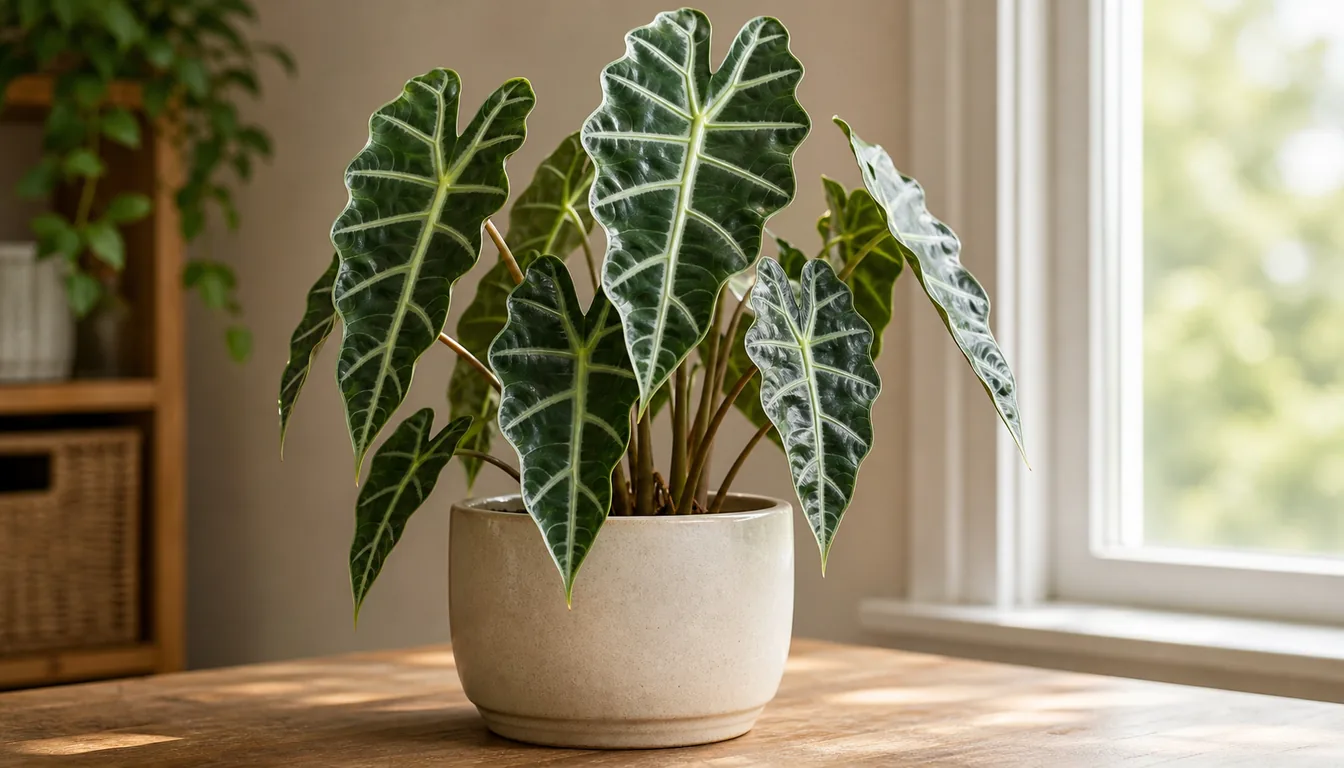
Alocasia Polly
Smoother arrow-shaped leaves with pale veins and wavy margins.
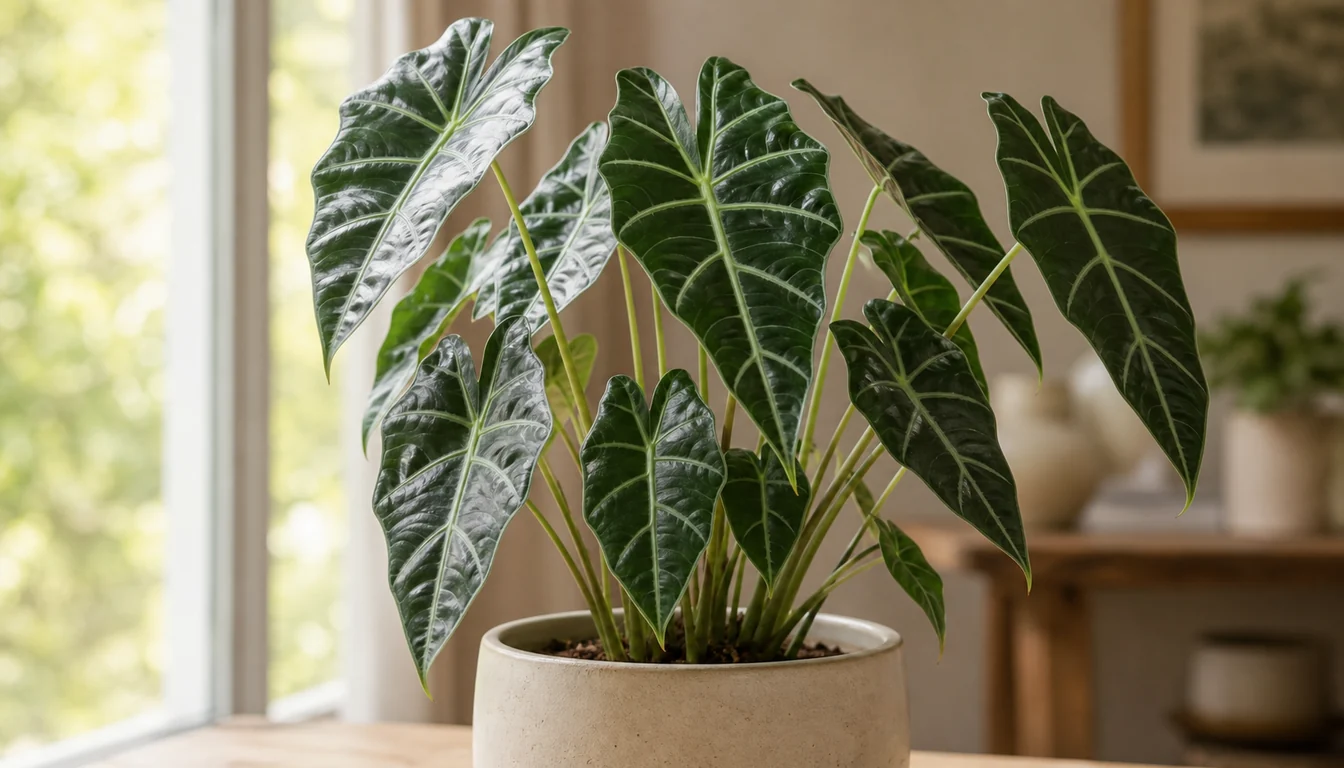
Alocasia
Compare compact selections with large elephant ears and their growing contexts.
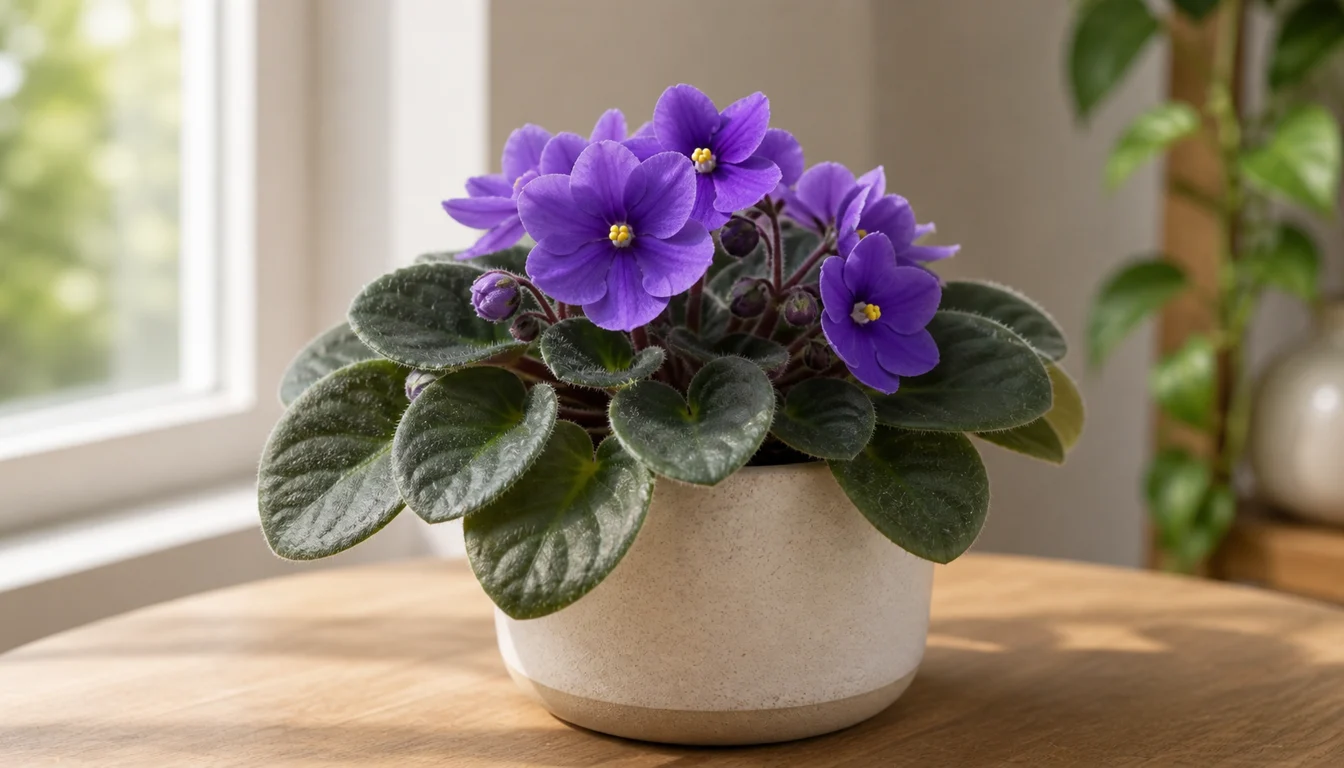
African Violet
African Violet is a windowsill bloomer that rewards steady, small-pot care.
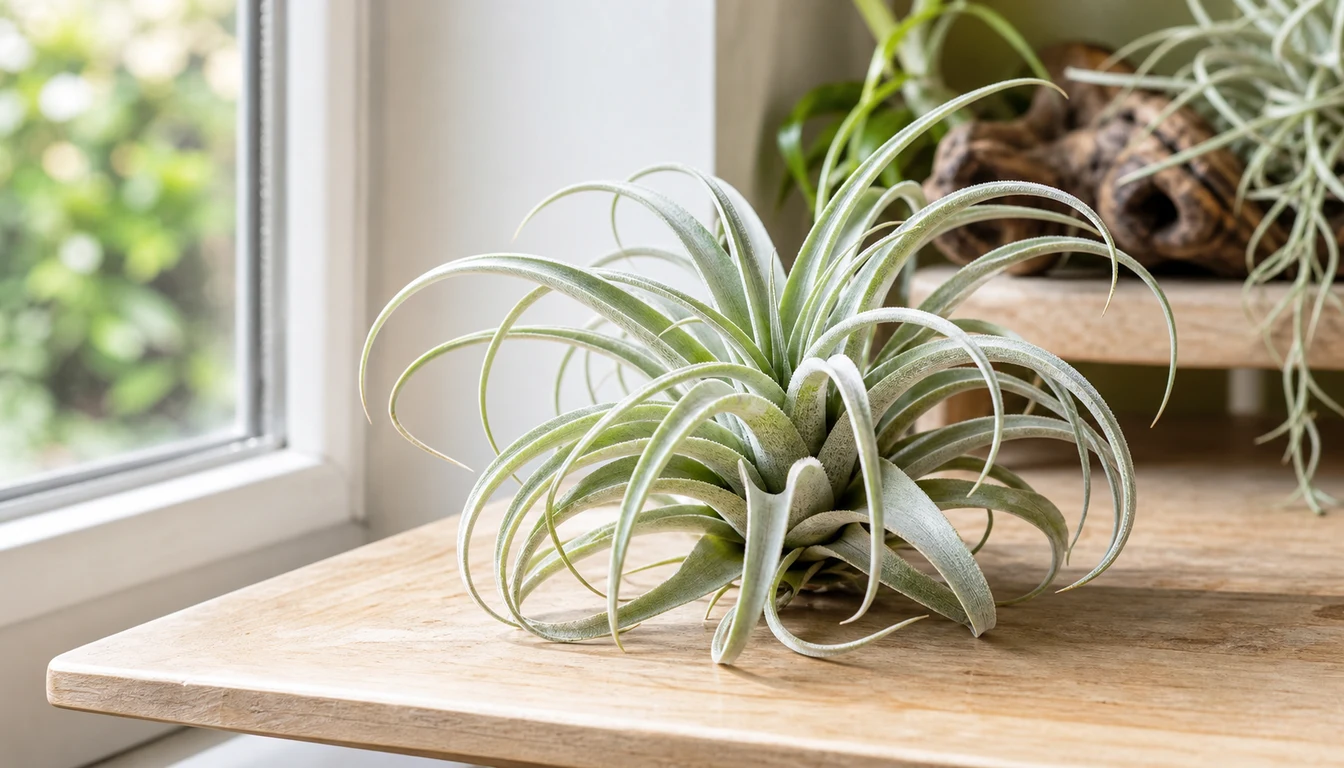
Air Plant
Air plants are living sculptures that thrive without soil, anchoring to driftwood, rocks, or shells while drawing…
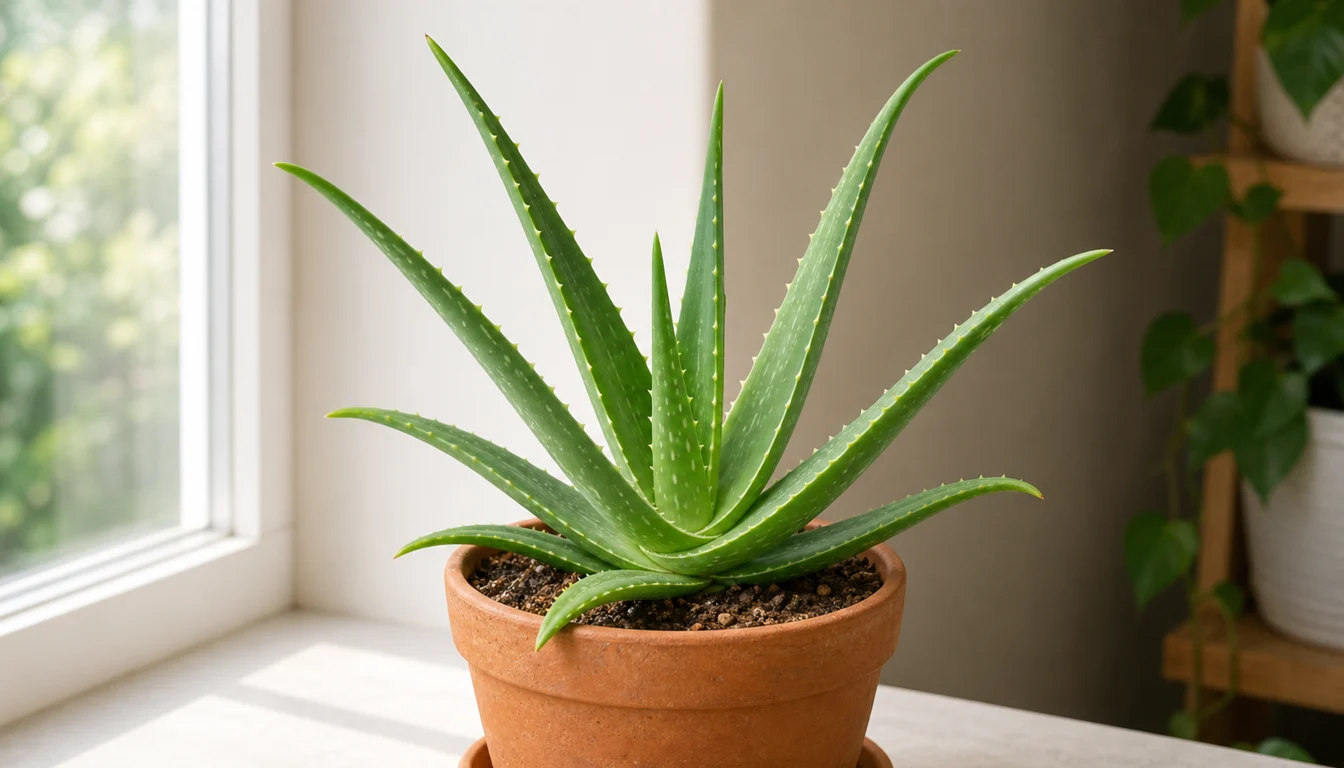
Aloe Vera
Aloe vera stores water in its thick, gel-filled leaves and can survive weeks without attention — which makes…
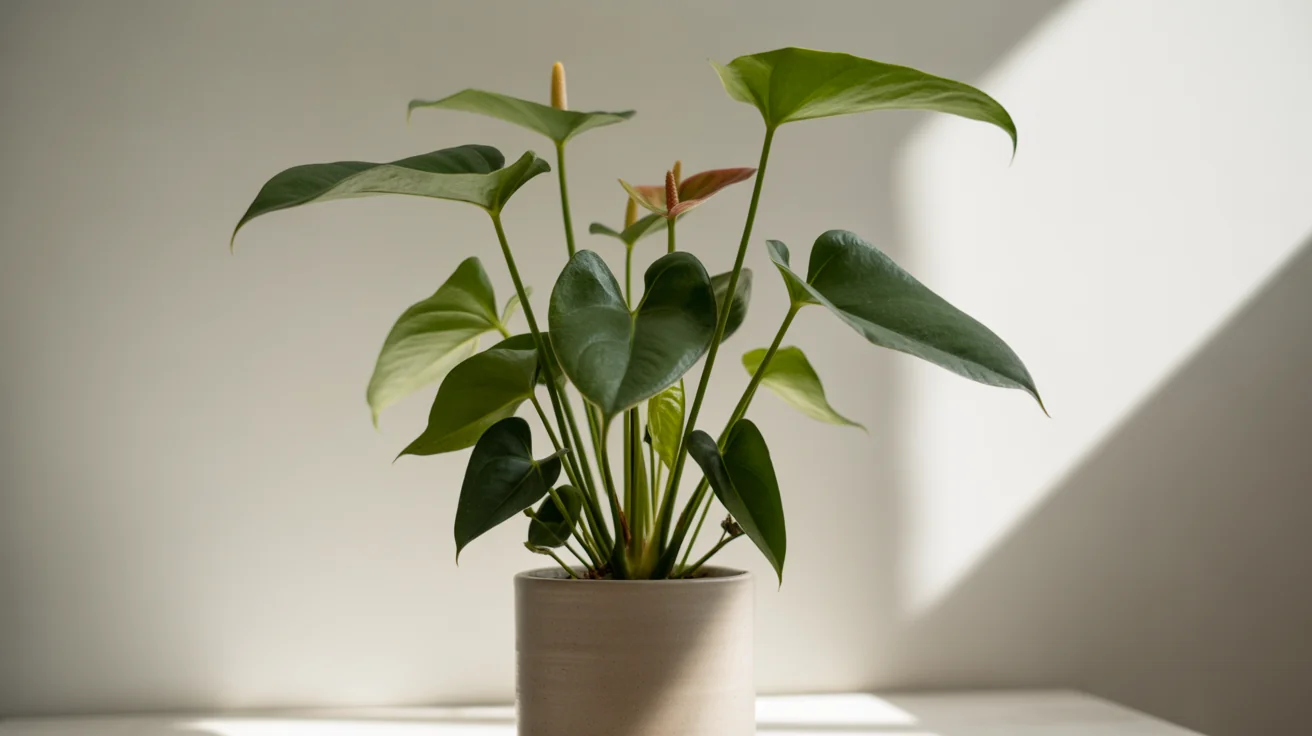
Anthurium
Flowering Anthurium needs bright indirect light, warmth, and a potting mix that holds moisture while letting excess…