
Which Medicinal Herbs Can You Grow and Identify at Home?
Which medicinal herbs to plant first, what NCCIH says the research shows for sage, lavender and mint, and the lookalikes to rule out before harvest.
At a glance
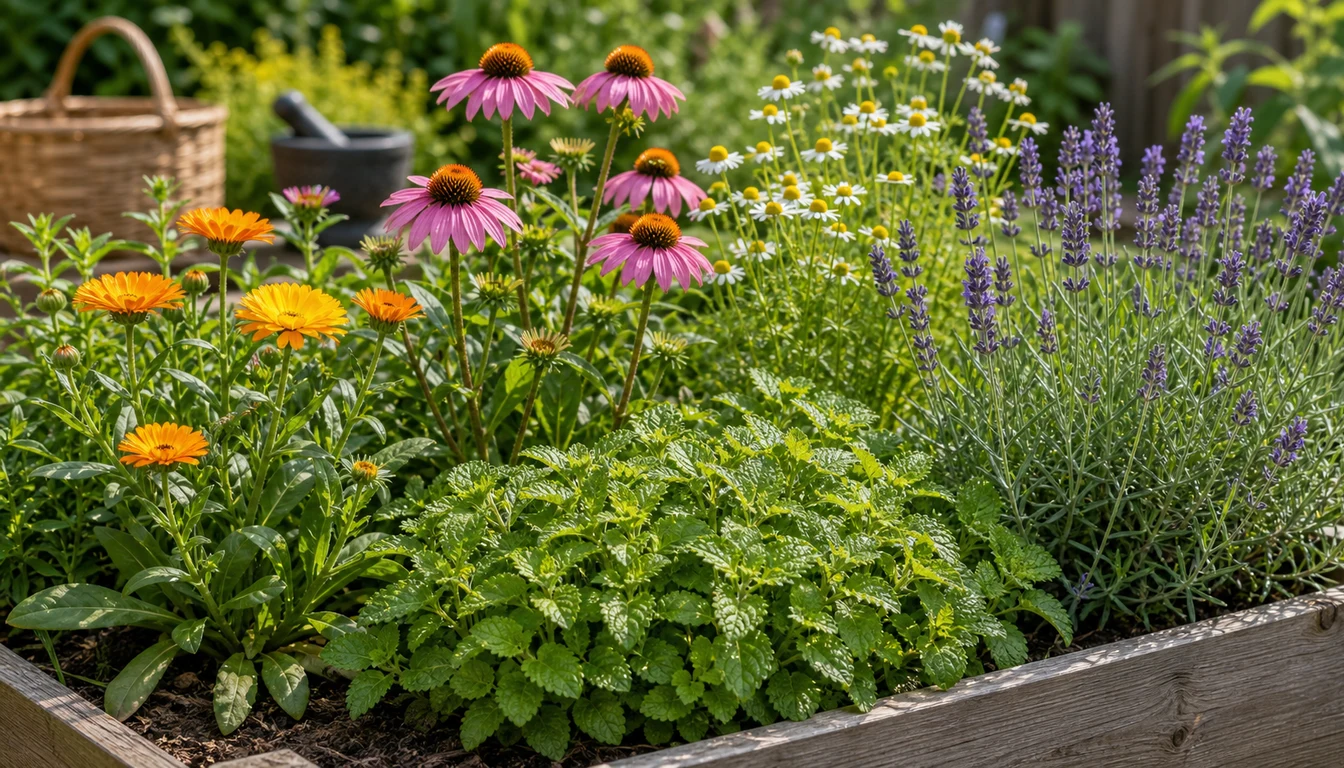
Start a medicinal herb bed with sage, thyme and rosemary, three plants you can identify without reading the label, and add mint, lavender and yarrow once those are familiar.
Identification comes first because several garden plants share a common name or a look with something you would not want to pick, and the shared name is often the only thing anyone checks.
The research behind these herbs is thinner than their reputation. The National Center for Complementary and Integrative Health (NCCIH) says only small amounts of research have been done on sage, and that there is not enough evidence to say whether peppermint leaf is useful for any health condition.
A garden can supply identified plant material. Deciding to use any of it for a health condition belongs with a qualified health professional rather than with a bed of herbs.
Which Medicinal Herbs Are Worth Growing at Home?
Begin with sage, thyme and rosemary.
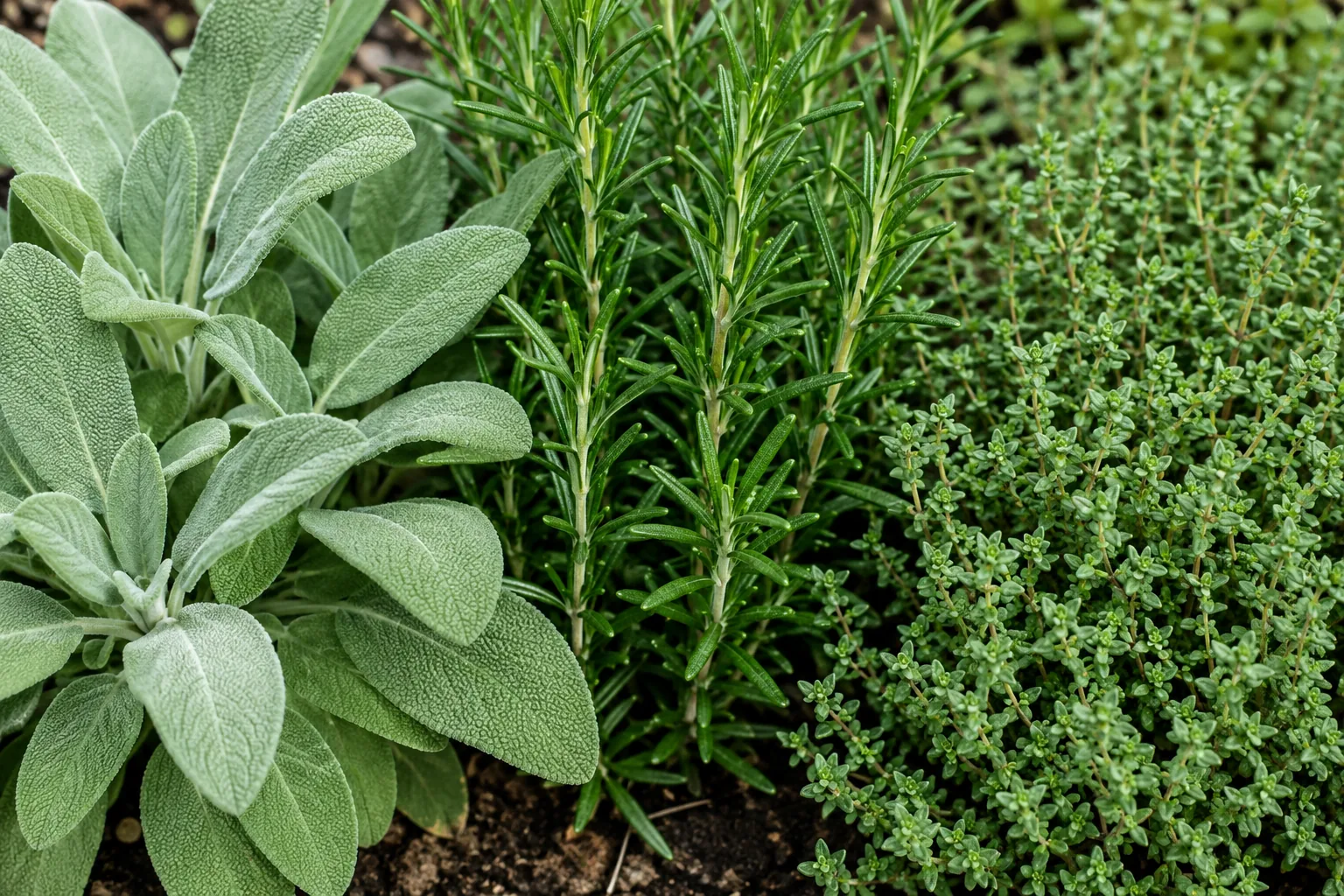
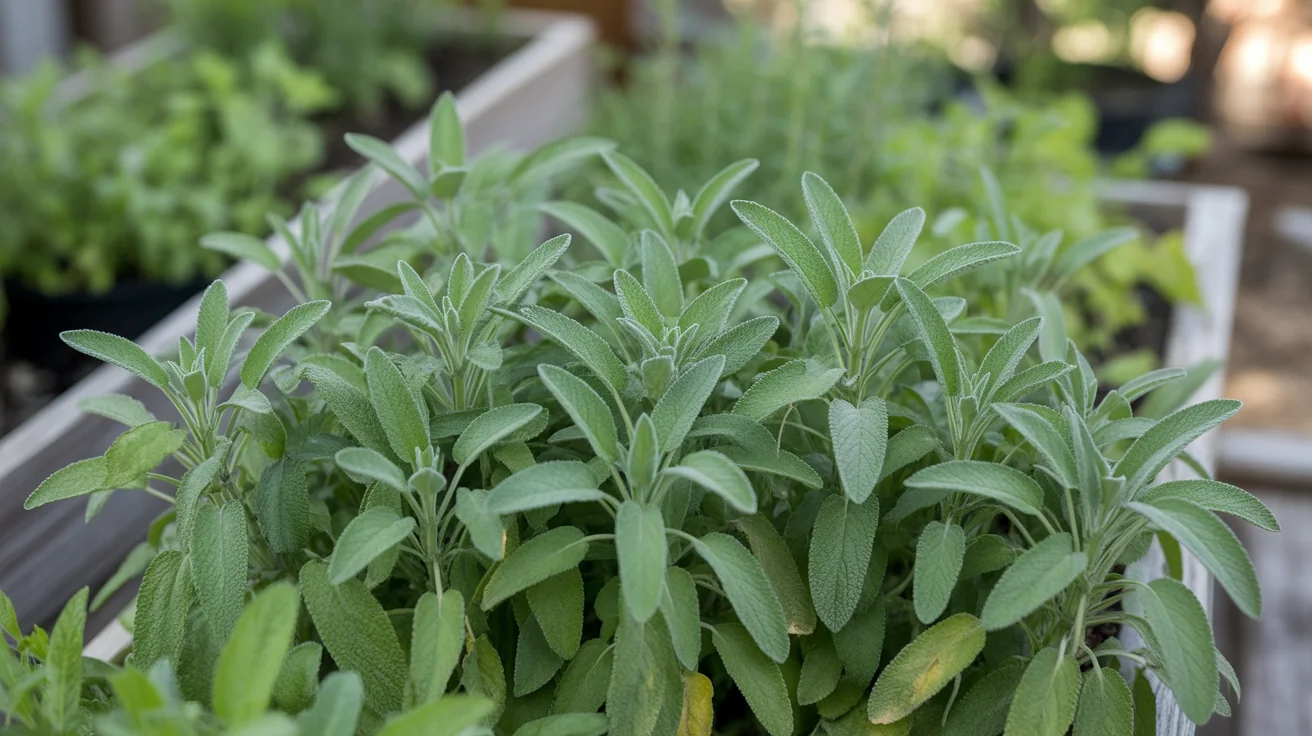
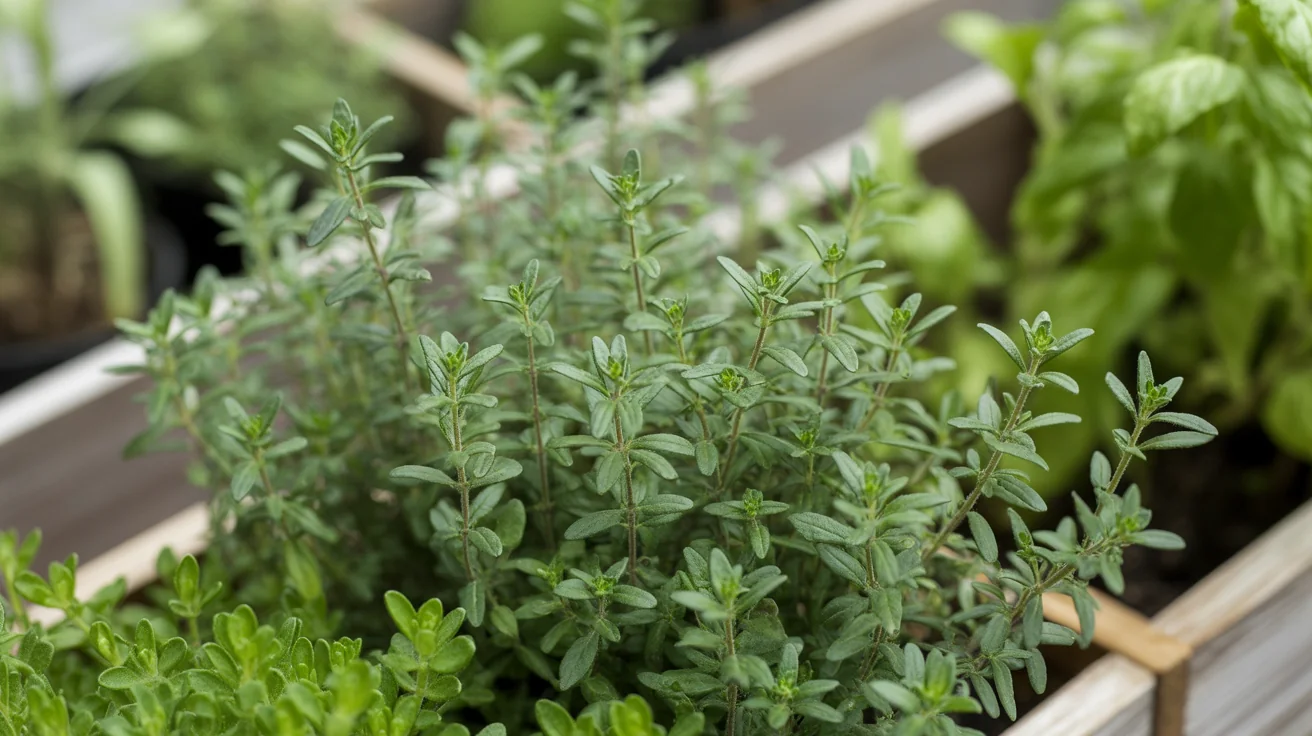
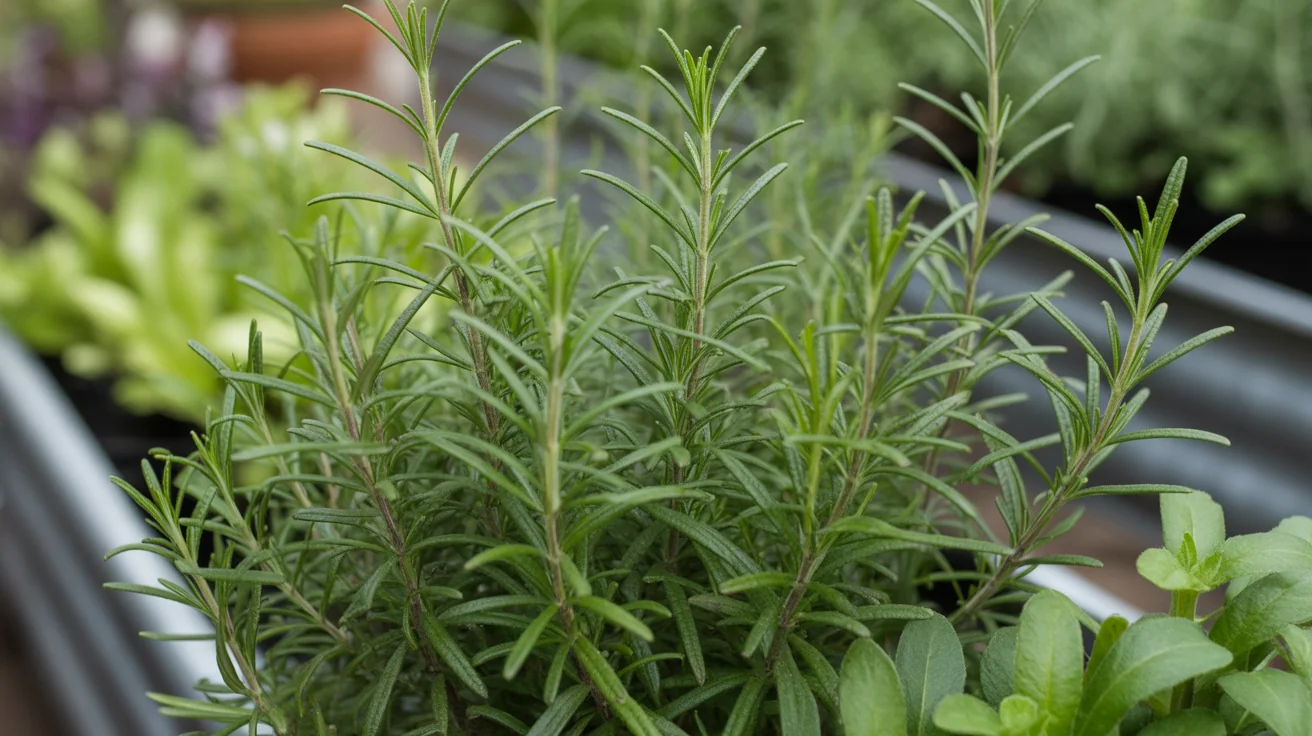
They are the strongest opening set for a reason that has nothing to do with reputation, which is that no two of them look alike. NC State describes sage leaves as grayish-green, hairy with white fuzz and about 4 inches long, thyme as a mound 6 to 12 inches high of tiny leaves only 1/4 to 1/2 inch long, and rosemary is woody with narrow needle leaves.
Somebody who has never grown a herb can separate those three across a bed at a glance. That is the property worth selecting for, because every other habit in the bed depends on it.
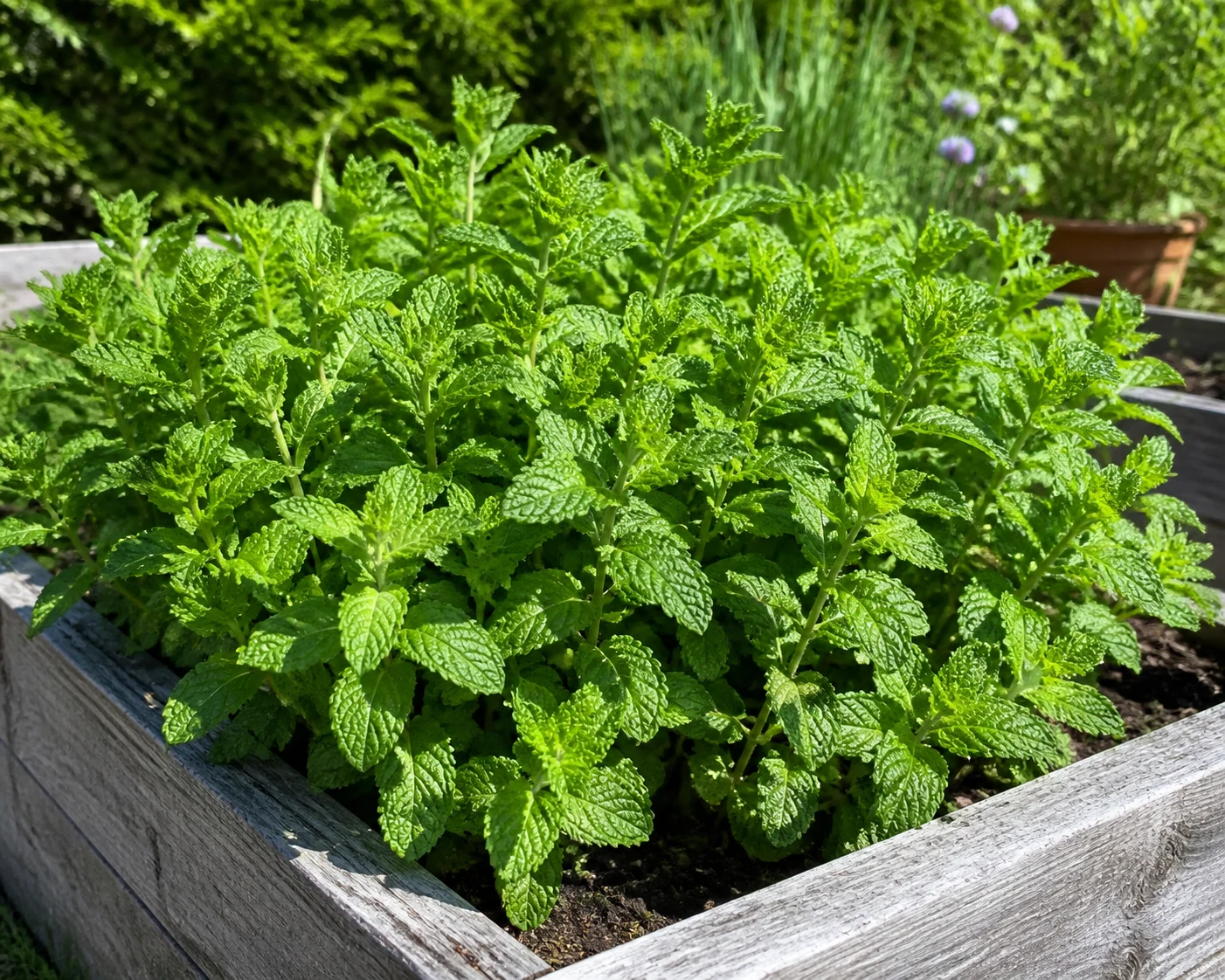
Mint and lavender come next. All five so far are in the mint family, and sage stems are square just as mint stems are, so the stem does not separate them. Mint gives itself away by its scent and by runners that spread through a bed, and lavender by its gray foliage and flower spike.
Yarrow is the sixth, identified by a flat flower head held over fern-fine leaves. It is also the one with a dangerous lookalike in the wild, covered in the lookalike section below.
| Herb | What identifies it | Confused with | Wants |
|---|---|---|---|
| Sage | Broad, fuzzy gray-green leaf about 4 inches long | Russian sage, an ornamental | Full sun, sharp drainage |
| Thyme | Low mound of tiny leaves | Nothing in a home bed | Full sun, dry edges |
| Rosemary | Woody stems, needle leaves | Nothing in a home bed | Full sun, sharp drainage |
| Mint | Strong scent, spreading runners | Nothing in a home bed | Its own free-standing pot |
| Lavender | Gray foliage, flower spike | Nothing in a home bed | Full sun, extremely well-drained soil |
| Yarrow | Flat flower head, fern-fine leaf | Poison hemlock, when picked wild | Lean soil, full sun |
Each plant above has its own profile carrying soil, spacing and seasonal care.
What Does the Research Actually Show for These Herbs?
Less than their reputation suggests. NCCIH keeps fact sheets on three of the six, sage, lavender and peppermint oil, and has none for thyme, rosemary or yarrow among its herb fact sheets.
| Herb | What it is used or promoted for | What NCCIH says the research shows | Safety notes NCCIH gives |
|---|---|---|---|
| Sage | Traditionally digestive, respiratory and skin problems, and now marketed for menopause symptoms, memory and cholesterol | Only small amounts of research, so definitive conclusions cannot be reached. A few small studies suggest common sage might reduce how often menopause hot flashes occur | Likely safe in food amounts. Common sage contains thujone, which can be toxic in large amounts, and sage may be unsafe during pregnancy |
| Lavender | Anxiety, stress, aromatherapy and skin use | Studies of lavender products exist, but more high-quality research is needed for reliable conclusions. Oral lavender oil may help anxiety in studies with limitations | Likely safe in food amounts. Oral products may cause diarrhea, headache or nausea, skin use may cause allergic reactions, and it might interact with sedative drugs |
| Mint (peppermint) | Peppermint oil for IBS, indigestion, headaches and nausea | Most research is on peppermint oil and IBS. For peppermint leaf there is not enough evidence to determine whether it is useful for any health condition | The oil can cause heartburn, nausea and dry mouth, and menthol should not be applied to the face of an infant or small child |
Two things follow from that table. The first is that the studies describe oils, extracts and capsules at measured doses, and a leaf picked from the bed is none of those, so a finding about lavender oil says little about a handful of lavender flowers.
The second is that risk depends on amount and form. NCCIH's warning about thujone in common sage applies to large amounts, which is why it calls sage likely safe at the amounts found in food and separately flags pregnancy.
Mint is the clearest case of the gap. The research NCCIH describes is mostly on peppermint oil, while the plant most gardeners grow is a pot of leaves, for which NCCIH says the evidence is not enough to judge.
Which Herbs Get Confused With Something You Should Not Eat?
The danger in a herb bed is usually a plant that shares a word or a look with another plant, because the word is what people trust and it is the part nobody checks.
Bay laurel is Laurus nobilis, in the family Lauraceae, and it is the leaf that goes into cooking. Skip laurel is a form of Prunus laurocerasus, cherry laurel, a hedging shrub in the rose family.
They are not close relatives, they are not interchangeable, and the only thing they share is the second half of a common name.
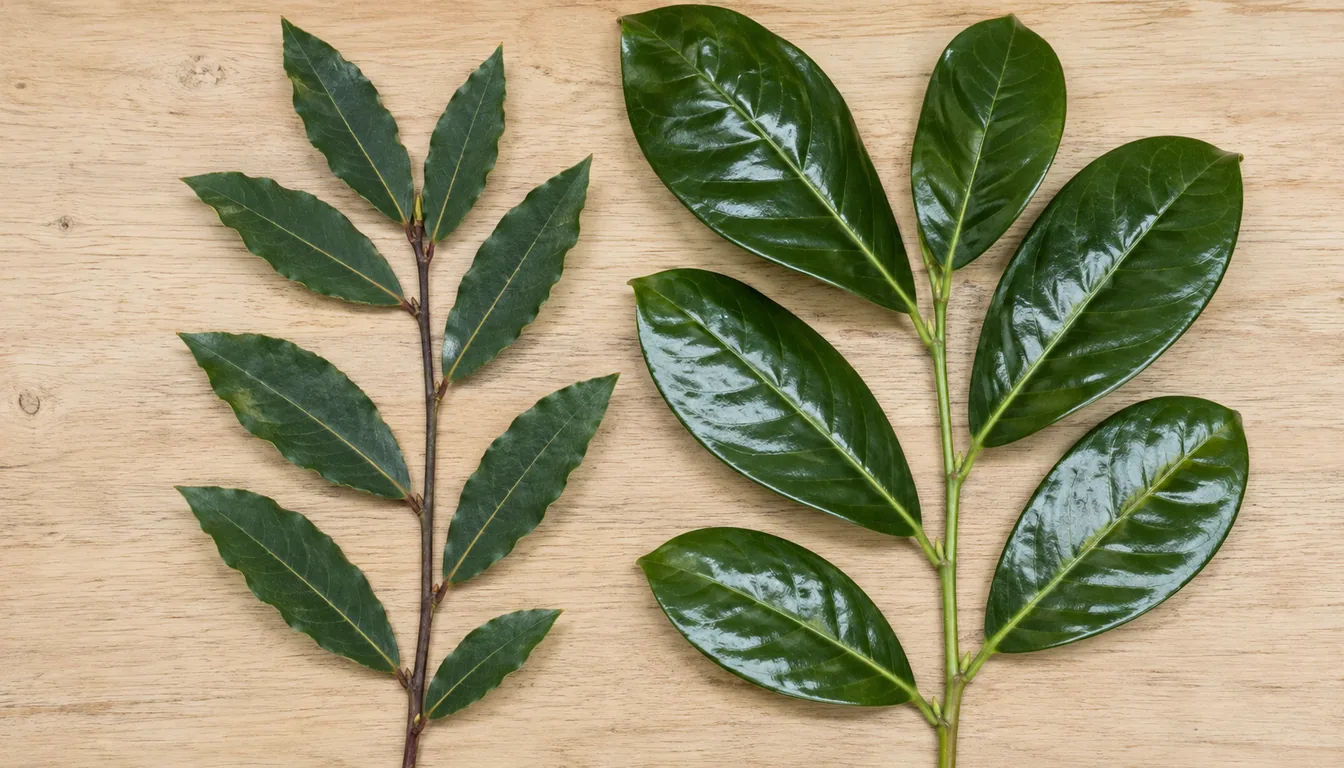
In the hand they separate on size and shine. NC State gives bay leaves as 1 to 3 inches long and leathery, and cherry laurel leaves as glossy and up to 10 inches long. Bay is not a pet-safe plant either, since the ASPCA lists it as toxic to dogs, cats and horses.
The second collision is quieter and costs nothing except a season.
Russian sage is Salvia yangii, an ornamental perennial with grayish, finely dissected leaves and purple flowers on tall branched stems, and it is not the culinary Salvia officinalis growing in the bed. Somebody who plants one expecting the other ends up with an attractive border plant and no sage.
Yarrow raises a different problem, because the risk sits outside the garden. University of Minnesota Extension lists yarrow among the plants that look similar to poison hemlock, a weed in which all parts are extremely toxic to people and livestock when eaten and small amounts can be deadly.
Poison hemlock stems are hollow, ridged and hairless, with purple spots or blotches, and its lacy white flowers sit in umbrella-shaped clusters 2 to 3 inches across on plants usually 4 to 6 feet tall. Minnesota's guidance is to wear gloves and eye protection to handle it and not to compost or burn it.
A yarrow bought in a pot under the name Achillea millefolium is not the danger. The danger is a white-flowered plant picked from a ditch or field edge because it looked like yarrow, which is why gathered wild material has no place in a bed kept for harvest.
All three cases come back to the same habit. A common name is a label somebody applied and the botanical name is what identifies the plant, so a nursery tag reading only laurel or only sage has not told you what you are buying.
How Do You Keep the Label Attached to the Identity?
Write the botanical name on the label rather than the common one. A label reading Salvia officinalis still answers the question in two years, where one reading sage does not.
Add the planting date while you are there, because it tells you the age of a woody herb, and age is what decides whether a bare-looking rosemary is worth cutting back or replacing.
The label in the bed is only half the job.
Once material has been cut and dried it has left the plant that identified it. UMN Extension labels drying bundles to prevent mix-ups, and Maryland Extension stores dried herbs in a labeled airtight container, so the label travels with the material from the moment it is cut.
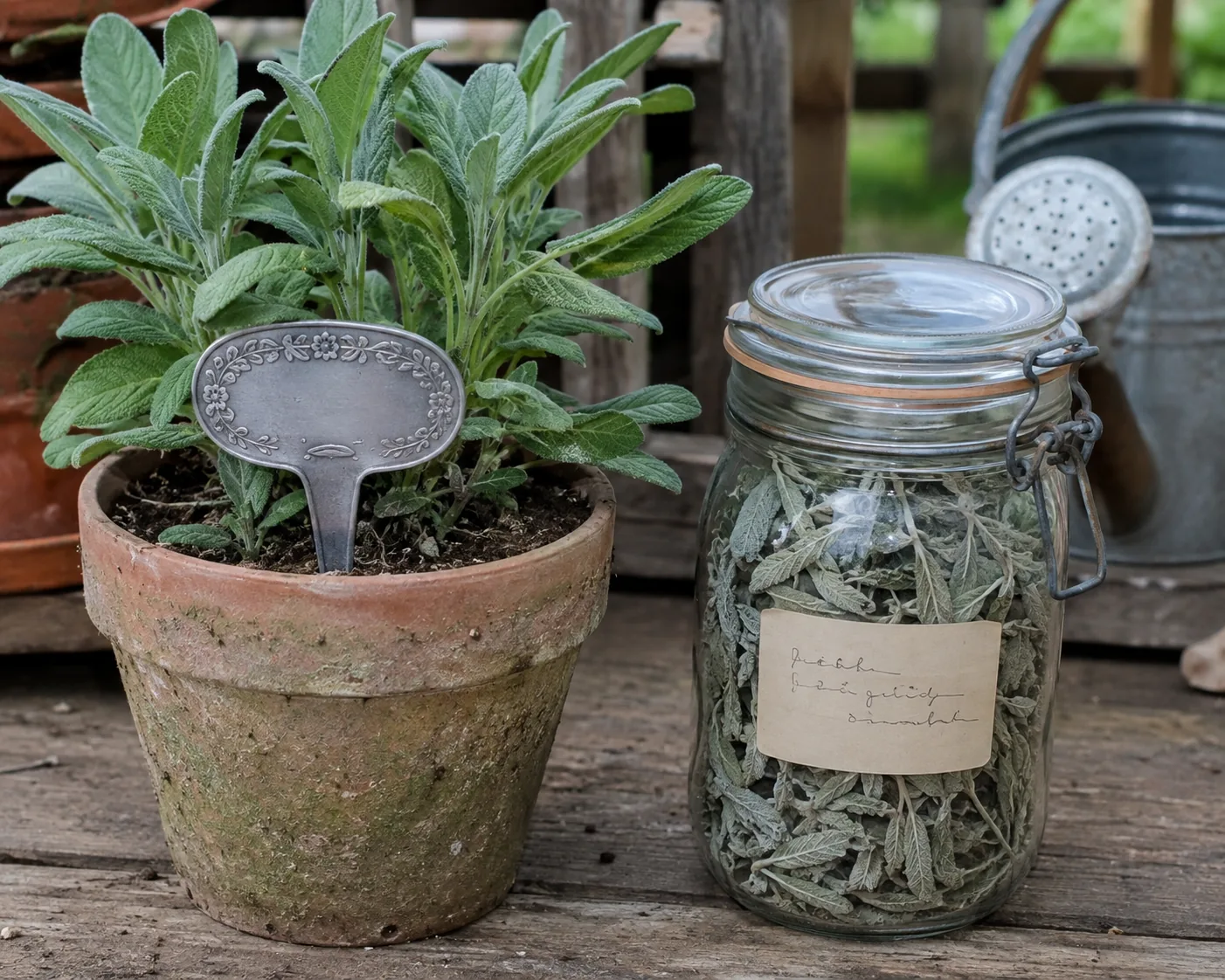
- The botanical name: The one detail that still identifies the plant when the common name has drifted.
- The date: Planting date on the bed label, drying date on the jar.
- A material that lasts: A label that is still readable after a season of watering and sun.
- A position above the soil: A label lying flat gets buried under growth and turns up the following spring, if at all.
One jar holds one plant. Dried leaves from two herbs put into the same jar cannot be separated again, and that is the moment an identification you were careful about is actually lost.
Where Should a Medicinal Herb Bed Go?
A harvested bed has a siting problem an ornamental border does not. Illinois Extension's harvesting advice starts with a check that the plants have not been sprayed with pesticides, since many products are not approved for herbs that are eaten.
So the boundary that matters is the one spray and drift can cross, and a harvested bed belongs apart from anything that gets treated, a lawn included.
The site then decides part of your list for you. UMN Extension says most herbs need at least six hours of direct sun and well-drained soil, and Illinois calls lavender demanding of full sun and extremely well-drained soil, so a damp shaded corner rules out sage, thyme, rosemary and lavender before you have bought anything.
Mint is a siting decision rather than a maintenance one. UMN Extension says hardy perennial mints can spread aggressively, and a free-standing pot of its own keeps it out of the thyme.
Which Part of the Plant Do You Harvest, and When?
The bed is not harvested one way.
Leaf herbs and flower herbs each give a different part, and applying a leaf habit to a flower herb wastes the crop and the season with it.
Cut leaf herbs before they flower. Maryland and Illinois both say leaf production declines once flowering starts, and Illinois adds that removing flowers as they appear keeps new leaves coming.
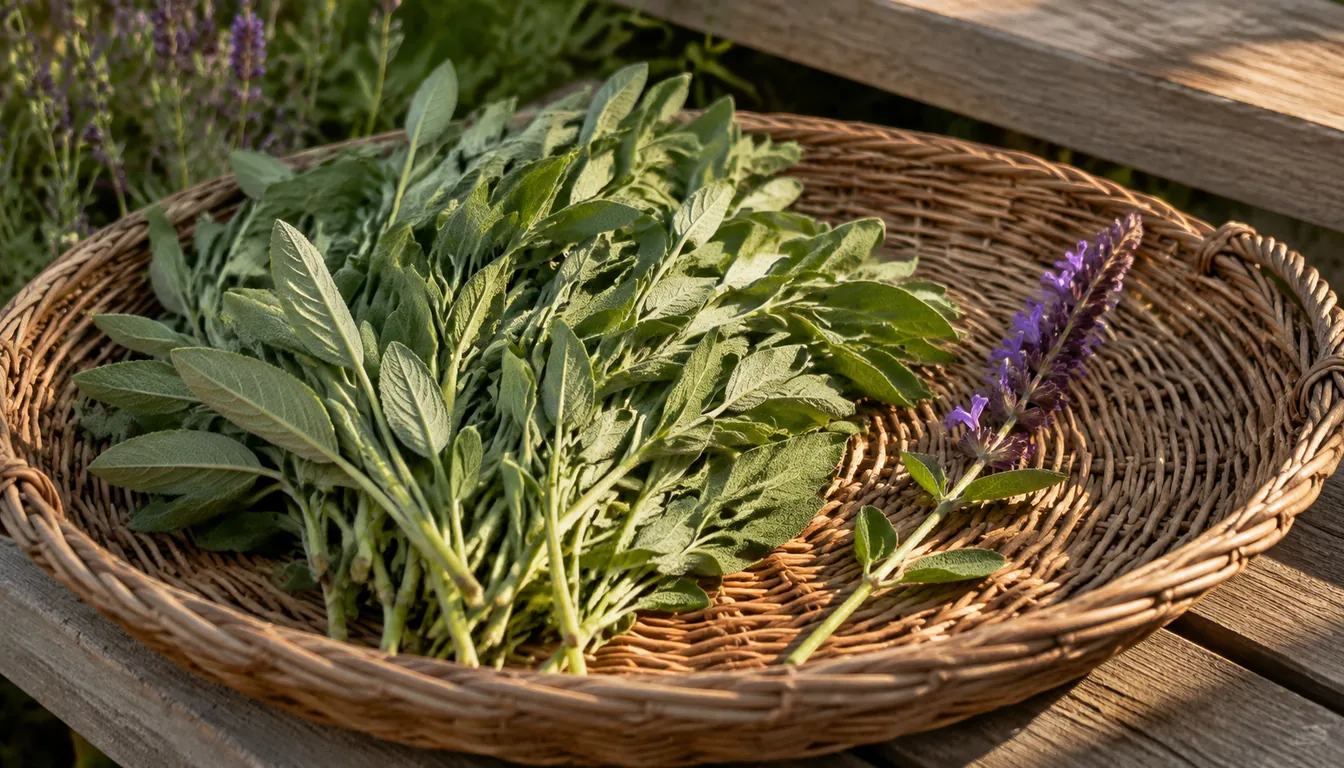
- Sage, mint and thyme: Leafy shoots, taken before the flowers open.
- Rosemary: Soft green tips in the growing season.
- Lavender: The flower stems, which Illinois cuts just as the flowers start to open, and cutting lavender stems has its own technique.
How much you take decides whether the plant comes back. Illinois puts the limit for perennial herbs at about one-third of the growth at any one time, which on rosemary keeps the cut in green growth rather than old bare wood.
Time it for the morning once the plants have dried off and before the day gets hot, which is the window Illinois and Maryland both give. UMN Extension then hangs bundles of four or five stems upside down in a dark, dry, well-ventilated place for 7 to 14 days.
Where Is the Line Between Growing an Herb and Using One?
A garden gives you identified plant material.
That is the whole of what it gives you, and it is worth saying plainly, because what is in a leaf varies with the season, the site, the age of the plant and how it was dried.
Traditional use is a record that people have used a plant. It is not a dose, not a duration, and not evidence that the plant suits any particular person. NCCIH's own sage fact sheet describes traditional use and still concludes that definitive conclusions about its effects cannot be reached.
Some questions stop being gardening questions entirely. Anything involving prescribed medication, pregnancy, nursing, children or pets belongs with a qualified professional who knows the individual circumstances, and NCCIH flags pregnancy for sage and sedative drugs for lavender.
This is also why a plant can be worth growing without being worth taking. The two recommendations are separate, and this page only makes the first.
How Do You Add a New Herb Without Losing Confidence in the Bed?
Apply the opening rule to every plant that arrives after the first six. A new herb earns a place when you could pick it out of the bed with every label removed, and it does not when the tag is the only thing separating it from its neighbor.
Buy from a nursery that sells under the botanical name.
It removes most of the problem at the counter rather than in the bed, and a supplier who will not tell you the species has answered a different question from the one you asked.
- You can name the species without reading the tag
- It does not share a growth form with anything already in the bed
- Its common name is not shared with a plant you would not eat
- You know which part of it is harvested before you plant it
A plant that fails the test is not banned from the garden. It goes into a pot of its own, away from the harvested bed, until it is familiar enough that the label is a convenience rather than the only evidence.
Quick Tips
- Photograph each plant beside its label in the first season, because a picture of the whole plant is easier to check a mystery seedling against than a written description.
- Grow one plant per pot when starting from seed. Two species sharing a pot are separable while they are small and difficult once the roots have knitted.
- Keep the nursery tag in a box rather than in the soil. It carries the species and the supplier, and it outlives the label that sits out in the weather.
Recommended Plants
4 herbs worth considering.
Sage
Sage is sold as a herb but grows as a small evergreen shrub that spreads wider than it grows tall, and it is…
Thyme
Thyme is sold beside the soft herbs but it is a small evergreen shrub, and it lives or dies on drainage rather than on…
Rosemary
Rosemary is an evergreen shrub that dies far more often from wet roots and cold winters than from neglect, so the site…
Mint
Mint spreads two ways at once. Its square stems root wherever they touch the ground and its rhizomes travel sideways…
Frequently Asked Questions
Are medicinal herbs safe to grow around pets and children?
They carry different records. The ASPCA lists sage, thyme and rosemary as non-toxic to dogs, cats and horses, and lists mint, lavender and yarrow as toxic to all three. For children the bigger risk is a plant mistaken for a herb, such as cherry laurel, which NC State rates as highly toxic to people. Anything specific to your household belongs with a vet or a doctor.
Can I use dried supermarket herbs to identify what I grew?
No, because dried material has lost the features identification depends on. Leaf surface, stem shape and scent in the hand are what separate a living plant from its lookalike, and none of those survive drying and packing.
Do medicinal herbs need different soil from cooking herbs?
They are largely the same plants, so no. Sage, thyme, rosemary and lavender want full sun and sharp drainage whichever bed they are planted in, and the difference between the two beds is how carefully the identity is tracked.
How do I know a nursery plant is the species on the label?
Check the plant against the features rather than the tag. A plant labeled sage with finely cut gray leaves and tall branched stems of purple flowers is Russian sage, and a plant labeled laurel with glossy leaves up to 10 inches long is cherry laurel rather than the bay used in cooking.
Does a long history of use mean a herb works?
No. NCCIH describes long traditional use of sage, yet says only small amounts of research have been done and definitive conclusions about its effects cannot be reached. A record of use shows that people have used a plant, not what dose is safe or whether it suits a particular person.
Sources & References
- University of Minnesota Extension: Growing Herbs
- NCCIH: Herbs at a Glance
- NCCIH: Using Dietary Supplements Wisely
- NCCIH: Sage: Usefulness and Safety
- NCCIH: Lavender: Usefulness and Safety
- NCCIH: Peppermint Oil: Usefulness and Safety
- NC State Extension Gardener Plant Toolbox: Prunus laurocerasus
- NC State Extension Gardener Plant Toolbox: Laurus nobilis
- NC State Extension Gardener Plant Toolbox: Salvia yangii
- NC State Extension Gardener Plant Toolbox: Salvia officinalis
- NC State Extension Gardener Plant Toolbox: Thymus vulgaris
- University of Minnesota Extension: Poison Hemlock, Plant Identification, Reporting Finds, and Management Strategies
- Illinois Extension: Harvesting Herbs
- Illinois Extension: Lavender
- University of Maryland Extension: Harvesting and Preserving Herbs
- ASPCA Toxic and Non-Toxic Plants: Sage
- ASPCA Toxic and Non-Toxic Plants: Thyme
- ASPCA Toxic and Non-Toxic Plants: Rosemary
- ASPCA Toxic and Non-Toxic Plants: Mint
- ASPCA Toxic and Non-Toxic Plants: Lavender
- ASPCA Toxic and Non-Toxic Plants: Yarrow
- ASPCA Toxic and Non-Toxic Plants: Bay Laurel