
Best Time to Water Indoor Plants: Morning or Evening?
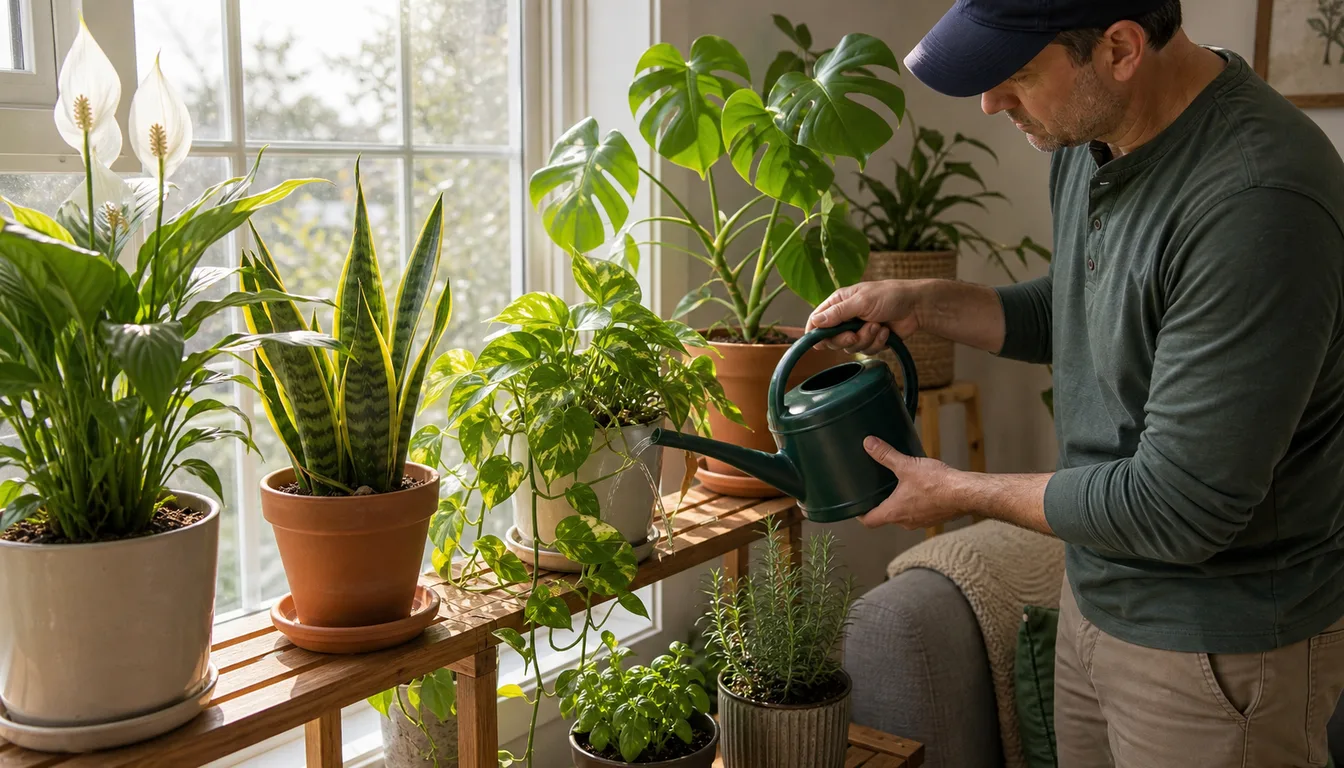
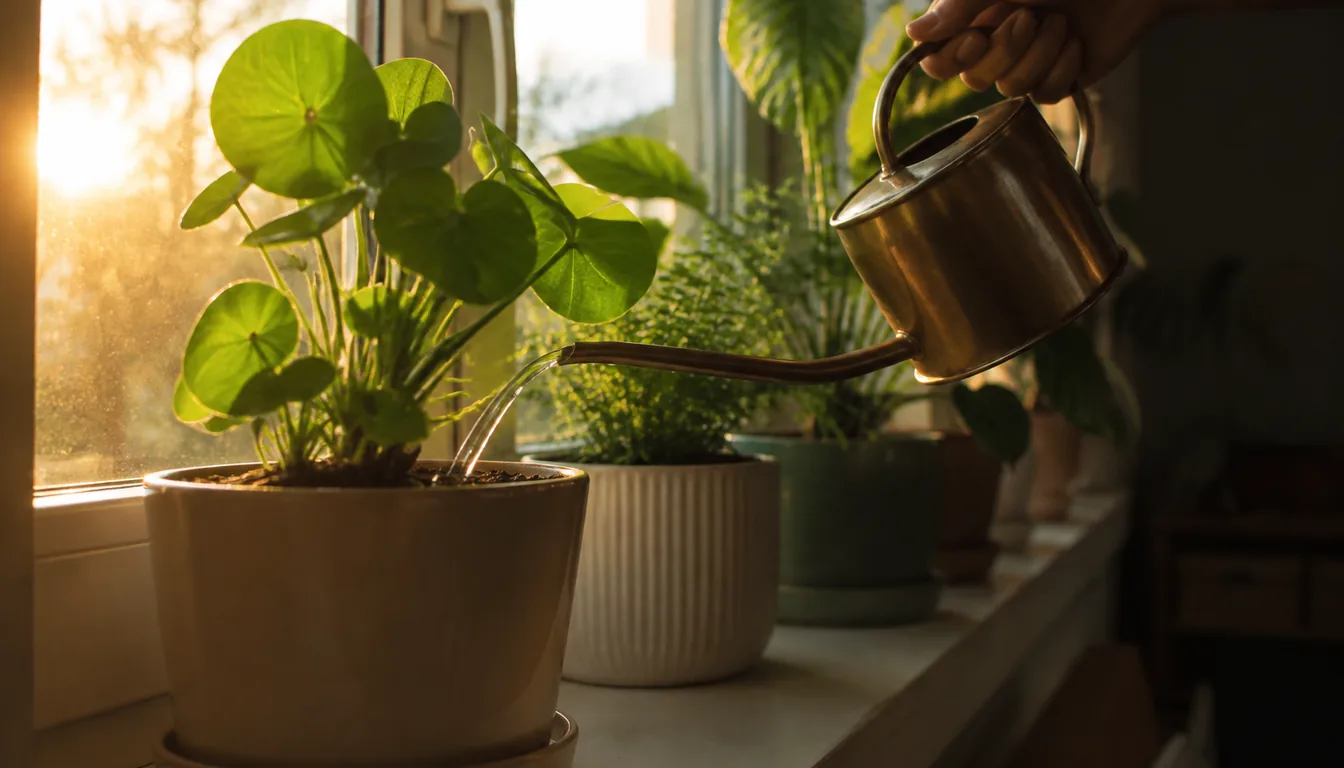
Morning is the better default for watering indoor plants. Virginia Cooperative Extension recommends it because the pot has the day to drain while the plant is actively growing, and UNH Extension adds that any water on the leaves dries faster in the warmer part of the day.
Whether the pot needs water matters more than the hour. If the mix has dried to the plant's watering point in the evening, water it then, keep the water off the leaves, and let the pot finish draining before you leave it.
At a glance
Why morning is a useful default
Two reasons favor the morning. Virginia Cooperative Extension notes that a plant takes up most of its water during daylight, when it is photosynthesizing, so morning watering gives the mix time to drain and the roots the whole day to use it. UNH Extension recommends morning for wet foliage, because leaves dry quickly while temperatures are higher, and says plants can be watered at any time of day when the leaves stay dry.
Both reasons are about drainage and leaf wetness, so they matter most for plants that get splashed during watering and for pots that drain slowly. For a plant watered at the soil line with a narrow spout, only the drainage reason applies.
Aim the water at the potting mix. If a plant needs its leaves rinsed, do it at a separate time when it can dry where it normally grows, without moving a shade plant into strong sun to speed things up.
Missed the morning? Check the pot before deciding
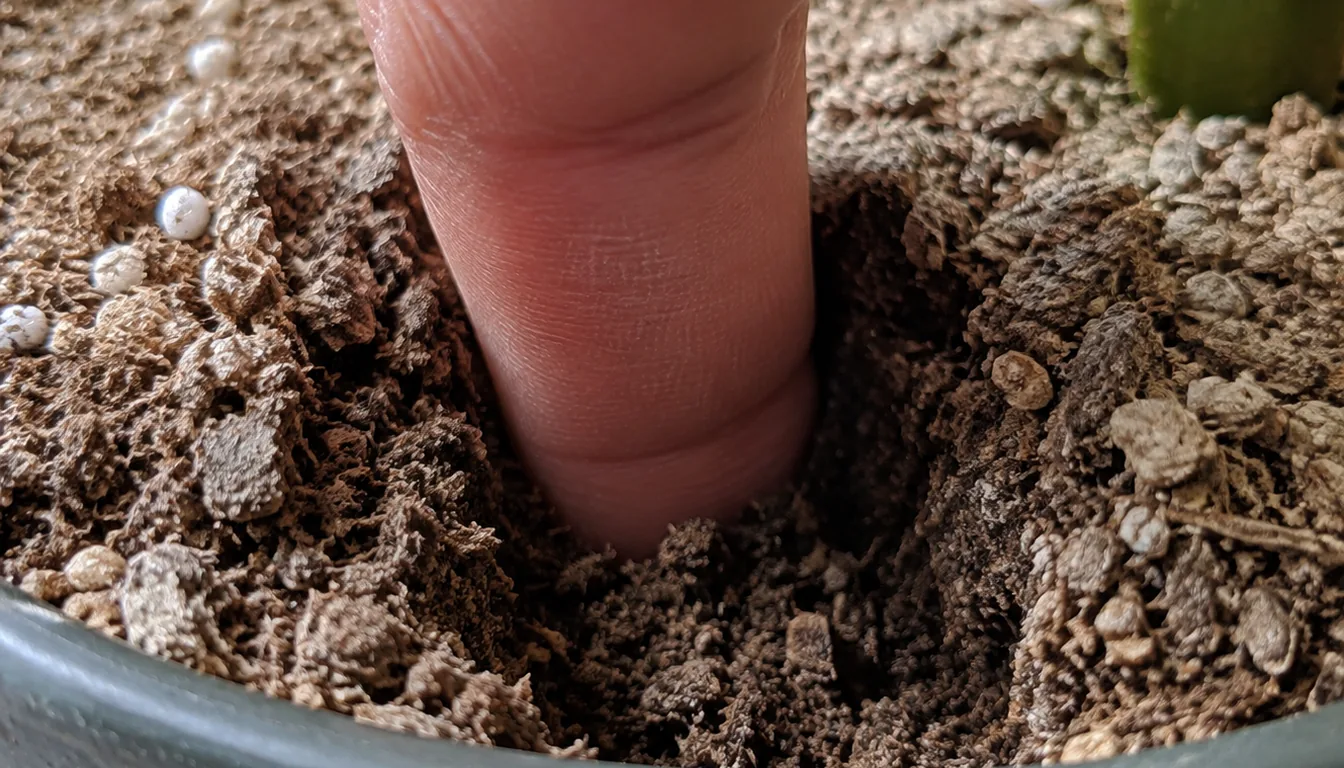
An evening check should answer the same question as a morning check. Has this plant's mix reached the moisture level at which it needs watering?
Look beyond a pale surface. Feel the mix about 2 inches down, or lift the pot, since a dry pot weighs noticeably less than one that still holds water.
How dry the mix should get depends on the plant. A fern and a succulent have very different watering points, and matching watering frequency to the pot covers how to judge each.
| What you find | What to do now |
|---|---|
| Mix at its plant-specific watering point | Water now, even in the evening, and keep water off leaves |
| Pot still holds adequate moisture | Wait instead of watering by the clock |
| Wilted plant with dry mix | Water and confirm the center absorbs moisture |
| Wilted plant with wet mix | Check drainage and investigate the root zone |
A small sip to tide a dry plant over until morning leaves most of the mix dry. Give the pot its normal thorough watering, let the excess drain, and empty the saucer.
Mix that has dried out completely can shed water down the inside of the pot. Fast runoff does not show the mix absorbed water, and slow applications help rewet it.
Wet leaves and wet potting mix are different concerns
Keeping water off the foliage deals with wet leaves. Drainage and a long enough gap between waterings address wet mix, and changing an evening watering to morning does not fix a pot that stays saturated.
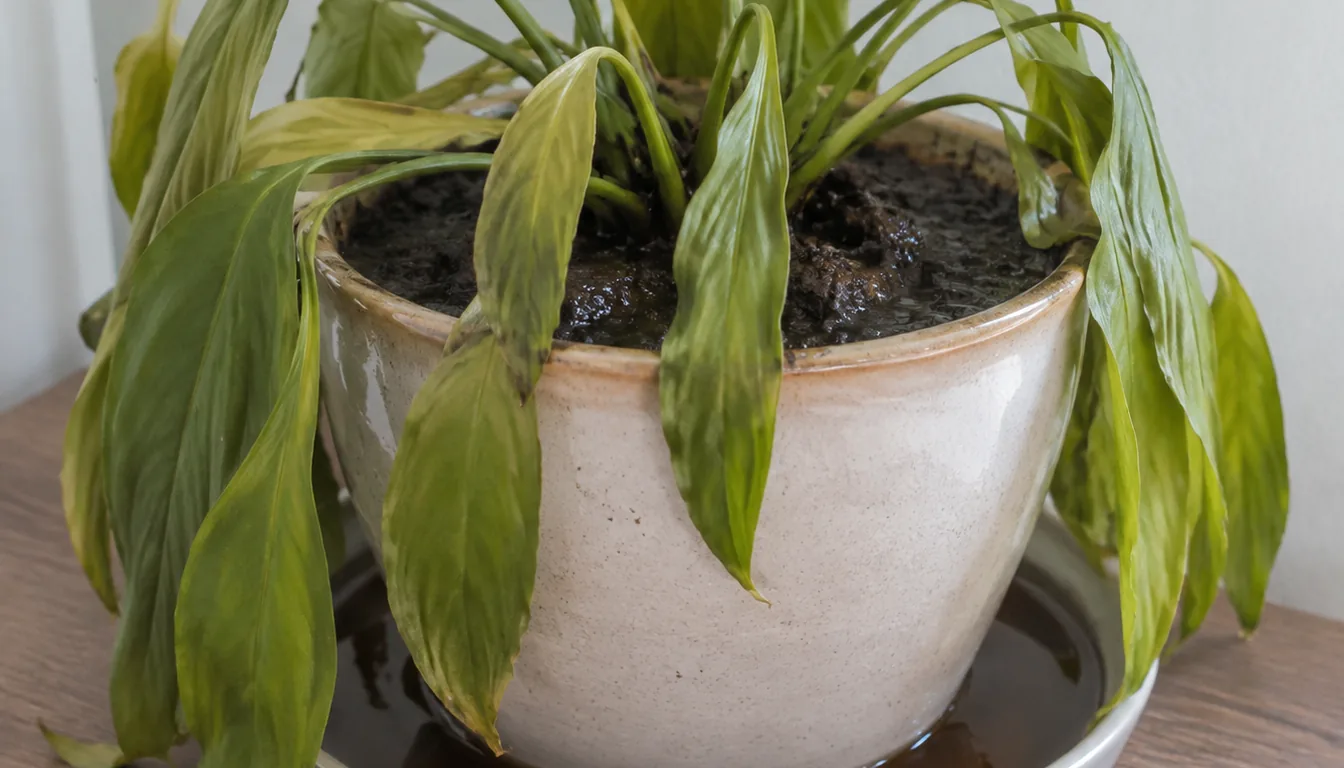
After watering, water should leave through the drainage holes. Virginia Cooperative Extension advises not leaving a pot sitting in its drainage tray for more than 60 minutes, so an evening watering needs enough time before bed to empty the saucer. Check inside a decorative outer pot as well, because runoff collects there out of sight.
If foliage wilts while the mix is still wet, more water or a different hour will not help. Virginia Cooperative Extension lists wilting in wet mix among the signs of overwatering, along with yellowing leaves and soft stems, and suggests clearing blocked drainage holes and letting the mix dry.
Adjust to the room, season, and your workday
Room conditions change how fast a pot dries, and that affects how often it needs water far more than the hour does.
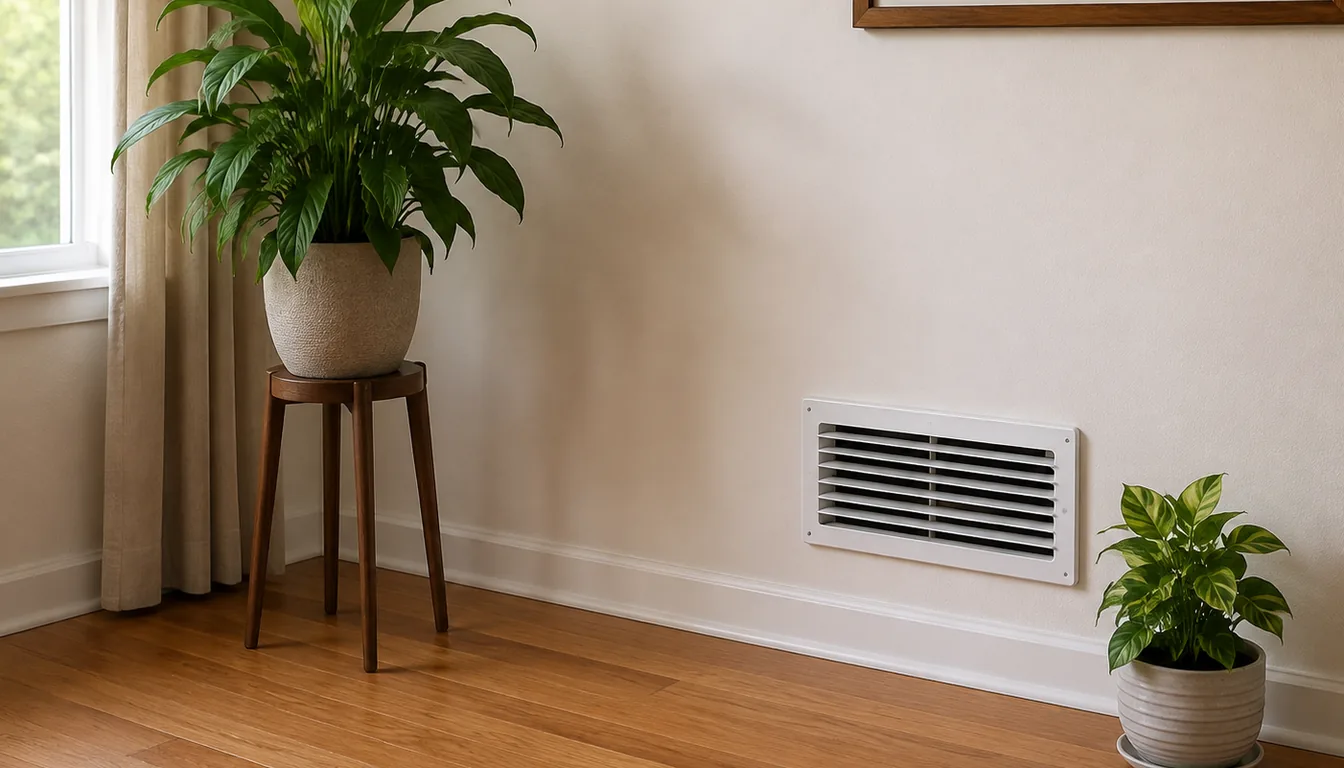
Virginia Cooperative Extension notes that growth slows in autumn and is slowest in winter, and advises close monitoring then to avoid overwatering. A plant beside a cold winter window may stay cool and need less water. Heated indoor air is drier, which speeds drying, and a plant near a heater or in a hot sunny window can dry out faster when the pot and roots warm up.
Watch the individual pot after its conditions change. If a heating vent blows directly on a plant, moving the plant to a spot that still meets its light needs helps more than changing the watering time.
For a grow-light shelf or an evening-only care routine, choose a time when you can see what you are doing and wait for the pots to finish draining.
Build a checking routine around your day
A fixed watering day gives some plants too much and others too little. Iowa State University Extension makes this point with the example of watering every Saturday morning and recommends checking on a regular schedule instead, then watering only the plants that need it.
- Check the mix below its dry-looking surface
- Compare the pot's weight with its recently watered weight
- Water only the pots that reached their plant-specific trigger
- Let each watered pot drain and remove collected runoff
- Note any pot that repeatedly dries out before the next check
Choose a care window long enough to deal with runoff before you leave or go to bed. For bottom watering, Virginia Cooperative Extension suggests leaving the pot in the water for about 15 to 30 minutes, depending on how dry the mix is, then taking it out. A pot left soaking overnight stays saturated.
After a missed check, inspect normally instead of giving every plant a catch-up drink. If one plant repeatedly reaches a dry, wilted state before you see it, check that plant more often rather than moving the whole collection onto an earlier schedule.
Frequently Asked Questions
Can I water indoor plants at night?
Yes, when the plant needs water and you can water the mix while keeping the leaves dry. Let the pot drain and empty the saucer before bed, because a pot left standing in water overnight stays saturated.
Do succulents need a special morning watering window?
No. How dry the pot gets matters more than the hour. Follow the watering requirements of the particular succulent and water once its mix has dried, whatever the time of day.
Should I mist plants every morning?
Misting does not water the roots, so it never replaces watering the pot. Virginia Cooperative Extension notes that most houseplants do not benefit from misting or tolerate it, and that its humidity effect is temporary.
Sources & References
Related Guides
A Drought Tolerant Plant Is Not Drought Tolerant Yet
Colorado State puts it in one sentence. Drought tolerant plants are not drought tolerant until…
11 min read
An Overwatered Tree Hides It for a Year, Then Thins
A tree gives you almost no warning. Colorado State says the symptoms of root problems may appear…
12 min read
Best Time to Water Flowers for Stronger Blooms
Watering flowers at the wrong time does more damage than skipping a day.
10 min read
Best Time to Water Plants for Healthier Roots
Watering at the wrong time wastes water and stresses plants, even if you are generous with the…
11 min read
Deep Watering vs Frequent Watering: What Roots Need
Deep watering usually serves established lawns, vegetables, trees, and shrubs better than repeated…
17 min read
How Much Water Do Plants Need? Wet the Root Zone, Then Wait
Plants need enough water to moisten the soil where their roots take it up, and then no more until…
8 min read