
How to Spot and Fix an Underwatered Plant
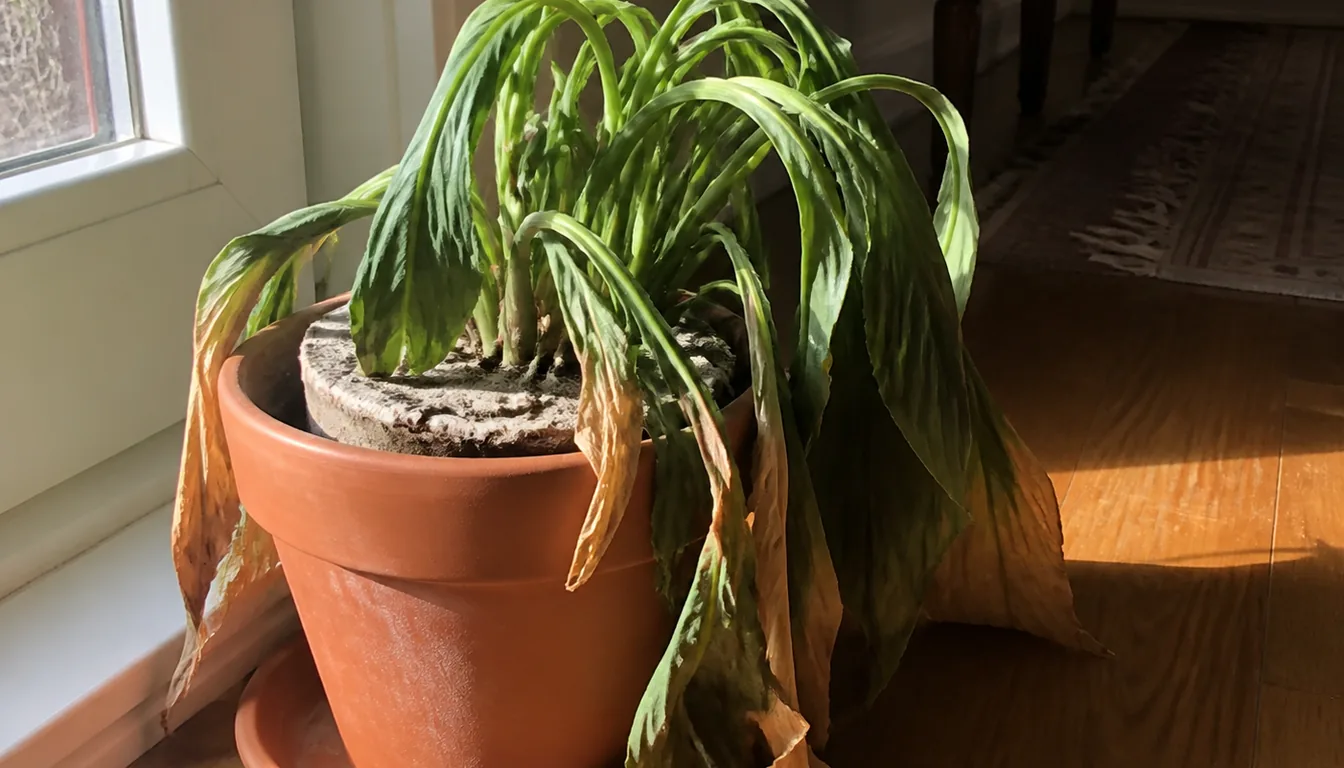
Underwatering is likely when a plant is wilting and the soil around its roots is too dry for that species. A light pot, shrunken potting mix, and a recent missed watering strengthen that explanation.
Brown tips, yellow leaves, or afternoon drooping alone do not establish it.
Check the root zone before adding water.
If it is dry, rehydrate it and verify that the water soaked in. If it is already wet, adding another drink can worsen a root problem.
The aim is to correct the shortage the roots actually face, then find out why it happened.
At a glance
Which signs suggest underwatering?
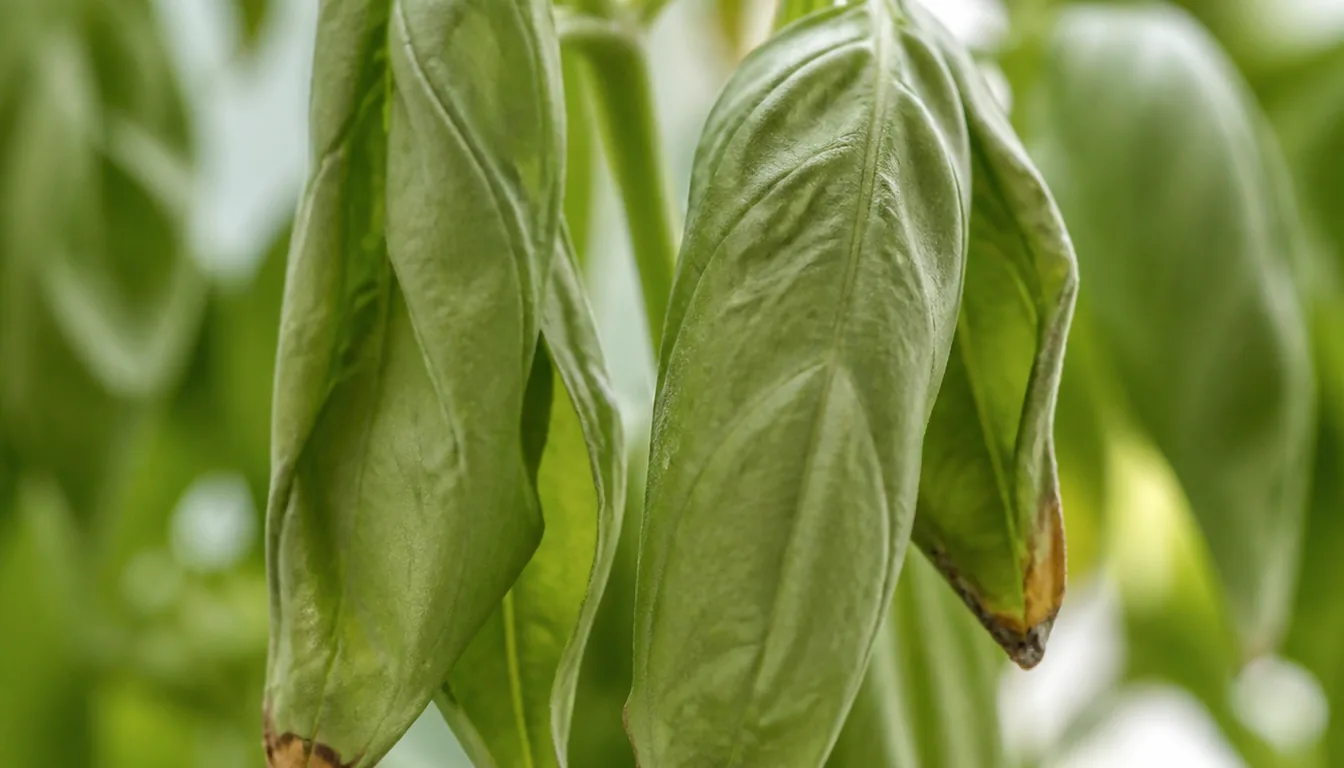
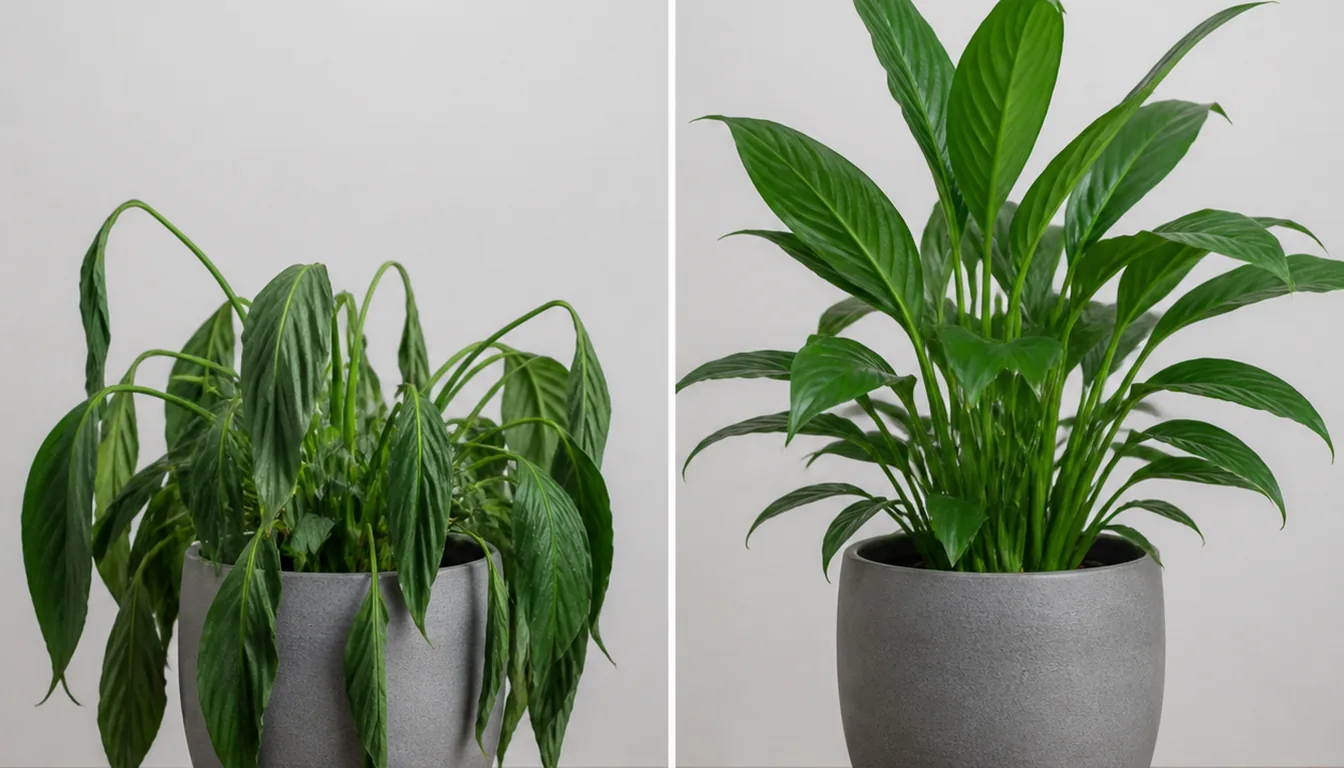
Leaves lose firmness when the plant cannot maintain enough water in its tissues. Soft stems may droop, leaves can curl, and foliage may develop a duller cast.
Those changes make a moisture check worthwhile, but they do not tell you why water is failing to reach the leaves.
Compare the plant with its usual appearance. A naturally gray succulent is not showing a new drought symptom just because its foliage looks gray.
A single old yellow leaf carries less diagnostic weight than a whole canopy losing firmness after a missed watering.
| Observation | What it may mean | What to check next |
|---|---|---|
| Limp leaves, light pot | Possible dry root ball | Check deeper mix and recent watering |
| Crisp tips or edges | Damaged leaf tissue | Check moisture, exposure, and fertilizer history |
| Curled or dull leaves | Possible water stress | Compare healthy growth and inspect the mix |
| Yellow or falling leaves | Several possible causes | Look for changes across the plant |
| Wilt after watering | Bypass or impaired roots | Check the center and drainage |
A peace lily can wilt conspicuously as its mix dries, while a jade plant is adapted to a drying interval. Their leaves should not be used as interchangeable watering alarms.
Learn the moisture preference of the plant you own before calling normal drying a shortage.
Repeated stress can reduce growth and leave lasting damage, but there is no dependable sequence in which every plant loses gloss, curls, then turns brown. Do not wait for that sequence before checking a vulnerable pot.
Confirm moisture where the roots are
Start with a manageable container.
Lift it only if doing so is safe, and compare it with the weight you remember after watering and drainage. An unusually light pot is useful evidence.
The weight of a heavy outer planter, however, can hide the difference, so lift the inner nursery pot when practical.
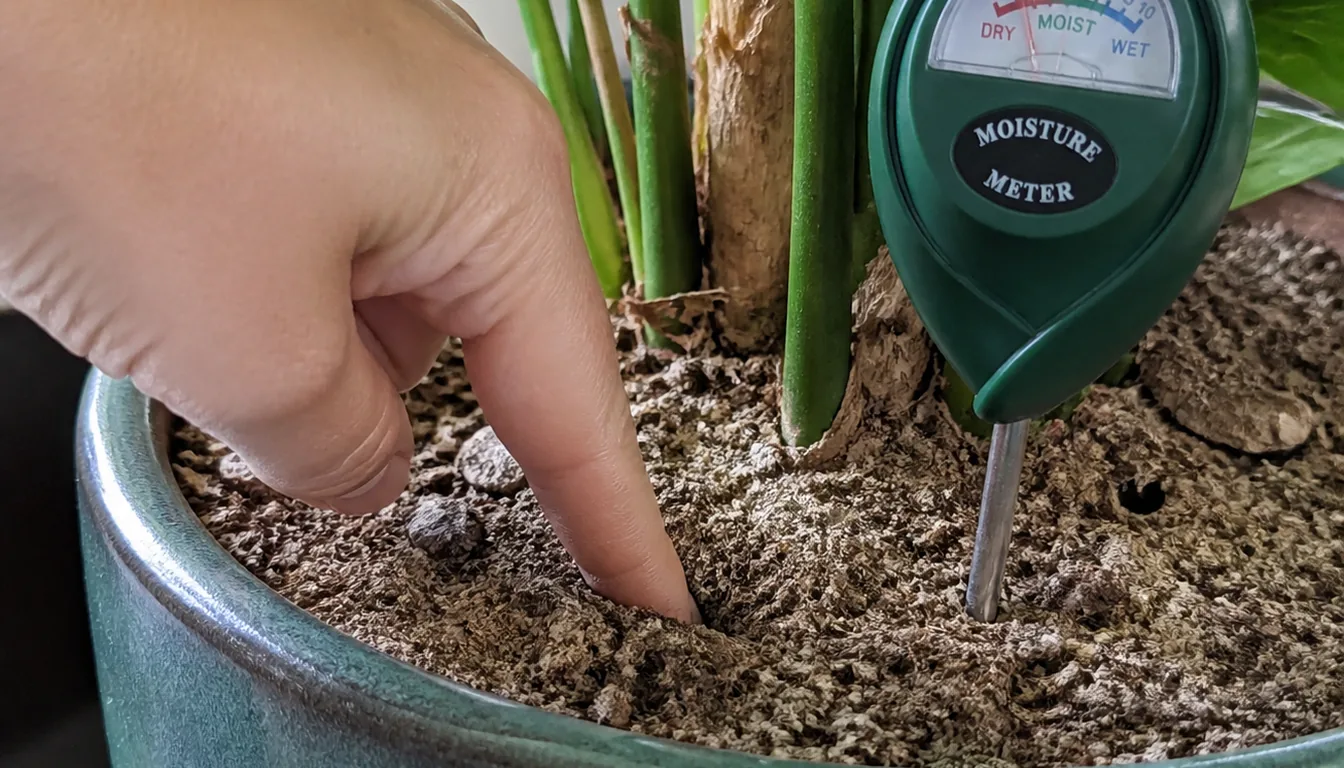
Feel beneath the surface without forcing a finger through dense roots.
About two inches is a useful starting check for many foliage houseplants, but a tiny seedling cell or an orchid in bark needs different handling. A dry surface can cover damp mix, and a wet patch near the rim can surround a dry center.
Check another accessible spot when the first result conflicts with the plant's condition.
- [ ] Lift a safe inner pot and compare its usual watered weight
- [ ] Feel below the surface at more than one accessible spot
- [ ] Compare the center with the rim when runoff may bypass the mix
- [ ] Check the original root ball separately on a recent planting
- [ ] Use a meter only as a second reading, not the final answer
Look for a gap between the mix and the pot. Very dry potting material can shrink and become difficult to rewet.
Water may run down that gap without moistening the middle, so the fact that you watered yesterday does not settle the question.
For a garden plant, move mulch aside and inspect soil below the exposed surface near its roots.
Maryland Extension uses a check at about six inches for trees and shrubs. Stay clear of major roots and avoid unnecessary digging.
Newly planted root balls need separate attention because the original nursery material can differ from the surrounding soil.
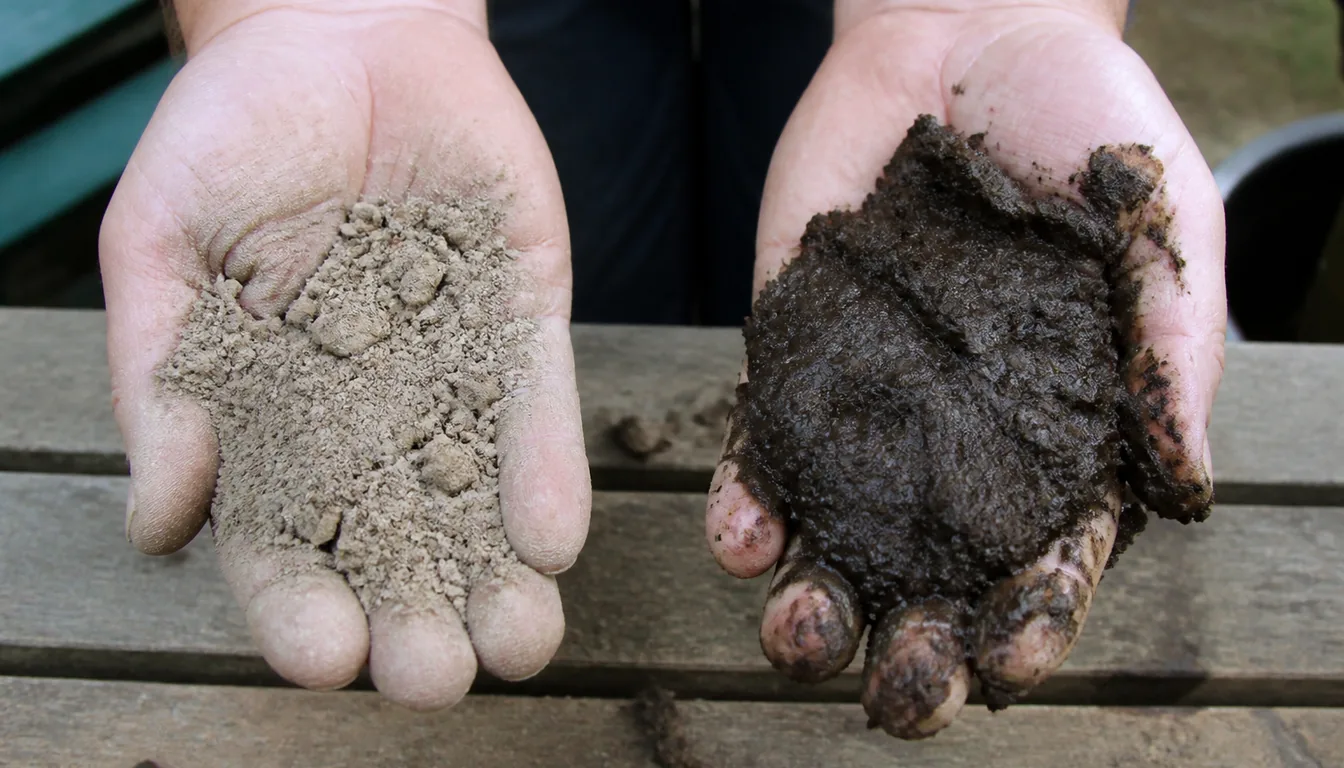
Soil color and the way a handful crumbles depend on texture as well as moisture. Sandy soil and clay behave differently, and bark-based potting mix is different again.
A photograph of pale crumbs beside dark wet soil illustrates a contrast, not a test that can classify every growing medium.
A moisture meter can provide another reading, but its contact with the mix and its position matter. Compare it with touch and recent watering history.
The absence of fungus gnats, a dry twig, or a particular root color cannot confirm underwatering.
When wilting calls for a different response
Persistently wet mix changes the decision.
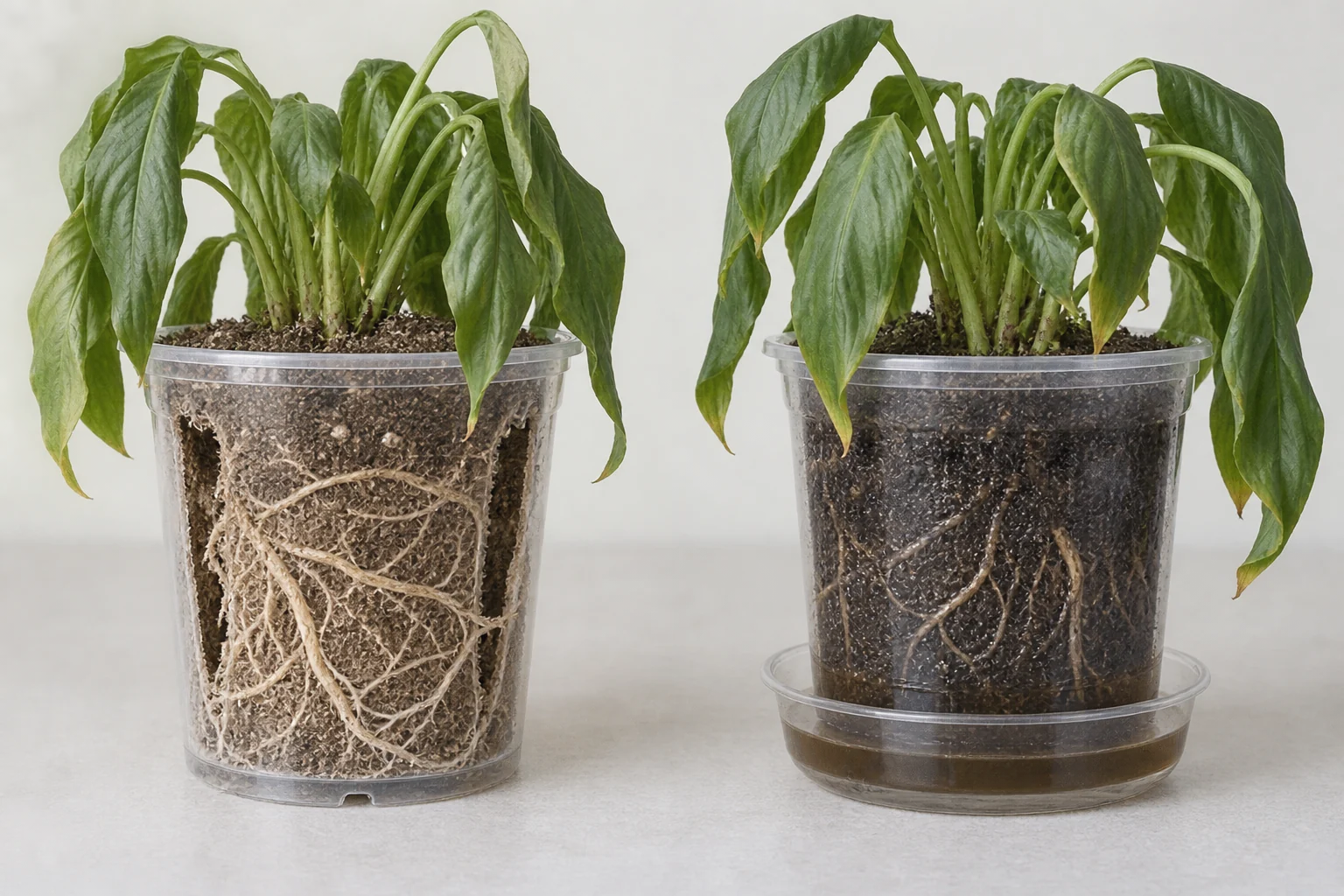
Roots in poorly aerated, saturated conditions can become damaged and fail to supply the leaves even though water surrounds them. Empty collected runoff, check drainage, and investigate the roots if the plant continues to decline.
A wet, wilted plant should not receive repeated rescue soakings.
Heat can also make leaves lose water faster than roots replace it.
If a garden plant droops during the hottest period but its root zone is moist, check its posture again when conditions cool. Temporary relief from intense exposure may help a movable container.
If the root zone is dry, address that dryness rather than waiting for evening merely to test the pattern.
Use the distribution of damage as another clue.
One wilted branch on an otherwise firm plant deserves an inspection of that branch and its stem connection. Leaf spotting, fine webbing, or expanding areas of dead tissue call for a closer look at pests, disease, or injury.
Increasing water without investigating can delay the useful response.
Brown tips can accompany low humidity or fertilizer-related salt injury as well as drought. Check recent feeding and any crust on the mix or container.
Likewise, a cold draft or a sudden change in exposure can damage foliage without a missed watering. Several problems can occur together, so correcting dry mix does not prove that every mark came from underwatering.
Dry root zone
Rehydrate the full root ball and confirm that water soaked into the center
Wet root zone
Stop rescue watering and inspect drainage and root condition
Moist soil in extreme heat
Reduce exposure temporarily and check again as conditions cool
One wilted branch
Inspect that stem for injury, disease, or blocked water movement
Rehydrate a dry container and check the result
Once the root ball is confirmed dry beyond the plant's needs, water the mix slowly and evenly.
For an ordinary pot with drainage holes, continue until the root ball is wetted and surplus water can escape. Empty the saucer or decorative outer pot afterward.
Aim at the mix instead of trying to revive the plant by misting its leaves.
Check what happened inside the pot.
If the center remains dry and the pot is still unexpectedly light, rapid runoff may have bypassed the root ball. Pause and reapply water slowly enough for the material to absorb it.
A large, difficult-to-move container may need a controlled trickle rather than another fast pour.
For a suitable smaller pot, bottom watering is another way to rewet dry mix. Set the pot in a shallow basin with its drainage holes in contact with water.
Check whether moisture is moving upward through the root ball, then remove the pot and allow it to drain when it is hydrated.
There is no universal soak duration.
Very dry mix can take longer than a brief dip, while a small pot may hydrate sooner. Thirty minutes is not a biological deadline at which root rot begins.
The useful endpoint is a rewetted root ball followed by drainage, without abandoning the pot in standing water.
Do not turn a recovery watering into a new rule that the plant must remain constantly wet.
Once hydrated, return to its normal moisture preference. Succulents, recently rooted cuttings, and plants undergoing species-specific root treatment need their own care decisions.
A recovery method for a leafy houseplant does not override those requirements.
- Confirm that the root ball is drier than this plant tolerates.
- Apply water slowly across the mix instead of pouring into one spot.
- Watch for runoff that bypasses a shrunken center.
- Reapply slowly or bottom-water a suitable smaller pot until the center is moist.
- Let surplus water drain and empty the saucer or outer pot.
- Check the root zone again before the next watering.
Help dry garden plants at the right scale
In a bed, apply water at a rate the soil accepts and across the root area that needs it.
If water runs over the surface, slow the delivery or pause to let it soak in. After it has had time to move downward, check beneath the surface in several places.
A shiny wet surface is not proof that deeper roots received water.
A newly planted shrub may have a dry nursery root ball even when neighboring garden soil feels moist. Check both materials and direct water where the dryness is found.
The label drought tolerant describes a plant's potential once established, not a guarantee that newly planted roots can reach stored moisture elsewhere in the yard.
For an established tree, the root system extends beyond the small circle next to the trunk.
Wetting only that circle can miss much of the area that needs water. Use tree-specific watering guidance for the root area and soil rather than scaling up a houseplant's cup amount.
Persistent wilt or branch decline in a valuable tree warrants local diagnostic help.
Mulch can reduce surface evaporation, and temporary shade can reduce heat load on susceptible plants during extreme conditions.
Keep mulch away from trunks and crowns, and support shade material so it does not rest on foliage. Do not stake a shrub merely because its leaves wilted.
Staking addresses stability, not a water shortage.
Check irrigation delivery as well as the schedule. A displaced emitter, blocked outlet, or a container sheltered from rain can leave one plant dry while its neighbors receive water.
Observe the water arriving at that plant before extending the runtime for the whole bed.
What recovery should look like
If water shortage was causing reversible loss of firmness, living leaves may become more upright after the root ball is rehydrated. Response varies with the species and severity of injury.
Use the plant's condition and the moisture check, not a promised number of hours, to decide what happens next.
Brown, dead tissue will not turn green after watering. Leave usable green foliage while the plant recovers, and remove fully dead material when it can be done cleanly without damaging live growth.
Do not strip every imperfect leaf in an attempt to make the plant look reset.
- [ ] Living leaves regain some firmness without another soak
- [ ] Root-zone moisture is even rather than wet only at the rim
- [ ] No new yellowing, collapse, odor, or soft tissue appears
- [ ] Dead brown tissue is judged separately from living foliage
- [ ] A failed response triggers a fresh diagnosis, not more water
If leaves stay limp while the root ball is now adequately moist, stop repeating the soak.
Reconsider bypassed dry pockets, damaged roots, heat, and other causes. For a potted plant that continues to decline, gently inspecting the root ball may be justified.
Avoid tearing apart healthy roots simply to check their color.
Keep care steady enough to interpret the response.
Fertilizer does not replace water or repair dead roots, and feeding a stressed plant can add another problem. Resume feeding according to the plant's growth and normal care needs rather than a fixed waiting period.
Delay elective repotting or heavy pruning while the plant is severely stressed, but address a drainage defect or badly damaged roots when that is the actual cause.
A photo taken from the same angle can help you compare posture and new damage over time. Record whether the root ball absorbed the water and how long it remained moist.
Those observations are more useful than deciding that an old brown edge means the latest watering failed.
Find why the plant keeps drying too far
Trace the last episode to a practical cause. Was this pot skipped, did the water miss its center, or did the plant use moisture faster after a move?
The answer determines whether you need a better reminder, a different watering method, or a change to the growing setup.
For a collection of houseplants, make reminders mean check the pots. A peace lily that needs attention and a jade plant whose mix is still damp should receive different decisions even on the same inspection day.
Indoor watering frequency changes with the individual plant, its light, its container, and its mix.
If a pot becomes dry again unusually quickly after thorough wetting, look at how much root and usable mix it contains.
A rootbound plant may need an appropriately larger container. Inspect first instead of assuming that every fast-drying pot needs a large upgrade.
Container size is one part of the problem, alongside exposure and the material around the roots.
Recheck after changes in growth, season, heating, or outdoor weather. There is no reliable rule that every houseplant needs twice as much water in summer.
A hot, windy hanging basket may need very frequent checks, while a plant growing slowly indoors may remain moist much longer.
For mixed containers, choose plants with compatible moisture needs. If one plant repeatedly wilts while another suffers in the same wet mix, more careful timing may not resolve that mismatch.
Separating incompatible plants can make each one's care easier to manage.
Before an absence, use the drying pattern you have observed to arrange care.
Give a sitter instructions for the actual pots, including when to leave them alone and how to empty runoff. Test any wick or reservoir while you can still observe it.
A device should solve the missed-water problem without creating continuously wet roots for a plant that needs drying intervals.
| Repeated pattern | Evidence to check | Better change |
|---|---|---|
| One pot is skipped | Dry center, no delivery record | Mark and check that pot |
| Water runs down the sides | Shrunken mix, light center | Rewet slowly in passes |
| Pot dries unusually fast | Dense roots, little usable mix | Inspect before repotting |
| One emitter misses | Dry plant beside moist neighbors | Repair or reposition emitter |
| Mixed planter conflicts | One plant wilts while another stays wet | Separate moisture needs |
| Absence causes stress | No tested care method | Trial sitter notes, wick, or reservoir early |
Keep the observed drying interval for each plant as the baseline. A calendar reminder should prompt a check, not force every pot to receive water.
Frequently Asked Questions
Can rain leave a garden plant underwatered?
Yes. Rain may wet only the surface, be intercepted by foliage or structures, or fail to moisten the original root ball of a new planting.
Check the soil around the roots before deciding that the rain supplied enough.
Is a succulent with wrinkled leaves always thirsty?
No.
Check its identity, growing season, root-zone moisture, and the condition of its base.
Damaged wet roots can also leave a plant unable to supply its leaves.
Do not soak a damp succulent solely because a leaf wrinkles.
Should I water a dry, wilted plant immediately or wait for morning?
Once you confirm that its root zone needs water, address the shortage. A routine morning check is convenient, but waiting for a preferred clock time does not help a plant whose roots are already too dry.
Sources & References
- Iowa State University Extension - Why Is My Houseplant Wilting?
- University of Maryland Extension - Watering Indoor Plants
- Illinois Extension - Watering Houseplants
- UC Master Gardeners - Watering Hydrophobic Soil
- University of Maryland Extension - Watering Trees and Shrubs
- Iowa State University Extension - Managing the Garden in Extreme Heat
- Iowa State University Extension - Diagnosing Houseplant Problems
- Iowa State University Extension - Watering Plants in Containers and Plug Trays
- NC State Extension - Peace Lily
- NC State Extension - Jade Plant
- Iowa State University Extension - How to Care for Houseplants
Related Guides
A Drought Tolerant Plant Is Not Drought Tolerant Yet
Colorado State puts it in one sentence. Drought tolerant plants are not drought tolerant until…
11 min read
An Overwatered Tree Hides It for a Year, Then Thins
A tree gives you almost no warning. Colorado State says the symptoms of root problems may appear…
12 min read
Best Time to Water Flowers for Stronger Blooms
Watering flowers at the wrong time does more damage than skipping a day.
10 min read
Best Time to Water Indoor Plants: Morning or Evening?
Morning is the better default for watering indoor plants.
6 min read
Best Time to Water Plants for Healthier Roots
Watering at the wrong time wastes water and stresses plants, even if you are generous with the…
11 min read
Deep Watering vs Frequent Watering: What Roots Need
Deep watering usually serves established lawns, vegetables, trees, and shrubs better than repeated…
17 min read