
What's Asparagus? How to Grow a Bed for Years
Asparagus officinalis Asparagaceae
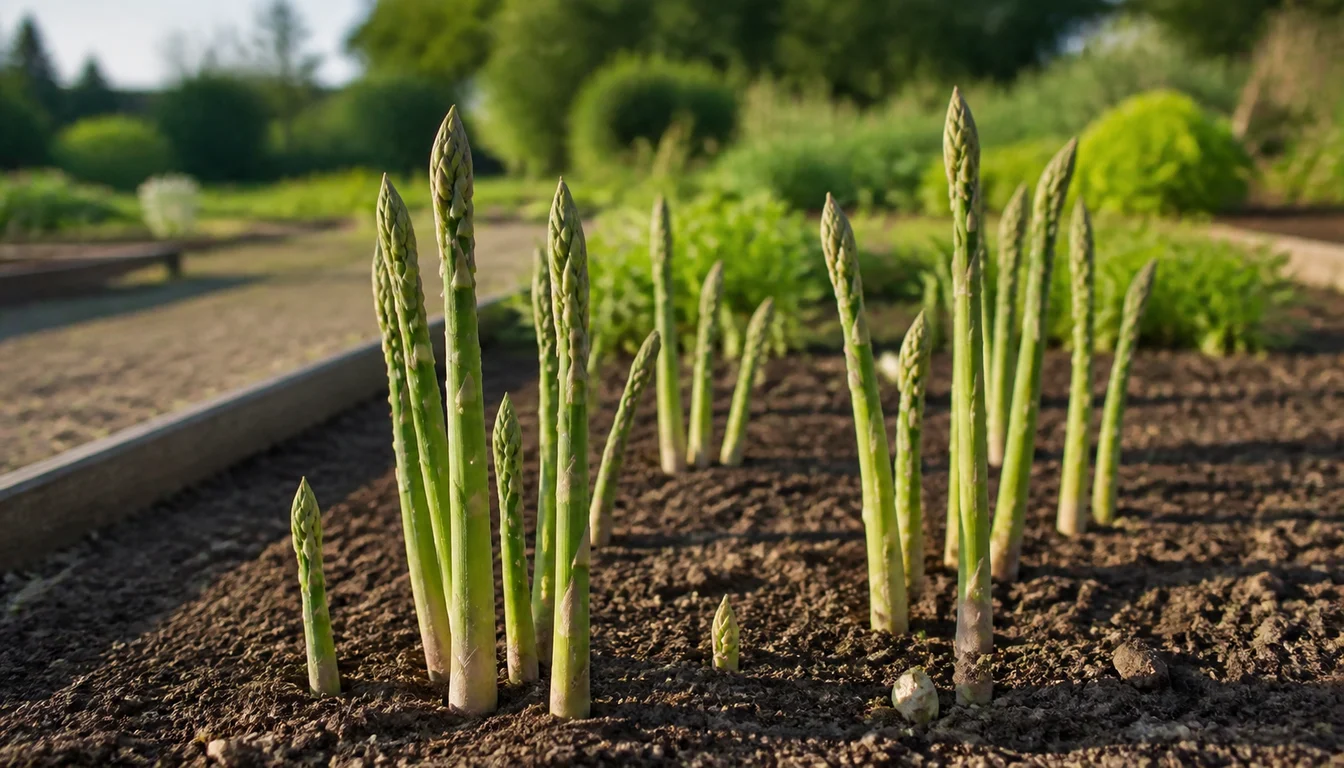
Asparagus rewards careful establishment with spring harvests for many years. Give the crowns a permanent sunny bed, harvest lightly while they mature, and protect the green fern growth that powers the next crop.
Care snapshot
Why Does Asparagus Need a Permanent Bed?
Garden Asparagus (Asparagus officinalis) is a long-lived perennial in the asparagus family, and its edible spear, tall summer fern, and underground crown are stages of the same plant. Buds on the crown send up spears each spring, while thick roots and rhizomes store energy from one year to the next.
A temporary vegetable row is a poor home for this perennial structure because tilling, deep hoeing, or moving the bed can cut crowns and new buds hidden below the surface.
Choose a weed-free site with at least 6 hours of direct sun and soil that drains after heavy rain because a low spot that stays soft for days can rot buried crowns even when the surface looks fertile.
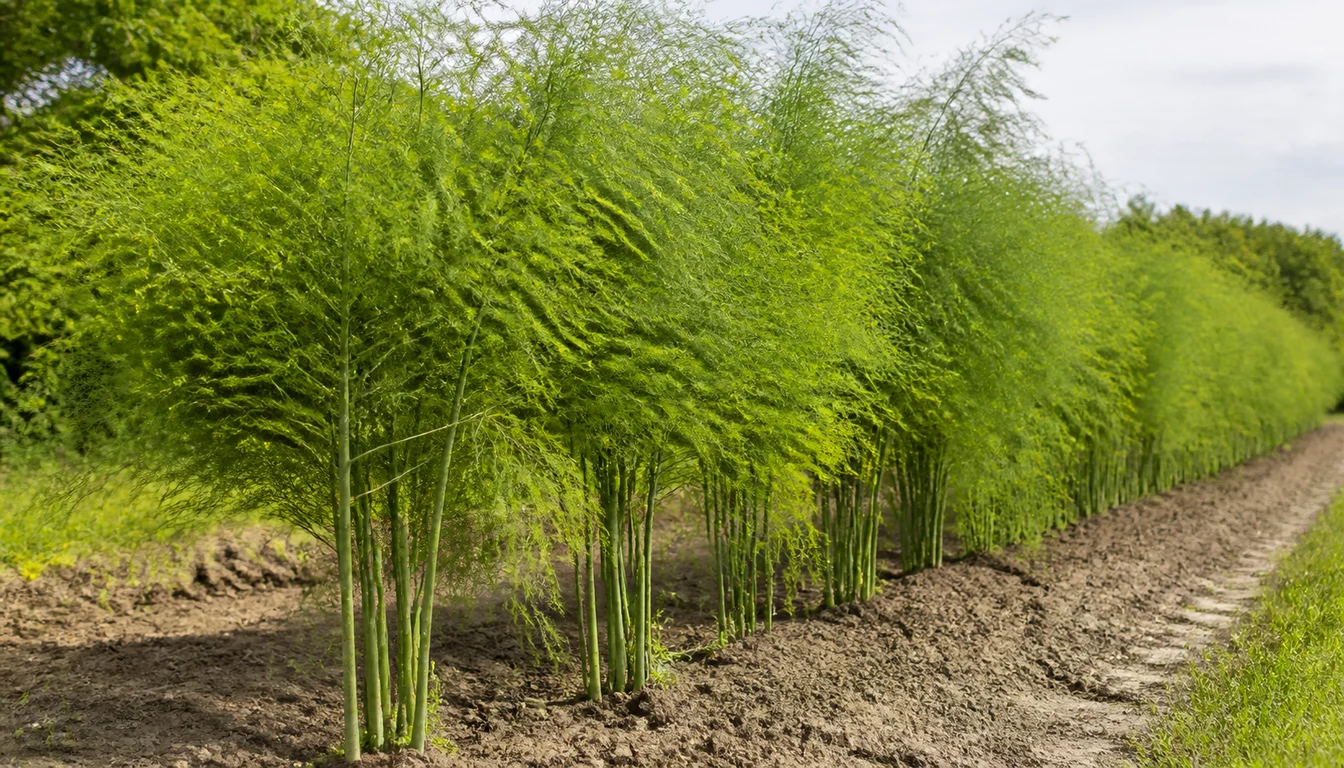
Plan for the plant you will see in July, not only the short spears you cut in April. Mature ferns commonly reach 3 to 5 feet, so place the row where the canopy will not block a path, shade shorter crops, or lean against a solid fence.
Avoid ground that recently held an old asparagus patch when another site is available. Productive crowns can remain for more than 15 years, while old roots leave growth-suppressing compounds and soilborne Fusarium can persist long enough to make replacement plants struggle in the same place.
Should You Plant Asparagus Crowns or Start From Seed?
One-year crowns are the practical starting point for most home beds. Choose bundles with plump buds and firm pale roots because shriveled, dark, or water-soaked tissue begins the permanent planting with less vigor and a higher disease risk.
Seed costs less and offers more cultivar choice, but it adds roughly one year to establishment plus the nursery space and weed control seedlings need before moving into the permanent row.
Garden asparagus has separate male and female plants, and males generally make fewer but thicker stems because they do not spend reserves on fruit. Open-pollinated seed produces both sexes, while many modern hybrids produce mostly male plants with more uniform spear size and fewer berry-producing plants.
Female plants still make edible spears, so a berry is not a reason to remove a healthy crown even though fruit uses stored energy and dropped seed can produce volunteer plants that crowd the row.
Choose a cultivar tested for your winter cold, summer heat, and common local diseases rather than buying by sex alone. Newer regional hybrids may outperform familiar Jersey names, so compare yield, spear quality, rust, Fusarium, and Phytophthora tolerance in a nearby extension trial before ordering a bed that may remain productive for more than 15 years.
- One-year crowns
- Fastest home-garden start with established roots and buds
- Hybrid seed
- More uniform plants and usually fewer berry-producing females
- Open-pollinated seed
- More variation with both male and female plants
How Deep and Far Apart Should Asparagus Crowns Be Planted?
Prepare the whole bed before the crowns arrive by removing perennial weeds, loosening compacted soil, and using a soil test to correct major pH or nutrient problems before later digging can endanger permanent roots.
A slightly acidic to neutral soil around pH 6.5 to 7.0 suits most beds, but drainage matters more than chasing one decimal point. Mix mature compost through the prepared root zone rather than leaving a rich pocket under each crown, then use a raised or mounded row if heavy clay still holds water.
Dig a furrow about 6 to 8 inches deep, staying toward the shallow end in heavy clay while a well-drained sandy bed can take the deeper end without trapping the crown in a wet pocket.
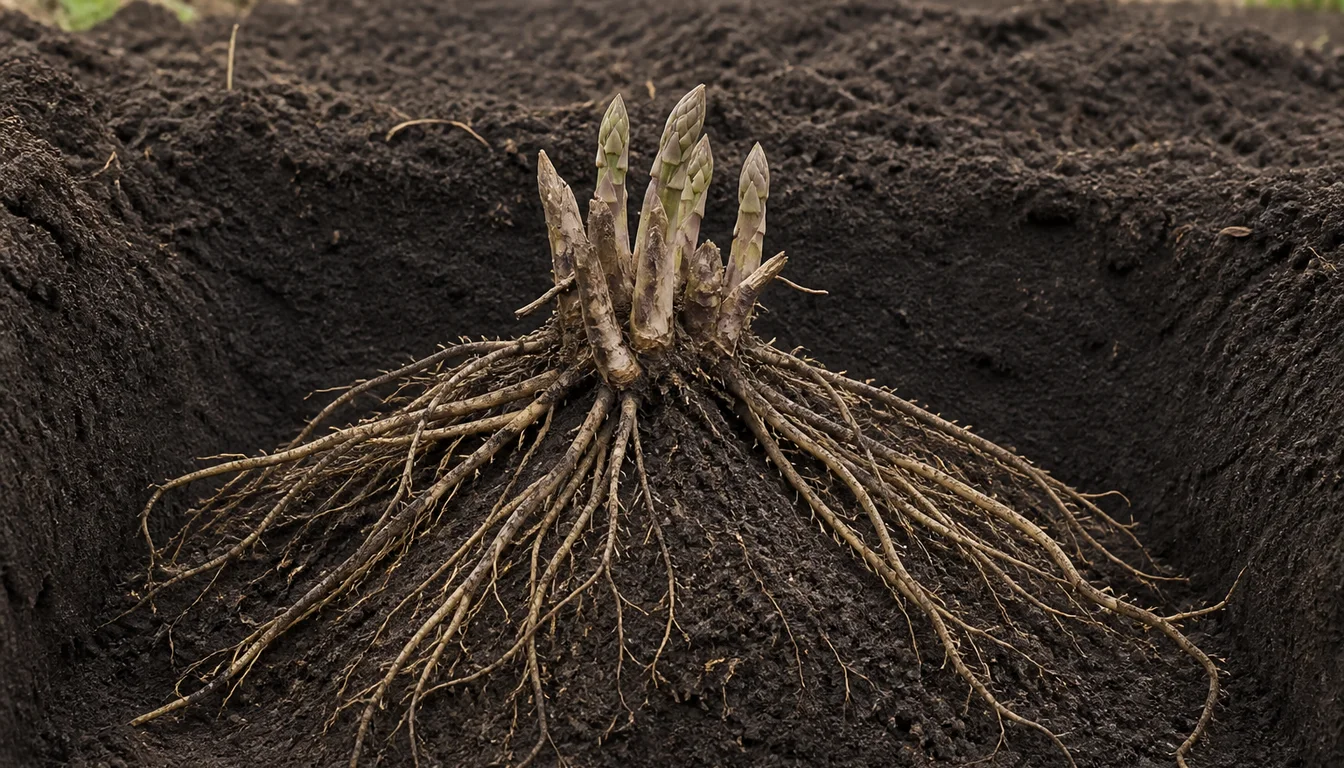
Set each firm crown on a small ridge with the buds facing up and the fleshy roots spread outward. Roots should radiate from the center rather than fold underneath or bunch into a narrow hole.
Space crowns about 12 inches apart and allow roughly 4 feet between rows so expanding crowns, tall ferns, airflow, and future weed work all have room.
Cover the crown with only about 2 inches of soil at first, then backfill gradually as shoots lengthen. Do not dump the full trench depth onto new buds or bury green shoots while filling the row.
Water the settled soil deeply and keep it consistently moist through the first season. New roots need contact with damp soil around the whole trench, and every spear must remain on the plant to build the first full fern canopy instead of going to the kitchen.
- Open a 6 to 8 inch furrow in prepared soil.
- Build a low ridge along the center of the furrow.
- Set crowns about 12 inches apart with buds facing up.
- Spread the roots over the ridge and cover with about 2 inches of soil.
- Add soil gradually as shoots grow until the furrow is level.
When Can You Start Harvesting Asparagus?
Do not harvest during the year you plant crowns, while a vigorous crown bed may support a brief harvest the following spring and a seed-grown bed generally needs one additional season.
Every harvested spear is a stem that cannot open into a fern and send carbohydrates back underground. Heavy early cutting can leave too little stored energy for new roots, buds, and next spring's thick spears.
In the second spring after crown planting, harvest for no more than two weeks when thick spears emerge steadily, but skip cutting and let every shoot fern out if the bed looks sparse or thin.
Increase the window gradually as the planting proves its strength. A mature, vigorous bed may produce for 6 to 8 weeks and need picking every day or two in warm weather, but daily emergence and spear diameter still outrank a date on the calendar.
Harvest spears at about 5 to 8 inches tall with tight tips, snapping near ground level or cutting carefully above the crown so the tool does not nick nearby buds.
Stop when most new spears become thinner than a pencil or the number emerging each day drops sharply. A spear comes out of the soil at nearly its final diameter, so leaving a thin one longer will make it taller, not thicker.
End earlier after drought, severe weed competition, heavy beetle feeding, or a poor fern season because current crown strength matters more than bed age when setting the harvest length.
- Planting year
- Harvest none and grow a full fern canopy
- Second spring after crowns
- Take up to two weeks only from a vigorous bed
- Third and fourth springs
- Lengthen the harvest as thick spear production allows
- Mature healthy bed
- Harvest about 6 to 8 weeks, then stop
Why Should You Leave Asparagus Ferns Standing?
A spear that remains uncut elongates, branches, and becomes the feathery growth gardeners call a fern. The fine green structures are modified stems called cladodes rather than true fern fronds, but they perform the essential leaf work for Asparagus after harvest.
The green canopy photosynthesizes for months and moves carbohydrates into the crown and fleshy roots, which supports stronger buds and thicker spears the following spring.
Keep watering during dry weather, pull weeds before they climb through the stems, and support a leaning row with twine instead of shortening it. Scout the open canopy for beetles and stem lesions because broken, crowded, or diseased fern loses working leaf area, while cutting healthy green growth removes the plant's main way to refill its reserves.
Wait until the ferns yellow and turn brown naturally before cutting stems close to the soil without digging into the crown. That color change shows the canopy has stopped active work, though snow cover, frost, and local disease pressure determine whether cleanup happens in late fall or before spring emergence.
Carry dead stems out of the bed because common asparagus beetles can overwinter inside hollow fern debris, while rust and other fern diseases can survive on infected residue and begin another cycle as new growth appears. If snow prevents fall removal, finish the job before spring spears break the surface.
How Much Water and Fertilizer Does Asparagus Need?
Water deeply enough to moisten the active root zone, then let the surface regain air because Asparagus needs reliable moisture during establishment, spear emergence, and fern growth without leaving buried crowns in saturated soil.
New beds need closer checks because their roots have not explored much soil. Mature crowns can draw from several feet down, so check moisture below the mulch and use a slow deep soaking or drip line during dry weather instead of wetting only the surface and fern canopy.
Watch the soil after rain because standing water, a sour smell, or declining plants in the lowest part of the row points toward drainage trouble that more irrigation can worsen and Phytophthora can exploit.
Use a modest mulch layer to slow evaporation and suppress annual weeds, but keep it loose enough to see where new spears are pushing through. Remove perennial grass, bindweed, and volunteer asparagus by hand before their roots knit through the crown zone and compete with young plants.
Base fertilizer on a soil test and local extension guidance because compost or a balanced fertilizer after harvest can correct low nutrients and support the new fern canopy. Extra nitrogen cannot repair a waterlogged site, overharvested crown, or diseased root system.
- Feel below the mulch before adding water.
- Keep mulch loose around emerging spear tips.
- Check drainage and bed vigor before adding fertilizer.
Why Are Asparagus Spears Thin, Crooked, or Missing?
Start with bed age and last year's care when spears are thin. Young crowns naturally produce small shoots, while an established bed often becomes thin after a long harvest, drought, heavy weeds, or damaged ferns left too little energy underground.
A thin spear will not become thick if you wait another day, so stop cutting weak shoots and let them branch into ferns that can rebuild the crown.
A few crooked spears can come from insects, cutting tools, compacted soil, or windblown grit slowing growth on one side while the undamaged side keeps lengthening.
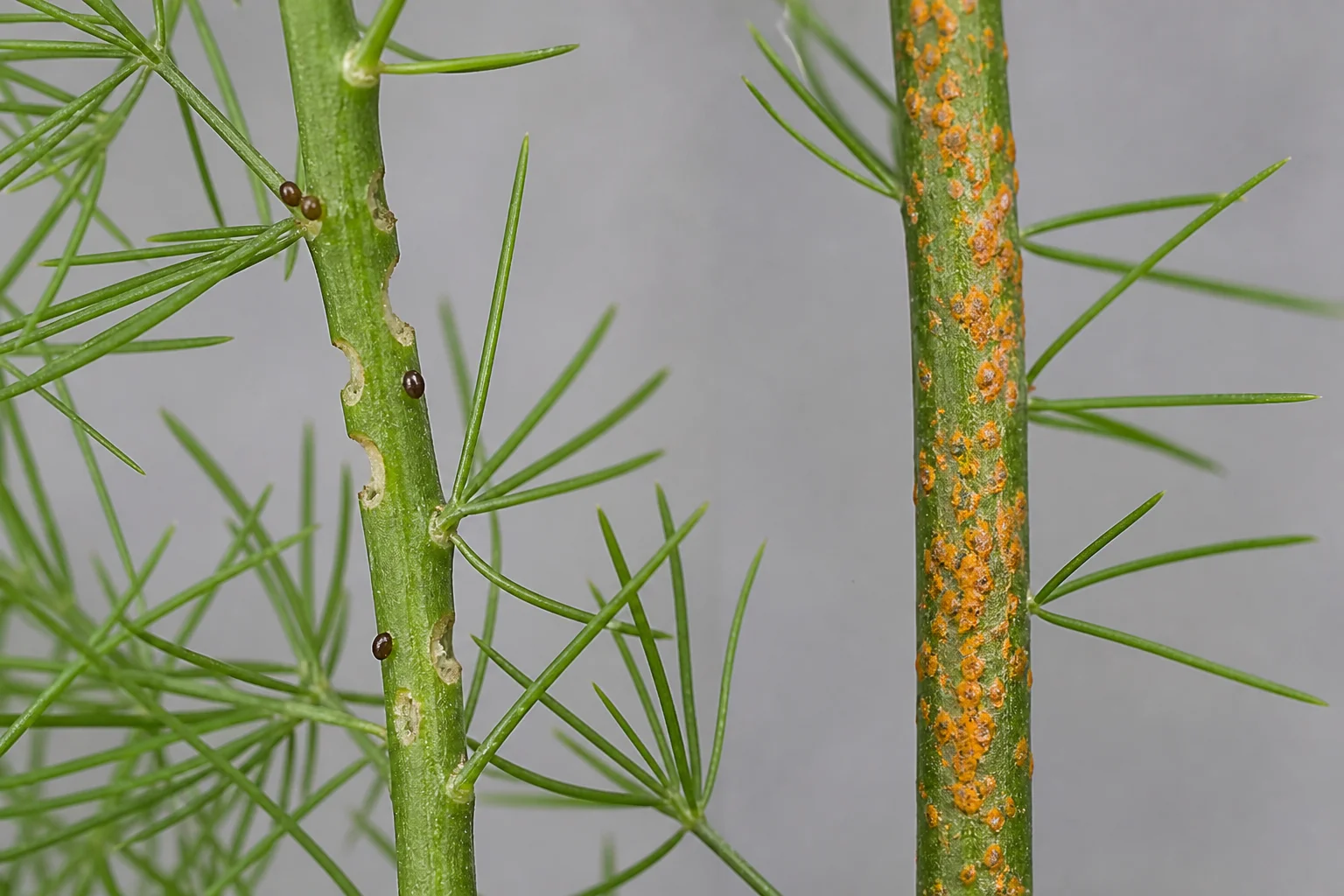
Common asparagus beetles leave rows of dark oval eggs on spears and chew pits or ragged patches into stems and ferns. The spotted asparagus beetle looks different and its larvae feed mainly in berries, so identify the insect and the damaged plant part before treating.
Asparagus rust starts with pale cream lesions and can develop orange stripes along intact fern stems, while repeated infection weakens the next crop by shortening the canopy's working season.
Wet low patches point to a different problem. Phytophthora can cause water-soaked lesions at the soil line, brown shriveled tissue, crooked shoots, and a slow decline that cannot be fixed by spraying the fern.
Fusarium crown and root rot more often appears as a gradual loss of vigor, yellowing ferns, wilt, and smaller harvests over several years. Inspect new crowns for firm white roots, avoid replanting old asparagus ground, and reduce stresses that make infected plants decline faster.
Match the response to the evidence by resting an overharvested bed, improving drainage, removing dormant diseased debris, and replacing collapsing crowns that fertilizer cannot restore.
Let every spear fern out and give the crowns another establishment season.
Stop cutting and protect water, weeds, and fern growth.
Check for beetles, tools, crusted soil, or grit damage.
Check fern stems closely for asparagus rust.
Treat drainage and root disease as the priority.
Can Asparagus Grow in Containers or Warm Climates?
A small patio pot is a poor match for a crown that expands outward and sends deep roots down for many years. A very large permanent planter can hold a few plants, but it dries faster, exposes roots to wider winter temperature swings, limits the number of buds a crown can support, and is unlikely to match an in-ground bed for longevity or harvest.
Asparagus needs both cold hardiness and a cultivar suited to the local combination of winter dormancy, spring emergence, and summer heat because a hardiness-zone label alone does not predict spear quality through a long hot season.
In mild-winter or long hot regions, choose a cultivar that local trials recommend and expect a shorter or different harvest rhythm from a northern bed. Ask whether growers nearby maintain thick spears after several summers because first-year survival does not prove the climate will support a productive mature crown.
Are Asparagus Berries Safe to Eat?
Do not eat the hard red berries produced by female garden asparagus plants. They have low poison severity, but swallowing them may cause abdominal discomfort, vomiting, or diarrhea, so remove reachable fruit when children or pets use the bed area.
Berry removal limits volunteer seedlings that compete for light, water, and working room between established crowns, so cut reachable fruiting stems before ripe berries drop when reseeding is a problem.
Raw shoots and plant sap can irritate sensitive skin, especially during a long cleanup job. Wear gloves if you have reacted before, keep cut stems out of pet bowls, and wash after handling berries without treating normal garden contact as an emergency.
Frequently Asked Questions
How long does asparagus take to grow?
Crowns spend the planting year building roots and ferns. A vigorous crown bed may support a short harvest the next spring, while seed-grown plants generally need an additional year.
When should I stop harvesting asparagus?
Stop when most new spears become thinner than a pencil or emergence slows sharply. Let every remaining shoot open into a fern.
Can asparagus grow in partial shade?
The plants may survive with some shade, but reliable spear and fern growth needs at least 6 hours of direct sun. Use the sunniest permanent bed available.
What is the difference between green, purple, and white asparagus?
Purple asparagus comes from cultivars selected for purple spears. White asparagus is usually a green type kept away from light while the spear grows, which prevents chlorophyll from forming.
Should asparagus ferns be cut down in fall?
Wait until the ferns yellow and turn brown naturally, then cut and remove the dead growth. In very snowy regions, cleanup may need to wait until early spring before new spears emerge.
Why did my asparagus stop producing?
Check bed age, recent harvest length, summer fern health, weeds, drought, and drainage first. A long decline with yellow ferns can also point to Fusarium crown and root rot.
Sources & References
- Planting Asparagus, University of Minnesota Extension
- Harvesting Asparagus, University of Minnesota Extension
- Asparagus Pest Management, University of Minnesota Extension
- How to Grow Asparagus in Your Garden, Utah State University Extension
- Asparagus, Illinois Extension Home Vegetable Gardening
- Asparagus officinalis, NC State Extension Plant Toolbox
- Toxic and Non-toxic Plants: Asparagus Fern | ASPCA
Related Plants
Tomato
A warm-season annual that needs a different bed and yearly rotation plan.
Strawberry
Another perennial food crop that needs long-term weed and renovation planning.
Kale
A cool-season crop for annual beds rather than the permanent asparagus row.
Beans
Two different plants share the name bean, one that stays knee-high and gives most of its crop inside two or three…
Beet
Beet care starts with one unusual fact. Each seed ball can make several seedlings, so the crop needs early thinning…
Bell Pepper
Bell Pepper rewards growers who manage flowers, roots, and heat together.