Roma vs San Marzano
A determinate Roma suits a more concentrated sauce harvest. A cordon-grown San Marzano suits ongoing picking with taller support. Neither name guarantees better flavor or more finished sauce.
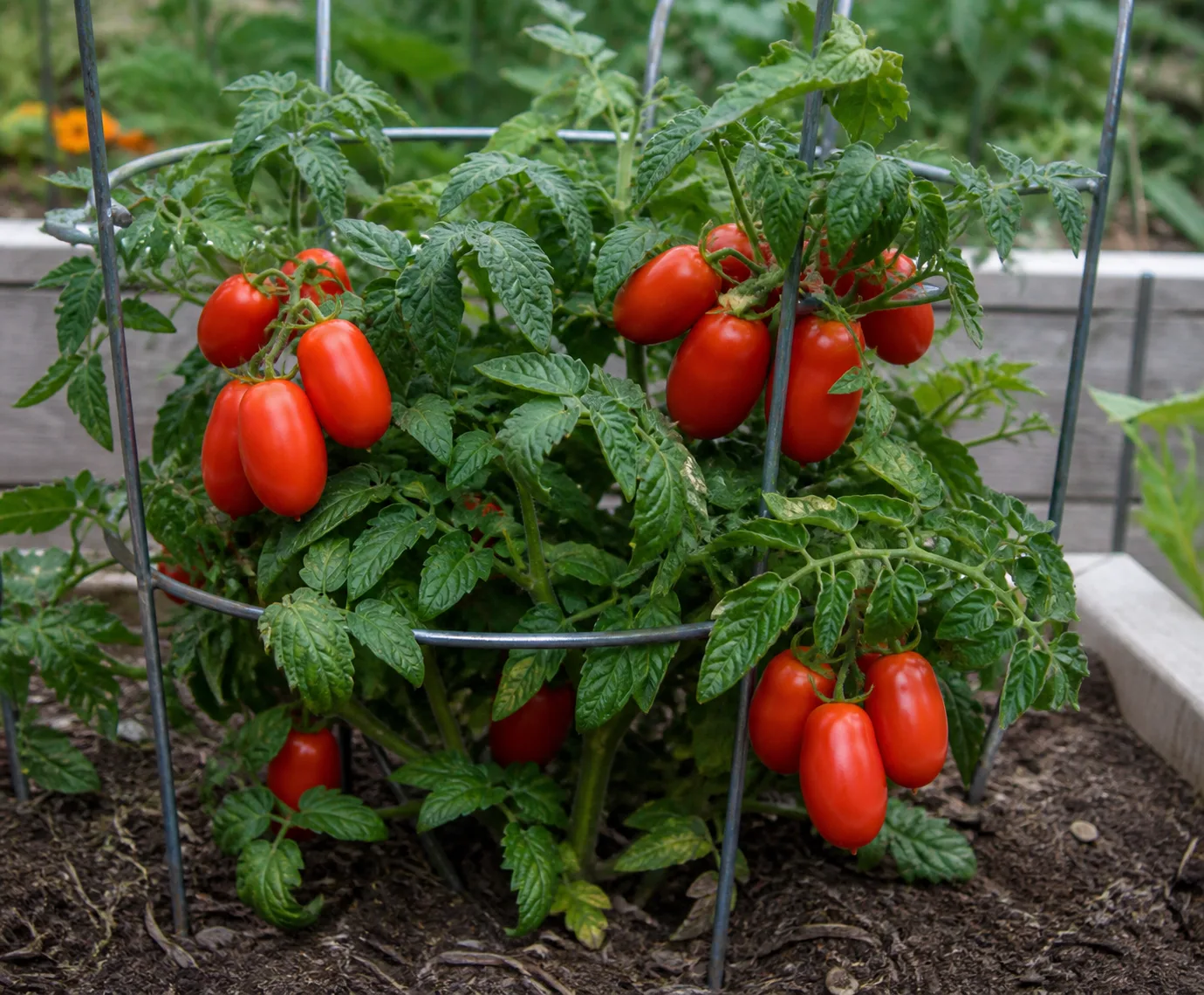
Roma
Solanum lycopersicum 'Roma'
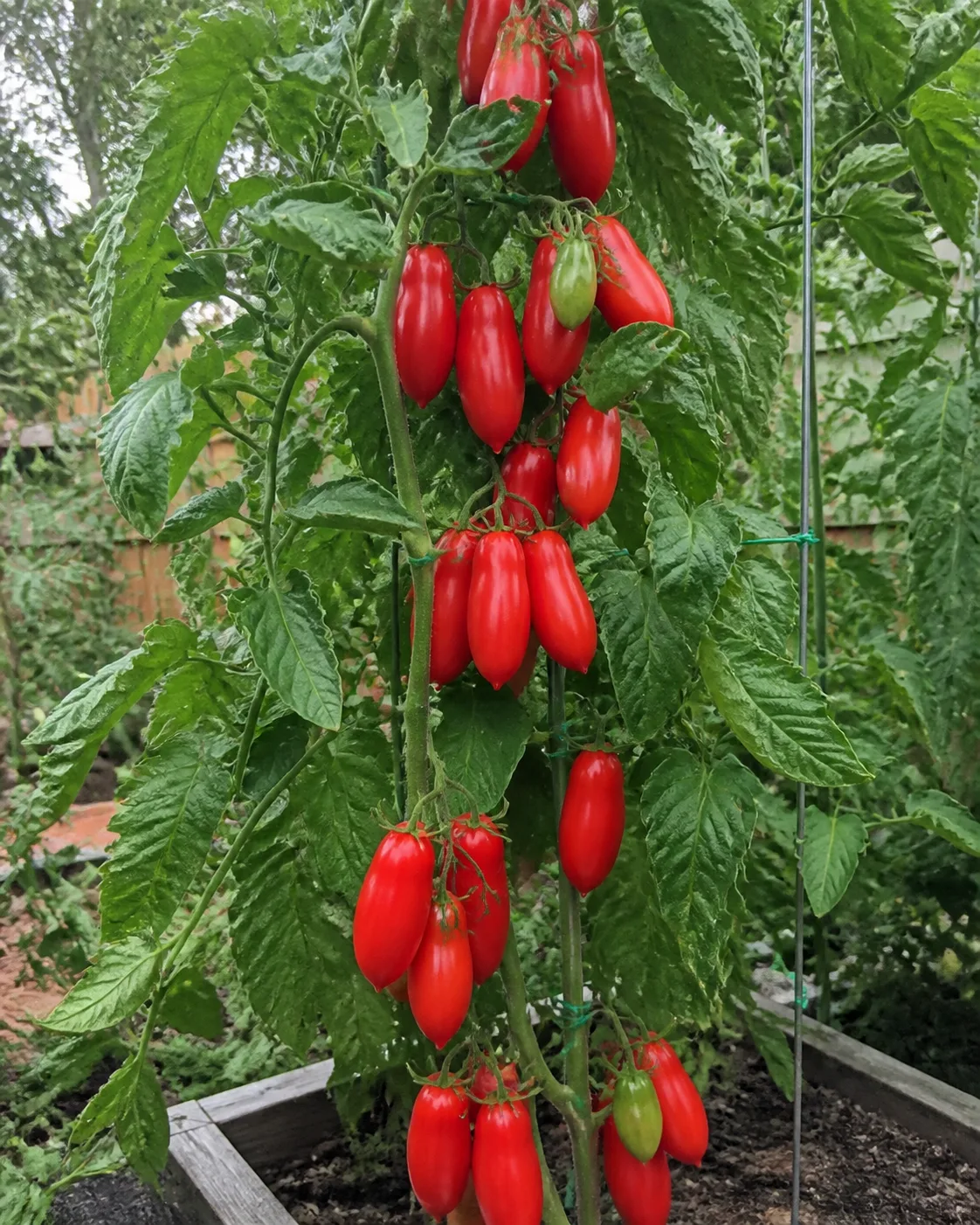
San Marzano
Solanum lycopersicum 'San Marzano'
Roma and San Marzano are both familiar choices for tomato sauce, but the label needs a closer look. Roma can name a specific cultivar or describe a broader paste-tomato type. NC State even includes San Marzano among tomatoes collectively described as Roma types.
Here the comparison is between a commonly sold determinate Roma and a cordon-grown San Marzano. Minnesota identifies Roma as determinate, while the RHS describes its San Marzano record as a cordon plum tomato. The growth habit on the actual seed packet or plant label takes priority over a loose market name. UNH lists San Marzano among determinate examples, so these references do not justify treating every plant sold under that name as identical.
That distinction makes this a decision about a particular sauce planting. The wider growth-habit comparison explains other tomato types, while this page connects the label with picking, support, and a batch of sauce.
Specifications
Compare the named selections by the traits that matter in your garden.
| Feature | Roma | San Marzano |
|---|---|---|
| Name used here | A determinate Roma cultivar | A cordon-grown San Marzano selection |
| Useful label check | Full cultivar name and growth habit | Full strain or cultivar name and growth habit |
| Typical harvest arrangement | More concentrated picking | Repeated picking while conditions allow |
| Support decision | Cage suited to mature bush size | Taller support with room for trained growth |
| Sauce suitability | Paste-type fruit | Plum fruit used for sauces |
| Yield and flavor ranking | Not established by the name alone | Not established by the name alone |
A packet estimate for first ripe fruit is not the length of the whole harvest. Two tomatoes with similar maturity estimates can still put very different demands on a cook because one has a concentrated peak and the other continues setting fruit.
A sauce tomato is not automatically safe to can by any method. NCHFP instructions require the specified preparation, acidification, and processing for the chosen product. Flavor, a paste label, or the use of a pressure canner does not cancel those instructions. This comparison does not supply a canning recipe.
Best Use Cases
Choose by the job the planting needs to do.
Support you can reach
Growth habit on the label
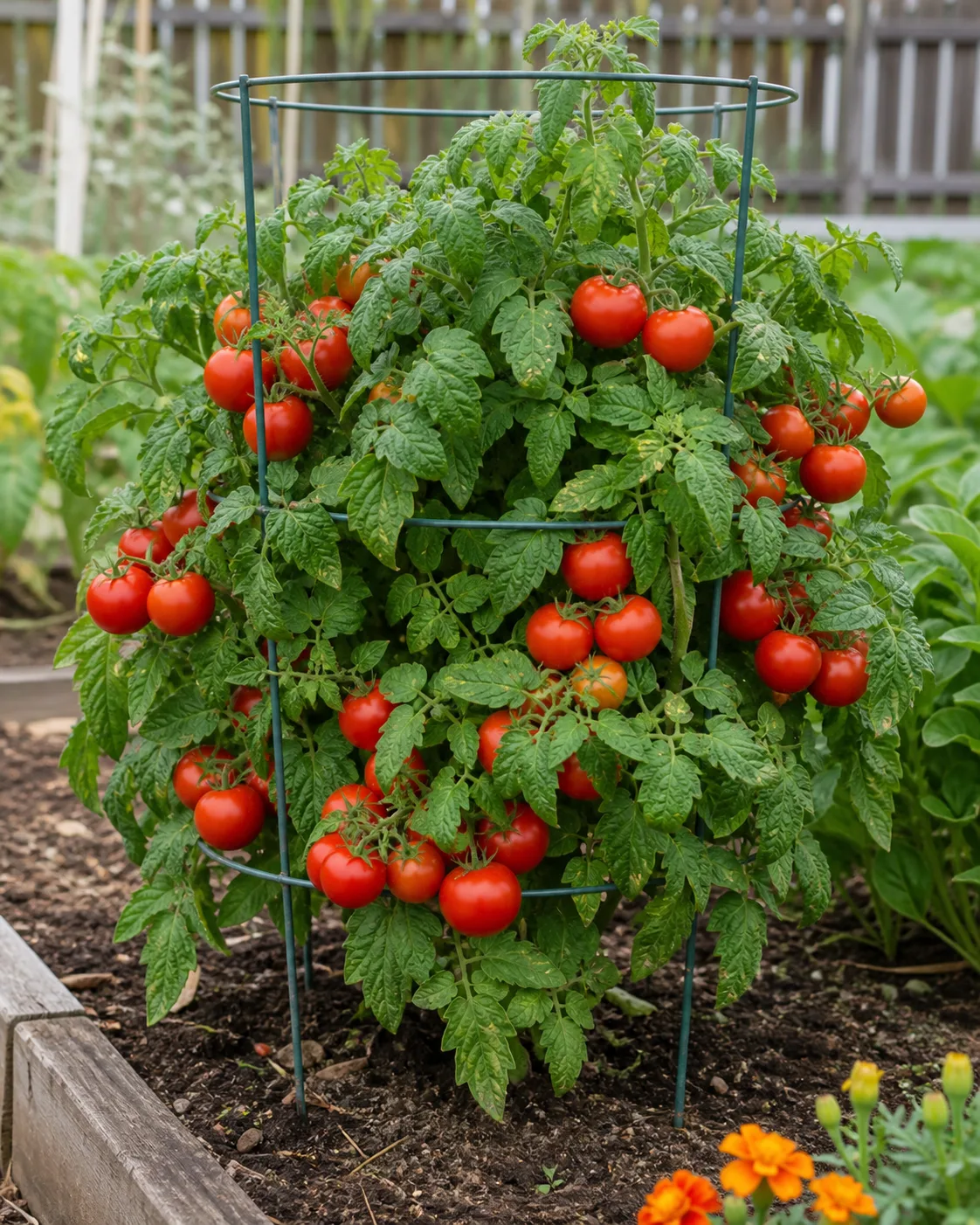
A determinate Roma can fit a conventional cage more readily than a continuously extending vine. The benefit is access to the plant and its fruit, not permission to crowd several plants into the same footprint.
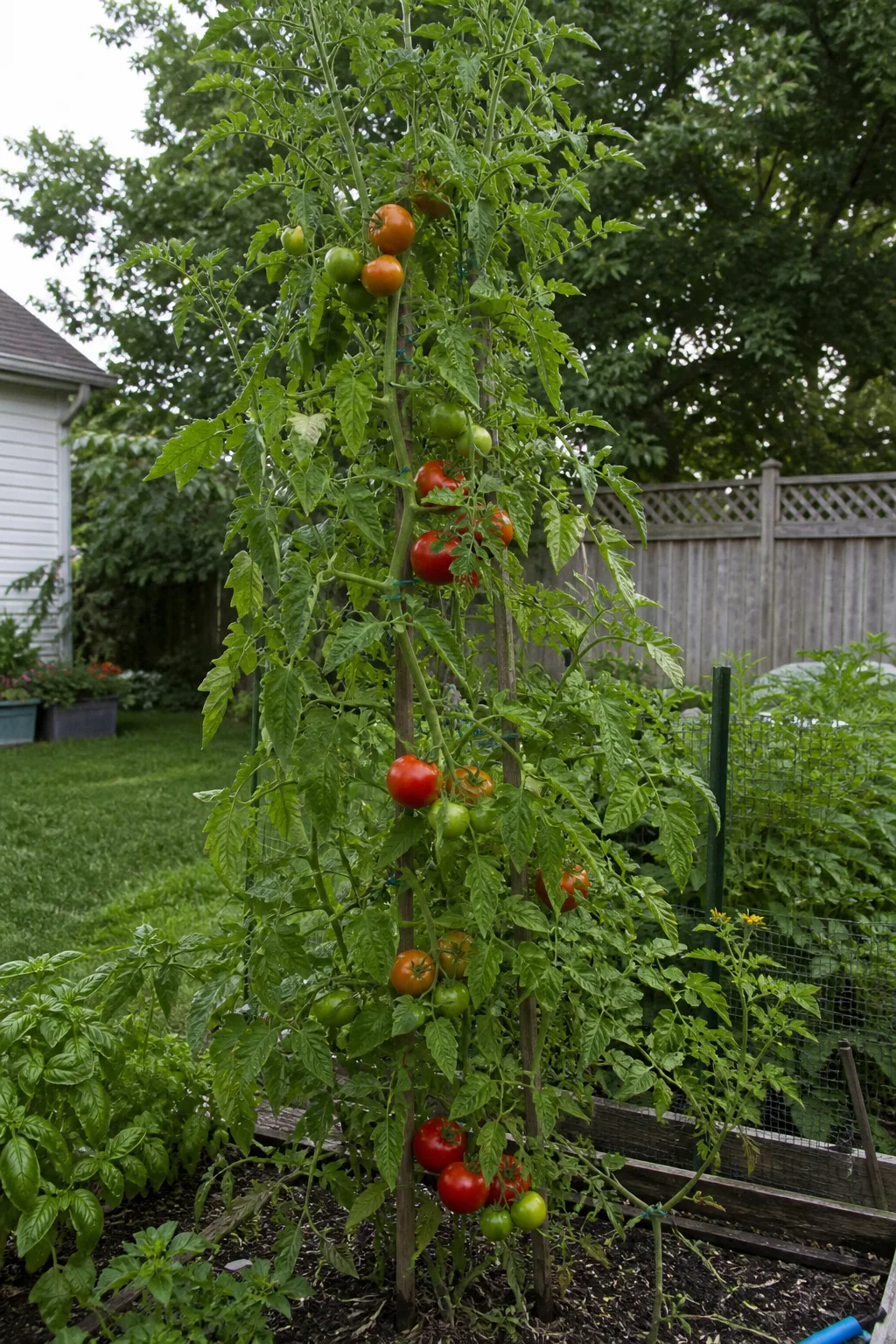
A San Marzano sold for cordon training needs a support that accommodates continued growth. Its extra height may use vertical space well, but training and picking remain part of the arrangement. A narrow bed is not automatically unsuitable if that work is practical.
Concentrated sauce making
Harvest pattern versus total yield
More concentrated ripening can make it easier to gather a batch for sauce. That does not make every fruit ripen on one weekend or guarantee a particular number of jars. Disease, weather, plant count, and the recipe still affect what reaches the kitchen.
An indeterminate San Marzano can spread picking over a longer period when conditions remain favorable. Repeated small batches may fit ordinary cooking better. A grower planning large batches would need to judge the actual harvest rather than assume that the name supplies less fruit.
Flavor in your own sauce
Taste is not a universal ranking
Roma provides a paste-tomato option, but calling it inherently inferior in flavor goes beyond the evidence here. Ripeness, the particular selection, and the way the sauce is cooked all matter to the comparison a cook experiences.
The RHS describes San Marzano as a plum tomato associated with sauces. That supports its use, not a claim that it always tastes better or has lower yield. A small side-by-side planting can answer a personal taste question without committing the entire bed to an assumed winner.
Season and watering
Local conditions apply to both
A determinate habit describes how growth and flowering develop. It does not prove that a Roma selection tolerates drought better, matures first, or escapes a hot spell. The cultivar description and local growing season are separate parts of the choice.
San Marzano also needs suitable growing conditions and consistent moisture. A USDA winter-hardiness zone does not tell you when tomatoes can be planted or how long fruit has to ripen before local cold weather returns.
Sources & References
- University of Minnesota Extension: Trellises and cages to support garden vegetables
- NC State Extension: Growing Tomatoes in the Home Garden
- RHS: Solanum lycopersicum 'San Marzano'
- National Center for Home Food Preservation: Canning Tomatoes, Introduction
- University of New Hampshire Extension: Pruning Tomato Plants — growth-habit examples and training systems
Related Comparisons
Determinate vs Indeterminate Tomatoes: Which Type Fits Your Garden?
Read Comparison
Bell Pepper vs Jalapeno: Heat, Yield, and Garden Space
Read Comparison
Basil vs Cilantro: Best Partner for Your Tomato Beds
Read Comparison