At a glance
- Peak damage for many species
- Late spring, at 65 to 80°F
- Primary spread
- Eggs on the plant, weeds, wind-borne winged aphids and new plants
- Isolate new houseplants
- 30 days
- Birth to adult
- 7 to 8 days in warm California weather, 10 to 14 days in Colorado
A lasting fix removes the eggs, the ants and the host weeds, and leaves the predators in place. The sections below show where each wave comes from, how to clear a colony, and what to do before next spring, and the natural control methods guide covers the wider range of options.
Why do aphids seem to appear overnight?
Aphids multiply so fast that a few you missed can become a visible colony without any new arrivals. In warm weather many species reach reproducing age in 7 to 8 days in California, while Colorado aphids take about 10 to 14 days to become full-grown, and each adult can produce up to 80 offspring in a week. No male is needed, because through most of the summer wingless females give birth to live young instead of laying eggs.
When a colony gets crowded or the plant's quality drops, some of the young develop wings and leave to start colonies elsewhere. They are poor fliers, but they are small enough to be carried for miles on the wind, so winged aphids can reach plants well away from where they hatched.
Winged aphids are one stage of a yearly cycle, and the cycle restarts every spring from eggs laid the previous fall.
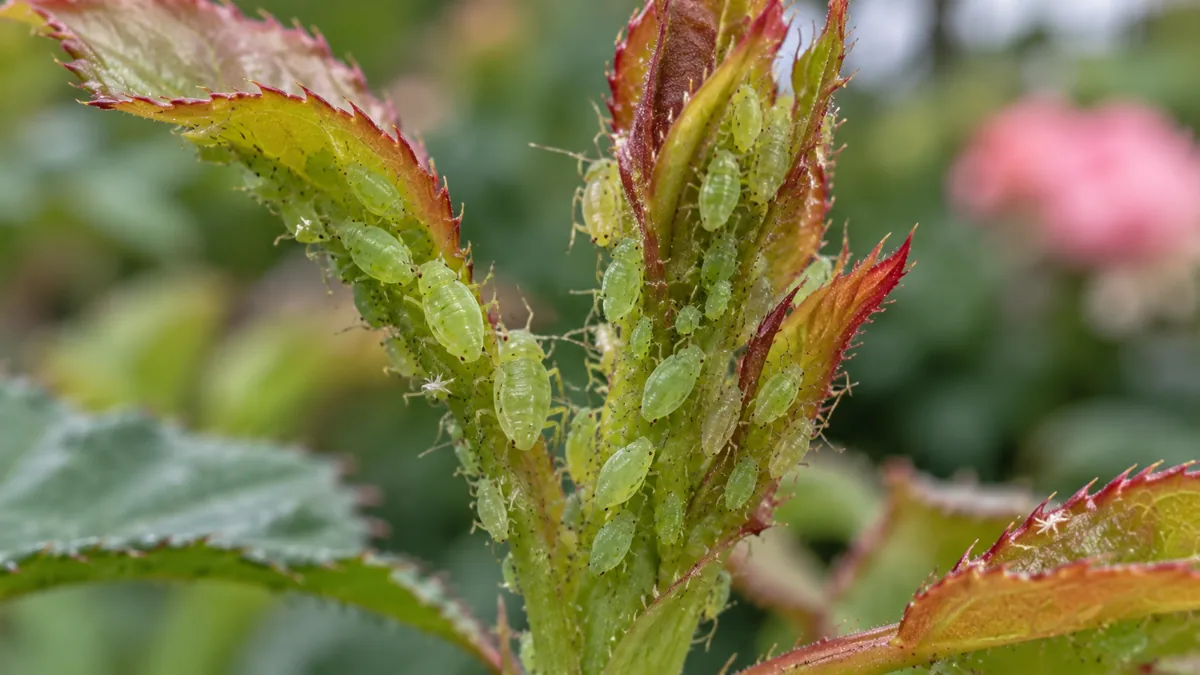
| Time of year | What the aphids are doing |
|---|---|
| Spring, shortly after bud break | Eggs hatch, and the young feed on the new leaves |
| Late spring | Many species do the most damage while temperatures are warm but not hot, 65 to 80°F |
| Midsummer heat | Some species decline and are gone by mid-summer, so aphid numbers often drop on their own in hot weather |
| Fall | Males appear and mate with the females, and the females lay eggs in crevices around buds or on stems |
| Winter | The eggs survive on the plant, while in the milder parts of California some aphids stay active all year |
Rain changes the picture too, since even a good rainstorm can knock aphids off a plant, and you may notice more of them in seasons with lighter rain.
Where do the aphids on your plants come from?
A colony on plants that were clean last week came from one of four places.
- Eggs on the plant itself. Most aphids on fruit trees, poplars, willows, pines, roses, lindens, maples, oaks, hawthorn and viburnum survive winter as eggs on the plant, and perennials that die back to the ground, such as columbine, lupines and perennial asters, carry them on old leaves and stems.
- A different winter host. In Colorado the potato aphid winters on rose and feeds on potatoes and tomatoes in summer, and the green peach aphid winters on peach, plum or apricot and moves to peppers, cabbage and potatoes.
- Weeds. Sowthistle and mustards can support large numbers of aphids.
- Wind. Winged aphids drift in from infested plants nearby.
Aphids of landscape trees and shrubs feed only on their own kind of plant, so aphids on a quaking aspen will not move to an oak. Aphids tend to be most prevalent along the upwind edge of a garden and close to other infested plants of the same kind, so those are the first places to check.
Aphids that build up on weeds are one source you can remove. Pull sowthistle and mustards from around a vegetable bed before the seedlings emerge, because aphids on those weeds move onto related crop seedlings once they come up.
Could the aphids have arrived on a plant you bought?
They can, because a transplant or houseplant that looks healthy at purchase may still carry a small colony, and the chance is greater with plants of uncertain origin. Aphids cluster on buds and new growth, and many species sit on the underside of leaves, so turn the leaves over and check the growing tip before the plant goes into a bed or onto a shelf.
To confirm you are looking at aphids, check for these signs.
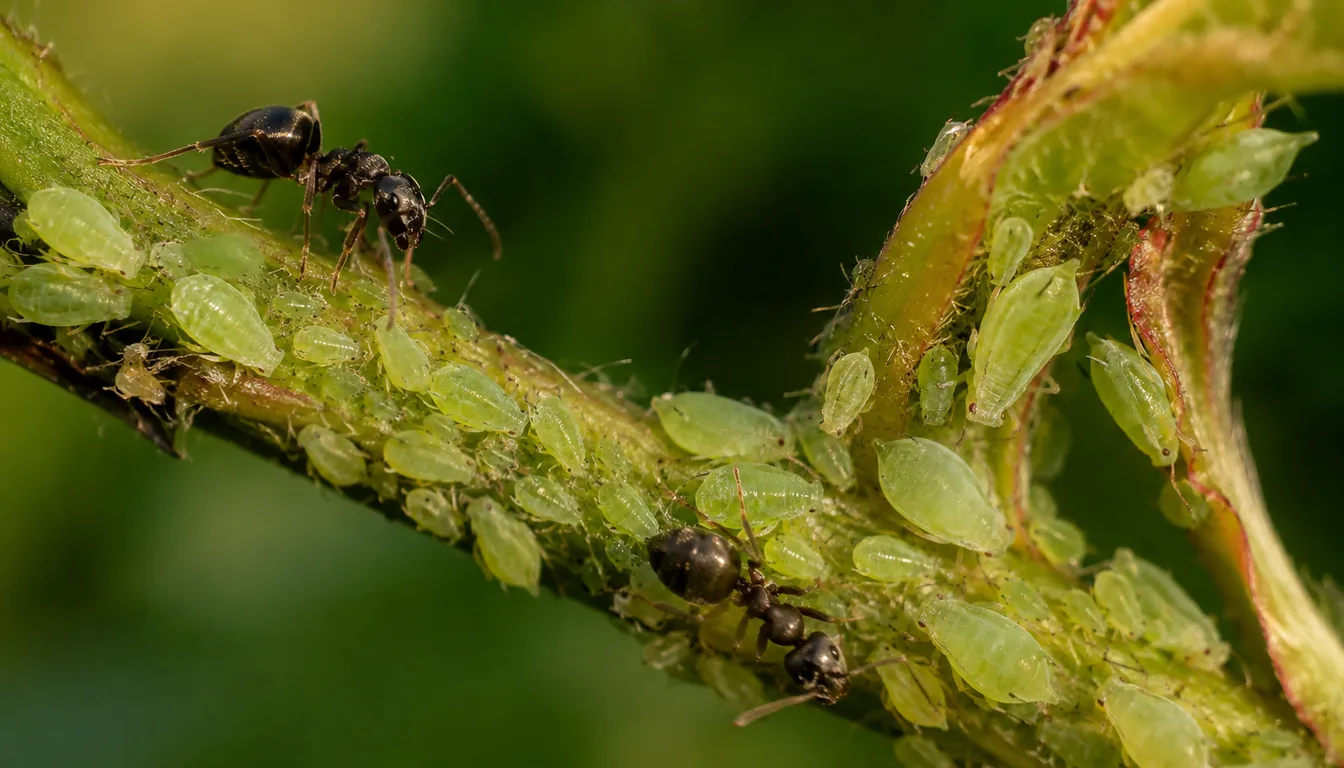
- Soft, pear-shaped insects 1/16 to 1/8 inch long, in green, black, red, yellow, brown or gray
- Two tail pipes (cornicles) at the back end of the body, which is the best way to identify them
- White shed skins on the leaves, or a sticky, shiny coating that is aphid honeydew
On houseplants, keep a new plant away from the others for 30 days before it joins your indoor collection, and move any plant that shows signs of a problem away from its neighbors.
On a houseplant with broad leaves, aphids can be washed off with a soft brush or cloth and a teaspoon of mild soap in a gallon of water. The washing has to be repeated if the aphids come back.
Why do ants and fertilizer make aphid problems last?
How do ants keep a colony alive?
Ants feed on the honeydew that aphids excrete, and to protect that food they drive off many of the predators and parasites that would otherwise thin the colony. A steady line of ants climbing a trunk is therefore a clue to look higher in the tree for aphids or other honeydew-producing insects.
To keep ants off, put a band of sticky material around the trunk. On young or thin-barked trees, and on trees that have been severely pruned, wrap the trunk with fabric tree wrap or duct tape first and put the sticky material on the wrap, because it can harm bark.
Ant stakes or baits set on the ground control the ants without affecting aphids or their natural enemies, and branches that touch a building, the ground or another tree give ants another route, so prune those back.
Does fertilizer feed aphids?
Aphids feed on soft new growth, and high levels of nitrogen fertilizer favor their reproduction. Use no more nitrogen than the plants need, choose a less soluble form such as an organic or urea-based time-release fertilizer, and apply it in small portions through the season rather than all at once. For vegetables, the fertilizer chart by crop gives nitrogen amounts to work from.
Will lady beetles and wasps handle aphids on their own?
Often they will, but not right away. Lady beetle larvae, lacewing larvae, syrphid fly larvae and tiny parasitic wasps all eat or kill aphids, and they usually do not appear in significant numbers until the aphids are already numerous. A parasitized aphid turns into a crusty, golden-brown mummy, and once mummies show up in warm weather, the aphid population is likely to drop substantially within a week or two.
Broad-spectrum insecticides such as organophosphates, carbamates and pyrethroids kill natural enemies along with the pests, which can make an aphid problem worse, so give the predators a chance before you reach for one.
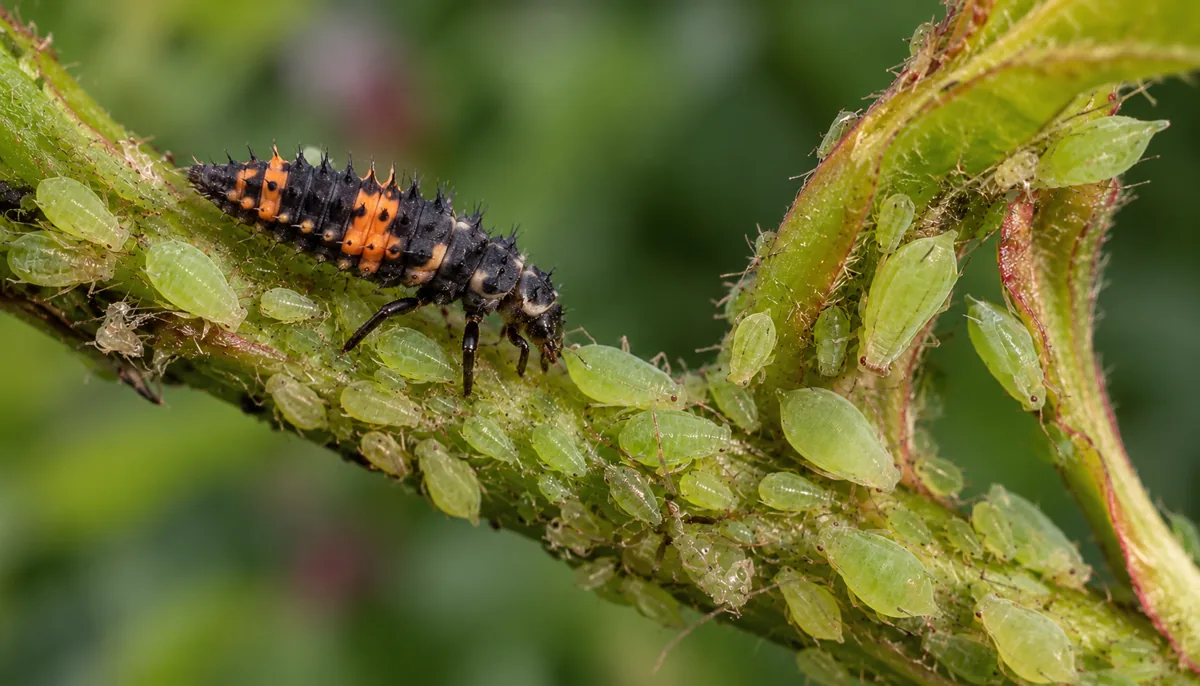
Look for these before you spray
- Lady beetle, lacewing or syrphid fly larvae among the aphids
- Crusty golden-brown mummies, sometimes with a round exit hole where a wasp emerged
- Reddish or brown, fuzzy, shriveled aphids killed by fungus in humid weather
Releasing store-bought lady beetles gives only temporary control, because most of them leave your yard within a few days. University of California research found that one large, heavily infested rose bush needed two releases, a week apart, of about 1,500 lady beetles each.
Flowering plants that bloom at different times through the season give adult natural enemies a food source, and the guide to plants that attract beneficial insects lists good choices.
How do you clear a colony without making it worse?
- Spray the plant with a strong stream of waterDo it early in the day so the foliage dries quickly in the sun. Most dislodged aphids cannot get back onto the plant, and the spray washes off the honeydew too.
- Prune out curled leaves and shoot tipsAphids inside curled leaves are shielded from contact sprays and from predators, so cut those parts off and dispose of them.
- Spray insecticidal soap or oil if aphids remainCover the tops and undersides of the leaves, because these products kill only the aphids they touch. Skip drought-stressed plants and days above 90°F, and test a few leaves several days ahead, since some plants are sensitive.
- Check again and repeat when new colonies appearLook at least twice a week while the plant is growing fast, since soaps, neem oil and horticultural oil kill only the aphids present on the day they are sprayed.
The sticky honeydew and the black sooty mold that grows on it do not need to be cleaned off the plant, according to Minnesota Extension, although Penn State notes that abundant mold can reduce photosynthesis. Bringing the colony down is what stops the honeydew, and the neem oil guide covers using that oil.
What can you do before next spring?
Before next spring, the aphids that will return are eggs on plants you can reach, and two jobs go after them. On perennials that die back to the ground, the eggs are on the old leaves and stems, so cut off that old top growth before new shoots emerge in spring. The eggs on the cuttings can be composted or piled elsewhere, since aphids that hatch there can move only inches before dying.
On trees and shrubs whose aphids winter as eggs, a horticultural oil sprayed before bud break in the dormant season smothers the eggs, but only the ones it covers. A delayed-dormant spray just as the eggs begin to hatch gives incomplete control and is probably not justified for aphids alone, and leafcurling aphids on ash cannot be controlled this way because they do not winter as eggs. Follow the product label for timing and plants.
For vegetables, seedlings are the stage most at risk, so start them under protective covers, in a greenhouse or indoors, and transplant them when they are older and more tolerant of aphid feeding. Silver reflective mulch also repels aphids from seedlings and small plants, and it should come off in high summer heat to keep the plants from overheating.
Pro Tips
- Check new growth for aphids at least twice a week while plants are growing fast, and turn leaves over to look at the undersides.
- Pull sowthistle and mustard weeds from around vegetable beds before the seedlings emerge.
- Look over transplants and new houseplants for aphids before they go near other plants, and keep a new houseplant apart for 30 days.
- Cut off the old top growth of perennials such as columbine, lupines and asters before new shoots emerge in spring.
- Use no more nitrogen than plants need, in a slow-release form applied in small portions through the season.
- When ants climb a trunk, wrap it first and put sticky material on the wrap rather than on young or thin bark.
- Look for lady beetle larvae, lacewing larvae and golden-brown mummies before you spray.
- Skip soaps and oils on drought-stressed plants and on days above 90°F, and test a few leaves first.
Frequently Asked Questions
Do aphids come from the soil or the plant itself?
No. Most aphids winter as eggs laid on a plant in fall, and the eggs hatch in spring shortly after bud break. Winged aphids add to them by flying in, because they are small enough to be carried for miles on the wind.
Why do I get aphids every year on the same plants?
Aphids on a tree or shrub feed only on that kind of plant, and most of them winter as eggs on it, so last year's eggs hatch on the same plants. Cutting back the old growth of perennials before shoots emerge removes the eggs there, and a dormant-season horticultural oil can reach the eggs on many trees and shrubs.
How do aphids get onto houseplants?
A plant you bring home is one route, because a new plant can carry aphids and still look healthy. Keep a new houseplant away from the others for 30 days, and look over the growing tips and the undersides of the leaves before it joins them.
Do aphids lay eggs or give birth to live young?
Both, depending on the season. Through most of the summer, wingless females give birth to live young without mating. In fall, males mate with females, and the females lay the eggs that survive winter on the plant.
Will one treatment get rid of aphids for good?
Usually not. Soaps and oils kill only the aphids they touch on the day you spray, so you may need to repeat them, and new aphids can still arrive from weeds or nearby plants. Check the plants at least twice a week while they are growing fast.
Sources & References
- University of California IPM: Aphids Management in Gardens and Landscapes
- University of Minnesota Extension: Aphids in Home Gardens
- Penn State Extension: Aphids on Ornamentals
- Colorado State University Extension: Aphids on Shade Trees and Ornamentals
- University of Kentucky Entomology: Houseplant Insect Control (ENTFACT-406)