
Best Quick-Harvest Vegetables for Fast Results
Choose quick-harvest vegetables by first picking, season, and space. Compare radishes, greens, peas, beans, beets, and baby carrots.
At a glance
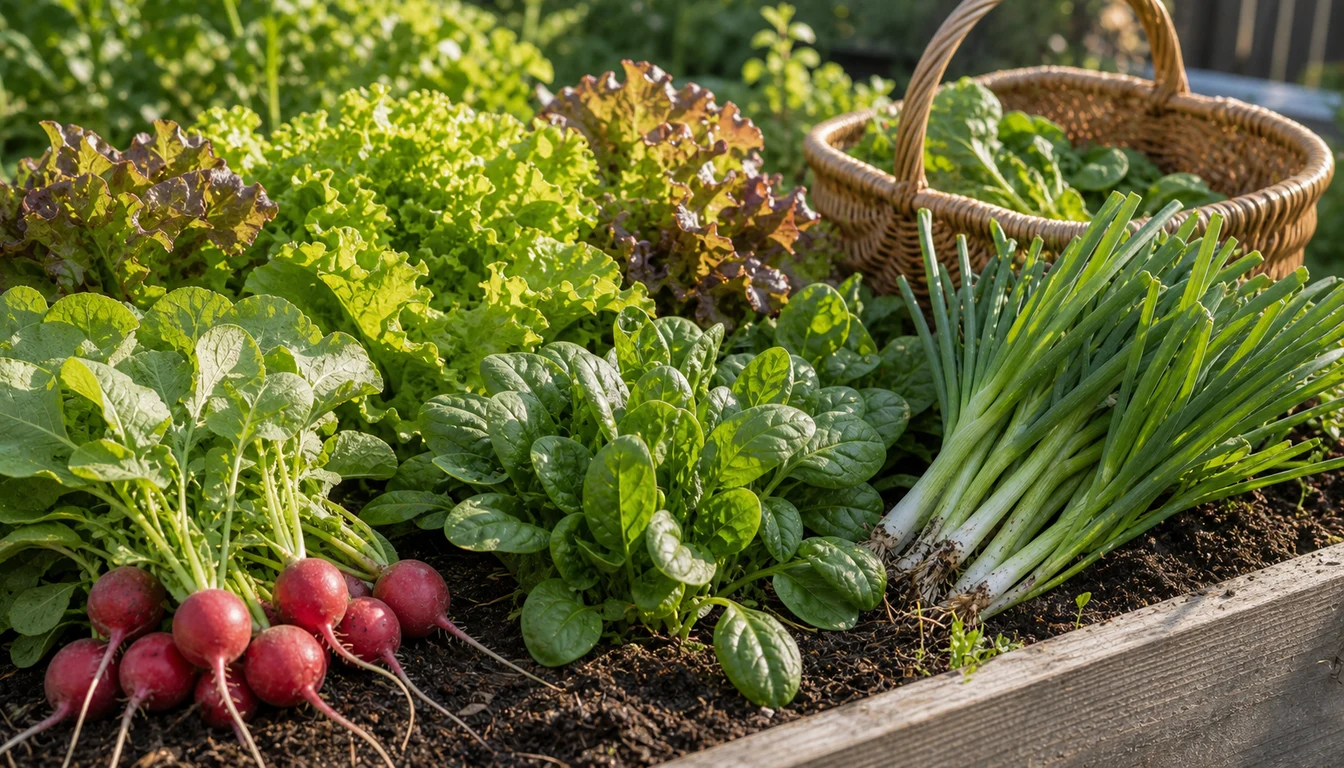
The best quick-harvest vegetables are radishes, baby salad greens, spinach, arugula, mustard greens, scallions, baby beets and carrots, snap peas, and bush beans. The fastest choice still depends on temperature.
Leafy greens and roots lead in cool weather, while beans become the practical short-season crop after the soil warms.
Compare the date of the first useful picking, not just the full-size maturity number. A salad can come from young leaves weeks before a head forms, and a carrot can be worth pulling at baby size before it reaches its storage-crop dimensions.
Speed also comes from management. A fine, evenly moist seedbed, prompt thinning, timely harvest, and a prepared second sowing protect more days than any label that says “early.”
The useful benchmark is the first useful harvest. It keeps a fast packet from becoming a slow, stressed planting.
Which Vegetables Give the Fastest Useful Harvest?
Start with crops whose young stage already tastes good. Radishes are the clearest fast root, while loose-leaf lettuce, spinach, arugula, and mustard can be cut before they make a full plant.
Scallions are useful as soon as the stems reach a size worth slicing.
Baby beets and carrots let you trade root size for an earlier meal, and their tender tops can be used while the roots continue growing.
Snap peas need more time than radishes, but they earn a place in a cool spring because the pods are picked repeatedly.
Bush beans fill the same role after frost, once warm soil supports quick germination.
The ranges below are planning references, not promises. Cultivar, soil temperature, heat, moisture, and whether the packet counts from seeding or transplanting can move the date.
| Crop | Useful harvest | Best window | Main catch |
|---|---|---|---|
| Garden radish | About 20–35 days | Cool spring or fall | Roots turn fibrous when held too long |
| Arugula, mustard, salad mix | About 25–45 days | Cool to mild weather | Heat shortens the tender window |
| Spinach | About 30–50 days | Cool weather | Long, warm days trigger bolting |
| Baby carrots | About 35 days | Cool to mild weather | Full roots often need 55–75 days |
| Beets | About 50–55 days | Cool to mild weather | Crowding delays root sizing |
| Bush beans | About 50–55 days | Warm, frost-free weather | Cold soil slows or rots seed |
| Snap peas | About 50–65 days | Cool spring or fall | Warm weather ends pod quality |
What Does “Days to Maturity” Actually Measure?
A maturity number is tied to one cultivar and a starting point. Direct-sown packets usually count from seeding, while some transplanted crops count from setting a plant outdoors.
Two identical-looking numbers may therefore cover different amounts of calendar time.
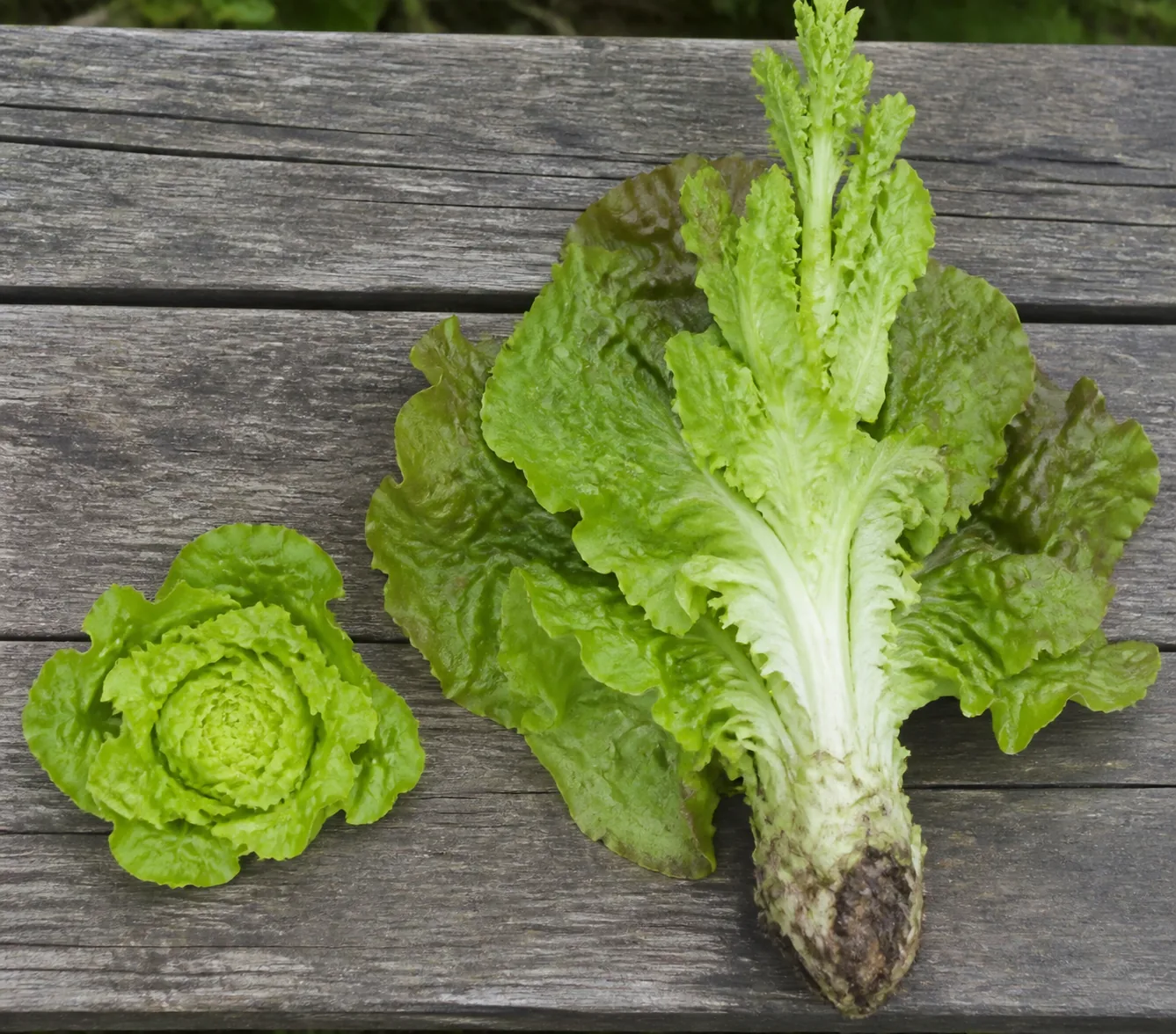
The printed date usually describes a standard market or full-size stage. It may not tell you when a leaf is large enough to clip, when a radish shoulder is worth checking, or how long repeated harvest will continue.
A seedling that emerges late has already spent part of its advertised speed. Record the sowing date, emergence date, and first useful harvest separately so next season’s estimate reflects your bed rather than a national average.
Which Fast Crops Fit Cool and Warm Weather?
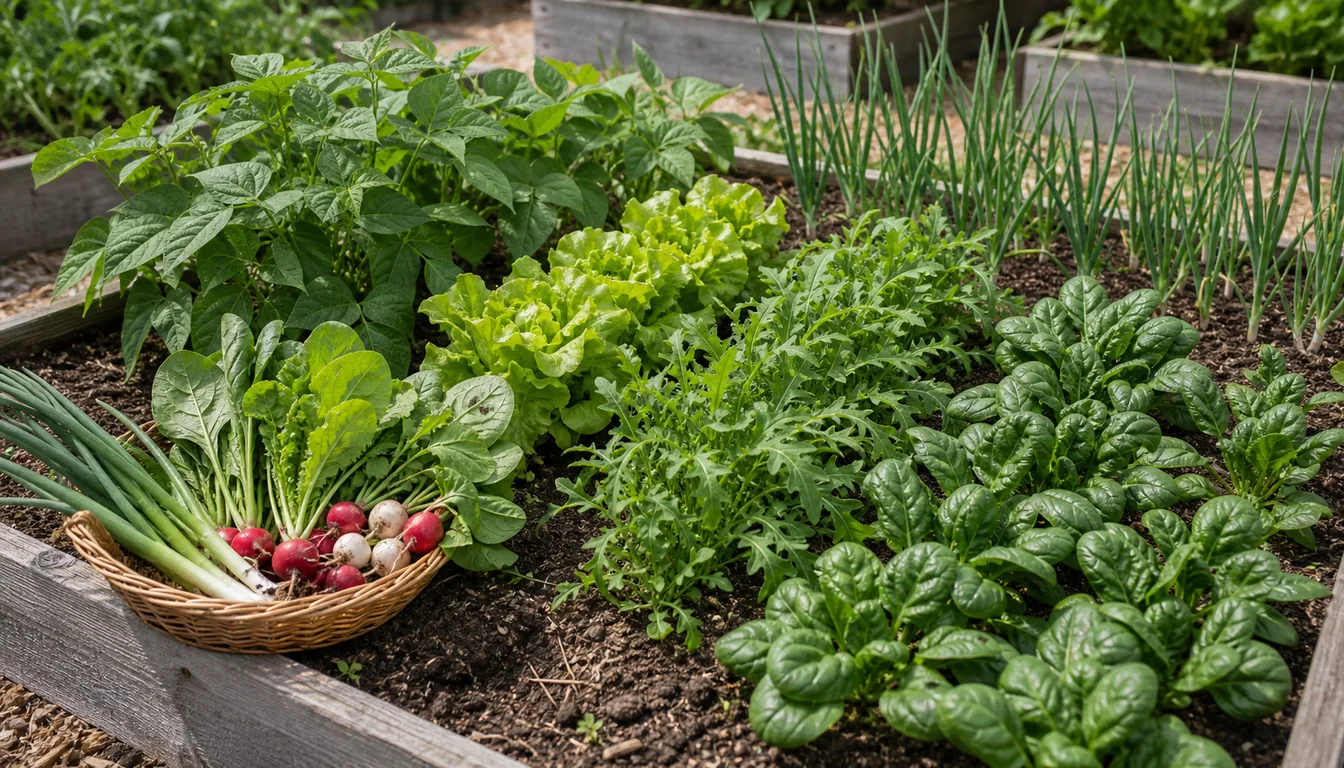
Radish, spinach, lettuce, arugula, mustard, peas, beets, and carrots grow best across the cooler shoulders of the season. Their calendar advantage fades when heat speeds bolting, toughens roots, or makes germination uneven.
Beans are frost-tender, but bush types become a useful summer succession once the ground has warmed. They should replace a finished spring crop rather than be forced into cold soil for an early date.
Early cool soil
Spinach, radish, peas, arugula, mustard, and leaf lettuce
Mild spring
Beets, baby carrots, scallions, lettuce, and repeat greens
Warm frost-free soil
Bush beans and heat-tolerant leafy cultivars
Cooling late summer
Radish, spinach, lettuce, mustard, beets, and turnips
Local frost dates set the outside boundaries, while the seed packet and current weather set the actual sowing day. Count backward from expected heat for spring greens and from first frost for a fall crop.
Leave extra time for slower growth as days shorten.
How Do You Keep Germination From Wasting a Week?
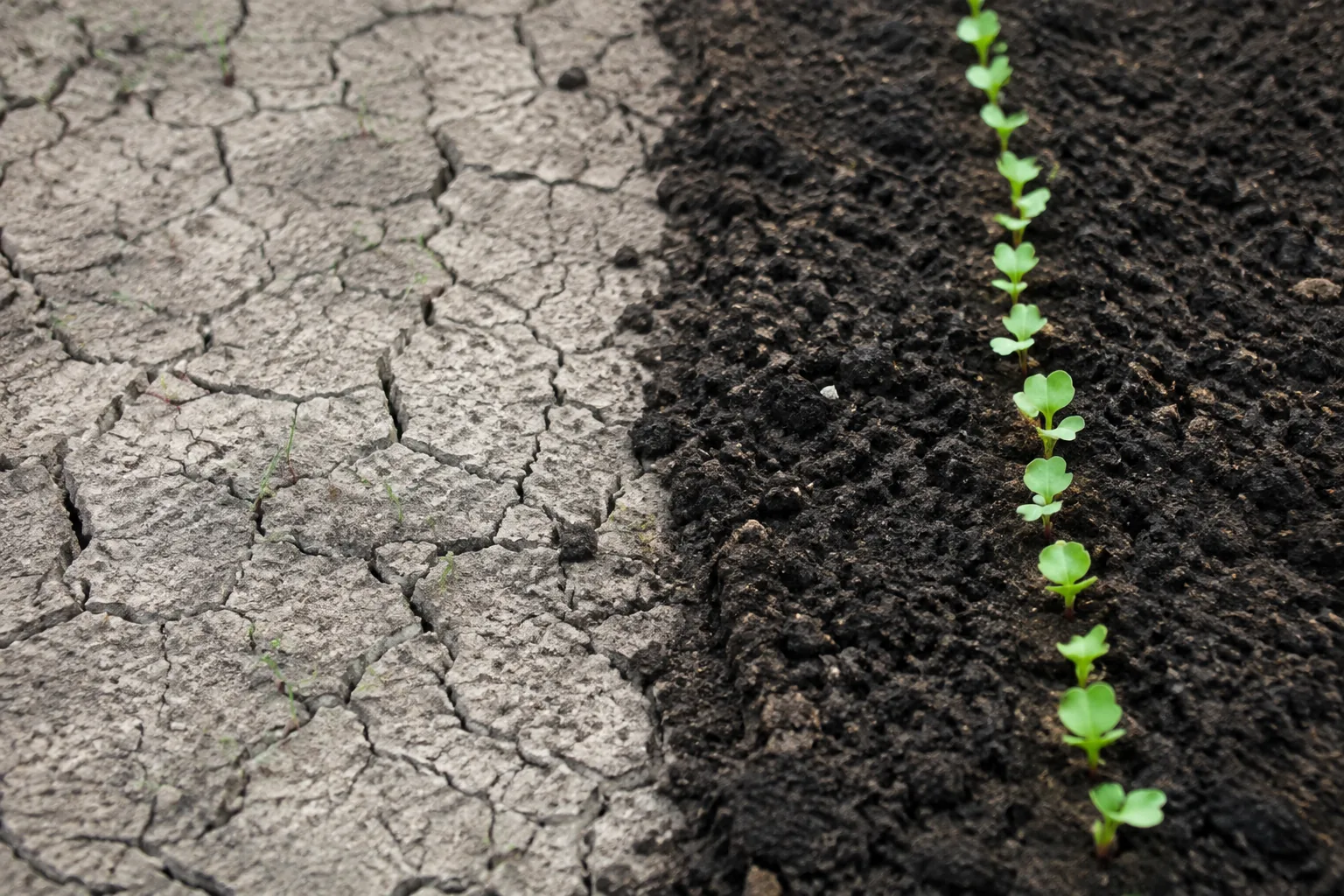
Small seed needs close contact with fine soil and moisture near the surface. Large clods leave air pockets, while a hard crust can trap a seedling even when the soil below is damp.
Water the bed before sowing if it is dry, plant at the packet depth, and use a gentle spray that does not wash seed into piles.
Check the seed zone daily until emergence because young roots cannot reach a deep reserve.
- [ ] Soil is loose at root depth and fine at the surface
- [ ] Seed is planted at the packet depth
- [ ] Surface stays evenly damp, not saturated
- [ ] Row label carries the crop, cultivar, and sowing date
- [ ] Cover comes off as soon as seedlings need full light
- [ ] Crowded seedlings are thinned at the proper stage
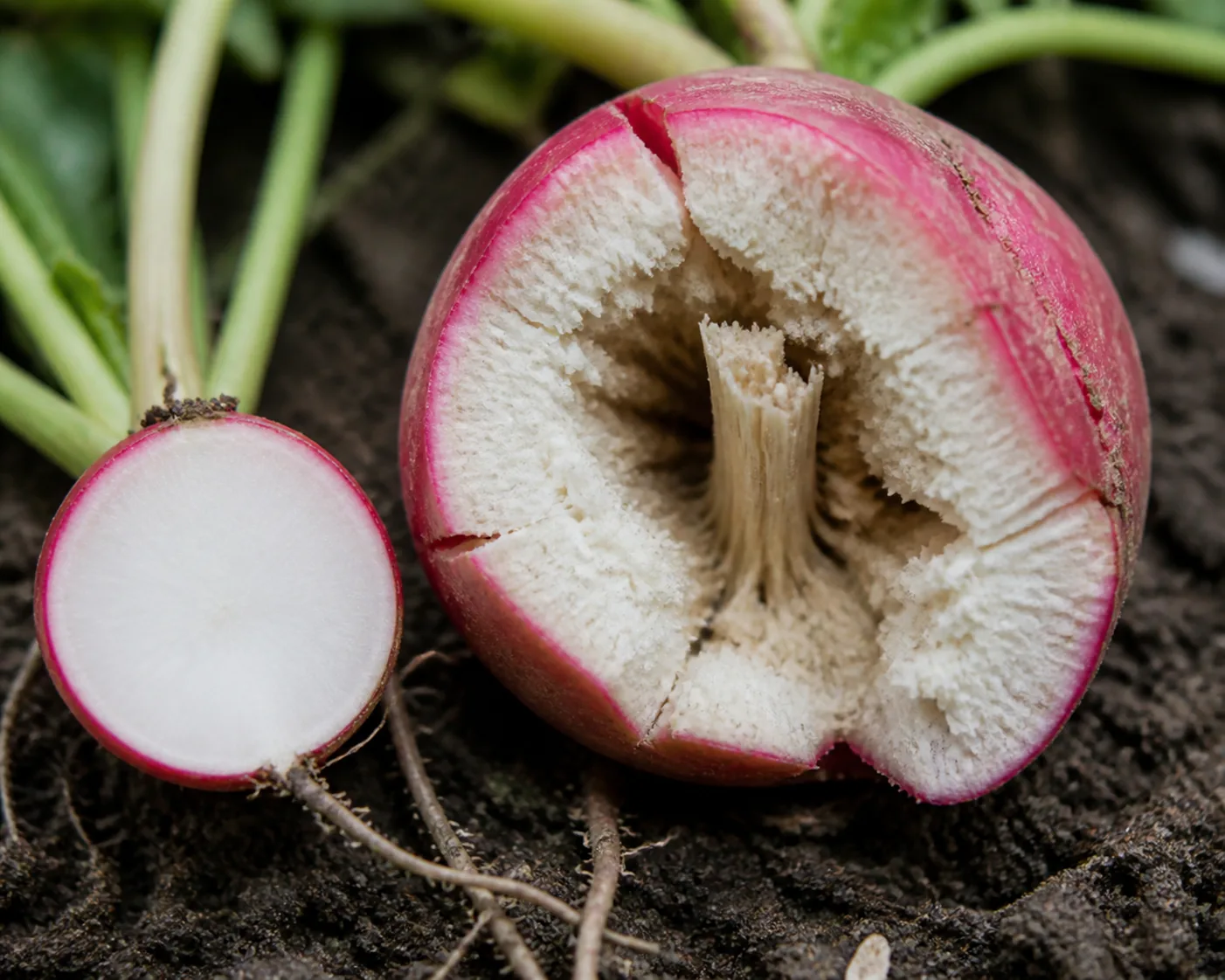
Crowding is a delay, not a way to gain more food. Radishes fail to form clean roots when packed together, and leafy crops make smaller, damper canopies with less airflow.
Use vegetable garden watering for the established bed, but keep the newly sown strip under closer observation.
The top layer can dry while deeper soil still feels moist.
How Do You Turn One Fast Crop Into a Steady Harvest?
One large sowing creates one glut. Succession planting divides the same seed into smaller batches so the kitchen receives manageable harvests and the bed has fewer empty weeks.
The interval should follow the crop’s harvest window and your household use. Illinois Extension uses 7–10 days as a practical example for lettuce, spinach, radishes, and beans, while other crops or slower weather may need wider spacing.
- Mark one short row or small block for the first batch.
- Sow only the amount your household can use during its best harvest window.
- Write the next sowing date before leaving the bed.
- Check emergence before sowing batch two, then adjust if weather delayed batch one.
- Harvest the oldest batch first and clear it when quality falls.
- Prepare that opening for the next crop or the next season.
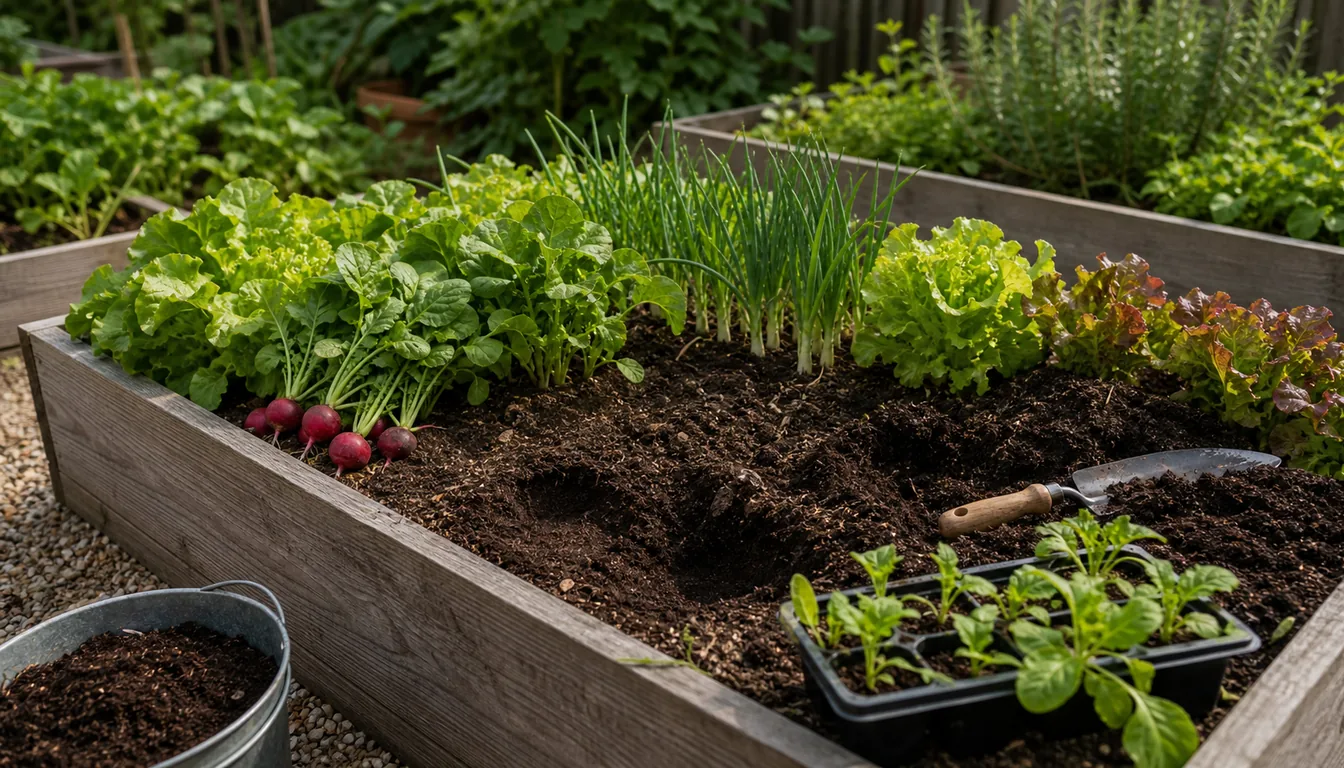
Keep each batch visually distinct with a label or a narrow gap. Otherwise, new seedlings disappear among older leaves and are damaged during harvest.
When Should You Pick for Speed and Quality?
Harvest begins when the edible part is useful, not when the plant looks largest. Pull one radish when its shoulder widens at the soil line, taste a few leaves before cutting a row, and pick beans while pods are tender and seeds have not swollen heavily.
A baby harvest gives food sooner but less weight per plant. Waiting can increase size, yet it also exposes the crop to heat, pests, pithiness, bitterness, and a missed handoff to the next planting.
For cut-and-come-again greens, remove outer leaves or cut above the growing point only when the crop and cultivar support regrowth.
Whole-head lettuce and damaged crowns will not produce the same second cut.
Which Quick Vegetables Work in Containers and Small Beds?
Containers favor crops with a compact root system and a harvest that does not require a large permanent footprint. Loose-leaf lettuce, spinach, arugula, scallions, and round radishes are easier fits than sprawling vines or a full bed of long carrots.
Pot depth still has to match the root. Shallow salad boxes suit baby leaves, while radishes and beets need room below the seed for the edible root to form without hitting a hard base.
- [ ] Drainage holes release excess water
- [ ] Soil depth matches the mature root
- [ ] The surface is wide enough for useful spacing
- [ ] The pot receives the crop’s required light
- [ ] Water can be checked daily during germination
- [ ] Part of the container can be replanted without uprooting the rest
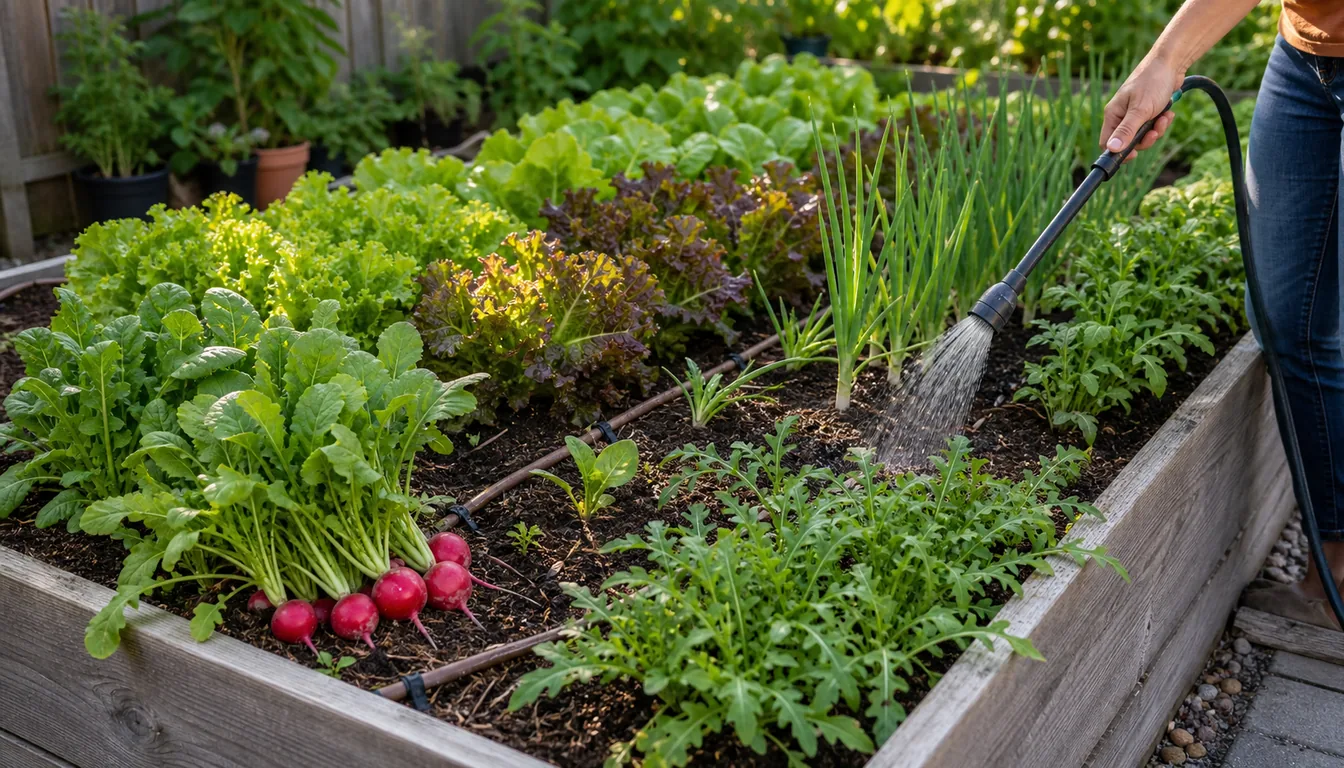
Divide a wide container into dated bands instead of sowing every inch on one day. This keeps new seedlings away from the roots and shade of the oldest batch.
Why Are Fast Vegetables Growing Slowly?
Use the pattern in the bed to find the delay. Poor emergence points toward seed, temperature, depth, crusting, or moisture, while even emergence followed by pale or stalled growth points toward light, roots, soil conditions, or crowding.
Do not add fertilizer before checking the basics.
Quick crops often finish before a rescue feeding helps, and excess nitrogen can produce soft leaves without correcting heat, shade, or saturated roots.
| What you see | First likely cause | Check next |
|---|---|---|
| No seedlings | Dry seed zone or unsuitable temperature | Dig for swollen or rotted seed |
| Patchy row | Crusting, uneven watering, or seed wash | Compare high and low spots |
| Tall pale seedlings | Too little light or a cover left on | Check daily sun and cover timing |
| Leaves but no radish roots | Crowding, heat, or excess nitrogen | Measure spacing and inspect shoulders |
| Bitter leaves or flower stalks | Heat and long days | Harvest now and change crops |
| Split roots | Moisture changed sharply | Check irrigation consistency |
| Beans stalled after sowing | Soil was cold or wet | Inspect seed before reseeding |
If one patch fails while the rest grows, compare water delivery and soil texture within the bed. If the entire sowing stalls together, question the weather, seed lot, sowing depth, or crop choice first.
Resetting early can be the fastest correction. Once heat has pushed spinach to bolt or radishes have become pithy, a suitable replacement uses the space better than prolonged rescue work.
What Should Follow the First Quick Harvest?
The next crop should fit the weather that is arriving, not the weather the first crop enjoyed. Finished spring radishes and greens can hand space to beans or another frost-tender summer crop, while a declining summer row can open ground for fall spinach, lettuce, mustard, beets, or turnips.
Spring roots and greens
Follow with bush beans after frost when the soil is warm
Early peas
Remove tired vines and use the support or light for a summer crop
Summer bush beans
Clear declining plants and count back for fall greens
Baby-leaf strip
Resow only while temperature and light still fit the crop
Clear roots and diseased debris, loosen only the disturbed surface, and restore moisture before seeding.
Use direct sowing or transplants according to the replacement crop rather than assuming every fast bed must start from seed.
Keep three dates for each batch. Record sowing, first useful harvest, and last good harvest.
Add the amount actually eaten, because the fastest vegetable is a poor repeat choice when it repeatedly becomes compost.
At the end of the season, keep crops that matched both the climate and the kitchen. Change the interval, cultivar, or bed position for near misses, and drop crops whose useful window never arrived.
Quick Tips
- Compare the first useful picking, not just full maturity.
- Match cool-season and warm-season crops to current weather.
- Keep the seed zone evenly moist until seedlings emerge.
- Thin roots and greens before crowding costs time.
- Prepare the next bed opening before the current crop declines.
Recommended Plants
5 vegetables worth considering.
Radish
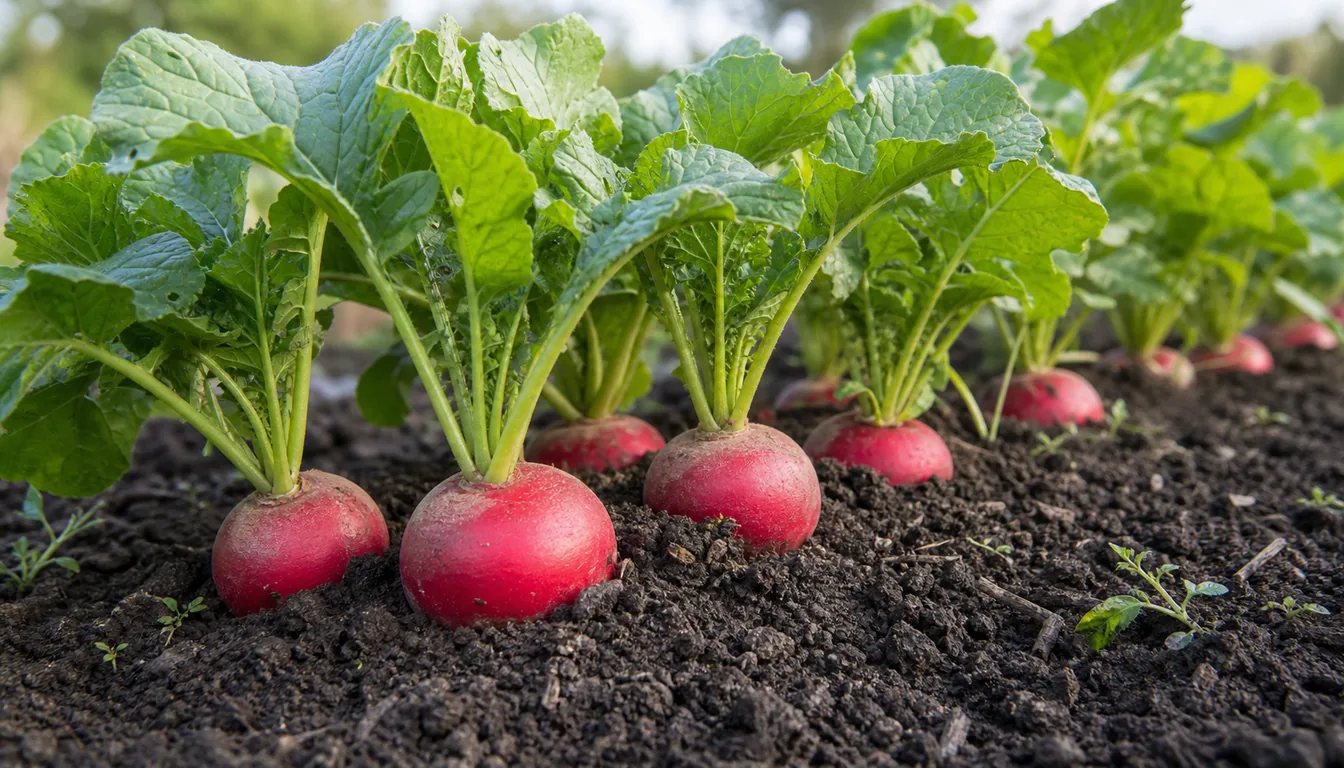
Radish is a fast cool-season root crop that makes its best roots at 50 to 65 F, in about 25 to 45 days depending on…
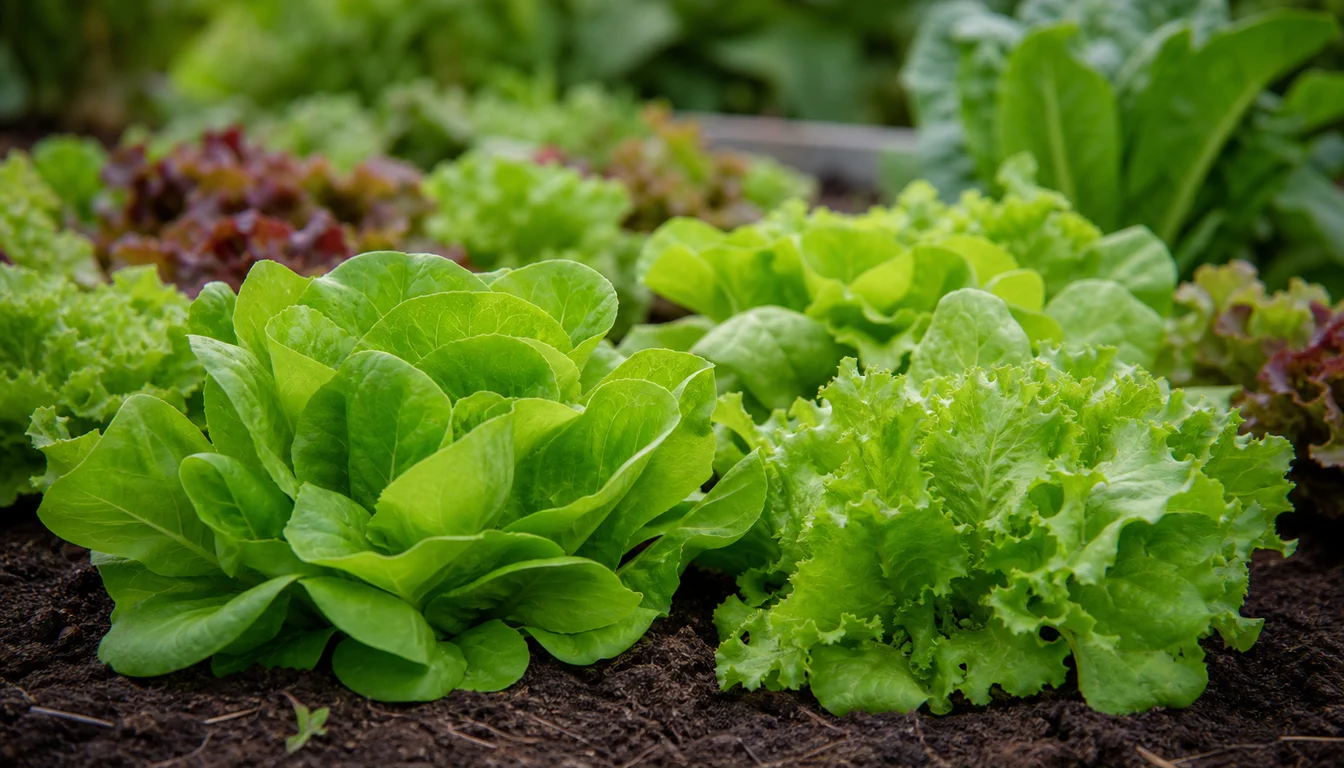
Lettuce
Lettuce grows best at 55 to 65 F and turns bitter and bolts when heat or dry soil stress the plants.
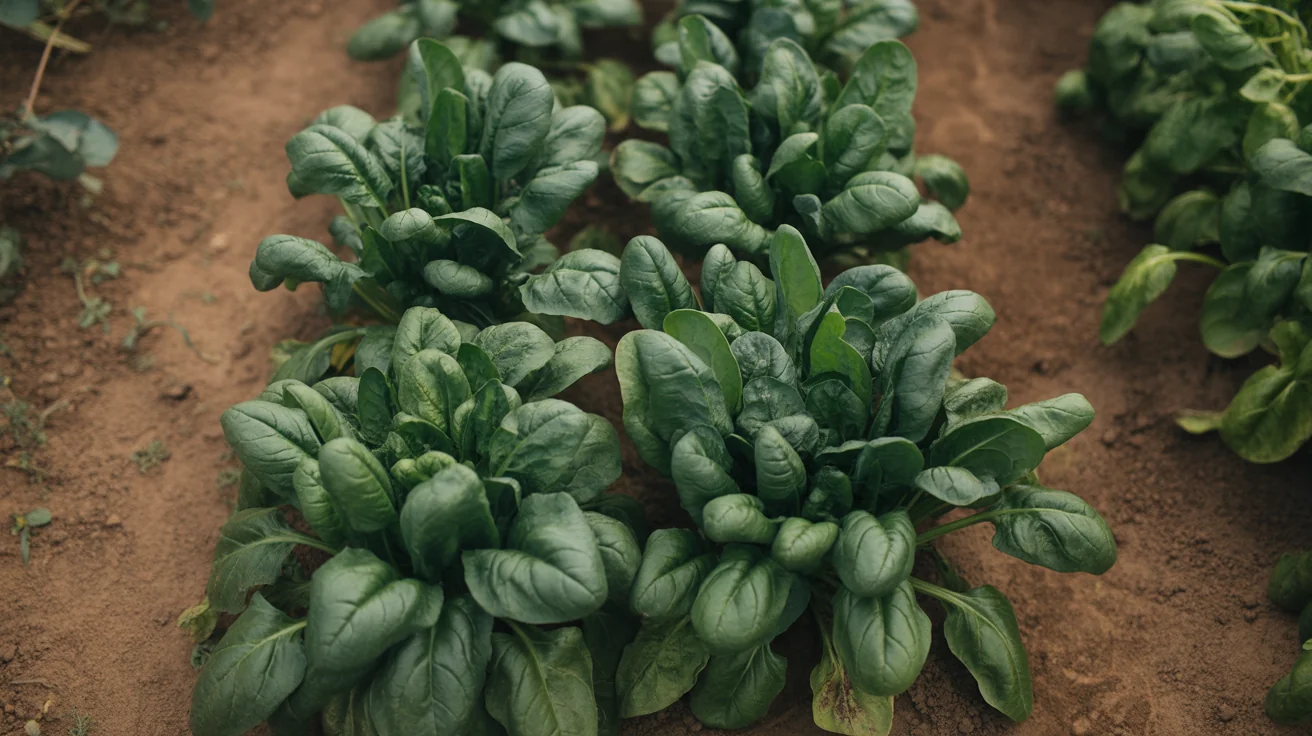
Spinach
Spinach (Spinacia oleracea) is a cool-season annual grown for tender leaves.
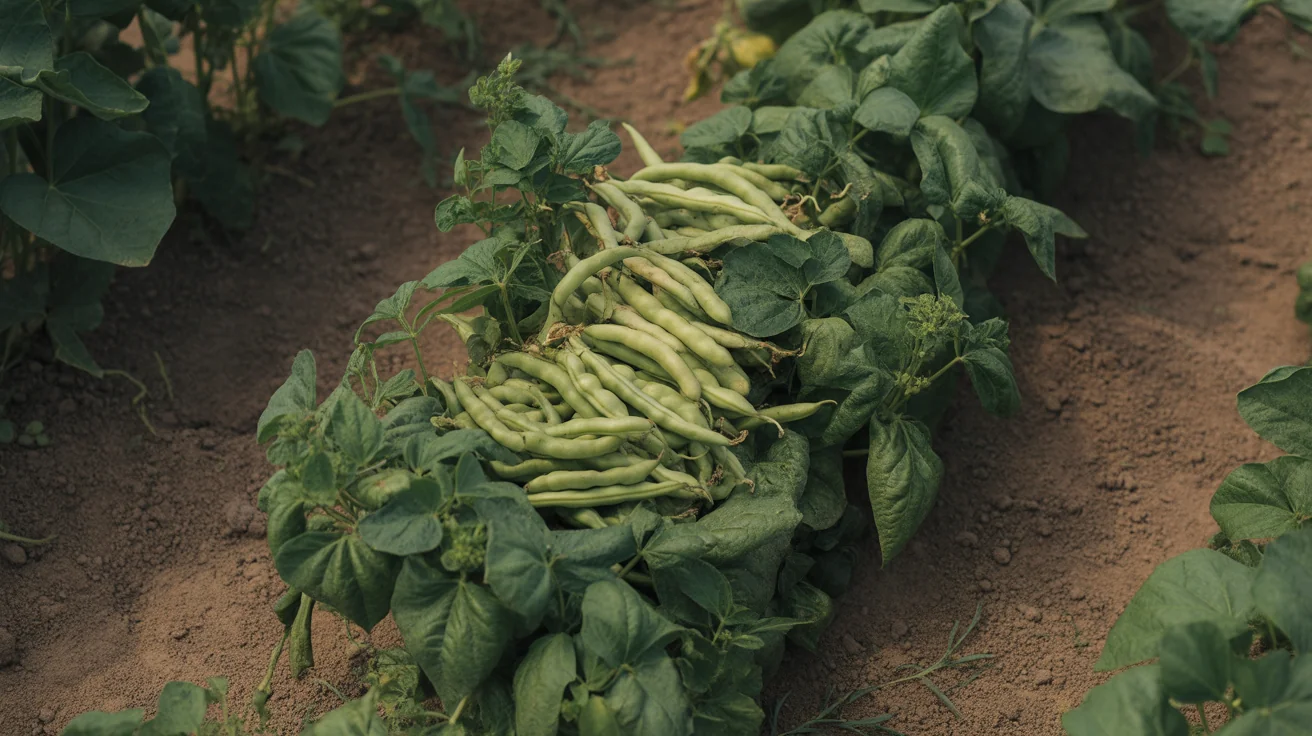
Beans
Two different plants share the name bean, one that stays knee-high and gives most of its crop inside two or three…
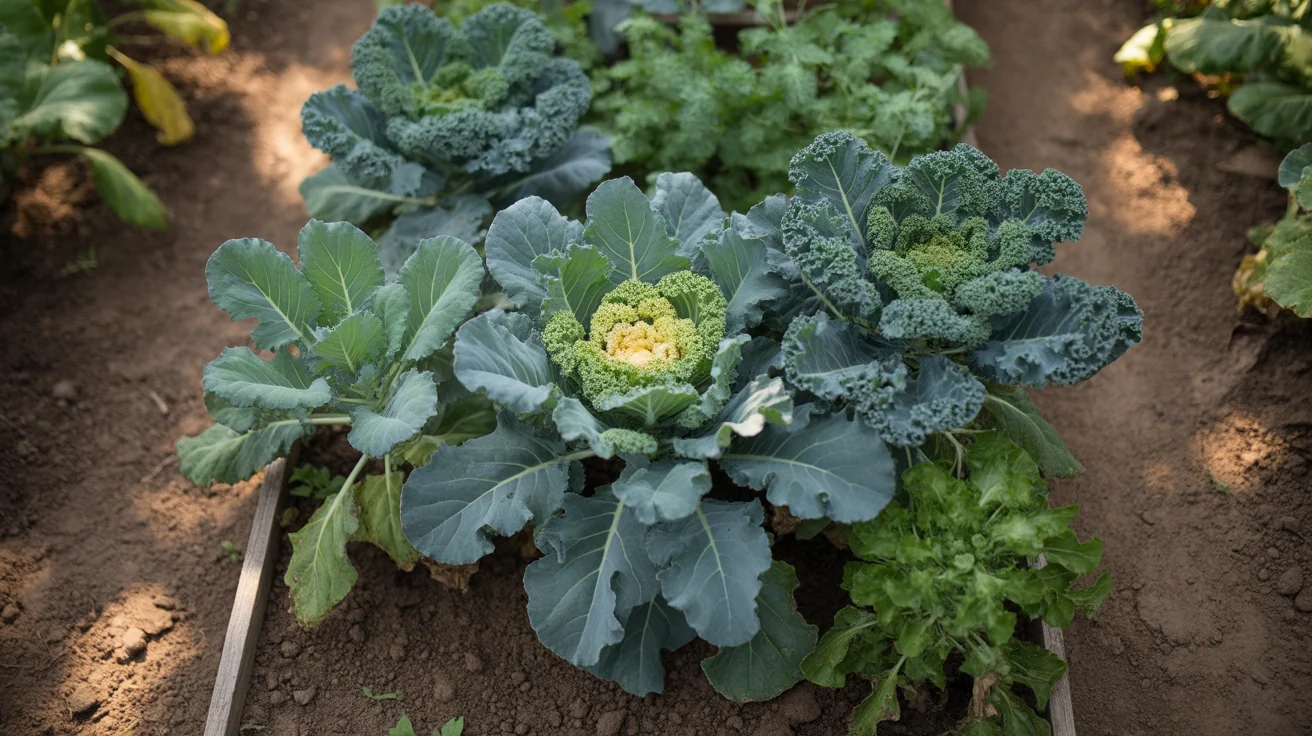
Kale
Kale works best when you treat it like a long-running leaf crop, not a one-time harvest.
Frequently Asked Questions
What vegetable gives the fastest harvest?
Garden radishes and baby salad greens are among the fastest common choices. Some radish cultivars mature in about 20 to 35 days, while young leaves can be cut before a full head forms. Weather and cultivar still control the actual date.
How often should I sow quick vegetables?
A 7- to 10-day interval is a useful starting example for lettuce, spinach, radishes, and beans, but adjust it after seeing emergence and household use. Slow weather or a crop with a long picking window may need a wider interval.
Can quick harvest vegetables grow in containers?
Leaf lettuce, spinach, arugula, round radishes, and scallions fit containers when the pot drains and has enough depth for the roots. Divide a wide container into dated bands so one harvest does not empty the whole pot.
Why are my fast vegetables growing slowly?
Cold or hot soil, a dry or crusted seedbed, deep sowing, crowding, and weak light can erase a crop's speed advantage. Separate an emergence problem from a later growth problem before changing fertilizer or reseeding.
Should I harvest quick vegetables before full size?
Often, yes. Baby leaves, small roots, scallions, and tender bean pods can be useful before the plant reaches maximum size, and delaying harvest may trade tenderness and bed time for extra weight.
Sources & References
- University of Minnesota Extension: Vegetable Growing Guides
- Clemson Cooperative Extension: Planning a Garden
- Cornell Garden Based Learning: Vegetable Growing Guides
- University of Minnesota Extension: Crop and Field Planning Tools for Vegetable Farmers
- University of Minnesota Extension: Growing Radishes in Home Gardens
- Illinois Extension: Lettuce
- Illinois Extension: Nonstop Vegetable Gardening
- Utah State University Extension: Home Vegetable Garden Variety Recommendations