
How to Grow Spinach and Harvest Before Bolting
Spinacia oleracea Amaranthaceae
Spinach (Spinacia oleracea) is a cool-season annual grown for tender leaves. It does best when seedlings can establish and produce a crop before long days and heat push the plant toward flowering.
Picking outer leaves can give more than one harvest while the crown remains healthy. It does not stop bolting or turn spinach into a permanent crop, so local sowing timing matters as much as watering and soil preparation.
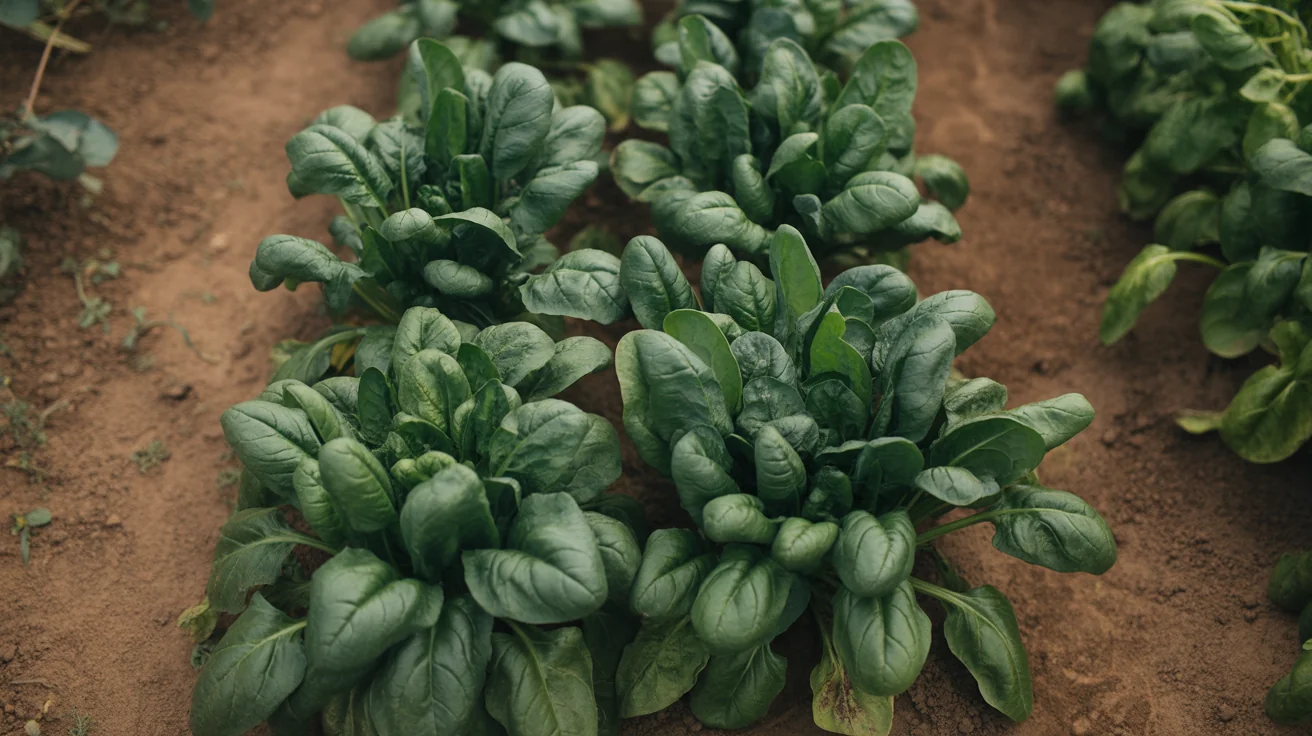
Care snapshot
Leaf Type and Crop Life Affect the Harvest
Spinacia oleracea is true spinach, an annual in the amaranth family. It makes a leafy rosette before producing a flowering stalk. Swiss chard is a beet relative in the same family, while Malabar spinach and New Zealand spinach are different plants despite sharing part of the name.
Those distinctions matter when choosing a summer crop. A plant sold as a heat-tolerant spinach substitute does not have the same growth habit or care as true spinach. Swiss chard can provide greens when summer conditions make a new spinach sowing less reliable, but its leaves and stems have a different texture.
- Smooth or flat-leaf spinach
- Leaves are easier to rinse clean because there are fewer folds holding soil
- Savoy and semi-savoy spinach
- Crinkled leaves provide a different texture and need attention around folds when washing
- Bolt-resistant selection
- May extend the useful harvest window, but does not eliminate the response to long days and heat
- Disease-resistant selection
- Resistance is specific to the disease and sometimes the pathogen race listed for the variety
Baby leaf describes an early harvest stage and sometimes a cultivar selected for that use. A crop grown for small leaves can use different spacing from one grown into full rosettes. Seed-packet directions help resolve that choice before sowing, rather than crowding mature plants and expecting repeated full-size harvests.
Picking leaves preserves an established plant only while its growing center remains intact and conditions support new growth. Eventually the annual life cycle moves toward flowers and seed. Successive sowings can spread the harvest within suitable weather, but cannot keep a cool-season crop productive indefinitely through summer.
Sunlight, Warmth and Day Length Work Together
Spinach grows well in full sun during cool weather. Some shade can help in a warmer part of the season, especially where afternoon heat increases water stress. A shaded position also receives less light for growth, so shade is a tradeoff rather than a cure for every warm-weather problem.
Day length and temperature are different signals. Increasing day length promotes bolting, while heat and drought can speed it. Shade may reduce heat exposure but does not shorten the astronomical day. A healthy-looking spring crop can therefore start producing a flower stalk even with adequate watering.
The seasonal problem also changes before and after germination. Hot soil can make establishing a late-summer sowing difficult even when the coming autumn should suit leaf growth. Conversely, a spring sowing may emerge well in cool soil but have little time left before long, warm days.
Location affects how these factors overlap. A Minnesota spring calendar is not a universal schedule for a mild-winter garden or the Southern Hemisphere. Local extension planting dates, current soil conditions and the expected harvest window together provide a better decision than a USDA zone alone.
Sowing and Thinning a Spinach Crop
Direct sowing is a straightforward way to establish spinach. University of Minnesota Extension recommends seed about 1/4–1/2 inch deep and thinning seedlings to roughly 2–4 inches apart for its garden guidance. The packet may specify a different spacing for baby leaves or a particular cultivar.
Cool, workable soil makes spring sowing practical before many warm-season vegetables can go outside. Maryland Extension uses 45°F soil as a spring sowing reference. Workable also means the bed can be prepared without smearing saturated soil into dense clods, so temperature alone does not make a waterlogged bed ready.
- Prepare a level seedbed with drainage and remove weeds that would compete with small seedlings.
- Sow at the depth and spacing suited to the chosen crop, cover gently and water so the seed zone is moistened without washing seed away.
- Keep the seed zone moist during germination. Its small volume can dry before deeper soil, especially in a container or warm spell.
- Thin crowded seedlings once they can be handled, leaving room for the intended harvest size. Avoid disturbing the roots of plants that remain.
Poor emergence calls for checking soil temperature, moisture, crusting, depth and seed condition before repeating the same sowing. Maryland’s salad-table guidance notes slower germination in growing media above 80°F or below 50°F. That explains one risk in a hot container without making those values universal failure cutoffs for garden soil.
Direct sowing avoids an additional transplanting step and works well when the bed is ready. That recommendation does not establish that spinach can never be transplanted. For purchased starts, local guidance and the condition of the root ball matter more than borrowing the planting calendar for a different crop.
Small repeat sowings can spread picking dates when enough favorable weather remains. Maryland lists roughly 28–55 days from seed to maturity, while the cultivar, growing conditions and chosen leaf size affect the actual picking date. That range helps compare a sowing with the weather ahead rather than guaranteeing a season’s supply from a fixed number of plantings.
Soil Preparation Starts With the Bed You Have
Spinach needs soil that holds usable moisture and still drains. Compaction and standing water can limit roots even where the surface looks loose. A raised bed helps only if water can leave it, so a prescribed shallow bed depth does not establish adequate drainage.
A soil test can identify whether pH or nutrients need correction. University of Minnesota gives a pH range of 6.5–8 for its spinach and chard guidance. That range does not justify adding lime to every bed or treating the highest value as a target.
Well-decomposed compost can improve soil condition, but an already enriched bed may not need another heavy layer. Fertilizer decisions should account for the soil test, previous amendments and the product label. A lawn weed-and-feed product does not belong in an edible vegetable bed.
Fresh manure is unsuitable as a casual top-dressing around leaves intended for harvest. The crop is eaten directly, sometimes raw, so soil preparation and food handling need to be considered together rather than focusing only on fast green growth.
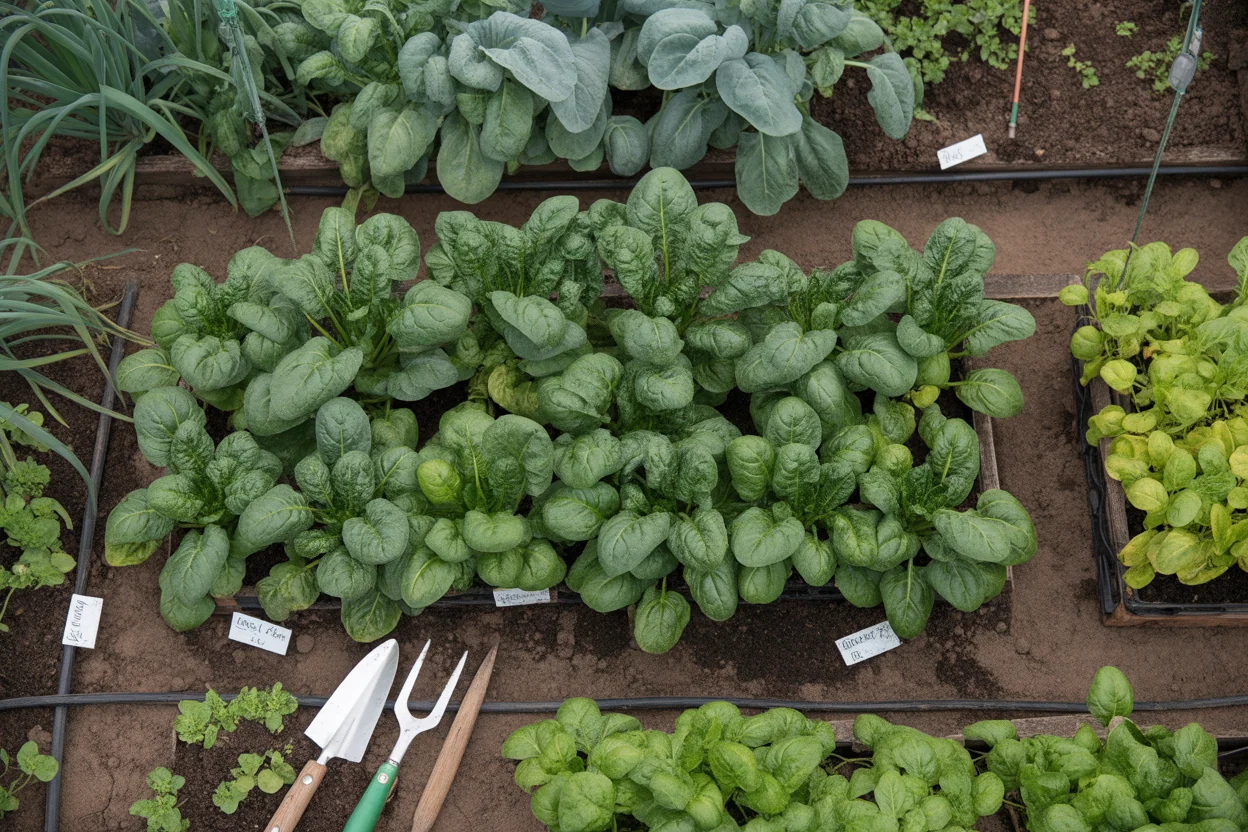
A container offers control over the growing medium and position, but its limited water reserve needs closer attention. Drainage holes, enough root space and appropriate spacing matter more than claiming all spinach roots remain in the top few inches. The nearby bed image shows the crop’s low leafy form and watering access, not a measured yield or soil-depth trial.
Water Below the Surface After Establishment
The moisture needed for germination and for an established plant involves different depths. Frequent gentle watering may be necessary to keep a newly sown seed zone from drying. Once roots are established, repeated surface sprinkling can leave the soil underneath dry.
Watering thoroughly lets moisture reach more of the root zone. University of Minnesota suggests checking how far water has penetrated rather than assuming a wet surface means enough was applied. Soil texture changes the result because sandy soil drains and dries differently from heavier soil.
An inch of rain or irrigation is a common extension planning reference, not an automatic weekly instruction for every bed. Existing soil moisture, recent rain, heat, mulch and container size determine whether more water is useful. Applying that amount again to saturated soil would ignore the actual conditions.
Wilting during a hot afternoon needs a moisture check before another watering. Dry soil supports one explanation, while wet soil and persistent decline raise other possibilities. Yellowing likewise does not identify a fertilizer shortage on its own.
Water delivered near the soil limits unnecessary leaf wetness. When overhead watering is used, timing that allows foliage to dry reduces prolonged wet conditions. Moisture consistency supports tender growth, but watering cannot reverse a plant’s transition to flowering.
Recognize Bolting and Plan the Next Window
A compact spinach rosette keeps new leaves close to its center. Bolting becomes visible as that center extends into an upright stalk with smaller leaves and developing flowers. Leaf quality often declines as this transition proceeds.
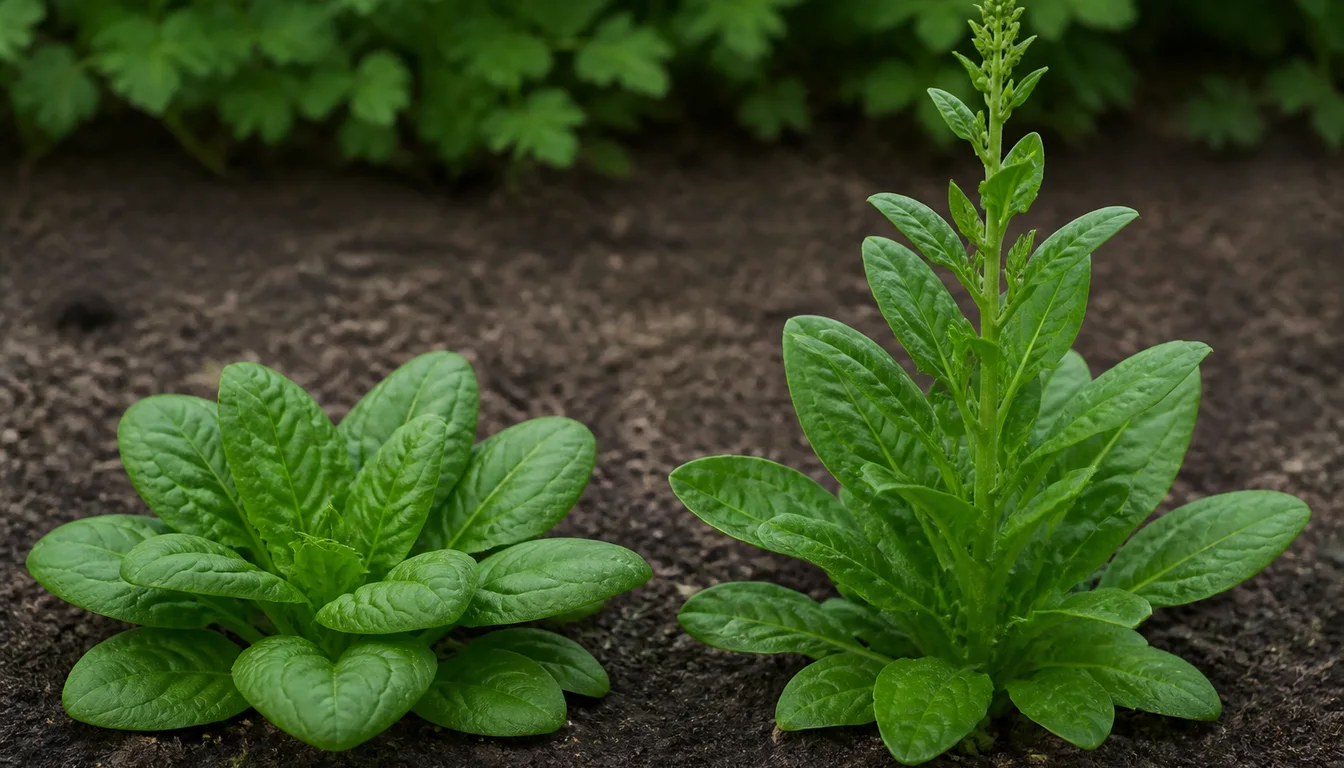
Removing the stalk does not reliably return the plant to its earlier leaf-producing stage. Harvesting remaining usable leaves and preparing for a better sowing window is usually more productive than trying to force the same plants through unsuitable weather.
Spring offers cool establishment but increasingly long days. Autumn offers shortening days but may begin with soil too warm for easy germination. In very mild climates, winter can be the main growing season. Local recommendations explain which of those constraints usually matters first.
Spinach tolerates frost, but crop survival and undamaged marketable leaves are different outcomes. Plant age, acclimation, exposure and the severity and duration of cold affect the result. A USDA winter-hardiness zone does not tell you the next frost date or guarantee an uncovered crop.
Row covers can protect a crop and extend its season, but performance depends on the fabric and weather. Covers can also trap warmth, so they are not a fixed number of degrees of protection under every condition. Overwintering is an option in suitable sites and climates, not a promise attached to a zone range.
Crop rotation follows plant relationships and the actual pest or disease. Replacing spinach with beets or Swiss chard does not change the family, and these crops can share spinach leafminers. Treating every leafy vegetable as one rotation group would miss both that relationship and differences among unrelated greens.
Leaf Damage Needs More Than a Color Match
Leafminers feed inside leaves, while several other insects feed on their surfaces. Downy mildew is a different problem again. Distinguishing the pattern, checking both sides of the leaf and considering recent wet weather helps avoid using the wrong treatment.
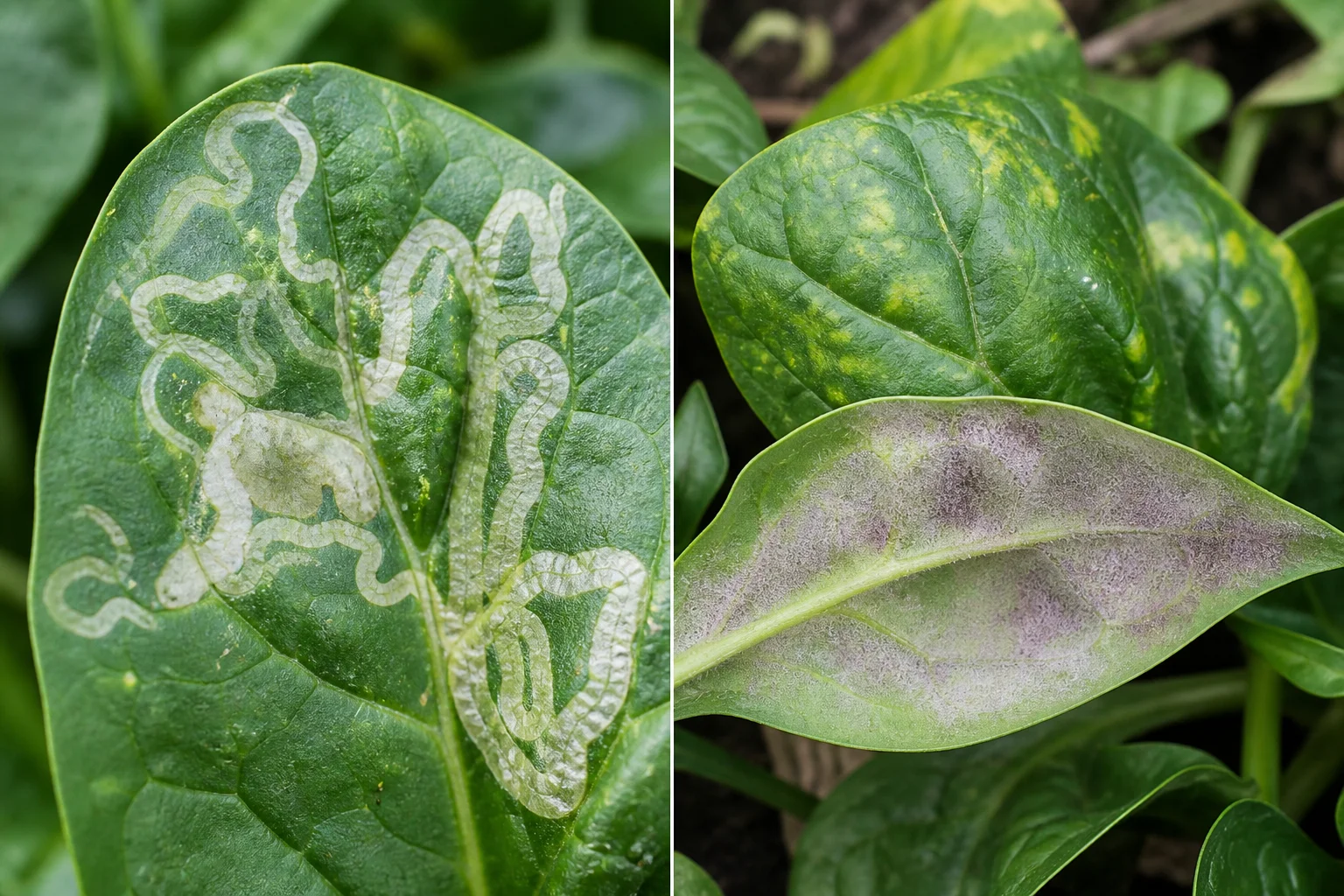
- Pale mines or blotches within the leaf
- Inspect for leafminer larvae and eggs on the underside; spinach leafminer also affects beets and chard
- Yellow or angular patches with gray-purple growth beneath
- Possible downy mildew, particularly in wet conditions; similar discoloration alone is not confirmation
- Clusters of small sap-feeding insects
- Inspect for aphids and feeding injury before choosing a labeled control
- Holes or missing tissue
- Look for the feeding pest and its evidence rather than treating every hole as mildew
University of Maryland recommends removing affected leaves or crushing leafminers within mines before they complete development. An insect-proof cover can reduce egg laying when applied before pests reach the crop. A cover over soil containing overwintering pests can trap them with the plants, so placement history matters.
For suspected downy mildew, useful measures include better airflow, avoiding prolonged leaf wetness and selecting appropriate resistant varieties. Resistance can be specific, and a fungicide that protects new growth does not repair an already damaged leaf. Local diagnosis is valuable before choosing a disease treatment for an edible crop.
Any pesticide must be labeled for the crop and pest, with the harvest interval observed. A product suitable for ornamental houseplants is not automatically suitable for spinach. Washing harvested leaves cannot substitute for following those directions.
Broad pesticide use can also kill beneficial insects that attack pests. Inspection and identification therefore improve both the immediate choice and the chance of useful natural control. A weekly visit or a homemade spray cannot guarantee prevention.
Harvest, Wash and Store the Leaves
Outer leaves can be picked when they reach a useful size, leaving the central growing point and smaller leaves to continue. Cutting or damaging that crown reduces the chance of regrowth. Alternatively, harvesting the entire rosette gives one larger picking and ends that plant’s contribution.
The choice depends on leaf quality, plant size and the weather ahead. A healthy crop in a cool window may support repeated picking. A crop starting to bolt is a better candidate for a final harvest than for a promise of several more rounds.
For preparation, University of Minnesota’s Real Life, Good Food guidance recommends rinsing spinach under running water and patting it dry. Savoy folds can retain soil, so both sides and folded areas need attention. A bowl soak alone does not establish that leaves are ready to eat.
Refrigeration helps preserve quality after harvest. The same Minnesota guidance suggests loosely wrapping leaves in a damp paper towel inside a plastic bag and using them within about 3–5 days. That is a household storage guide, not proof that a damaged or contaminated batch is safe for that period.
Spinach is grown as food for people, but that use does not establish a pet feeding amount or an animal toxicity classification. The cited sources do not resolve that separate question for Spinacia oleracea. An unknown animal-safety status does not mean the crop has been shown to be toxic.
Sources & References
- Growing Spinach in a Home Garden — University of Maryland Extension
- Growing Spinach and Swiss Chard — University of Minnesota Extension
- Leafminers on Vegetables — University of Maryland Extension
- Downy Mildew on Vegetables — University of Maryland Extension
- Spinach — University of Minnesota Real Life, Good Food
- Plant, Fertilize, Water a Salad Table or Salad Box — University of Maryland Extension
Related Plants
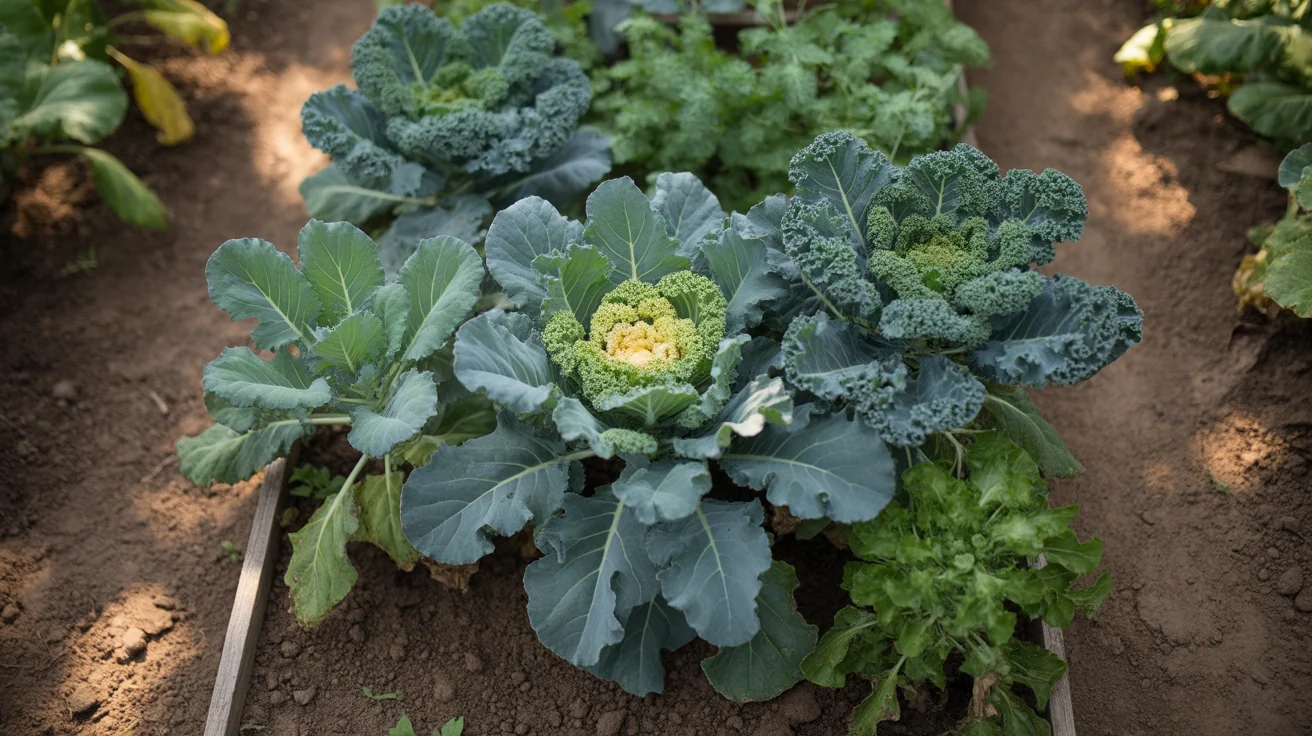
Kale
A leafy brassica with a different growth habit and harvest pattern from spinach.
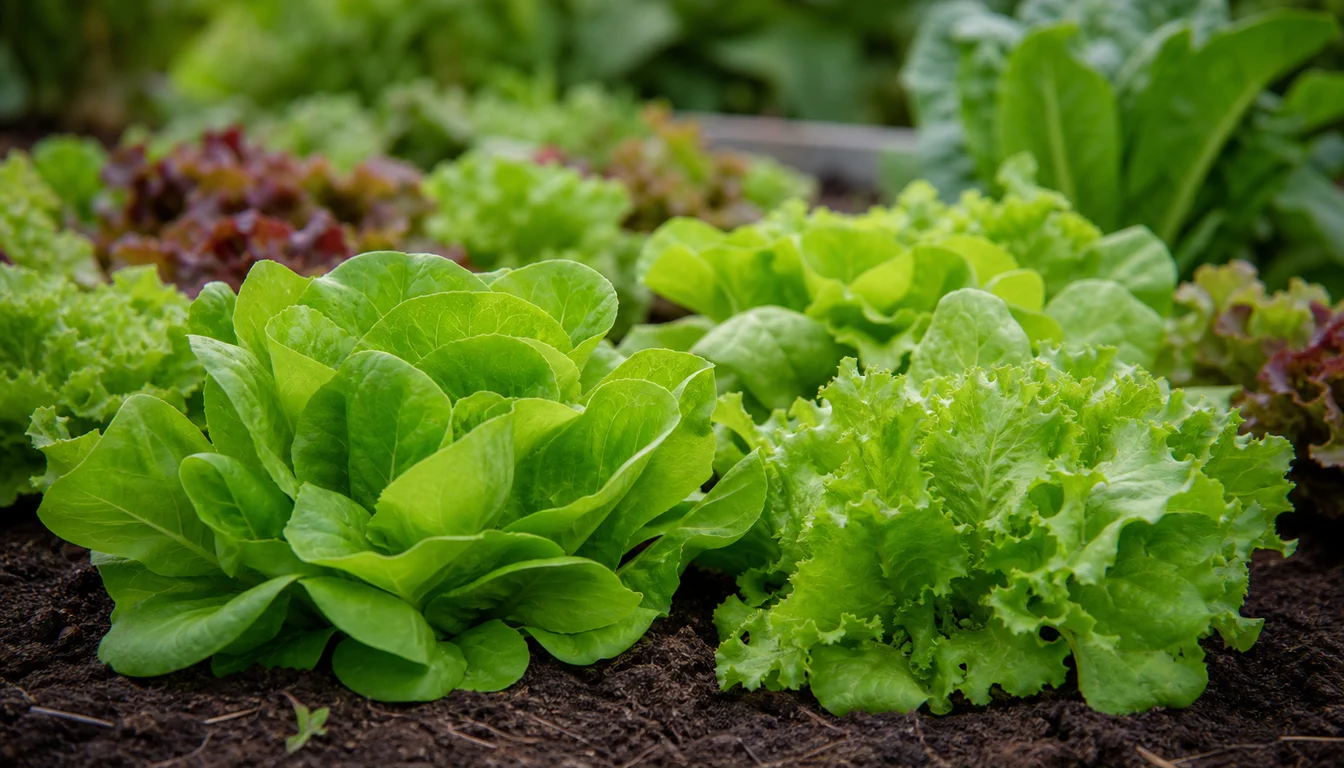
Lettuce
Another salad crop whose variety and sowing window need their own heat and bolting assessment.
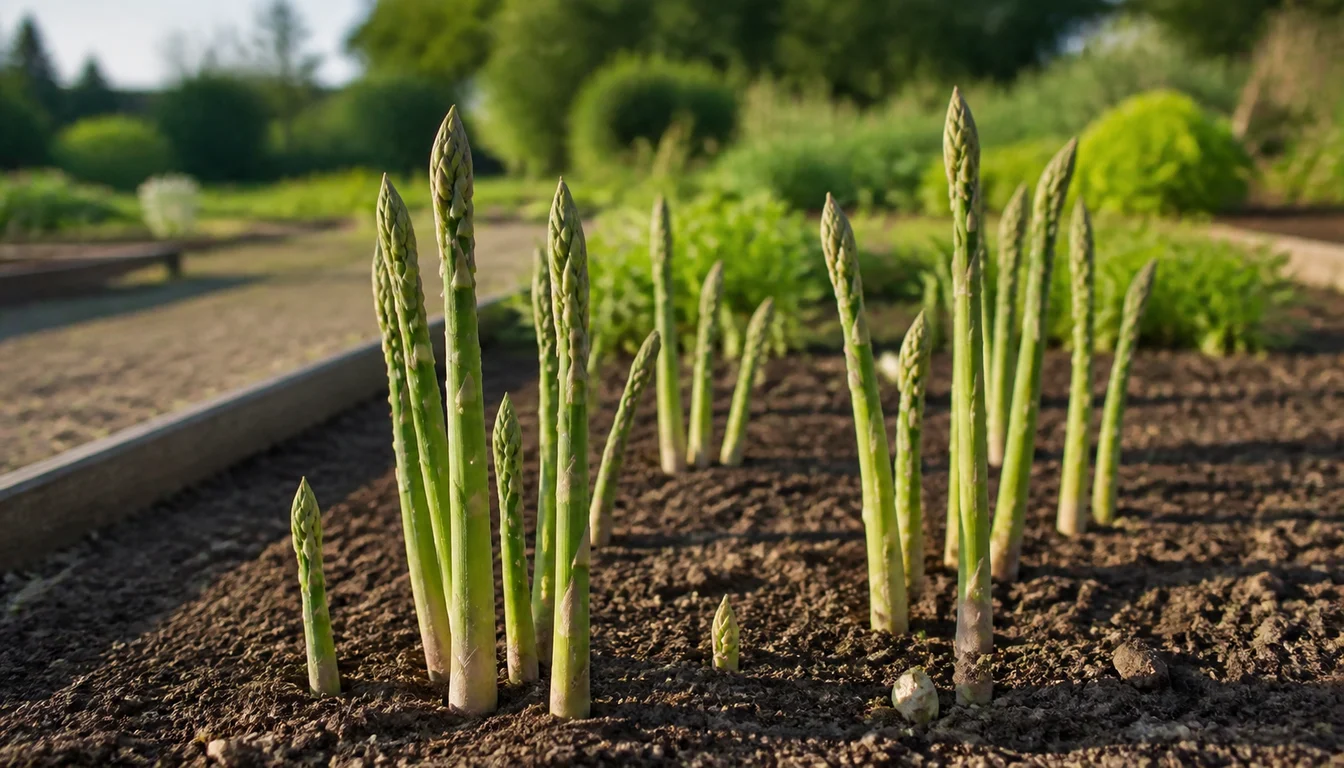
Asparagus
Asparagus rewards careful establishment with spring harvests for many years.
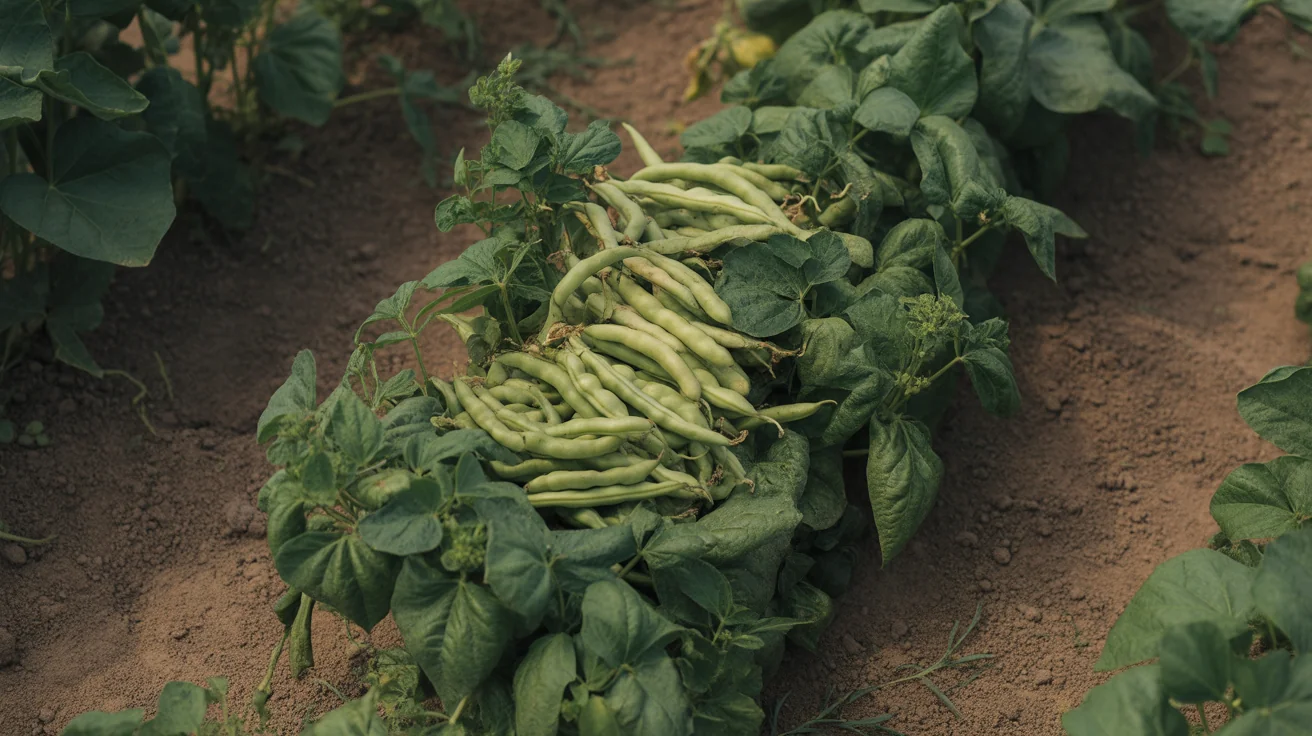
Beans
Two different plants share the name bean, one that stays knee-high and gives most of its crop inside two or three…
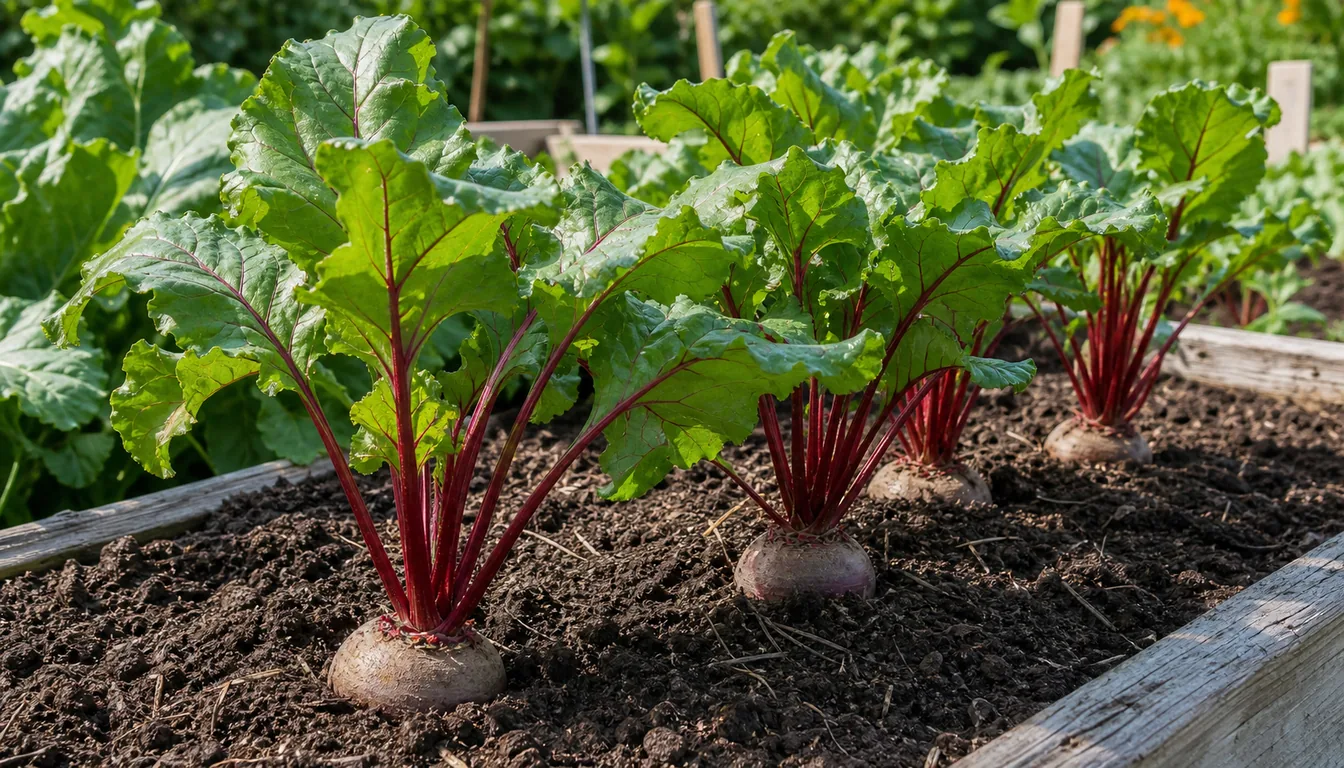
Beet
Beet care starts with one unusual fact. Each seed ball can make several seedlings, so the crop needs early thinning…
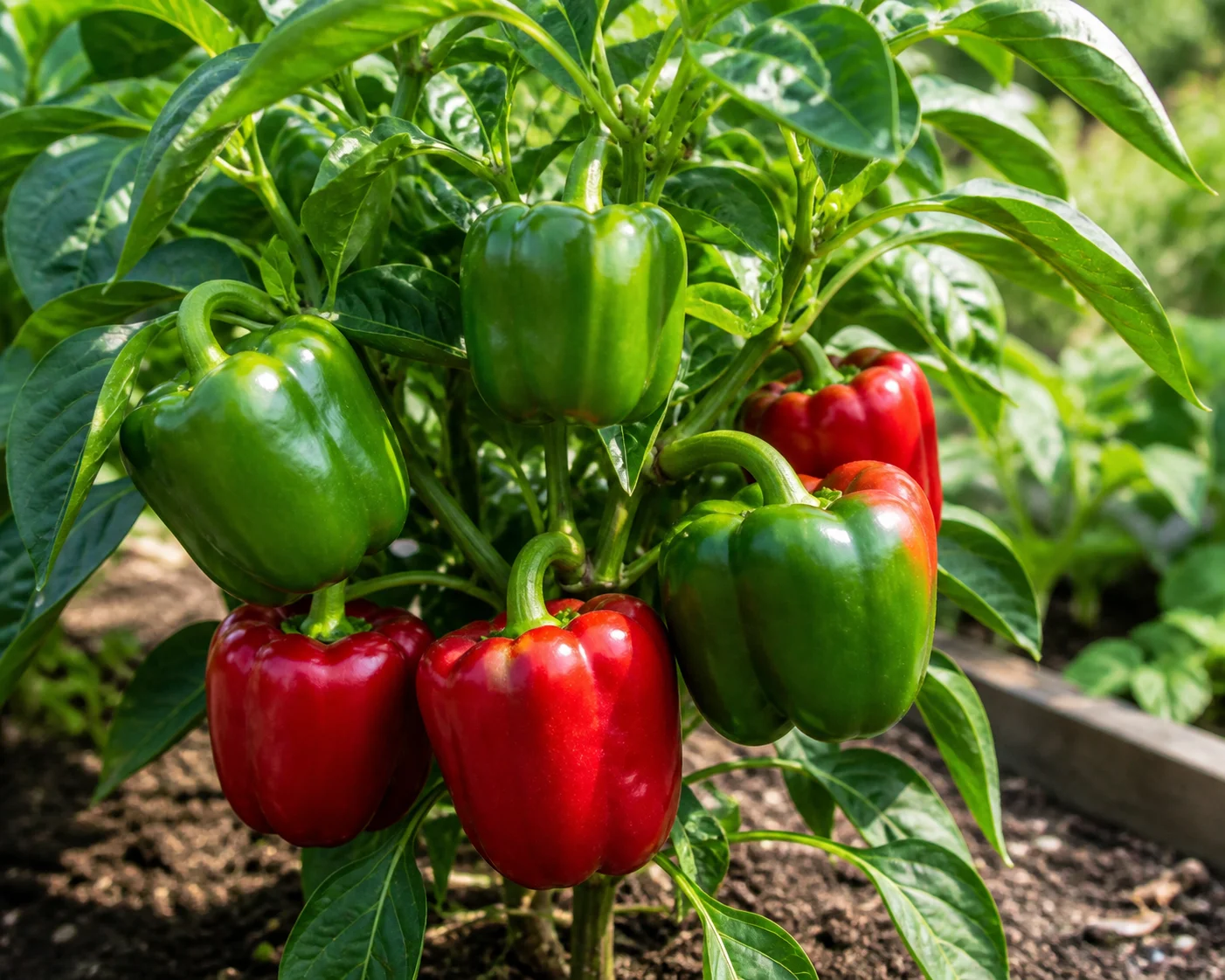
Bell Pepper
Bell Pepper rewards growers who manage flowers, roots, and heat together.