
What's a Radish? How to Grow Crisp Roots Before Heat Hits
Raphanus sativus Brassicaceae
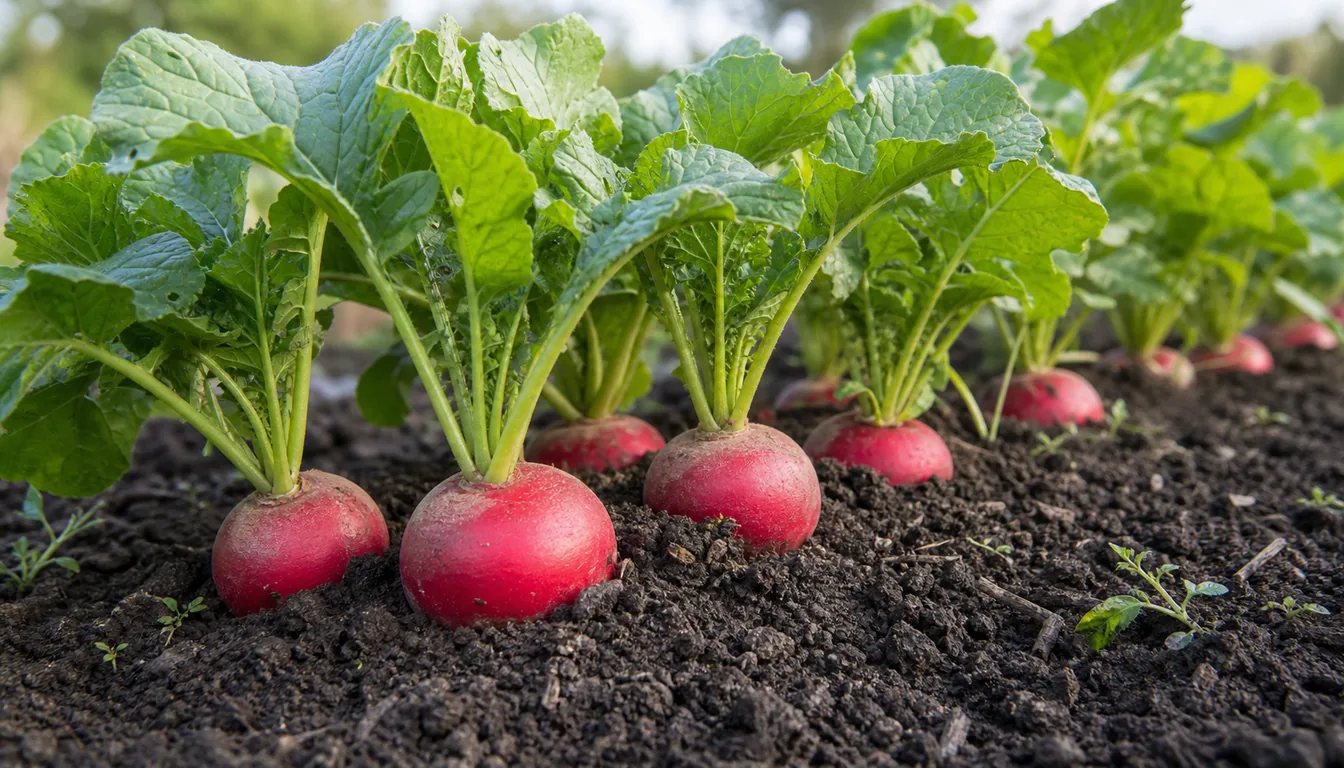
Radish is a fast cool-season root crop that makes its best roots at 50 to 65 F, in about 25 to 45 days depending on variety.
Sow ¼ to ½ inch deep, thin spring types to 1 to 2 inches, keep moisture even, and pull roots while they are under about an inch across, because slow growth, heat, and age make them hot, woody, or split.
Care snapshot
Is a Radish Related to Carrots or Cabbage?
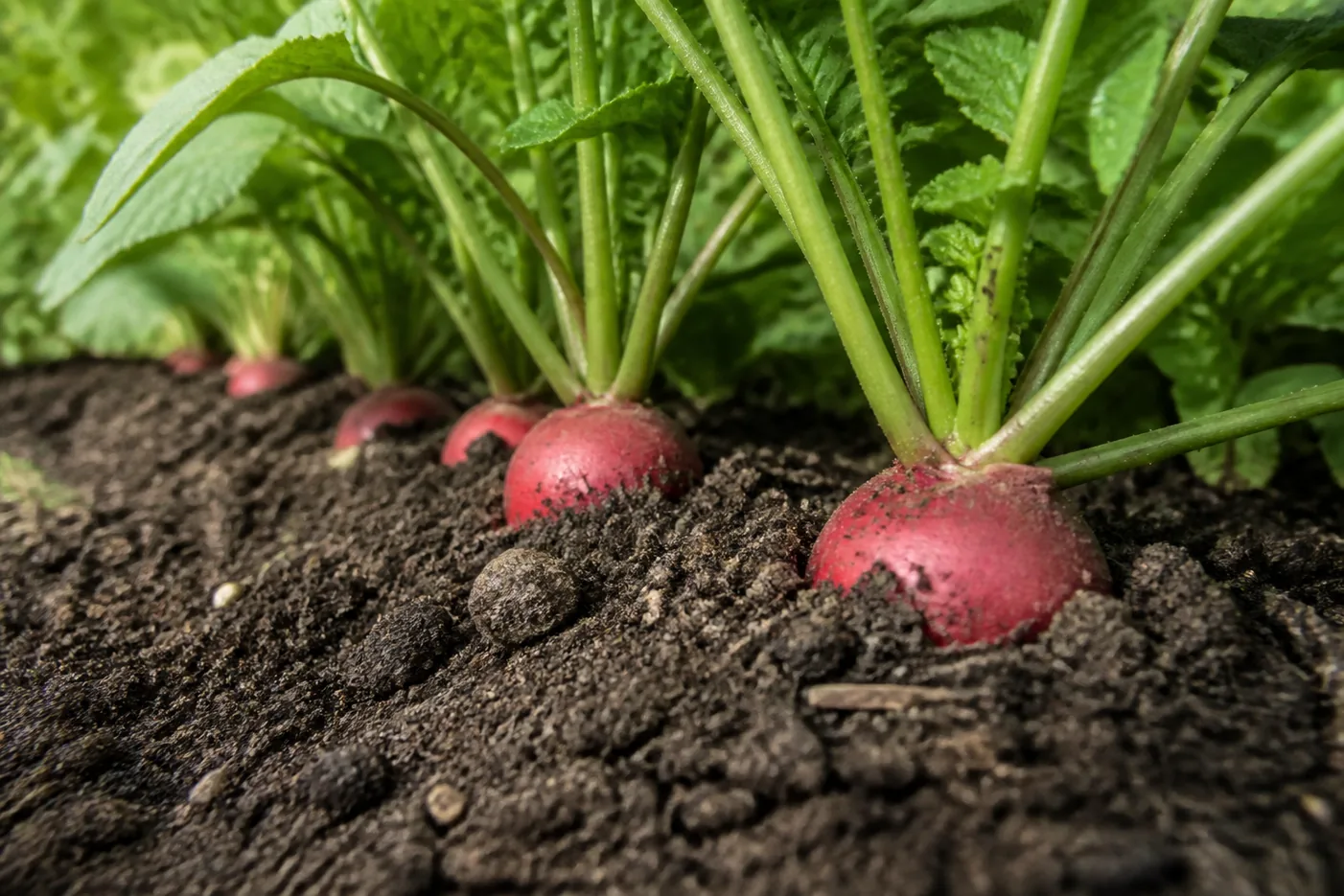
Cabbage, not carrots. Radish is Raphanus sativus, a member of the Brassicaceae family, which makes it a closer relative of broccoli and kale than of any other root crop in the bed.
The family matters more than the shape. The Mid-Atlantic vegetable recommendations published through University of Maryland Extension note that cabbage maggots attack all brassica crops and that radishes are susceptible to clubroot, so radish belongs in the cabbage-family rotation rather than alongside carrot and beet.
The crop is quick. Utah State gives roots 25 to 45 days from seeding to maturity, depending on variety, and the same Mid-Atlantic guide says radish has to be grown rapidly, in about 23 to 28 days, to stay crisp. When growth is checked, the root turns hot, tough, and pithy.
NC State lists the roots, leaves, and flowers as edible. It also notes that the leaves and roots can mildly irritate the skin of sensitive people during handling, a low-severity effect of the plant's sharp-tasting compounds.
Plant profile
- Botanical name
- Raphanus sativus
- Family
- Brassicaceae, the mustard and cabbage family
- Days to harvest
- About 25 to 45 days, depending on variety
- Best root quality
- 50 to 65 F with medium to short days
- Edible parts
- Roots, leaves, and flowers
- Rotates with
- Broccoli, Kale, Cabbage, and other brassicas
When Should You Sow Radishes?
Spring radishes go in early. Illinois plants them from as soon as the soil can be worked until mid-spring, and Utah State sows 2 to 3 weeks before the last frost, once soil reaches 40 F. Seed germinates best at 55 to 75 F.
The reason for the early start is root quality. The Mid-Atlantic guide gives the best quality, small tops and well-shaped roots, at 50 to 65 F in medium to short day lengths. A sowing that matures into warm, long days is more likely to bolt or turn hot.
Short repeated sowings keep roots coming at the right size. Illinois sows short rows every 10 to 14 days, while commercial growers in the Mid-Atlantic seed at 8 to 10 day intervals through September. Small rows mean each batch is eaten before it gets old in the ground, and a succession planting schedule keeps the dates straight.
Fall is the second window. Utah State sows again in early September for fall roots, and Illinois sows winter radishes, including daikon types, from midsummer to late summer, the same timing as fall turnips.
- Spring sowing
- As soon as soil can be worked, about 2 to 3 weeks before the last frost
- Germination
- Sow once soil reaches 40 F. Best at 55 to 75 F.
- Repeat sowings
- Short rows every 10 to 14 days in cool weather
- Fall and winter types
- Spring types again in early September. Winter radishes midsummer to late summer.
Which Radish Type Should You Grow?
Radish types split by how long they need. Small round spring radishes are the quick ones. Winter radishes and daikon grow much larger, and the Mid-Atlantic guide lists vendor ranges of 18 to 45 days for radish against 24 to 80 days for daikon and specialty types.
Spacing and harvest size follow the type. Illinois thins spring radishes to ½ to 1 inch and winter radishes to 2 to 4 inches or more, and harvests winter types considerably larger. They also store longer, up to two weeks in the refrigerator against 5 to 7 days for spring roots.
Utah State's variety list shows the range. Champion and Cherry Belle are round red spring radishes, Icicle is a long white one, Easter Egg mixes colors, and Daikon Long White is a large winter type.
This is where radish differs from carrot, which rewards slow root building over months. A spring radish left in the ground past its window turns pithy, so radish rows need checking within weeks of sowing. A bed with only a few cool weeks left suits a round spring type or lettuce rather than a daikon.
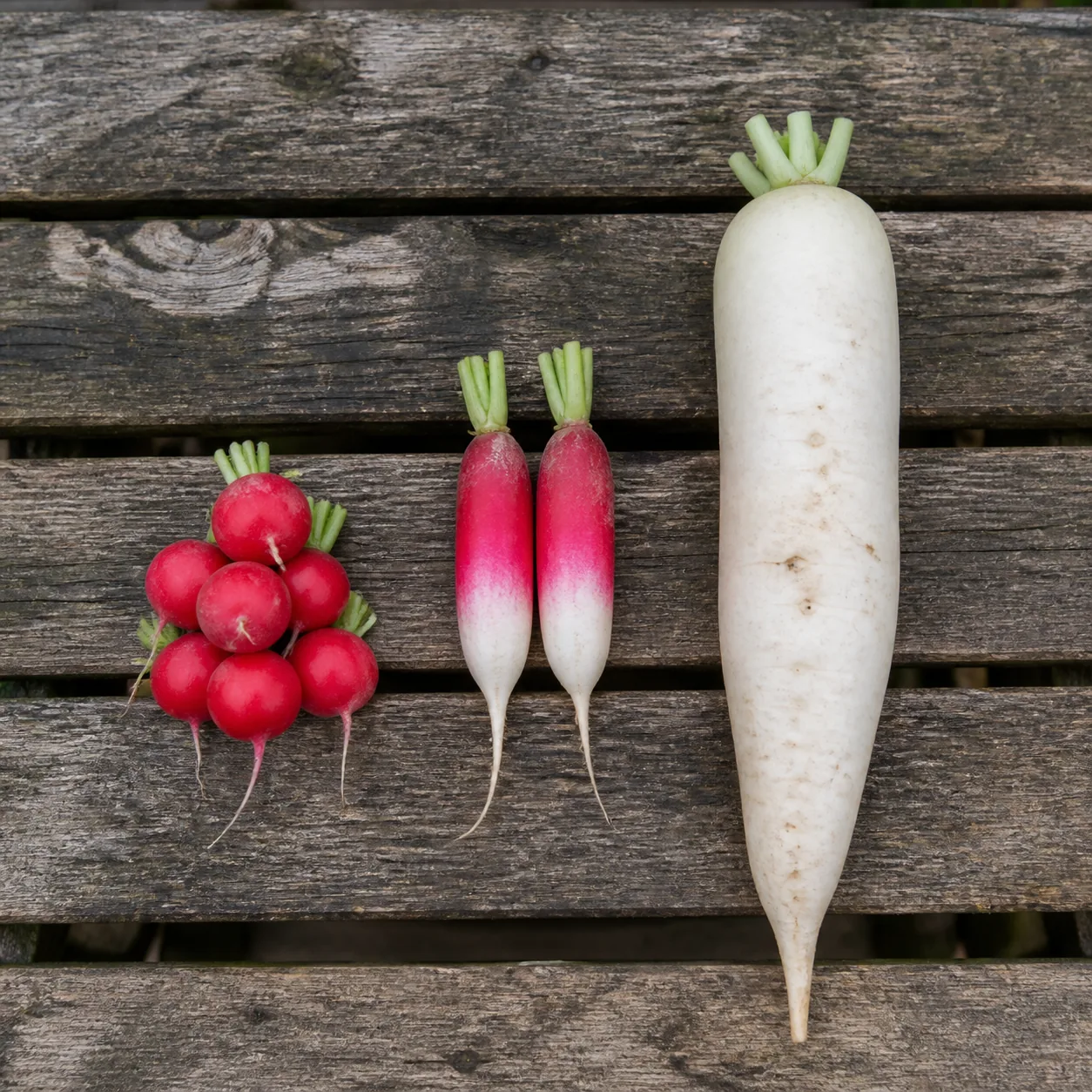
- Round spring radish
- Fast, thin to ½ to 2 inches, pull under 1 inch across. Champion, Cherry Belle.
- Long spring radish
- Same short season with a longer root. Icicle.
- Daikon and winter radish
- Sow midsummer to late summer, thin to 2 to 4 inches, harvest much larger
- Storage
- Spring roots 5 to 7 days refrigerated, winter roots up to two weeks
How Deep Do You Sow Radish, and When Do You Thin?
Radish seed goes in shallow. Illinois sows ¼ to ½ inch deep and Utah State ½ inch, in fine soil that stays moist at the surface until seedlings emerge.
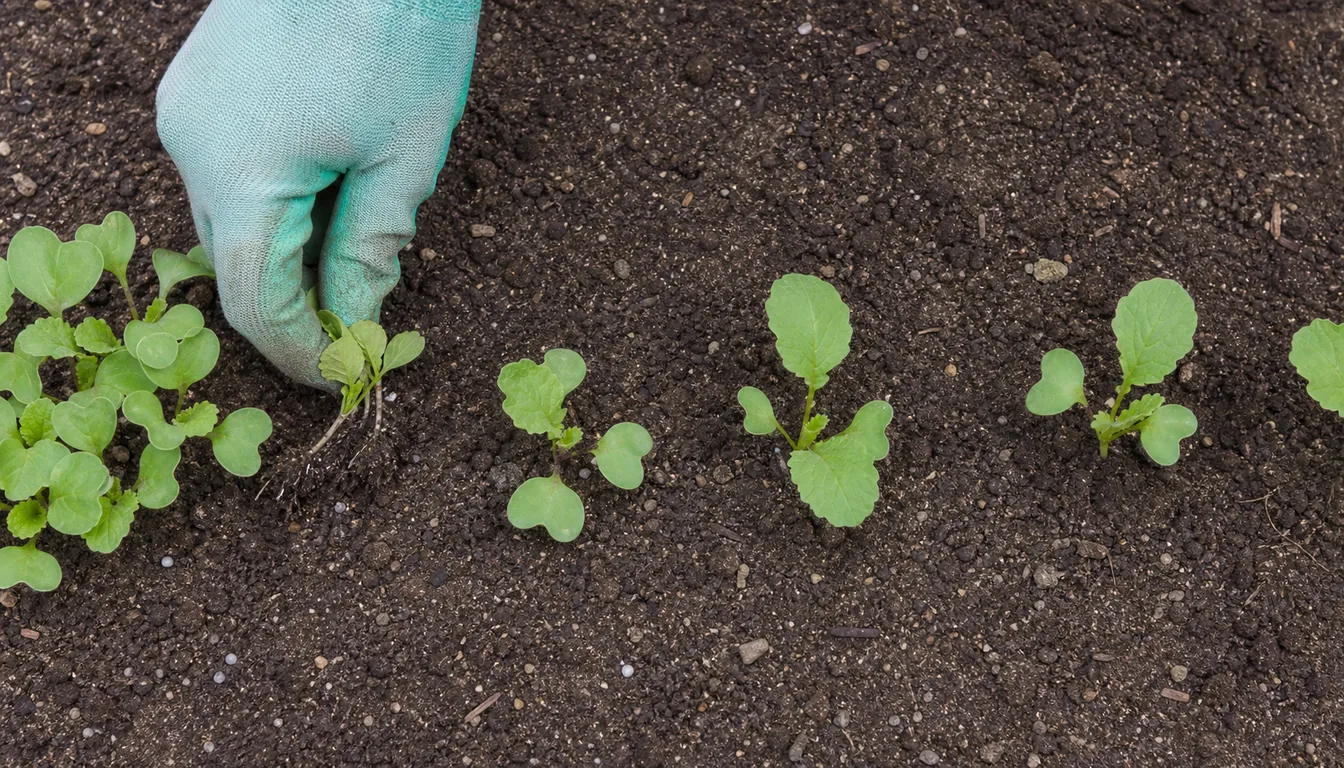
Thinning is what turns seedlings into roots. Utah State thins to 1 to 2 inches between plants with rows 10 to 12 inches apart, Illinois thins spring types to ½ to 1 inch, and in a wide bed Illinois spaces plants 2 to 3 inches apart in all directions. Illinois lists overcrowding first among the causes of radishes that make all tops and no roots.
The root swells right at the soil surface, so stones and hard clods in the top few inches deform it. Raking the bed smooth before sowing removes most of them, and a crust that forms after heavy rain can be gently broken so seedlings can push through.
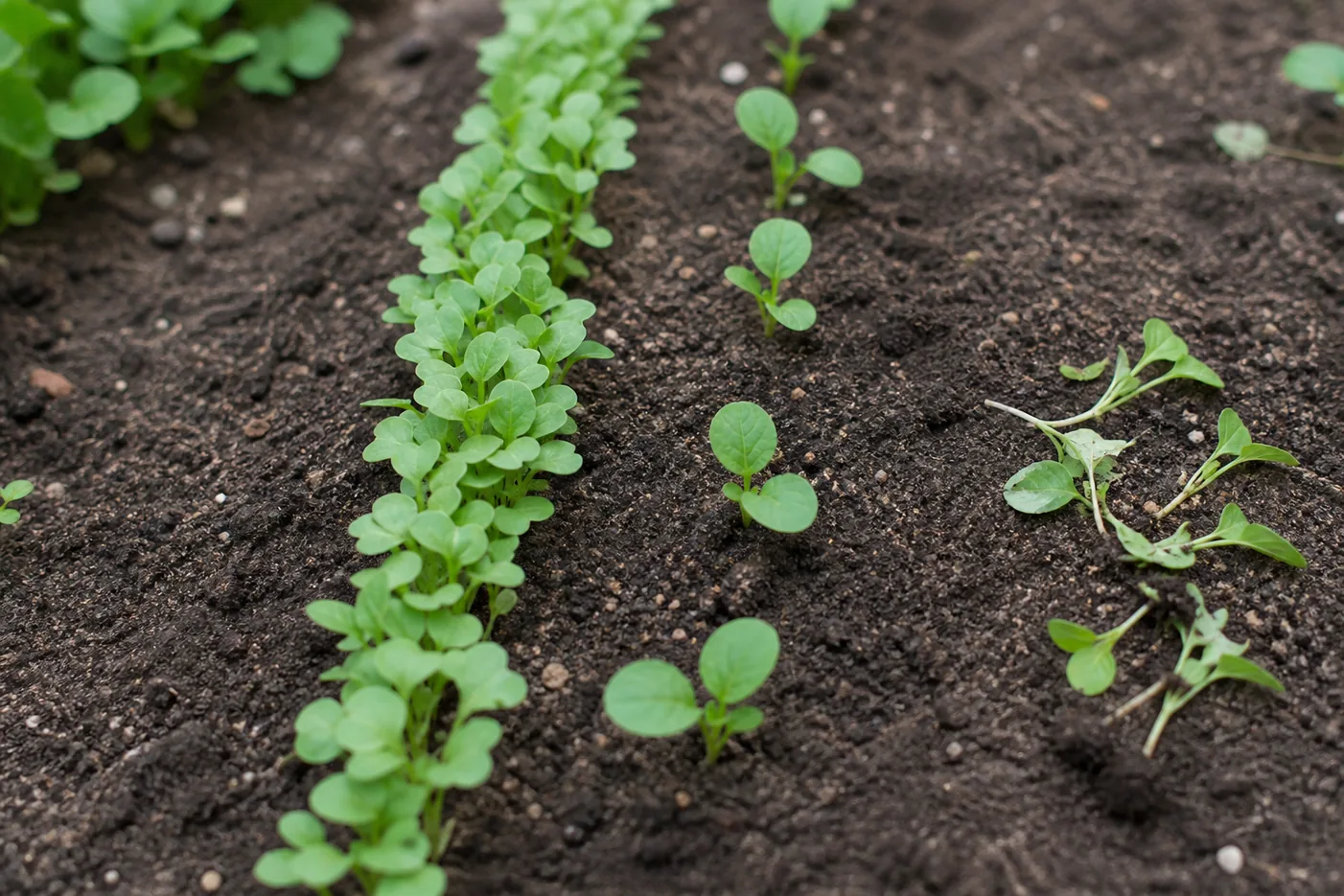
- Sow ¼ to ½ inch deep in fine, moist soil.
- Thin spring radishes to 1 to 2 inches apart.
- Thin winter radishes and daikon to 2 to 4 inches or more.
- Keep rows 10 to 12 inches apart, or space 2 to 3 inches each way in a bed.
How Much Water and Fertilizer Does Radish Need?
Utah State's advice is to water radishes regularly, because moisture swings cause root cracking and slow leaf development. Illinois explains the cracking. A flush of moisture after a period of relative dryness can make mature roots burst.
Water also keeps growth fast, and fast growth is what keeps the flavor mild. Illinois notes that slow development makes radishes hot in taste and woody in texture, and Utah State ties hotness to the length of time the root has been growing.
Radishes need little fertilizer. Utah State applies a quarter cup of 21-0-0 per 10 feet of row 3 to 4 weeks after emergence. For a crop that is often pulled at 4 weeks, that is a single light feeding at most.
A soft spray or a drip line keeps the shallow seed row from washing out or crusting. After germination, watering a band wider than the seed line keeps the soil around the swelling shoulders moist as well.
Can You Grow Radishes in Containers?
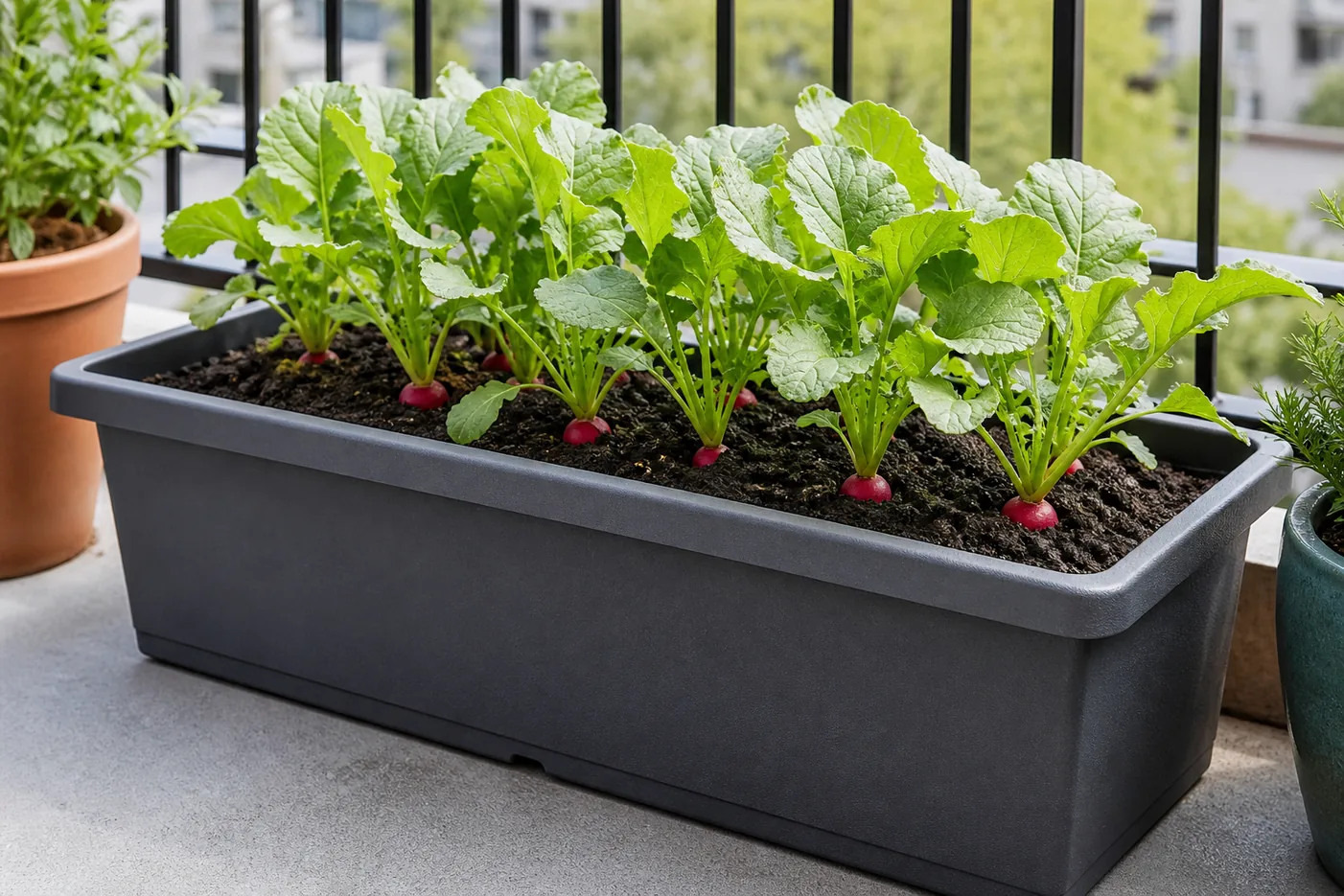
Round spring radishes suit containers because they are pulled small. Illinois harvests them at under an inch across, so a pot with a few inches of loose mix below the shoulder is enough. Winter radishes and daikon grow far larger and belong in deep soil.
Light is the usual container problem. Illinois lists insufficient light, along with crowding and heat, as a cause of radishes with plenty of leaves and no roots, so a pot on a shaded balcony or windowsill often grows tops only.
Use a loose potting mix in a pot with drainage holes, and check moisture often. A small volume of mix dries faster than a garden row, and the same dry-then-wet swing that splits garden radishes splits potted ones.
Why Did My Radishes Bolt Instead of Making Roots?
Radishes bolt when days are long and the weather is warm. The Mid-Atlantic guide states that long days, around 15 hours, and warm temperatures induce seed-stalk formation. Once the plant starts a flowering stem, the root stops being its storage priority and turns tough.
That is why late spring sowings disappoint even with a fast variety. The same seed that gave crisp roots in early spring meets longer days and warmer soil a month later and goes to flower instead.
Fall sowings work for the opposite reason. Days shorten and temperatures fall as the roots size, which matches the 50 to 65 F and medium to short day lengths that give the best quality.
When a row's timing is in doubt, pulling one root and tasting it settles it. A crisp, mild root means there is still a little time, while a hot, fibrous one means the rest should come out now. In summer, warm-season crops such as cucumber make better use of the bed.
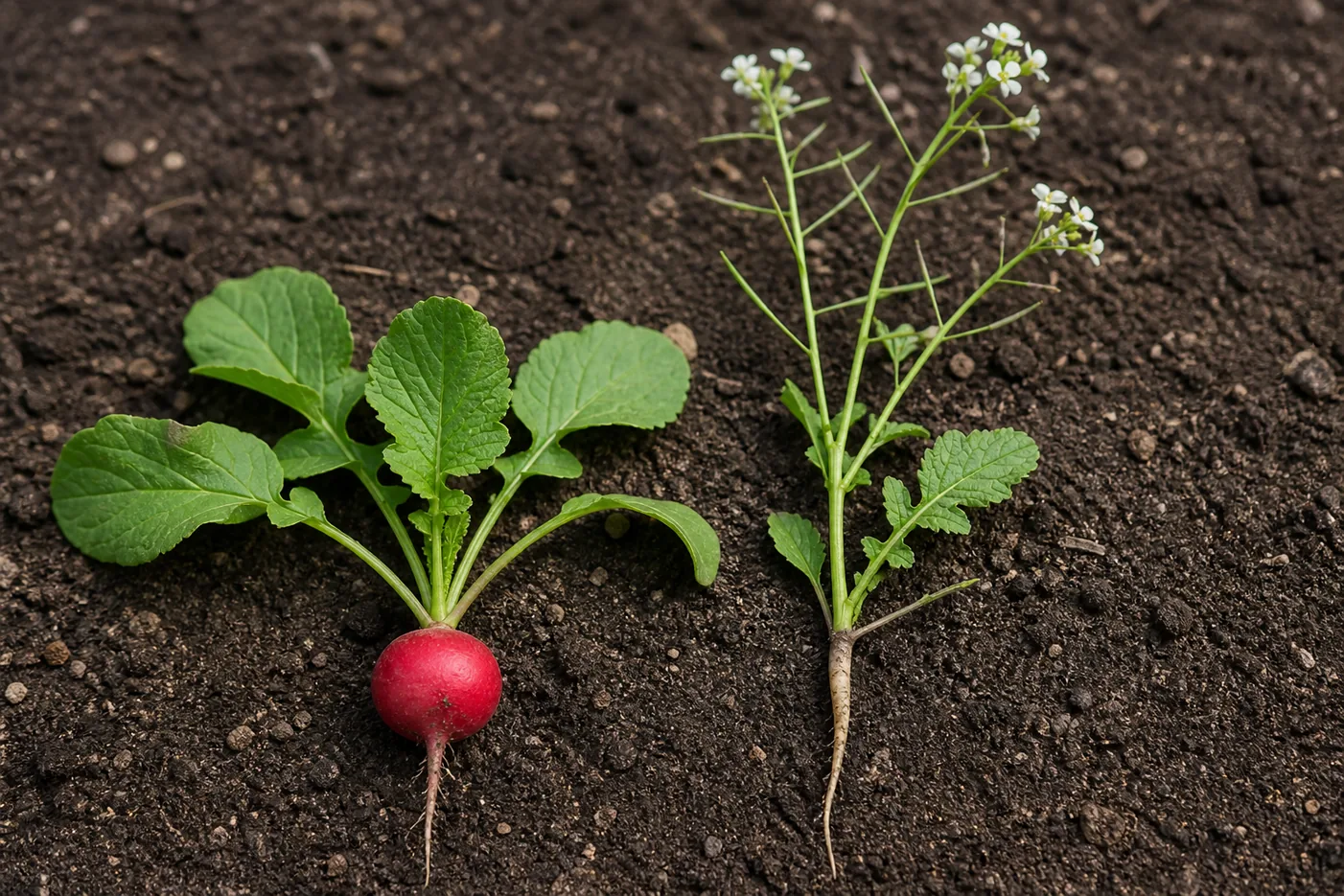
Good crop signal
- Short leafy tops
- Round shoulders showing
- Mild bite when sampled
Heat and long-day signal
- Tall flowering stem
- Flower buds forming
- Hot or woody roots
Crowding or low light
- Lots of leaves
- Thin roots
- Uneven root sizes
When Is a Radish Ready to Pull?
Illinois pulls spring radishes when the roots are less than 1 inch in diameter, and Utah State warns that old radishes generally split. Pulling the largest shoulders first gives the smaller neighbors room for a few more days.
The shoulder is the signal because the root swells upward at the soil line. Brushing away a little soil shows its width without pulling the plant.
Remove the tops before storing. Illinois keeps spring radishes 5 to 7 days in the refrigerator with tops removed, and winter radishes up to two weeks.
A spring row clears the bed in about a month, so the space is ready for warm-season transplants such as pepper or a sowing of beans after frost. Potatoes are the exception. Clemson advises against planting potatoes after radishes, beets, or carrots, because all of them are susceptible to scab.
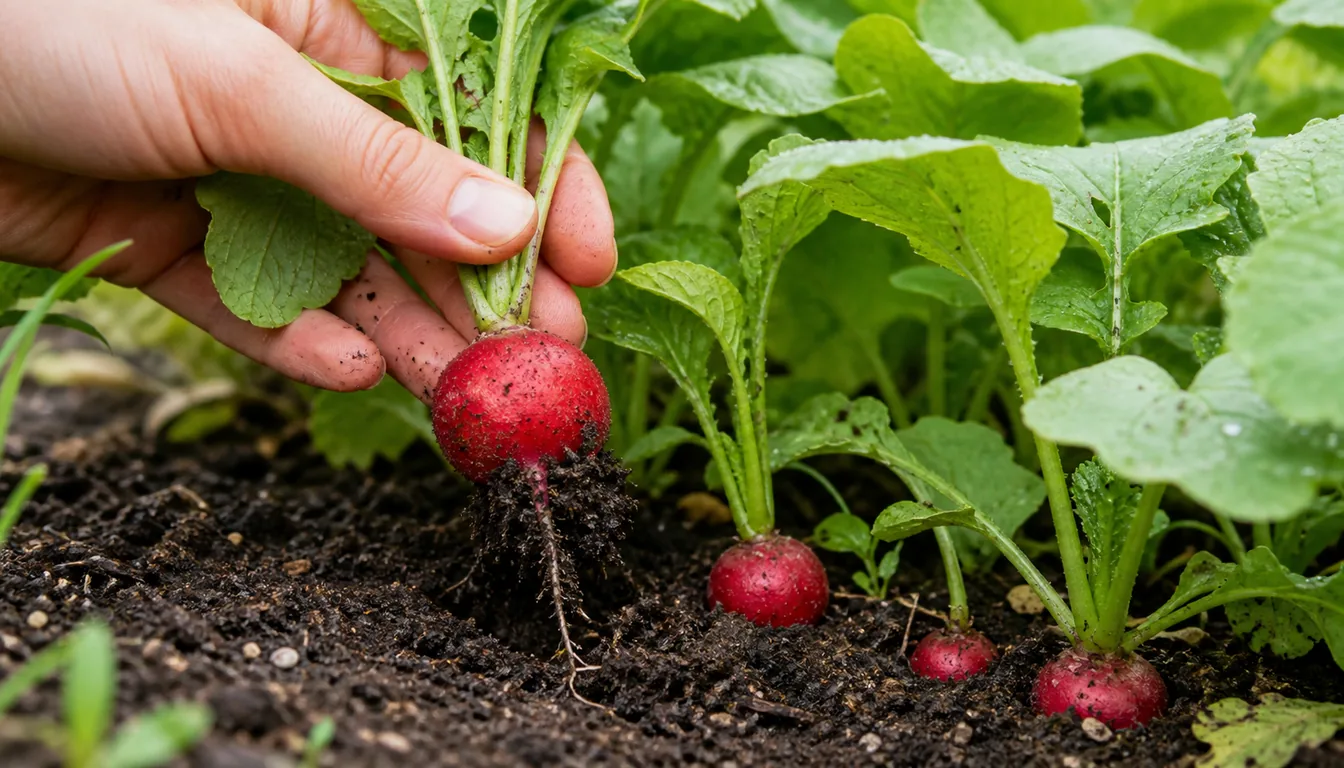
Pull when roots are under about 1 inch across and feel firm.
Harvest much larger, and loosen the soil first so long roots do not snap.
Eat them right away instead of storing them with sound roots.
Compost them and time the next sowing for cooler weather.
Why Are My Radishes All Leaves and No Root?
Leaves without roots usually point to the bed, not the seed. Illinois lists overcrowding, excessive heat, and insufficient light as the causes, so thinning, earlier sowing, and a sunnier spot fix most cases.
Split roots come from age or a soaking after a dry spell, and hot or pithy roots from slow growth. Both are timing and watering problems that the next sowing can correct.
Tunnels in the root are usually root maggots, which Illinois notes are more common north of 40 degrees latitude. The Mid-Atlantic guide explains their timing. The adult flies emerge when wild mustard called yellow rocket first blooms and lay eggs on or near roots, and damage cannot be undone once it shows. Row covers keep the flies off small plantings, and prompt removal of crop residue helps.
Small pinholes in the leaves are flea beetles, which also feed on broccoli and other brassicas. Utah State uses floating row covers against them, and the Mid-Atlantic guide notes that back-to-back plantings of host crops let populations build, so rotation and clearing old crops matter as much as cover.
Scab on radish roots, the same disease that marks potatoes, is more severe in dry soil and at high pH, according to the Mid-Atlantic guide.
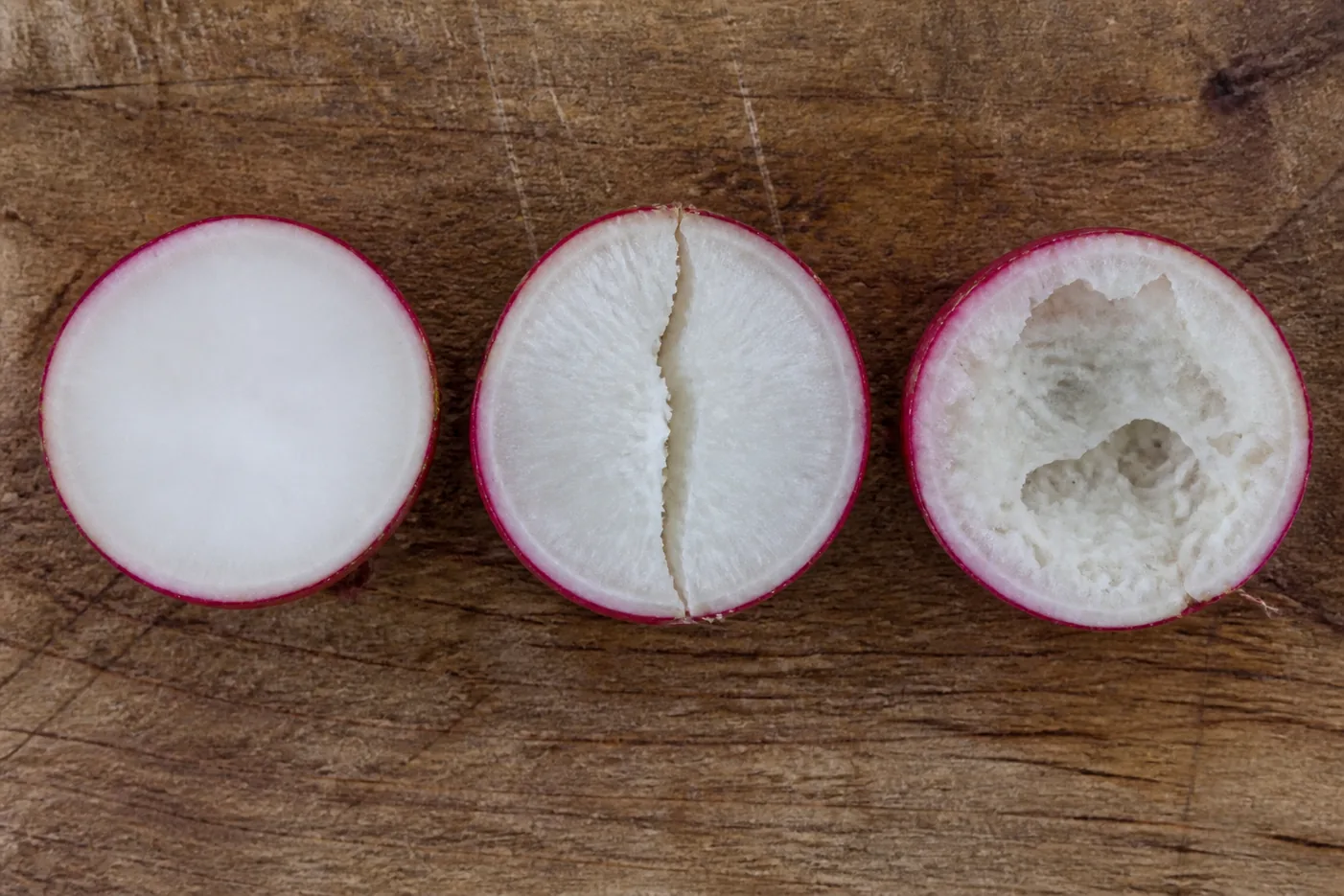
- All leaves, no root
- Overcrowding, heat, or too little light
- Split roots
- Roots left too long, or a soaking after dry weather
- Hot or pithy roots
- Slow growth from heat, dry soil, or age
- Leaf pinholes
- Flea beetles. Row cover on young plants, rotation, and cleanup.
- Root tunnels
- Root maggots. Row cover, rotation, and prompt removal of old crops.
- Corky scabs on roots
- Scab, worse in dry soil and at high pH
Can You Eat Radish Leaves and Seed Pods?
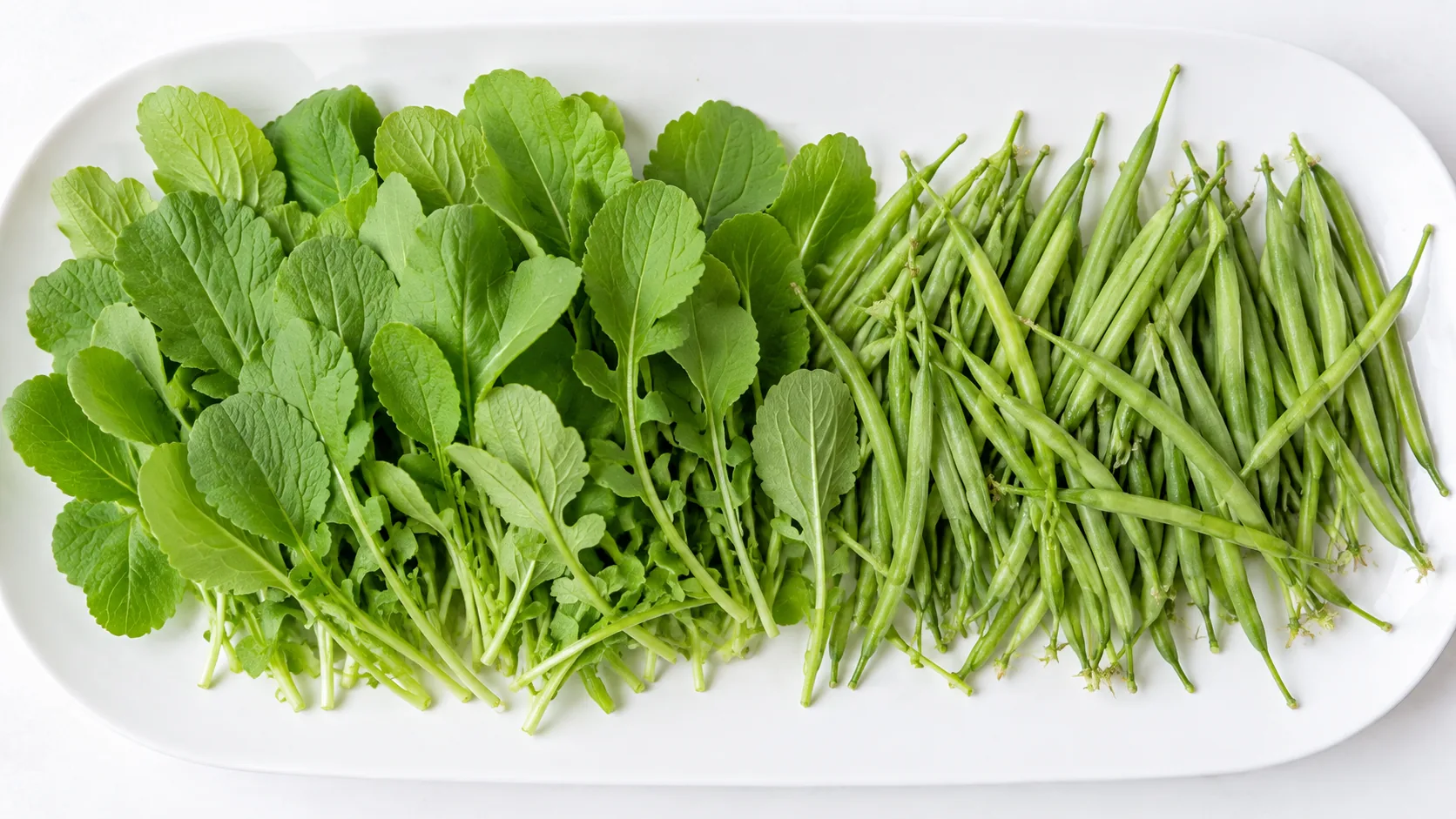
NC State lists radish leaves and flowers as edible along with the root, and says the leafy tops are best cooked to improve their texture. The blossoms have a spicy flavor.
Thinnings are the easiest greens to use, since those seedlings were coming out anyway. Taking many leaves from plants still sizing their roots costs root growth, because the leaves feed the root.
Seed pods are a different crop. Pods form only after the plant bolts, when the root of an ordinary radish has already gone past its best. NC State describes the Rat's Tail cultivar, 'Caudatus', as grown for large, fleshy, edible pods, with no edible taproot, on plants that can grow several feet tall.
A pod crop therefore belongs in its own row, separate from radishes grown for roots, so the root rows can be pulled on schedule.
Frequently Asked Questions
How long do radishes take to grow?
Utah State gives 25 to 45 days from seeding, depending on variety. Daikon and winter radishes take longer, up to about 80 days for some vendor varieties.
Why are my radishes all leaves and no root?
Illinois lists overcrowding, excessive heat, and insufficient light. Thin to 1 to 2 inches, sow while the weather is cool, and give the row full sun.
Can radishes grow in containers?
Round spring radishes are pulled under an inch across, so they fit a pot with drainage holes and loose mix. Daikon and winter types need deep soil.
Can I eat radish leaves?
Yes. NC State lists the leaves and flowers as edible and says the leafy tops are best cooked. Thinnings are the easiest leaves to use.
How often should I sow radishes?
Illinois sows short rows every 10 to 14 days while the weather is cool, then sows again in late summer for fall and winter types.
Why did my radishes split?
Illinois names two causes. The roots were left too long, or a heavy watering or rain followed a dry spell and made mature roots burst.
Sources & References
- Radish, Home Vegetable Gardening, Illinois Extension
- How to Grow Radishes in Your Garden, Utah State University Extension
- Radishes, Rutabagas and Turnips, Mid-Atlantic Commercial Vegetable Production Recommendations, University of Maryland Extension
- Raphanus raphanistrum subsp. sativus (Radish), North Carolina Extension Gardener Plant Toolbox
- Irish Potato & Sweetpotato Diseases, Clemson Cooperative Extension Home & Garden Information Center (HGIC 2214)
Related Plants
Carrot
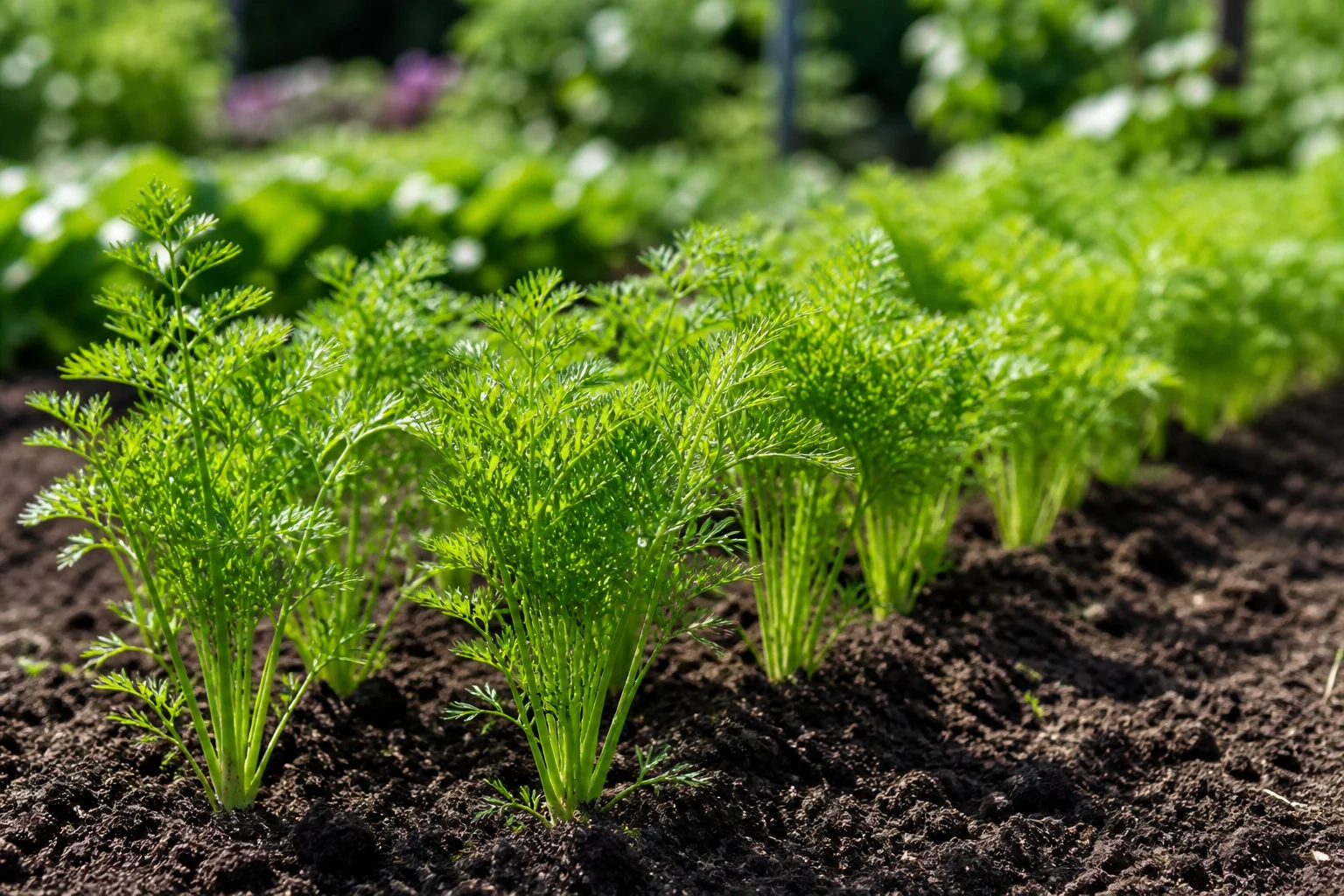
A slower direct-sown root crop where soil depth and patience matter more than speed.
Beet
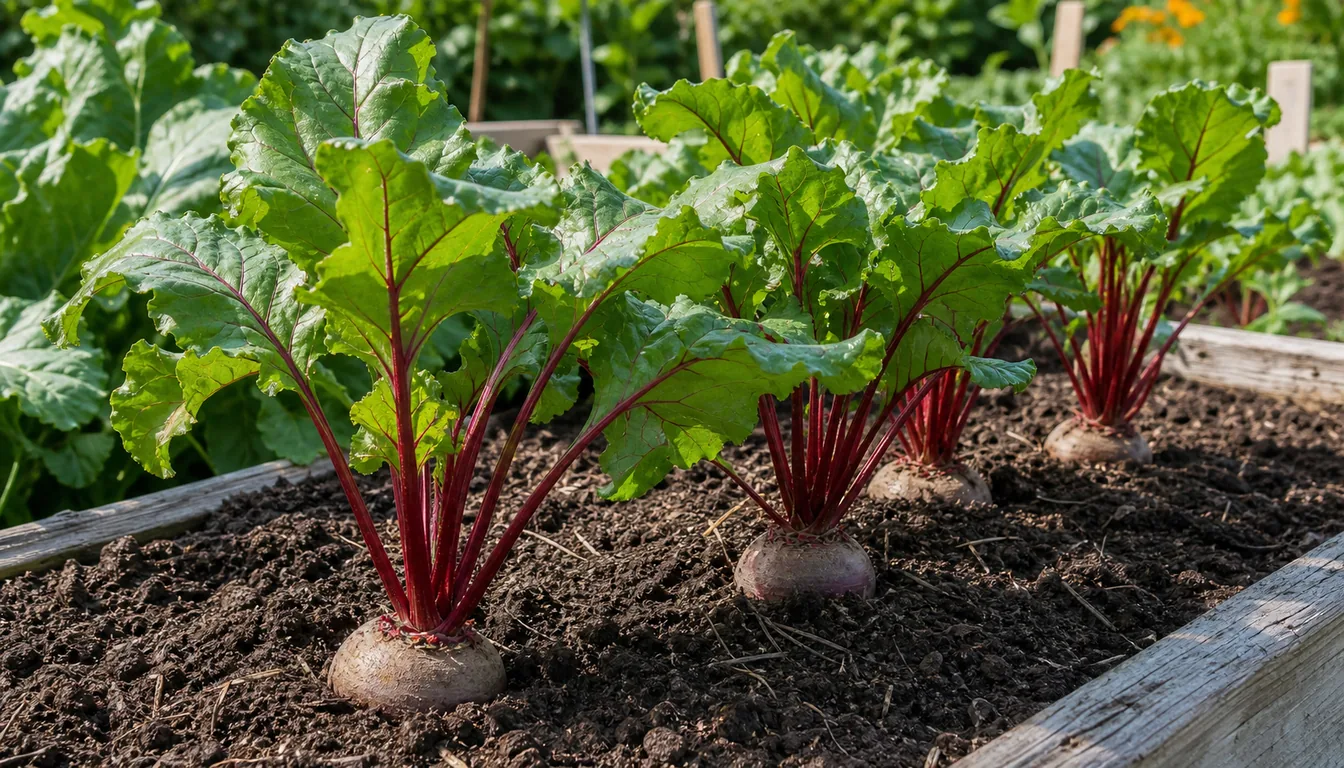
A cool-season root and greens crop that stays in the bed longer than radish.
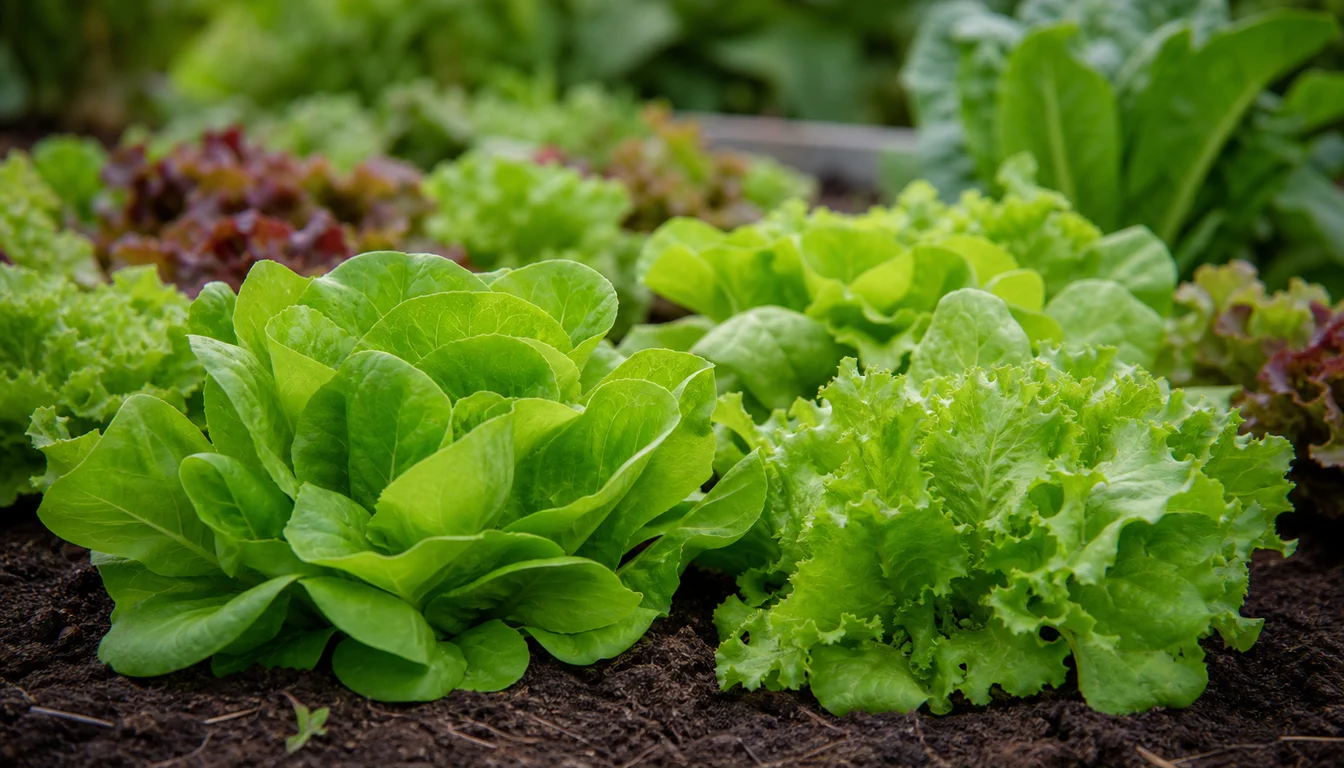
Lettuce
A fast cool-season partner for the same spring and fall sowing windows.
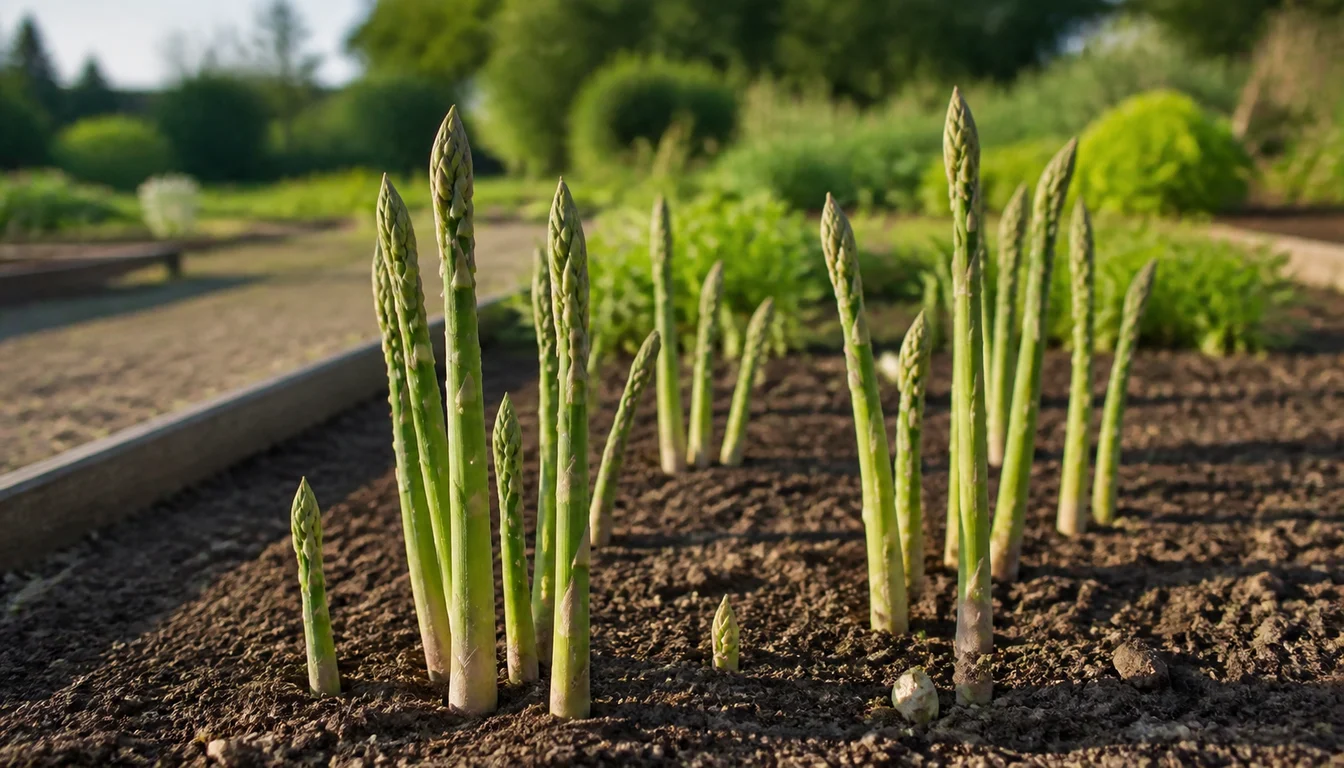
Asparagus
Asparagus rewards careful establishment with spring harvests for many years.
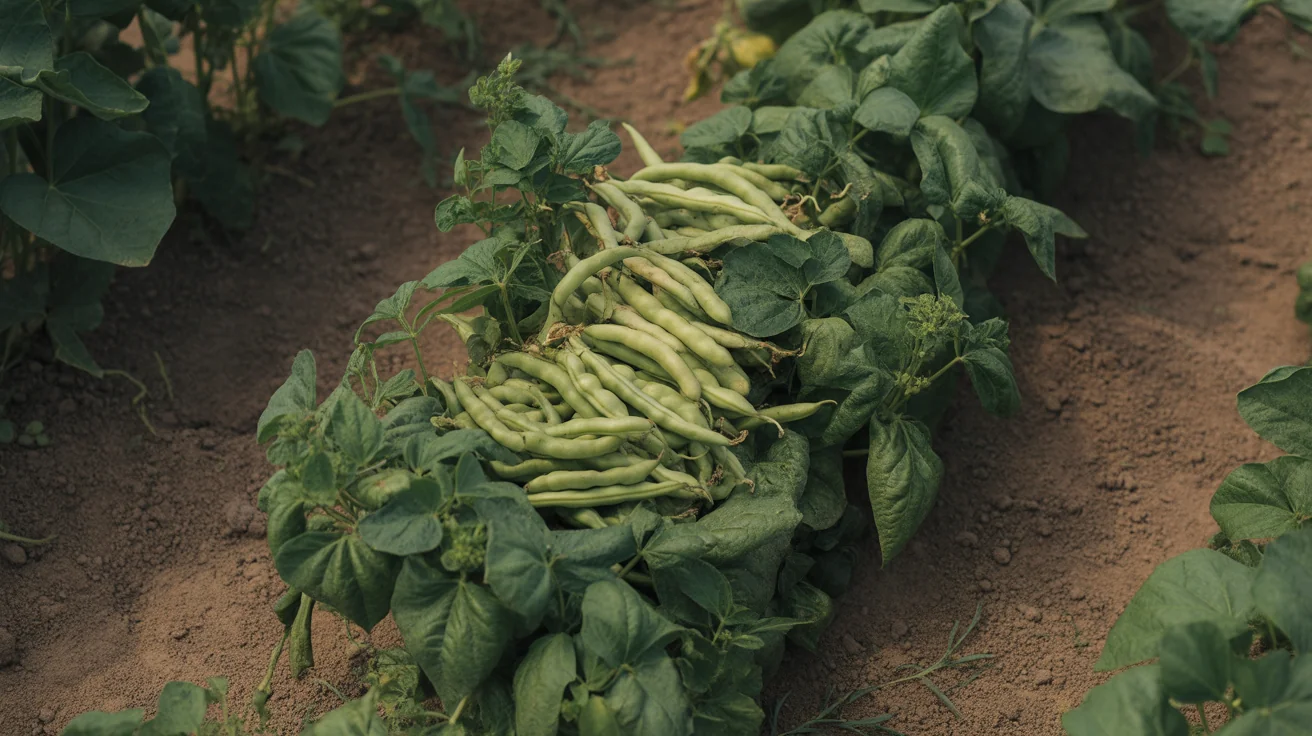
Beans
Two different plants share the name bean, one that stays knee-high and gives most of its crop inside two or three…
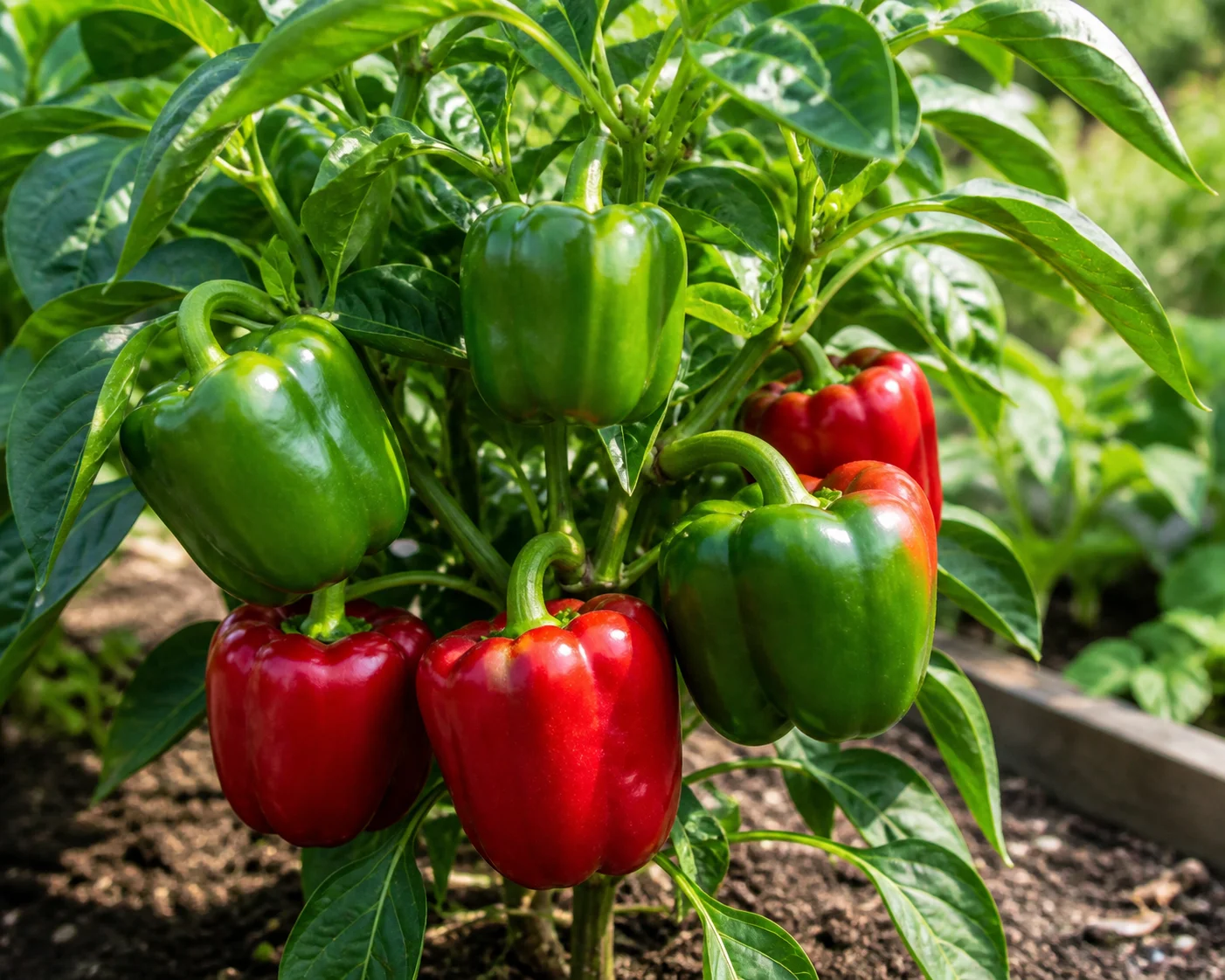
Bell Pepper
Bell Pepper rewards growers who manage flowers, roots, and heat together.