
What's a Pumpkin? How to Grow One the Vine Can Finish
Cucurbita maxima Cucurbitaceae
Grow Pumpkins by choosing the fruit job first, giving vines real ground, keeping water steady through fruit fill, and curing mature rinds before storage.
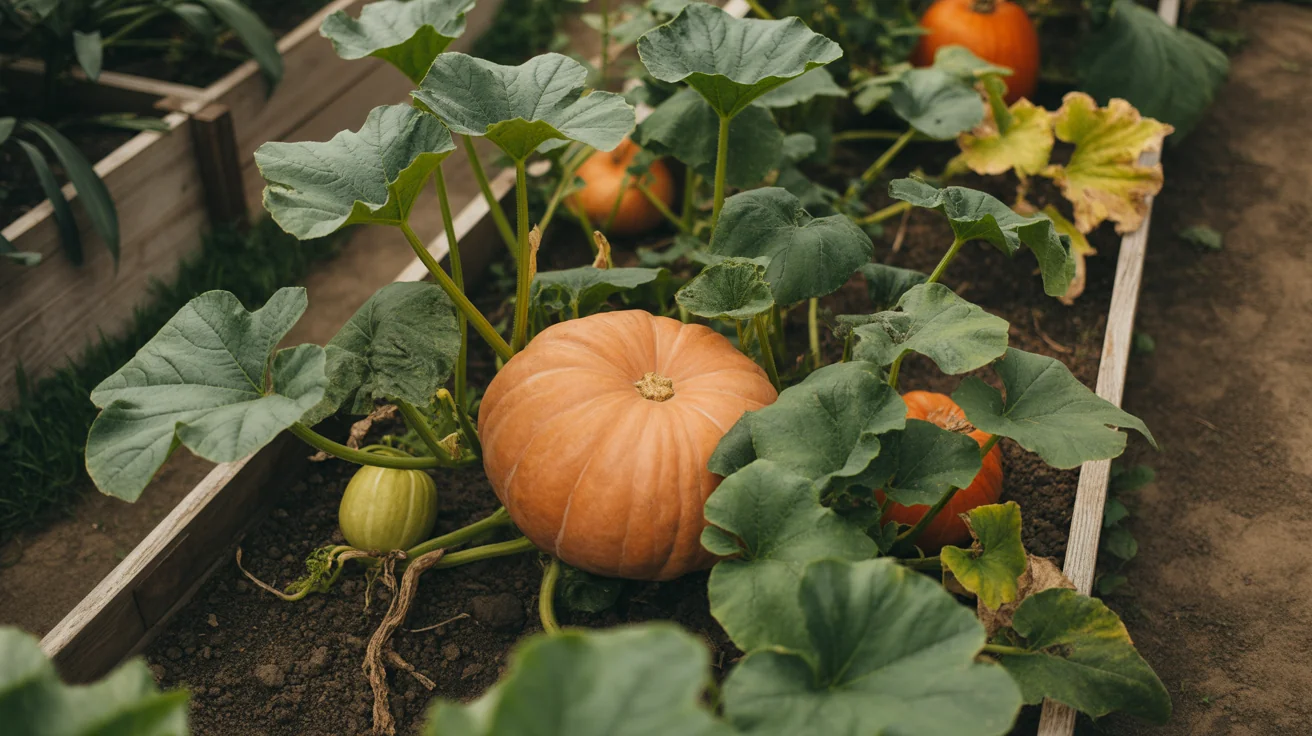
Care snapshot
Is a Pumpkin a Squash?
Yes. Pumpkin is a name for certain winter squash, not a separate botanical thing, and most large garden types are Cucurbita maxima.
Others sold as pumpkins are Cucurbita pepo or Cucurbita moschata, which is why two packets labeled the same way can behave very differently in the same bed.
All of them sit in Cucurbitaceae with Cucumber, Squash, and melons.
That family is the practical part, because those crops share cucumber beetles, squash vine borers, and powdery mildew, so they rotate as one group rather than independently.
The fruit is botanically a pepo, a berry with a hard rind, which is what makes curing and storage possible at all.
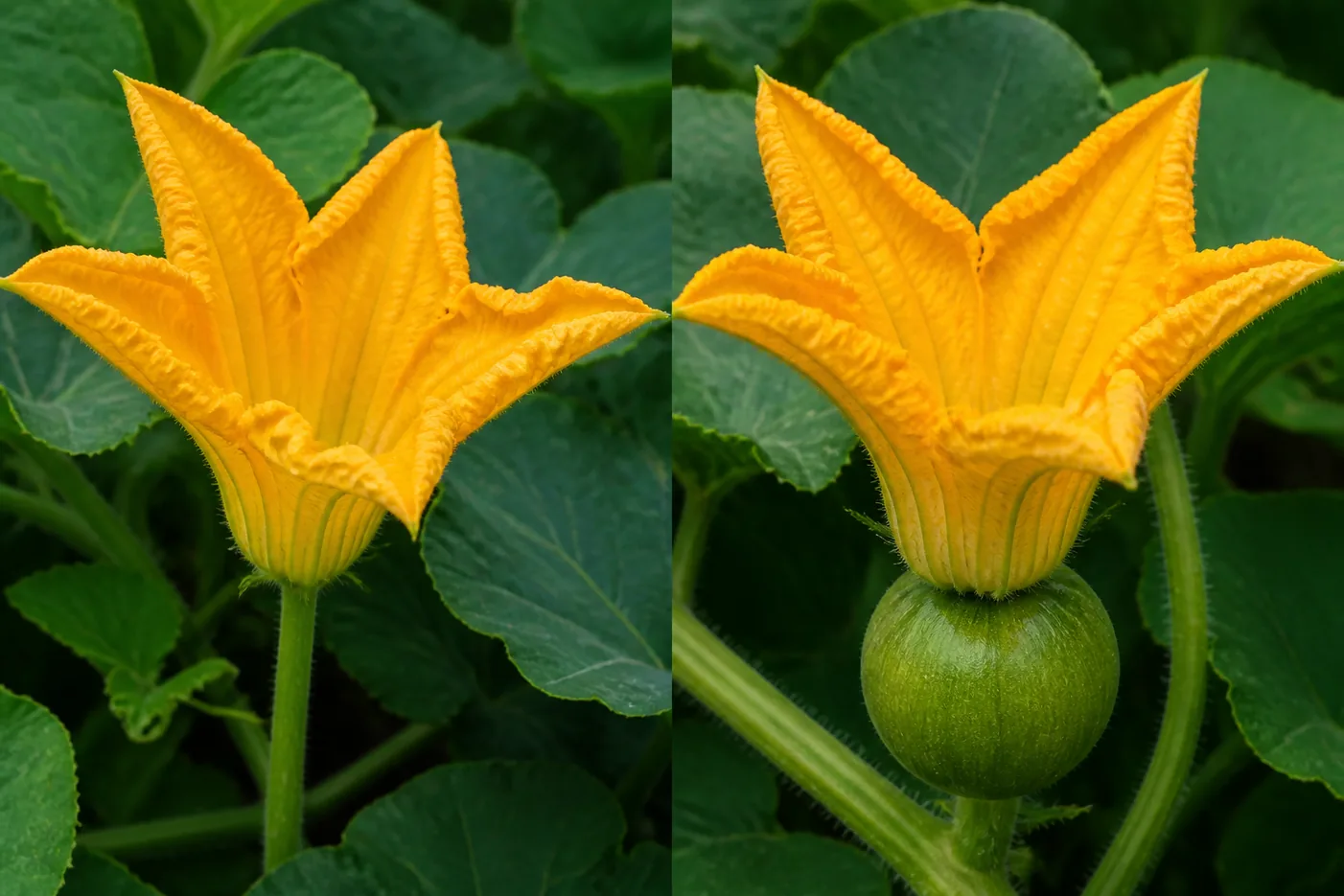
The flowers are big enough to be a crop in their own right. Each one opens for a single morning, they are edible, and giant growers hand-pollinate and then tape them shut to control which pollen gets in.
The vine is the other half of the identity. It runs along the ground and roots at leaf nodes as it goes, which is why moving an established vine costs more than steering it early.
Plant profile
- Botanical name
- Cucurbita maxima, with pumpkins also sold as C. pepo and C. moschata
- Family
- Cucurbitaceae, the gourd family
- Plant type
- Warm-season annual trailing vine
- The fruit is
- A pepo, a hard-rinded berry, which is why it cures and stores
- Flowers
- Separate male and female on the same vine, needing insect pollination
- Rotates with
- Cucumber, Squash, and melons as one cucurbit group
What Do You Actually Want the Pumpkin For?
The first decision is not fertilizer or a seed-start date. It is what kind of Pumpkin you want at the end, whether that is a dense pie fruit, a hollow carving fruit, or one huge show fruit that gets most of the vine's energy.
That job changes the whole bed plan, since pie types can carry several small fruits, carving types need cleaner rind space, and giant types turn one plant into a season-long project. If your garden is already tight, a quicker crop like zucchini may give more food from the same square footage.
Give full-size vines room before nearby crops are planted.
A Pumpkin hill at the edge of a new vegetable bed can run into a path, lawn edge, or spent spring crop space, while a hill in the middle of tidy rows will swallow the plan by July.
The honest answer for most home gardeners is one or two hills, not a whole packet.
That still gives enough fruit for cooking or carving without burying bean rows or late plantings under rough leaves.
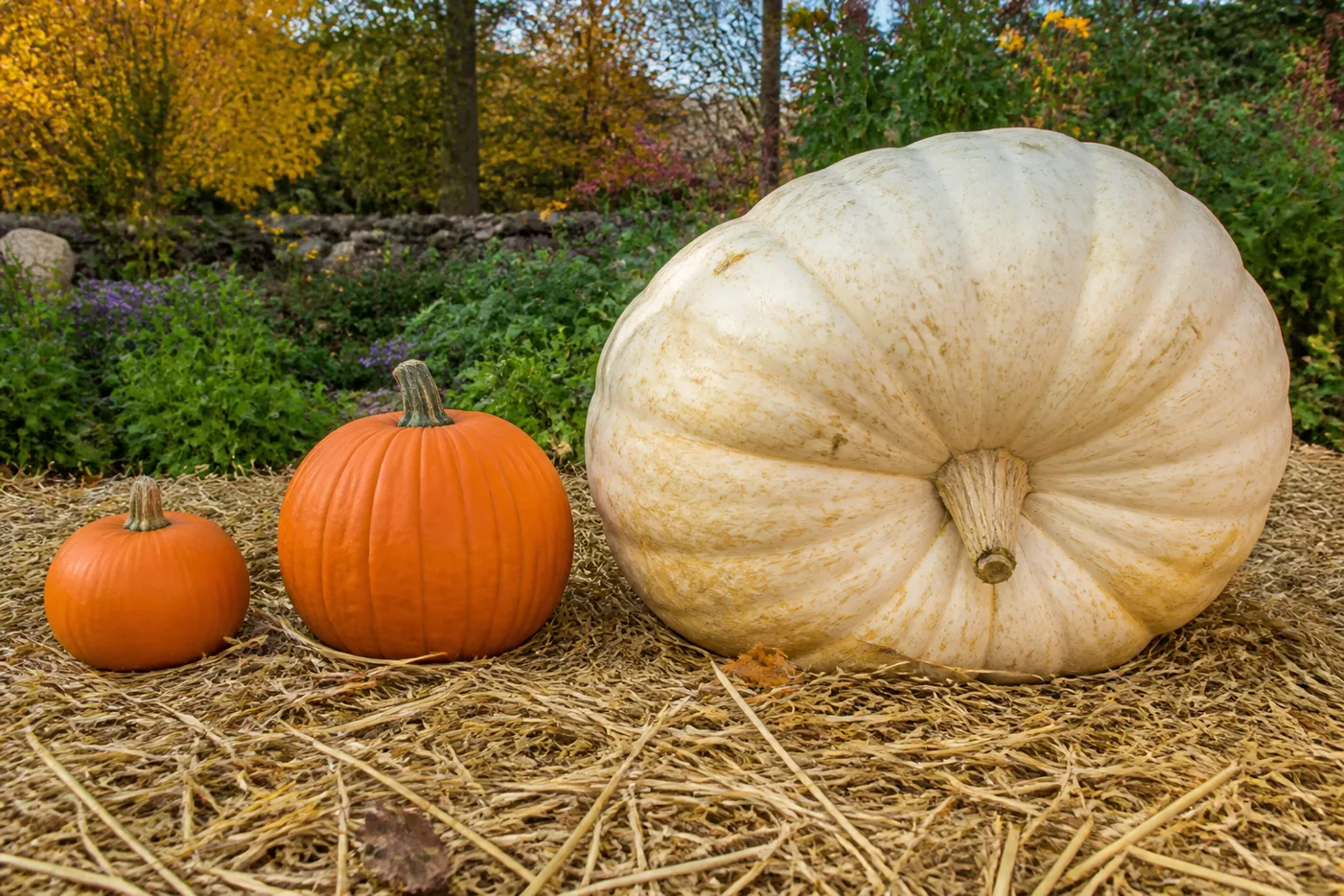
Pie fruit
- Best for cooking and baking
- Usually 3-8 lb fruit
- Can finish several fruits per vine
Carving fruit
- Best for Halloween display
- Needs clean rind space
- Usually 1-3 keepers per vine
Giant fruit
- Best for competition or fun
- Needs one main keeper
- Demands the most water and feeding
How Long Does a Pumpkin Take to Grow?
A Pumpkin seed packet is really a calendar. In Zone 3-5, a 115-day giant can run out of warm nights before the rind hardens, while in Zone 8-10, that same long cultivar may finish easily if heat and pests do not cut the vine short.
Look at days to maturity after you know your first fall frost window.
If your season is short, choose 90-100 day varieties and use the same indoor-start discipline you would use for stronger transplants.
Do not let small fruit size fool you into poor spacing.
Compact pie pumpkins still need airflow and a clean path for vines, especially where humid summers push mildew through crowded cucurbits like cucumber.
Reading the seed packet's days-to-maturity number as a guarantee is a common early mistake, since cool, cloudy stretches during fruit fill can add real time beyond the printed range. Building in a buffer of a week or two before your expected frost date protects a slow season without forcing an early harvest.
- Short-season pie type
- 90-100 days; best for cold zones and small kitchens
- Standard carving type
- 100-110 days; needs a wide hill and clean rind support
- Large storage type
- 105-115 days; useful when fall curing weather is reliable
- Giant type
- 110+ days; grow only if one fruit can own the bed
How Do You Prepare a Pumpkin Hill?
Pumpkin hills reward loose, fertile soil more than a wide bed does, since raised mounds warm faster and drain away the excess spring moisture that rots young roots.
Work several inches of compost or aged manure into each hill before sowing, aiming for a pH between 6.0 and 6.8.
Heavy clay benefits from extra organic matter and a slightly raised mound rather than a flat, low spot.
Space hills 4-8 feet apart for compact types and 8-12 feet for sprawling giants, since underestimating spread is one of the most common Pumpkin planting mistakes.
Rotating Pumpkin away from squash, cucumber, and melon beds for 2-3 years cuts down on shared cucurbit pests and diseases building up in the soil. A bed that grew any cucurbit crop last summer is not a fresh start, even if it looks empty now.
Companion plantings like bush beans or radishes can fill the small gaps around a young hill before vines spread, since that early bare soil otherwise just grows weeds. Pull or cut those companions back once runners need the room, rather than letting them compete once the vine is established.
- Build each hill a few inches above grade so water drains away from the crown.
- Mix in compost weeks ahead of sowing, not the same day.
- Size hill spacing to the mature spread of your chosen type, not the seedling.
- Track which beds grew cucurbits last year before choosing this year's hill site.
When Is Soil Warm Enough to Sow Pumpkins?
Cold soil is the first injected failure point for weak Pumpkins.
Seeds rot or stall when the bed is wet and below about 60 F, so wait until warm nights are steady instead of planting by the calendar.
Direct sowing works best when the season allows it because Pumpkin roots dislike being torn apart.
If you must transplant, use a small biodegradable pot and move seedlings before roots circle the container.
Set two or three seeds per hill, then keep the strongest plant after the first true leaves open.
Saving every seedling feels kind, but crowded crowns create weak airflow and make later vine training harder.
This is where Pumpkins differ from radish. Radishes reward fast repeat sowing in cool soil, while pumpkins reward patience until the bed is warm enough to launch a long vine.
- Warm the bed with dark mulch or clear plastic before sowing in cold springs.
- Sow seeds about 1 inch deep after frost danger has passed.
- Thin to one strong plant per hill once leaves are sturdy.
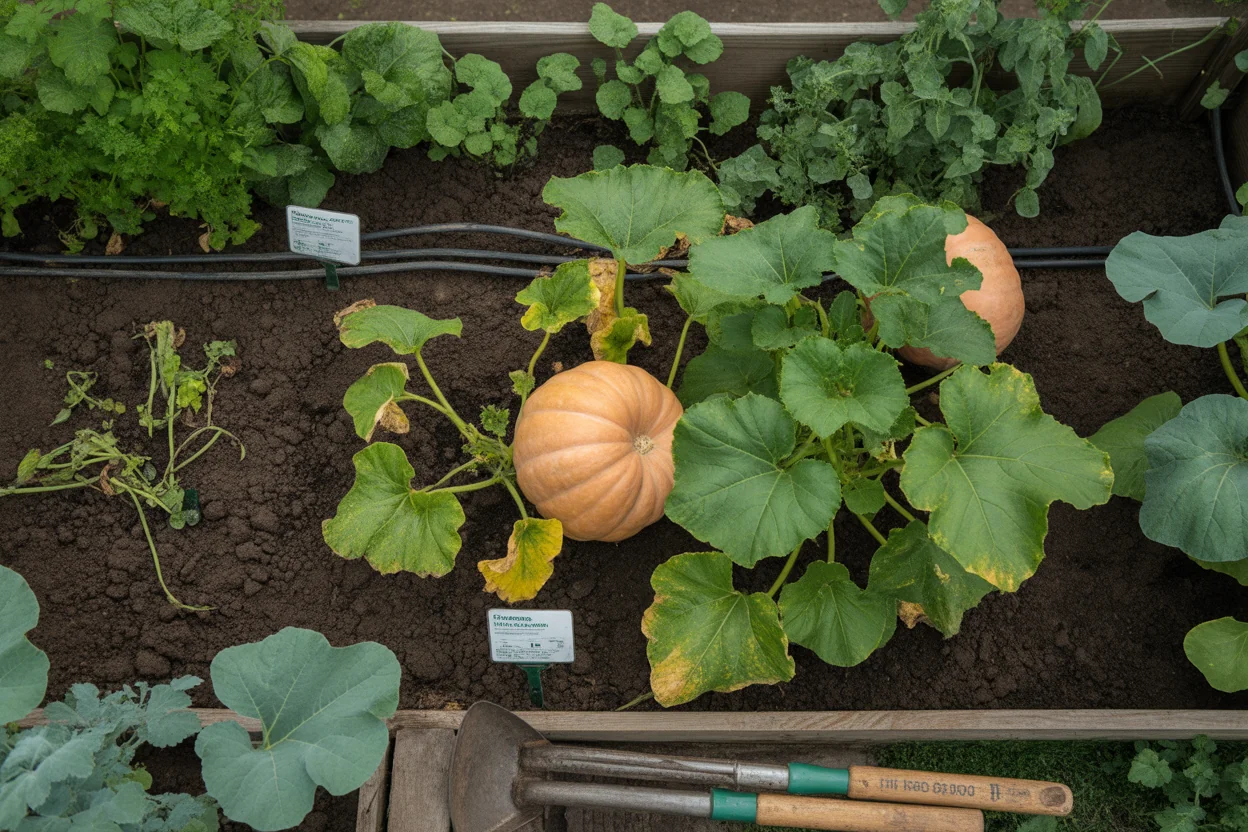
- Lay drip tape or a soaker hose before vines hide the soil surface.
How Much Water Does a Pumpkin Need?
Watering matters most from female flowers through fruit sizing. A deep soak that reaches the active root zone beats daily splashing, and deep watering habits keep big fruit from stalling during hot spells.
Aim water at soil, not leaves. Large Pumpkin leaves already trap humidity near the crown, and overhead watering adds mildew pressure and leaves wet fruit sitting against mulch overnight.
Once a fruit is softball-size, slide straw, a board, or a flat tile under it. That small lift changes the rind environment from damp soil contact to a cleaner, faster-drying surface.
Ease water slightly once rinds harden and stems start corking. Do not drought-stress the plant, but stop forcing lush green growth when the job has shifted from sizing fruit to finishing storage quality.
A container-grown or very small-space pumpkin dries out faster than an in-ground hill, since less soil volume buffers against a hot afternoon. Check those pots daily once fruit is sizing, rather than assuming the same watering interval that works for the open garden.
Can You Control Where Pumpkin Vines Grow?
Vines left alone wander toward whatever open ground, path, or neighboring bed they can find, so a plan for where growth is welcome saves a summer of redirecting stems.
Gently turn wandering vine tips back toward the hill every few days while they are still flexible, instead of waiting until a stem hardens in the wrong direction. Snapped vines rarely reroute cleanly once damaged.
Compact and semi-vining pie types can climb a sturdy trellis or fence if fruit gets support in slings as it grows, trading ground space for a little extra staking work.
Pinching the growing tip once a vine has set its keeper fruit can redirect energy into that fruit instead of more runner length. This works best on giant and carving types where one or two fruits are the whole goal.
A vine that roots at leaf nodes along its length is actually helping itself, since those secondary roots feed the plant even after the original crown root slows down. Leave nodes in loose soil undisturbed instead of lifting the whole vine to move it.
- Redirect stray vine tips every few days while they are still soft and flexible.
- Sling developing fruit on any vine trained onto a trellis or fence.
- Pinch growing tips once keeper fruit is set on giant or carving types.
- Leave pie types mostly untrained if ground space already allows for it.
Should You Fertilize Pumpkins, and How Many Fruit?
Pumpkin feeding has two phases. Early nitrogen helps vines cover ground, while later, balanced fertility and steady moisture matter more than pushing more leaves.
Mix compost into the top foot before planting, then use a vegetable fertilizer plan that fits heavy feeders. The vegetable fertilizer chart is a better guide than dumping high-nitrogen lawn food beside the crown.
Fruit load is part of feeding. A pie plant may finish several small fruits, but a carving plant often gives better size when you keep two or three, and a giant project usually keeps one.
- Too much nitrogen
- Long vines, many leaves, delayed fruit, softer growth
- Too many fruit
- Small pumpkins that color late or never harden well
- Too little steady water
- Stalled sizing, misshapen fruit, weak handles
- Best correction
- Compost before planting, balanced side-dress, thin extra fruit early
Why Is My Pumpkin Flowering but Not Setting Fruit?
The first yellow flowers are usually male, so early flower drop is not a crop failure. The real test begins when female flowers show a tiny fruit at the base and need bee visits while the pollen is fresh.
Remove row cover when female flowers open, or hand-pollinate in the morning. Nearby pollinator plantings help, but open Pumpkin flowers still need access at the right time of day.
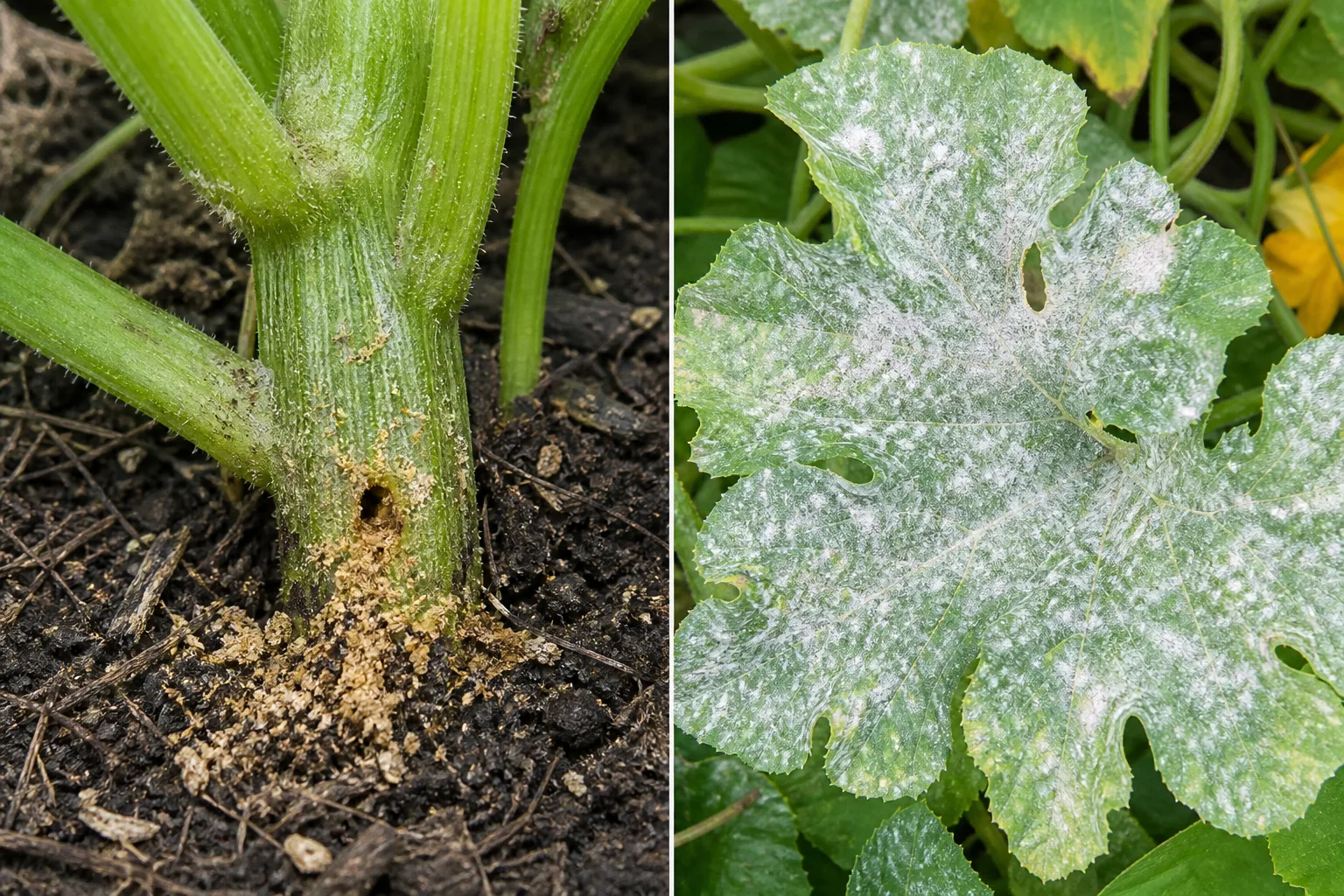
After pollination, pest order matters. Cucumber beetles and squash bugs chew and spread disease, vine borers can collapse a runner from the inside, and mildew steals the leaf area that finishes fruit.
A single bad pest year does not doom next year's crop if the bed gets a real rotation break, since most of these problems build up from repeated hosting rather than one bad season. Cleaning up old vines at the end of the season instead of leaving them to overwinter cuts down on where borers and beetles hide.
Few fruit
- Check female flowers and bee access
- Avoid heavy nitrogen during bloom
- Hand-pollinate in cool or rainy weeks
Sudden vine wilt
- Inspect stem bases for frass
- Compare with squash vine borer symptoms
- Remove badly damaged vines
White leaf coating
- Improve spacing and airflow
- Water at soil level
- Keep enough healthy leaves to finish fruit
When Is a Pumpkin Ready to Pick?
Harvest timing is not the same as orange color, since mature Pumpkins have a hard rind, a duller skin finish, and a corky stem that is drying down. If a fingernail easily dents the rind, the fruit still needs vine time.
Cut the stem with pruners and leave a handle. Carrying fruit by the handle breaks storage quality, so lift from underneath even when the stem looks strong.
Cure mature fruit in a warm, dry, airy spot for about a week or two when weather allows. This step hardens the skin and helps small wounds seal before storage.
Store only sound fruit. Any Pumpkin with a soft spot, broken stem, or frost injury should be cooked soon, composted, or fed to animals only if it is clean and not moldy.
For winter squash relatives, the same maturity logic appears in butternut harvest timing, but carving pumpkins usually get judged more by rind cleanliness and handle strength.
- Keep 1-2 large keepers on a carving or giant vine.
- Turn fruit gently only if one side stays wet or pale.
- Harvest before a hard freeze, even if leaves are still alive.
- Store cured fruit in a cool dry place, not on damp concrete.
Are Pumpkins Safe for Pets to Eat?
Plain cooked Pumpkin flesh is usually pet-safe, but the garden plant still needs common sense. Do not feed moldy fruit, waxed decorations, painted Pumpkins, or tough rind pieces to pets or livestock.
Very bitter Pumpkin or squash flesh does not belong in the kitchen. Bitter cucurbit fruit can contain high cucurbitacin levels, so spit it out and discard the fruit instead of cooking around the taste.
Rotate the Pumpkin bed next year with lighter crops such as peas or leafy greens. Rotation reduces pest carryover and gives the soil a break after one of the heaviest-feeding vegetable crops.
Frequently Asked Questions
How much space does one Pumpkin plant need?
Most full-size Pumpkin plants need about 25-50 sq ft per hill. Compact pie types can use less space, but carving and giant types need wide paths so vines can run without burying nearby crops.
Should I start Pumpkins indoors?
Start indoors only when your season is short. Sow in small biodegradable pots about 2-3 weeks before transplanting, then move the whole pot after soil warms so roots are not torn apart.
How many Pumpkins should I leave on a vine?
Keep several small pie fruits, about 2-3 carving fruits, or 1 giant fruit depending on the variety and your goal. Remove extra young fruits early so the plant can finish the keepers.
Why are my Pumpkins rotting underneath?
The fruit stayed wet where it touched soil. Slide straw, a board, or a flat tile under young fruit, water at soil level, and harvest before cold wet weather softens the rind.
When is a Pumpkin ready to harvest?
Harvest when the rind is hard, color is mature for the variety, and the stem is corky. Cut with pruners and leave a stem handle, but lift the fruit from underneath.
Sources & References
- University of Minnesota Extension - Growing Squash and Pumpkins in Home Gardens
- University of Minnesota Extension - Growing Pumpkins in the Home Garden
- Squash Vine Borer, University of Wisconsin-Madison Extension
- Are volunteer squash toxic? Oregon State University Extension
- Cucurbita maxima (Autumn Squash, Buttercup Squash, Hubbard Squash, Marrow, Pumpkin, Squash, Turban Gourd, Winter Squash) | North Carolina Extension Gardener Plant Toolbox
- Toxic and Non-toxic Plants: Hubbard Squash | ASPCA
Related Plants
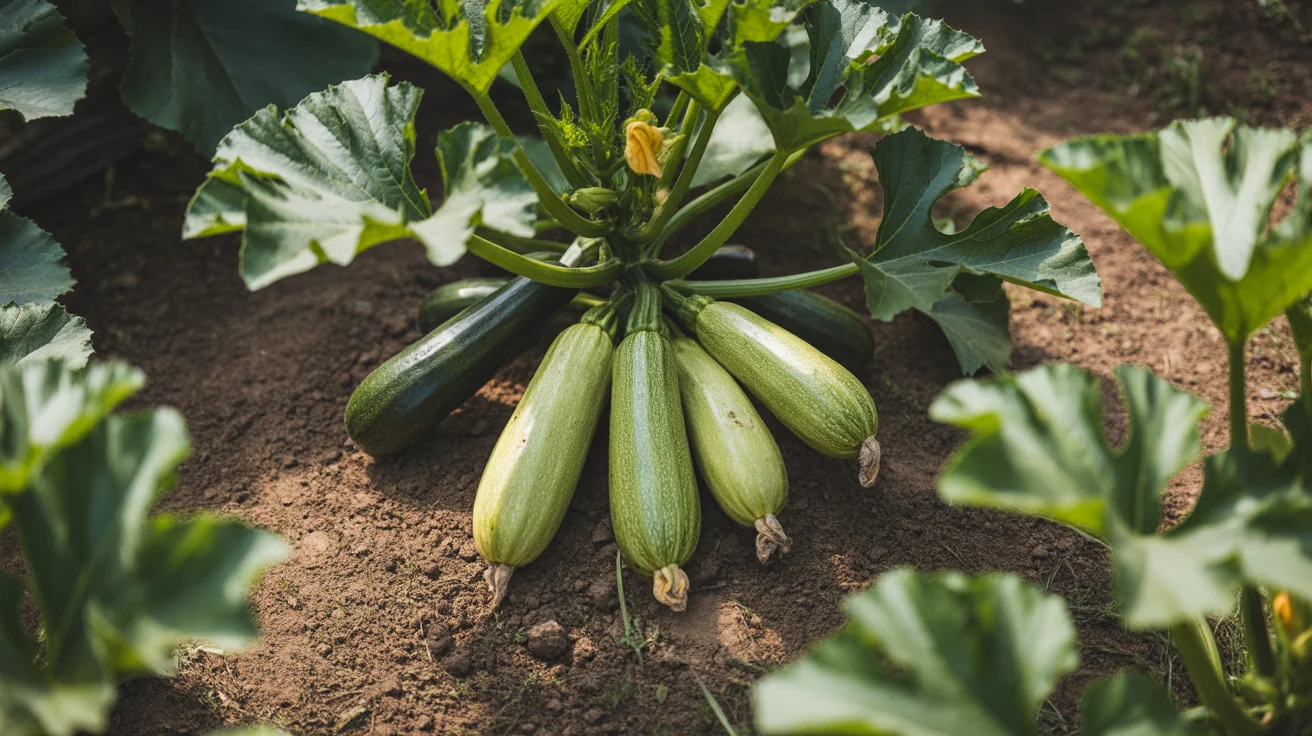
Zucchini
A faster summer squash for smaller beds when pumpkin vines would take too much room.
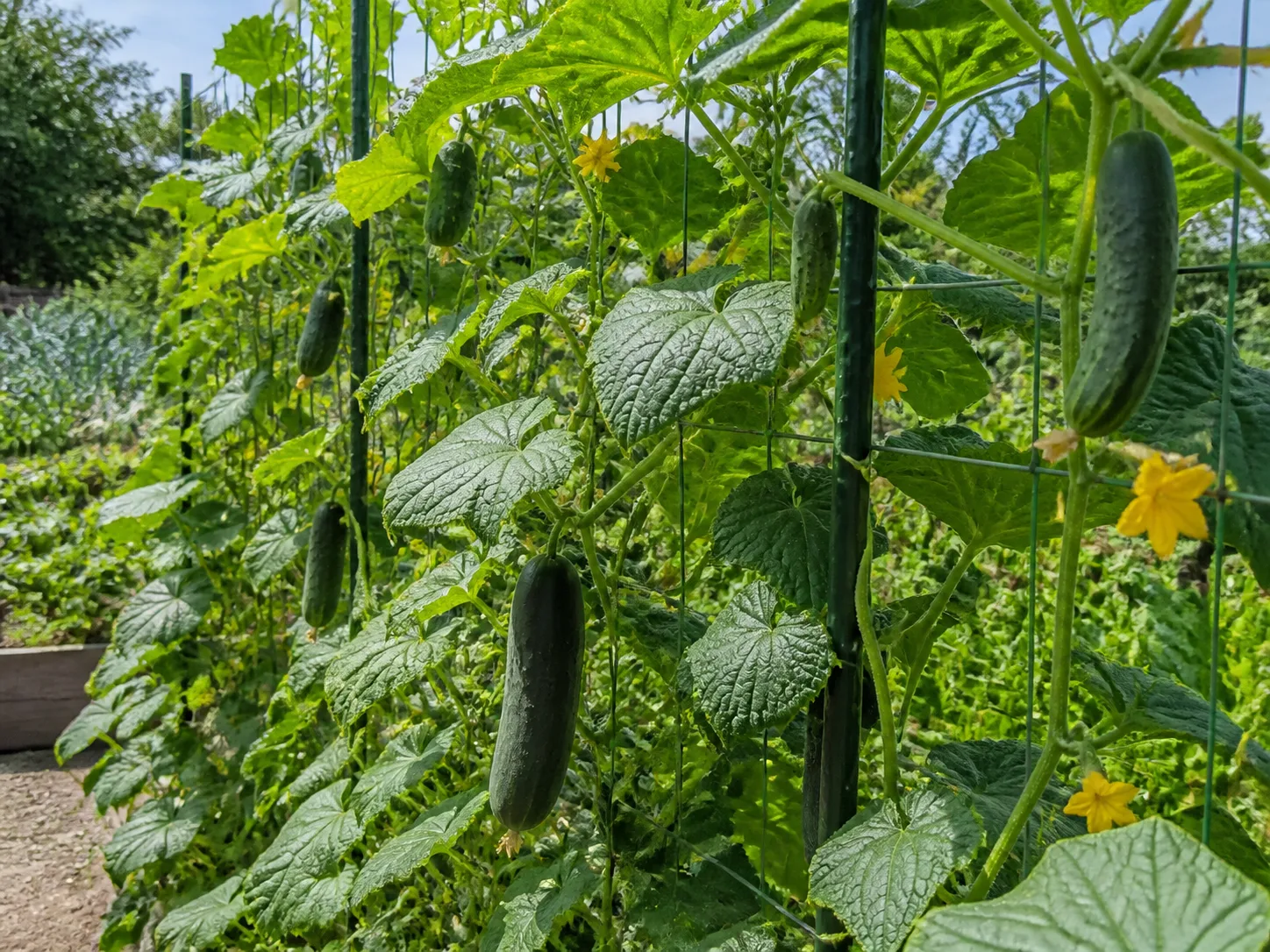
Cucumber
A smaller cucurbit that can climb a trellis when ground space is tight.
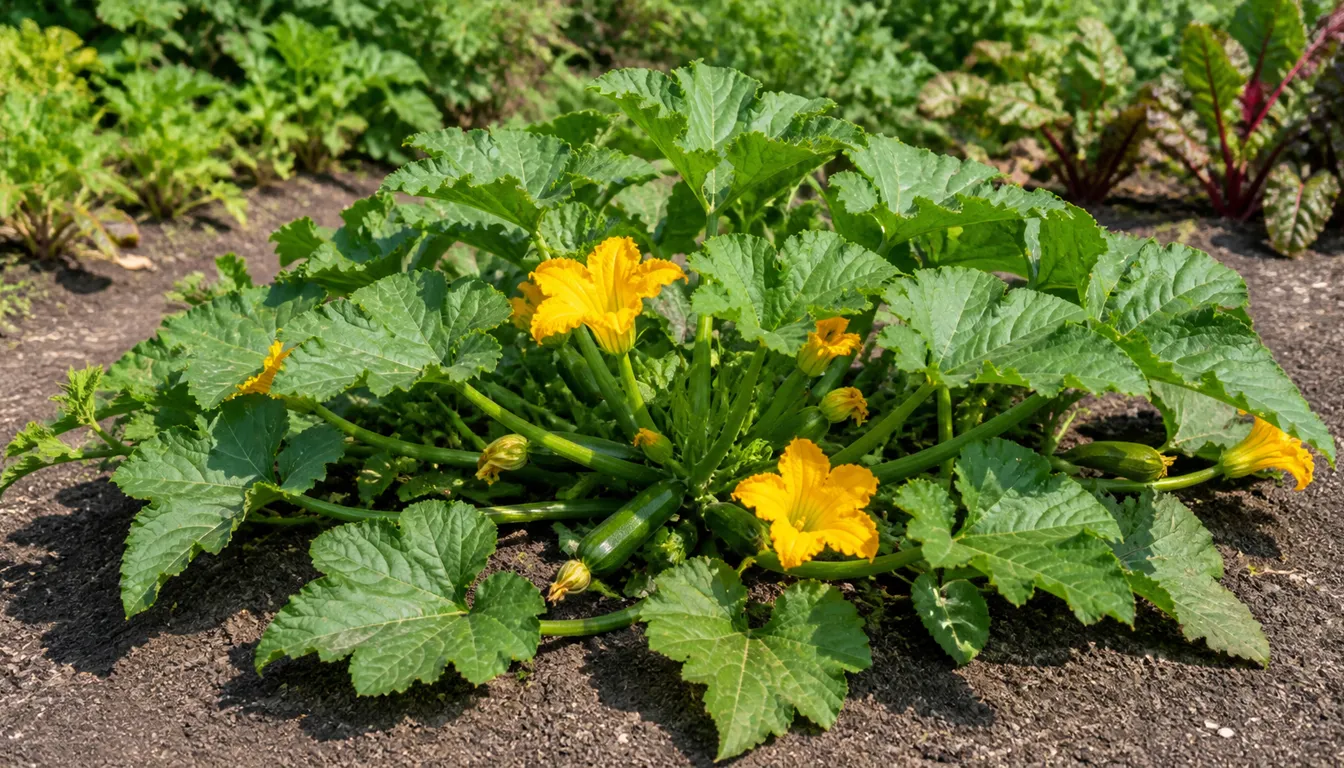
Squash
The broader Cucurbita crop group, including summer and winter harvest stages.
Asparagus
Asparagus rewards careful establishment with spring harvests for many years.
Beans
Two different plants share the name bean, one that stays knee-high and gives most of its crop inside two or three…
Beet
Beet care starts with one unusual fact. Each seed ball can make several seedlings, so the crop needs early thinning…