
What's Zucchini? How to Keep Tender Fruit Coming
Cucurbita pepo Cucurbitaceae
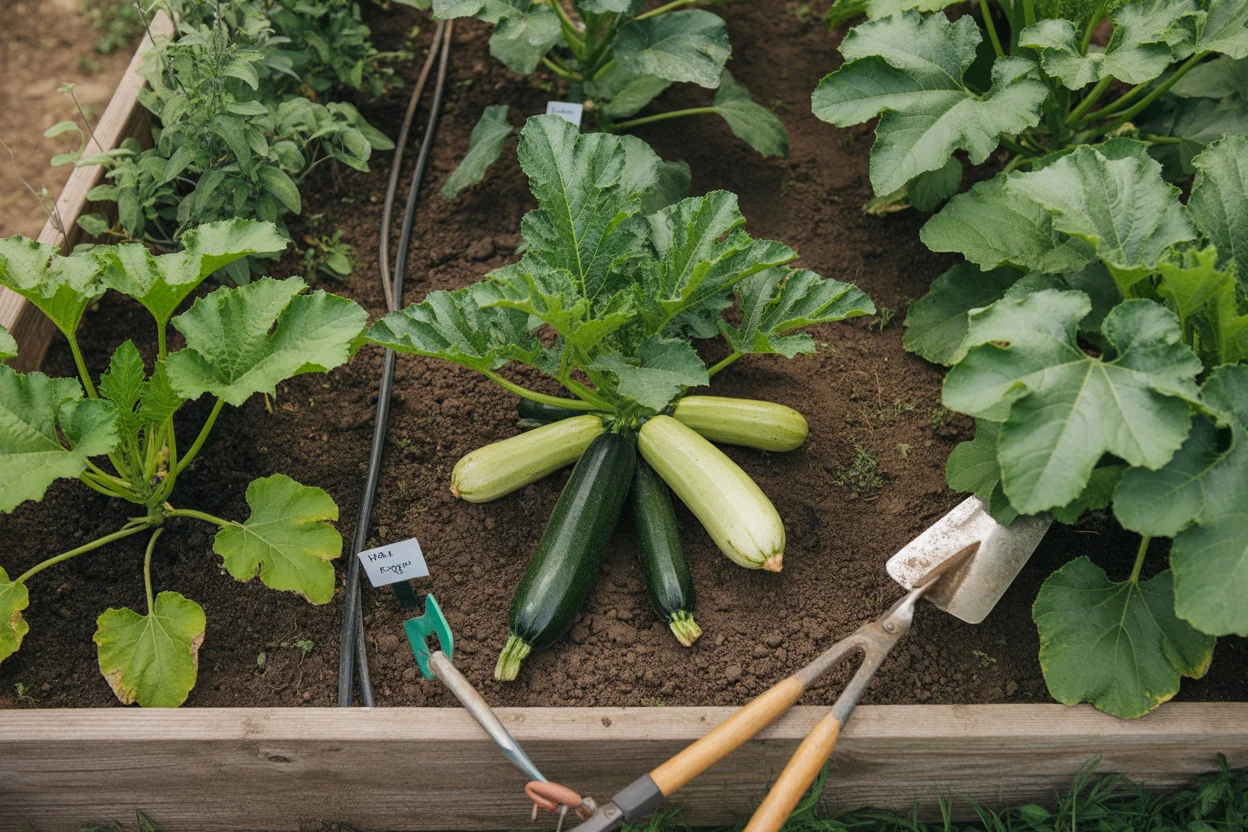
Plant zucchini after frost in warm soil, give each crown full sun and open space, and keep the shallow root zone evenly moist. Check the flowers in the morning and pick tender fruit every day or two once harvest begins.
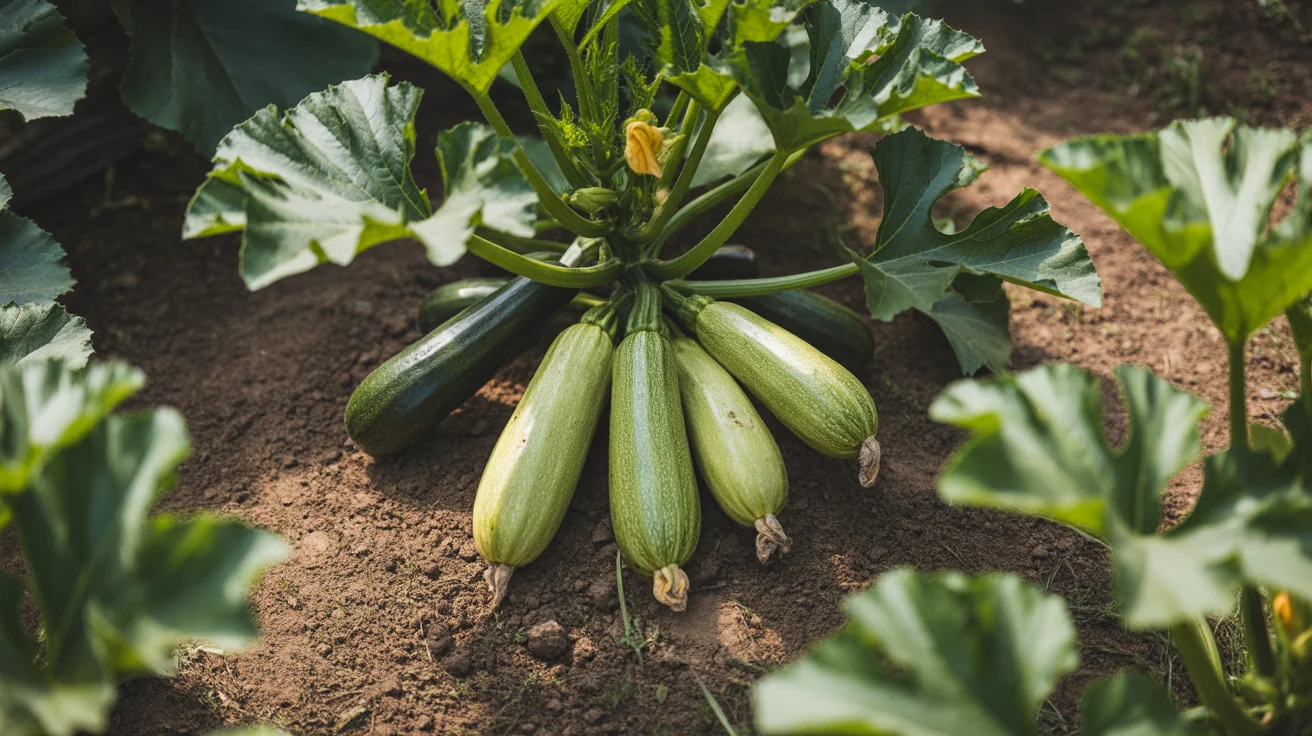
Care snapshot
What Makes Zucchini a Summer Squash?
Zucchini is a tender annual form of Cucurbita pepo grown for fruit that is still young, soft-skinned, and full of undeveloped seeds. That immature harvest is what makes it a summer squash rather than a storage squash that ripens to a hard rind.
Most garden varieties grow from a short central crown instead of sending the long runners associated with pumpkins, although a plant may stay only 18 to 24 inches tall while its broad leaves occupy a circle 3 feet wide or more.
That low, leafy shape explains why spacing matters even when a seed packet calls the plant a bush type because overlapping leaves block access to blossoms, slow leaf drying after rain, and make hidden fruit easy to miss.
Each plant carries separate male and female flowers. Male flowers stand on narrow stems, while a female flower has a miniature zucchini directly behind its petals.
Pollen has to move from a male flower to a female flower before that small ovary can grow into a well-shaped squash, which makes morning bee activity as important as sun, water, and fertile soil.
A zucchini fruit can reach cooking size only a few days after a flower opens. Frequent inspection and harvest are therefore part of basic care, not a separate job saved for the end of the season.
Which Zucchini Variety Fits Your Garden?
Choose a zucchini variety by the mature plant and the harvest you will use, not by the fruit photograph alone, because the word bush describes a compact crown that still needs a wide patch of soil and easy access for picking.
Standard green cultivars fit most recipes and make missed fruit easy to spot once it grows beyond the leaves. Ribbed Italian types such as Costata Romanesco are often chosen for texture and flavor, though their open plants may take more room.
Yellow zucchini can be easier to see inside a dense canopy. Color does not tell you whether a cultivar matures early, resists disease, or stays compact, so read those traits separately on the packet.
Compare days to maturity in a short growing season, while a humid garden with a history of powdery mildew gives more weight to a resistance or tolerance label that can preserve useful foliage later into summer.
Resistance lowers risk but does not replace full sun, open spacing, and dry leaves because a resistant plant crowded between other squash can still develop enough disease to shorten its harvest.
One or two healthy plants supply many households because fruit can be ready every day or two. Plant more only when you have enough open space and a clear plan to cook, share, freeze, or preserve the extra harvest.
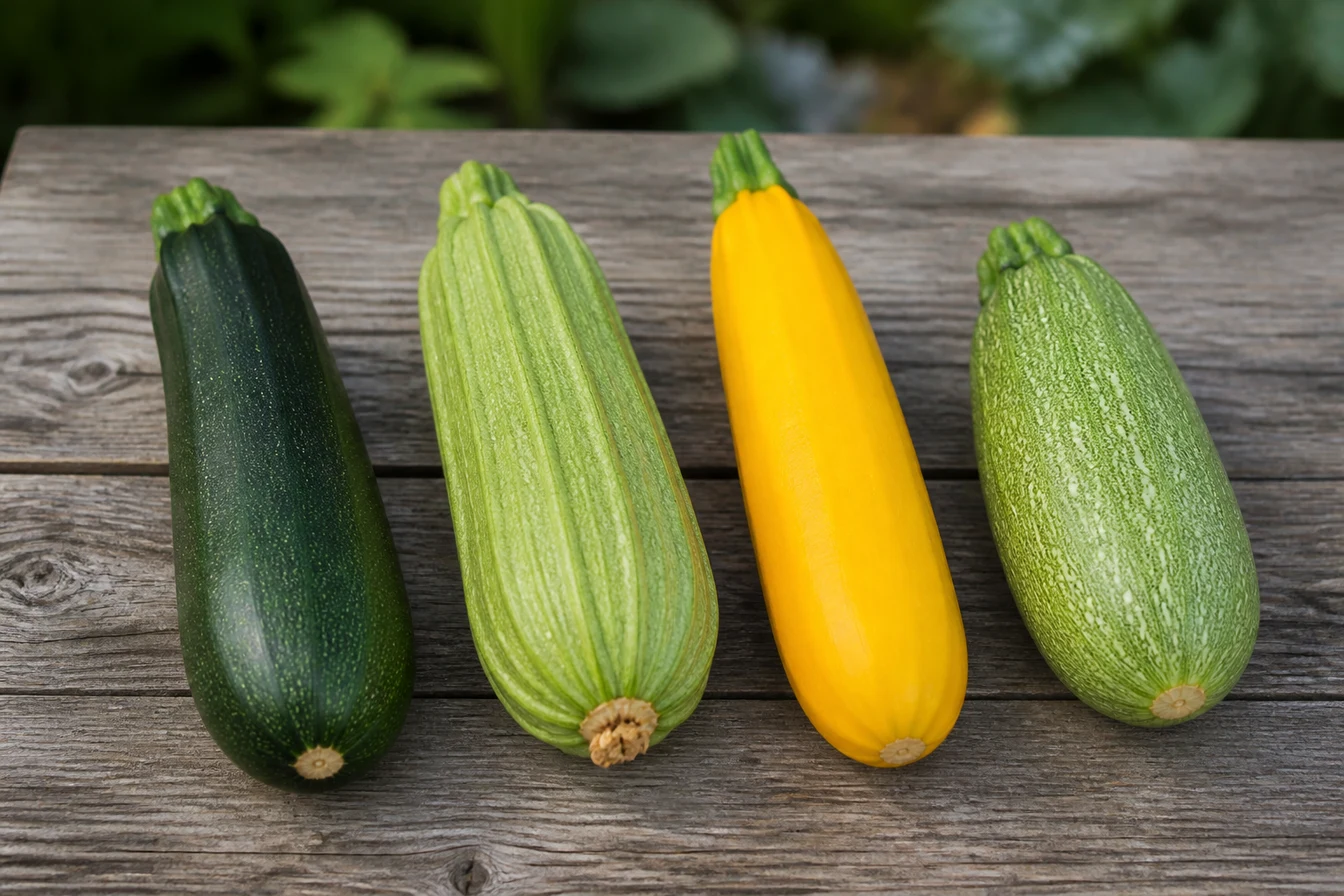
- Compact green type
- Best when bed width or container space is the main limit
- Ribbed Italian type
- Best when texture and flavor matter more than maximum compactness
- Yellow-fruited type
- Best when easy harvest visibility is useful
- Resistant cultivar
- Best where a named local disease repeatedly ends the crop early
When Should You Plant Zucchini?
Plant zucchini after frost danger has passed and the soil has warmed to at least 60 to 65°F because cold soil delays germination and leaves a seed vulnerable to decay before a vigorous root system forms.
Use soil temperature and your local frost history instead of a zone number alone because two gardens in the same hardiness zone can warm weeks apart due to elevation, slope, soil type, and spring weather.
Direct sowing is simple because the large seed establishes where the plant will finish the season. Sow about 1 inch deep and follow the packet spacing for that cultivar, which is commonly 24 to 36 inches between bush plants.
A young transplant can shorten the wait in a cool region, but an overgrown transplant often stalls after planting. Choose a plant with two or three true leaves, keep the root ball intact, and set it out only when outdoor soil is warm.
A second sowing can extend harvest where enough frost-free weather remains. Count backward from the average first frost using the packet's days to maturity, then leave extra time because late-season light and temperature may slow growth.
Row cover can protect seedlings from cool wind and early beetles. Remove it when female flowers begin to open unless you plan to uncover and hand-pollinate every morning.
- Moisten the bed before sowing so the seed does not sit in a dry pocket.
- Plant the seed about 1 inch deep, then press the soil gently rather than packing it hard.
- Keep the seed zone evenly damp until the seedling emerges.
- Cut off extra seedlings after true leaves appear so the remaining root is not pulled or torn.
How Much Sun and Space Does Zucchini Need?
Give zucchini at least 6 to 8 hours of direct sun because strong light builds the leaf area that supports repeated flowering and rapid fruit growth, while a shaded plant often becomes broad and leafy without producing well.
Plan around the mature crown rather than the small transplant. A common bush plant needs roughly 24 to 36 inches between its center and the next large crop, with more room when the packet describes a vigorous or semi-vining habit.
Crowded leaves hold humid air around the crown and dry slowly after rain, which favors foliar disease and makes the first white colonies of powdery mildew harder to see.
Crowding also hides flowers from bees and from the gardener trying to hand-pollinate, so leave a path or open side where you can reach the crown without snapping hollow leaf stalks.
In a very hot climate, brief late-afternoon shade can reduce stress after the plant has received strong morning and midday light. Do not trade away most of the day's sun simply because leaves droop for a few hot hours.
A plant that wilts in afternoon heat but recovers after sunset may be losing water faster than its roots can replace it. Check the soil before adding water because wet roots, stem injury, and squash vine borer can also produce wilt.
Container growing works best with a compact cultivar in a pot at least 20 to 24 inches wide, with generous soil volume and several clear drainage holes. A small pot can dry between morning and afternoon even when an in-ground bed remains moist.
A stake or sturdy support can lift leaves and reduce the horizontal footprint of a compatible cultivar. Support does not reduce the plant's need for sun, root volume, water, or access to flowers.
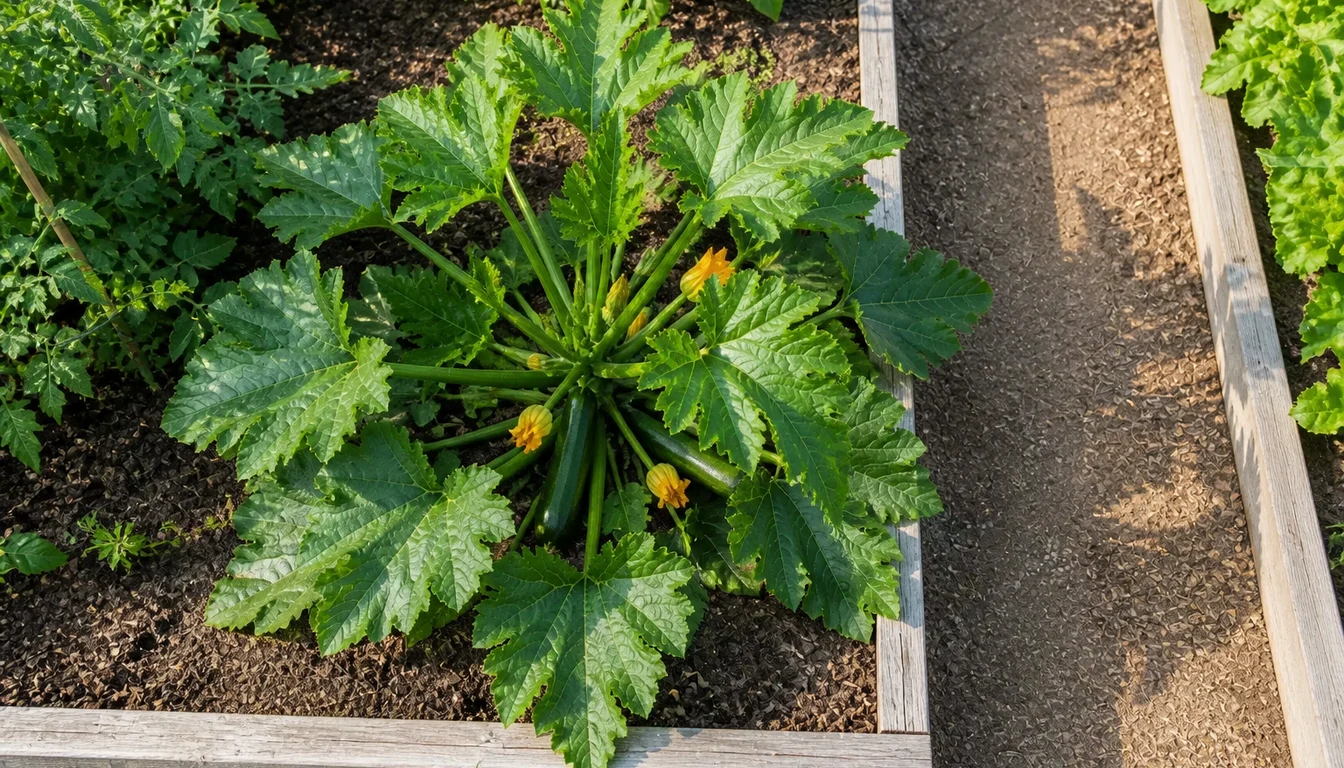
- Watch where a fence, corn row, or trellis will cast shade in midsummer.
- Measure spacing from the crown, not from the outer edge of the planting hole.
- Leave one open side for harvesting and inspecting flower bases.
- Place irrigation before leaves cover the soil and hide the hose.
How Often Should You Water and Feed Zucchini?
Water zucchini when the upper inch or two of soil is becoming dry, then wet the root zone deeply instead of following a fixed daily schedule that ignores rainfall, heat, mulch, soil texture, plant size, and containers.
Summer squash has a relatively shallow root system and grows fruit quickly. Sharp swings between dry and saturated soil interrupt water and calcium movement, which can leave fruit misshapen or dark at the blossom end.
A starting range of 1 to 2 inches of water per week works for many in-ground squash beds, including rainfall, but use a finger, trowel, or soil probe to confirm that water reached below the surface instead of stopping in the mulch.
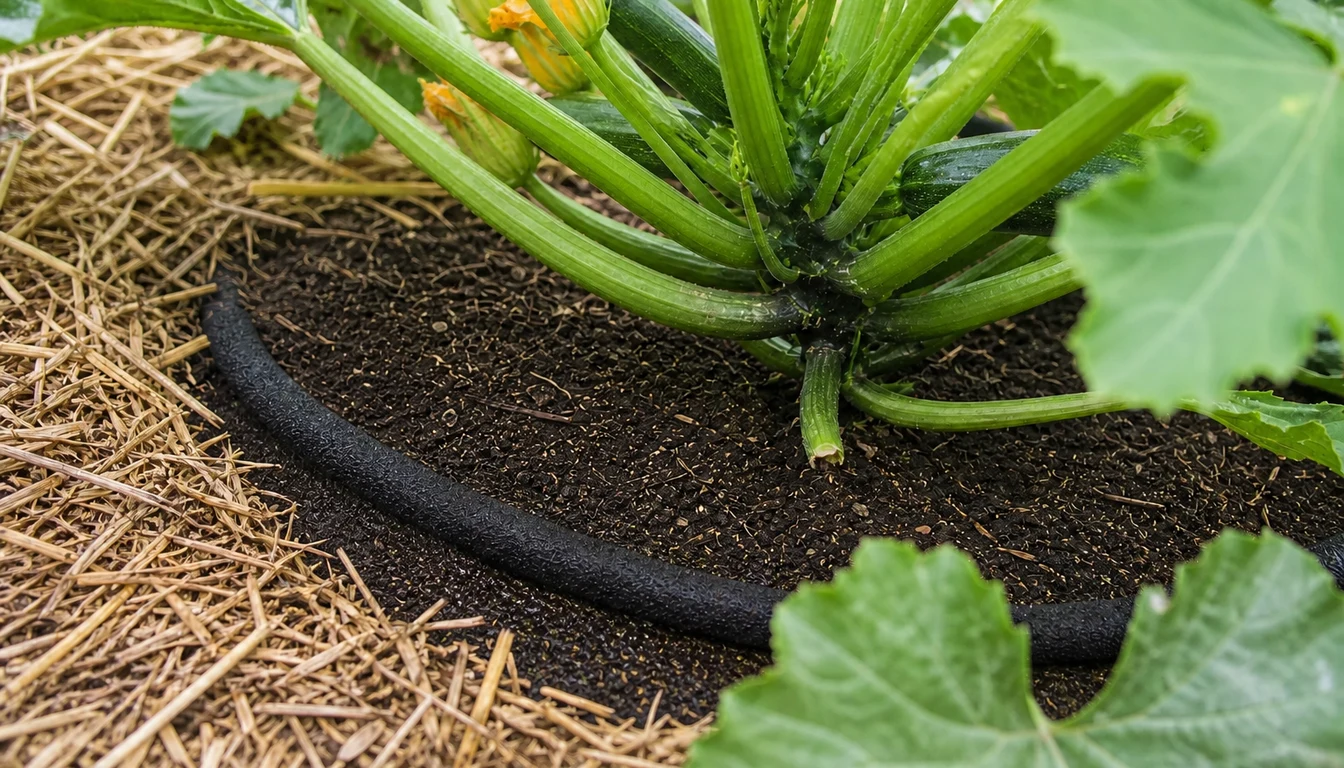
Aim drip tubing, a soaker hose, or a gentle hose stream at the soil. Keeping foliage dry does not prevent every disease, but it avoids adding long periods of leaf wetness and delivers water where roots can use it.
Mulch reduces evaporation once the soil is warm. Keep straw or shredded leaves a little away from the crown so you can inspect the stem base and so damp material does not conceal feeding damage.
Container plants need a separate check because drainage and small soil volume make them change faster. Water until excess drains from the bottom, then wait for the upper mix to begin drying rather than leaving the pot constantly saturated.
Grow zucchini in fertile soil that drains after rain, ideally near pH 6.0 to 6.8. Compost can improve structure and water holding, but the amount to add depends on the starting soil rather than a universal percentage.
Use a soil test when available and follow the chosen fertilizer label. A balanced preplant application may be enough in amended soil, while a light side-dressing around early fruit set can help where the test or plant growth shows a need.
Extra nitrogen is not a cure for every pale leaf or dropped flower. It can produce a dense canopy with fewer flowers, while persistent yellowing can also come from wet roots, damaged stems, compacted soil, or disease.
- Dry soil below the mulch
- Water the root zone deeply and check how far moisture penetrates
- Wilt that remains after a cool night
- Inspect crown firmness, roots, and the stem base before watering again
- Pale older leaves
- Check drainage and soil fertility before adding nitrogen
- Huge leaves with few flowers
- Review shade and excess nitrogen rather than adding more feed
- Dark sunken blossom end
- Stabilize moisture and protect roots while damaged fruit is removed
Why Is Your Zucchini Flowering Without Fruit?
Start by looking behind each zucchini flower. A male flower sits on a plain narrow stem, while a female flower has a small swollen ovary that already resembles a tiny squash.
Because young plants often produce male flowers before female flowers, those first blooms naturally fall and a week of male-only flowering does not prove the plant is sick.
Once female flowers appear, watch the ovary behind them because one that stays small, turns yellow, and shrivels usually indicates failed or incomplete pollination rather than a fruit that needs more fertilizer.
Squash flowers open in the morning and last for only one day. Cool rain, extreme heat, few visiting bees, or insecticide exposure during bloom can reduce the pollen that reaches a receptive female flower.
Hand-pollination is useful when both flower sexes are open but bees are scarce. Early in the morning, transfer pollen from the center of a freshly opened male flower to the stigma inside a freshly opened female flower with a clean small brush.
Do not assume that every soft young fruit simply lacked pollen. Wet rot can spread from a spent blossom into the ovary and may develop fuzzy growth or small dark pin-like structures on tissue that collapses rapidly.
If hand-pollinated ovaries still abort, check the rest of the plant and the recent weather. Temperatures above about 95°F, cool nights, uneven moisture, root injury, and excessive nitrogen can all interfere with fruit set or early growth.
Keep flowers accessible and avoid spraying open blooms when pollinators are working. A healthy plant does not need every flower to become a squash, but repeated failure of clearly female flowers deserves a morning inspection.
This is a male flower and it will fall without making fruit.
Check whether both flower sexes opened together and whether bees were active.
Incomplete pollination is likely when one side develops better than the other.
Remove the rotting tissue and reduce splash or prolonged blossom wetness.
When Is Zucchini Ready to Harvest?
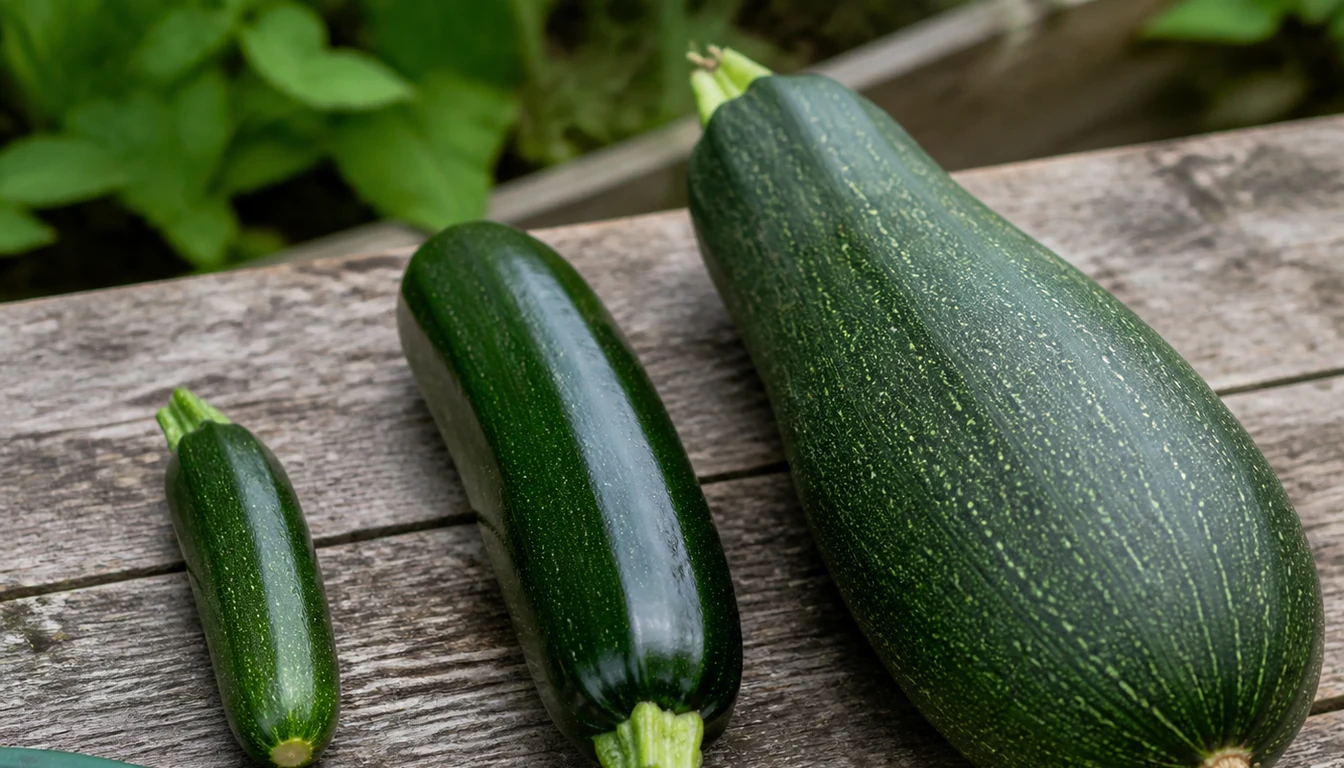
Harvest zucchini while the skin is glossy and tender, before the rind hardens and the seeds enlarge, and treat size as a useful cue only when it matches the cultivar you planted.
Many elongated green cultivars are at their best around 6 to 8 inches long and no more than about 2 inches thick. Round, ribbed, baby, and specialty types may have a different ideal size printed on the packet.
Fruit may reach harvest size 4 to 8 days after a flower opens, so once production begins, look under every large leaf daily or at least every other day.
Do not twist a fruit from the plant because the pull can split a hollow stem or disturb nearby flowers. Wear gloves and long sleeves if the prickly leaf stalks irritate your skin.
An oversized zucchini is often seedy and less tender, but it may still be useful after peeling and removing the seed cavity. Cut it promptly so the plant can direct resources toward younger fruit.
Frequent harvest supports continued flowering and gives you fruit that stores and cooks better. Stop chasing production when frost kills the plant or disease leaves too little green canopy to support new squash.
- Look for glossy skin that still marks easily with a fingernail.
- Check the cultivar's preferred length and diameter instead of waiting for maximum size.
- Lift leaves gently because a mature fruit often rests behind the crown.
- Cut the stem with a clean knife or pruners and leave a short handle on the fruit.
What Is Damaging Your Zucchini Plant?
Diagnose zucchini damage by its location and timing before choosing a treatment because a broad leaf canopy can wilt for several unrelated reasons, while the evidence that separates them may sit at the crown, under a leaf, or on the fruit.
First check whether the plant recovers after the evening cools because temporary afternoon droop can occur in heat, while a plant that remains collapsed the next morning needs a soil-moisture check and a close inspection of the stem base.
Squash vine borer often leaves an entry wound and coarse sawdust-like frass near the base of a stem. One branch may wilt before the whole crown fails because a larva is feeding inside the hollow tissue.
Squash bugs usually leave a different trail. Look under leaves for tight groups of copper-colored eggs, then inspect stems and leaf undersides for gray nymphs or flat brown adults.
White leaf markings need a surface check. Natural silver mottling lies flat inside the leaf tissue and often follows the veins, while powdery mildew forms raised dusty colonies that expand across the surface.
A young fruit that yellows and shrivels soon after flowering points toward failed pollination. A fruit with a dark sunken patch at the blossom end points toward disrupted water and calcium movement, often after moisture swings or root injury.
Use the focused diagnosis for the evidence you find instead of applying one spray to every symptom. The separate pages for powdery mildew, squash vine borer, and blossom-end rot cover the treatment and keep-or-remove decision in detail.
Prevention starts with rotation away from last year's cucurbit bed, open spacing, steady soil moisture, and prompt removal of dead vines. Row cover can exclude early insects only while its edges are sealed and flowers do not need visiting bees.
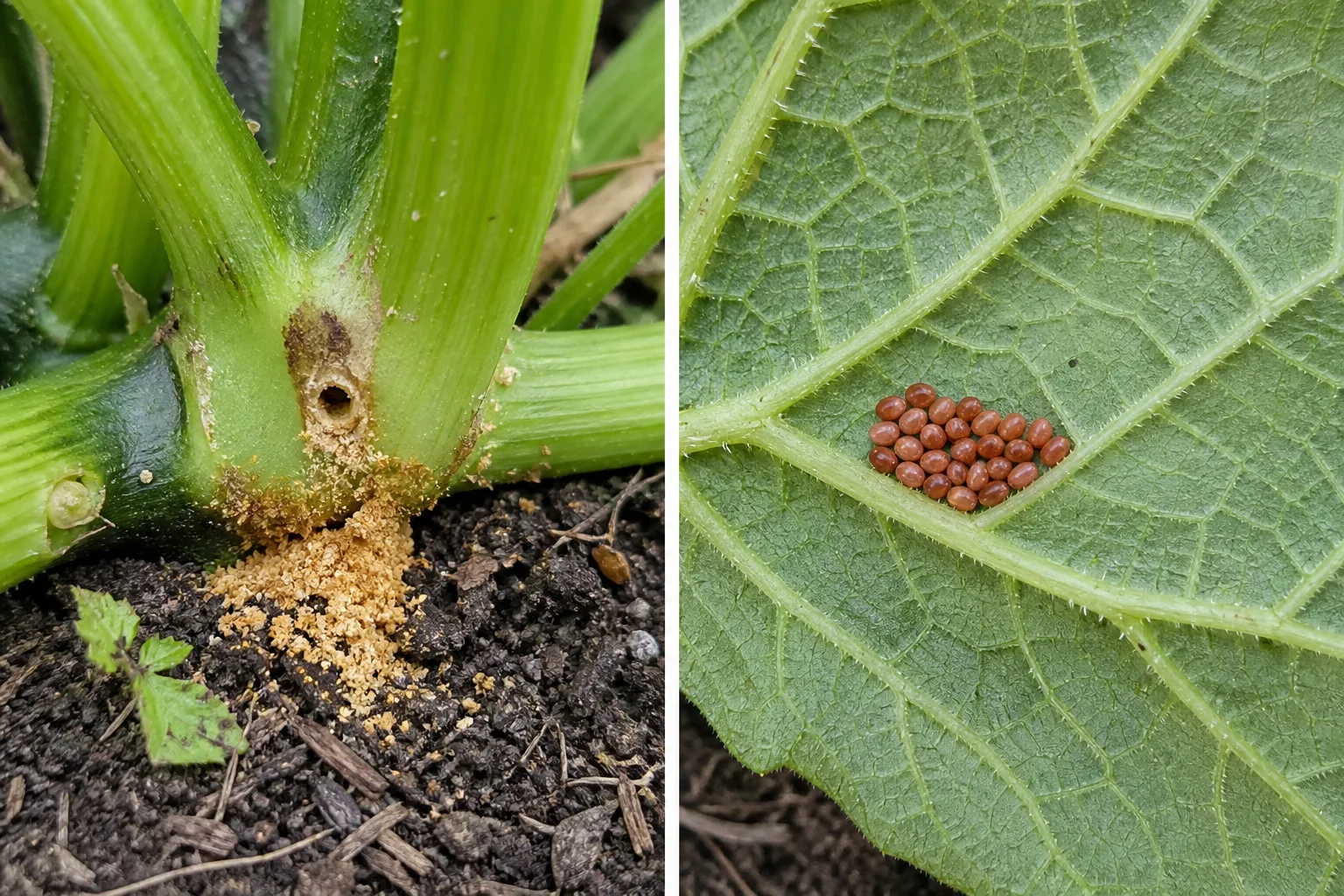
Inspect for squash vine borer inside the affected stem.
Remove squash bug eggs before the nymphs begin feeding.
Confirm powdery mildew and protect the remaining clean canopy.
Check flower sex, bee activity, and morning pollination.
Remove damaged fruit and stabilize the root-zone moisture.
Can You Eat a Bitter Zucchini?
Do not eat zucchini that tastes extremely bitter because the bitter compounds are cucurbitacins, and a high concentration can cause severe stomach cramps or diarrhea.
Heat, drought, sharp temperature changes, uneven watering, or poor fertility can contribute to mild bitterness. Extreme bitterness throughout fruit from one plant is unusual and is not something better seasoning or cooking makes safe.
Cross-pollination does not change the flesh of a zucchini already growing this season, but pollen can change the genetics inside saved seed and produce plants unlike either parent next year.
Do not save seed from a plant that produced extremely bitter fruit. Buy reliable seed for the next crop and remove volunteer squash when its identity or seed history is uncertain.
Frequently Asked Questions
How many zucchini plants do I need?
One or two healthy plants are enough for many households because harvest can arrive every day or two. Add more only when you have the space and a plan for the extra fruit.
Can I grow zucchini in a container?
Yes, choose a compact cultivar and a pot at least 20 to 24 inches wide with generous soil volume and open drainage holes. Check moisture daily in hot weather because the container can dry much faster than a garden bed.
Why does my zucchini have flowers but no fruit?
Early flowers are often male and naturally fall. Once female flowers with tiny ovaries appear, check whether a male flower is open at the same time and whether bees are visiting in the morning.
Should I remove male zucchini flowers?
You can harvest a few male blossoms for cooking, but leave enough open blooms to supply pollen. Do not remove female flowers unless you also want to remove the small fruit behind them.
How often should I pick zucchini?
Check the plant daily or every other day once harvest begins. Fruit can grow from a flower to cooking size within several days, especially in warm weather.
Sources & References
- Summer Squash, Illinois Extension
- How to Grow Summer and Winter Squash in Your Garden, Utah State University Extension
- Planting, Spacing, and Thinning Cucurbits, Utah State University Extension
- Zucchini Plants Flowering But Not Producing Fruit, University of New Hampshire Extension
- Bitterness in Cucumbers and Zucchini, Nebraska Extension
- Summer Squash, University of Florida Gardening Solutions
- Are Volunteer Squash Toxic?, Oregon State University Extension
- Toxic and Non-toxic Plants: Acorn Squash | ASPCA
- Toxic and Non-toxic Plants: Zucchini Squash | ASPCA
- Cucurbita pepo (Acorn Squash, Courgette, Ornamental Gourd, Patty Pan Squash, Pumpkin, Spaghetti Squash, Squash, Summer Squash, Winter Squash, Zucchini) | North Carolina Extension Gardener Plant Toolbox
Related Plants
Cucumber
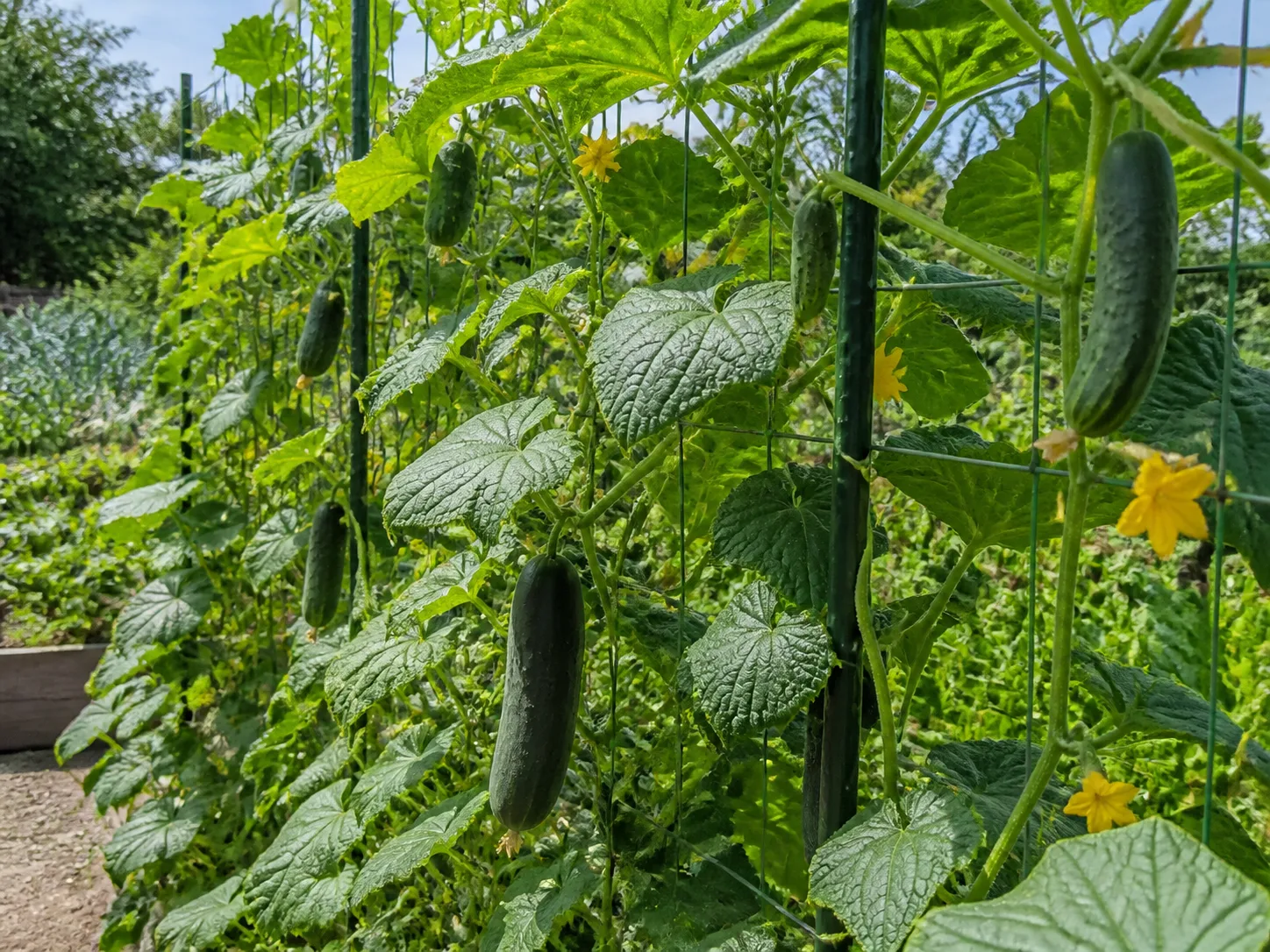
Vining cucurbit that climbs trellises and prefers similar warmth and care.
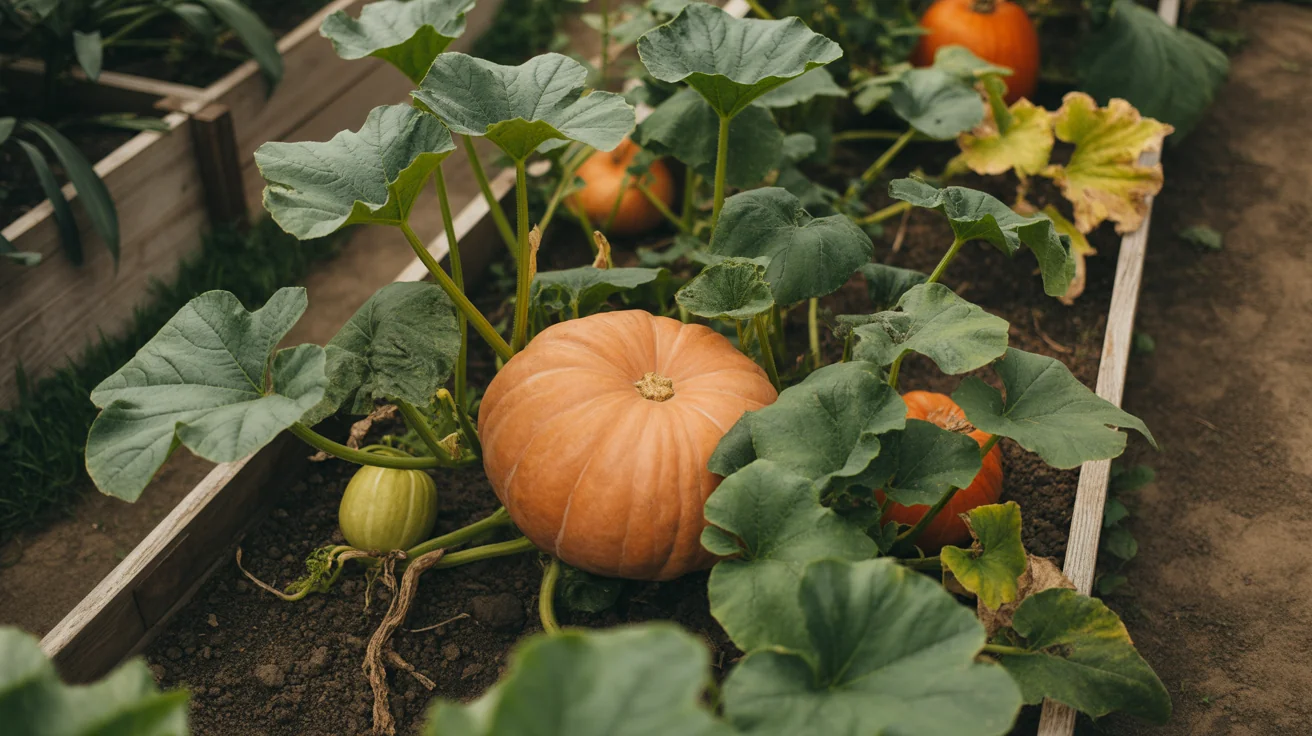
Pumpkin
Sprawling winter squash with longer season needs than zucchini.
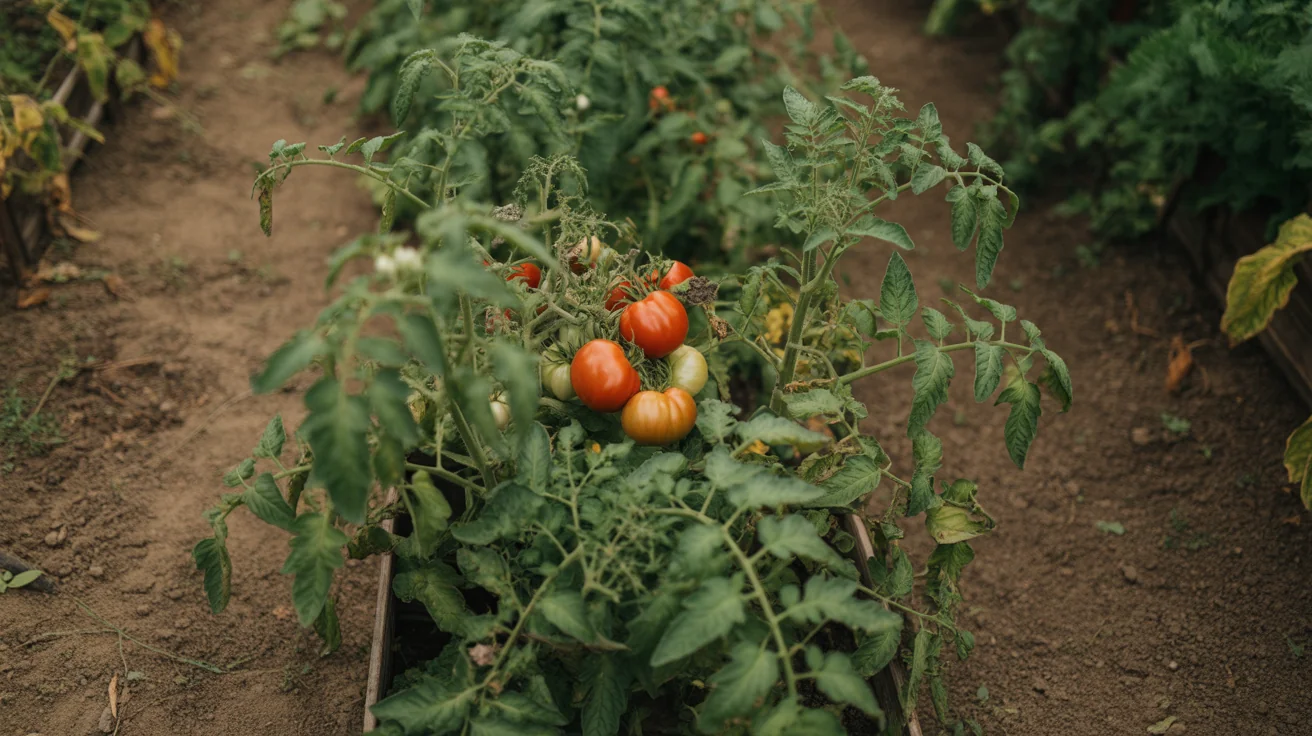
Tomato
Another summer staple that pairs well in beds and feeding schedules.
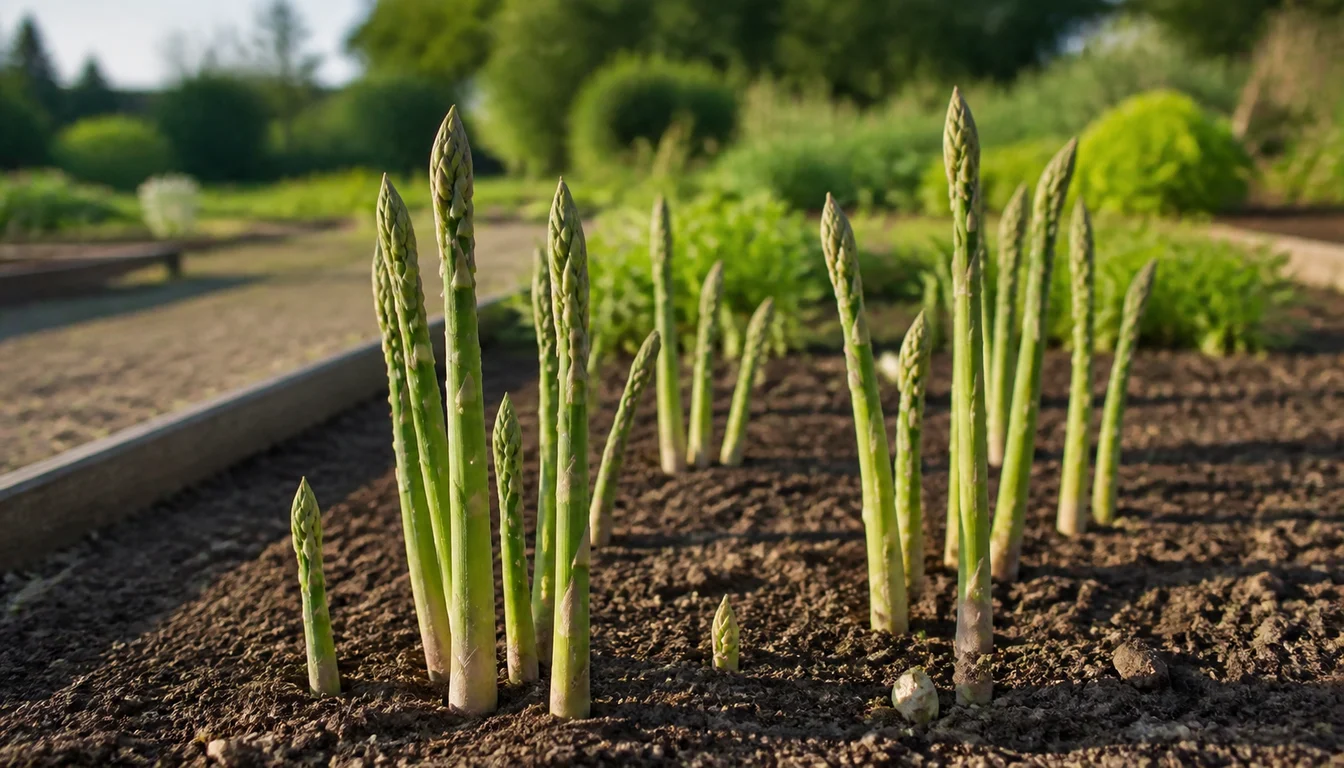
Asparagus
Asparagus rewards careful establishment with spring harvests for many years.
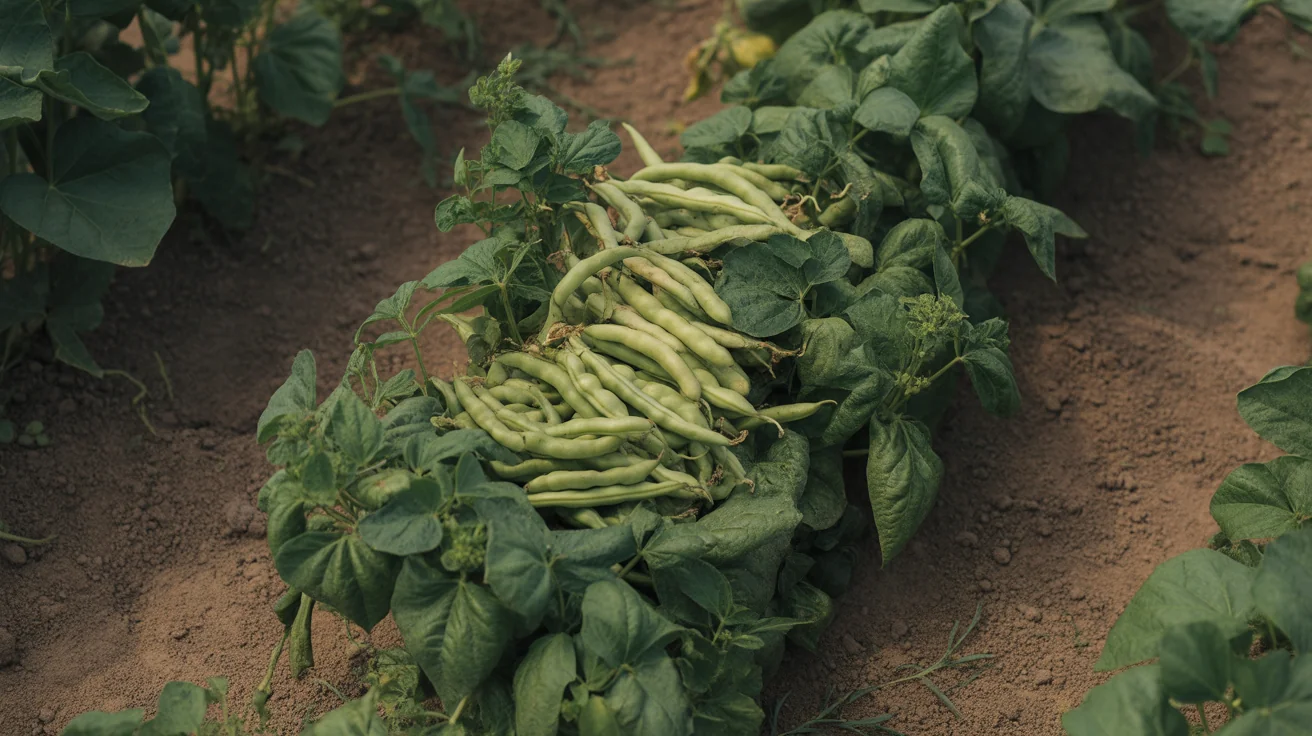
Beans
Two different plants share the name bean, one that stays knee-high and gives most of its crop inside two or three…
Beet
Beet care starts with one unusual fact. Each seed ball can make several seedlings, so the crop needs early thinning…