
Which Shade Trees Cool a Yard, and Where Should They Go?
Which trees throw enough crown to cool a patio or a west wall, what each one drops, and where the tree has to stand for the shadow to land on the hot surface.
At a glance
Two numbers decide a shade tree, and most people read the wrong one.
Height is on every nursery tag and it is not what covers a patio. Crown spread is, and a tree that reaches 70 ft with a 20 ft crown will never cool the surface you bought it for.
The second decision is where it stands. A shadow at four in the afternoon falls east and north of the trunk, so a tree planted directly north of a hot patio spends thirty years shading lawn nobody sits on.
This page answers both. Which trees carry a crown wide enough to be worth it, what each one drops on the ground underneath, and how to fix the position before anything is planted.
Which Trees Actually Cast Usable Shade?
Read the spread, not the height.
A surface is cooled by the width of the crown over it, so the number that decides whether a tree solves your problem is the one most tags print second.
Oak carries a 30 to 80 ft crown depending on species and is the long answer where a yard has the room. Red maple reaches 30 to 50 ft and fills in sooner on moist ground.
Sweetgum runs 40 to 60 ft wide at 60 to 75 ft tall, and river birch covers 30 to 60 ft.
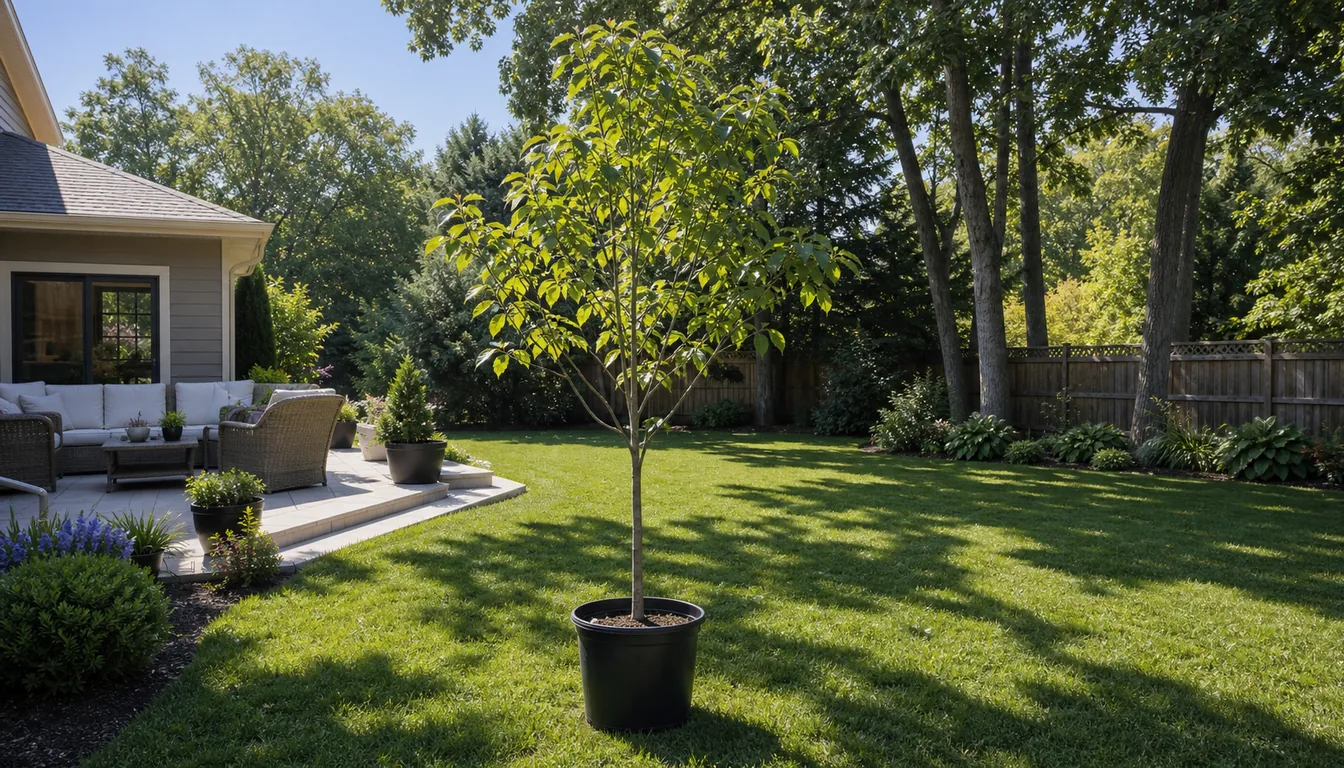
Every one of them wants full sun to build that crown, which is roughly six hours or more of direct light on the young tree. A shade tree planted into existing shade grows thin and one-sided, and it takes years to show you that.
Soil narrows the list faster than anything else. River birch wants a pH below 6.5 and sweetgum yellows above pH 7, so limey ground removes both before you have thought about anything else.
| Tree | Mature spread | What decides it | What it drops |
|---|---|---|---|
| Oak | 30-80 ft | Room, and patience for the first decade | Acorns |
| Red maple | 30-50 ft | Even moisture, especially when young | Light seed |
| Sweetgum | 40-60 ft | Soil below pH 7, and what is underneath | Spiky seed balls |
| River birch | 30-60 ft | Acid soil, damp ground | Small catkins |
| Ginkgo | Narrow young, broad with age | Time, and a named male form | Leaf fall only |
| Southern magnolia | 10-40 ft by cultivar | The cultivar name | Leathery leaf litter |
Southern magnolia is the one to check twice, because the 10 to 40 ft range means the cultivar decides whether you have bought a shade tree or a specimen.
Some trees sold for small gardens will never do this job at all. Redbud at 15 to 30 ft and serviceberry at 8 to 20 ft shade a bench, and if that is what the yard needs, the ornamental trees page is the better list.
Where Does the Shadow Actually Fall?
Mark the target before you choose a position for the tree.
Put a chair or an upturned bucket on the surface that feels worst, at the hour it feels worst. That mark is the thing the tree has to reach, and it converts a vague intention into a line you can stand on.
Now watch where the shade goes. Late in the afternoon a shadow runs east and north of the trunk, which means a tree planted due north of the patio throws its whole canopy onto lawn nobody uses.
The tree belongs west or southwest of the mark, offset rather than opposite it.
Morning sun and afternoon sun are different problems. An east-facing patio bakes for two or three hours after breakfast and then releases, while a west wall takes the worst four hours of the day and holds the heat into the evening.
Season moves the answer as well. Summer sun sits higher than spring sun, so a shadow you paced out in April is longer than the one that turns up in July when you actually want it.
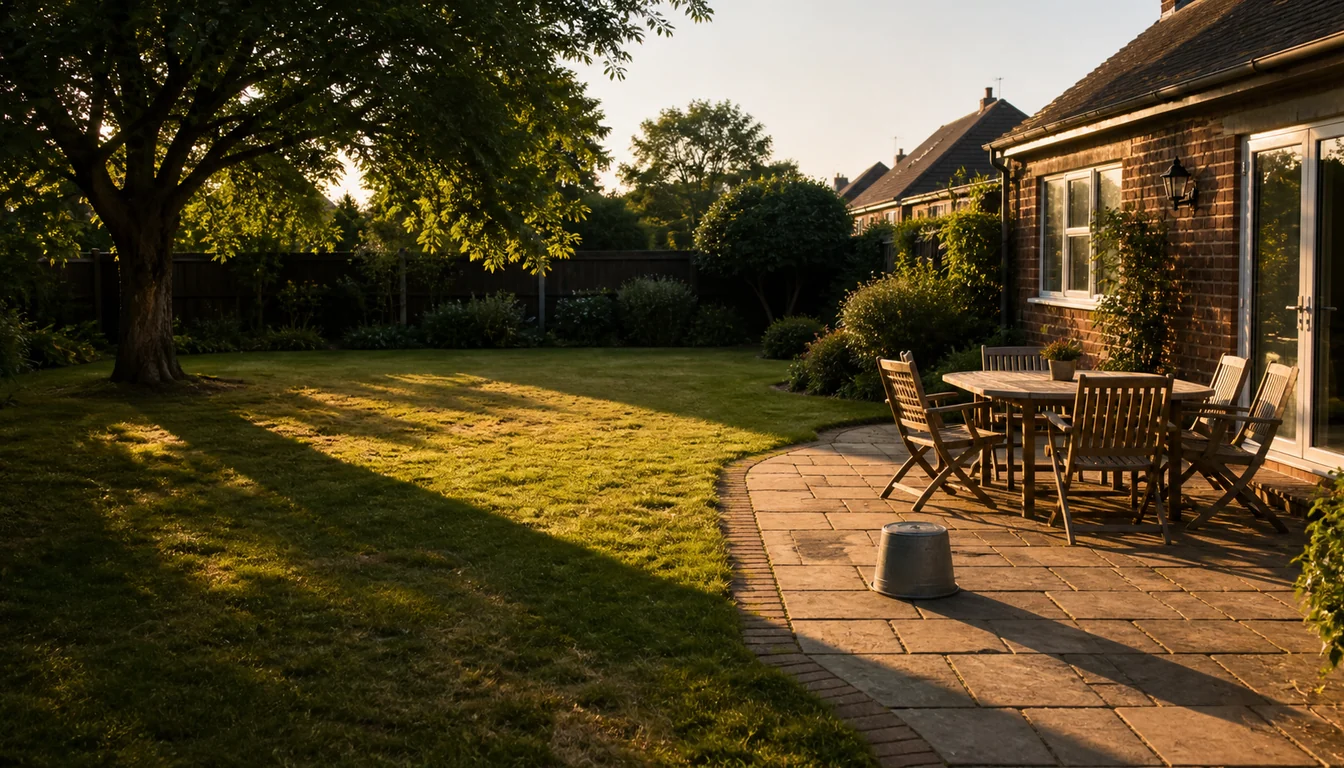
- Pick the hourChoose the time the yard is genuinely unusable, usually mid to late afternoon rather than noon.
- Mark the surfacePut a bucket or a chair on the spot and leave it there.
- Watch an existing shadowNote where a fence, a wall or a neighboring tree throws its shade at that hour, because that is the direction yours will go.
- Drive the stakePut it west or southwest of the mark at roughly half the mature spread, and live with it for a week before digging.
What Falls on the Ground Under It?
Nobody plans for this one and everybody lives with it.
A shade tree stands over the surface you are trying to make pleasant, which means whatever it sheds lands on exactly the place you sit.
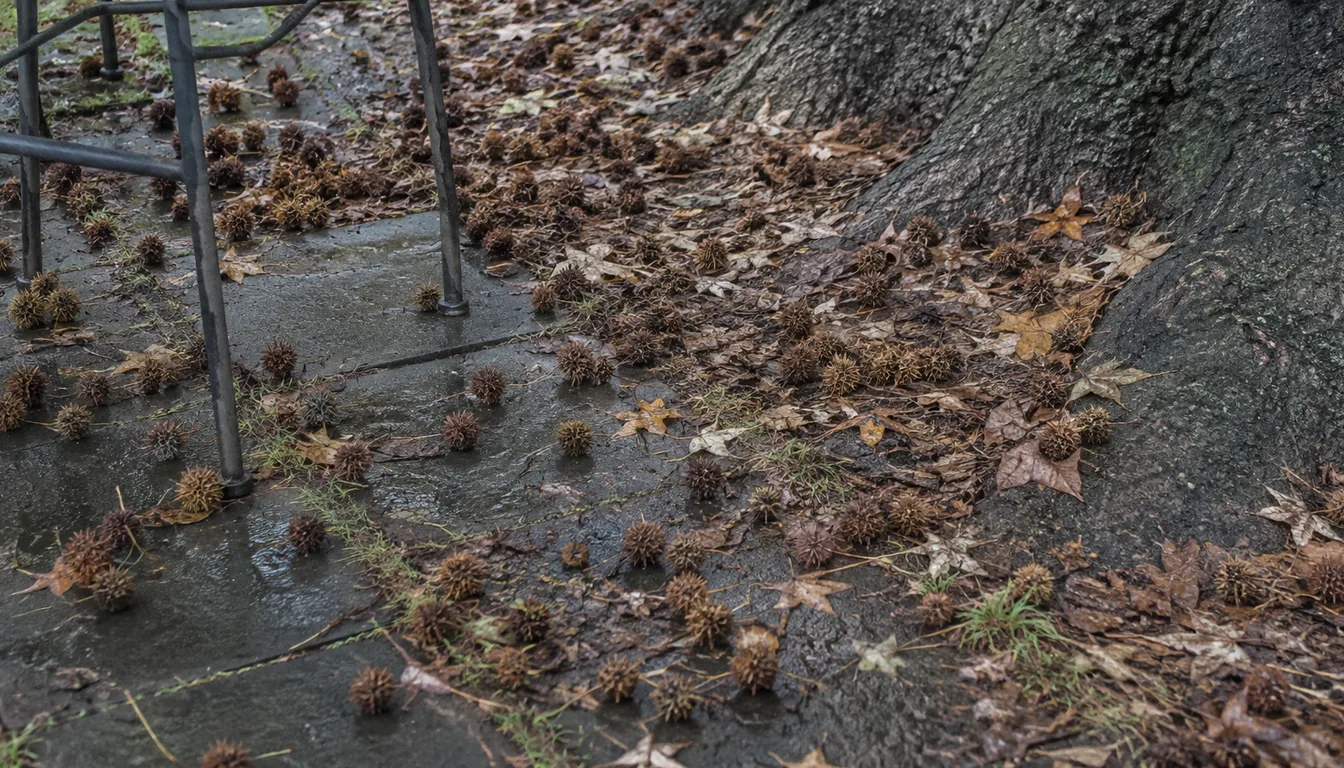
Oak adds acorns to a footprint measured in centuries, which is a minor thing over a mulched bed and a real one over a driveway where they roll underfoot.
Weeping willow drops something else entirely. The wood is soft enough that it sheds limbs in ordinary storms, so its litter arrives as branches rather than fruit.
The surface underneath changes every one of those answers. Litter on lawn is a mowing job, litter on paving is sweeping and something to skid on, and that is why the same tree can be right at the end of a garden and wrong twenty feet closer to the house.
How Much Ground Does the Tree Need Underneath?
The crown on the tag is a claim about the roots.
A tree cannot carry a 50 ft canopy on a root plate boxed in by paving, a foundation and compacted subsoil, so a position that cannot hold the roots will not deliver the shade either.
Some distances are not worth arguing with. Weeping willow roots range far past the canopy hunting water, which is why it wants 50 ft of clearance and why its problems arrive as plumbing rather than gardening.
- House or foundation: 50 ft for a willow, and the soil-moisture swing under a shrinking root plate matters as much as the roots.
- Septic field or leach line: 50 ft and more, because constantly moist nutrient-rich ground is exactly what roots hunt for.
- Drain or sewer lateral: 50 ft where the line is old clay or cast iron.
- Well head: 50 ft minimum, and check the local separation rule.
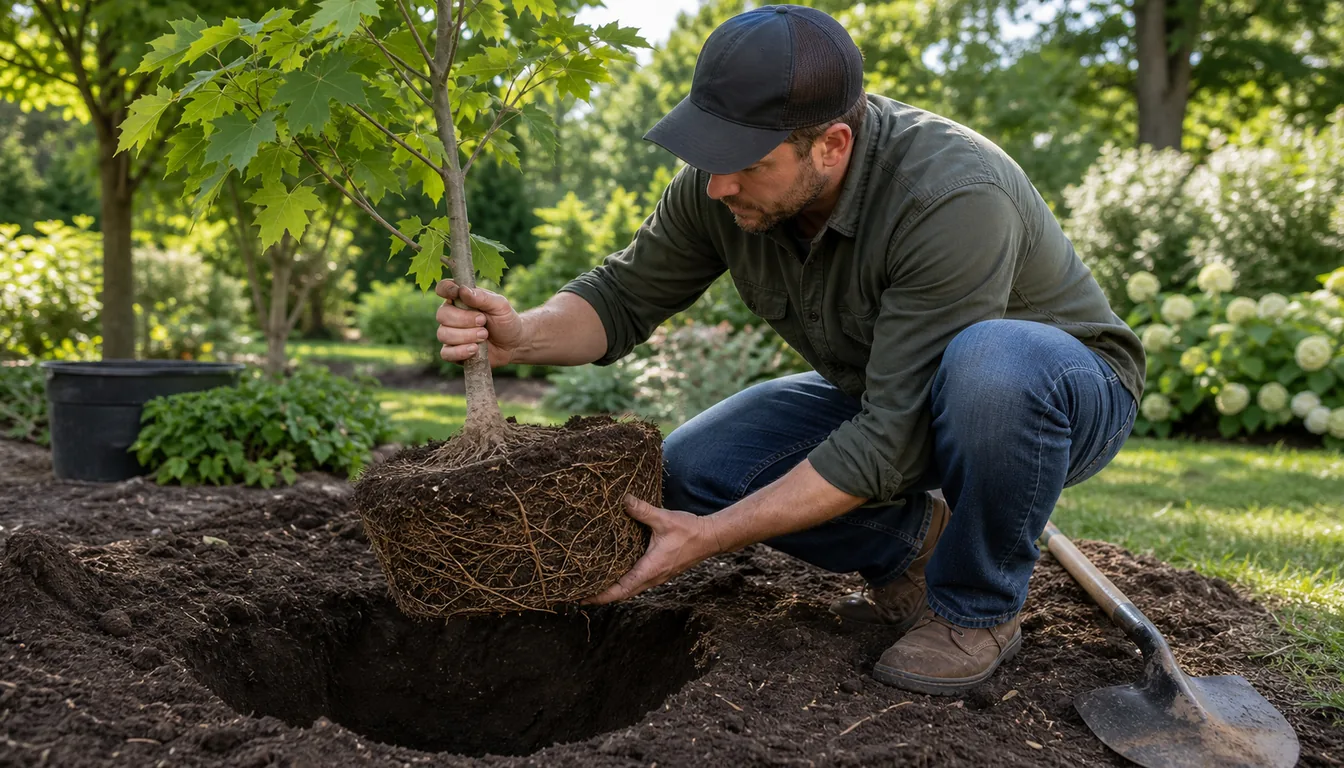
At planting, deal with the root ball. Roots that circled inside a nursery pot keep circling in open ground unless they are cut, and a tree that eventually strangles its own root plate fails a decade after anybody could connect the two events.
Dig wide rather than deep. The roots that hold a tree upright and feed it run outward in the top foot or two of soil, so a broad shallow hole matches what the tree is about to build.
Is a Fast-Growing Shade Tree Worth It?
Speed is real and it is not free.
Weeping willow puts on 3 to 8 ft a year and stands 30 to 50 ft within about fifteen years, which is why it looks like a bargain. It is also usually in decline by thirty, so the tree you planted for the patio may not outlast the patio furniture twice over.
Oak goes the other way. It invests below ground before it looks like anything above it, disappoints for years, and then outlives everything planted at the same time.
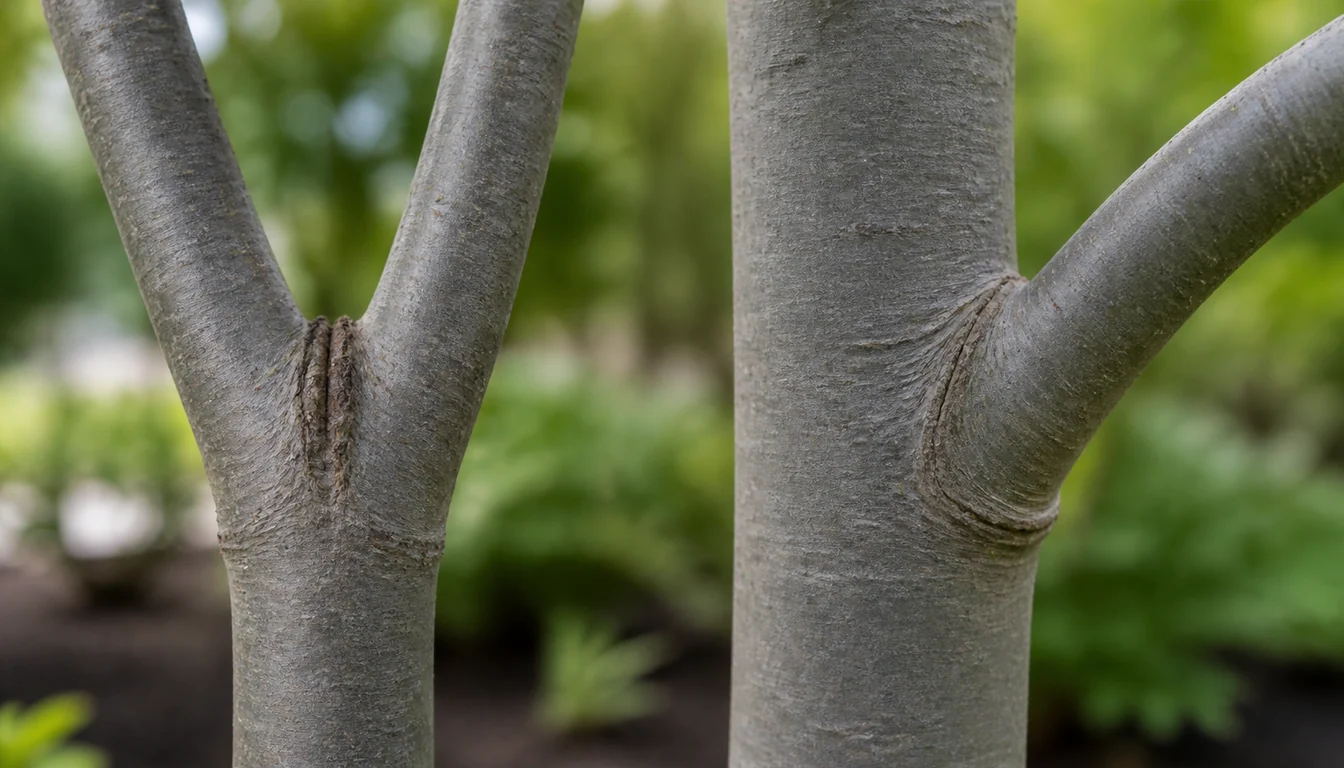
What actually separates a tree that holds from one that fails is the shape of its branch unions. A tight narrow V with bark pinched down inside it splits under the weight of a mature canopy, and a wide union with a raised collar of bark around the join holds.
That is decided early. The formative cuts that keep the good unions are made in the first few years, when they are small cuts on branches you can still read from the ground.
Speed is the right call when the shade is needed within a decade and the position is well away from anything a falling limb would land on. It is the wrong call beside a house.
What Can Still Grow Under a Shade Tree?
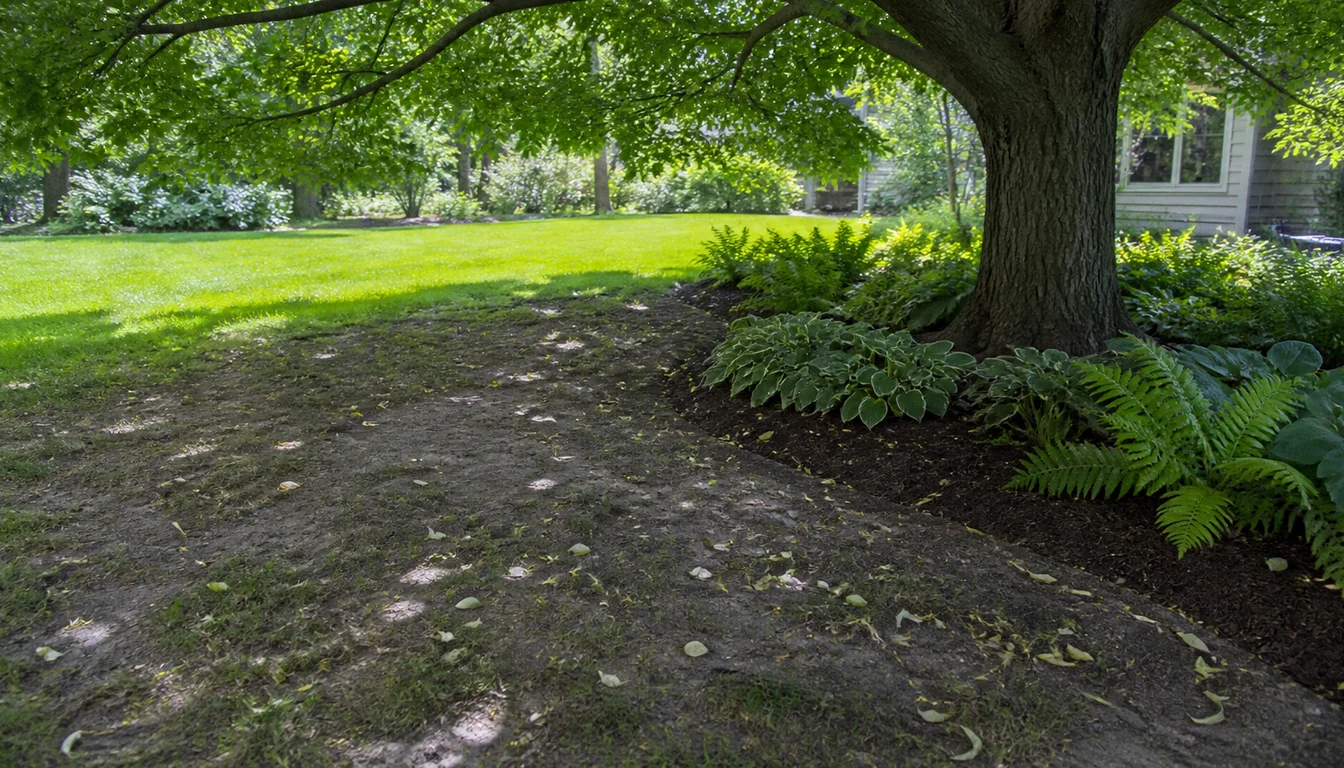
The lawn tells you before the tree does.
Grass that thins along one edge and wears to bare soil is the shade line moving, and it shows up a season or two before the turf gives up completely.
Ground under a mature canopy is dry as well as dark. The tree takes the water first, so root competition rather than light is usually what finishes the grass, and that is why reseeding the same strip keeps failing.
Shade tolerance is survival rather than performance. A plant listed for shade will hold on under a canopy at a fraction of the density, bloom and growth it manages in better light, and a gardener expecting the catalog picture reads that as a failure.
Carry a mulched bed out toward the drip line instead. It ends the mowing conflict and the mower damage to surface roots in the same decision, and it is far easier to do while there is still grass to remove than after two seasons of mud.
Hostas and ferns hold that ground where turf cannot. Which ones, and in what combination, belongs with the shade perennial list rather than here.
How Soon Do You Know the Tree Is in the Wrong Place?
Go and stand on the mark.
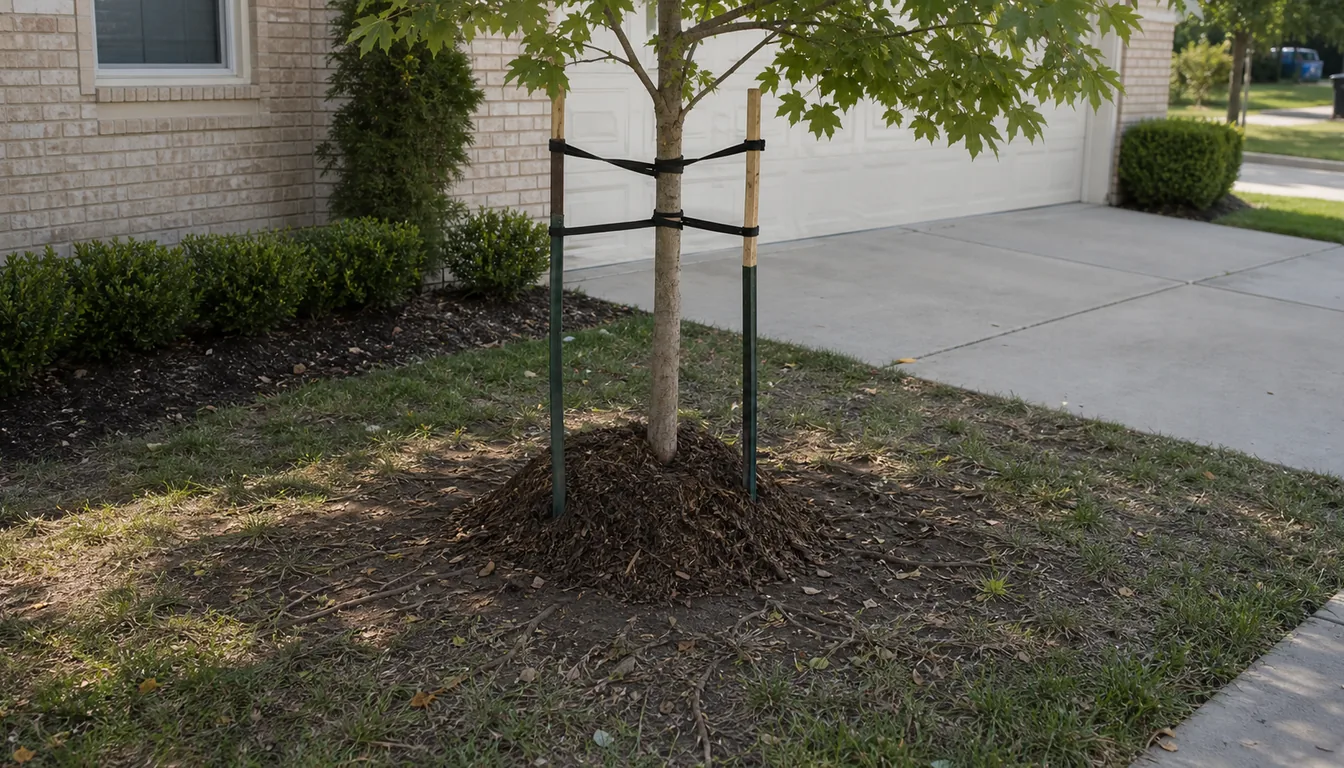
In the second and third summers, at the same hour you originally chose, check whether the shadow is arriving. The tree is still small enough to lift at that point, which is the whole reason for checking then rather than later.
- The shadow at the chosen hour is moving toward the mark rather than away from it
- The trunk has room on both sides for the mature spread on the tag
- Nothing hard has been built inside the future root plate since planting
A young tree squeezed into a narrow strip between a wall and a driveway has both problems at once, a root plate that cannot expand and a shadow that falls on paving. Neither improves with time.
Moving a young tree costs a season. Moving a mature one costs the tree.
Quick Tips
- Photograph the yard from the same spot at the same hour once a month through a summer. The set shows how far the existing shade already moves, which is the cheapest way to learn the geometry before committing a tree to it.
- Ask the nursery for the mature spread rather than the height. A supplier who quotes only height is selling you the number that does not cool anything.
- Check overhead before you dig. A crown that will reach 50 ft wide has to share that space with any service line running above the position.
Recommended Plants
5 trees worth considering.
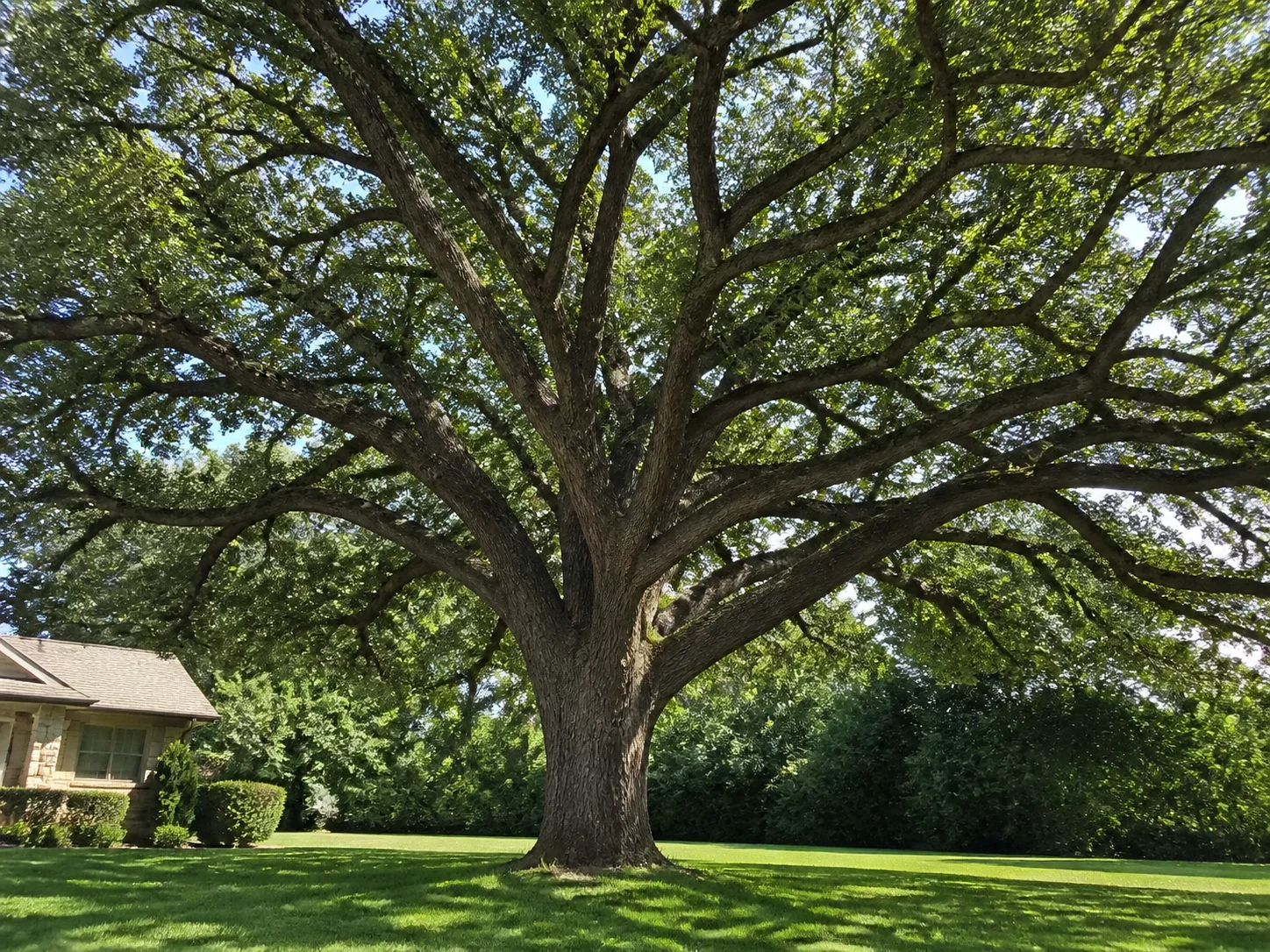
Oak Tree
Oak trees are long-lived shade trees whose mature size, species group, roots, and disease risks must fit the site.
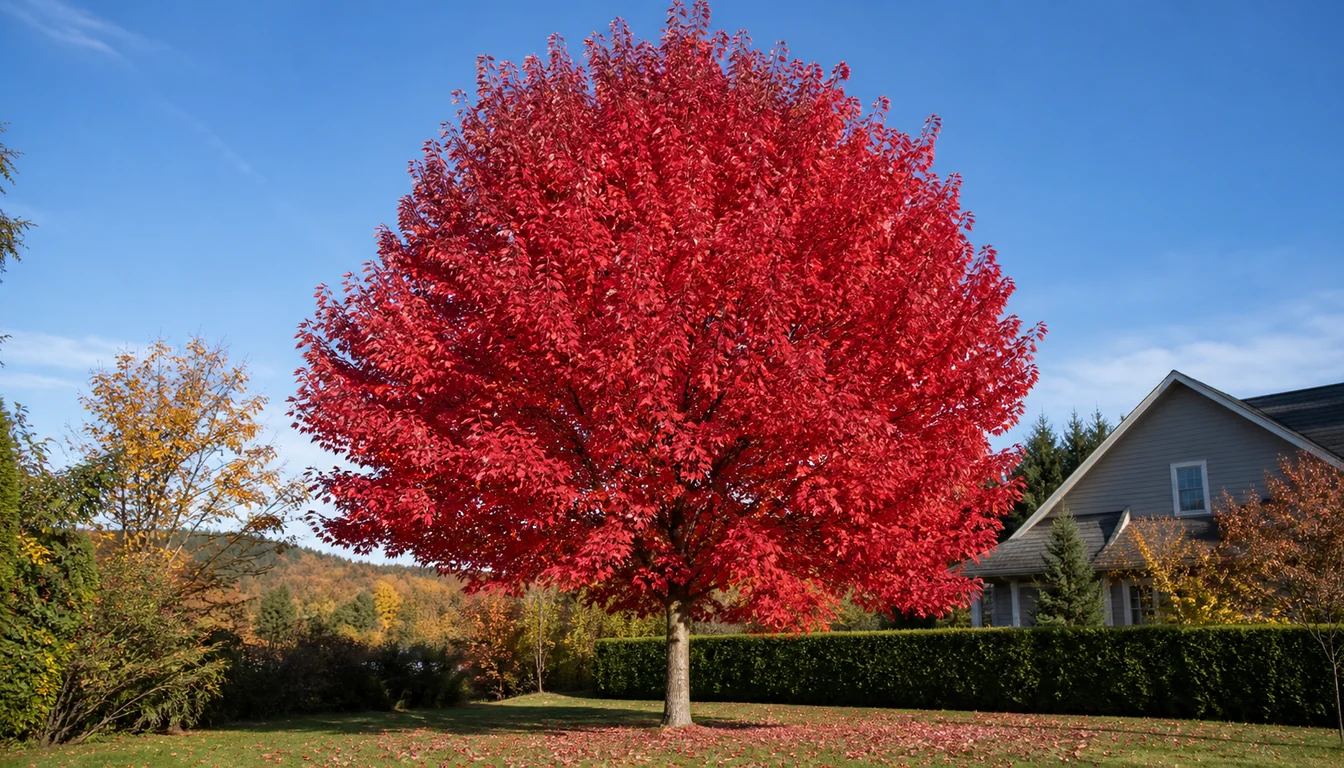
Red Maple
Red Maple is one of the quickest ways to grow a broad native shade canopy, especially on moisture-holding soil.
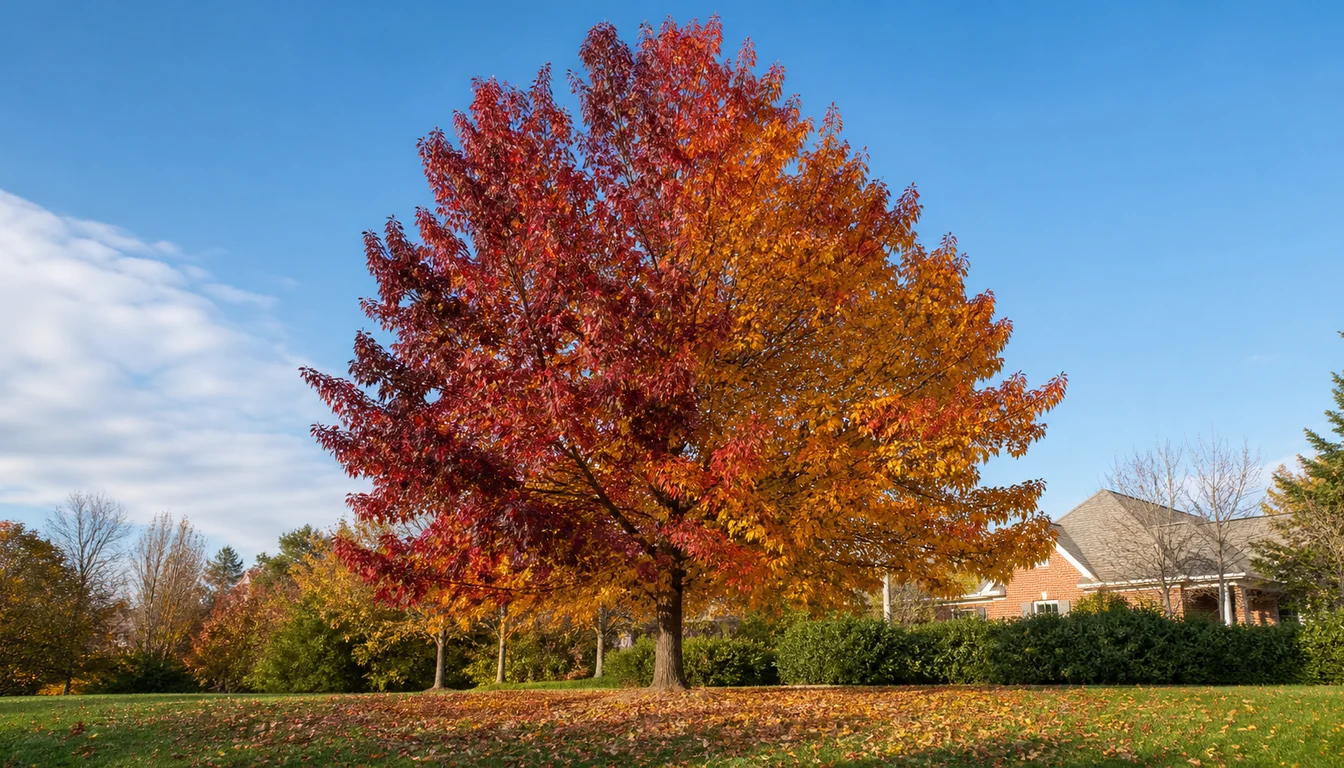
Sweetgum
Sweetgum (Liquidambar styraciflua) is a fast 60 to 75 ft native shade tree with star-shaped leaves and the best…
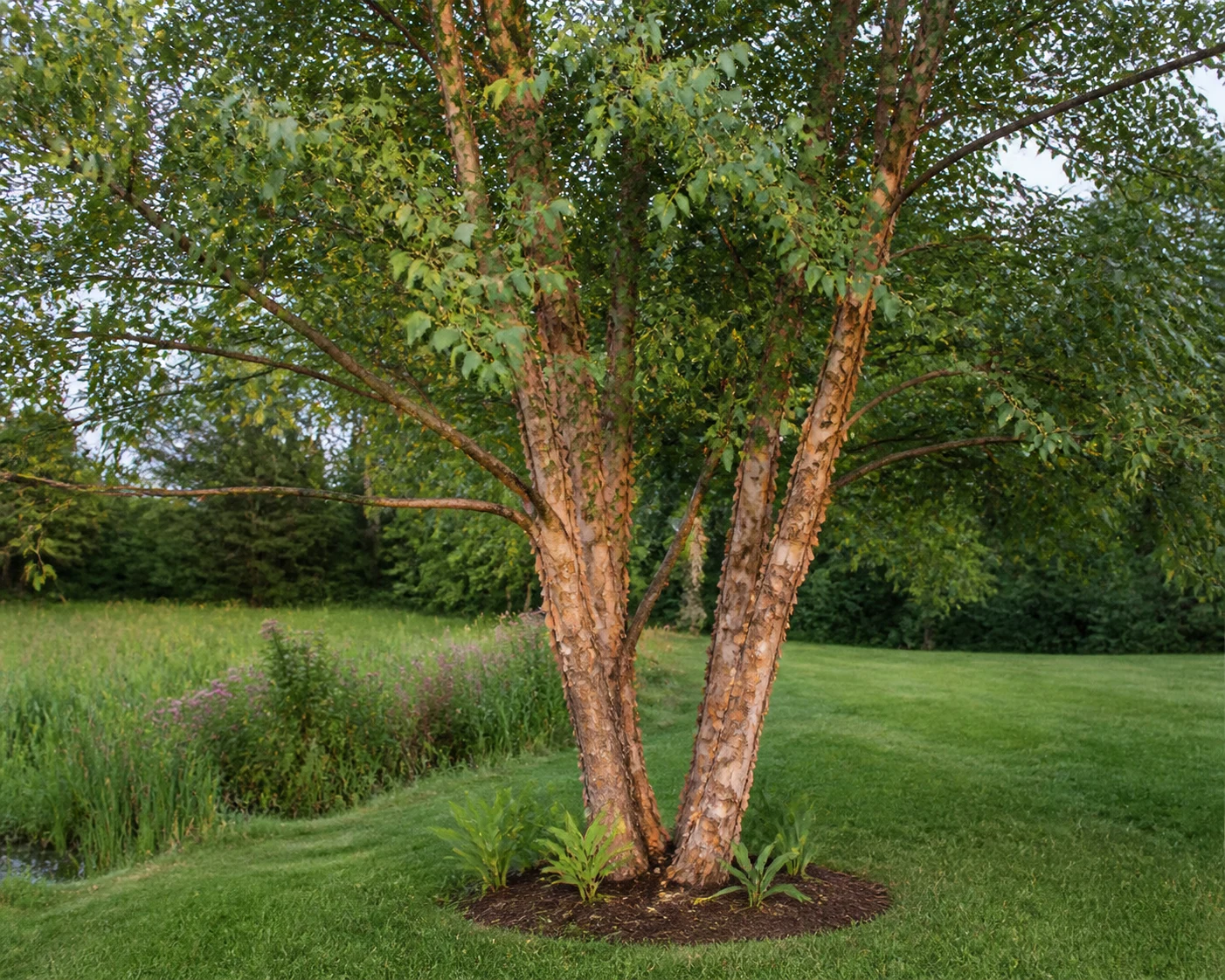
River Birch
River Birch (Betula nigra) is the birch that survives heat, humidity, and heavy wet clay, and its peeling salmon bark…
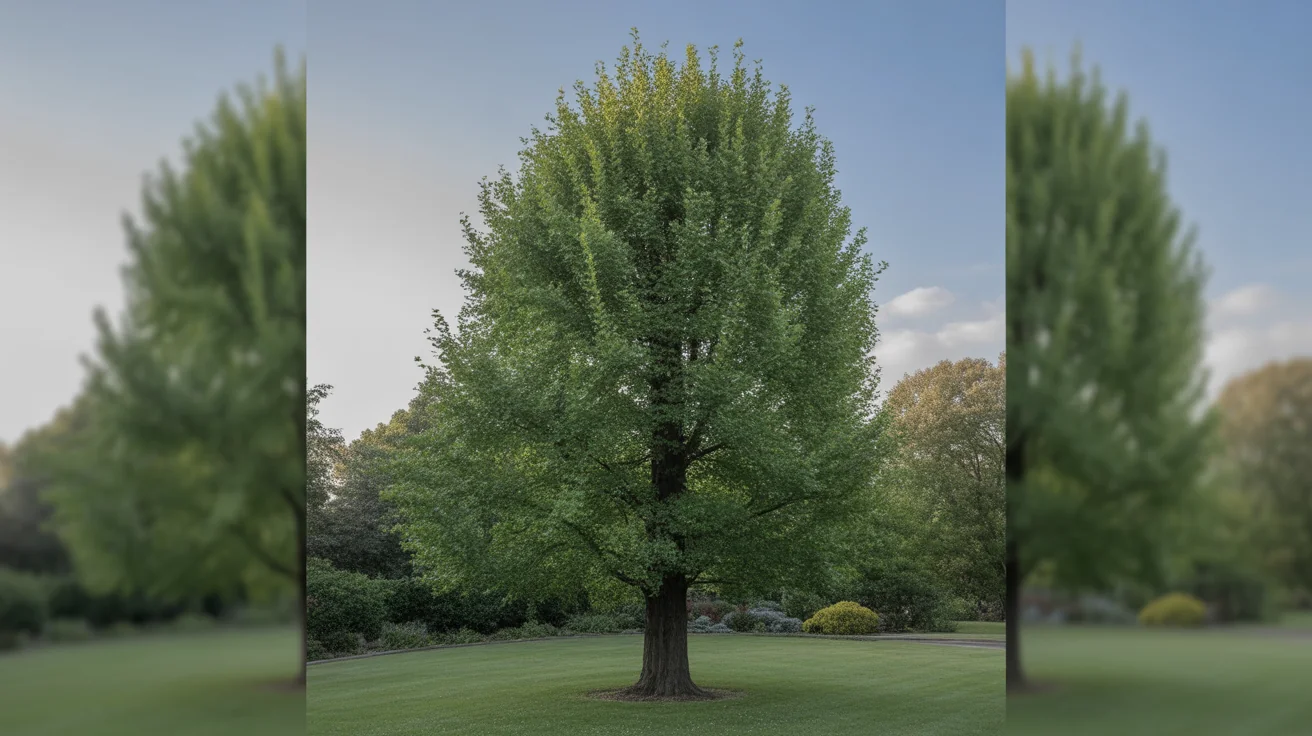
Ginkgo Tree
Ginkgo is not a plant for instant gratification. It is a patient tree that rewards the right buyer decision up front…
Frequently Asked Questions
How far from the house should a shade tree go?
Far enough that the mature crown does not sit on the roof and the roots have room on all sides, which for most of the trees here means at least half the mature spread. Weeping willow is the exception at 50 ft, because its roots travel well past the canopy.
Will a shade tree cool the house or just the yard?
It cools whatever its shadow lands on, so a tree shading a west wall through the afternoon does more for the room behind that wall than a larger tree shading open lawn. That is a placement question rather than a species one.
How long before a new shade tree actually shades anything?
Expect useful shade over a seating area in roughly eight to fifteen years for the moderate growers, sooner for a willow and considerably longer for an oak. The crown has to reach across the surface, so the spread rather than the height sets the wait.
Can I plant a shade tree in a lawn and keep the grass?
For a while, and then not. The grass thins as the canopy closes and the roots take the water, so plan the mulched bed as part of the project rather than as a repair later.
Is one large tree better than two smaller ones?
For cooling a single surface, usually yes, because one wide crown covers continuous ground where two small ones leave a sunlit gap between them. Two smaller trees suit a long boundary rather than a patio.