
What's a Sweetgum? How to Live With the Spiky Gum Balls
Liquidambar styraciflua Altingiaceae
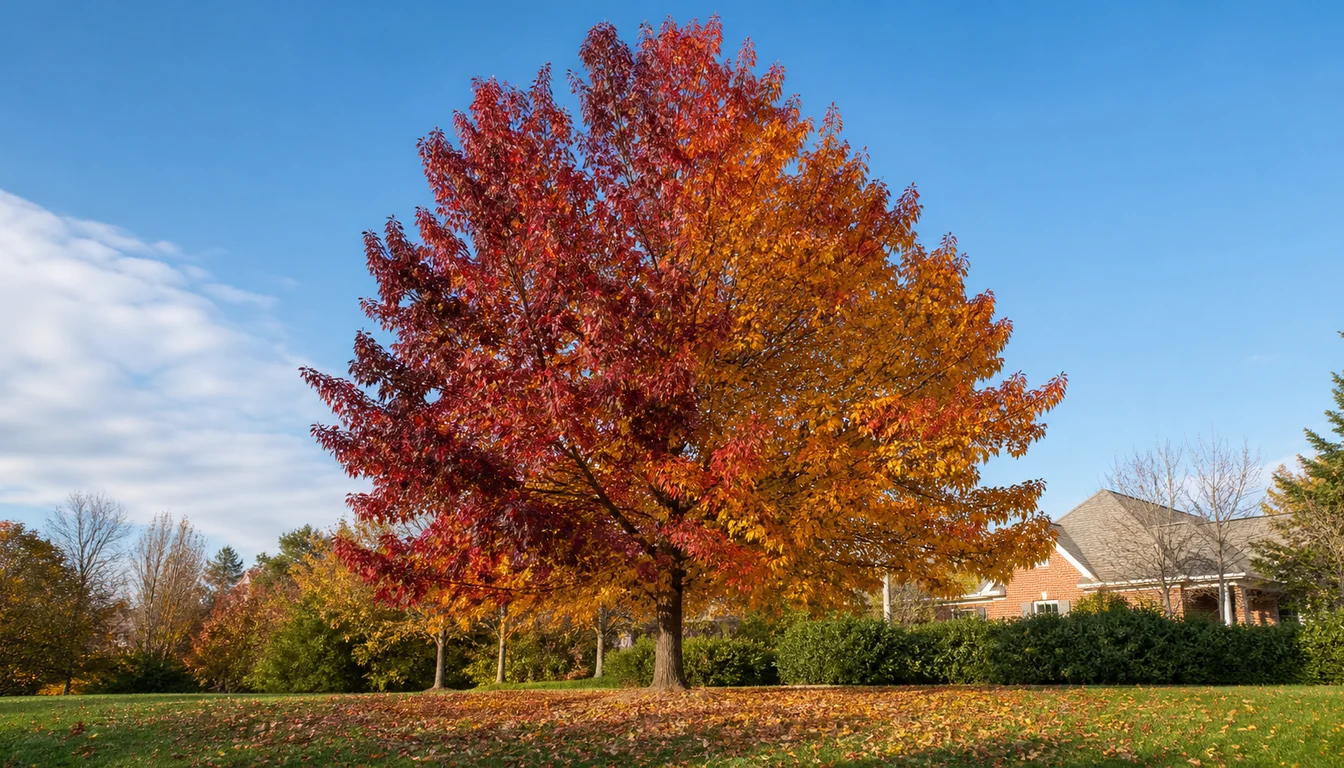
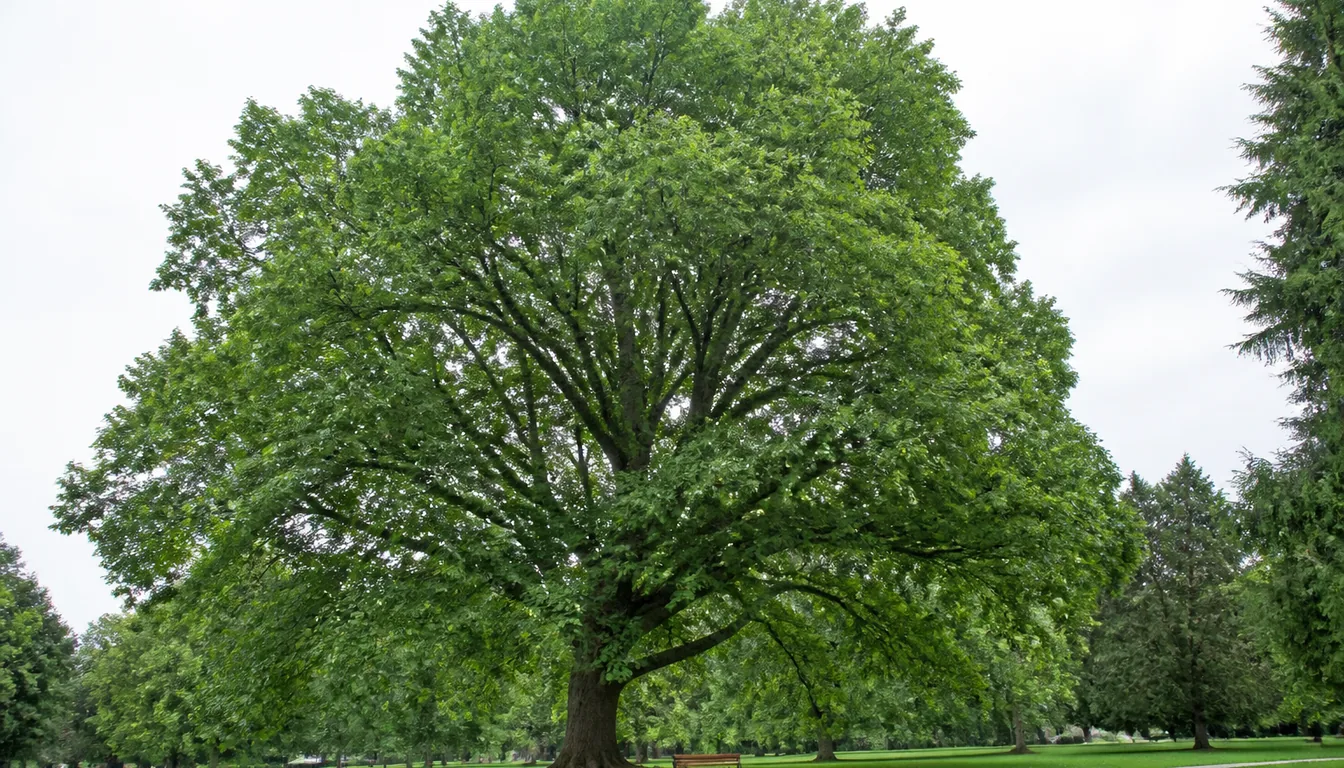
Sweetgum (Liquidambar styraciflua) is a fast 60 to 75 ft native shade tree with star-shaped leaves and the best multi-color fall display of any large American tree. It also drops several hundred hard spiky seed balls a year, and nothing you spray will reliably stop that, so the real decision is where the tree stands rather than whether you can fix it.
Care snapshot
What Is a Sweetgum, and How Do You Tell It From a Maple?
Sweetgum (Liquidambar styraciflua) is a large native shade tree from the eastern and southern United States, reaching 60 to 75 ft in a yard and taller on a deep moist site. It is not a maple, despite the leaf, and it sits in its own small family, Altingiaceae.
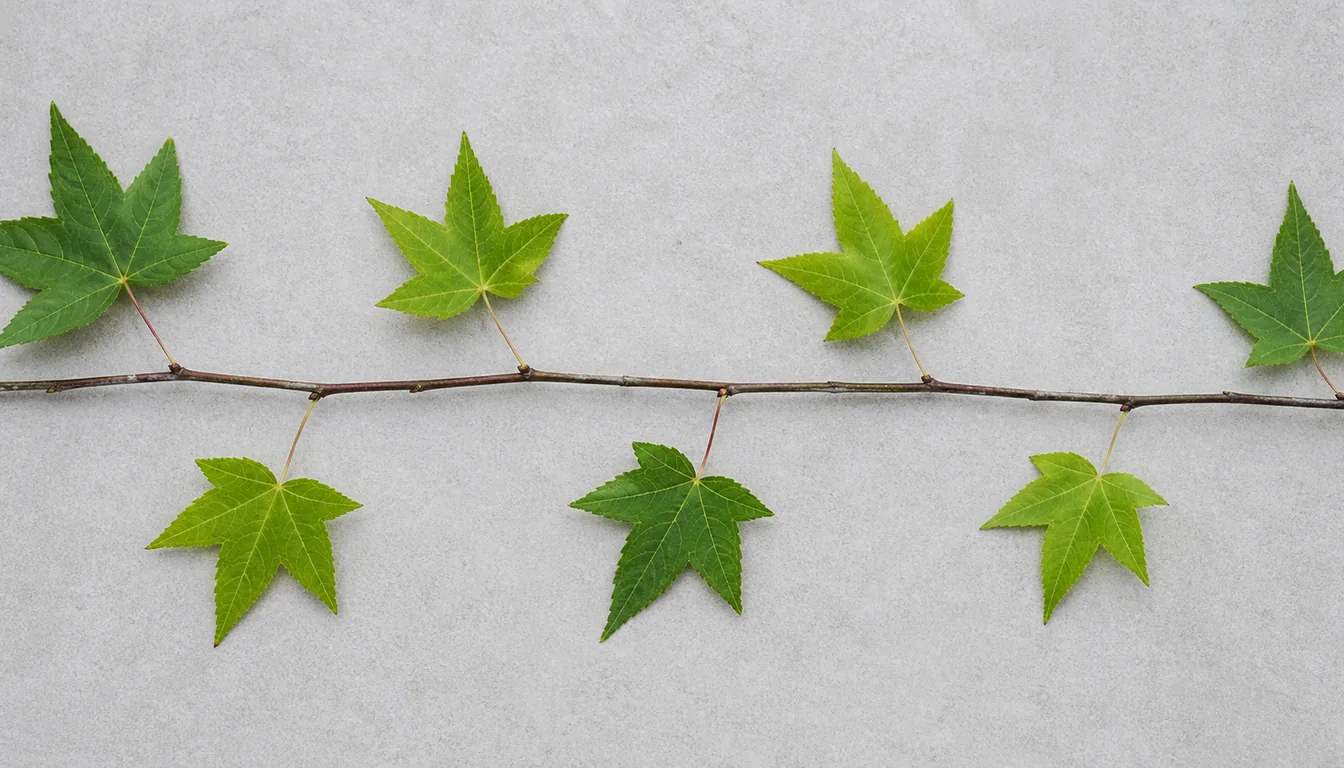
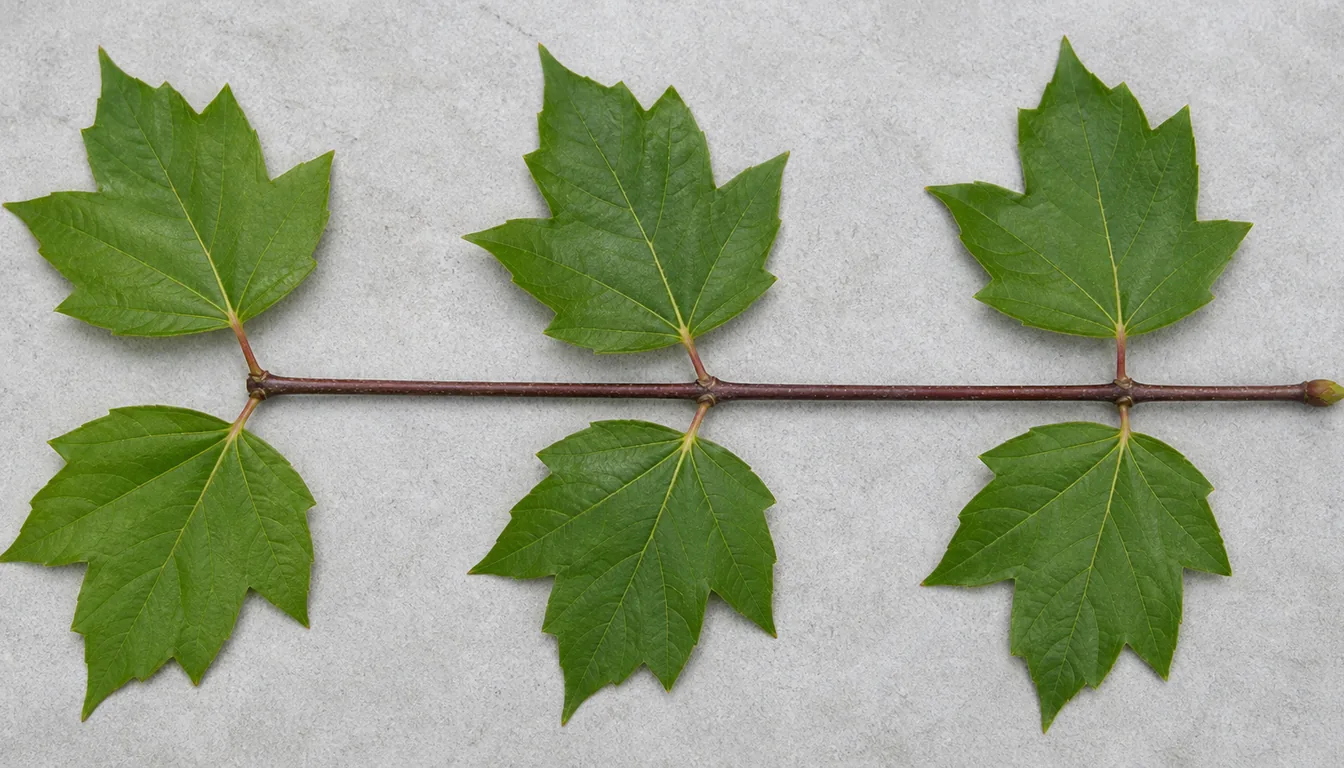
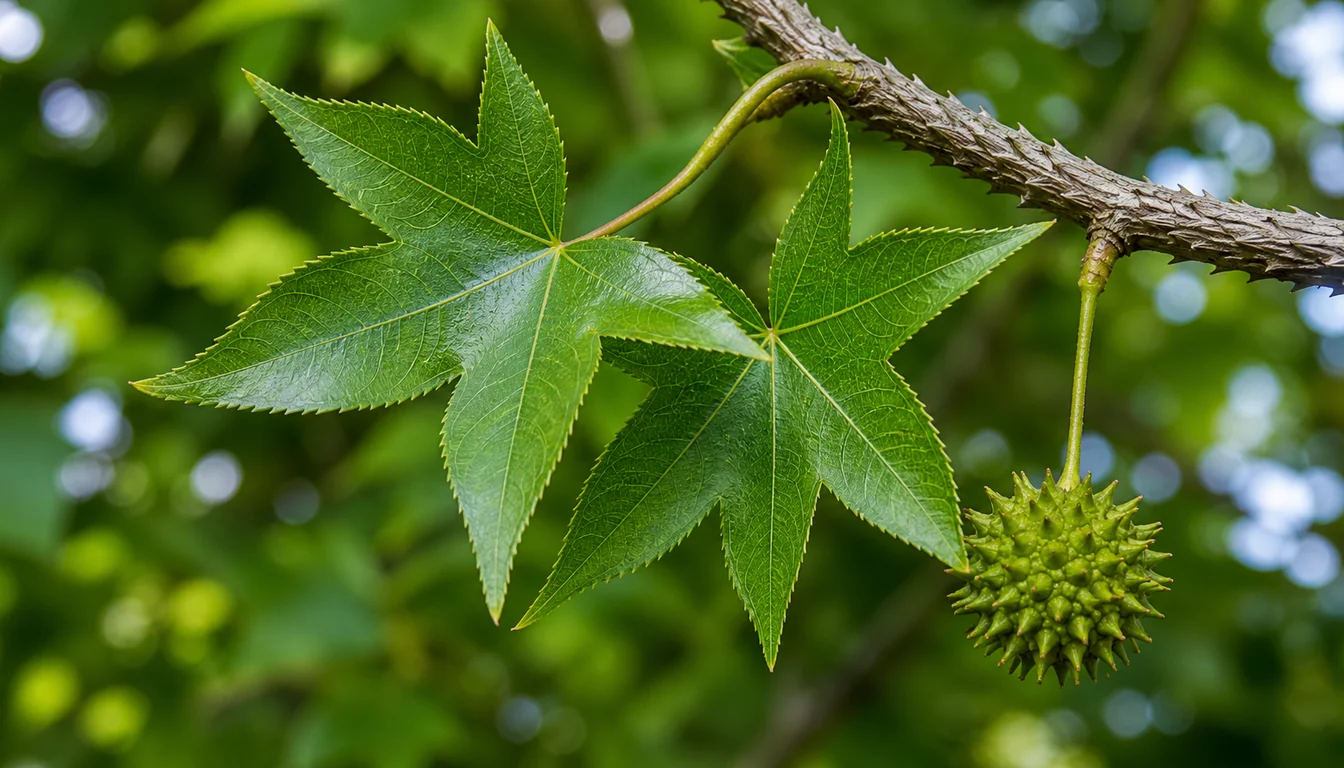
Two features settle the identification in about ten seconds.
The leaf arrangement settles it on its own. Sweetgum leaves are alternate, set one at a time up the twig, while every maple carries its leaves in opposite pairs.
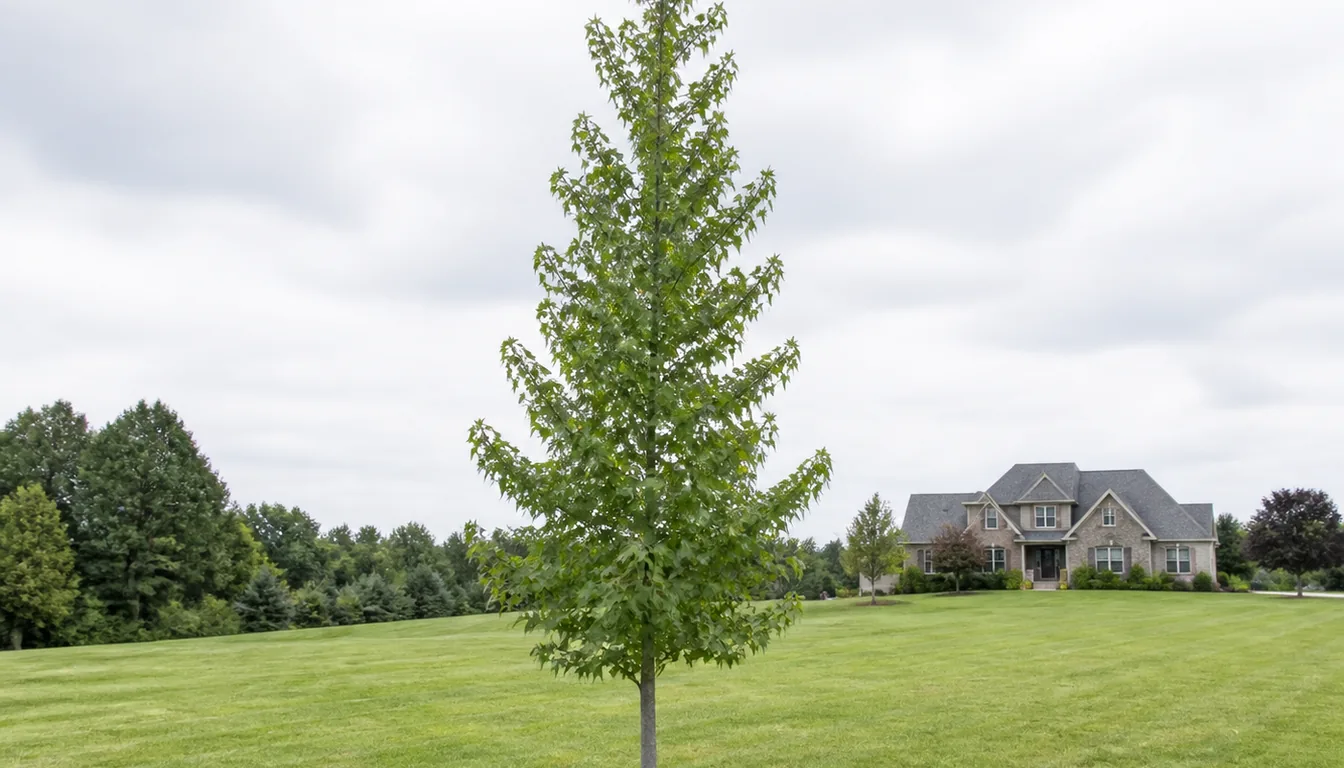
Growth is fast for a tree this size at 1.5 to 2 ft a year while young, and the shape stays narrowly pyramidal for the first thirty years before it broadens.
The name comes from the sap. Cut bark releases a fragrant amber resin called storax, once chewed, burned as incense, and used medicinally, and it is still why the wood smells faintly sweet when you prune it.
- Leaf arrangement
- Sweetgum sets leaves alternately, one at a time along the twig. Every maple sets them in opposite pairs.
- Leaf shape
- A clean five to seven pointed star with finely toothed edges, against the maple's broader lobes and smoother margins.
- Twig
- Older sweetgum twigs grow flat corky ridges along their sides. No maple produces them.
- Fruit
- A hard woody sphere an inch across, covered in stiff spikes, on a long thin stalk. Maples carry paired winged samaras.
- Cut bark
- Smells faintly sweet from storax resin, which is where the name comes from.
Can You Stop a Sweetgum From Making Gum Balls?
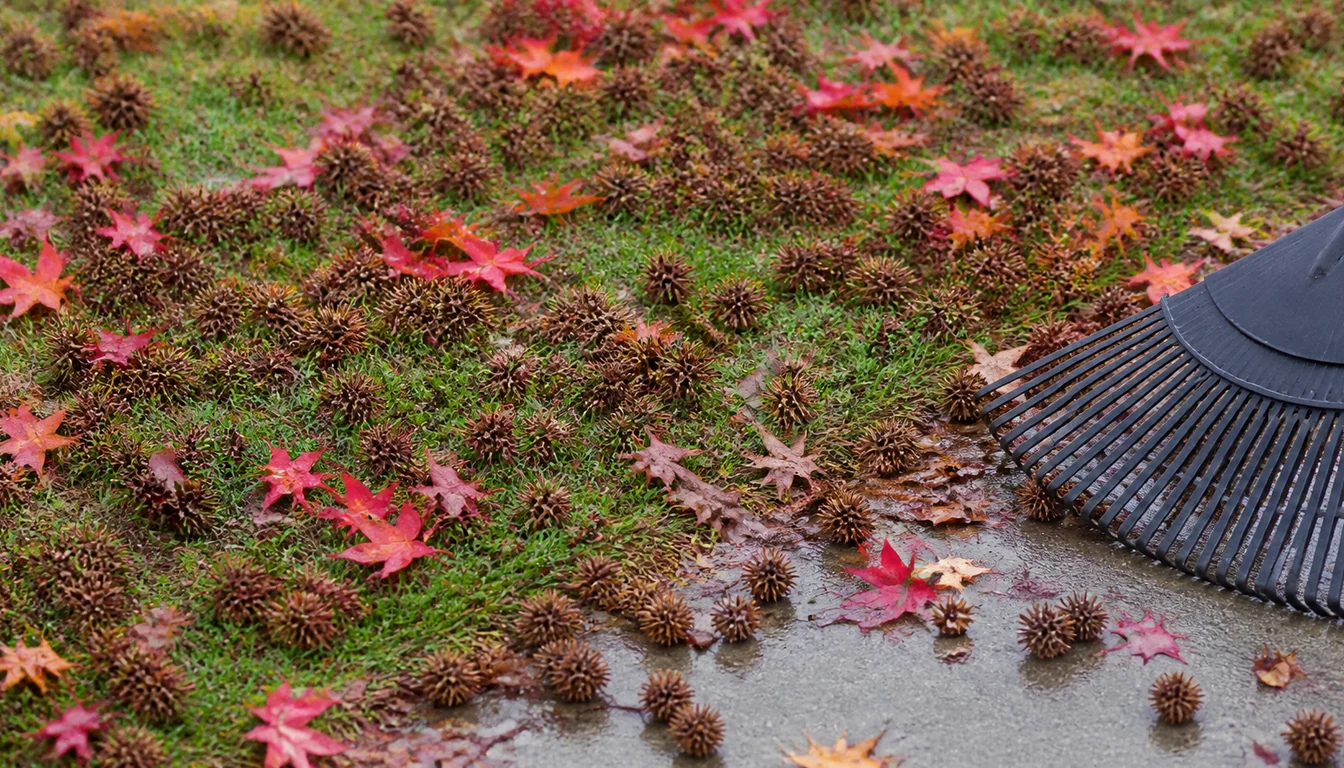
Mostly no, and the honest version of that answer saves a lot of money. A mature sweetgum drops several hundred to a few thousand spiky balls a year, and no treatment reliably stops it.
One product is sold for the job, a growth regulator called ethephon.
It works by making the tree shed its flowers before they set fruit, and the window is narrow, because it has to be sprayed while the flowers are actually open. Miss it by a week either side and the tree fruits normally.
On a 60 ft tree that means hiring a licensed applicator with a rig that can reach the whole canopy, every year, for a result that is partial even in a good season.
Most arborists will say it is not worth it, and most homeowners who try it once agree.
If the tree is not planted yet the answer is easy, because 'Rotundiloba' is a genuinely fruitless selection with rounded leaf lobes instead of pointed ones and it sets no seed balls at all.
It reaches a similar 60 ft and keeps good fall color, though it runs slightly less cold hardy and suits Zone 6 and warmer. 'Slender Silhouette' is the other route, a columnar form about 6 ft wide that still fruits but drops everything into a narrow strip.
If the tree is already there, the job is collection rather than prevention.
A rake slides straight over them, which is why so many owners conclude the job is impossible.
Balls that land in a mulched bed can stay there, because they break down slowly and cause nobody any trouble away from foot traffic.
How Far From Paving Does a Sweetgum Need to Be?
Sweetgum roots run shallow and wide, and on a tree that eventually spans 40 to 60 ft they lift anything thin growing above them. Sidewalk panels, patio pavers, and thin asphalt drives all move within twenty or thirty years of planting.
Allow 20 to 25 ft from a walk, a drive, or a patio, and 30 ft from a foundation.
The gum balls widen that in practice. They roll, they turn an ankle underfoot, and they are genuinely hazardous on a sloped drive or a flight of steps, so keep the canopy from reaching over anywhere people walk after dark.
Overhead lines rule the tree out on most residential frontages, because 75 ft of eventual height is not something a utility crew will leave alone.
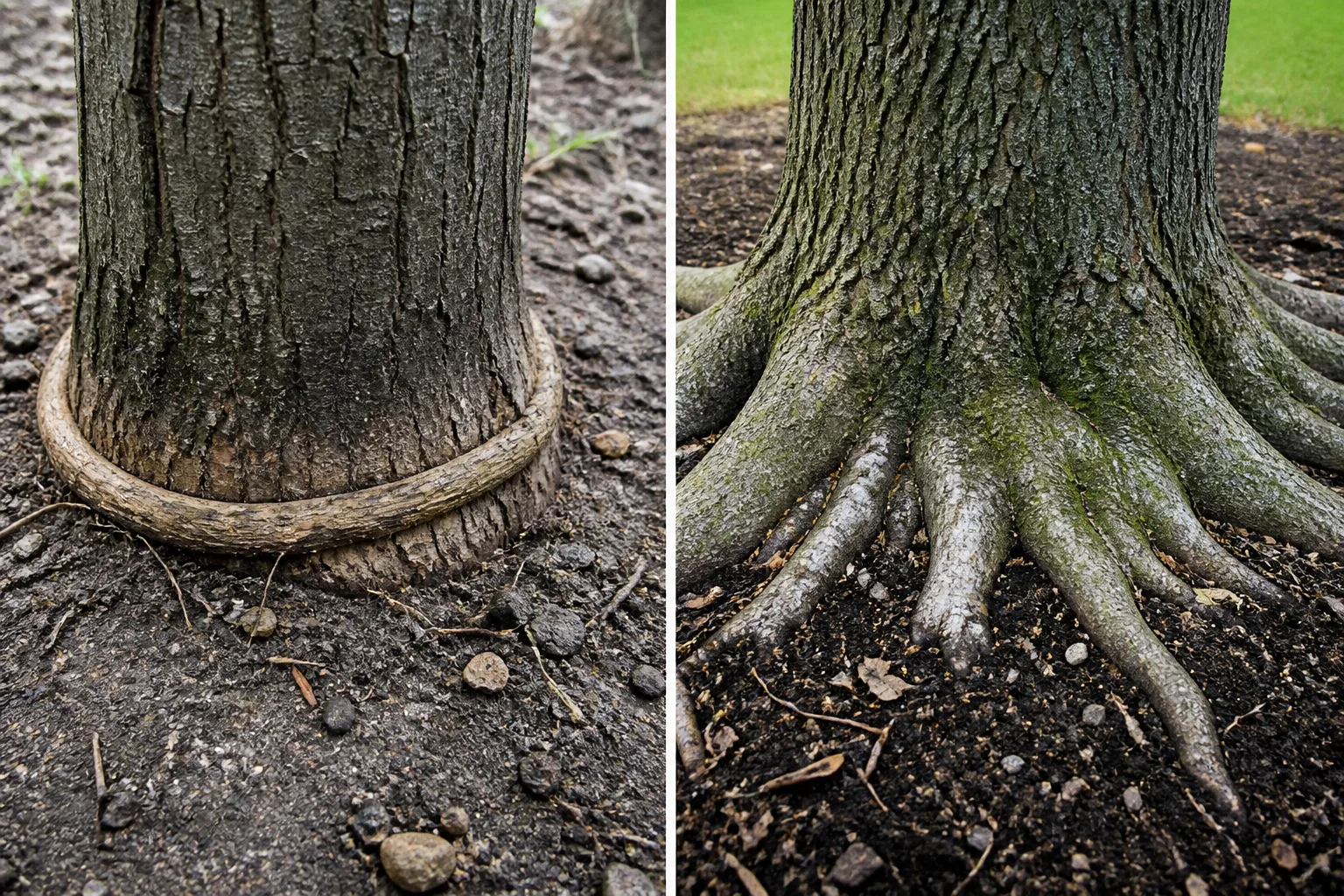
The other root problem is one you create on planting day. Sweetgum is prone to girdling roots, where a root circles the trunk instead of running away from it and slowly strangles the tree twenty years later, and it starts with a pot-bound root ball nobody teased apart.
Surface roots also settle the argument about grass under the canopy. Mowing across ridged roots scalps them and wounds the tree, so a mulched bed out to the drip line is less work than fighting to keep turf alive in a place it will always lose.
What Soil and Water Does a Sweetgum Need?
This is a bottomland tree in the wild, growing on deep moist alluvial soils along rivers and through low woods. That origin explains both what it wants and what makes it look bad in a yard.
It wants deep, moist, slightly acid ground, ideally around pH 5.5 to 6.5, with room for roots to run.
Alkaline soil is the common failure. Above about pH 7 the tree stops taking up iron properly and the foliage goes yellow between green veins, which is the same chlorosis that limits river birch and it is just as hard to reverse.
Water matters most in the first three years, when a soak every 7 to 10 days without rain pushes roots out beyond the planting hole. After that the tree looks after itself through most of its range, though it still browns early in a long dry summer.
Full sun is the one requirement with no flexibility in it. Shade thins the crown, weakens the fall color badly, and produces the leggy leaning shape that gets trees cut down.
- Test the soil pH before planting rather than after. Above about 7 the tree will yellow and stay yellow.
- On a new-build lot, dig a test hole first. Stripped topsoil and concrete-rich fill is the usual alkaline source.
- Plan on a soak every 7 to 10 days without rain for the first three years, then stop.
- Skip the fertilizer. Nitrogen on an already-vigorous tree adds height nobody asked for.
- Full sun with no compromise. Shade thins the crown and takes most of the fall color with it.
Why Are the Leaves Browning or Yellowing in Summer?
Three different things do this, and the pattern on the leaf tells you which one you have.
Watering a chlorotic tree harder changes nothing at all, and no amount of iron helps a tree that is simply dry.
Reading the pattern is the whole diagnosis, because treating one as another is the usual mistake.
One genuinely serious problem exists and it is regional. Sweetgum decline, tied to drought stress and root disease on poor sites, thins the crown from the top down over several years with small pale leaves and dieback in the upper branches, and there is no treatment beyond reducing the stress that started it.
- Crisp brown edges, green center
- Leaf scorch. The tree lost water faster than the roots could replace it. Shows first on the southwest side and the outermost leaves, after heat, wind, drought, or construction damage. Water deeply and mulch wide.
- Yellow between dark green veins
- Iron chlorosis from alkaline soil. Hits the newest leaves first and the margins stay soft. Fix the pH or accept it. More water changes nothing.
- Small angular brown or purple spots
- One of several leaf-spot fungi, following a wet spring. Cosmetic on a mature tree. Rake and bin fallen leaves and skip the spray, which is impractical at this size.
- Whole crown thinning from the top over years
- Sweetgum decline, tied to drought stress and root disease on poor sites. Small pale leaves and upper dieback. No treatment beyond reducing the stress that started it.
Why Is the Fall Color Better Than Almost Any Other Big Tree?
Most shade trees turn one color. Sweetgum turns several at once, so a single crown can carry yellow, orange, scarlet, crimson, and deep purple-burgundy on different branches on the same October afternoon.
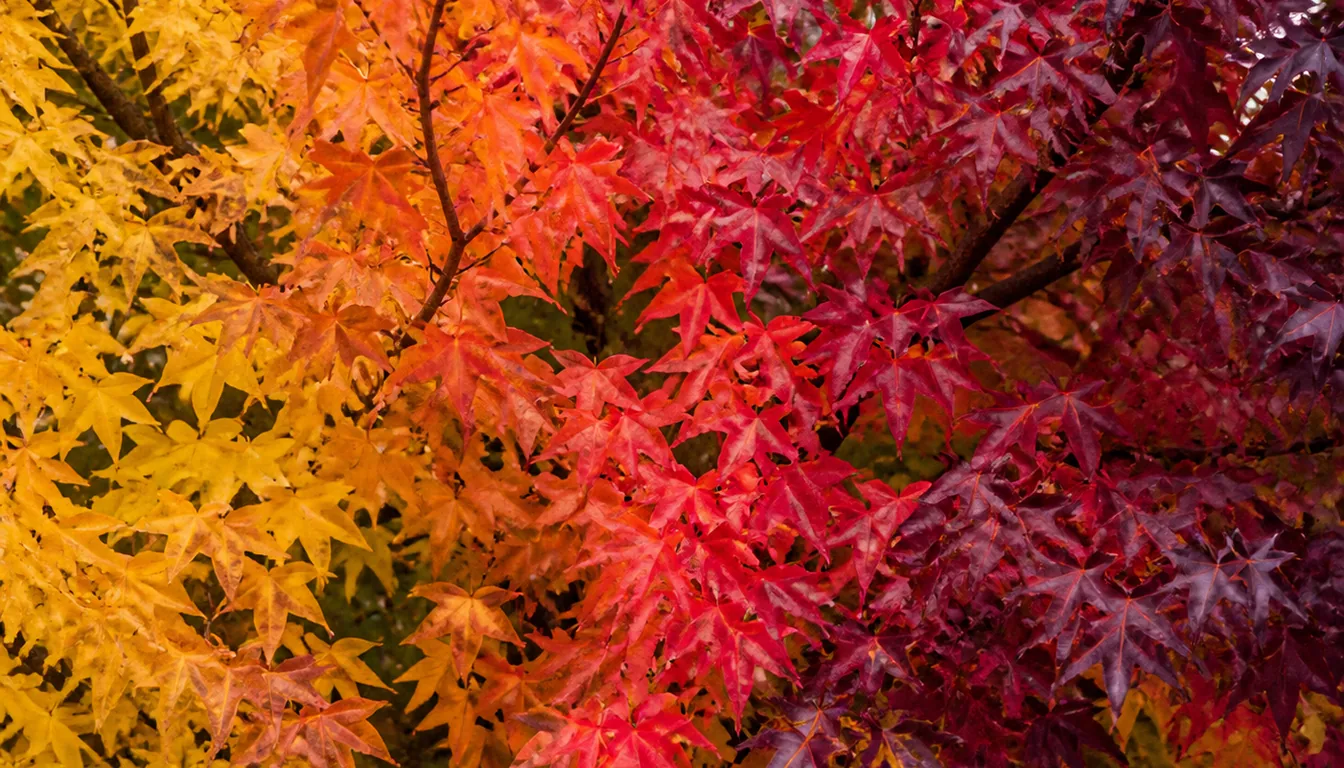
The pigments develop unevenly across the canopy, driven by how much direct sun each part of the tree received through the season, which is why the effect is strongest on an open-grown specimen.
The color also holds unusually long, with leaves often staying on into late November and past the first frosts, weeks after nearby maples are bare.
Three things reduce it and two are yours to control.
Shade is the biggest, because a tree in partial shade colors dully and drops early. Excess nitrogen is second, since it keeps leaves green late and cuts the red pigments short.
The third is genetics, which is the whole reason nurseries sell named selections.
'Worplesdon' is the reliable deep red and orange choice, 'Moraine' colors well and is the hardiest of the group, and 'Rotundiloba' holds good color while setting no seed balls. Seed-grown stock is a lottery that usually pays out, but not always.
- 'Rotundiloba'
- The fruitless one. No seed balls at all, rounded leaf lobes, about 60 ft, and best from Zone 6 south.
- 'Slender Silhouette'
- A columnar form roughly 6 ft wide at 50 ft tall. Still fruits, but drops everything into a narrow strip.
- 'Worplesdon'
- Grown for fall color, deep red into orange, with more deeply cut leaf lobes. Fruits normally.
- 'Moraine'
- The cold-hardy choice, reliable into Zone 5, with fast growth and dependable red.
- Seed-grown stock
- Cheapest and most variable. Mature size, fall color, and hardiness all differ tree to tree.
Is a Sweetgum Worth Keeping, or Should You Take It Out?
This is the question most people actually arrive with, and it turns on where the tree stands rather than on what it is. A sweetgum on open lawn well back from paving is a genuinely excellent shade tree, fast, tough, long-lived, and better in autumn than anything likely to replace it.
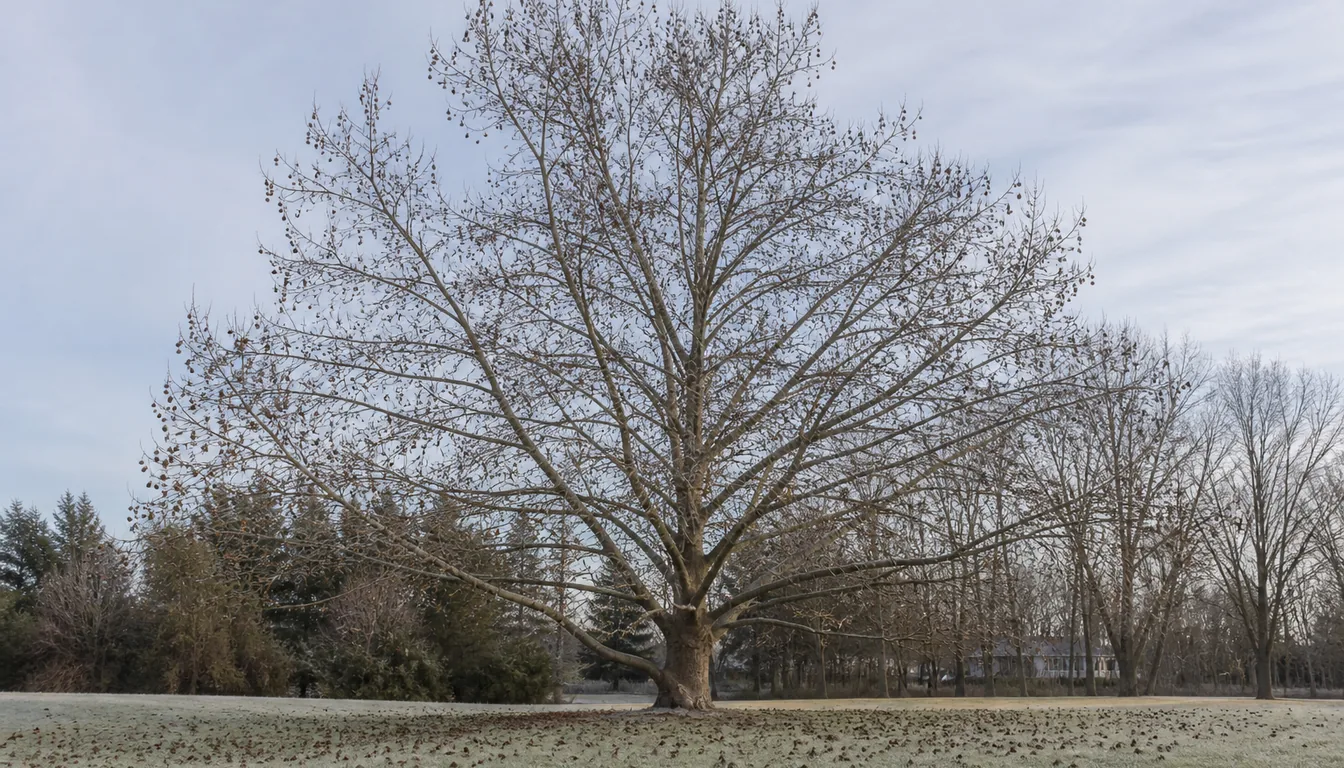
A sweetgum 10 ft from a drive with a play area underneath is a problem that gets worse every year.
Removal is expensive on a tree this size, commonly well into four figures, and the stump is not the end of it. Cut sweetgums sucker hard from the roots, sending shoots up across the lawn for two or three years unless the stump is treated at the time of felling.
Weigh that against roughly fifteen years for a replacement tree to cast the same shade.
There is a middle option people overlook. Crown raising, which means taking off the lowest limbs to lift the canopy well above head height, turns a tree that drops balls onto a patio into one that drops them into a bed you can sweep.
It does not reduce the crop at all, but it changes where the crop lands, and it costs a fraction of removal.
Keep it in almost every other case.
- Take it out when: Roots are already lifting structural paving, the crown overhangs a roof it will eventually damage, or the tree is visibly declining from the top down.
- Raise the crown when: The only real complaint is where the balls land. Removing the lowest limbs costs a fraction of removal and moves the crop off the patio.
- Leave it alone when: The tree stands on open lawn well back from paving. Nothing you plant instead will match it for fifteen years.
Are Sweetgum Balls Dangerous for Kids, Pets, or Mowers?
No ASPCA or NC State toxicity record was found for sweetgum or its seed balls, so whether they are toxic to pets is unknown. The clear risk is mechanical.
All three risks come off the same list, and all three are solved by collecting the balls rather than living around them.
Nothing else about the tree poses a risk, since there are no thorns, the sap is a mild fragrant resin rather than an irritant, and the leaves are harmless to everything.
The tree earns real credit in return. Goldfinches, chickadees, and juncos work the seed heads all winter, and the collected balls make excellent slug-proof mulch spread around hostas.
- Dogs: The spikes cut the mouth and throat, and a whole ball is the right size to lodge in the gut of a small dog. Vets see this every autumn.
- People: Hard round balls on a hard surface behave like ball bearings. A fall on paving is the common injury, and a sloped drive is the common place.
- Mowers: A ball thrown from a mower deck moves fast enough to break a window. A mulching mower simply jams. Clear the lawn before you cut.
Frequently Asked Questions
How long does a sweetgum tree live?
Commonly 100 to 150 years, and specimens past 200 exist on good bottomland sites. That is well beyond the lifespan of most fast-growing yard trees, which is part of why the placement decision matters so much.
At what age does a sweetgum start dropping gum balls?
Fruiting usually begins somewhere between 15 and 20 years old, and a grafted nursery tree can start earlier. A young tree with no balls yet is not a fruitless selection unless the label says 'Rotundiloba'.
Will a sweetgum grow in a wet or flood-prone spot?
Yes, better than most large shade trees, because it evolved on river bottoms that flood in spring. It handles several weeks of saturated soil in the dormant season, though it still wants the site to drain during the growing year.
Is sweetgum good firewood?
It burns acceptably once fully seasoned but it is unpleasant to prepare, because the interlocked grain makes it notoriously hard to split by hand and it takes a year or more to dry. Most people rent a splitter or leave it for the chipper.
Is a sweetgum the same thing as a sycamore?
No, though both are big trees with lobed leaves that hang round fruit on stalks. Sycamore balls are smooth and fuzzy and break apart into fluff, while sweetgum balls are hard, woody, and covered in sharp spikes.
Sources & References
Related Plants
Red Maple
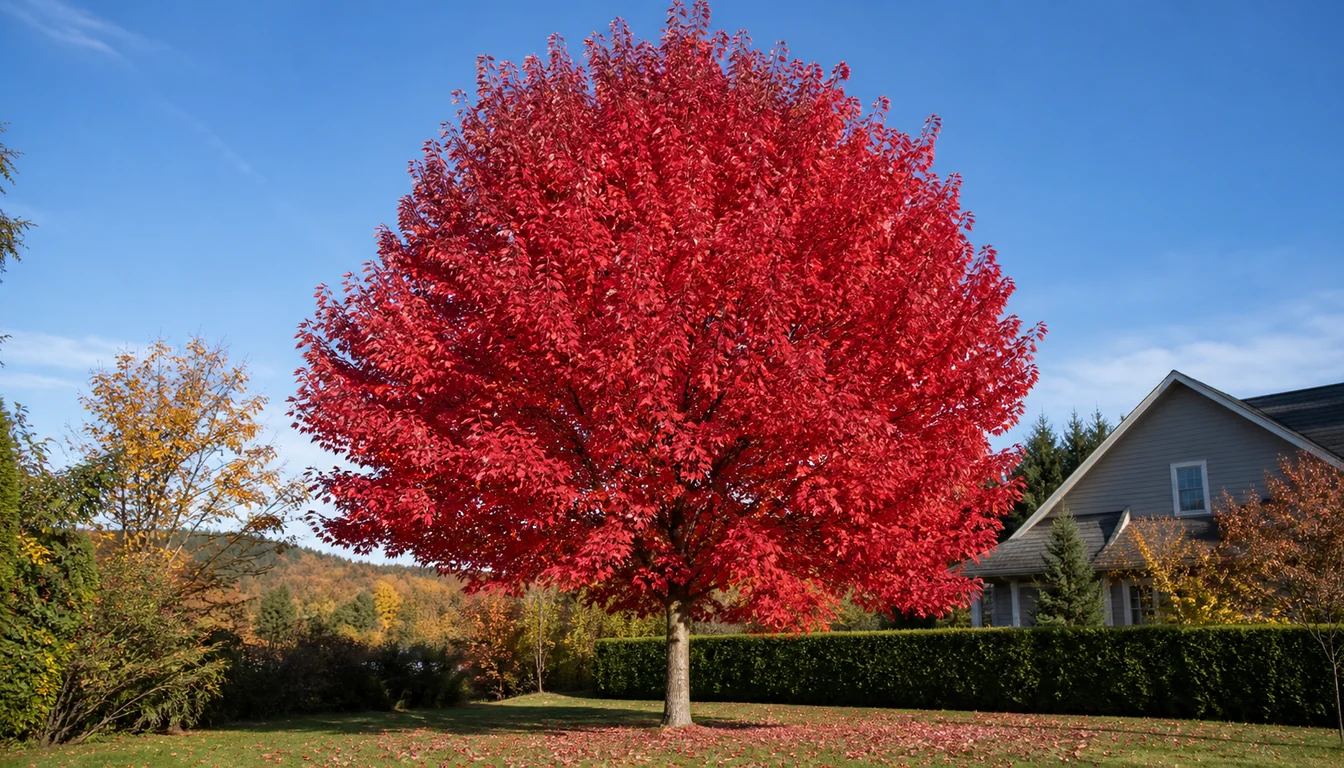
The usual replacement choice, with similar speed and fall color and no seed balls.
River Birch
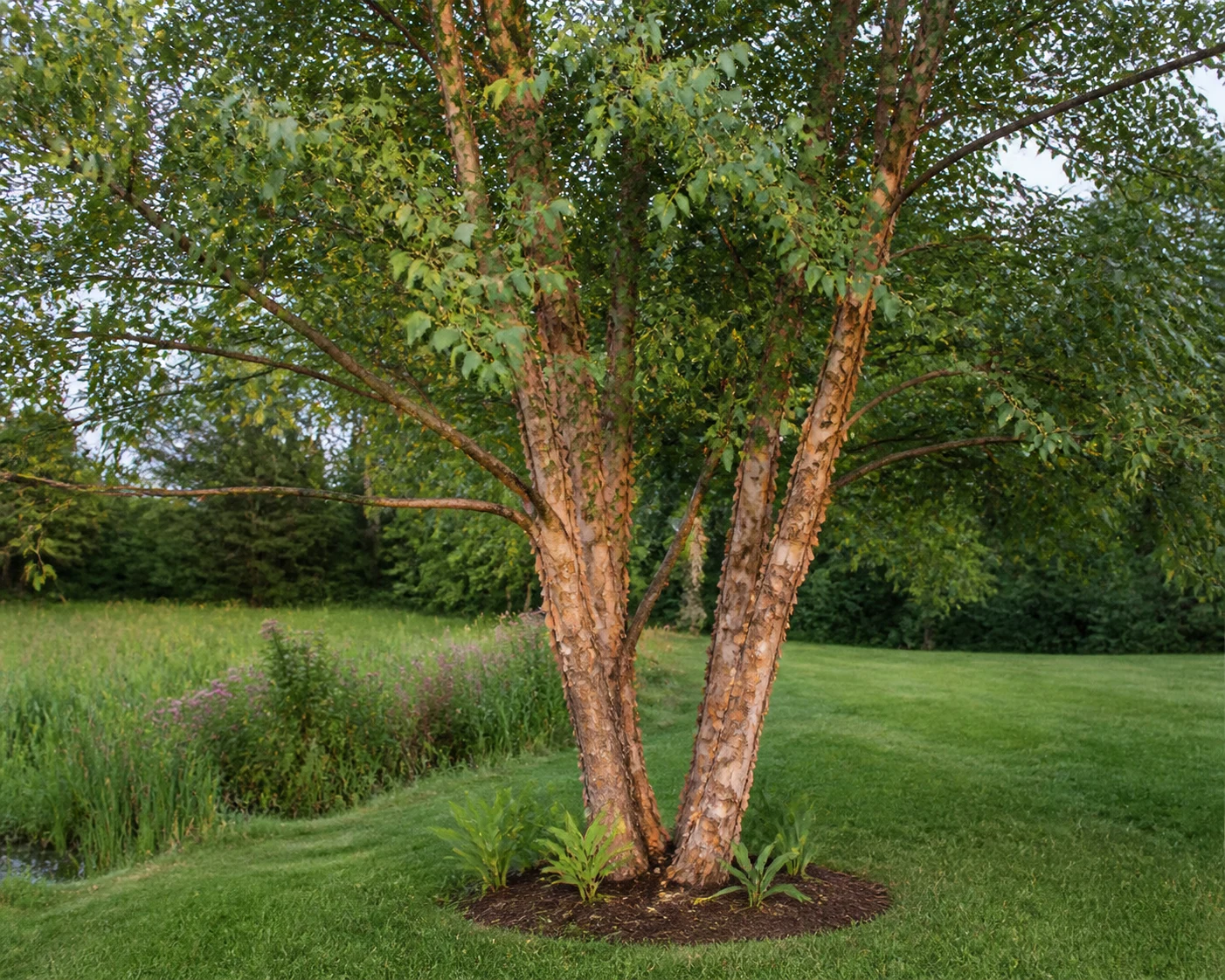
Takes the same damp bottomland soils and drops small catkins instead of spiky fruit.
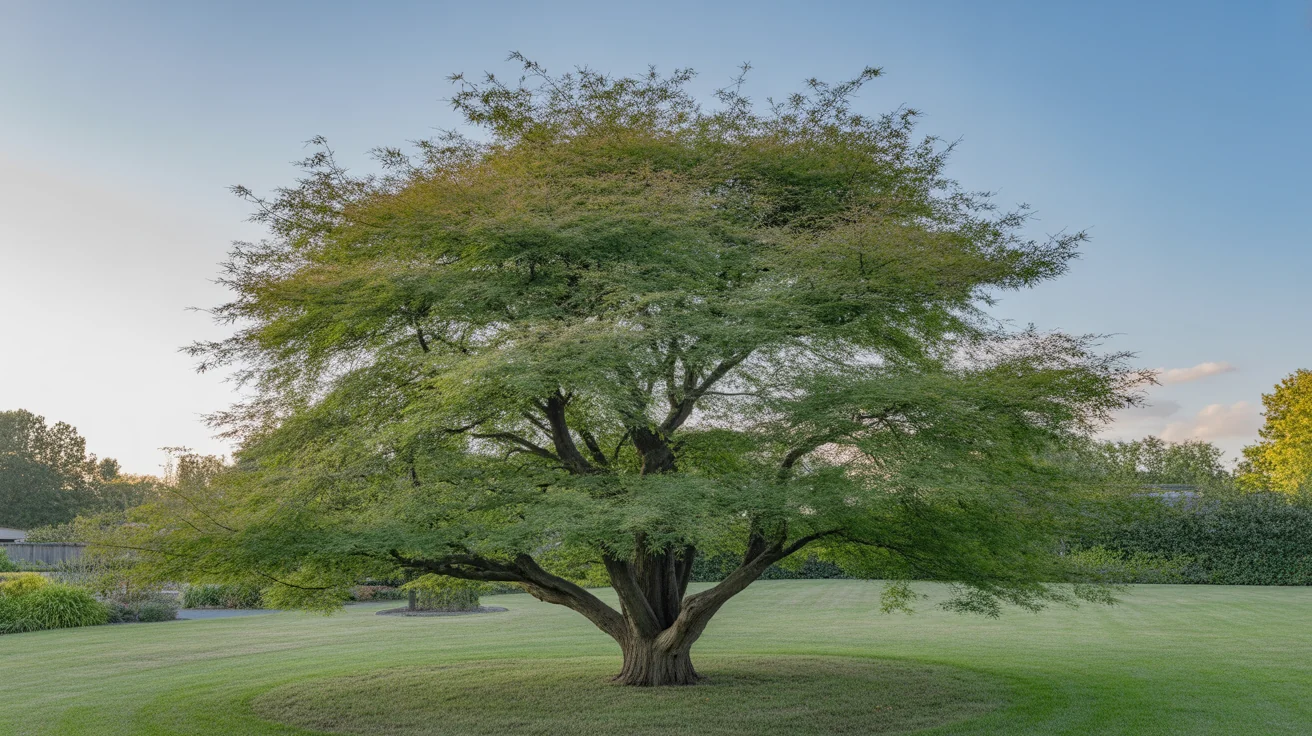
Japanese Maple
For fall color on a lot that has no room for a 70 ft tree.
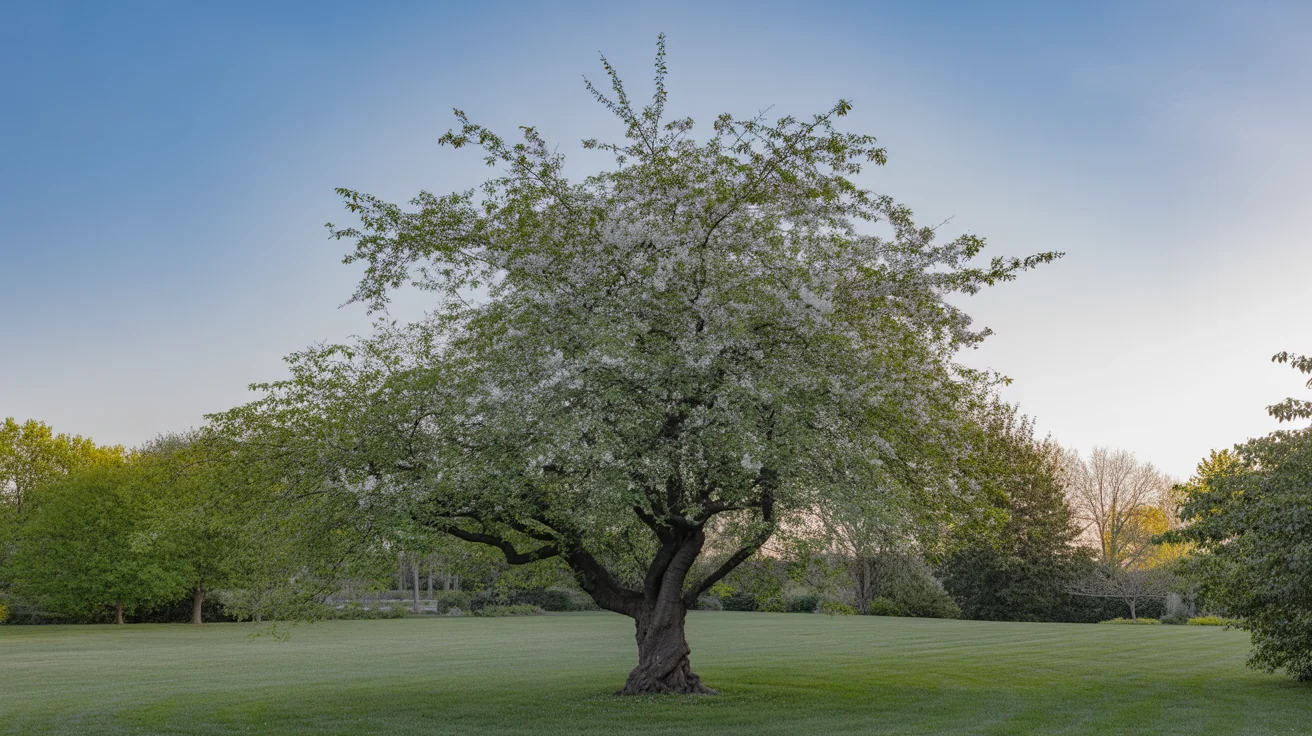
Cherry Blossom Tree
Cherry blossom tree is a common name for ornamental cherries grown for spring flowers rather than a useful fruit crop.
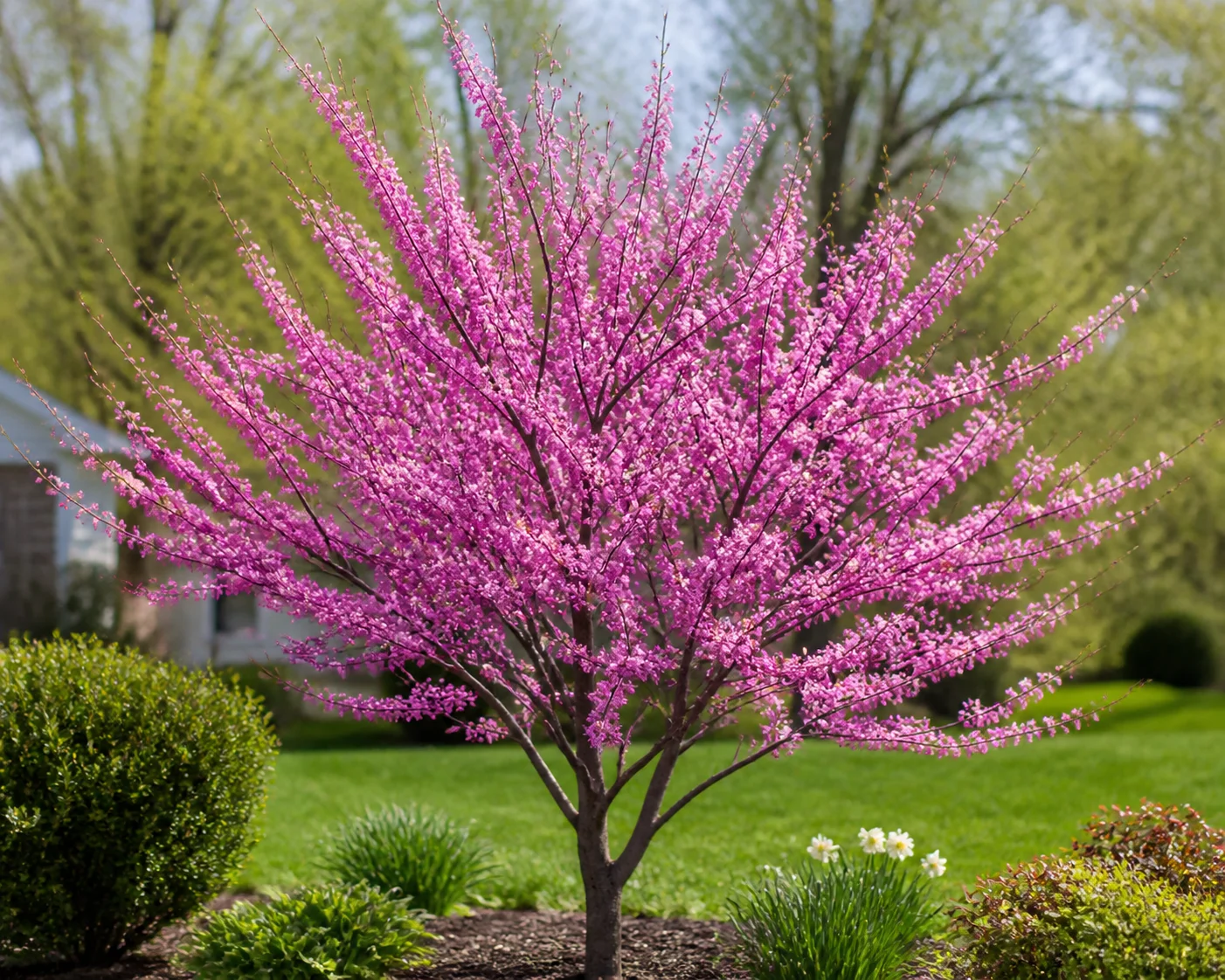
Eastern Redbud
Eastern redbud is a small North American tree with pea-like flowers that open on bare twigs and older wood.
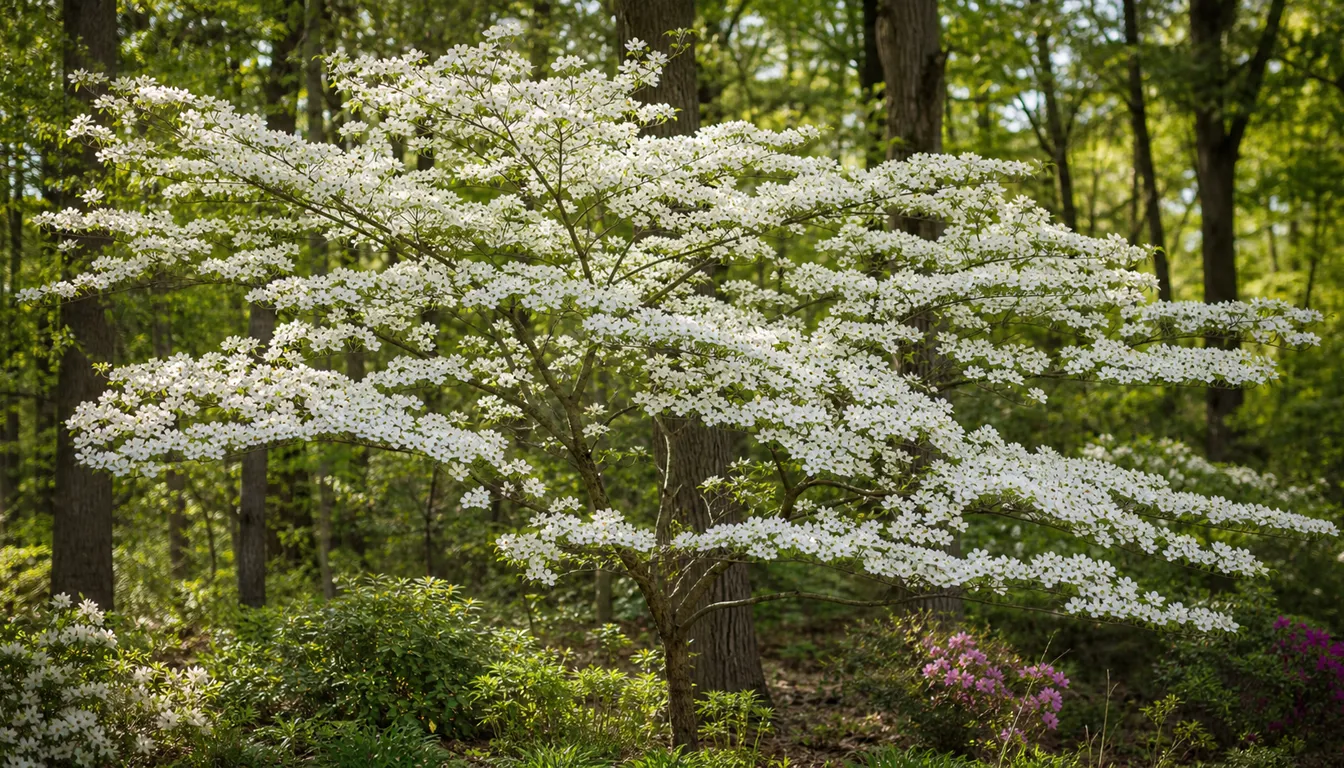
Flowering Dogwood
Flowering Dogwood is easiest to grow when you copy the place it wants to live.