
What's an Oak Tree? How to Choose One for the Long Term
Quercus spp. Fagaceae
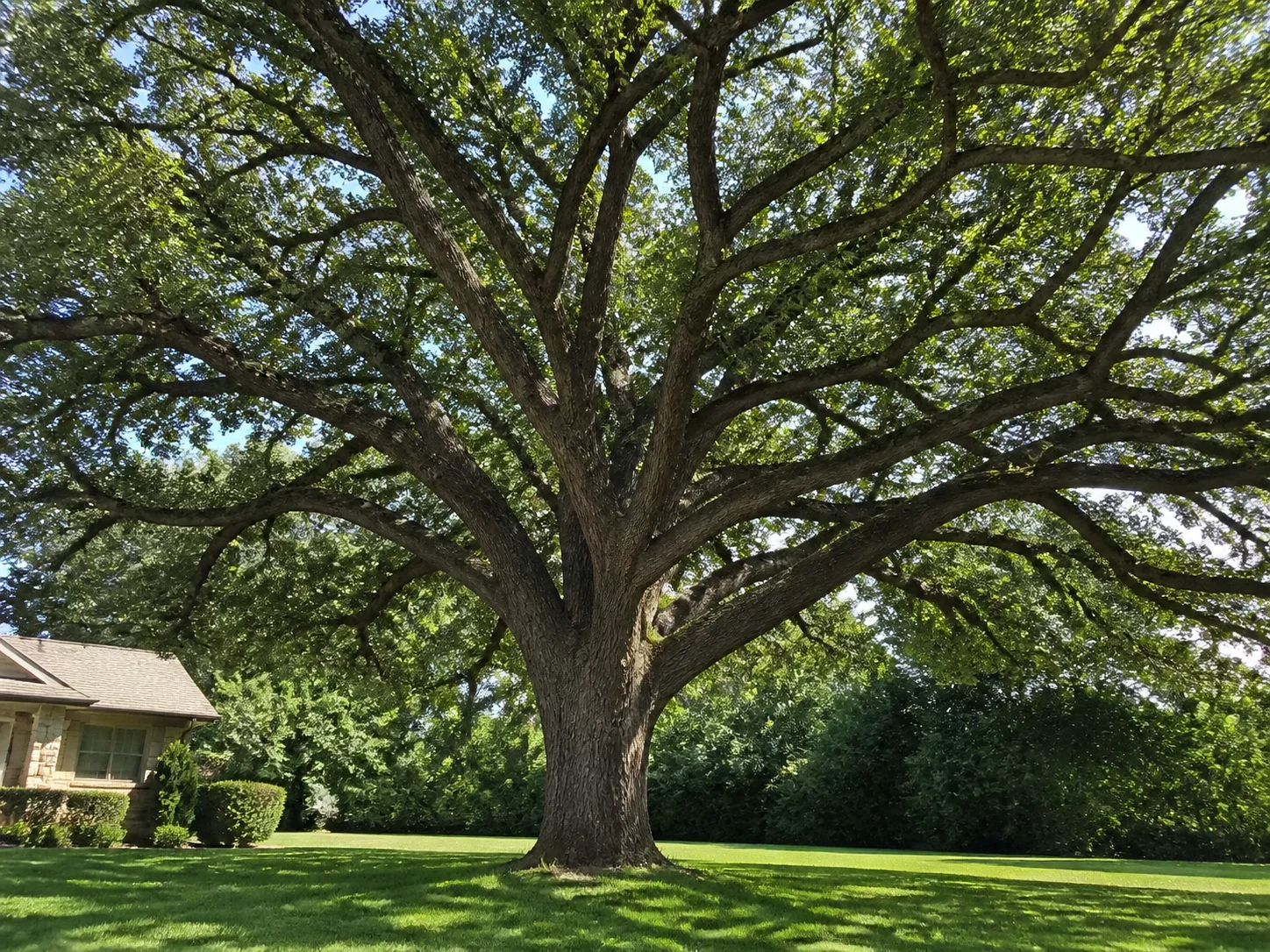
Oak trees are long-lived shade trees whose mature size, species group, roots, and disease risks must fit the site. This profile helps you identify an oak, choose one, establish it, and recognize serious decline.
Care snapshot
What Is an Oak Tree, and Which Group Are You Looking At?
An oak is a tree or shrub in the genus Quercus.
Every species produces an acorn, but leaf shape, mature size, climate tolerance, and disease risk vary widely across the genus.
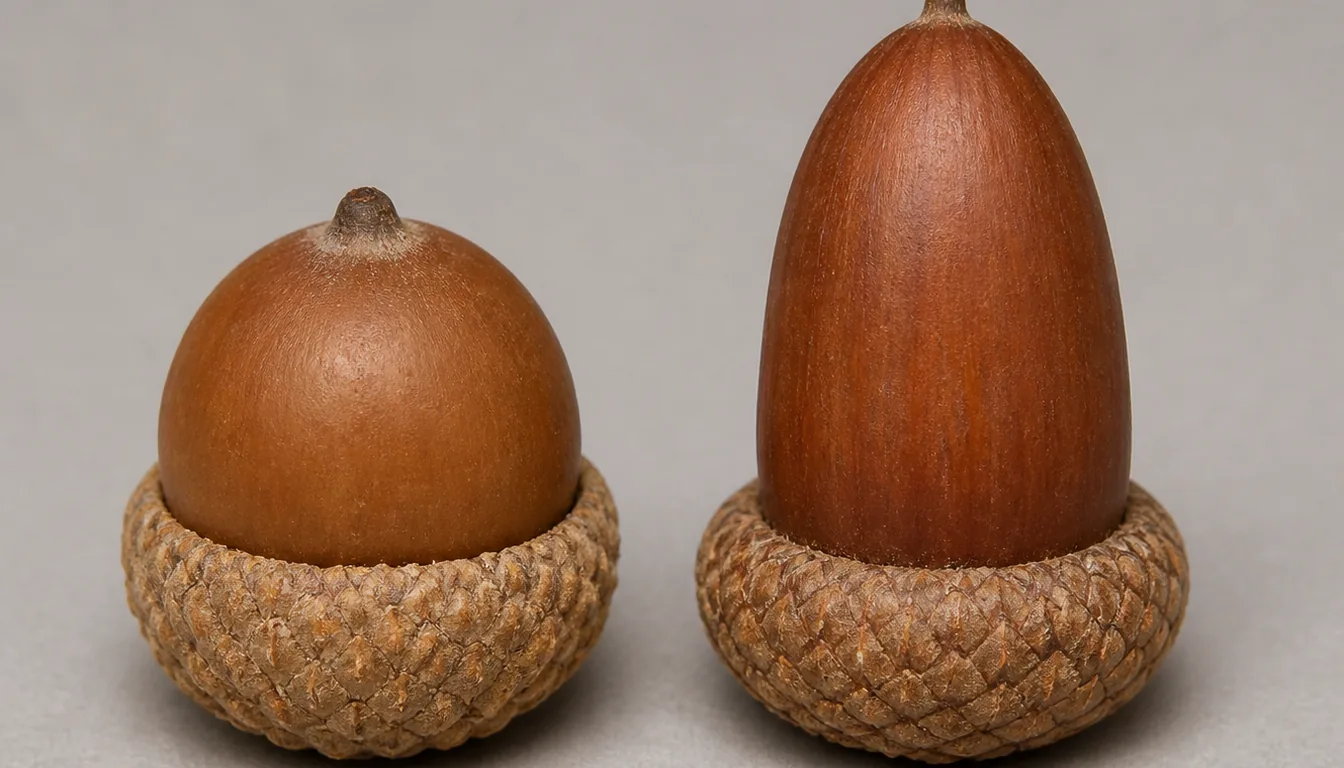
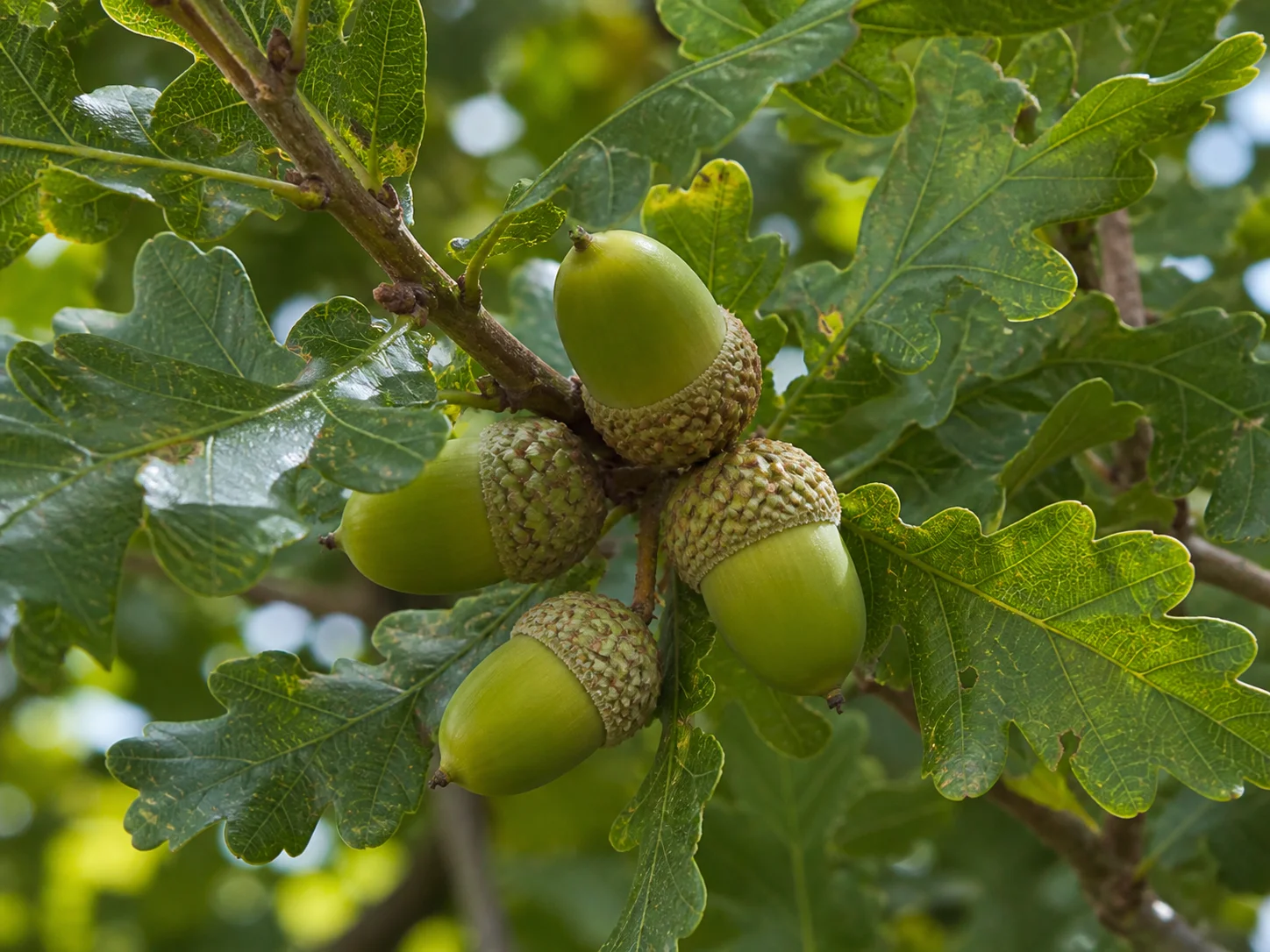
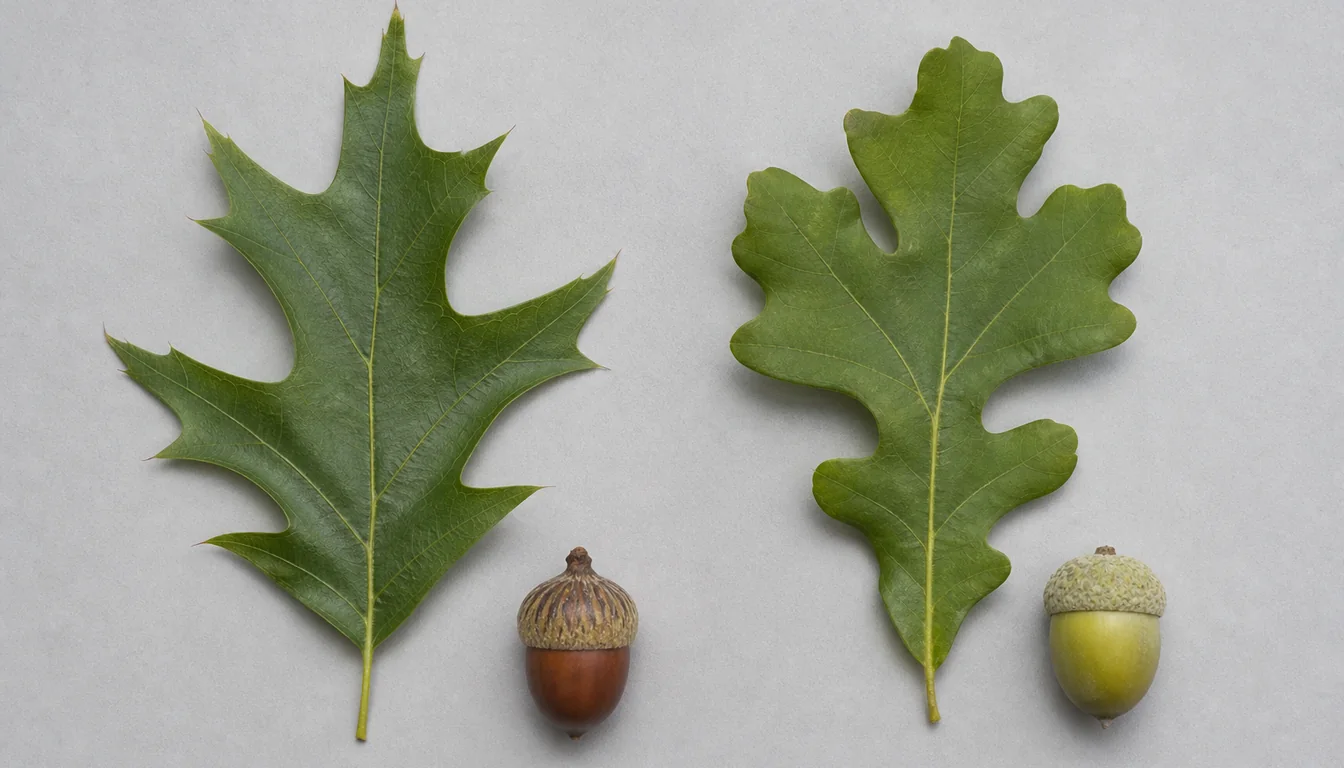
For North American gardeners, the first useful distinction is often the white-oak group versus the red-oak group. White-oak relatives usually have rounded leaf lobes and acorns that mature in one season, while red-oak relatives commonly have bristle-tipped lobes and acorns that take two seasons.
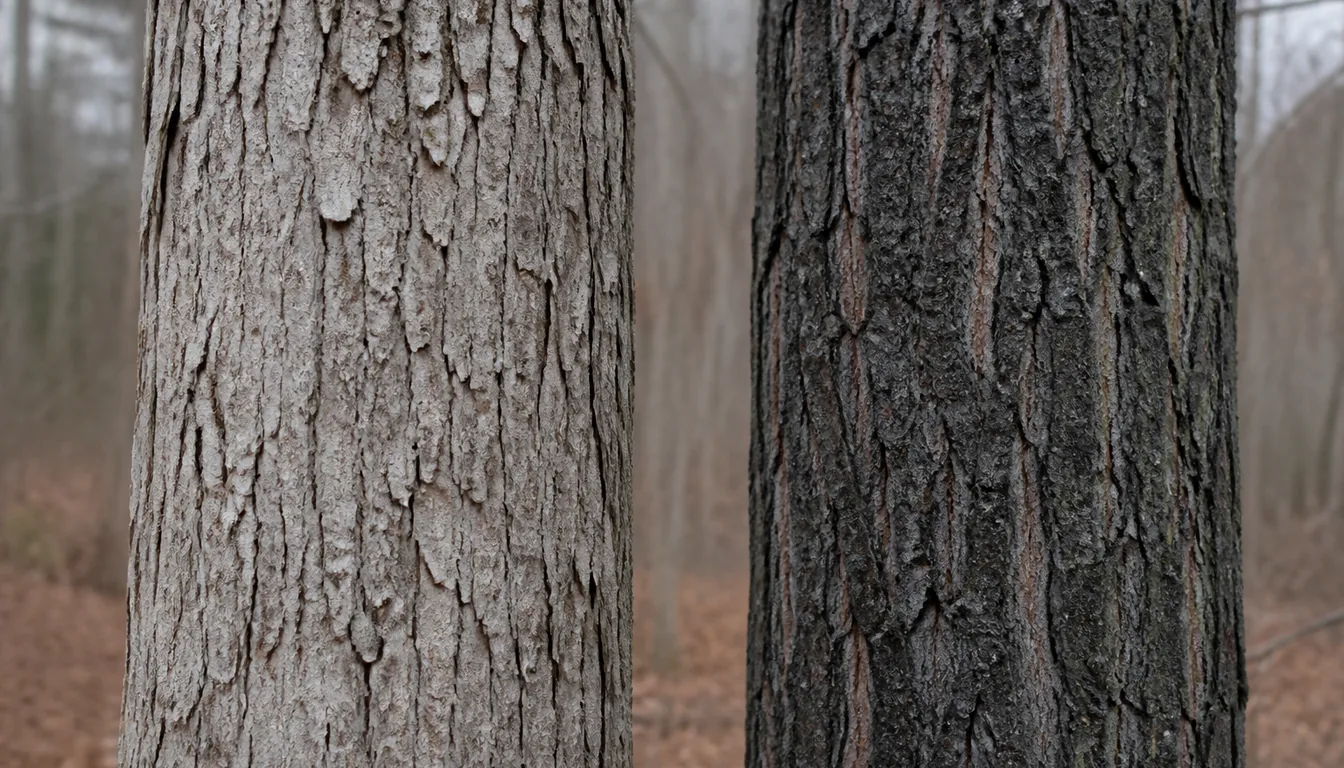
That group identity matters beyond naming the tree. It narrows likely species, helps explain acorn and bark differences, and changes how urgently you should respond to diseases such as oak wilt.
Some oaks have unlobed leaves, evergreen foliage, or narrow crowns, so one feature cannot confirm a species. Check several traits together, including buds, bark, acorns, leaf undersides, and the tree's geographic range.
- Botanical identity
- Genus Quercus in the beech family, Fagaceae
- Key fruit
- An acorn held partly inside a scaly cup
- Typical landscape size
- About 30 to 80 feet tall and wide, with major exceptions
- Light
- Usually full sun for a broad, balanced crown
- Root character
- Wide woody roots plus dense absorbing roots near the soil surface
- Useful first ID split
- Rounded lobes for many white oaks, bristle-tipped lobes for many red oaks
Which Oak Fits Your Soil, Climate, and Available Space?
Choose an oak by its mature dimensions and native range, then refine the choice by drainage and soil reaction.
A fast young tree is a poor bargain if its future crown covers the roof or its roots occupy a wet site the species cannot tolerate.
Bur oak and swamp white oak tolerate cold winters and challenging soils better than many species. Northern red oak grows more quickly on acidic, well-drained ground, while pin oak often develops chlorosis in alkaline soil even when moisture is adequate.
In warmer regions, live oak and willow oak provide large canopies, but neither belongs in a site chosen from a northern hardiness chart. Local provenance matters because two trees sold as the same species may not carry equal heat or cold tolerance.
Soil pH can eliminate attractive choices before planting. If nearby pin oaks or red oaks show yellow leaves with green veins, test the soil rather than assuming the next tree needs fertilizer.
Read the nursery tag for mature height and spread, but confirm those numbers with a regional extension source. Labels sometimes describe a young landscape specimen rather than the crown a healthy oak can develop over decades.
- Cold or exposed site
- Bur oak or a locally sourced white-oak relative
- Moist but draining soil
- Swamp white oak or another floodplain-adapted local species
- Acid, well-drained soil
- Northern red oak where oak wilt risk is understood
- Warm, roomy landscape
- Live oak or willow oak where regionally appropriate
- Restricted width
- A documented columnar cultivar, not a full-crowned species planted too close
Where Can an Oak's Crown and Roots Fit for a Century?
An oak needs a site measured from the mature trunk and crown, not from the edge of its nursery pot.
Large species belong where branches can expand without routine utility pruning and where falling twigs or acorns will not create a constant conflict.
Keep the planting hole away from foundations, pavement, septic components, overhead wires, and narrow property strips. Exact setbacks depend on the species and site, so use the expected crown radius as a starting point and allow extra room around permanent structures.
Roots do not mirror the crown as a deep underground dome. Most absorbing roots occupy oxygen-rich upper soil and can extend well beyond the drip line, which makes broad mulch and uncompacted soil more useful than a tiny ring at the trunk.
A lawn can coexist with an oak, but turf competes with fine roots and encourages mower injury near the trunk. A widening mulch zone reduces both problems as the tree grows.
- Give the crown open sky on most sides so the trunk develops balanced loading.
- Avoid a low pocket that remains saturated after surrounding ground has drained.
- Protect a wide root area from parked vehicles, trenching, and repeated grade changes.
- Place the tree where future shade helps the house or yard without suppressing every sun-loving bed.
How Do You Plant and Water a Young Oak?
Plant an oak with the root flare visible at finished grade. Dig a hole wider than the root system but no deeper than the distance from the flare to the bottom of the root ball.
Remove synthetic wrapping, wire, and constricting ties that would remain around the roots. Backfill with the existing soil unless a site-specific test shows a reason to change it, because a heavily amended pocket can hold water differently from the surrounding ground.
During establishment, water the root ball and the soil immediately beyond it deeply enough to wet both zones. Check moisture with your fingers or a small trowel instead of watering by the calendar, because clay, sand, heat, and rainfall change the interval.
A newly planted oak may need regular checks for two or more growing seasons. Once roots occupy the surrounding soil, longer intervals between deep soakings encourage resilience better than frequent surface sprinkles.
A trunk that enters the soil like a telephone pole is often planted too deep or covered by mulch. Correct the grade early, before buried bark and circling roots create a long-term decline.
- Find the first structural roots and expose the root flare before measuring the hole.
- Set the tree upright with the flare at or slightly above the surrounding grade.
- Spread or correct circling roots where the root system allows it.
- Backfill in lifts, water to settle the soil, and avoid compacting it with your feet.
- Add a broad 2 to 3 inch mulch layer while keeping mulch off the bark.
Can You Grow an Oak From an Acorn?
You can grow a species oak from a fresh, viable acorn, but the seedling will not reproduce a named cultivar exactly.
Acorns lose viability when they dry, overheat, or sit damaged on the ground.
Collect mature acorns from a healthy local tree and discard those with insect holes, mold, or shriveled tissue. A float test can help with a batch, but cutting a small sample gives a more reliable view of whether the interior is firm and pale.
White-oak-group acorns commonly germinate soon after falling and should be planted promptly. Many red-oak-group acorns need a period of cold, moist stratification, so correct treatment begins with knowing the parent group.
Oak seedlings invest heavily below ground before they look impressive above ground. Keep the medium evenly moist, provide strong light after emergence, and do not compensate for slow top growth with heavy fertilizer.
- White-oak group
- Plant promptly because many species begin germination soon after the acorn falls
- Red-oak group
- Provide the species-appropriate period of cold, moist stratification
- Named cultivar
- Buy a clonally propagated nursery tree when exact crown or foliage traits matter
When Can You Prune an Oak Without Raising Oak Wilt Risk?
Prune a young oak to establish one main trunk, well-spaced scaffold branches, and clear attachment angles. Small early cuts close more readily than the large corrections required after competing leaders thicken.
Where oak wilt occurs, avoid elective pruning during the locally active high-risk season. Fresh wounds can attract sap-feeding beetles that move spores from infected trees, and regional timing differs enough that local extension guidance should control the calendar.
Winter is the safest general pruning window in many oak-wilt regions because beetle activity and fungal spread are low. Dead, broken, or immediately hazardous limbs may require faster action, but emergency work should follow local wound-management advice.
Routine wound paint is not a general cure for pruning cuts. The important exception is a fresh wound made during oak-wilt risk in an affected area, where authorities may recommend immediate covering to reduce beetle contact.
Keep one developing leader, retain branches with broad attachments, and avoid removing a large share of the live crown in one season.
Make each cut just outside the branch collar without leaving a stub.
Is the Browning Oak in Drought Stress, or Could It Be Oak Wilt?
Start diagnosis with the pattern of damage, not the color brown. Note which branches changed first, how quickly symptoms moved, whether leaf margins or entire sectors are affected, and what happened to the roots or soil before symptoms appeared.
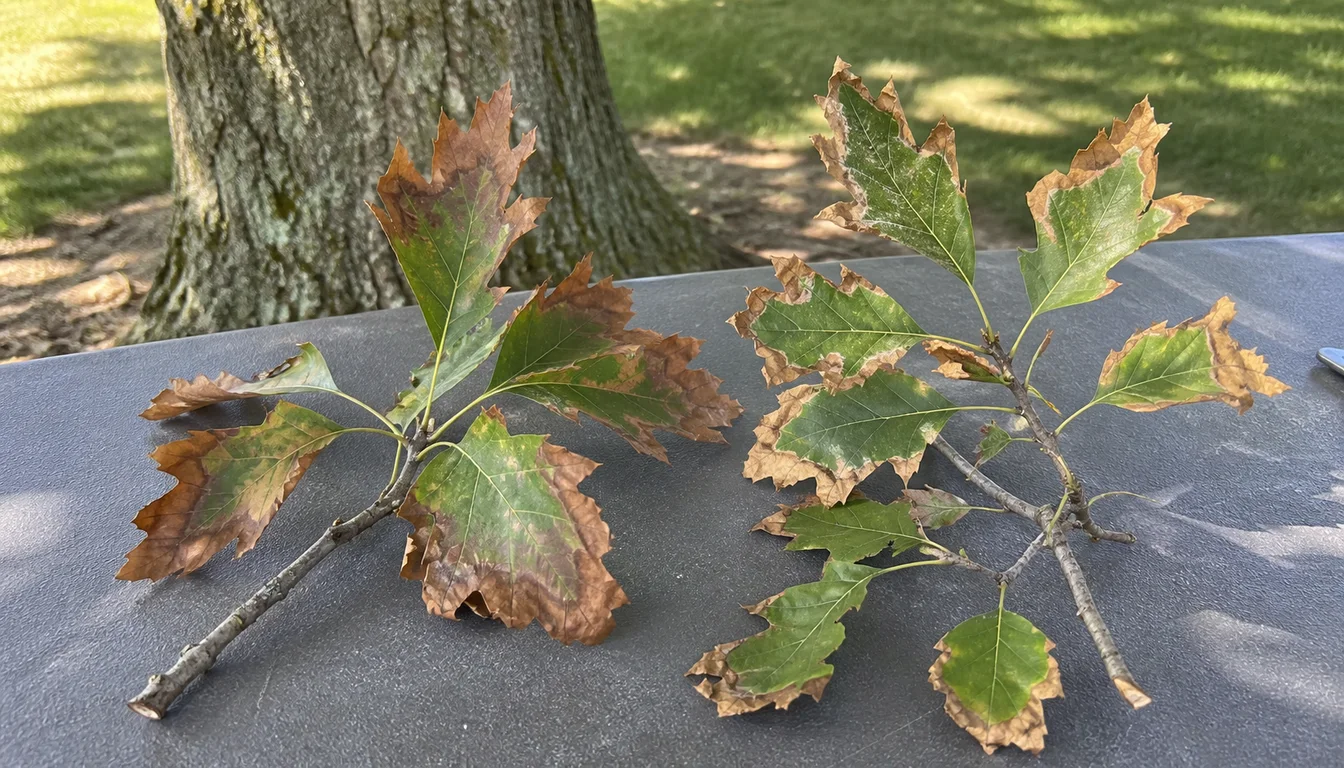
Drought and root loss often produce crisp browning at leaf tips and margins across much of the crown. Recent trenching, compacted soil, grade changes, or a failed irrigation zone can create the same water-shortage pattern even when rain has been normal.
Oak wilt can cause rapid bronzing, wilting, or leaf drop, often beginning in the upper crown of susceptible red-oak-group trees. The visual pattern overlaps with other disorders, so a photograph alone cannot confirm the pathogen.
Do not prune suspect branches simply to inspect them during an oak-wilt risk period. Photograph the whole crown and close symptoms, record the timeline, and contact a qualified arborist or diagnostic laboratory before creating fresh wounds.
A declining oak may have several causes at once. Heat and drought can weaken roots, then borers or cankers exploit stressed tissue, so killing a visible insect does not necessarily correct the original problem.
- Crisp margins across many leaves: Check drought, root injury, compaction, salt, and irrigation coverage.
- Rapid upper-crown bronzing or wilt: Treat possible oak wilt as urgent where the disease occurs.
- One dead limb with rough or sunken bark: Inspect for canker, borer activity, or an old wound.
- Yellow tissue between green veins: Test soil pH and investigate nutrient availability, especially on pin oak.
- Scattered chewing or galls: Measure actual canopy loss before choosing a treatment.
Should You Plant an Oak Near a House, Pasture, or Wildlife Garden?
An oak is one of the strongest choices for long-term shade and wildlife value when the site can support its mature crown.
Acorns feed many birds and mammals, and oak foliage supports a broad range of caterpillars that become food for nesting birds.
That ecological value arrives with falling acorns, leaves, twigs, and deep seasonal shade. Place the tree where those materials can remain under part of the canopy or be collected without blocking a walkway, gutter, or frequently used patio.
Acorns and young oak foliage contain tannins that can harm livestock when eaten in large amounts, especially during scarce forage periods. Pasture placement requires species-aware management and an animal-health plan rather than assuming a native tree is harmless.
Near a house, the main concerns are clearance, branch structure, soil volume, and future access for inspection. A properly placed oak is not automatically dangerous, but a cramped tree with buried roots or uncorrected defects becomes harder and more expensive to manage.
If the lot cannot hold a full canopy, choose a genuinely smaller species or documented narrow cultivar. Repeatedly cutting a large oak to fit a small space defeats the reason to plant a long-lived shade tree.
Frequently Asked Questions
How quickly does an oak become a shade tree?
Growth depends on species, soil, moisture, and establishment. Some red oaks add height relatively quickly, but an oak should be chosen for its mature fit and health rather than a promised annual rate.
Can an oak be planted in a small yard?
Only when the documented mature crown and root area fit without repeated reduction pruning. A narrow cultivar or smaller regional species is safer than placing a full-sized oak close to a house.
Do established oaks need fertilizer every year?
Most healthy oaks do not need annual fertilizer. Test the soil and investigate root stress before feeding a tree with pale leaves or weak growth.
Why are leaves on my pin oak yellow with green veins?
That pattern often indicates iron chlorosis associated with alkaline soil. A soil test and correct species diagnosis are more useful than applying a general fertilizer.
Should I remove oak galls from the tree?
Most leaf and twig galls are more conspicuous than damaging. Identify the gall and measure canopy health before treating, because cutting or spraying is often unnecessary.
Sources & References
Related Plants
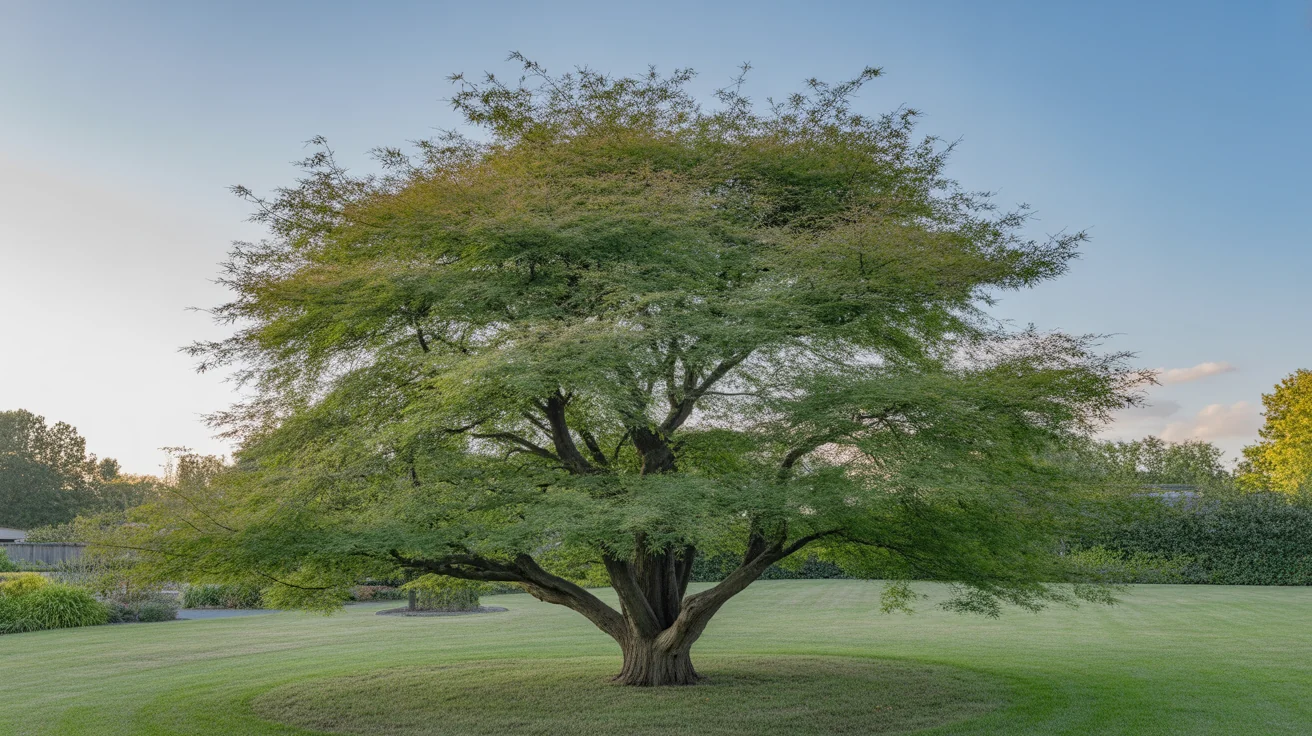
Japanese Maple
Smaller ornamental tree with vivid foliage color that pairs well with the bold structure of oaks.
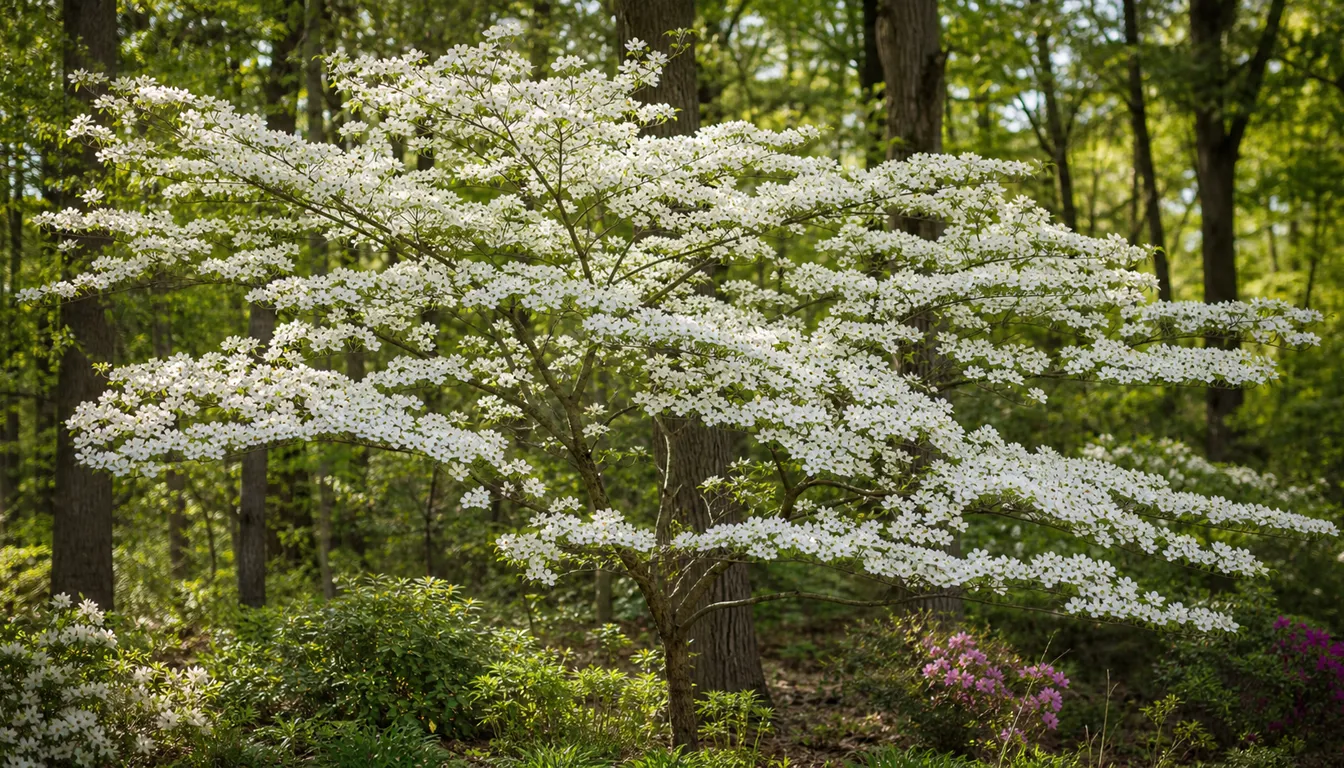
Flowering Dogwood
Flowering understory tree that thrives in dappled shade beneath mature oaks.
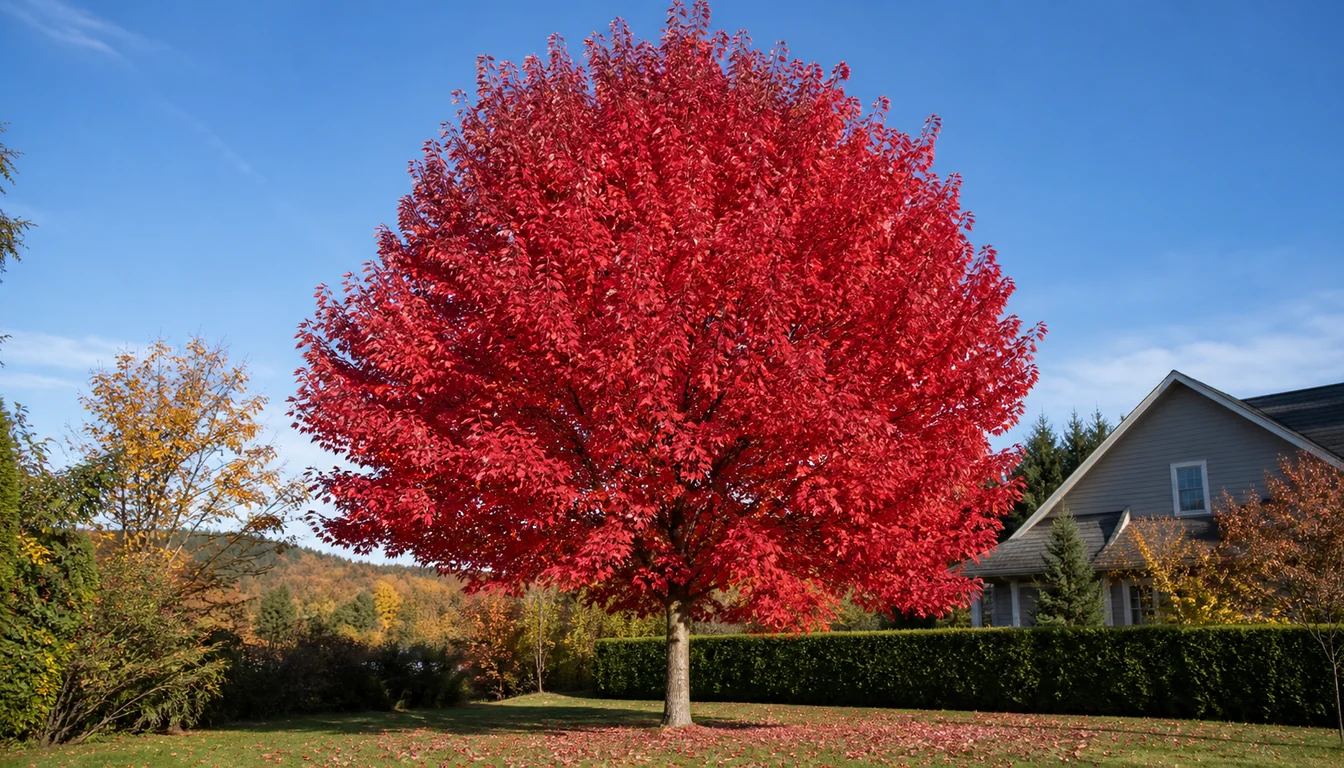
Red Maple
Fast-growing shade tree with bright fall color and somewhat smaller mature size than many oaks.
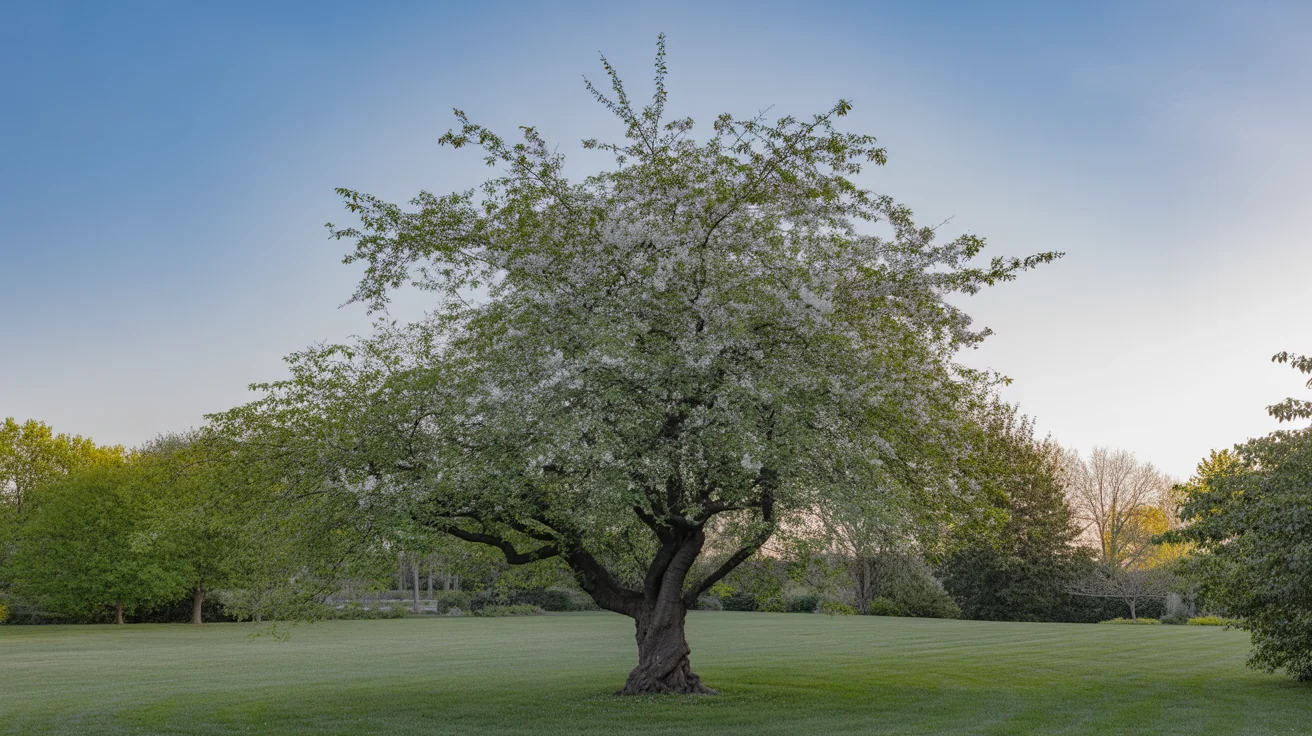
Cherry Blossom Tree
Cherry blossom tree is a common name for ornamental cherries grown for spring flowers rather than a useful fruit crop.
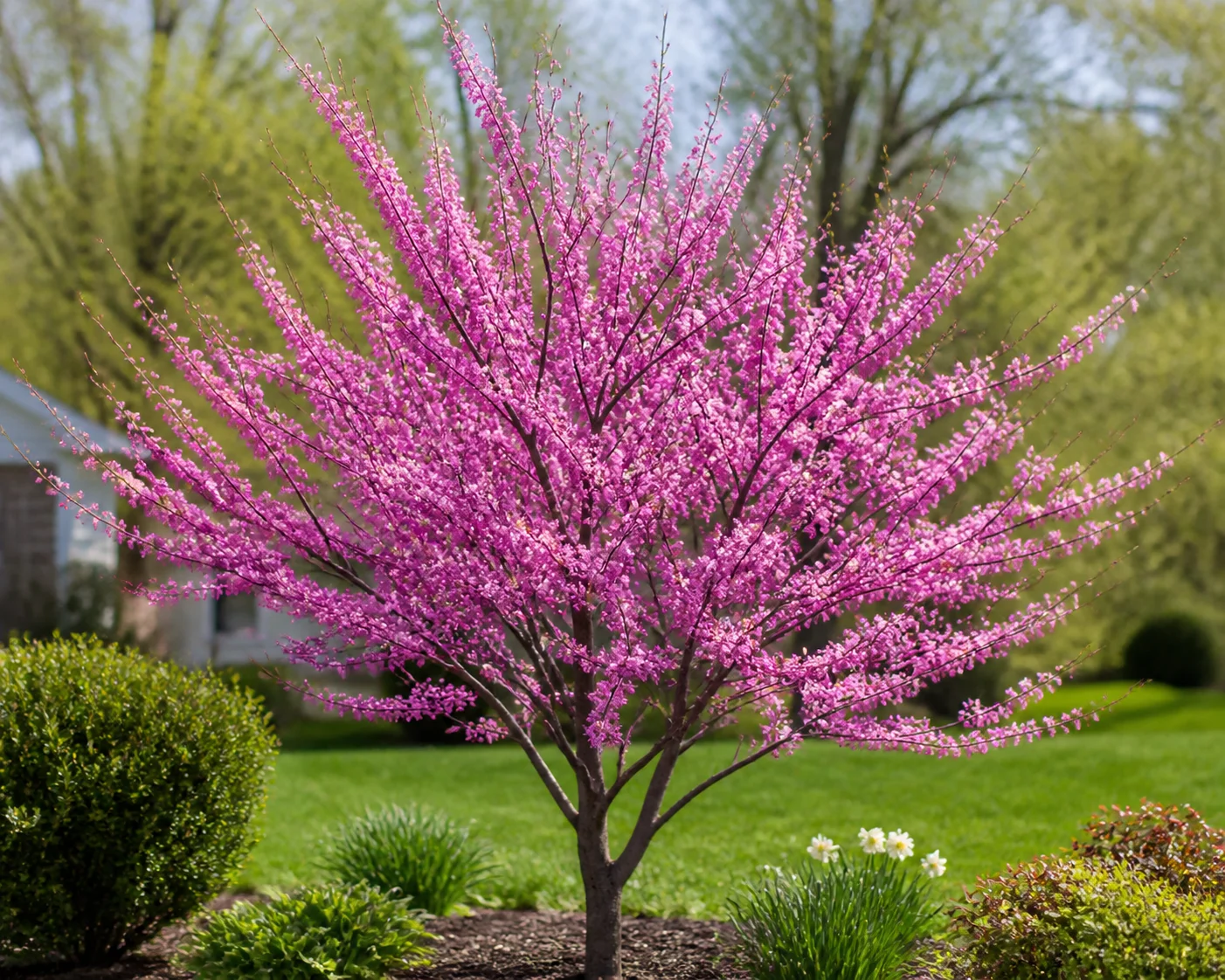
Eastern Redbud
Eastern redbud is a small North American tree with pea-like flowers that open on bare twigs and older wood.
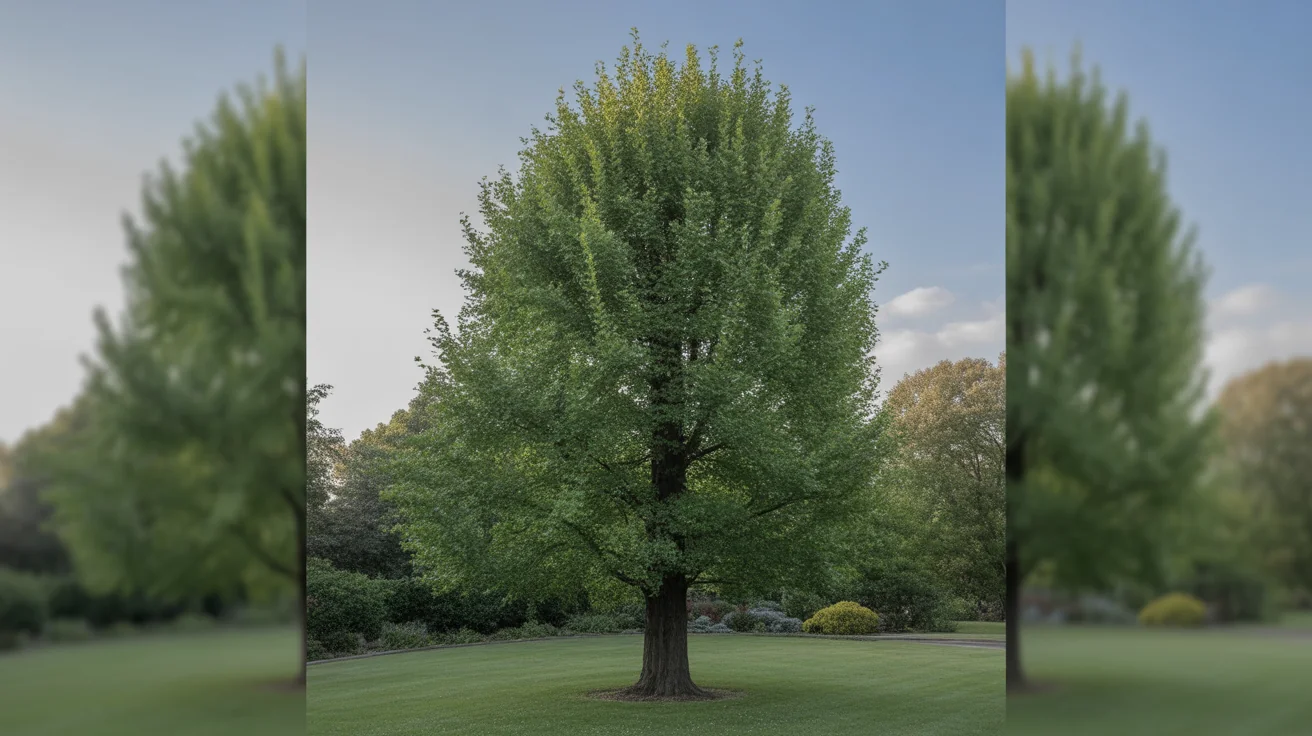
Ginkgo Tree
Ginkgo is not a plant for instant gratification. It is a patient tree that rewards the right buyer decision up front…