
What's a Serviceberry? How to Get the Fruit Before the Birds
Amelanchier spp. Rosaceae
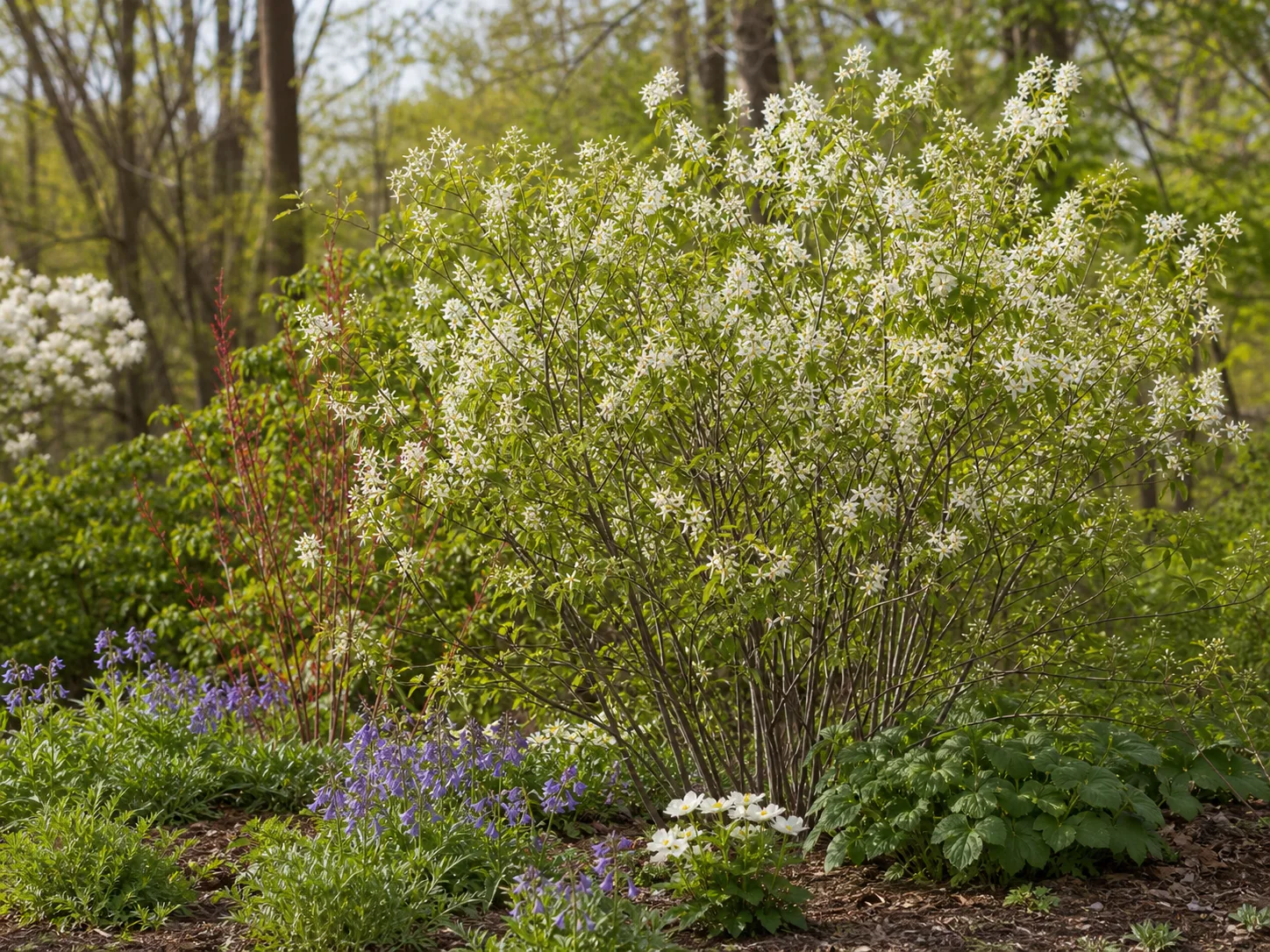
Serviceberry (Amelanchier) is a small rose-family tree that gives white flowers in very early spring, edible purple fruit in June, orange-red fall color, and smooth gray winter bark on a footprint of about 20 ft. The catch is the harvest, because the fruit ripens over roughly two weeks and the birds find it the day it first darkens.
Care snapshot
What Is a Serviceberry, and Why Does It Have Five Names?
Serviceberry is the North American name for Amelanchier, a genus of about twenty small trees and shrubs in the rose family. The same plant is sold as juneberry, saskatoon, shadbush, and shadblow, which is why nursery tags, foraging guides, and recipes so often read as though they are describing different plants.
Each of those names records something local, either the month the fruit ripens or the week the tree flowers.
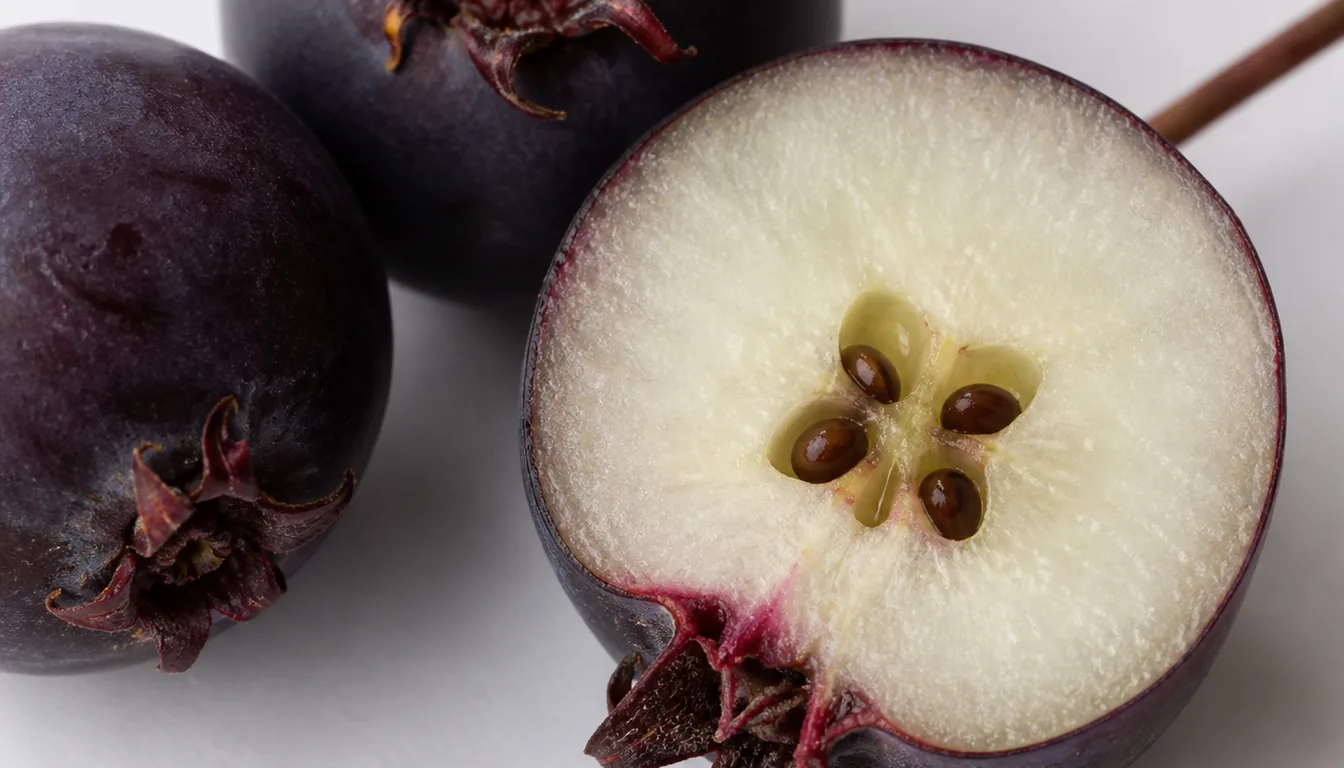
The fruit is not a berry at all.
It is a pome, the same structure as an apple, shrunk to blueberry size with the seeds in a small core at the middle. That is why ripe fruit tastes like blueberry with a distinct almond note behind it, since the seeds carry the same faint almond flavor apple seeds do.
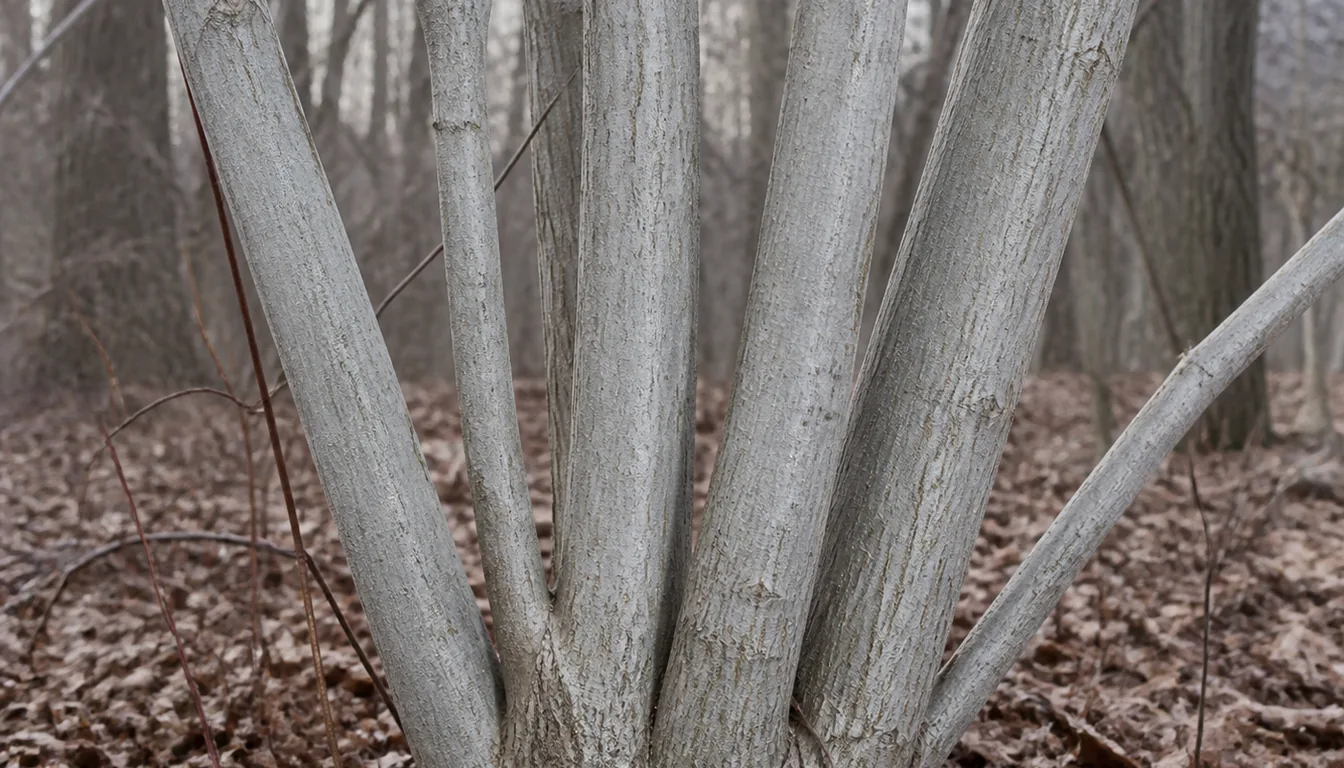
Above ground the plant reads as a small tree or a large multi-stem shrub, usually 15 to 25 ft tall, with smooth pale gray bark worth looking at all winter.
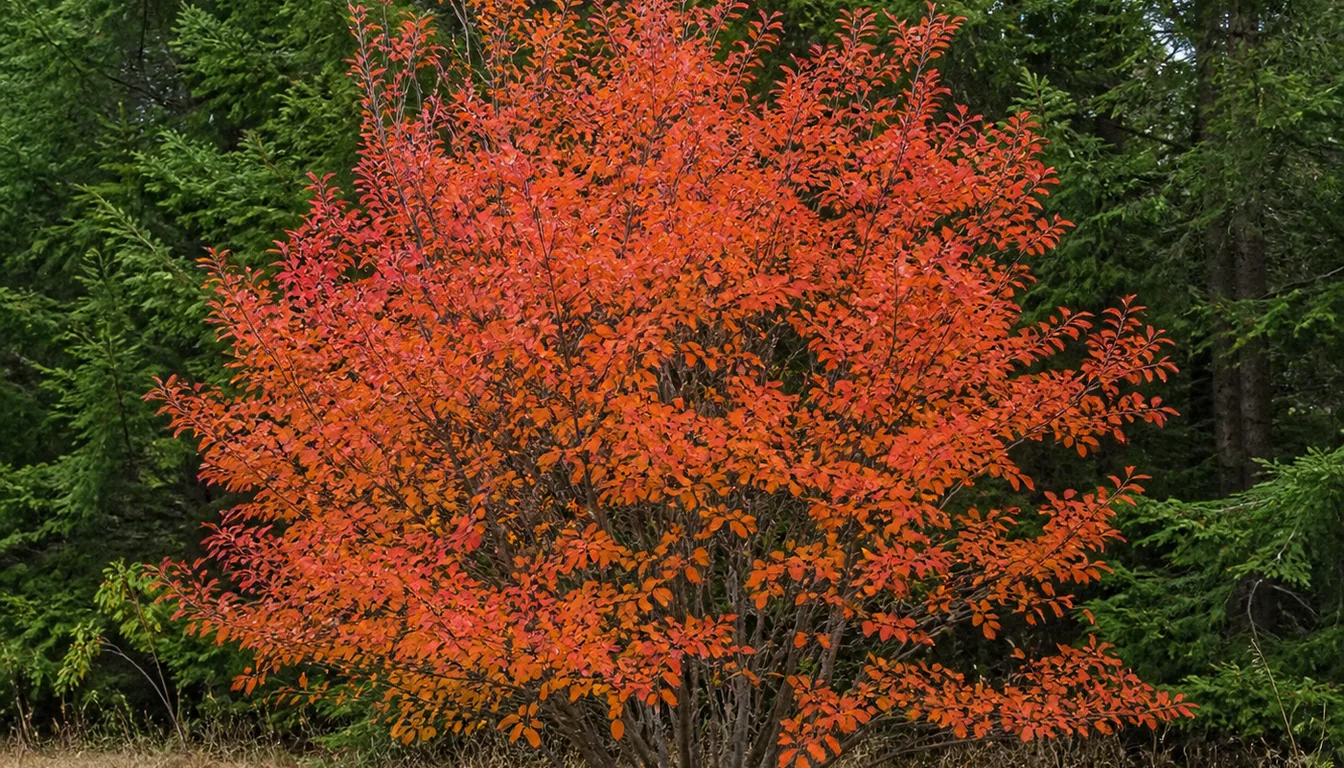
White flowers open very early, often before the leaves are fully out, which puts them in front of native bees in the week those bees leave hibernation and have almost nothing else to work. Fall color runs orange to red, stronger than most small flowering trees manage once the bloom is finished.
- Serviceberry
- The general North American name for the whole genus Amelanchier, and the one nursery tags usually carry.
- Juneberry
- Eastern states. Marks the month the fruit ripens, which is accurate in Zones 5 to 7 and early elsewhere.
- Saskatoon
- Canadian prairies, and specifically Amelanchier alnifolia. A staple food of Plains communities long before settlement.
- Shadbush or shadblow
- New England. Marks the week the tree flowers, which was when shad ran upstream to spawn.
- The fruit itself
- A pome, the same structure as an apple, not a berry. The seeds in its small core carry the almond note.
When Are Serviceberries Ripe, and How Do You Beat the Birds?
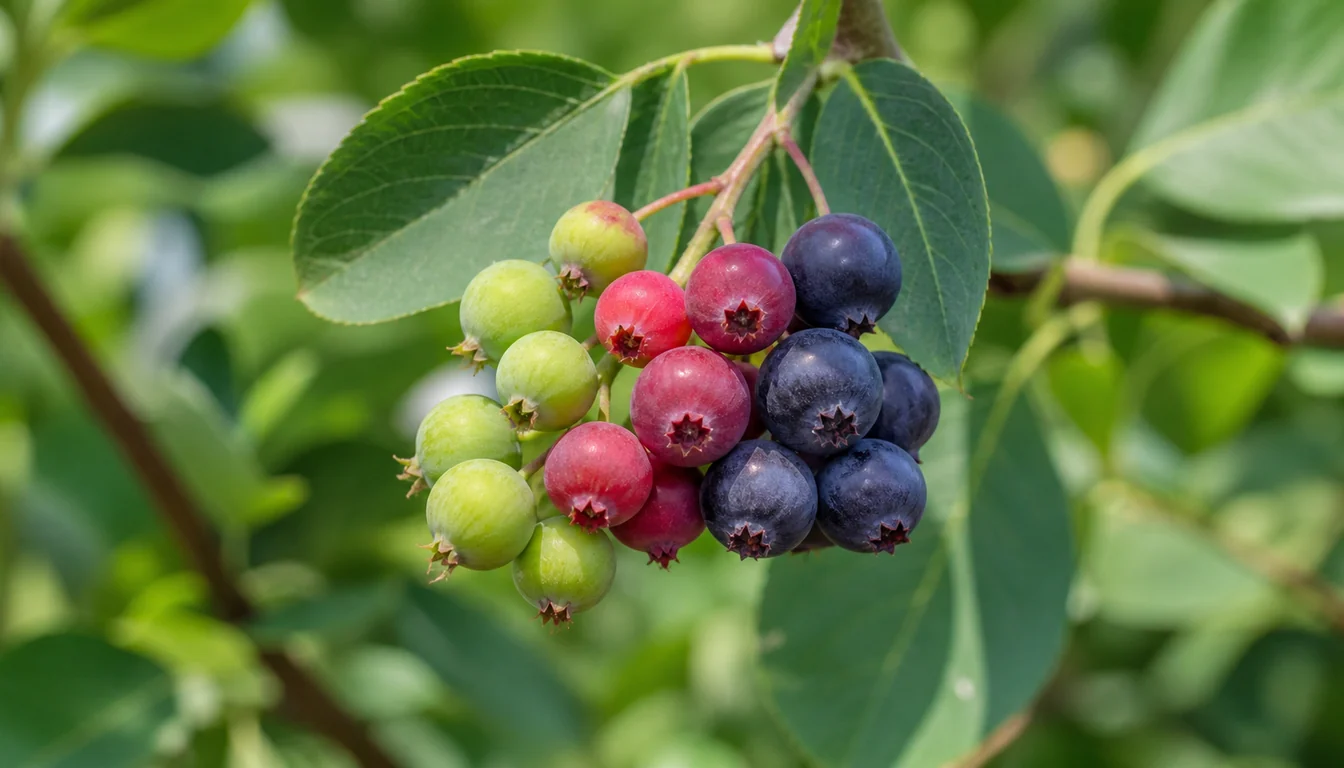
Red is not ripe. That single mistake costs more serviceberry harvests than birds do, because the fruit turns red about a week before it is edible and stays hard, sour, and drying in the mouth the whole time.
Three signs have to arrive together before a berry is worth picking.
Depending on the zone and the season that happens somewhere between late May and early July, and the crop does not turn all at once. One tree ripens over ten days to two weeks, which is what makes daily picking work and a single harvest day pointless.
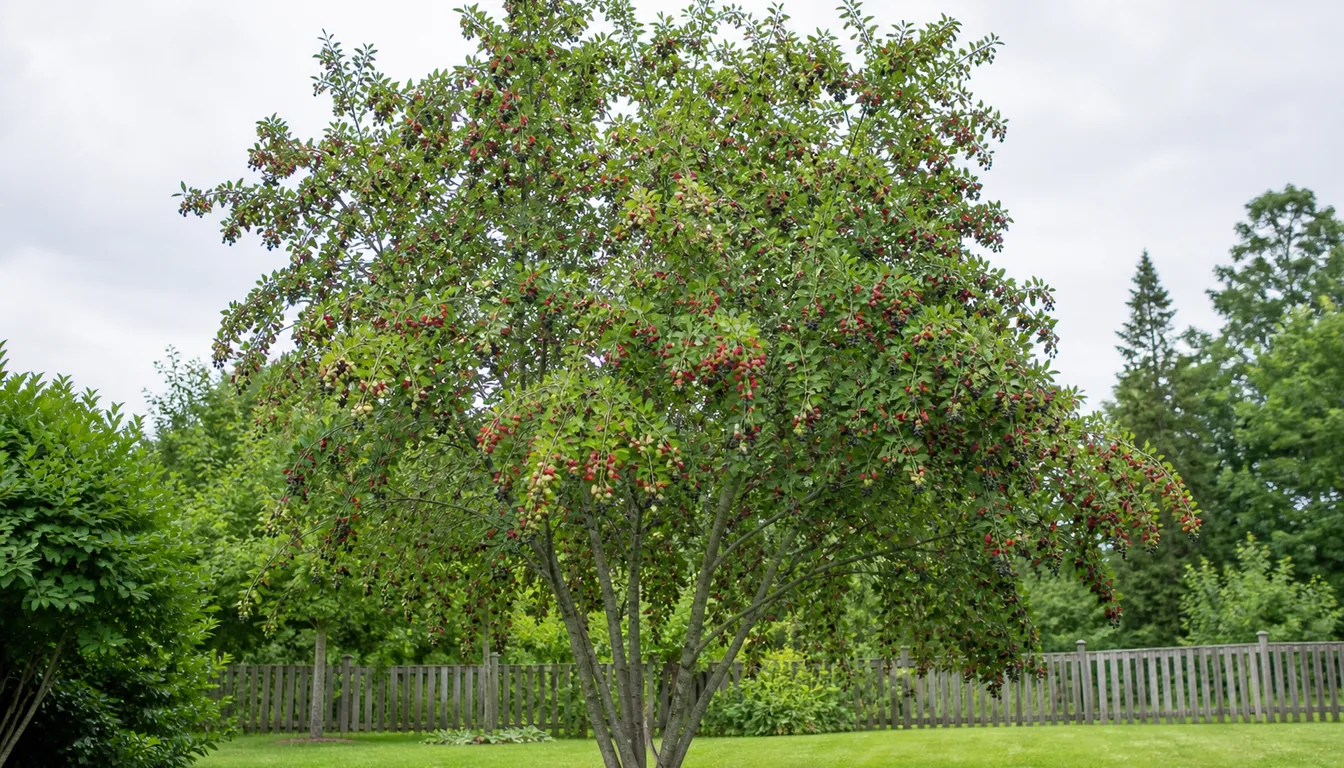
Birds find the tree the day the first fruit darkens.
Cedar waxwings arrive in flocks and can strip a small tree in an afternoon, and robins and catbirds work it steadily for the rest of the window.
There is no clever trick that beats them, only two honest options. Pick a handful every morning and accept that the birds get most of it, or throw bird netting over the whole canopy the day the first berries turn red and leave it on until you are done.
Netting a multi-stem clump is genuinely awkward, which is one of the better arguments for training a single trunk when fruit is the point.
Fresh fruit keeps about two days in the fridge and then collapses. Spread it in a single layer and dry it, the way saskatoon fruit was dried and pounded into pemmican, and it holds for months in a jar.
- Color has gone past red to a deep purple that is nearly black.
- A faint dusty bloom sits on the skin, the way it does on a blueberry.
- The berry gives slightly when you roll it between finger and thumb.
- It pulls off the stalk without tearing. A berry you have to tug is still a week away.
Do You Need Two Serviceberries to Get Fruit?
Most serviceberries set fruit on their own, so one tree in a yard will crop. Whether it crops well is a different question.
Amelanchier is botanically messy, and several species and nursery selections set seed apomictically, producing fruit and viable seed with no pollination at all.
That is why a lone tree still fruits, and it is also why a lone tree often fruits lightly. The same plants set noticeably heavier crops when a genetically different serviceberry is flowering within bee range.
Pair 'Autumn Brilliance' with a straight species plant, with 'Princess Diana', or with a saskatoon selection rather than buying two of the same tag. A neighbor's tree two gardens over does the job just as well.
The bigger yield variable is usually weather. Bloom comes so early that a hard frost during flowering, or a cold wet week that keeps bees indoors, cuts the crop no matter how many trees are planted.
Where Should You Plant One, and How Big Does It Get?
Full sun is what turns a serviceberry into a fruiting tree rather than a flowering one. Give it six hours or more in Zones 4 through 7, because bloom density, fruit size, and sugar all track light directly.
In Zone 8 and 9 an hour or two of afternoon shade keeps the leaves cleaner and the soil more even, but the site still has to be bright and open rather than a dark side yard.
Mature size depends on which species you bought far more than on how you treat it. The Amelanchier x grandiflora selections in most nurseries settle near 20 ft, A. laevis and A. canadensis run 15 to 25 ft, and saskatoon stays a 6 to 12 ft shrub.
Soil should be slightly acid to neutral, reasonably rich, and drained. The plant grows along stream banks in the wild, so it handles ordinary garden moisture better than most small ornamentals, though water standing for days after a storm still drowns it.
One siting rule matters more than the size and gets missed constantly.
Put it over lawn or a planting bed, or far enough back that the canopy does not overhang paving.
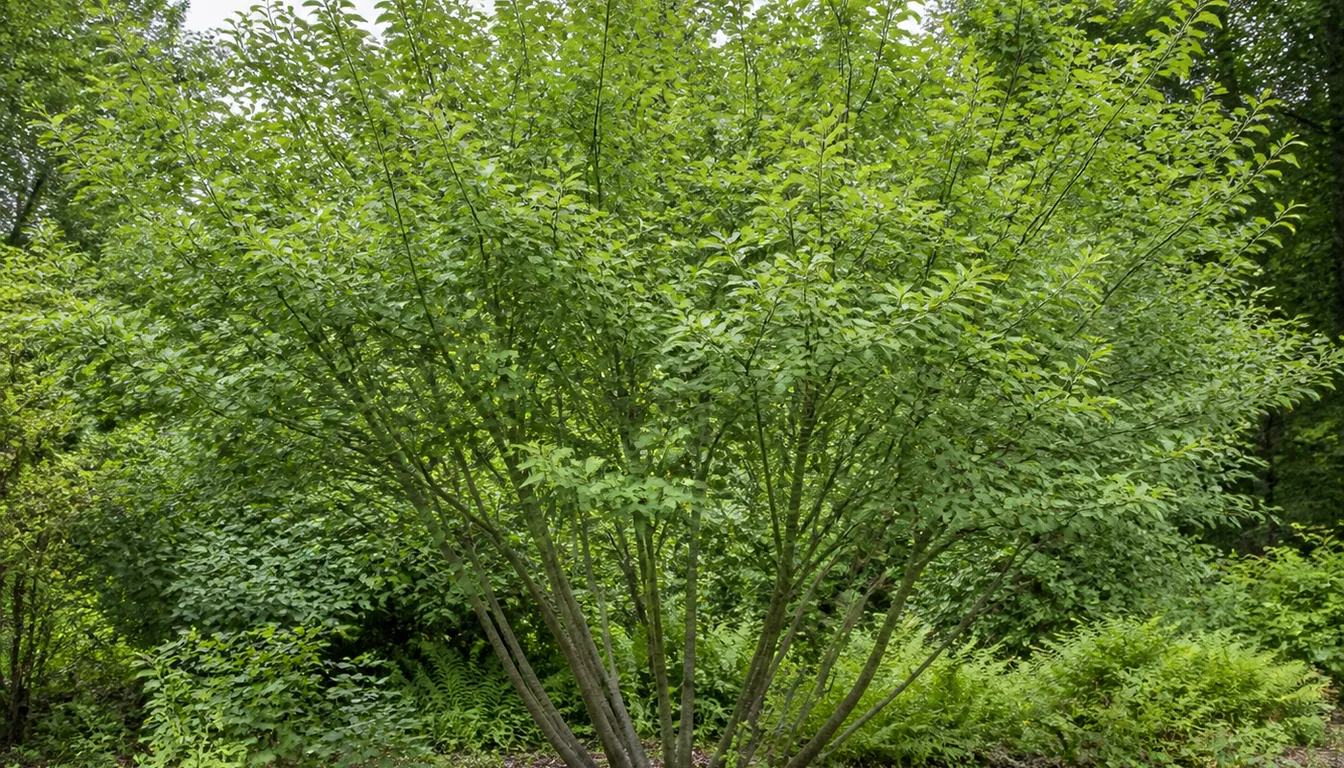
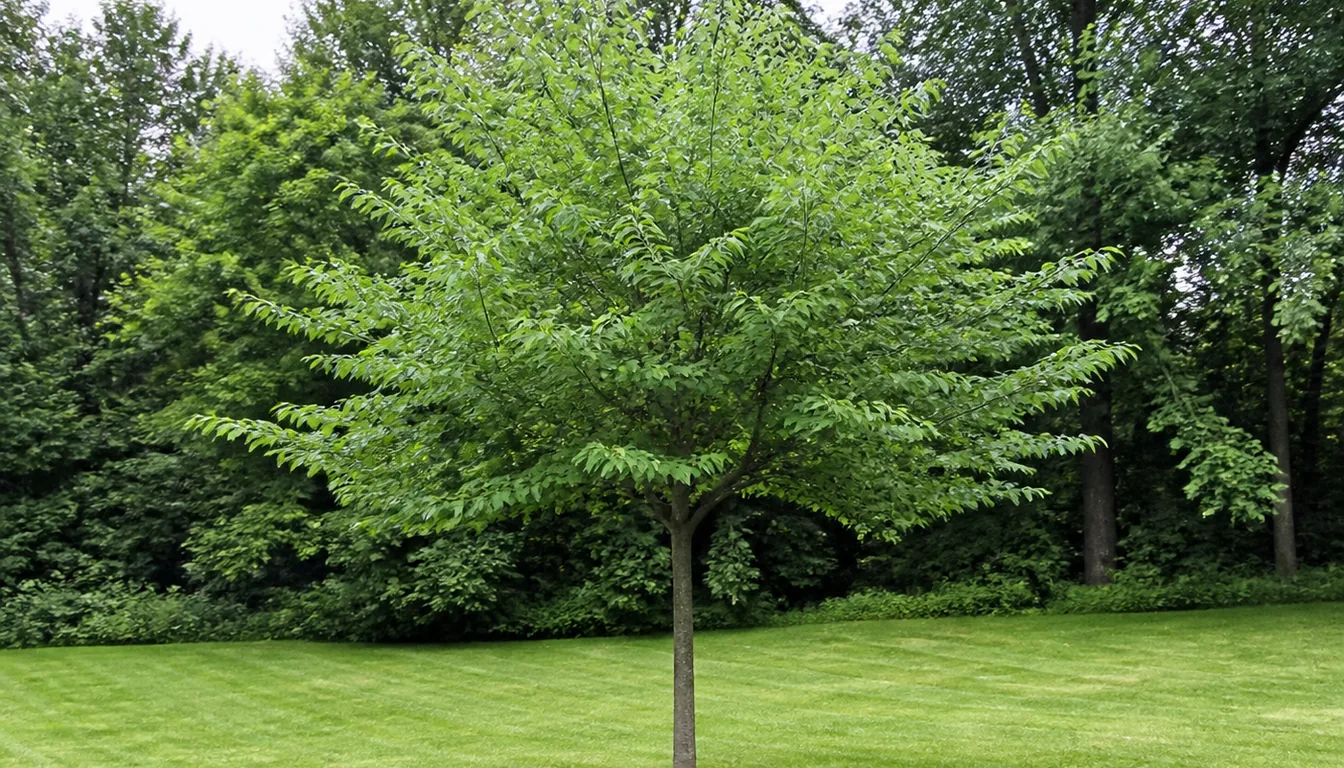
Form is the last decision and the easiest one to make early, because a multi-stem clump suits a naturalized bed and a woodland edge while a single trunk gives clean access underneath, nets far more easily, and reads correctly beside a front door.
- Amelanchier x grandiflora, including 'Autumn Brilliance'
- The usual nursery tree at about 20 ft tall and wide, with the most reliable orange-red fall color.
- Amelanchier laevis and A. canadensis
- 15 to 25 ft, more often sold as a multi-stem clump for naturalized beds and woodland edges.
- Amelanchier alnifolia, the saskatoon
- A 6 to 12 ft shrub bred on the prairies for fruit rather than form, and by far the easiest to pick.
- Multi-stem versus single trunk
- A clump looks native and shows more bark. A single trunk mows around easily, nets easily, and suits an entry.
Why Are the Leaves Covered in Orange Spots?
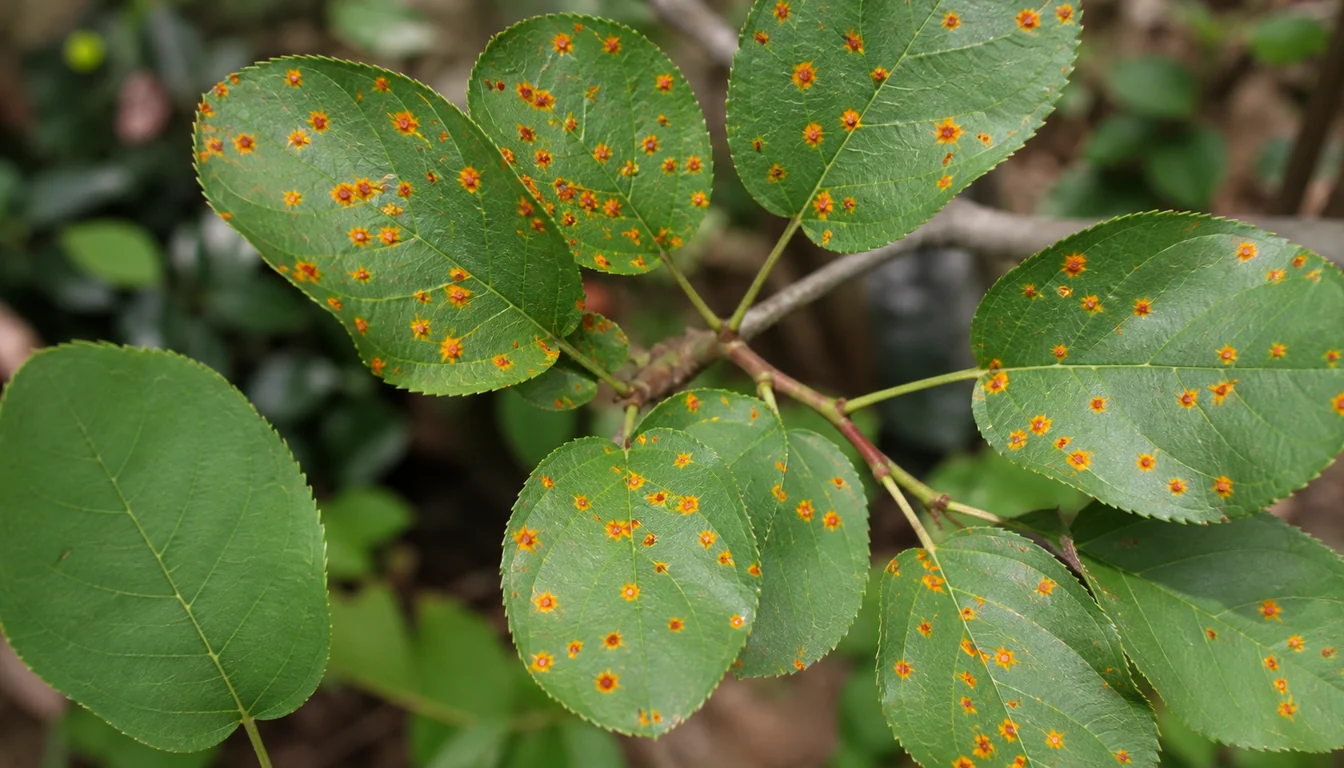
Bright orange to rusty-yellow spots on the upper leaf surface, often with a matching bump underneath that grows tiny tube-like projections by midsummer, are cedar-serviceberry rust. It is the same family of fungi that spots crabapples and hawthorns, and Serviceberry inherits it by being in the rose family.
The fungus cannot complete its life cycle on serviceberry alone.
It needs a juniper or an eastern red cedar within a few hundred yards, where it overwinters as a gall.
Wet springs make it worse, because the spores travel on wind during rain and infect young leaves.
It disfigures foliage and occasionally the fruit, and it does not kill the tree. A badly spotted serviceberry loses some leaves in August and comes back normally the next year.
Removing every juniper within range is the only real control, and it is almost never worth doing. The practical answer is to accept the spotting, rake and bin fallen leaves to reduce next season's load, and, if you are still choosing a planting spot, keep the tree away from an established cedar hedge.
What Turns the Shoot Tips Black and Curled?
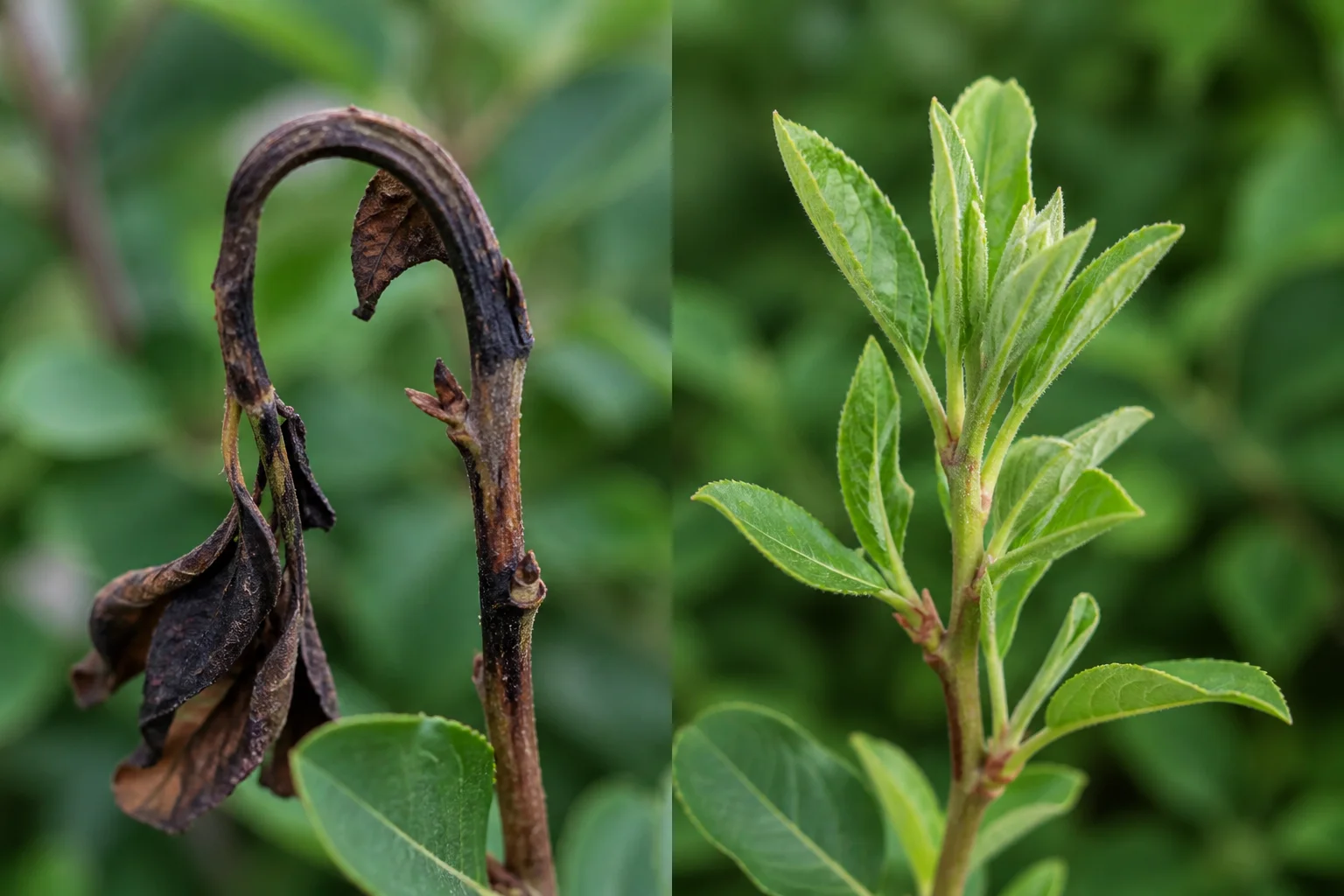
A shoot tip that has gone black, shriveled, and bent over into a hook is fireblight, and it is the one Serviceberry problem worth reacting to the same week you notice it.
The bacteria enter through open flowers during warm, humid bloom weather, then run back down the shoot faster than the tree can wall them off.
The hooked tip is the diagnostic. Rust spots the leaves and leaves the wood alone, while fireblight kills the wood from the tip backward and the dead leaves stay attached instead of dropping.
Cut it out the week you see it, and do the whole job in one pass.
The bacteria travel on a pruner far more efficiently than they travel through a tree, so one unwiped cut can seed three new infections.
Avoid heavy nitrogen feeding on a tree that has had fireblight, because the soft fast growth it produces is exactly what the bacteria colonize most easily.
A white powdery film on the leaves is a third and much milder problem. It is mildew, and it almost always means the canopy is crowded and slow to dry, which thinning fixes better than any spray.
- Wait for dry weather. Cutting in the rain spreads the bacteria further than leaving the shoot alone.
- Trace the blackened wood back to where it turns healthy, then cut 8 to 12 inches further down again.
- Wipe the blades with alcohol, or dip them in dilute bleach, between every single cut.
- Bag or burn what you removed. A brush pile beside the tree keeps the infection in the yard.
How Do You Prune Without Losing Next Year's Fruit?
Serviceberry flowers on wood that formed the previous summer, so anything cut after about midsummer is next spring's bloom and next June's fruit going into the bin.
Prune in late winter while the plant is bare and the branch structure is readable, which is also when you can still see which stems are crossing.
The exception is fireblight, which comes out the moment you find it whatever the date.
Thin, do not shear. Shearing costs the flowers, hides the pale gray bark that carries the plant through winter, and turns a distinctive small tree into a green blob that could be anything.
Either way, the goal is a middle open enough that leaves dry after rain, because a crowded canopy turns mildew and rust from cosmetic into persistent.
- On a multi-stem clump: Take out the oldest and most crowded stems at ground level over several years and let younger ones replace them. Somewhere around three to seven strong stems, rather than a thicket.
- On a single trunk: The job is mostly suckers. They come up from the base every year and quietly turn the tree back into a clump if you let them.
- On either form: Thin the middle rather than shortening the outside, so the pale gray bark stays visible through winter.
Is Serviceberry Safe Around Pets, and Is It Worth the Space?
The fruit is edible for people, but no ASPCA or NC State pet toxicity record was found for serviceberry, so its effect on a dog or cat that eats fallen fruit is unknown. There are no thorns, no irritating sap, and nothing about the plant that makes it a bad choice around children.
The seeds contain the same trace cyanogenic compounds apple seeds do, which matters only in theory, since you would have to deliberately grind and eat a very large quantity of them to reach a dose.
Deer browse young stems but rank serviceberry as ordinary rather than a favorite, and rabbits gnaw bark at ground level in winters with deep snow. A trunk guard for the first few winters covers both.
What earns the space is the number of jobs the plant does at once.
It carries white flowers when almost nothing else is open, feeds early native bees during that gap, produces fruit you can actually eat, colors orange-red in fall, and shows clean gray bark all winter, all on a footprint that fits a front garden.
Very few small trees do more than two of those.
A dogwood gives the bloom and the fall color without the fruit, and a crabapple gives fruit the birds want but you do not.
The honest cost is the disease list and the harvest race. Accept that rust may spot the leaves in a cedar neighborhood, watch for a blackened tip each spring, and decide before you plant whether the crop is yours or the birds'.
Frequently Asked Questions
What do serviceberries taste like?
Ripe fruit tastes close to a mild blueberry with a clear almond note behind it, which comes from the seeds in the small core. Underripe red fruit tastes sour and dries the mouth, which is why so many people try one, decide they dislike them, and never pick again.
Can you eat serviceberries raw?
Yes, straight off the tree once they are purple-black and soft. They also cook into pie, jam, and syrup the way blueberries do, and they dry well enough to keep for months.
How long does a serviceberry take to start fruiting?
A nursery tree planted at 5 or 6 ft usually sets its first real crop in the second or third year, and reaches full production around year five. A saskatoon shrub often fruits the year after planting.
Do serviceberry roots damage foundations or pipes?
No. The root system is fibrous and modest in scale next to a shade tree, which is one of the reasons this species works within 10 or 12 ft of a house where a maple or a willow would not.
Why did my serviceberry flower heavily and set almost no fruit?
Check the weather during bloom first, because a frost on open flowers or a cold wet week that keeps bees grounded wipes out a crop entirely. After that, look at light levels and at whether the fruit set and then disappeared, which is a bird problem rather than a pollination one.
Sources & References
- Serviceberry, University of Minnesota Extension
- Serviceberries, Clemson Cooperative Extension Home and Garden Information Center
- Amelanchier, Royal Horticultural Society
- Amelanchier canadensis, Missouri Botanical Garden Plant Finder
- Serviceberry, University of Maine Cooperative Extension
- Amelanchier (Common Serviceberry, Downy Serviceberry, Juneberry, Saskatoon, Serviceberry, Shadblow, Shadbush, Sugarplum) | North Carolina Extension Gardener Plant Toolbox
Related Plants
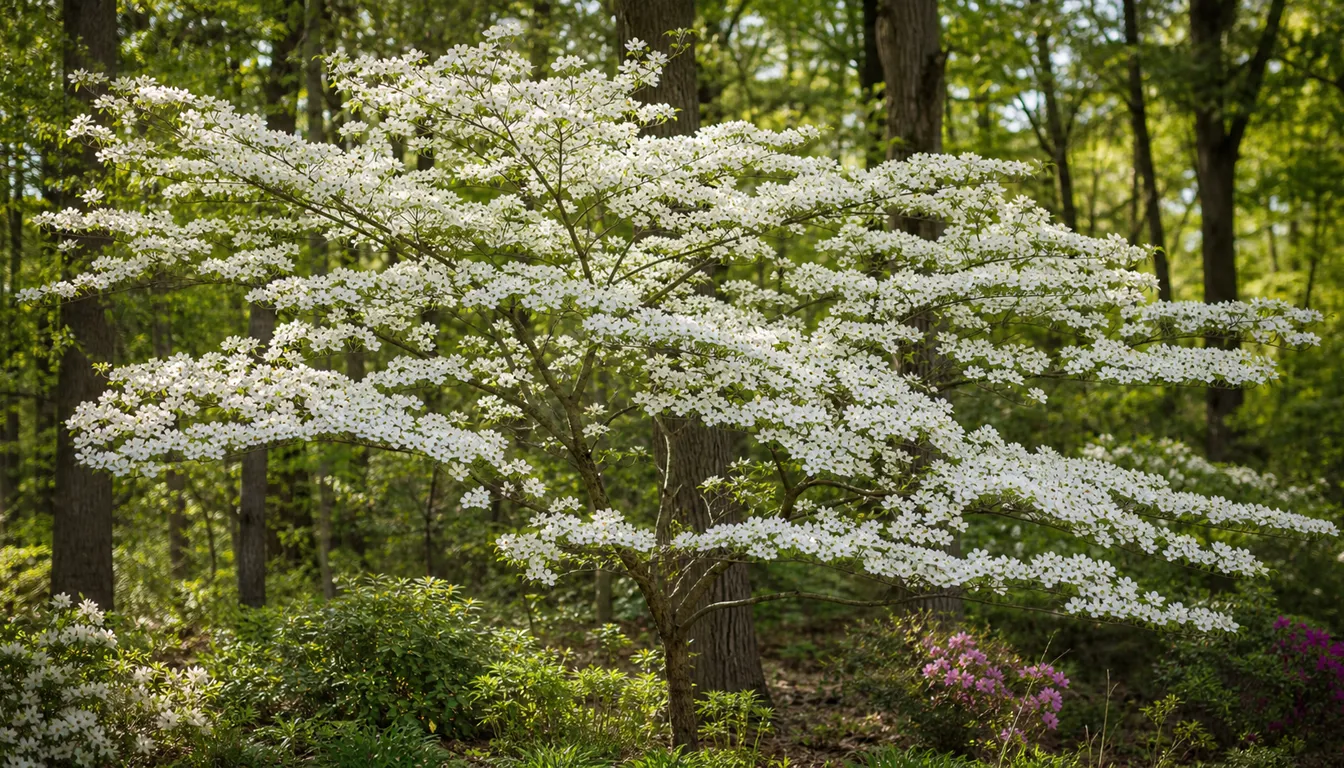
Flowering Dogwood
The usual alternative when you want the spring bloom and fall color without a fruit crop.
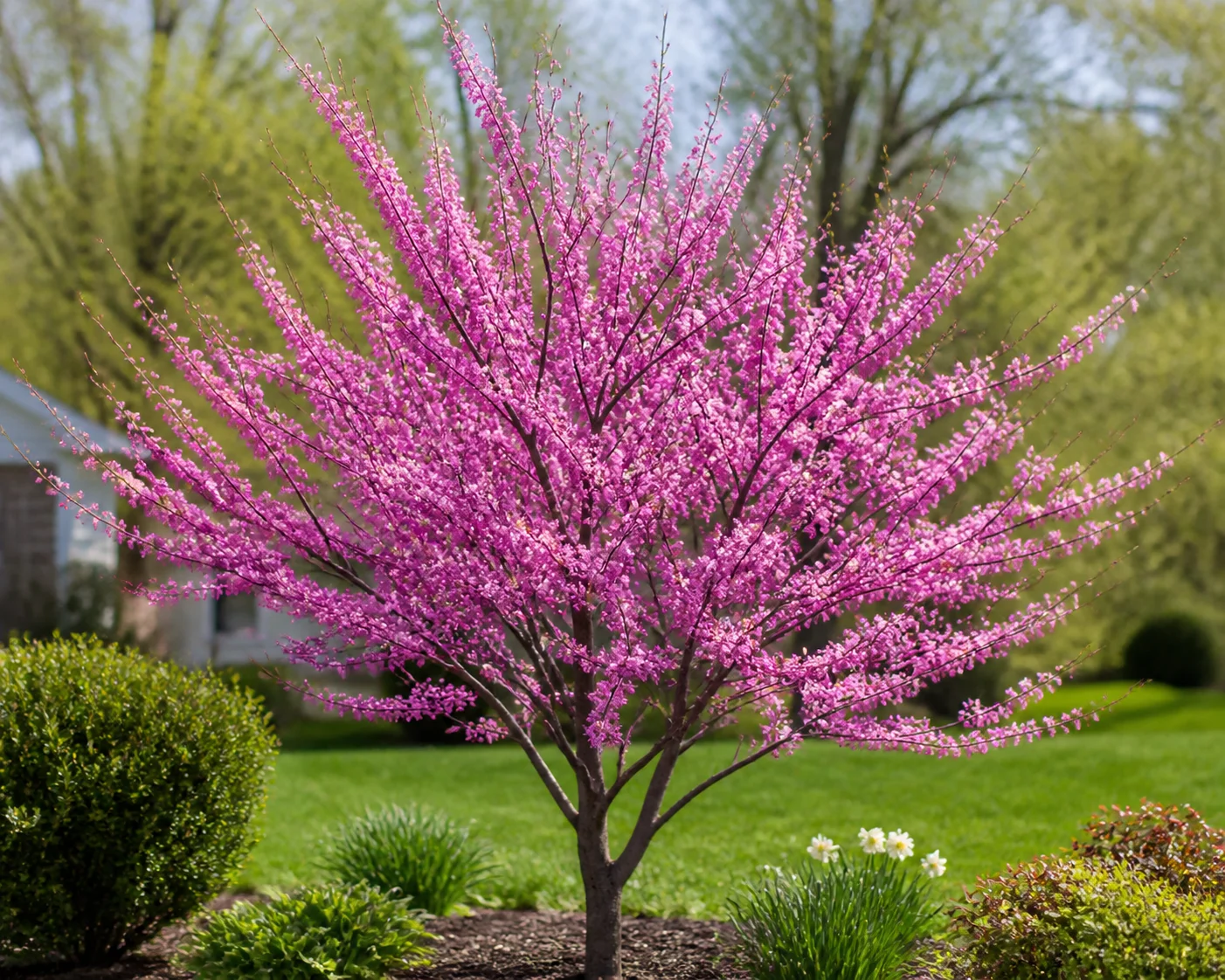
Eastern Redbud
Another early-blooming small native, but the flowers are the whole show.
Blueberry
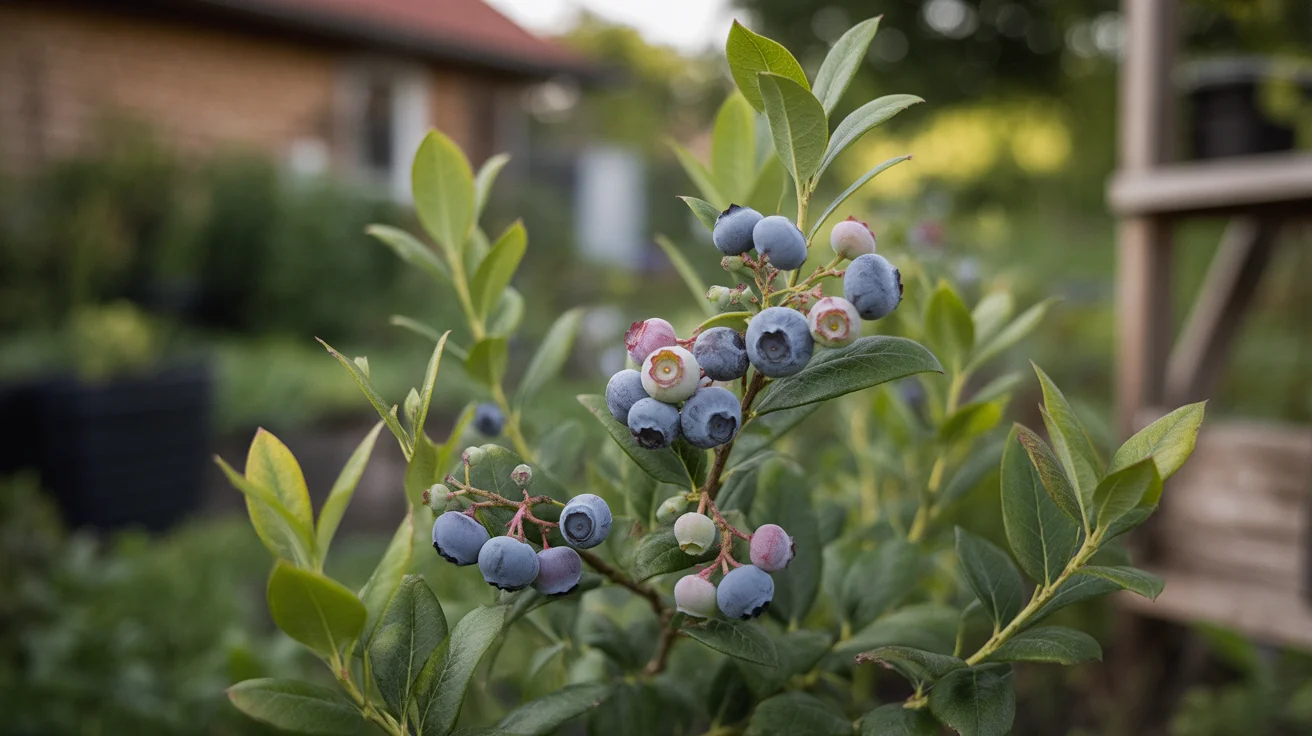
Similar fruit and similar acid soil, at knee height and much easier to net.
Cherry Blossom Tree
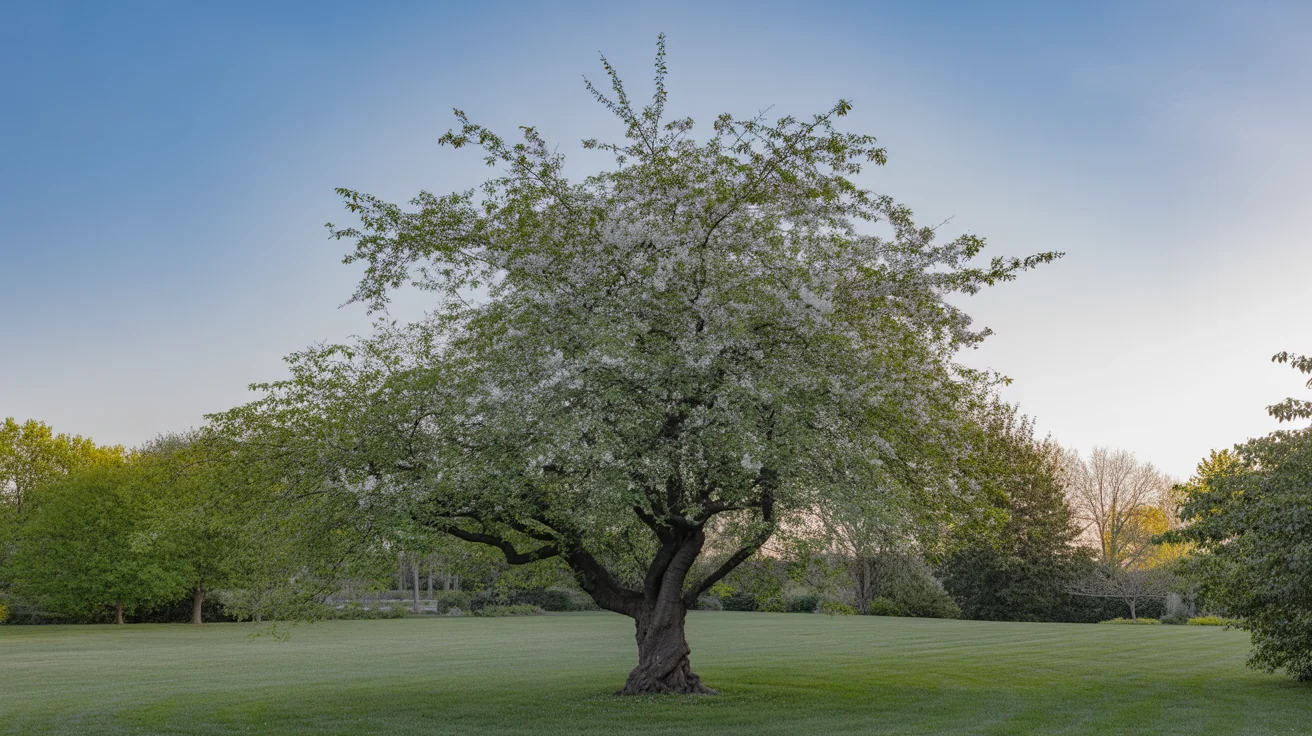
Cherry blossom tree is a common name for ornamental cherries grown for spring flowers rather than a useful fruit crop.
Ginkgo Tree
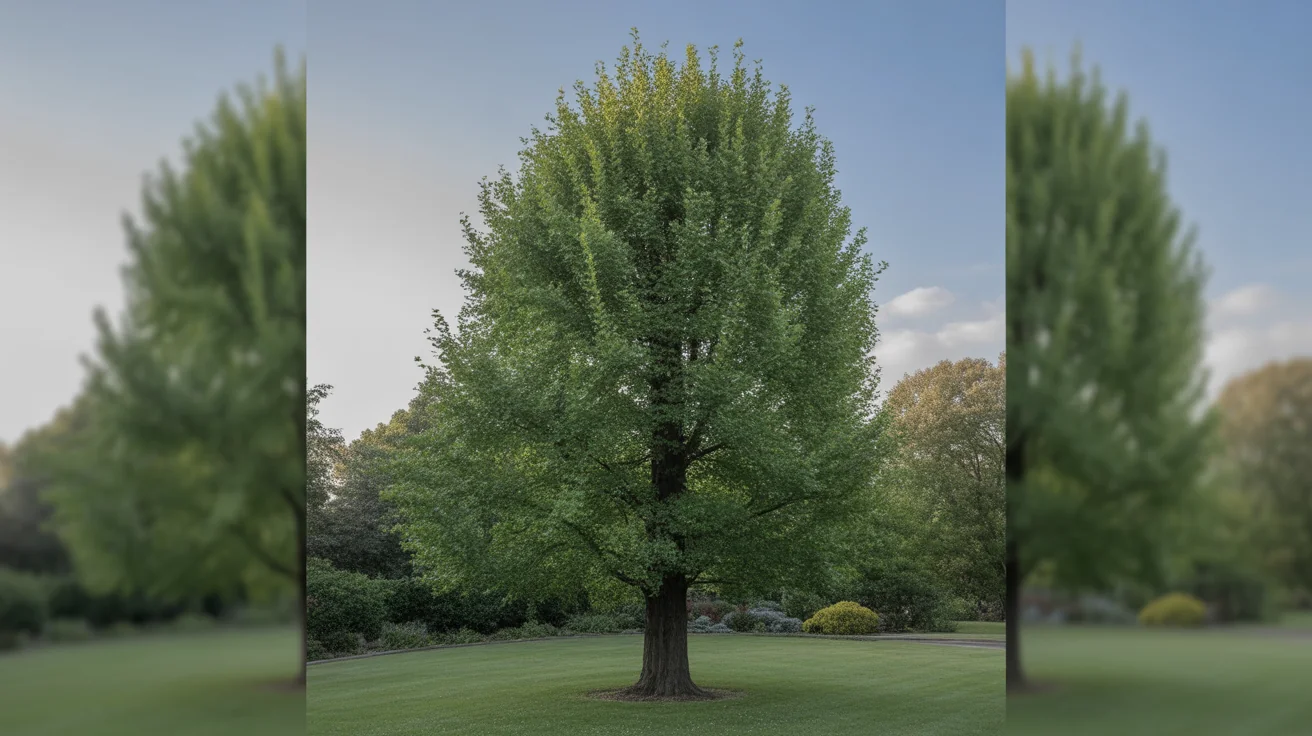
Ginkgo is not a plant for instant gratification. It is a patient tree that rewards the right buyer decision up front…
Japanese Cherry Tree
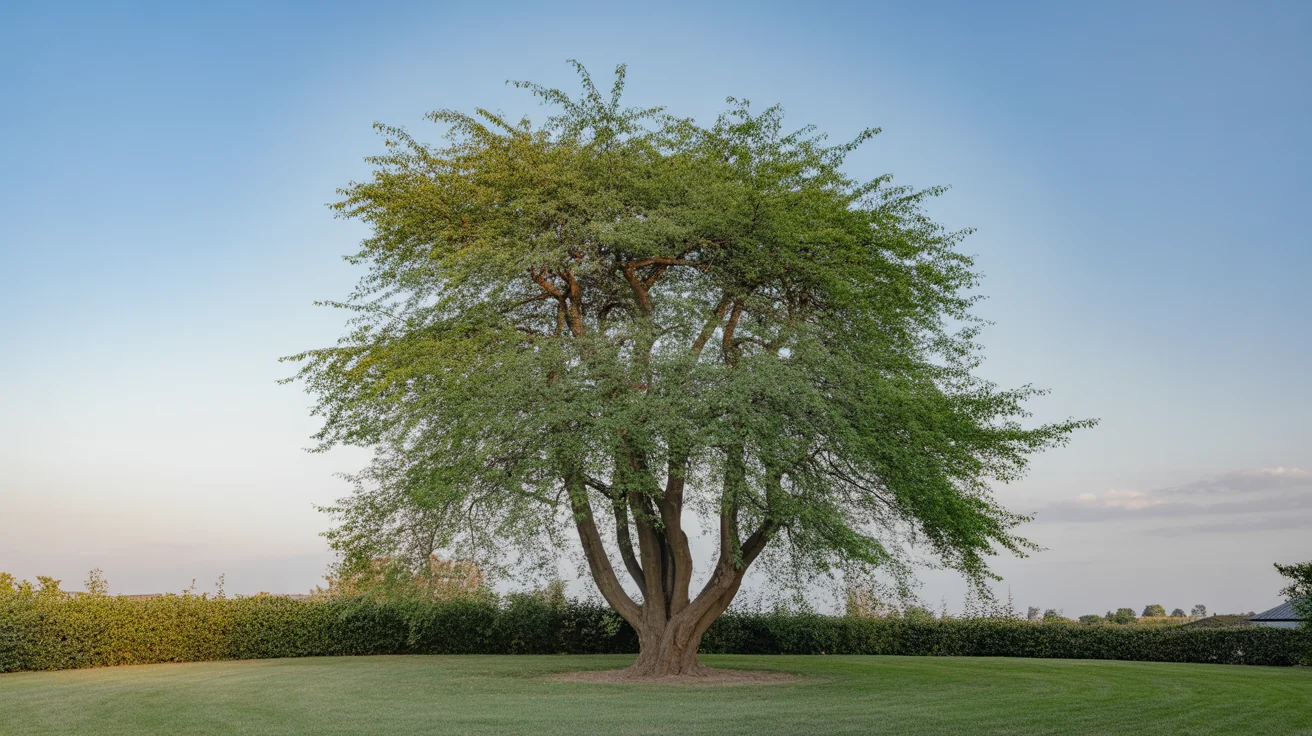
Japanese Cherry is a short-season show tree with real structural limits. The best care is not chasing bigger growth.