
What's a River Birch? How to Place One So It Stays Green
Betula nigra Betulaceae
River Birch (Betula nigra) is the birch that survives heat, humidity, and heavy wet clay, and its peeling salmon bark is the payoff for putting it somewhere that stays damp. Get the soil acid, keep it well off the house and the drive, and the two problems left to manage are yellow leaves on alkaline ground and a leaf shed in dry Julys.
Care snapshot
What Is River Birch, and Why Does It Outlive White Birch?
River Birch (Betula nigra) is a floodplain tree from the eastern United States, and in most of the country it is the only birch worth planting. Paper birch and European white birch lose their crowns to bronze birch borer within a decade once summers turn hot, while this species carries enough resistance to stay whole.
It sits in the birch family, Betulaceae, and keeps the family's thin bark and open, airy canopy. What it trades away is the chalky white trunk people picture when they say birch.
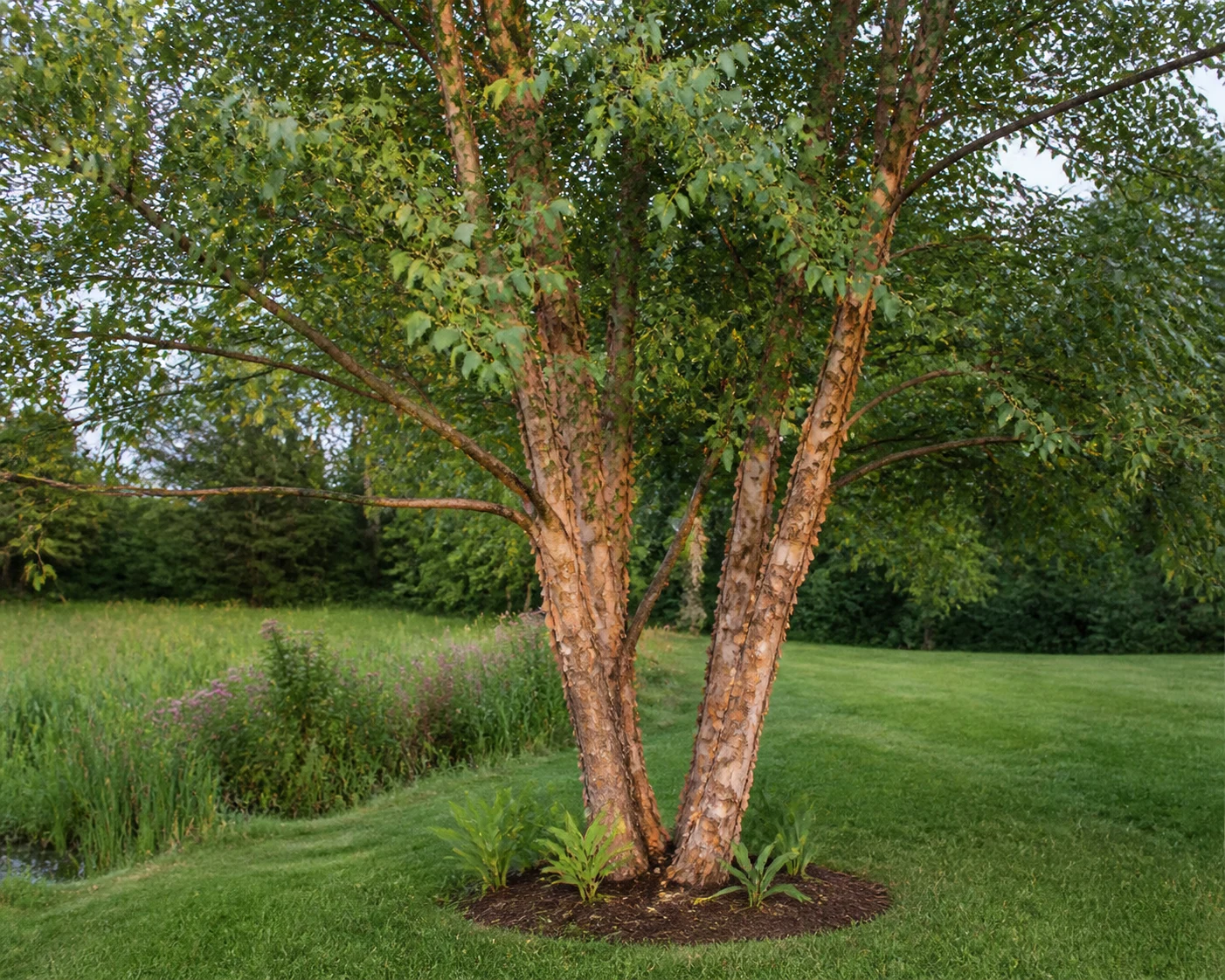
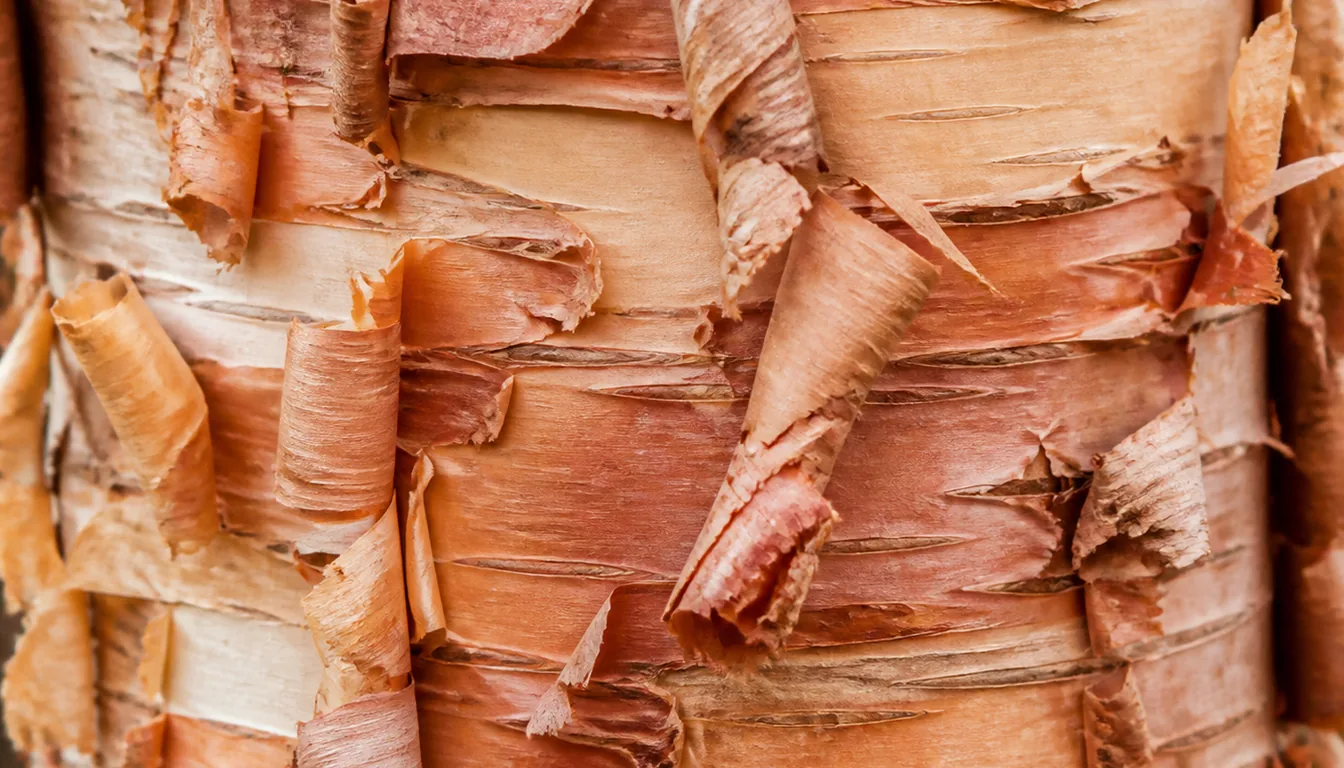
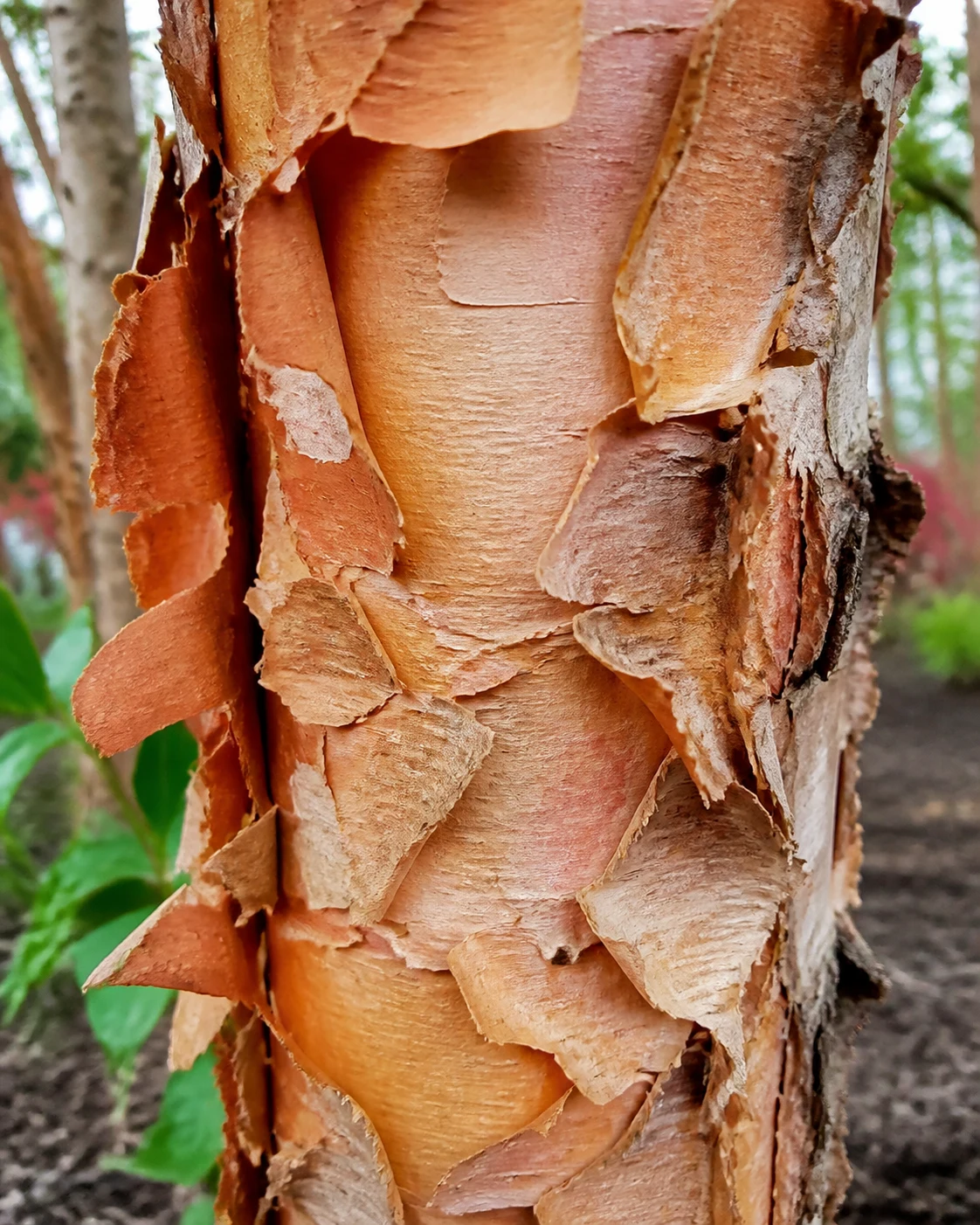
What replaces it is better. Older bark lifts away in curling salmon, cinnamon, and cream sheets that stay interesting all winter, and the peeling starts early enough that a five-year-old tree already shows it.
Nursery stock is usually a three-stem or five-stem clump, which is how the tree grows on a riverbank.
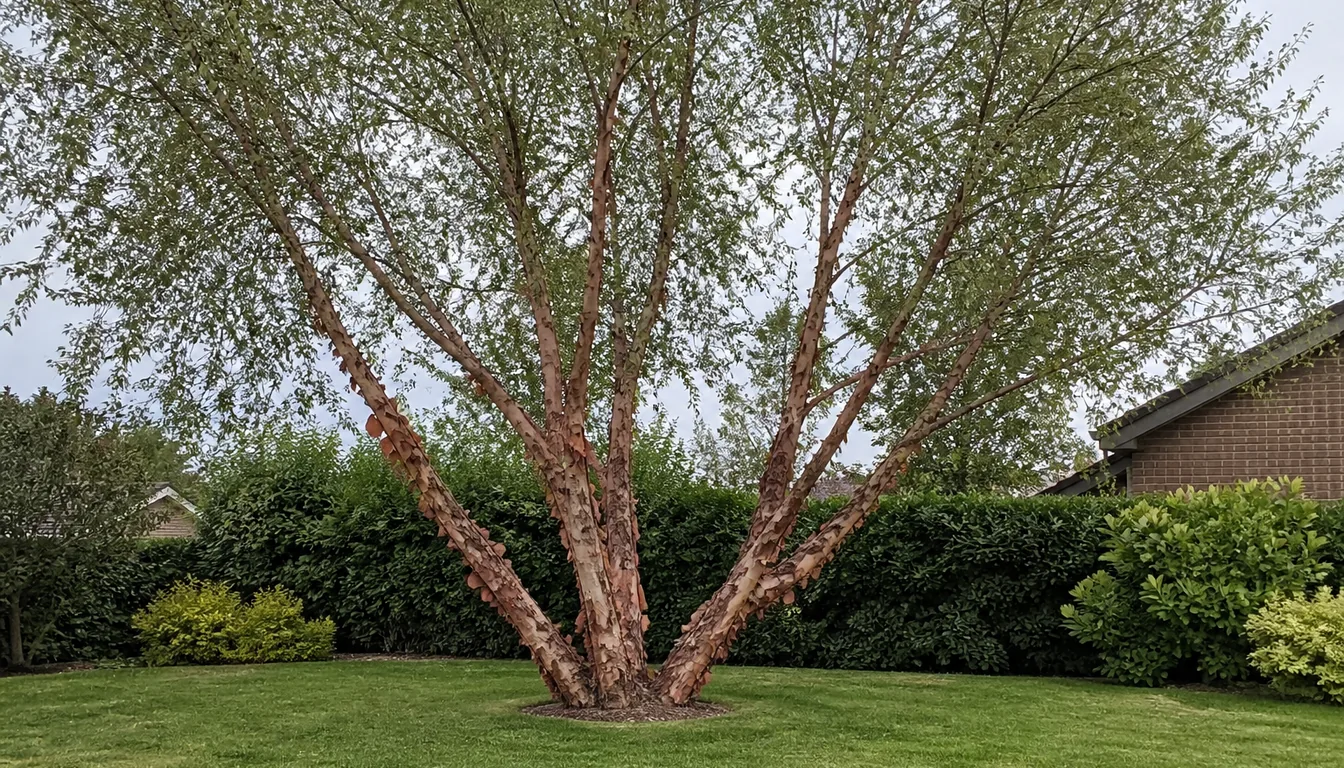
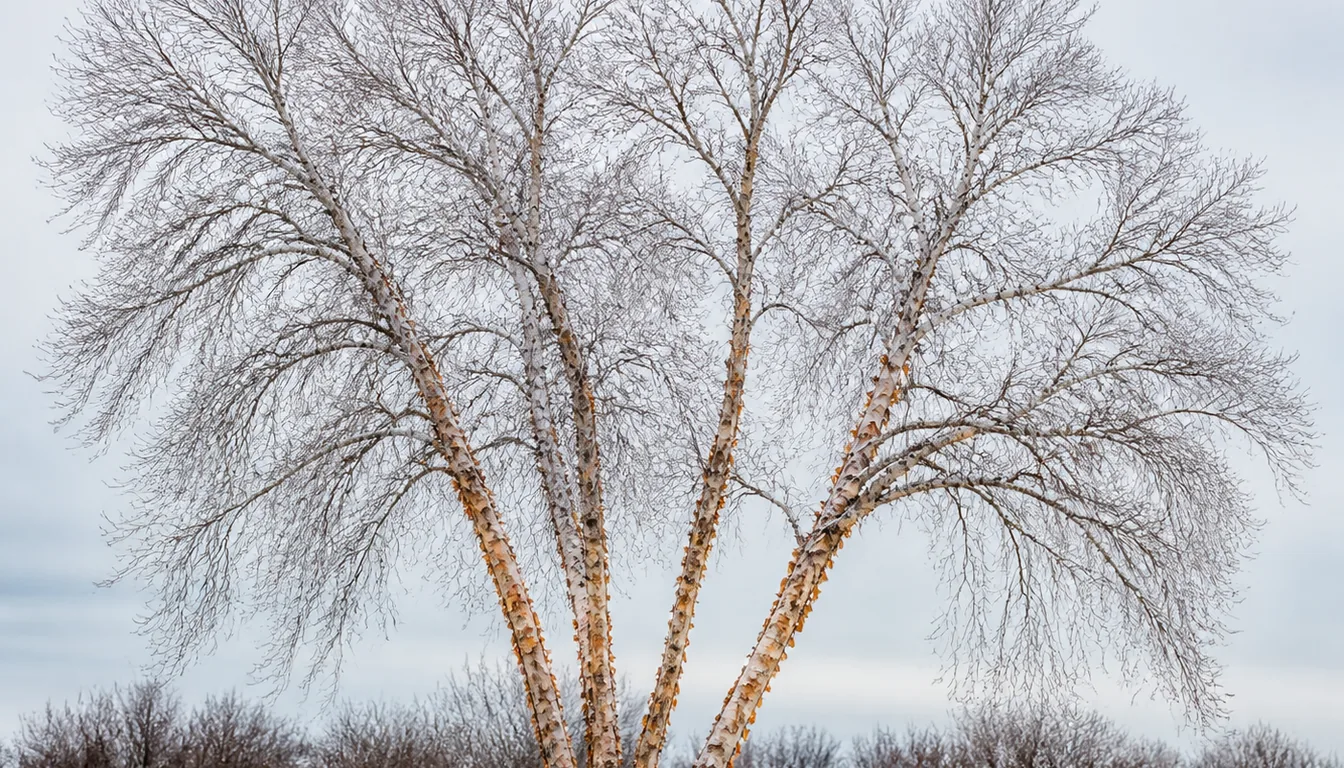
Mature size in a lawn runs 40 to 70 ft tall and 30 to 60 ft wide, so the shape reads as a wide vase rather than a single column.
The canopy stays open. Small diamond-shaped leaves throw filtered light instead of the dense shade that kills turf, which is why hosta and astilbe do well underneath while grass slowly gives up.
- River Birch (Betula nigra)
- Resists bronze birch borer. Reliable through Zone 9. Peeling salmon and cinnamon bark.
- Paper Birch (Betula papyrifera)
- Borer-prone once summers warm. Declines south of about Zone 6. Chalk-white peeling bark.
- European White Birch (Betula pendula)
- The most borer-prone of the three and often short-lived in yards. White bark with black fissures.
Will River Birch Grow in Wet Clay or a Spot That Floods?
Yes, and this is the job it does better than almost any other shade tree. River Birch evolved on banks that go under water every spring, so its roots survive several days of saturation that would rot a maple or an arborvitae.
Standing water for weeks is still too much. Aim for a low spot that drains within a day or two after a storm, not a pond edge that never dries out.
Heavy clay is fine on the same terms.
What the tree cannot forgive is the soil chemistry that often comes with clay. Betula nigra is an acid-soil species, and it stops taking up iron and manganese properly once pH climbs much past 6.5.
Test the pH before you dig, especially within about 10 ft of a foundation, a concrete drive, or an old lime-treated bed. Leaching mortar and concrete keep soil alkaline for decades after the work is finished.
Planting depth matters more in clay than anywhere else. Set the root flare 1 to 2 inches above the surrounding grade so the trunk base never sits in a saucer of runoff, and loosen an area two to three times the width of the root ball rather than digging deeper.
Mulch a 3 to 4 ft ring 2 to 3 inches deep and keep it off the bark, which on a young tree is thin enough to scald and rot under damp mulch.
- Water still standing 48 hours after heavy rain means the spot drains too slowly even for this tree.
- Soil pH above 6.5 predicts yellow leaves later, so amend the bed or pick a different site now.
- Concrete, mortar rubble, or a past lime application within 10 ft keeps raising pH long after the work is done.
- No visible flare at the top of the root ball means the nursery potted it too deep, so pull the soil back before you plant.
How Far From a House, Drive, or Septic Line Should It Go?
River Birch roots hunt for moisture and stay shallow while they do it. Most of the working root mass sits in the top 12 to 18 inches of soil and spreads well past the branch tips, which makes the tree an excellent bank stabilizer and a poor neighbor for hard surfaces.
It does not break sound pipe the way people fear.
It will fill a cracked or leaking line quickly once it finds one, and thickening surface roots lift thin drive slabs and sidewalk panels.
Give a full-size cultivar at least 20 ft from a foundation and 15 ft from a drive edge or walk. Keep it 25 to 30 ft off a septic field, where soil is both moist and easy to root through.
Overhead clearance is the constraint people forget, because a 60 ft tree under a service drop becomes a utility crew's pruning project every few years.
The surface roots also decide what grows underneath. Turf thins within about 10 ft of the trunk as the tree matures, so plan a mulched bed or shade-tolerant perennials there instead of reseeding the same patch every spring.
- Foundation or slab
- 20 ft for a 40 to 70 ft cultivar. About 12 ft is enough for a compact form.
- Drive, walk, or patio
- 15 ft. Surface roots lift thin slabs long before the canopy reaches full size.
- Septic field or leach line
- 25 to 30 ft. Moist, loose soil pulls roots in from a long way off.
- Overhead service lines
- Do not put a full-size form under one. Choose a selection that tops out under 15 ft.
- Nearest tree trunk
- About 30 ft, so the open habit does not lean out looking for light.
Why Are the Leaves Yellow With Green Veins?
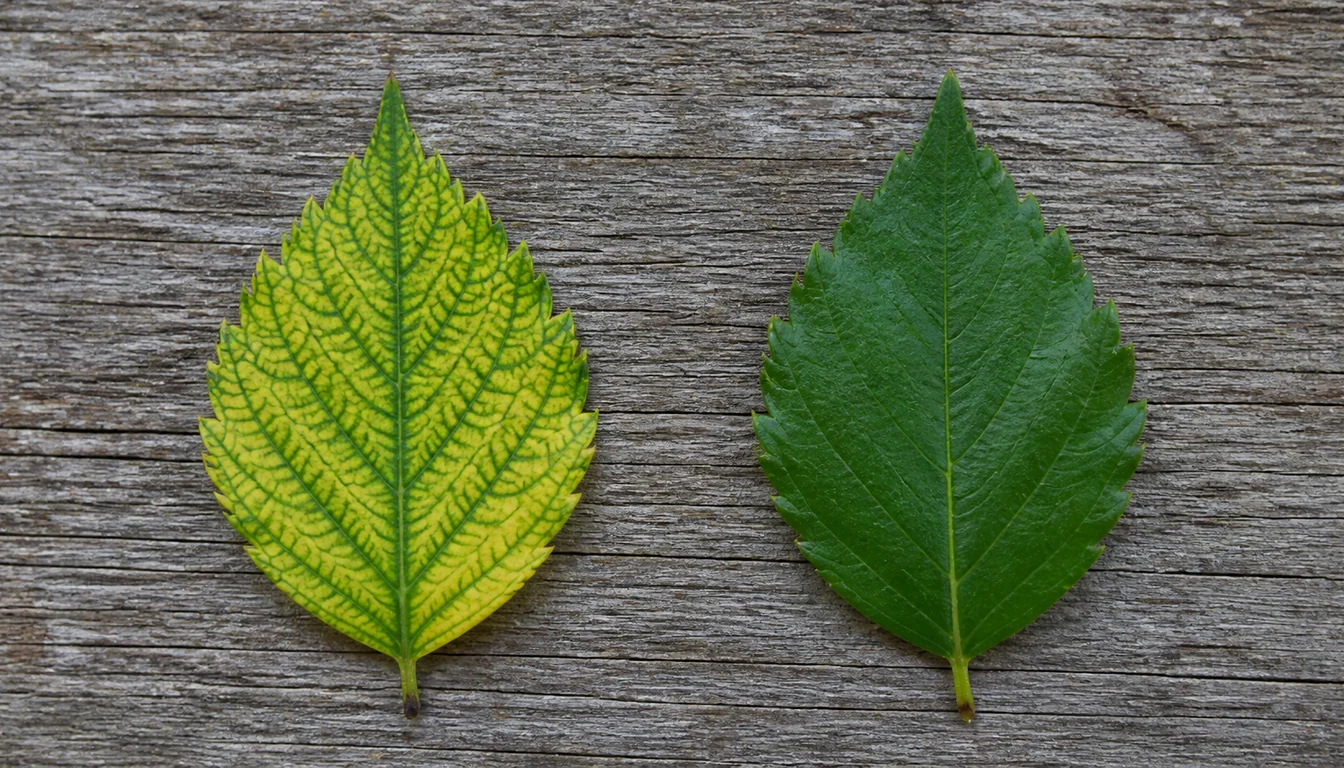
That exact pattern has one common cause on this tree. Yellow leaf tissue with a network of dark green veins still showing is iron and manganese chlorosis, and on River Birch it traces back to soil pH far more often than to soil that genuinely lacks the nutrients.
The iron is usually already in the ground, locked into forms the roots cannot take up once pH rises above roughly 6.5.
Newest leaves at the branch tips pale first, because a tree short on iron cannot move what it has out of older tissue. When the oldest leaves go yellow first and the veins fade along with the blade, you are looking at nitrogen shortage or drought instead.
Severe cases bleach almost white and scorch brown along the margins by August. Repeated seasons of it thin the crown from the top down.
The fast fix is a chelated iron and manganese product sprayed on the foliage, which greens existing leaves in two to three weeks and does nothing at all to the soil.
The durable fix is elemental sulfur worked into the root zone in fall, which pulls pH down slowly over one or two seasons.
Skip the sulfur when a test shows the alkalinity is coming from a concrete foundation or lime-heavy fill, because those resupply it faster than a yearly application can remove it. On that kind of site the honest answer is that a birch is the wrong tree and a swamp white oak or a red maple belongs there.
Why Does River Birch Drop Leaves in Midsummer?
A River Birch that sheds a third of its leaves in July is usually not sick. Shallow floodplain roots have no drought strategy other than dropping the canopy that is costing them water, so the tree lets go of interior leaves first and holds the tips.
The yellowing that comes with it is even, blade and veins together, which is what separates it from the vein-pattern chlorosis above.
Two or three dry weeks is the usual trigger. It arrives sooner on sand, on a slope, or beside pavement that heats the root zone, and a tree in a naturally damp hollow may go a whole summer without showing it at all.
Shedding is recoverable and the tree leafs out normally the following spring.
A tree that does it three or four years running is a different story, because it loses growth and turns into exactly the stressed target bronze birch borer looks for.
Water on a schedule the soil sets rather than the calendar, which means testing before you turn anything on. A soaker hose run slowly is the tool, because a sprinkler wets the top inch and leaves the root spread dry.
For the first two or three years after planting, expect that soak every 5 to 7 days without rain, then stretch to every 7 to 10 days once the tree is established.
- Push a trowel 6 inches down at the drip line, out where the branch tips end rather than at the trunk.
- Feel that layer. Cool and damp means wait, dry or barely moist means water today.
- Run the soaker slowly for 45 to 60 minutes, moving it once so the whole root spread gets wet.
- Check again the next morning. Water that ran off instead of soaking in leaves the 6 inch layer dry.
When Should You Prune a River Birch?
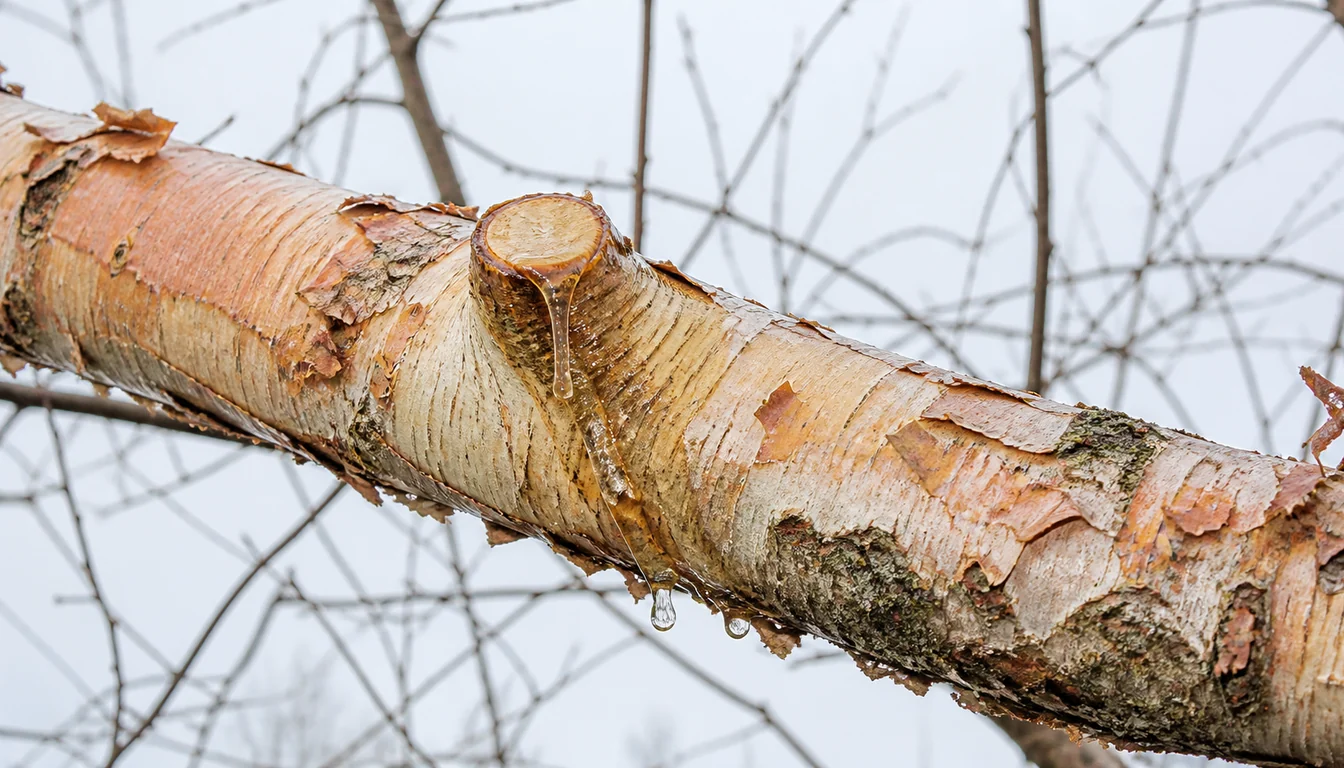
Not in late winter or early spring, which is exactly when general tree-pruning advice says to work. Birches move sap under heavy pressure as the ground thaws, and a cut made in February or March runs clear sap for days.
The bleeding rarely kills a healthy tree. It does waste stored sugar, stain the bark below the cut, and draw wasps and sapsuckers to an open wound.
The clean window is midsummer into early fall, roughly July through September, once the spring flush has hardened and before the tree starts moving reserves down for winter. Wounds close fastest in that stretch too.
Keep cuts small, because River Birch compartmentalizes large wounds poorly and a 4 inch stub often decays inward for years.
On a clump, the pruning that matters is thinning rather than shortening. Take out crossing stems and any low branch that will be in the way at head height in five years, then leave the outer stems their natural outward sweep.
Removing those outer stems is what turns a graceful vase into a mop, and it cannot be undone.
Resist the urge to peel or scrub the loose bark. It looks untidy up close and it is the reason the tree is in the yard.
Which River Birch Should You Buy for the Space You Have?
Seed-grown River Birch is the cheapest thing on the lot and the most likely to disappoint. Bark color, heat tolerance, and mature size all vary between seedlings, which is the whole reason the named selections exist.
Heritage is the default choice, with the palest cream and salmon bark of the common selections and vigorous growth to 40 or 50 ft.
Dura-Heat holds its leaves better through a hot, dry August, which matters directly if the midsummer shed above is what you are trying to avoid. It runs a little smaller at 30 to 40 ft, and its bark is a warmer orange-tan.
Little King, sold as Fox Valley, is the only one that fits a small lot honestly. It tops out near 10 ft tall and wide with a dense, shrubby habit.
Form is the second decision and it is not reversible. A clump reads natural and shows three or five bark surfaces at once, while a single trunk suits a narrow strip or a formal front bed and keeps mowing simpler.
- Heritage
- 40 to 50 ft. The palest bark, cream over salmon, and the most vigorous growth. The safe default for an open lawn.
- Dura-Heat
- 30 to 40 ft. Denser foliage that holds through hot, dry spells. Bark runs warmer orange-tan.
- Little King, or Fox Valley
- 8 to 12 ft. A dense, shrubby form for small lots, foundation beds, and anywhere under a service line.
- Clump versus single trunk
- A clump shows more bark and looks native. A single trunk mows easier and fits a narrow strip.
Is River Birch Messy, and Is It Safe Around Pets?
The peeling bark is the mess people expect and the smallest part of it.
The real complaint is aphid honeydew. River Birch carries heavy aphid populations in late spring, and the sticky film they drop coats everything parked underneath.
That settles the parking question better than any table of clearances does. Keep the canopy off a drive you use for a car you care about, or accept a wash every couple of weeks through May and June.
A strong hose spray knocks the colonies down, and the ladybugs and lacewings that follow usually finish the job by July, so spraying insecticide on a tree this size is rarely worth it.
The leaf drop itself is light and fine-textured next to a sweetgum or a sycamore, and it breaks down in a mulch bed instead of matting.
No ASPCA or NC State pet toxicity record was found for river birch, so its safety for dogs, cats, and horses is unknown, though the tree has no thorns, spines, or irritating sap to plan around.
Birch pollen is the one real health caveat. Wind-pollinated catkins release it in early spring, and it cross-reacts with alder and hazel for people who already react to those, so put the tree at the far end of the yard rather than beside a bedroom window if someone in the house has spring allergies.
In exchange the seeds feed goldfinches and chickadees through winter, and the fibrous root system holds a stream bank or a rain garden edge far better than turf ever will.
- Bark, all year: Curling sheets drop in every season. They rake up in a minute and most owners leave them where they fall.
- Honeydew, May and June: The sticky aphid film is the only mess that reaches a car, a table, or a set of cushions.
- Catkins and seed, late spring: Small winged seeds blow into gutters and along fence lines for about two weeks.
- Leaves, October: Light, small, and fine-textured. They break down in a mulch bed rather than matting over grass.
Frequently Asked Questions
How fast does a river birch grow?
Expect 1.5 to 2.5 ft of height a year while the tree is young, which is fast for a shade tree of this eventual size. Growth slows noticeably once the trunk passes about 8 inches across, so the fast years are the first fifteen.
How long does a river birch live?
Fifty to seventy years is a normal lifespan in a yard, which is short next to an oak and long next to the white birches it replaces. Trees on dry, alkaline, or compacted sites often decline by forty.
Why has the bark on my young river birch not started peeling?
Peeling is an age trait rather than a health signal, and most trees start showing it in the third to fifth year as the trunk widens. Heritage and Dura-Heat begin earlier than seed-grown stock, which sometimes waits until year six or seven.
Can a river birch grow in a large container?
Only as a temporary holding arrangement, because the shallow, wide, moisture-seeking root system dries out in a pot within hours in summer heat. Even Little King needs ground soil within a season or two.
Will a river birch tolerate dry soil once it is established?
It survives short dry spells after three to five years in the ground, but it never becomes a drought-tolerant tree. A dry site buys you thin growth, an early leaf shed most summers, and a much higher chance of borer damage.
Sources & References
- River Birch, Clemson Cooperative Extension Home and Garden Information Center
- Birch Trees in the Landscape, University of Minnesota Extension
- Betula nigra, River Birch, Missouri Botanical Garden Plant Finder
- Betula nigra Plant Guide, USDA Natural Resources Conservation Service
- Betula nigra (Black Birch, Red Birch, River Birch, Water Birch) | North Carolina Extension Gardener Plant Toolbox
Related Plants
Red Maple
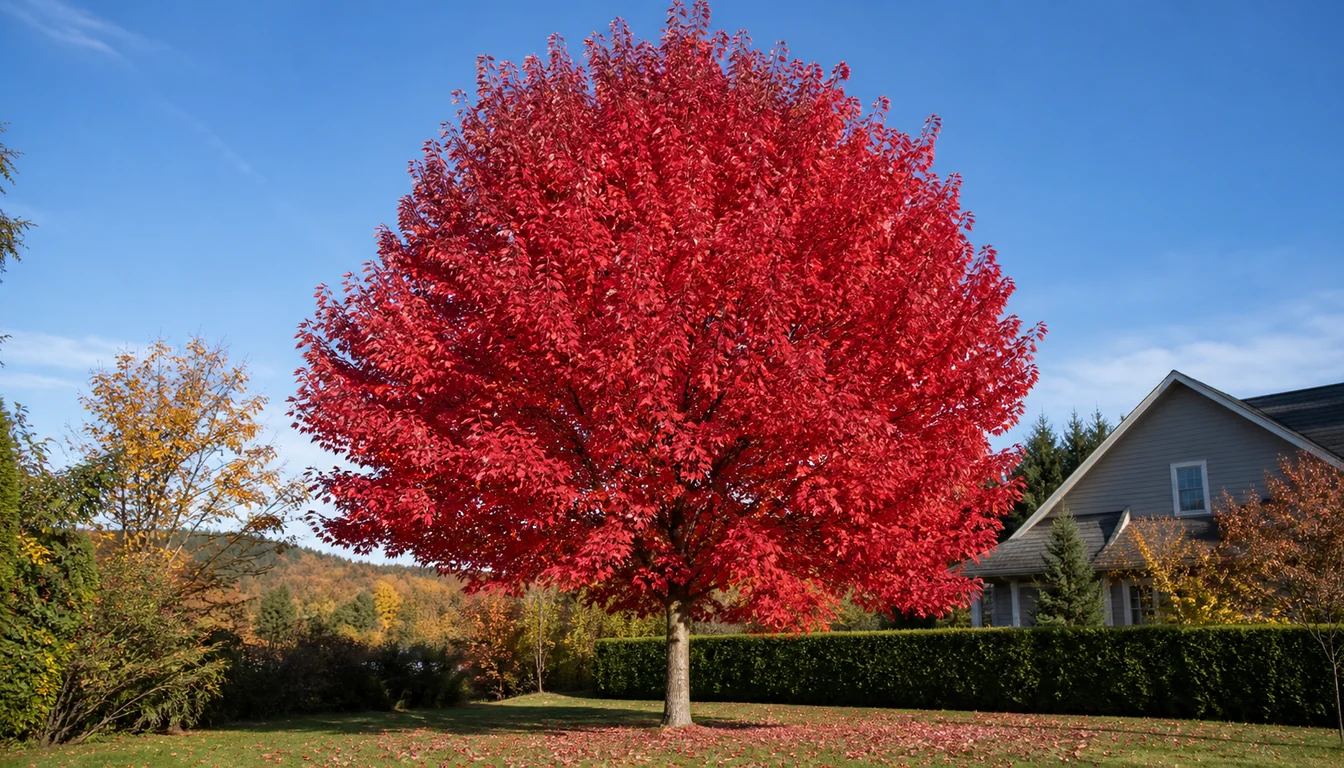
The usual alternative when a site is too alkaline for a birch but still stays damp.
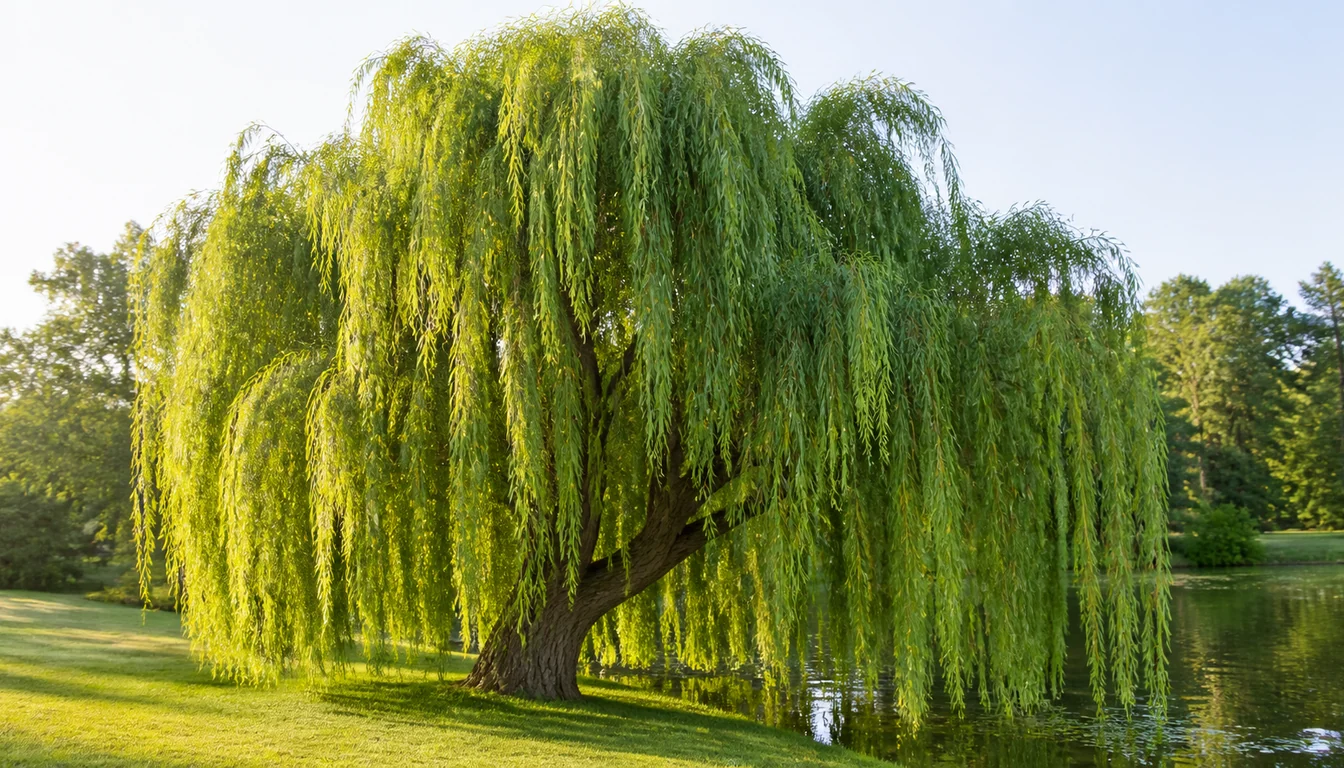
Weeping Willow
For genuinely wet ground and much larger spaces than a river birch needs.
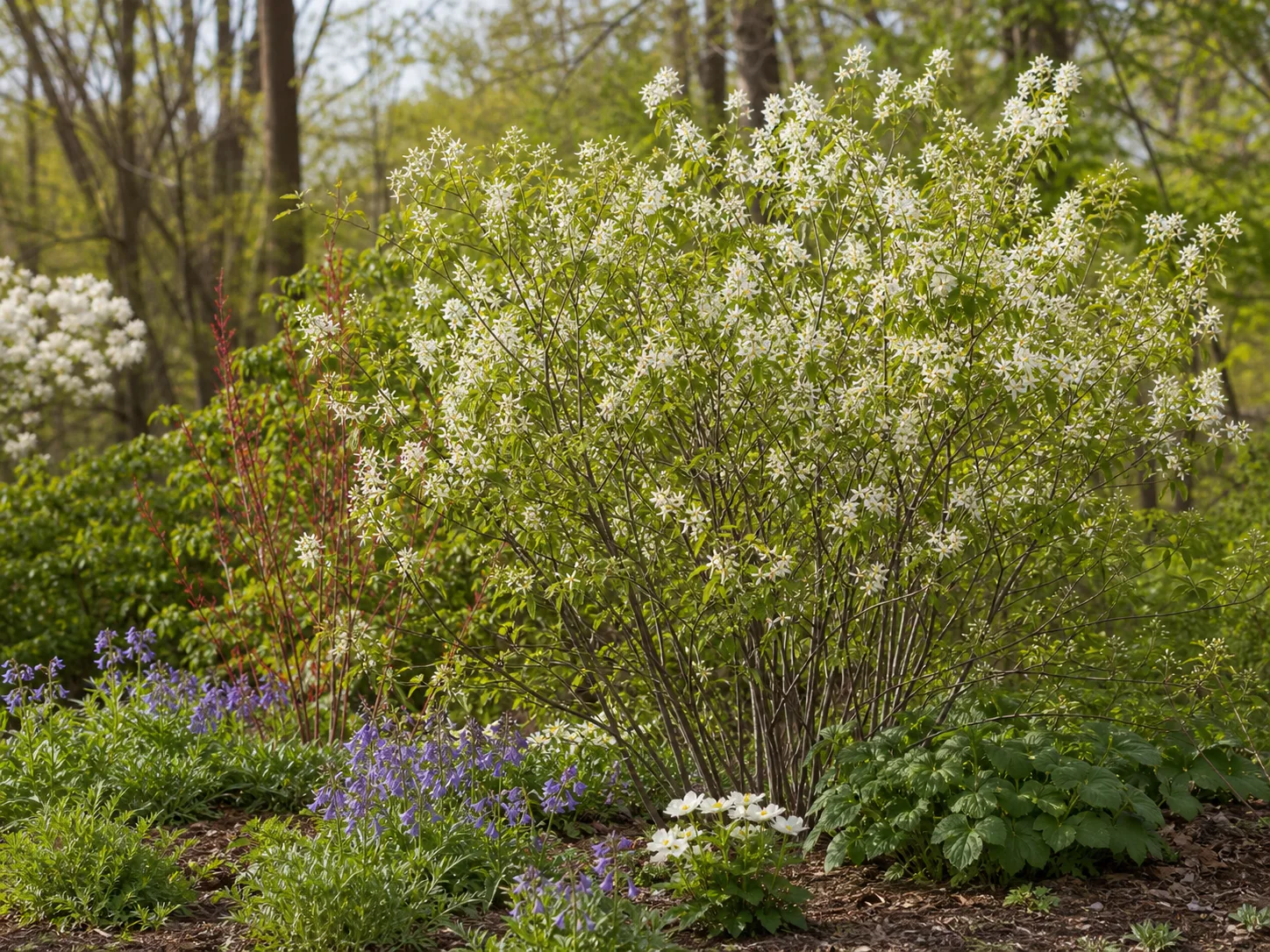
Serviceberry
A small multi-stem native for the tight lots where even Little King is too much.
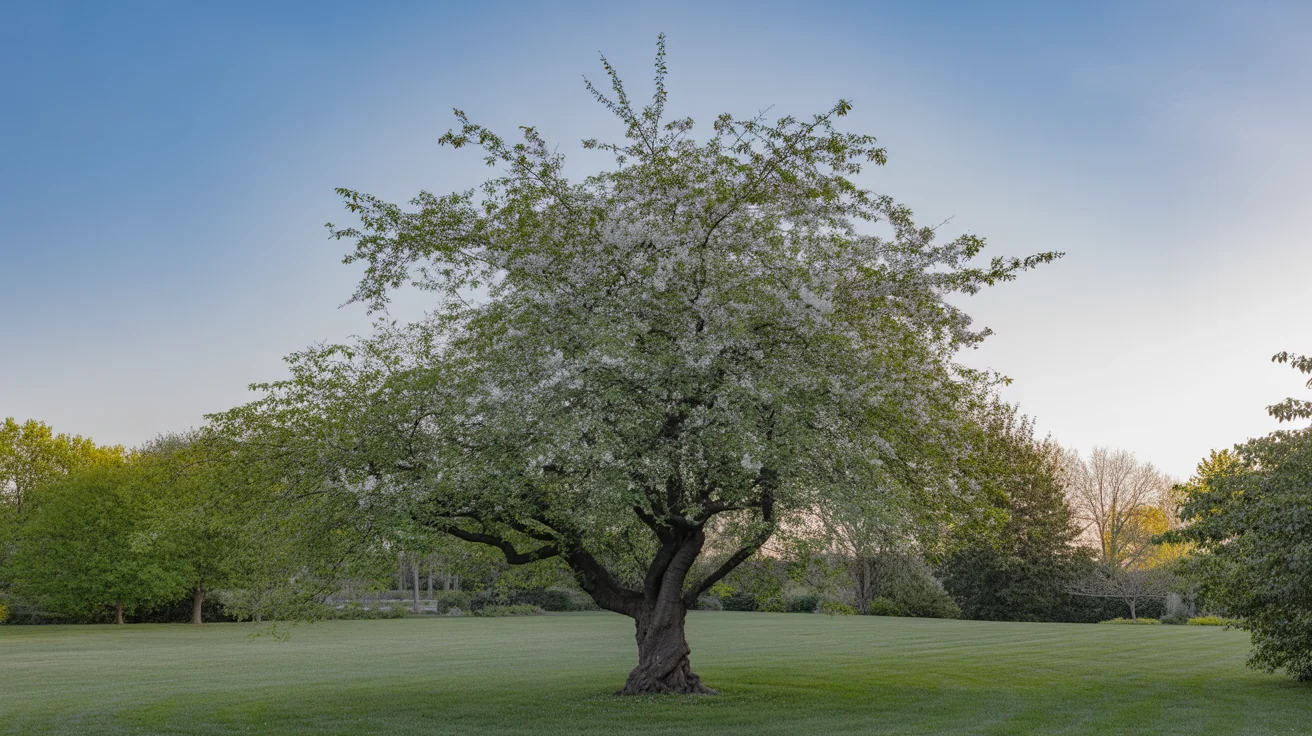
Cherry Blossom Tree
Cherry blossom tree is a common name for ornamental cherries grown for spring flowers rather than a useful fruit crop.
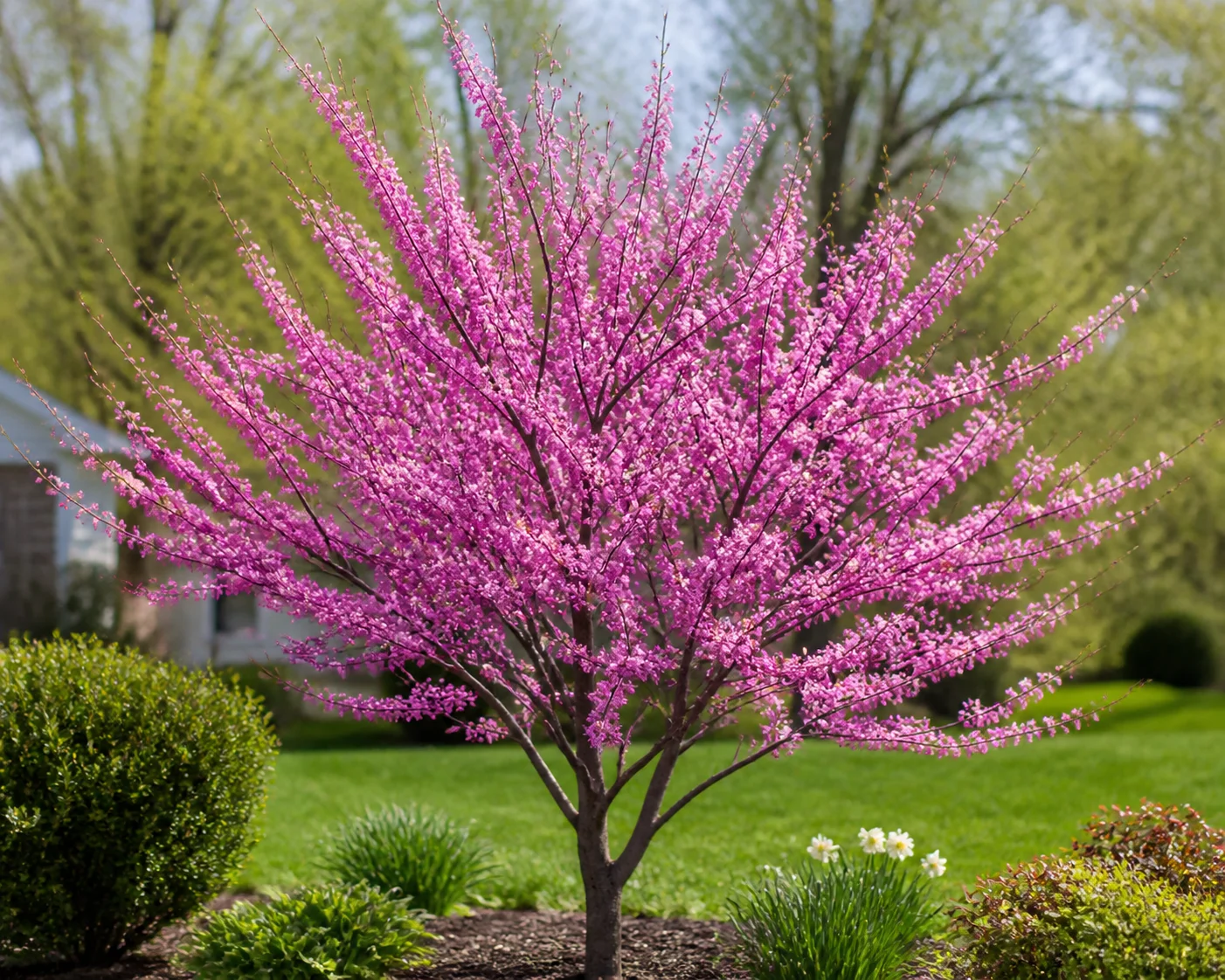
Eastern Redbud
Eastern redbud is a small North American tree with pea-like flowers that open on bare twigs and older wood.
Flowering Dogwood
Flowering Dogwood is easiest to grow when you copy the place it wants to live.