
Which Ornamental Trees Work Best in a Home Landscape?
Compare the best ornamental trees by size, sun, soil, seasonal interest, cleanup, and yard fit. Choose a focal tree that works after bloom too.
At a glance
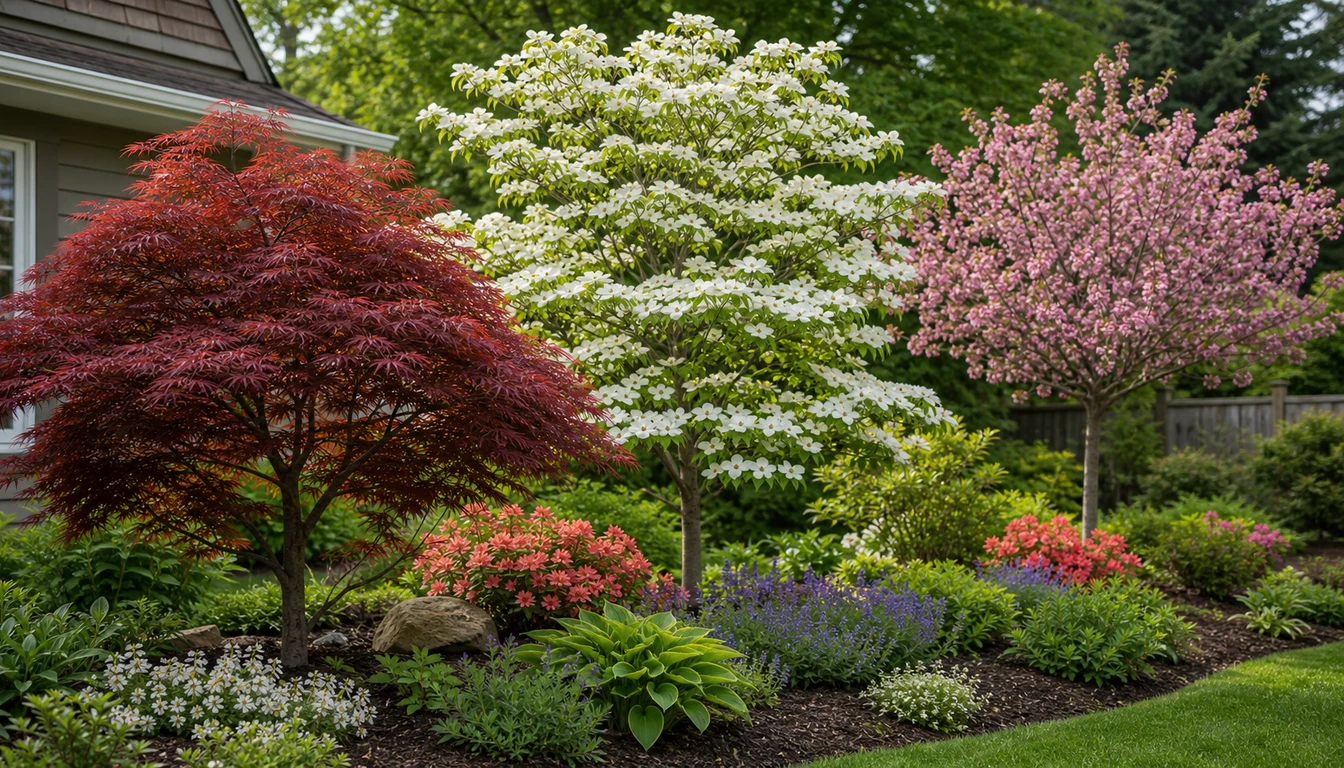
The best ornamental tree is the one whose mature size and strongest season fit the view you want to improve.
For many small or medium yards, that shortlist starts with Japanese maple, flowering dogwood, eastern redbud, serviceberry, or an ornamental cherry, while river birch, southern magnolia, and ginkgo need much more room.
Begin with the planting site's sun, drainage, soil, climate, and available canopy space. Then choose the flower, foliage, bark, fruit, or branch form you want to see from the porch, window, walk, or street.
This page helps you narrow the wider trees collection to a focal tree.
It does not treat ornamental as a synonym for small or assume that the tree with the showiest nursery bloom is the best long-term choice.
Which Ornamental Trees Work Best for Different Yard Jobs?
Japanese maple is the strongest compact choice when fine foliage and a sculptural crown matter more than flowers. Serviceberry is the better all-season small-tree choice where spring bloom, summer fruit, fall color, and winter branching can all be seen.
Choose flowering dogwood for a bright woodland-edge site with cool, well-drained soil. Choose eastern redbud for an early spring flower display in a broader, more adaptable canopy.
A cherry blossom tree gives the most concentrated blossom show, but it asks you to accept a shorter display season and, for many selections, a less durable tree. A ginkgo does the opposite because it offers restrained summer foliage and exceptional yellow fall color on a tree that may eventually reach 40 to 80 feet.
River birch belongs where peeling bark, moving foliage, and tolerance of moist ground justify a tree that can reach 40 to 70 feet tall. Southern magnolia needs similarly serious canopy and root space because its evergreen crown, heavy shade, leaf drop, and broad roots are part of the package.
No candidate wins every yard. Keep the tree whose main display fits your view, then reject it if the site or mature size conflicts with the house, drive, utility line, or soil.
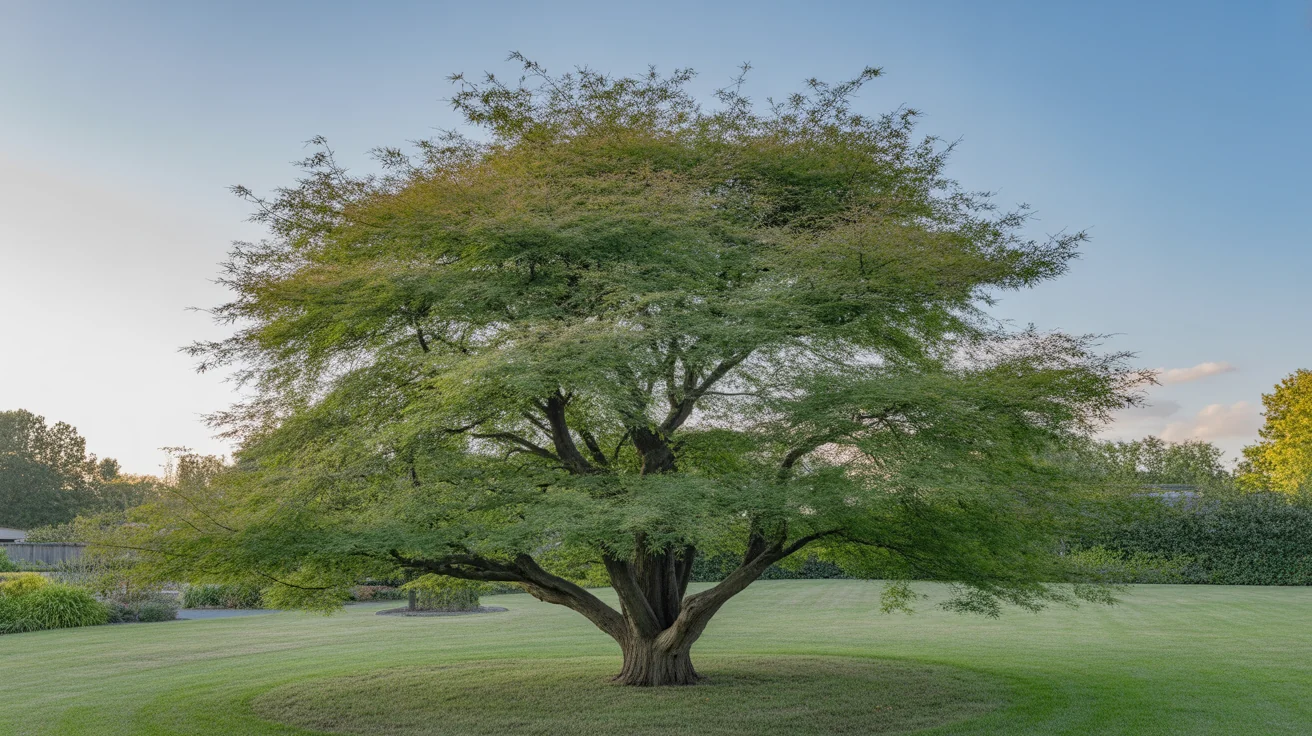
Japanese Maple
Acer palmatum
Close-view foliage and branch form beside a protected patio, courtyard, or entry
- Mature fit
- Choose the named cultivar only after its mature spread fits the measured bed
- Main tradeoff
- Hot afternoon sun and drying wind can scorch fine foliage
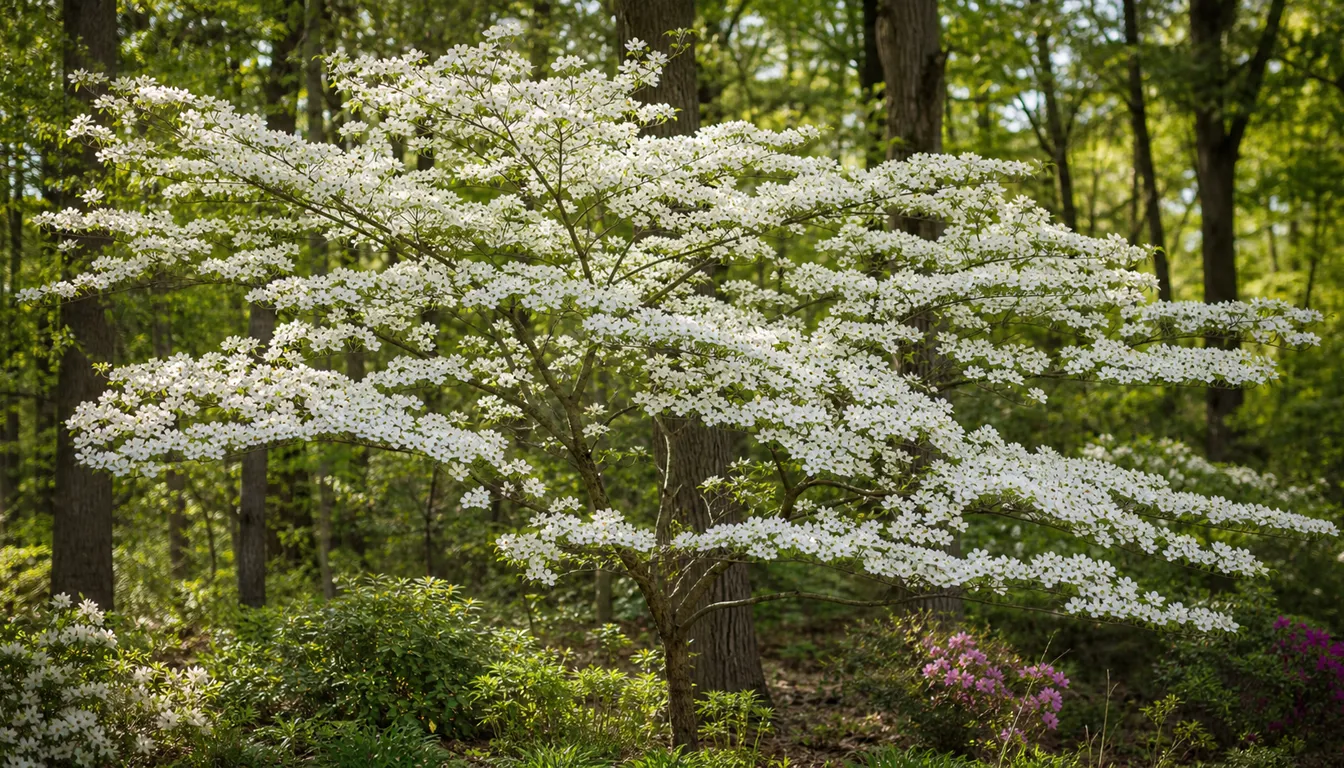
Flowering Dogwood
Cornus florida
Layered spring display at a woodland edge or in bright part shade
- Mature fit
- Allow roughly 15 to 30 feet for many flowering dogwoods and keep roots cool
- Main tradeoff
- Compacted hot soil raises stress and disease pressure
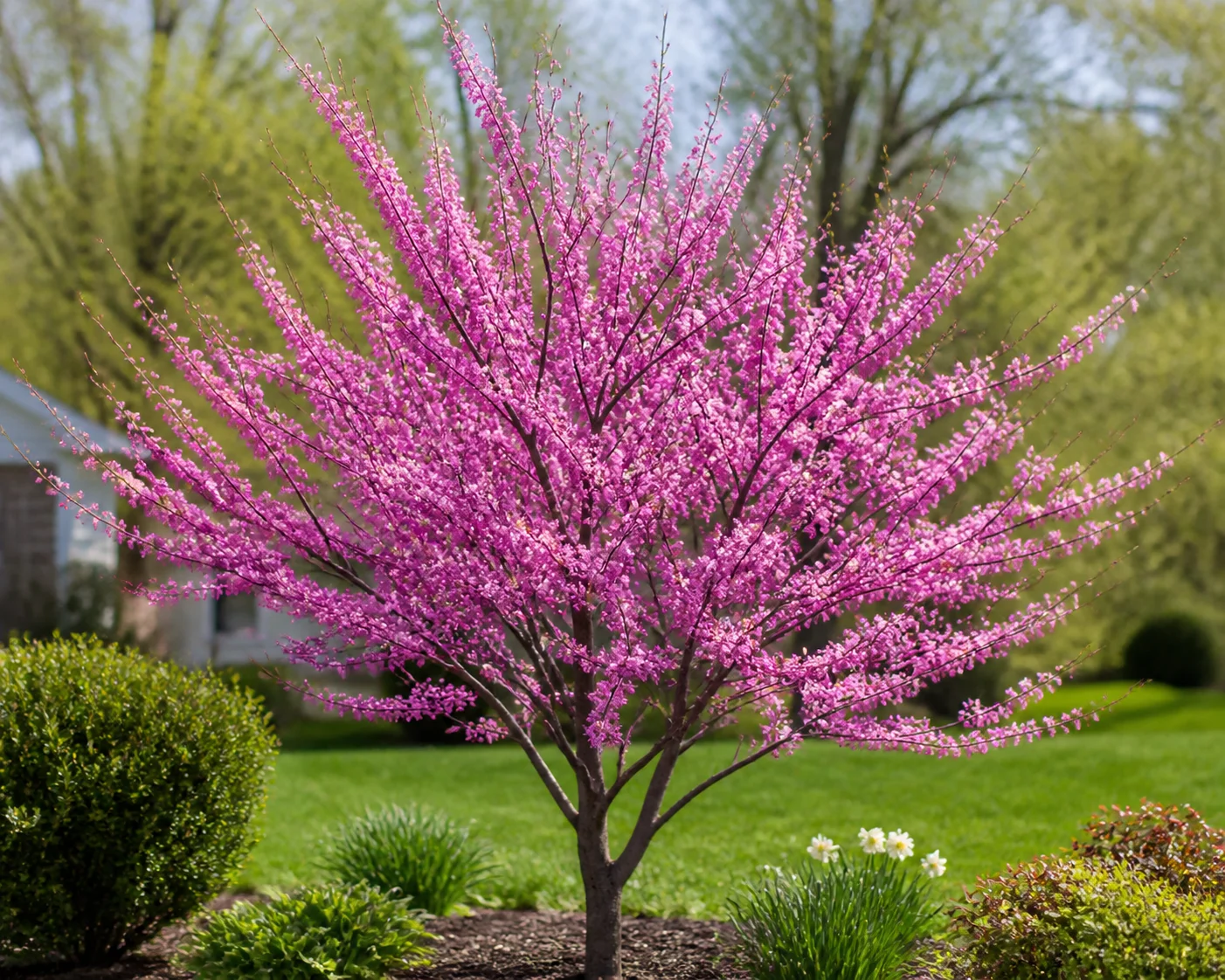
Eastern Redbud
Cercis canadensis
Early spring color with a broad, informal small-tree canopy
- Mature fit
- Reserve room for a crown that can spread about as wide as the tree grows tall
- Main tradeoff
- Wide branch unions need space and useful structural pruning while young
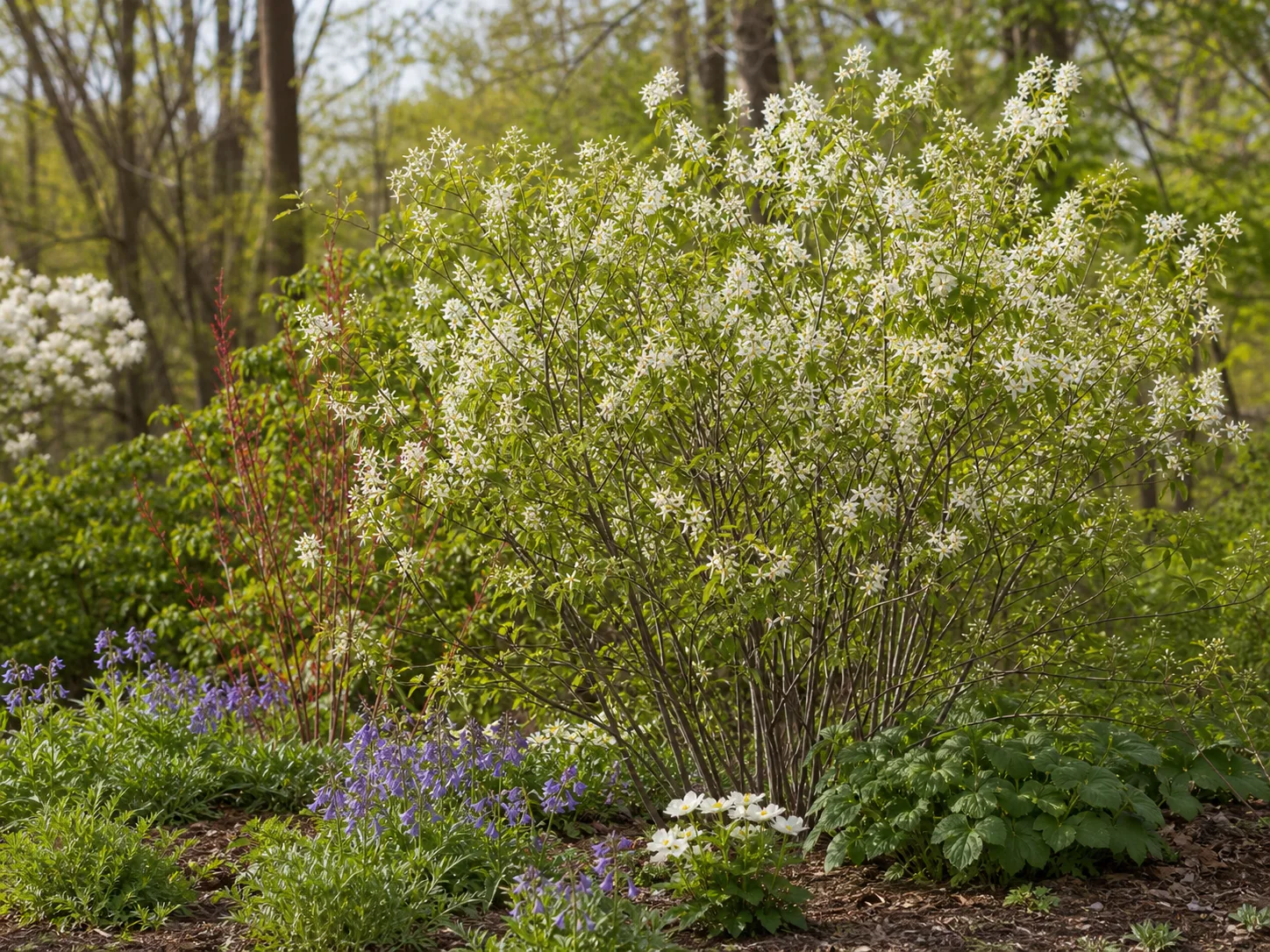
Serviceberry
Amelanchier spp.
Flowers, fruit, fall color, and winter stems in one modest footprint
- Mature fit
- Match single-stem or multi-stem form to a space commonly 15 to 25 feet across
- Main tradeoff
- Bird competition, fruit drop, and suckering vary by selection
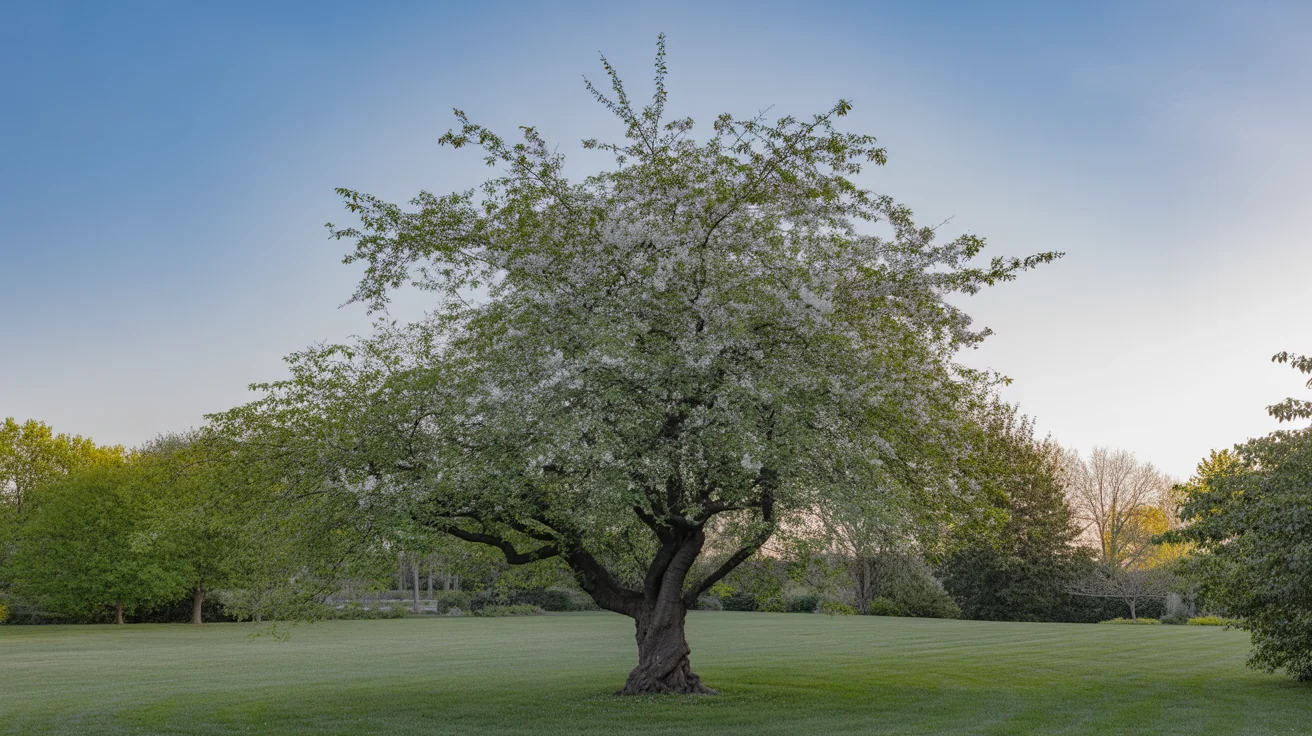
Cherry Blossom Tree
Prunus spp.
A concentrated spring blossom display in full sun and clean drainage
- Mature fit
- Use a named cultivar with a known spread instead of buying by flower color
- Main tradeoff
- The peak display is brief and some selections have limited durability
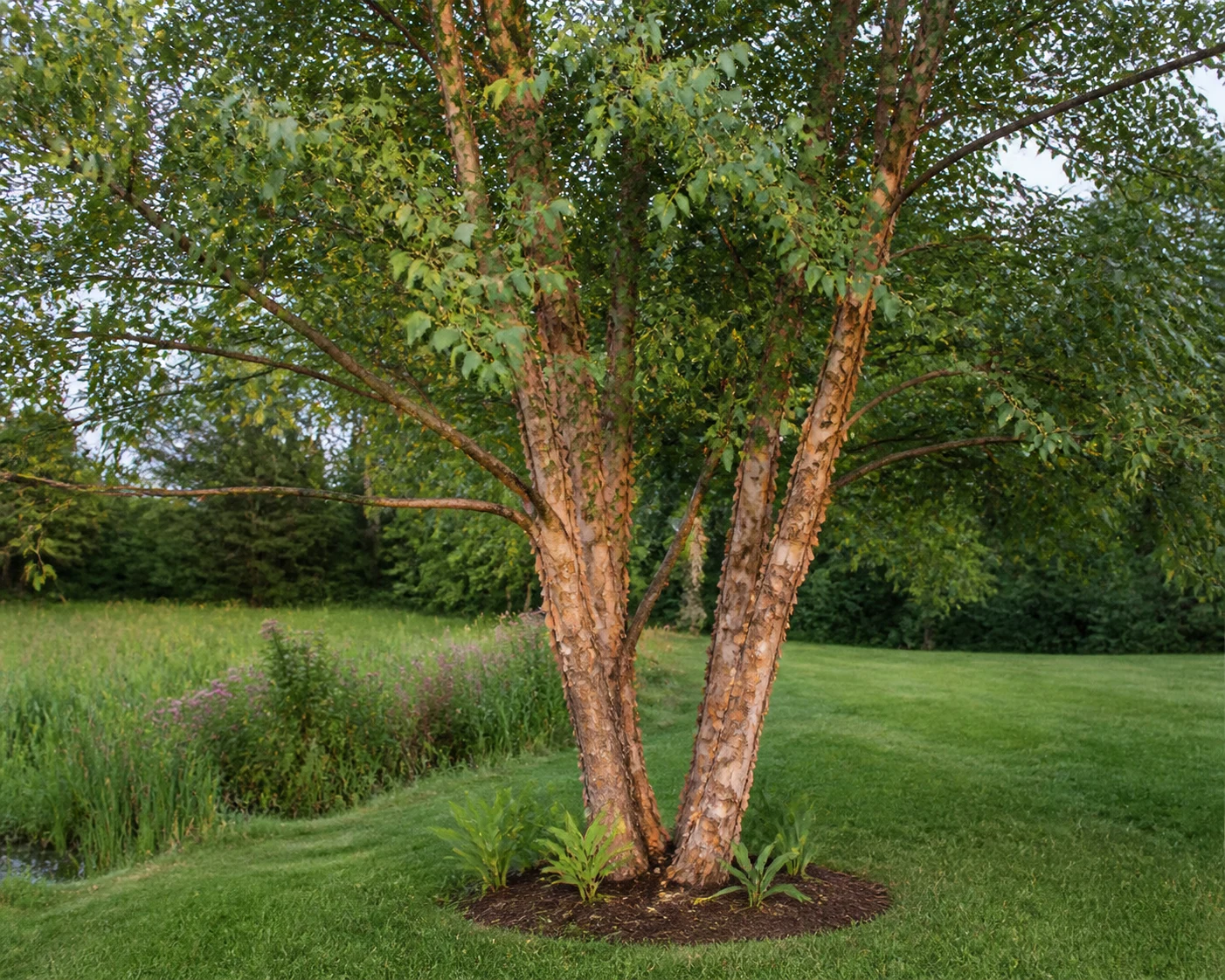
River Birch
Betula nigra
Peeling bark and moving foliage where the ground stays moist and acidic
- Mature fit
- Keep its 40-to-70-foot potential out of tight foundation beds
- Main tradeoff
- A large canopy brings leaf and twig cleanup, while alkaline soil can yellow foliage
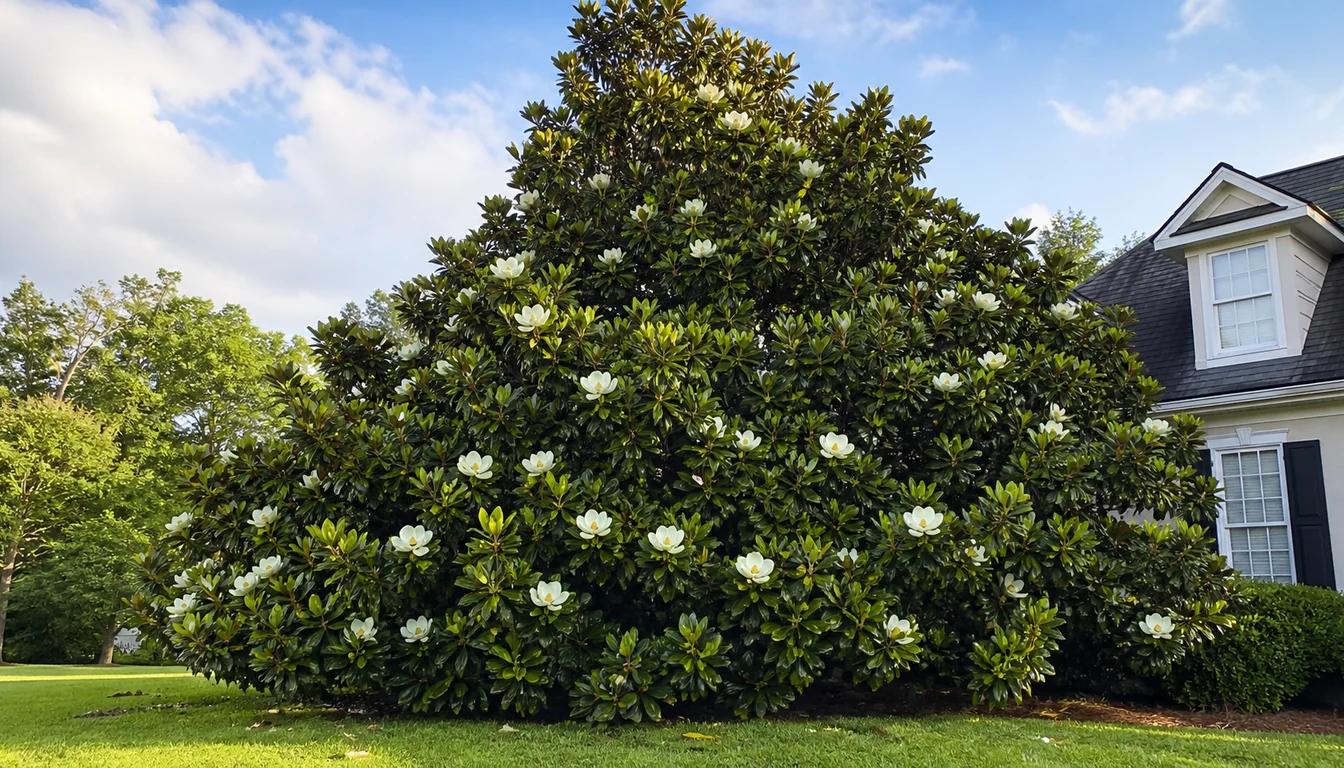
Southern Magnolia
Magnolia grandiflora
Evergreen structure and large flowers as an anchor on a generous site
- Mature fit
- Provide full-tree space for the broad crown, roots, and deep shade of southern magnolia
- Main tradeoff
- Large leaves, flower parts, and dense shade make cleanup and underplanting harder
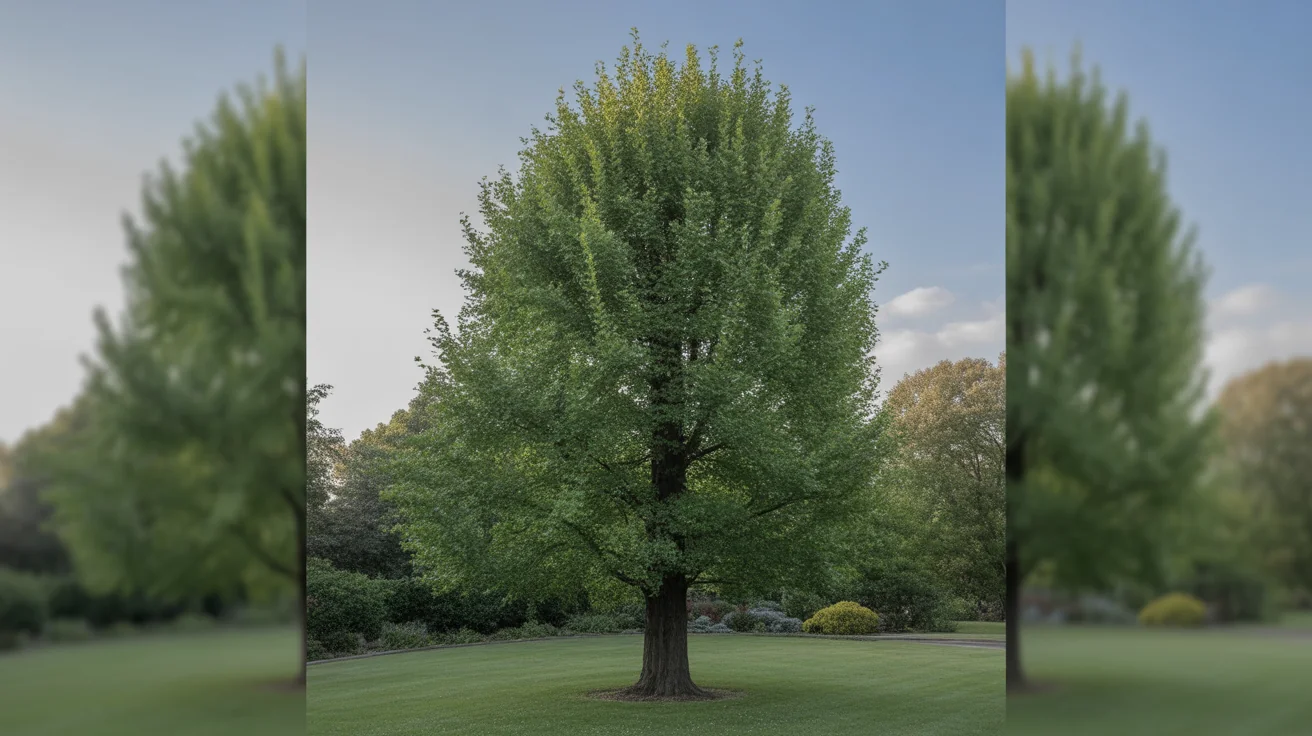
Ginkgo Tree
Ginkgo biloba
A durable specimen with clean form and exceptional yellow fall color
- Mature fit
- Site for a tree that may eventually reach 40 to 80 feet
- Main tradeoff
- Choose a male cultivar to avoid the foul-smelling fleshy seeds of mature female trees
What Makes an Ornamental Tree Worth the Space?
An ornamental tree is grown mainly for a visible feature such as flowers, foliage, fruit, bark, or crown form. The useful definition is broader than flowering tree because river birch can earn focal-point status through bark and Japanese maple through foliage and structure.
The main feature should appear when people actually use the view. A tree hidden behind the house during its one week of bloom provides less value than a quieter tree seen daily from the kitchen or patio.
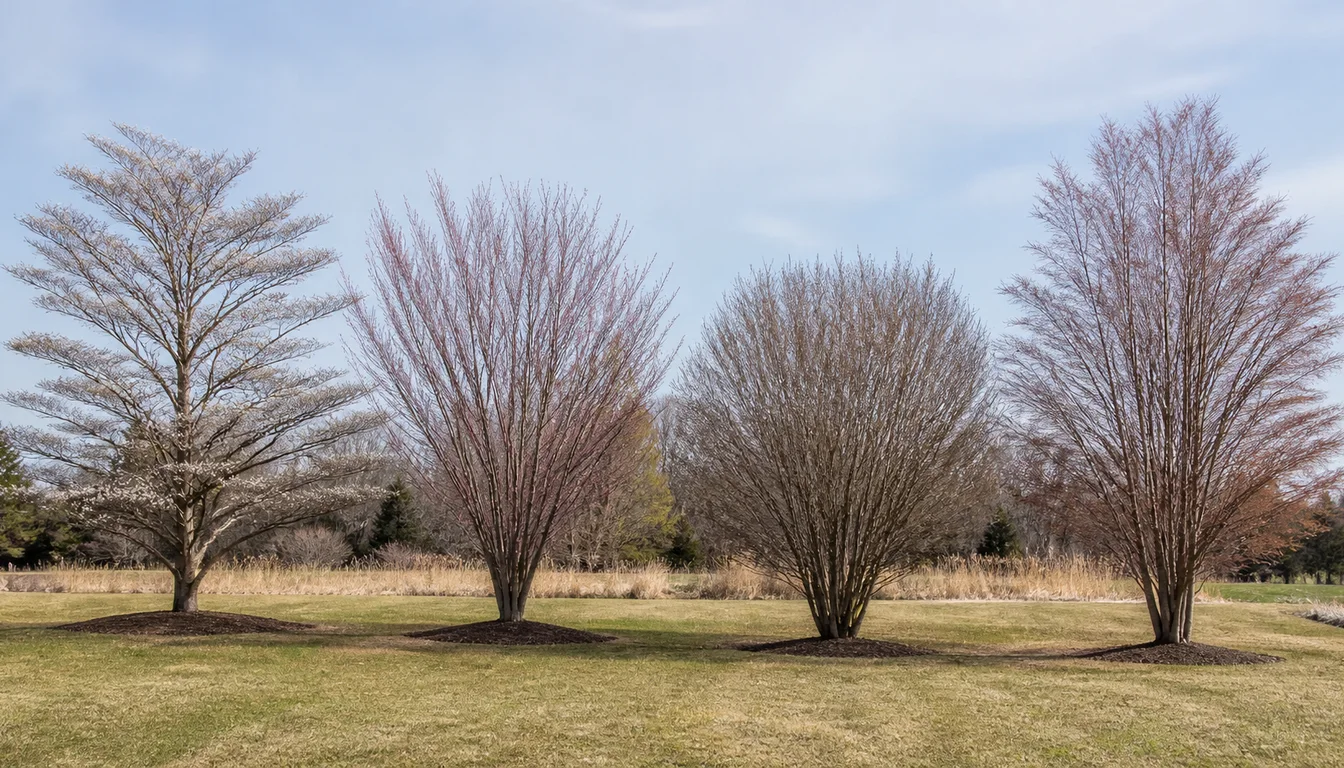
Look for a sequence rather than a single peak. Serviceberry can move from white spring flowers to purple fruit, orange-red fall foliage, and fine gray winter stems, while dogwood adds red fruit and layered branches after its spring bracts fade.
Winter is the honest test because flower color no longer distracts from weak placement or coarse structure.
If the trunk, branch outline, or bark adds nothing, the surrounding bed must carry the view for several months.
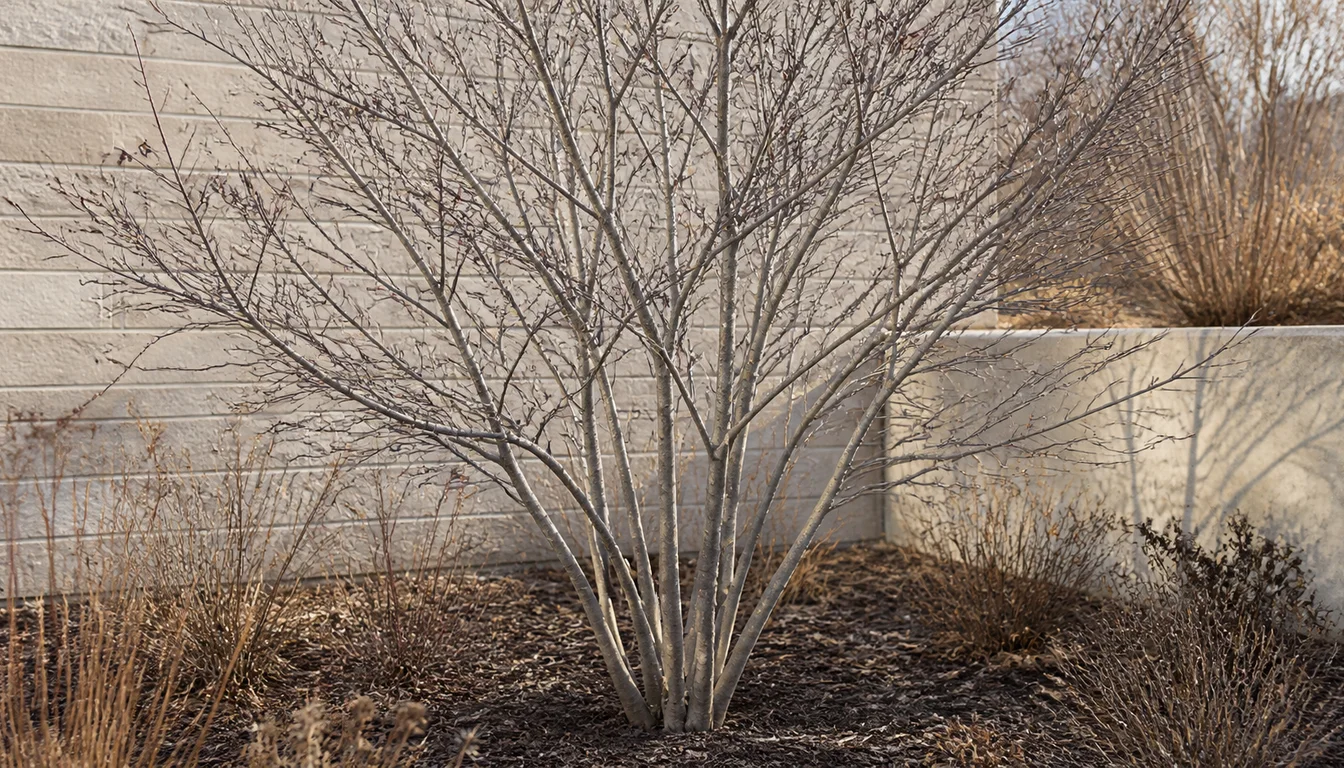
- Spring
- Flower timing, color, and frost exposure
- Summer
- Crown shape, foliage texture, shade, and fruit
- Fall
- Leaf color, berries, cleanup, and fruit drop
- Winter
- Bark, trunk form, branch structure, and persistent fruit
How Much Room Does an Ornamental Tree Really Need?
Ornamental does not mean dwarf. Many popular small trees mature around 15 to 30 feet, and river birch, ginkgo, and many magnolias become full-size landscape trees.
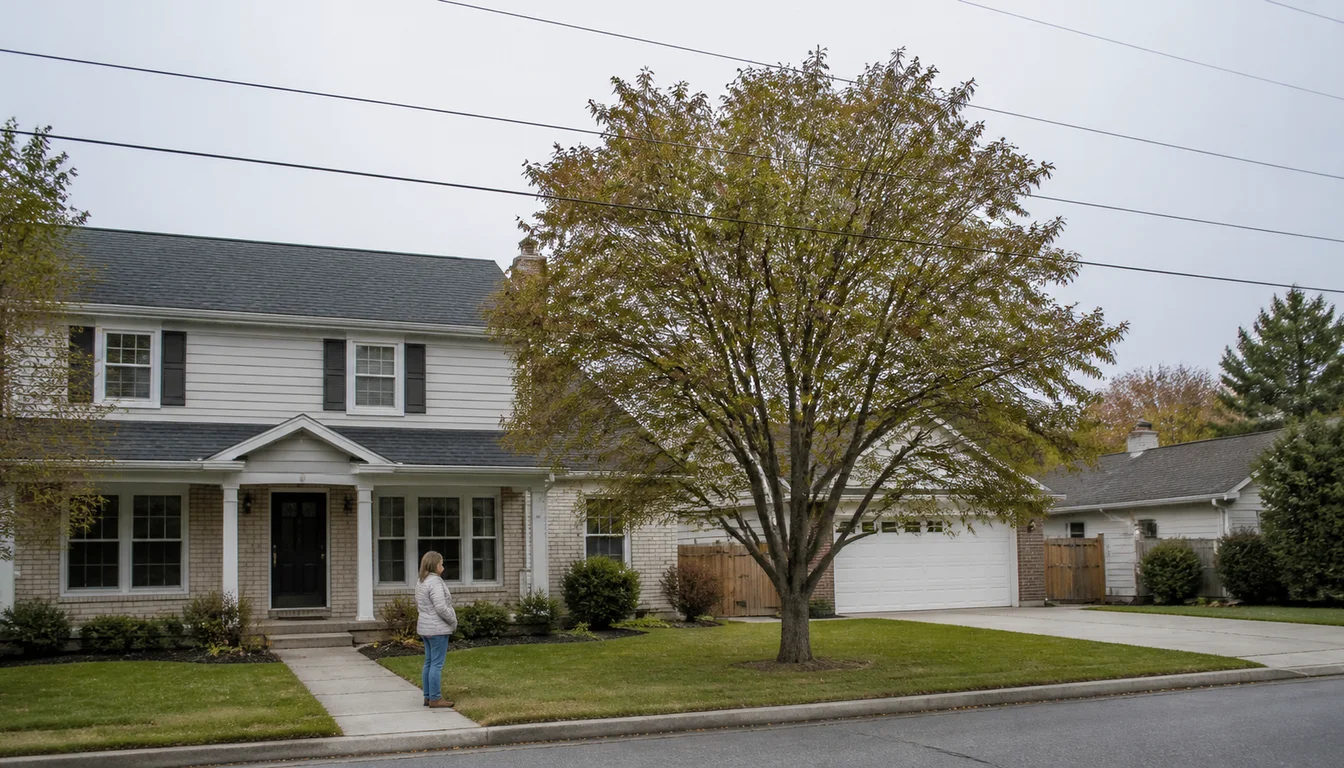
Measure the available width from fixed objects that cannot move. Include the house, roof edge, driveway, walkway, overhead wires, property line, and the path needed for a mower or future pruning.
Mark the expected canopy on the ground with a hose or flags, then view it from the street and the main window. An empty bed almost always looks larger before the circle is drawn.
Height alone can mislead. A 20-foot vase-shaped redbud may spread across a walk, while a taller narrow ginkgo cultivar may keep more ground clearance but still be wrong beneath a utility line.
Choose from the mature size of the named cultivar, not the species average or the pot label's current height. Dwarf, weeping, columnar, and multi-stem selections can differ enough to change the entire placement decision.
Repeated topping or hard reduction cannot turn a large tree into a stable small one.
If yearly size control is part of the plan before planting, select a smaller cultivar or move the tree.
| Mature scale | Trees to compare | Best landscape fit | Conflict to check |
|---|---|---|---|
| Usually under 15 ft | Dwarf Japanese maple cultivars | Courtyard, patio, protected entry | Afternoon heat, wind, and cultivar width |
| About 15 to 25 ft | Serviceberry, many redbuds, smaller dogwoods | Window view, small lawn, layered border | Canopy spread, fruit drop, and branch clearance |
| About 20 to 35 ft | Ornamental cherries, larger dogwoods, smaller magnolia cultivars | Open front lawn or broad mixed border | Roofline, disease pressure, and cleanup |
| Often over 35 ft | River birch, ginkgo, southern magnolia | Large lawn, distant focal point, estate-scale bed | Utilities, roots, deep shade, litter, and neighboring property |
Which Site Conditions Rule Out a Favorite Tree?
Filter by site before appearance because a beautiful tree under chronic stress loses the feature you bought it for. Record summer sun, reflected heat, winter exposure, drainage, soil pH, and mature width before comparing flowers.
Japanese maple prefers moisture-retentive, well-drained soil and often benefits from afternoon shade in hot climates. Hot paving, dry wind, and alkaline soil can produce scorched or chlorotic foliage even when the hardiness zone looks correct.
Flowering dogwood belongs in organic, well-drained soil with bright filtered light or morning sun in hotter regions. Full exposure can work in cooler climates, but compacted roots and reflected afternoon heat remove the woodland-edge conditions that keep the tree attractive.
River birch and sweetbay magnolia selections can use moist acidic ground that excludes many other ornamental trees. River birch may yellow in alkaline soil, while sweetbay magnolia can suit a wet edge better than southern magnolia.
Eastern redbud handles a broader range of ordinary well-drained sites, yet it still needs a mature-width check and protection from standing water. Serviceberry tolerates full sun to part shade, with stronger flowering and fruiting in brighter light where moisture remains even.
Hardiness zone describes winter cold tolerance only. Summer heat, humidity, disease pressure, salt, deer, and local invasive rules can change the answer within the same zone.
Hot afternoon exposure
Start with a heat-tolerant local species or a redbud suited to the region. Reject delicate Japanese maple foliage unless the site has afternoon protection and reliable moisture.
Bright part shade
Compare Japanese maple and flowering dogwood. Check drainage, air movement, and summer heat before choosing by leaf or flower color.
Moist acidic ground
Compare river birch with a suitable sweetbay magnolia. Confirm the mature canopy space because tolerance of wet soil does not make either tree small.
Ordinary well-drained soil
Compare redbud, serviceberry, ornamental cherry, and regionally suitable dogwoods. Use cultivar size, disease resistance, and cleanup to narrow the list.
What Should You Check Before Buying an Ornamental Tree?
Choosing the right species does not guarantee a good individual tree. Nursery stock can hide a buried root flare, circling roots, damaged bark, weak branch unions, or a mislabeled cultivar behind healthy leaves and flowers.
Read the full botanical and cultivar name, then confirm its mature dimensions and hardiness from a reliable source. A generic tag that says red maple or magnolia does not tell you whether the selection stays narrow, becomes broad, or fits the climate.
Study the trunk before the crown. The base should widen into a visible flare, the bark should be intact, and major roots should not circle tightly around the outside of the root ball.
A central leader is desirable for a tree sold as a single-trunk form, but naturally multi-stem serviceberry, river birch, and magnolia selections need several well-spaced stems rather than one forced leader. Judge the structure the cultivar is supposed to have.
Smaller healthy stock often establishes faster than the largest container on the row.
Buy the specimen with the soundest roots and branch structure, then let growth happen in the ground.
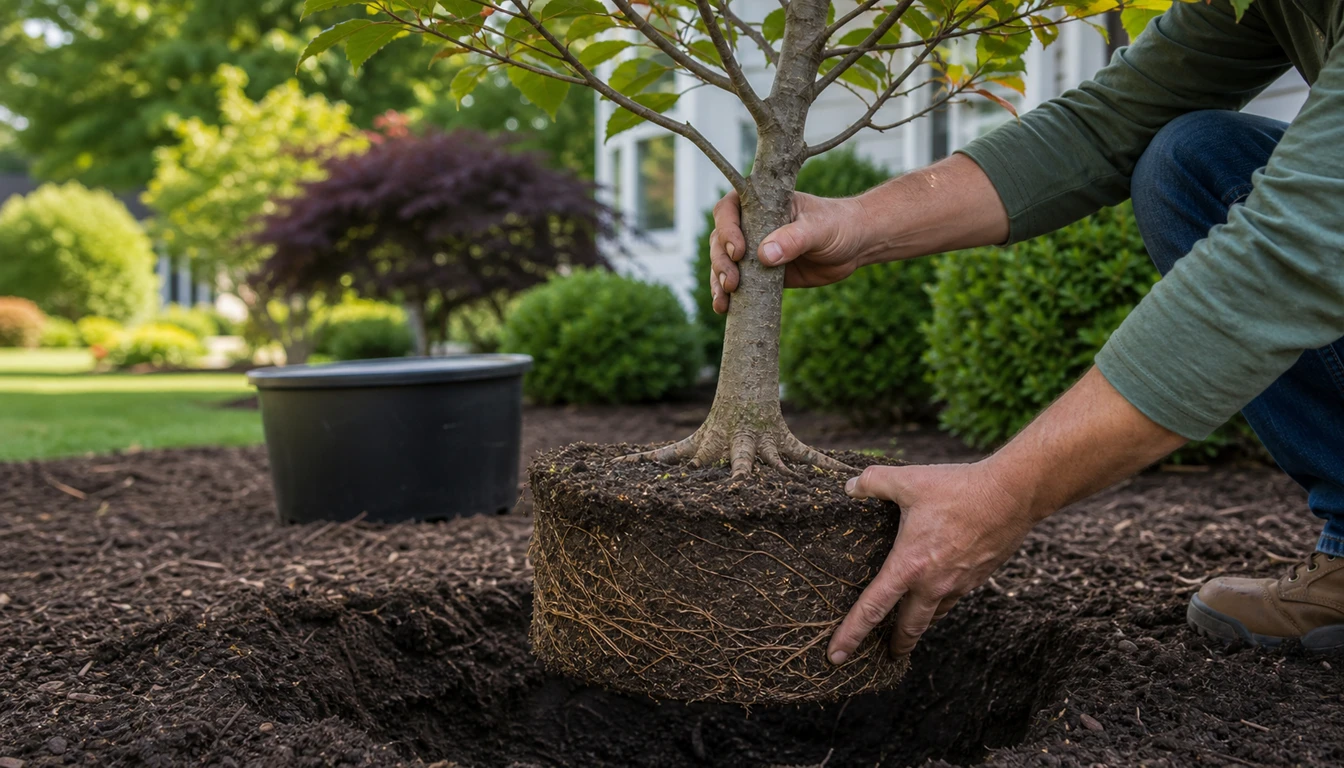
- The botanical name and exact cultivar match the tag and receipt
- Mature height and spread fit the measured site
- The trunk flare is visible rather than buried in potting mix
- Outer roots can be corrected and are not a solid woody circle
- Bark has no major wounds, splits, or rubbing ties
- Branches are distributed around the trunk with no tight competing leaders
- Leaves show no unexplained scorch, chlorosis, spots, or heavy pest residue
- The container is stable and the trunk does not pivot loose in the root ball
How Do You Plant an Ornamental Tree at the Right Depth?
Find the first substantial roots before measuring the hole because the top of the nursery mix may sit several inches above the true root flare. The flare, rather than the container rim, sets planting depth.
Dig a broad hole with undisturbed soil beneath the root ball. A hole two to three times as wide as the ball gives corrected roots room to move outward, while extra depth lets the tree settle below grade.
Remove the container and correct circling or matted outer roots before backfilling. Keep the trunk upright, spread usable roots outward, and use the excavated soil unless a site-specific soil problem requires a different correction.
Water slowly after backfill so soil settles around the roots, then recheck the flare. Add a wide shallow mulch ring that ends several inches before the trunk.
Establishment watering follows weather, soil, and root-zone moisture rather than a fixed weekly promise. Check below the mulch, water deeply when the root ball begins to dry, and wait when the planting hole remains wet.
Fertilizer does not correct bad depth, compacted soil, or poor drainage.
New growth matters less than roots expanding safely into the surrounding ground.
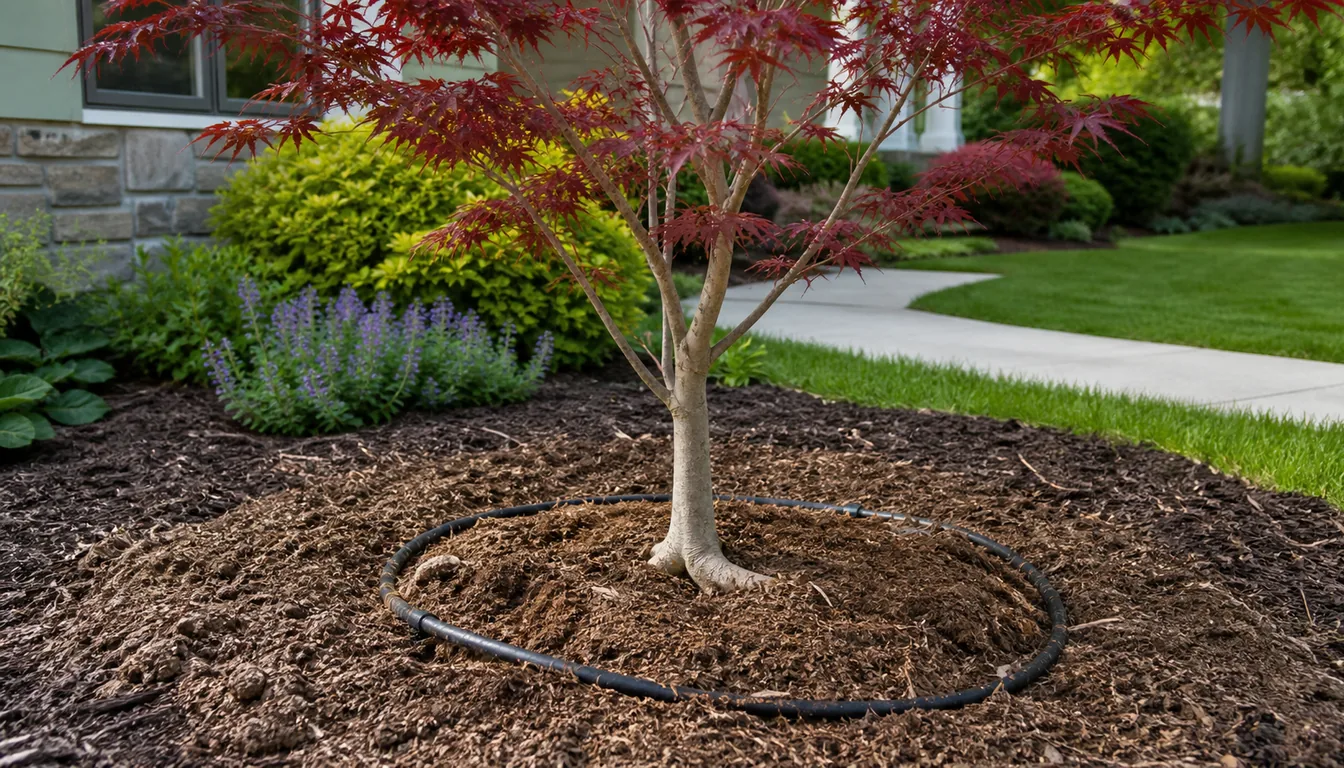
- Expose the flareRemove excess potting mix until the first major roots and trunk widening are visible.
- Measure from the flareSet the hole depth so the flare finishes at or slightly above surrounding grade.
- Widen the holeDig two to three times the root-ball width without polishing the sides into a hard bowl.
- Correct the rootsLoosen, spread, or selectively cut circling outer roots before backfill.
- Backfill and settleReturn the native soil in lifts, water slowly, and confirm the trunk remains upright.
- Build the mulch ringCover the root zone lightly while leaving the trunk and flare exposed.
- Check moistureTest the root ball and surrounding soil before each deep watering.
When Should You Prune an Ornamental Tree?
Pruning time depends on why you are cutting and which tree you have. Remove broken, hazardous, or diseased wood when safety or disease management requires it, then schedule elective shaping around flowering and species response.
Spring-flowering cherries, dogwoods, redbuds, and many magnolias often carry blooms on wood formed earlier. Pruning just after bloom preserves more of the next display when flower production is the main concern.
Dormant-season visibility helps with young-tree structure because crossing limbs, narrow unions, and competing leaders are easier to see without leaves. Make small corrections early instead of waiting for a large branch to become a removal wound.
Species can change the timing.
Japanese maple may bleed sap after late-winter or spring cuts, so many growers reserve necessary pruning for late fall to midwinter and keep it light.
Never shear every ornamental tree into a rounded outline. Layered dogwood branches, a redbud's broad informal crown, a Japanese maple's fine structure, and a multi-stem serviceberry each lose value when forced into the same shape.
A request to reduce the whole crown every year usually reveals a placement error. Improve clearance with a few selective cuts, but replace or relocate a tree that can never fit its mature space.
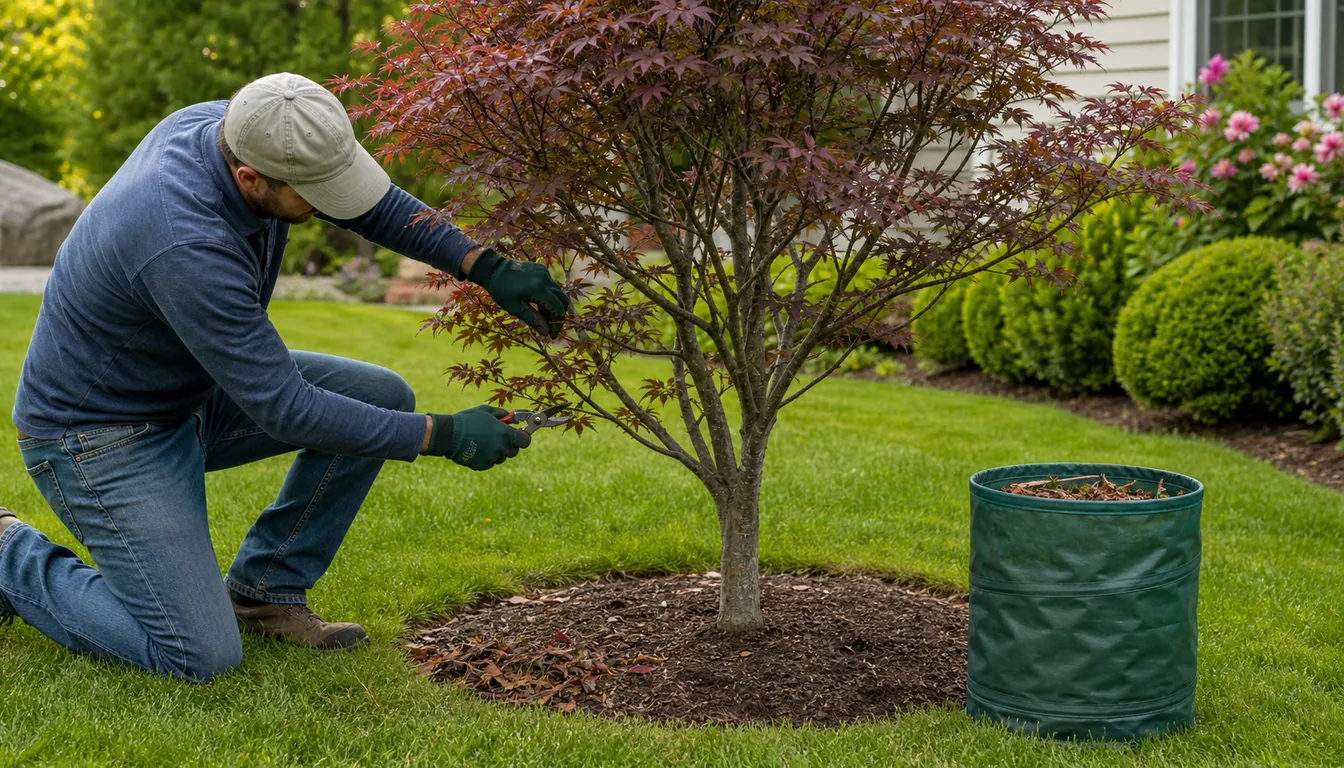
| Reason for cutting | Useful timing | Keep the cut focused | Avoid |
|---|---|---|---|
| Broken or hazardous branch | As soon as conditions are safe | Remove the damaged branch to a sound union | Waiting for the preferred season while risk remains |
| Young-tree structure | Dormancy or the species-specific quiet season | Correct one competing leader or crossing limb | Removing a large share of the live crown at once |
| Spring bloom preservation | Soon after flowering where buds form on older wood | Thin or shape only what the view and health require | Heavy winter pruning that removes flower buds |
| Walkway or roof clearance | Before contact becomes severe | Raise or shorten a small number of branches | Topping the entire crown |
| Tree is too large for the site | No season makes this a good annual job | Reassess the cultivar or location | Repeated hard reduction to hold a large tree small |
Can One Ornamental Tree Carry a Four-Season Design?
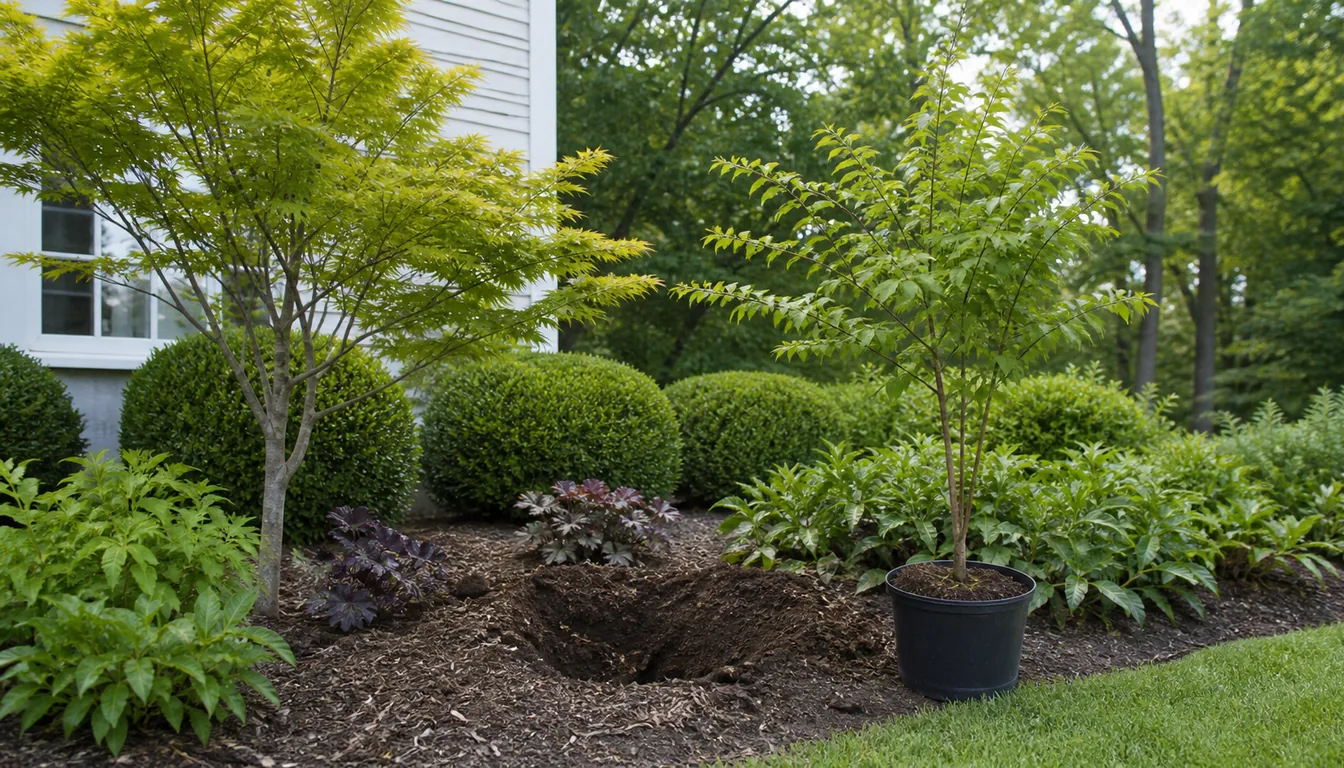
One tree can carry a small view when its strongest features arrive in more than one season and the surrounding planting stays subordinate. The tree does not need to peak every month, but its crown, bark, foliage, fruit, or flowers should give the eye a reason to return.
Use low groundcovers and restrained shrubs to frame the trunk without hiding it. Keep the mature canopy edge open enough that the tree reads as one shape rather than as the tallest item in a crowded bed.
Photograph the same view after leaf-out, during bloom, in late summer, at fall color, and after leaf drop. The sequence shows whether the weak period comes from the tree, the supporting plants, or the viewing angle.
Add a low supporting layer when the trunk looks bare from a seated view. Edit or move a competing shrub when two plants pull attention equally, and leave open ground when the branch silhouette already fills the frame.
Replace the tree when the problem is chronic site mismatch, such as annual scorch, waterlogged roots, blocked access, or a crown that will never clear the building. Styling cannot repair a biological or spatial conflict.
A focal tree succeeds when the whole view still feels intentional after the flowers fade.
That standard produces a quieter shortlist than a nursery in bloom, but it also produces a landscape that works for decades.
Quick Tips
- Measure the mature crown against fixed structures before comparing flowers.
- Choose a named cultivar because size and form can vary widely within one species.
- Judge the tree from the porch, window, street, or seat where it will actually be seen.
- Reject a favorite tree when the site's heat, drainage, soil, or winter exposure does not fit it.
- Inspect the root flare and outer roots before paying for nursery stock.
- Keep mulch wide and shallow, with the trunk flare visible.
- Prune to correct one defect or reveal natural form, not to hold a large tree in a small space.
Recommended Plants
8 trees worth considering.
Frequently Asked Questions
What is the best ornamental tree for a small front yard?
Start with a cultivar of Japanese maple, serviceberry, flowering dogwood, or eastern redbud whose mature width fits the measured space. The best choice then depends on afternoon heat, drainage, soil, winter cold, and whether you value foliage, flowers, fruit, or branch form most.
What is the lowest-maintenance ornamental tree?
A healthy tree matched to its native climate and the site's soil, light, and space will require less correction than a supposedly easy species planted in the wrong place. Serviceberry and redbud can be manageable small trees in suitable regions, while a male ginkgo can be durable on a much larger site.
How far should an ornamental tree be planted from a house?
Use the named cultivar's mature spread and place the trunk so the future crown clears the roof, wall, windows, and pruning path. One universal distance is unsafe because a dwarf Japanese maple and a southern magnolia do not occupy comparable space.
Can an ornamental tree grow in partial shade?
Yes, and Japanese maples, flowering dogwoods, and serviceberries often tolerate or benefit from part shade. The useful question is whether the site still supplies enough light for the feature you want without adding heat, weak flowering, or persistent dampness.
Should I choose a flowering tree by bloom color?
Bloom color comes after mature size, site fit, crown form, and disease resistance. A short flower display cannot compensate for a tree that scorches, crowds the house, or needs repeated hard pruning.
Are ornamental trees bad for foundations?
Most problems begin with choosing a tree whose mature crown and root area do not fit the available space, rather than with the word ornamental. Keep large species away from tight foundation beds, protect utilities, and follow the mature dimensions of the exact cultivar.
Sources & References
- RHS: Trees for Smaller Gardens
- University of Minnesota Extension: Planting Trees and Shrubs
- University of Florida IFAS: Buying a Tree
- North Carolina Extension: Japanese Laceleaf Maple
- North Carolina Extension: Flowering Dogwood
- North Carolina Extension: River Birch
- North Carolina Extension: Sweetbay Magnolia
- Penn State Extension: Pruning Ornamental Trees and Shrubs
- University of New Hampshire Extension: Best Flowering Trees for a Small Yard