
Best Privacy Trees for Screening a Yard
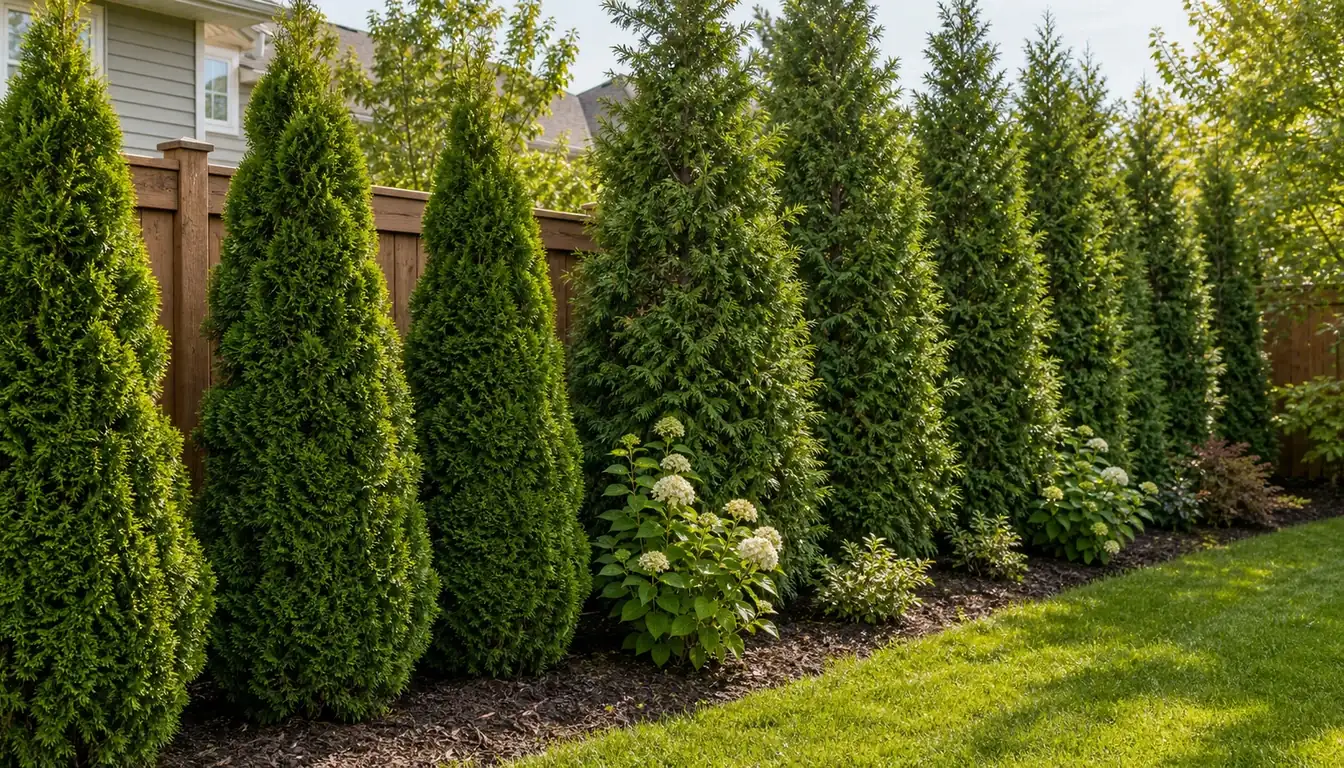
Space privacy trees at 60 to 75 percent of mature width and place the row half that width inside your line. Match tree height to the view.
At a glance
Most privacy plantings are measured from the fence, which is why so many of them fail.
The view that bothers you happens from a particular chair or window, and a row on the property line can be perfectly straight and still leave that view open. This page starts at the seat, turns the exposure into a height in feet, and then gives the spacing that decides whether the screen ever closes.
Start at the Seat, Not at the Fence
The boundary is where the plants go, not where the problem is. Beginning there produces a tidy row that solves a view nobody was standing in.
Go to the chair, the window or the gate where the exposure is actually felt and write down five things before looking at a single plant.
Distance then works strongly in your favor, because a screen placed halfway to the viewer blocks roughly twice the angle of the same height planted at the line. That single fact is why a modest plant near the patio often beats a large tree at the boundary.
- Viewer: seated patio, standing window, deck corner, gate, driveway, or sidewalk
- Target: a neighbor's window, the street, a service area, headlights, or a fence gap
- Height: seated eye, standing eye, second-story line, or road glare
- Season: all year, summer evenings, or winter when deciduous cover is gone
- Distance: from the viewer to the screen, since nearer blocks more
How Tall the Screen Has to Be
Seated eye level is roughly 4 feet and standing eye level 5 to 5 feet 6 inches, which is the same arithmetic used on the perennial screen page and the reason most exposures need far less height than people assume.
The hard cases are the ones that genuinely need a tree. A neighbor's second-story window sits roughly 15 to 20 feet up, so blocking it means 20 to 25 feet of screen, and nothing shorter will do it however dense.
At the other end, headlight glare crosses at about 2 to 3 feet, which a low dense layer handles completely.
| What is exposed | Height needed | Where to put it |
|---|---|---|
| Seated patio view | About 4 ft | Near the seat, not at the line |
| Standing view across the yard | 5 to 5 ft 6 in | Mid-yard or boundary |
| Neighbor's second-story window | 20-25 ft | Boundary, and it has to be a tree |
| Headlight glare from a road | 2-3 ft, dense | Along the exposed edge |
| Angled view through a straight row | Same height, offset | A second staggered row |
Spacing Decides Whether It Ever Closes
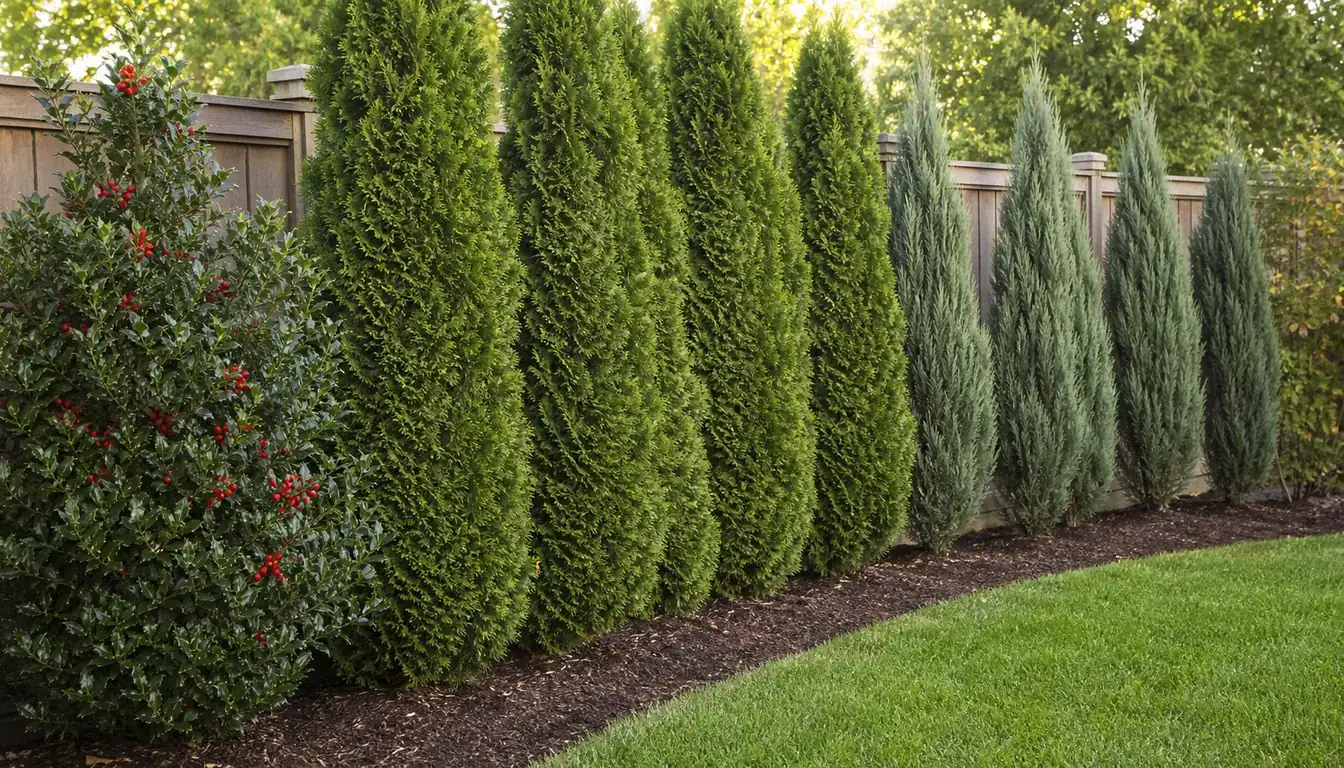
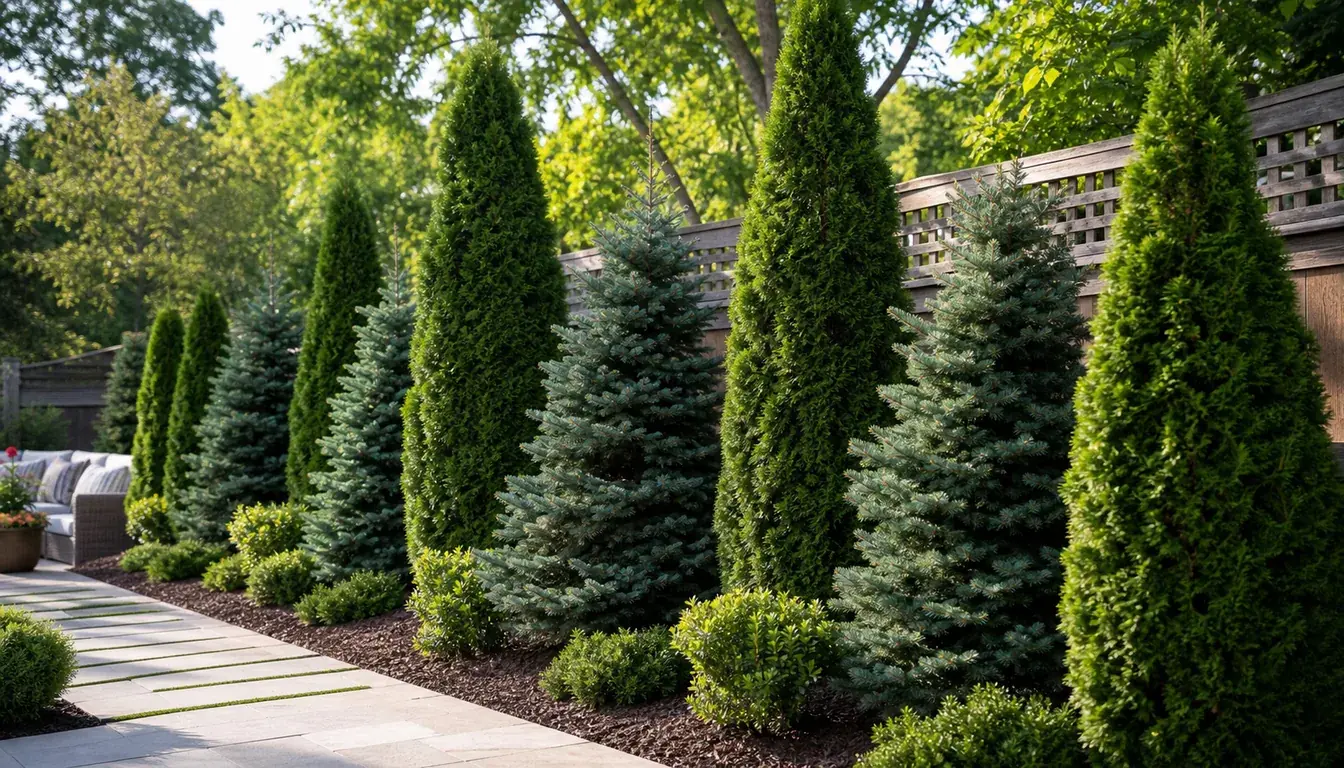
Space at roughly 60 to 75 percent of mature width. The lower end closes sooner, the upper end keeps more air between the crowns, and both are far wider than the plants look on planting day.
An arborvitae cultivar maturing 8 feet across goes about 5 to 6 feet apart, and planting it at 3 feet buys you a screen two years sooner followed by pressed crowns, bare interiors and disease running down the row.
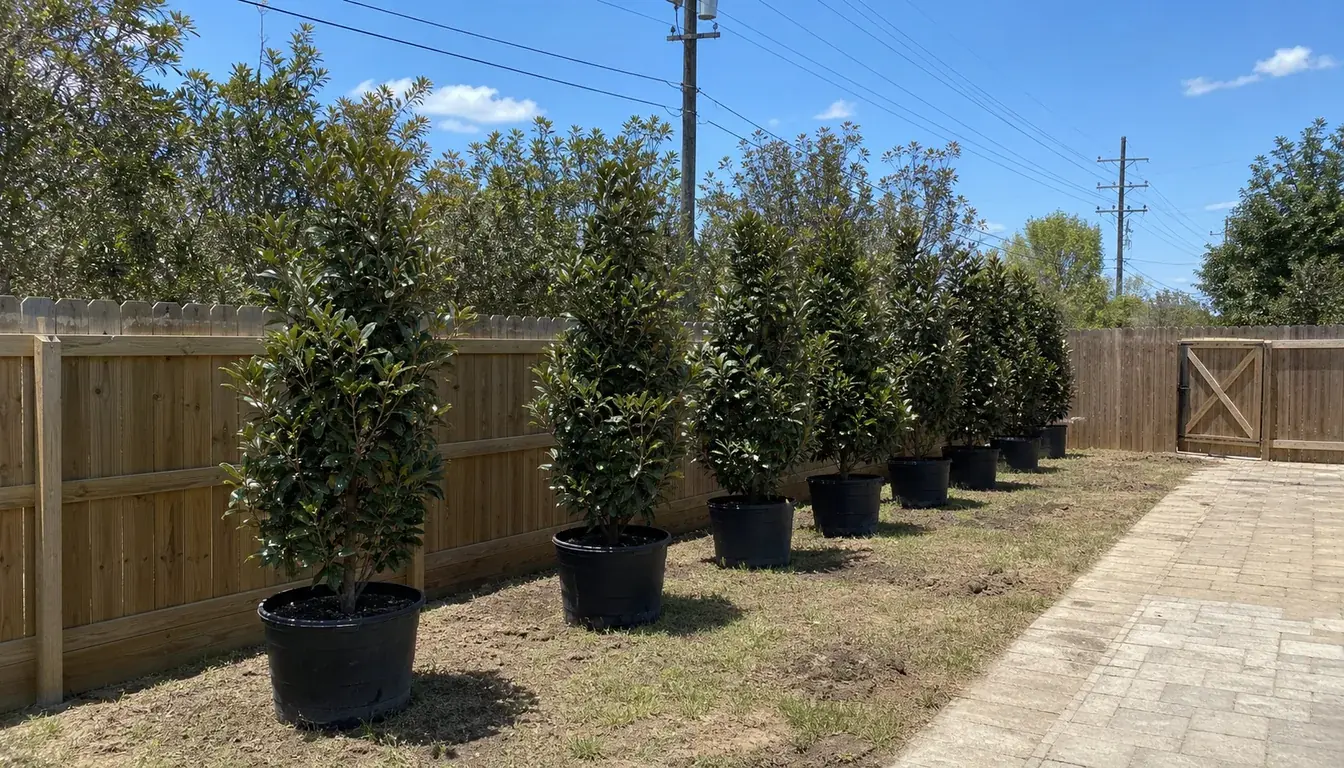
Set the row at least half the mature width inside your own property line, so a plant reaching 8 feet across sits 4 feet in. Anything closer and half the screen becomes your neighbor's problem to prune.
| Plant | Mature height | Mature width | Plant them |
|---|---|---|---|
| Arborvitae | 3-40 ft by cultivar | 2-15 ft | 60-75% of the cultivar's width |
| Skip laurel | 6-10 ft | 3-5 ft | 3-4 ft apart |
| Juniper | 1-50 ft by species | 2-15 ft | Check the cultivar, not the species |
| Holly | 3-50 ft by type | 3-25 ft | Wide, and it is slow |
| Yew | 10-40 ft | 4-20 ft | Wide, tolerates shade and shearing |
| Privet | 4-15 ft | 3-12 ft | 3-4 ft, but check it is not invasive locally |
| Serviceberry | 10-25 ft | 8-20 ft | 8-12 ft, deciduous |
| Magnolia | 20-70 ft | 10-40 ft | A specimen, not a row |
Keep the Back Side Reachable, and Plant It Shallow Enough
Leave 2 to 3 feet of working room behind the row. That corridor is what lets you water, prune, clear leaves and replace one failed tree without climbing through the screen from the front.
The other half of a good planting is depth, and burying the root flare is the most common way a healthy screening tree declines slowly for years without any obvious cause. Size matters here too, since an oak or a red maple is a canopy tree rather than a screening shortcut, and neither belongs in a narrow strip beside a fence.
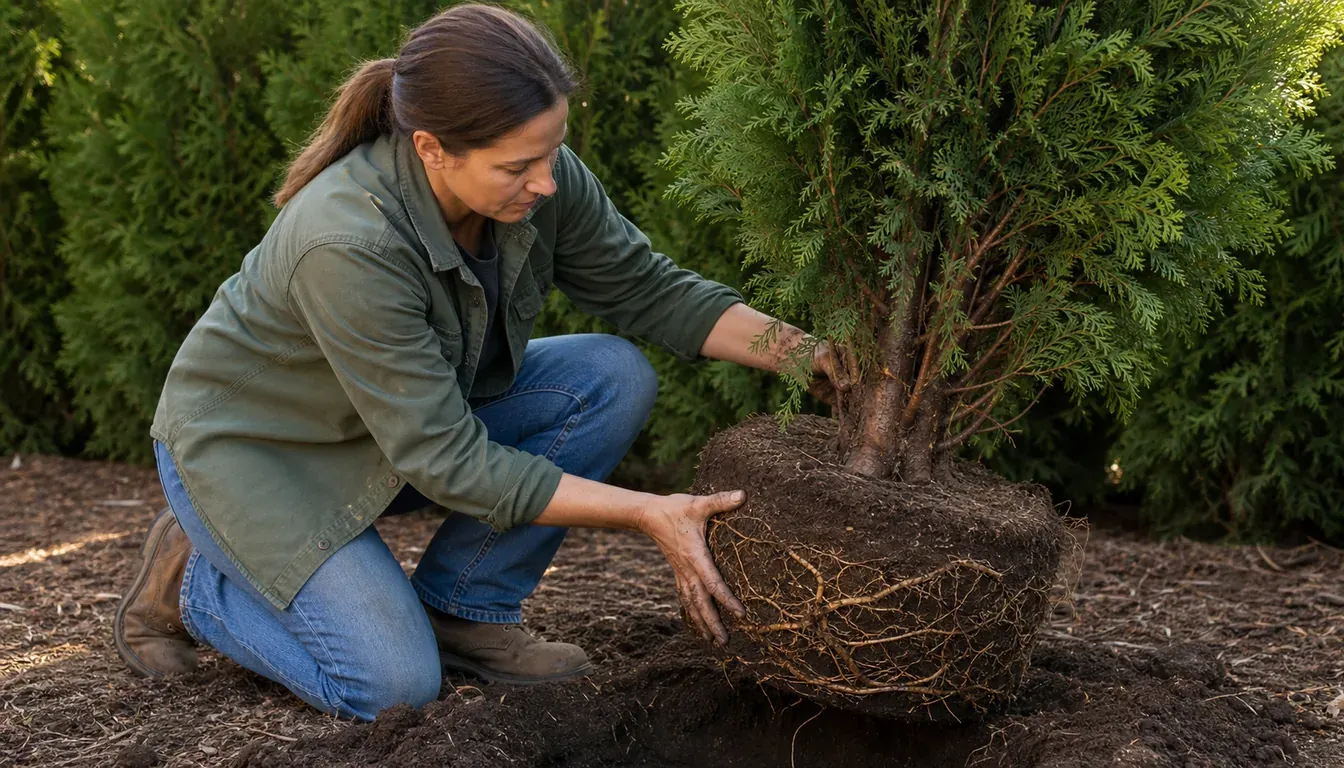
- 2 to 3 ft behind the row: for access, and because a tree against a fence browns on that side
- Root flare at or just above grade: never buried, whatever depth the pot suggests
- Mulch in a ring, not against the trunk: a ring holds moisture, a pile rots bark
- Half the mature width inside your line: so the screen stays yours to maintain
A Row Fails in Patterns, Not at Random
A row does not average out a site problem, it repeats it. One dry fence corner, one soggy drainage line or one wind funnel takes out several trees in the same place, which is why a screen usually fails in a stretch rather than one plant at a time.
Check the run as separate root zones rather than one planting, and remember that a wet trench makes leaves wilt in a way that looks exactly like drought, so the overwatering signs are worth reading before you add more water.
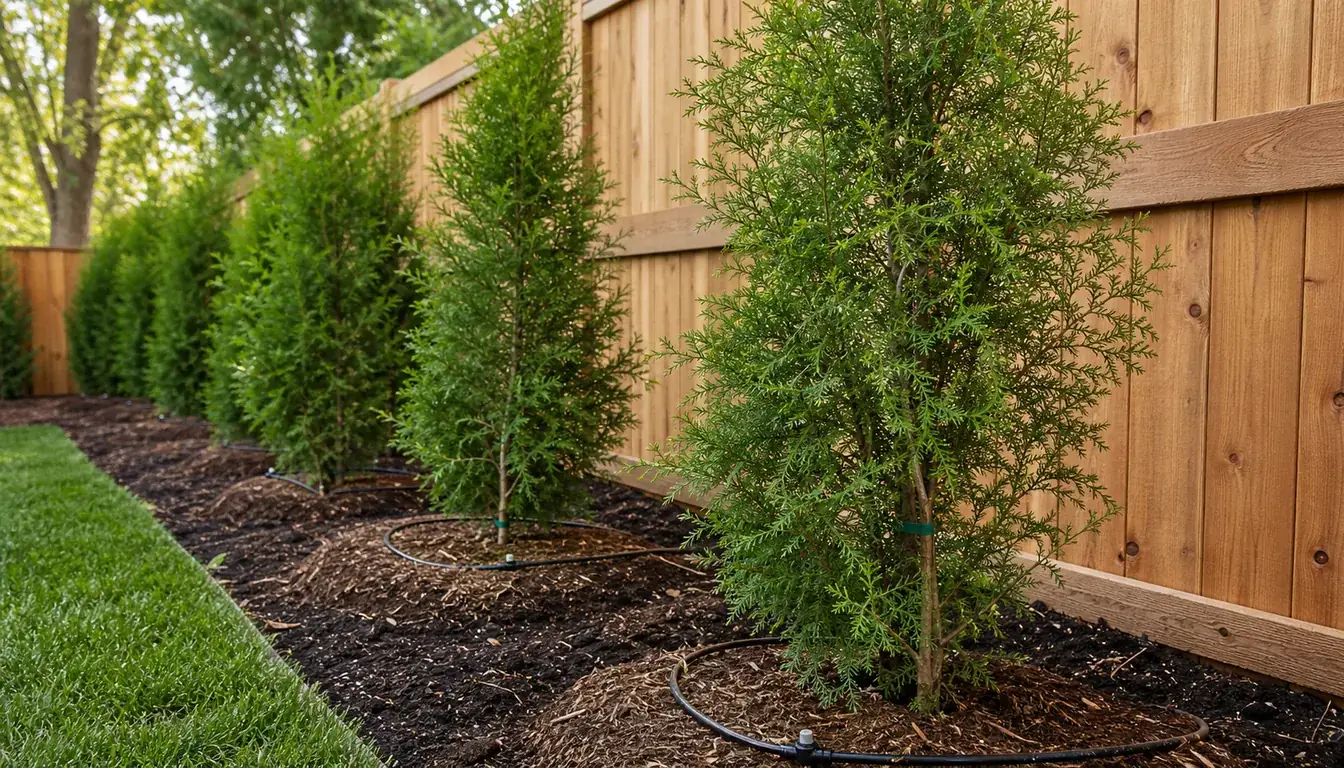
- The uphill and downhill ends: rarely share the same drainage
- The downspout side: wetter than the middle all year
- The dry eave side: gets almost no rain at all
- The exposed end: takes wind the protected middle never feels
Repair the View, Not the Row
When a gap opens, go back to the chair the screen was planted for. What you see from there decides the repair, and it is almost never another tall tree.
The instinct to add height is what turns a screen into an overgrown row, because most reopenings happen low down or at an angle rather than at the top.
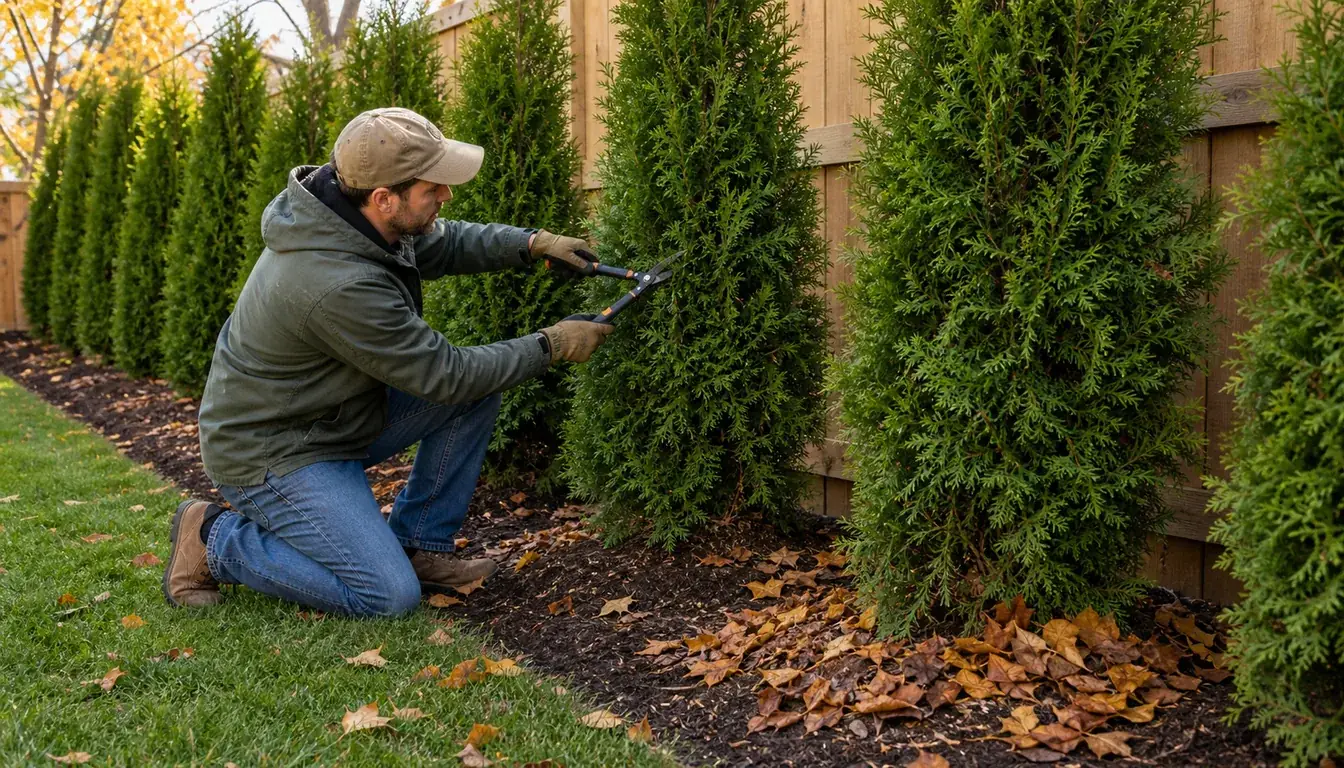
| What reopened | Better repair | Bad repair |
|---|---|---|
| Trunks lifted above seated view | Add a lower layer in front | Plant another tall tree |
| Side-angle view through the row | Stagger one group inward | Extend the row straight |
| Brown interior | Reduce crowding, stop shearing | Cut deeper into old wood |
| One dead tree | Replace early, matched to the job | Wait until neighbors close over |
Quick Tips
- Measure from the seat where privacy fails, not from the fence.
- A screen halfway to the viewer blocks about twice the angle of the same height at the line.
- Blocking a neighbor's second-story window needs 20 to 25 feet, and nothing shorter will do.
- Space at 60 to 75 percent of mature width, however sparse it looks on planting day.
- Set the row half the mature width inside your own property line.
- Leave 2 to 3 feet of working room behind the row.
- Keep the root flare at grade, and mulch in a ring rather than against the trunk.
Recommended Plants
3 trees worth considering.
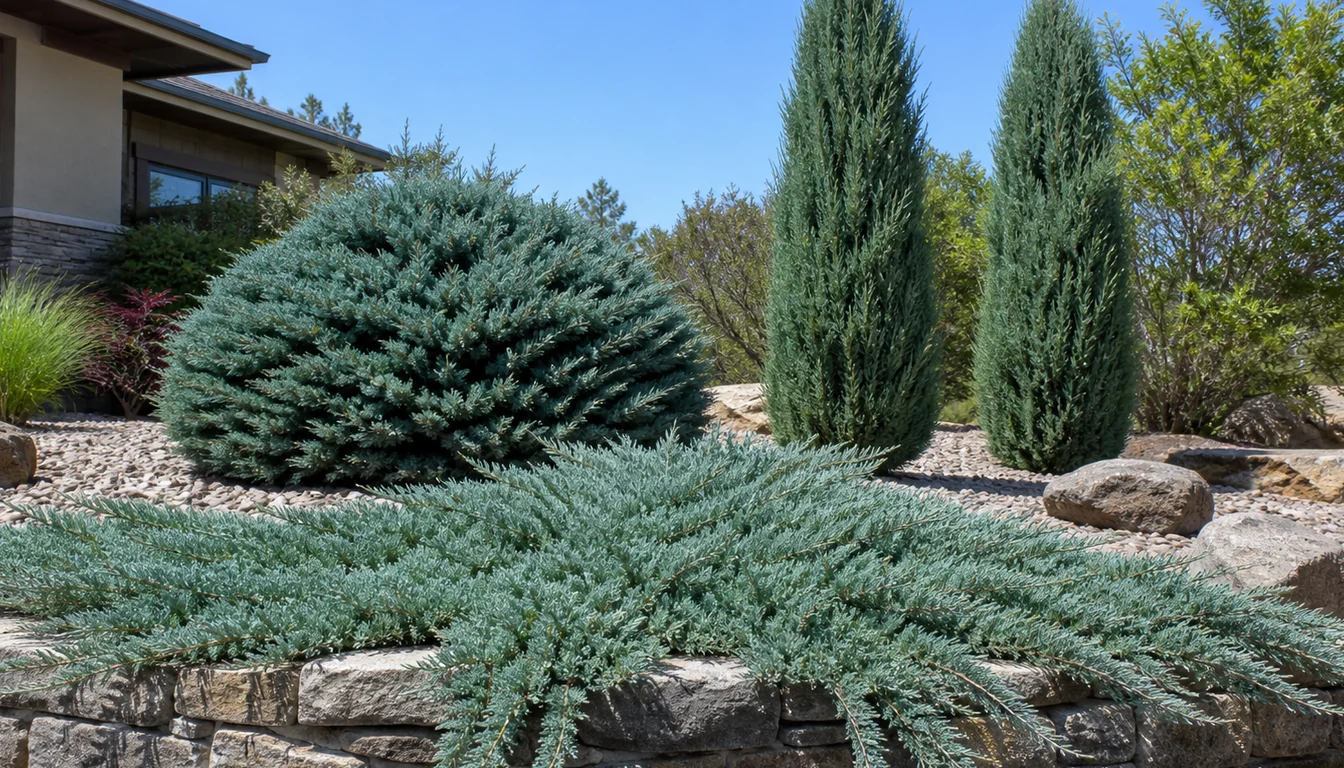
Juniper
Juniper covers dozens of evergreen conifers that range from a 4 inch mat to a 60 ft tree, so the form on the label…
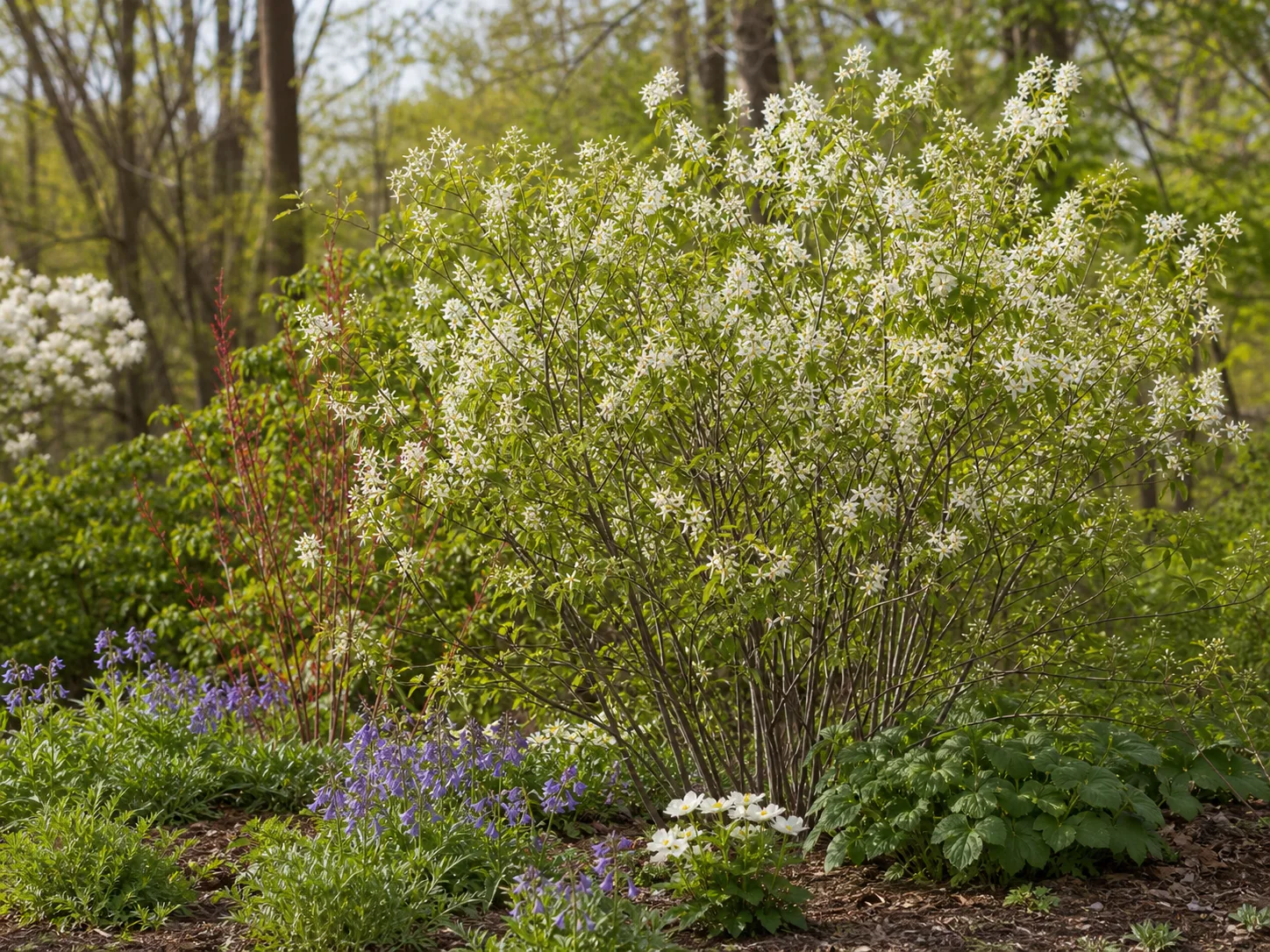
Serviceberry
Serviceberry (Amelanchier) is a small rose-family tree that gives white flowers in very early spring, edible purple…
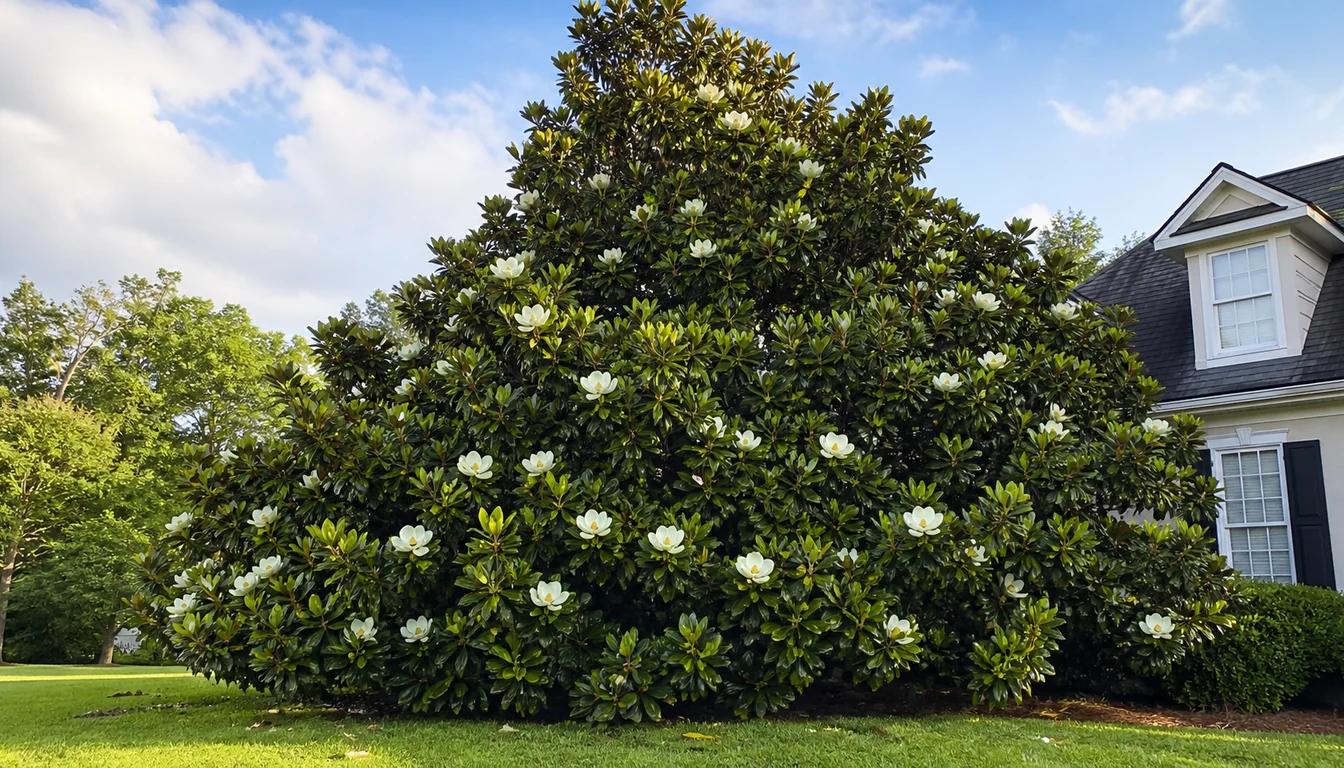
Southern Magnolia
Southern Magnolia is not just a flowering tree. It is a broad evergreen anchor that throws heavy shade, glossy leaves…
Frequently Asked Questions
How far apart should privacy trees be planted?
At roughly 60 to 75 percent of their mature width, so an arborvitae maturing 8 feet across goes about 5 to 6 feet apart. Planting tighter closes the screen a couple of years sooner and then produces pressed crowns, bare interiors and disease running down the row.
How tall does a privacy screen need to be?
About 4 feet clears a seated patio view and 5 to 5 feet 6 inches a standing one, while a neighbor's second-story window sits 15 to 20 feet up and needs 20 to 25 feet of screen. Headlight glare crosses at only 2 to 3 feet.
How close to the property line can I plant?
Set the row at least half the mature width inside your own line, so a plant reaching 8 feet across sits 4 feet in. Closer than that and half the screen grows over the boundary, which makes it your neighbor's to prune and your problem when they do.
Why did several trees in my row die in the same spot?
Because a row repeats a site problem rather than averaging it, so one soggy drainage line or one dry eave takes out a stretch at once. Check the uphill and downhill ends, the downspout side and the exposed end as separate root zones.
My screen has gone bare at the bottom. What now?
Add a lower layer in front rather than another tall tree, because trunks lifting above seated view is a gap at the bottom of the screen and not a shortage of height. Brown interiors usually mean crowding and shearing rather than underfeeding.