
What's a Japanese Maple? How Do You Prevent Leaf Scorch?
Acer palmatum Sapindaceae
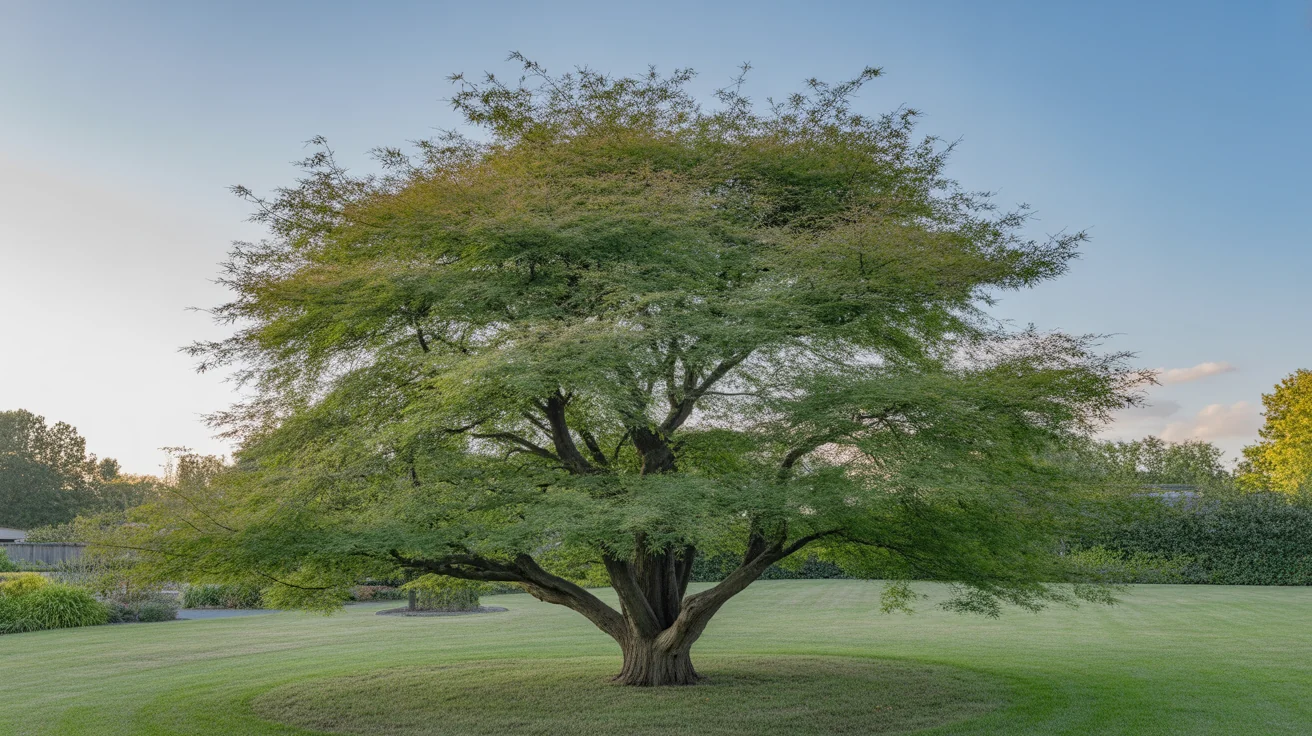
Japanese Maple succeeds when the site protects the leaves as much as the roots. The real care job is matching the cultivar's habit to the space, buffering heat and wind, and pruning just enough to show off the branch structure instead of fighting the tree every summer.
Care snapshot
Where Does a Japanese Maple Grow Best?
The first question for Japanese Maple is not red, green, or laceleaf. It is what the yard feels like at 4 p.m. in July.
Japanese maple (Acer palmatum) is a small deciduous maple with fine leaves and layered branches. Those thin leaves show site mistakes quickly because hot wind can pull moisture out faster than the roots replace it.
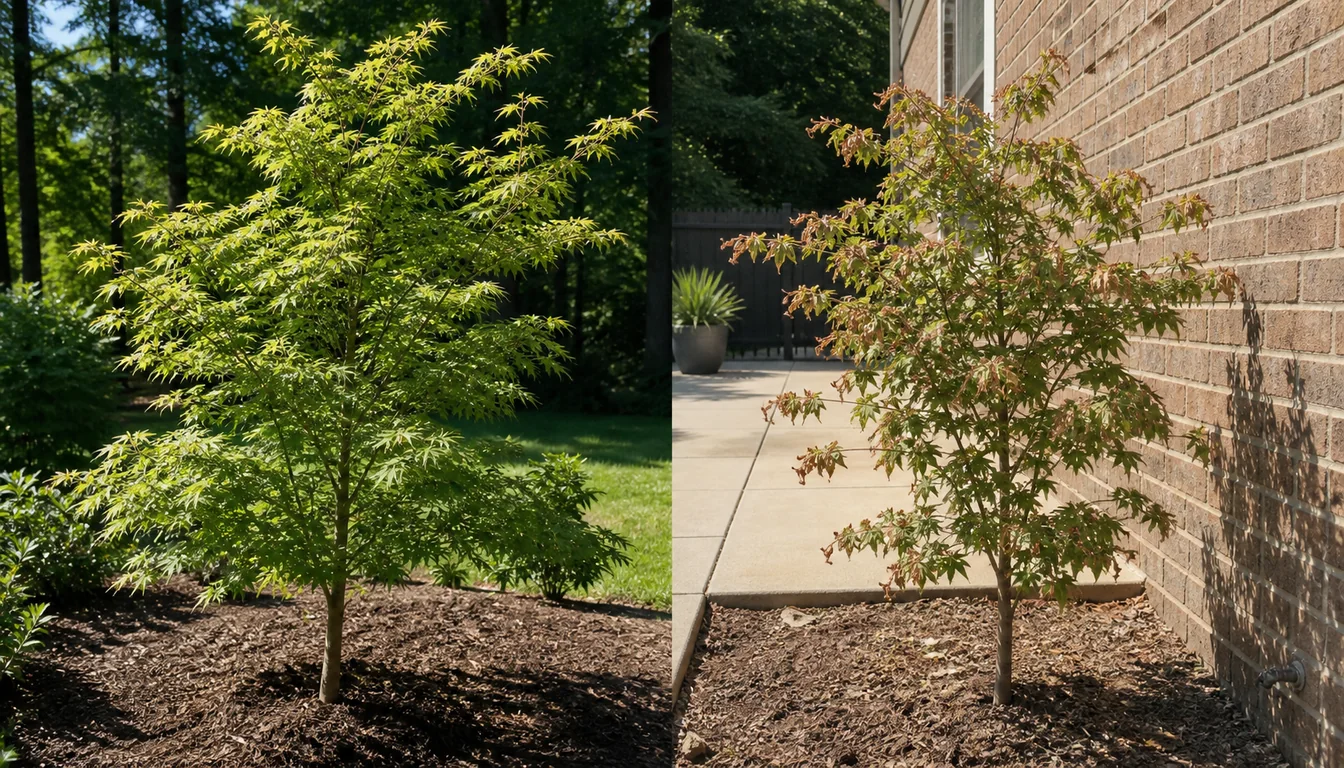
A front bed that looks bright and pleasant in the morning can become a reflected-heat trap by late afternoon if there is concrete, dark fencing, or a west wall nearby. Japanese Maple reads that heat almost like a warning label.
Afternoon sun does more damage than the same number of morning hours, since it lands after a full day of accumulated heat rather than on cool morning air, which is why west-facing exposure scorches leaves that east-facing exposure would not.
Crisp edges, faded color, and limp summer texture often start there, not in the fertilizer bag.
That is why Japanese maple needs more than generic small-tree advice. You are not merely asking whether the tree survives.
You are asking whether the leaves stay beautiful enough to justify the plant, since survival alone is too low a bar here.
If the site only offers full punishment sun and wind, a tougher tree such as red maple may make more sense.
If the garden already supports azalea, you may already have the calm, acid-leaning feel that Japanese Maple likes. Rhododendrons often suggest the same sheltered kind of site.
A site that looks shaded in spring can turn sunnier by midsummer once deciduous neighbors above finish leafing out or a nearby structure's shadow angle shifts, so checking the site more than once before committing matters.
Good Japanese Maple Site
- Morning sun or bright open shade
- Protection from the hottest late-day blast
- Calm air instead of a dry wind tunnel
Bad Japanese Maple Site
- Patio edge that reflects heat at leaf level
- Southwest wall with little air movement
- Open lawn slot where hot wind crosses all day
Which Japanese Maple Form Fits Your Space?
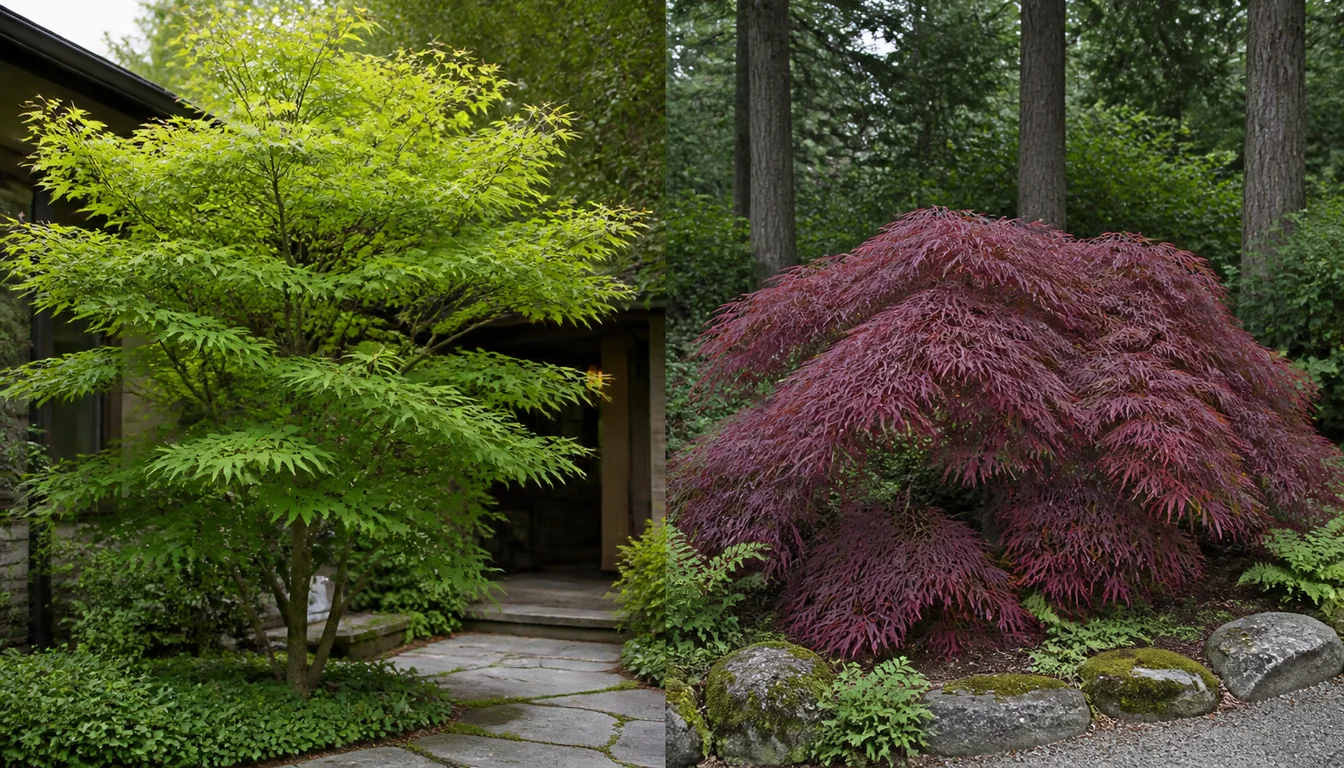
Form comes before foliage color because form decides where the tree belongs for the next twenty years. Upright selections build layered branching that looks best at eye level and slightly above.
Japanese Maple famously grows slowly, often just a few inches a year, so a young nursery specimen's current size says almost nothing about the mature footprint the cultivar tag actually promises.
Laceleaf weepers spread outward and downward, which makes them poor choices beside tight walks even when they are stunning in a photo.
A compact courtyard, a large patio planter, and a woodland edge all ask for different Japanese Maple habits. The wrong form creates endless maintenance pressure.
The right form makes pruning almost feel optional because the tree is already doing the job you bought it for.
More than a thousand named Acer palmatum cultivars exist, which is exactly why matching growth habit to the site matters more than memorizing individual cultivar names at the nursery.
This is also where Japanese Maple parts ways with Japanese cherry. Cherry often wins on spring spectacle.
Maple wins when the garden needs close-range texture, quieter scale, and four-season branch beauty after flowers would be gone.
- Upright forms
- Best for entries, side yards, and layered views where branch architecture should read above shrubs
- Laceleaf weepers
- Best as low focal specimens where the canopy can spill outward without blocking feet or mower paths
- Dwarf or compact forms
- Best for courtyards, large containers, and small gardens where width matters more than height
- Stand where you will actually view the tree before picking a habit.
- Measure mature width, not only nursery height.
- Save container culture for truly compact cultivars.
- Do not buy a weeper and then expect yearly pruning to turn it upright.
How Should You Plant and Mulch a Japanese Maple?
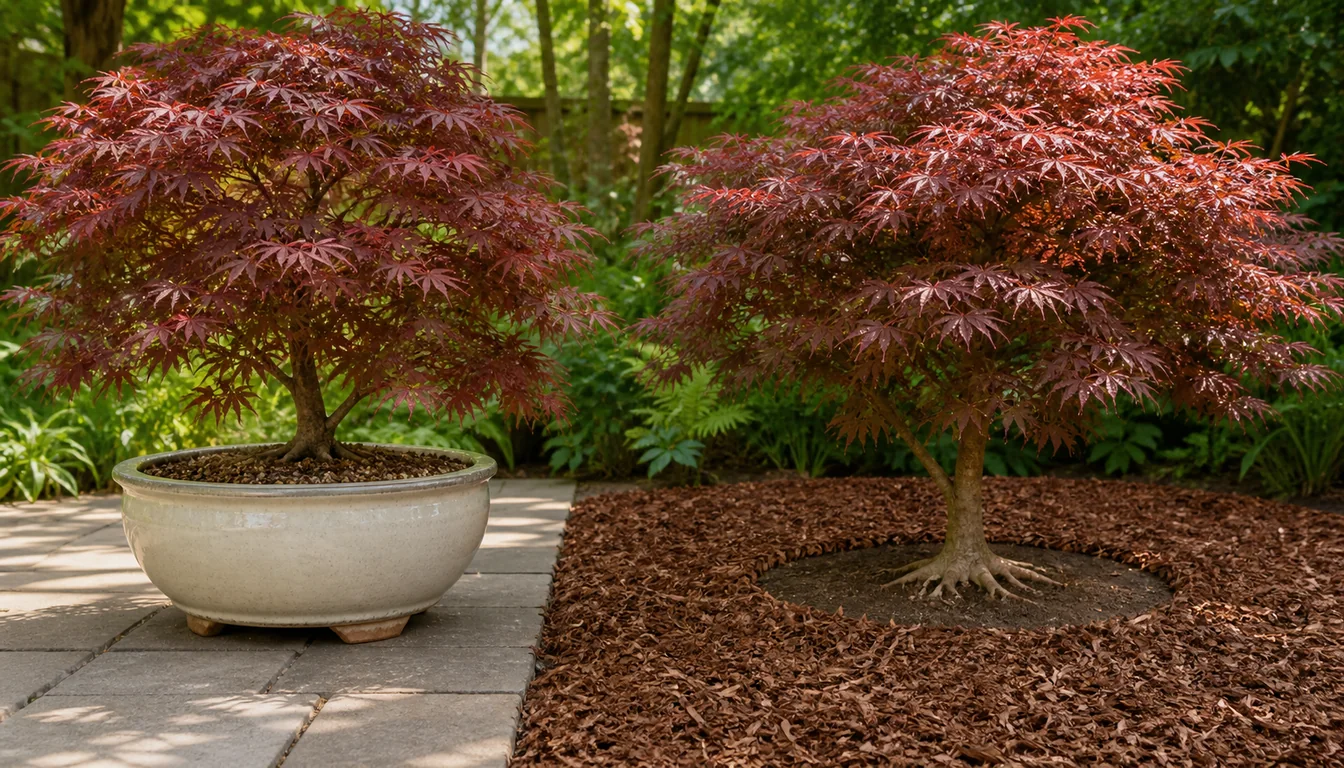
A lot of scorched foliage begins as a root-zone problem. Japanese Maple wants a cool broad root zone that stays airy and evenly moist.
Bury the trunk, crowd it with lawn, or let the soil bake, and the leaves will show the bill.
The tree's fine, shallow roots compete poorly against turfgrass roots occupying that same top layer of soil, losing out on both water and nutrients in a fight most lawn grasses win by sheer density.
Plant high enough that the flare is easy to see. Then give the tree a mulch ring wide enough to cool the soil and reduce mower traffic.
That simple ring is not just for appearance. It changes how much heat reaches the roots and how much turf steals from the tree in midsummer.
Dark mulch or gravel pressed close to the trunk can radiate extra heat back onto the bark on hot afternoons, working against the same cooling goal a mulch ring is supposed to deliver.
If the native soil stays brick-hard after rain, solve that before planting or before calling the tree fussy. The same groundwork used in fixing compacted soil matters because delicate foliage cannot stay calm over suffocating roots.
If you need a picture of the ideal texture, think close to loamy soil, open enough for oxygen, rich enough to hold moisture, and never heavy like wet clay packed around the trunk.
How Often Should You Water a Japanese Maple?
The classic complaint is brown leaf edges. On Japanese Maple, that usually means the leaf lost moisture faster than the root zone could replace it.
Heat, wind, and uneven watering often work together, which is why the symptom can look dramatic even when the tree is not dying.
Salt buildup from over-fertilizing or nearby de-icing runoff can burn leaf edges in a pattern that looks a lot like drought scorch, which is why a soil test is worth ruling out before assuming watering alone is the problem.
In the ground, deep soaking works better than shallow splashing because it builds a larger moisture reserve under the canopy. The logic from deep watering fits well here.
You want roots to move through the soil, not hover near the hottest surface layer.
In a container, the same cultivar becomes a much faster decision tree. Pots heat up sooner, dry out sooner, and give you less margin for error.
A potted Japanese Maple can look perfect for weeks, then show crisp edges almost overnight during a hot spell.
This is one reason container culture should stay a conscious design choice, not a default. If you truly need a long-term container tree, pick a compact cultivar and give the pot the same protection you would give a prized patio plant.
Rainwater or well-drained overhead water rarely causes salt problems the way accumulated fertilizer runoff or reused irrigation water can, which is another reason a simple flush watering now and then helps container specimens more than people expect.
- In-ground tree
- Needs deep, even moisture and a broad cool root zone
- Container tree
- Needs more frequent checks because the root ball heats and dries faster
- Wrong response
- Adding fertilizer when the real problem is heat plus uneven moisture
How Do You Prune a Japanese Maple Without Flattening Its Shape?
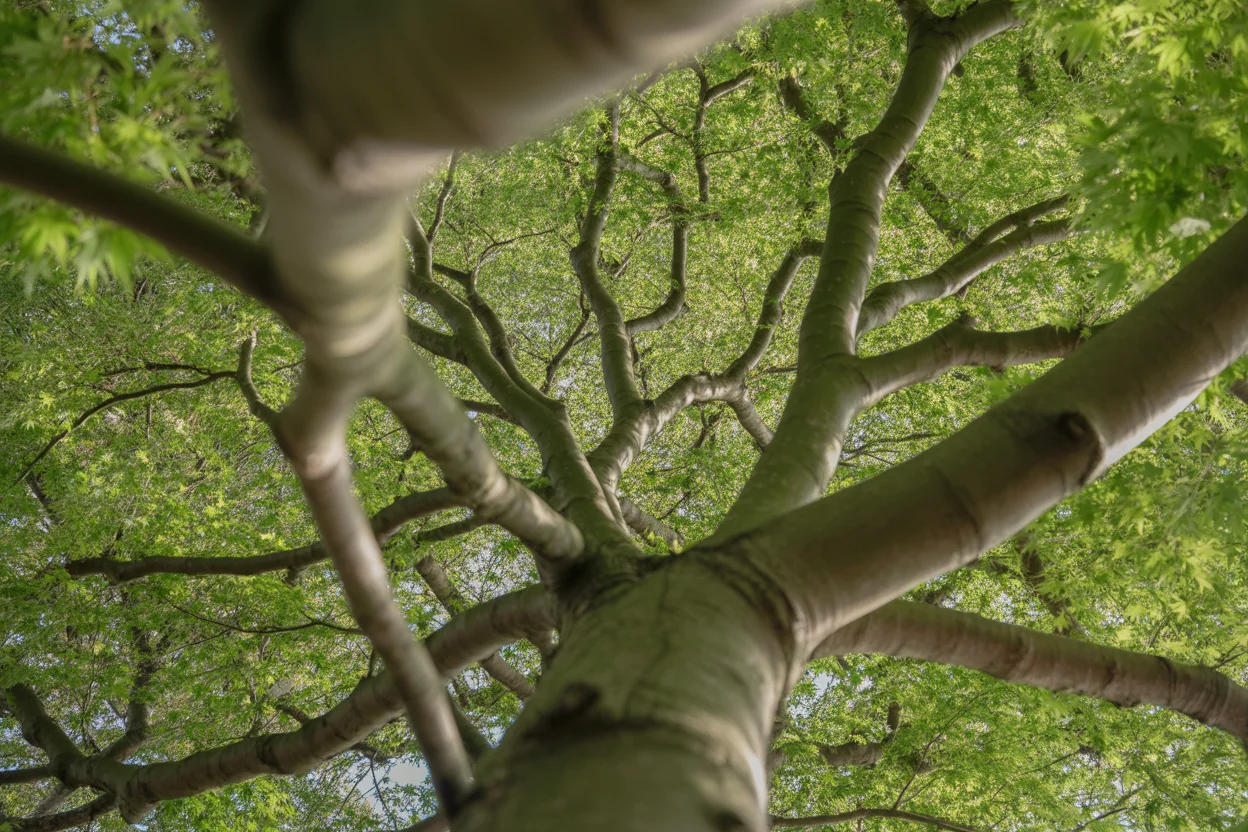
A good Japanese Maple already has the habit you wanted when you bought it. Pruning should clarify that habit by opening visual windows through the canopy, taking out dead or crossing twigs, and removing the few shoots that break the line.
Late winter, while the tree is still dormant, is the safer window for larger structural cuts, since pruning during active summer growth can trigger stress bleeding and slower wound closure on a tree that already heals slowly.
Heavy cutting usually ruins more than it fixes. The fine branching loses grace quickly when too many stems are shortened back to the same point, and the result can look coarse for years.
Cutting too close to the branch collar or leaving too long a stub both slow healing, so placing the cut just outside that slightly swollen junction gives the wound the best chance to close cleanly.
If the tree constantly feels too big, the cultivar was wrong. A maintenance plan should not depend on annual correction to stop Japanese Maple from occupying the space it was bred to occupy.
A single oversized cut in one season does more visible damage than the same total wood removed gradually over two or three years, since the tree's fine branching structure recovers better from small, spread-out changes.
- Start with dead, broken, and rubbing wood.
- Thin a few interior twigs to reveal layered branching.
- Remove reverted green shoots on colored cultivars before they take over.
- Stop before the tree loses the soft uneven rhythm that makes it look natural.
Is It Leaf Scorch, Dieback, or Reversion?
Brown edges after a hot windy week usually mean leaf scorch. One branch dying while the rest of the tree still looks normal points somewhere deeper.
A strong green shoot on a red or variegated cultivar is often reversion, which is not a disease at all. Those three problems look similar from across the yard and need completely different decisions.
A cultivar sold specifically for its red or purple color that quietly reverts to green usually keeps growing just as vigorously, since the reverted shoots are simply healthier than the colored ones they are shading out.
Scorch usually follows exposure. Dieback pushes you to inspect bark, roots, and winter injury.
Verticillium wilt is a specific soil-borne disease that can also cause one branch to die back while the rest of the canopy looks fine, a more serious cause worth ruling out alongside simple winter injury.
Reversion simply asks whether you will let plain green growth overtake the special color you paid for.
Compared with ginkgo, Japanese Maple gives you stress signals earlier and more clearly. That sensitivity is part of the appeal.
It lets you respond fast, but it also means the tree will not hide a bad site for long.
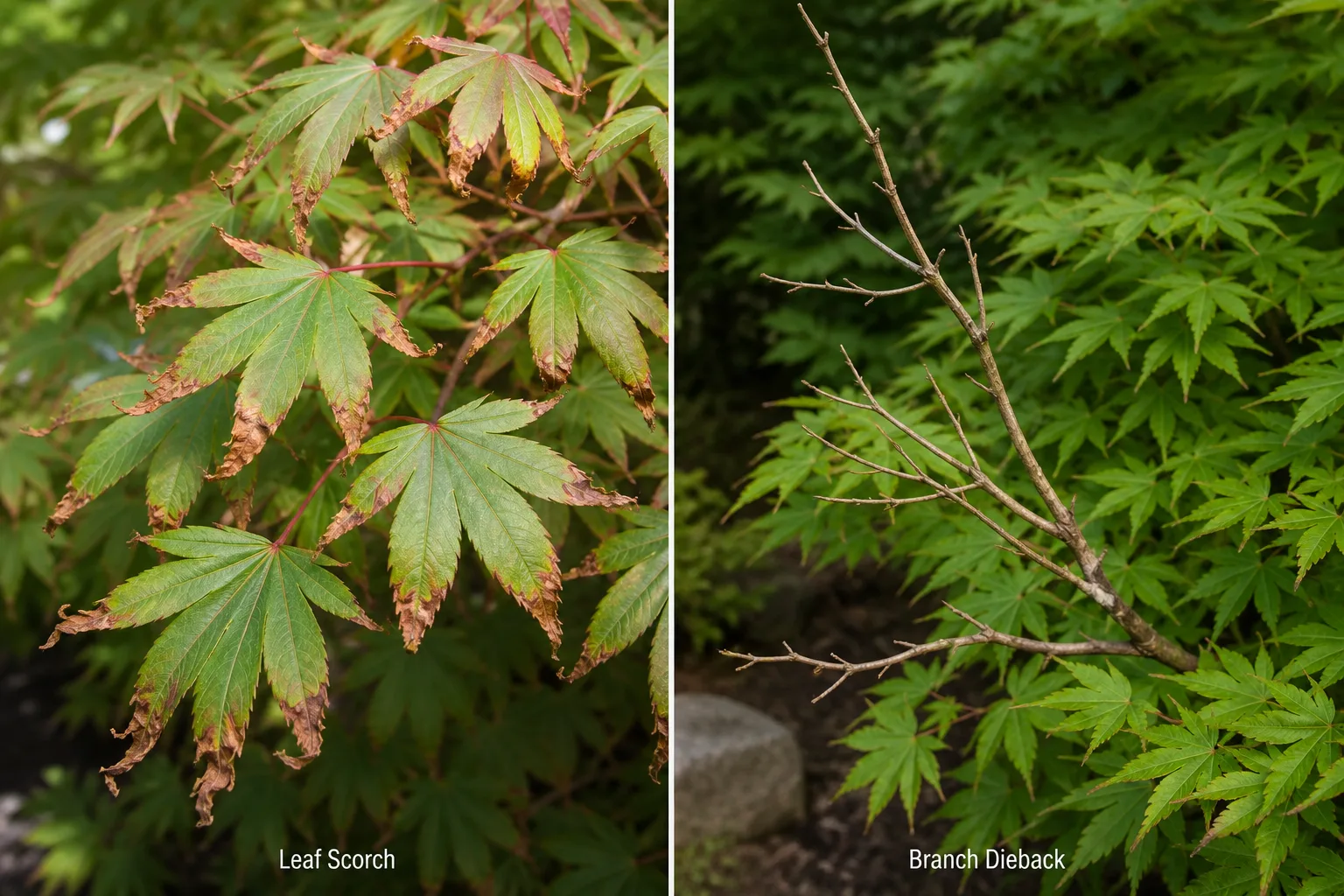
Usually Scorch
- Leaf edges crisp first
- Damage is worse on the hot or windy side
- Tree improves when heat and moisture balance improve
Look Closer
- One whole branch dies back
- Dark bark damage or split bark appears
- Strong plain-green shoots outrun colored growth
Where Does a Japanese Maple Add the Most Value?
Japanese Maple is a close-view tree. Its best features are leaf cut, branch layering, bark texture, and the way the canopy changes at human scale through the year.
Japanese Maple earns a permanent place in traditional Japanese garden design partly for how its bare branch silhouette reads in winter, proof that the tree's appeal was never only about autumn color.
Those details disappear when the tree is thrown into the middle of a big open lawn and asked to behave like a fast shade tree.
Use it near an entry, patio, side garden, or sheltered path where people move slowly enough to notice the foliage and winter structure. The tree rewards repeated passing glances, not distant highway-speed viewing.
That is also why Japanese Maple often pairs well with azalea. Dogwood can play the same close-view role in a layered garden.
These plants belong in compositions that are meant to be read up close instead of from the far end of the property.
Frequently Asked Questions
Can Japanese maple take full sun?
Some cultivars handle more sun in cooler climates, but Japanese Maple usually looks best with morning sun or bright filtered light and protection from harsh late heat.
Why do Japanese maple leaves turn brown on the edges?
Edge browning usually comes from scorch, heat, wind, and uneven moisture working together. Check exposure and watering before blaming fertilizer or assuming the tree is dying.
Can Japanese maple live in a container long term?
Yes, but only if you choose a compact cultivar and accept much tighter watering control. A pot makes Japanese Maple more vulnerable to heat and dry spells than the same plant in the ground.
Do Japanese maples have invasive roots?
Japanese Maple roots are shallow and wide, but they are not usually classed as invasive. The bigger issue is that they dislike turf competition, heat, and damage around the base.
When should I prune Japanese maple?
Prune lightly when you need to reveal branch structure, remove dead wood, or cut out reverted shoots. The goal is subtle thinning, not repeated size reduction.
Sources & References
Related Plants
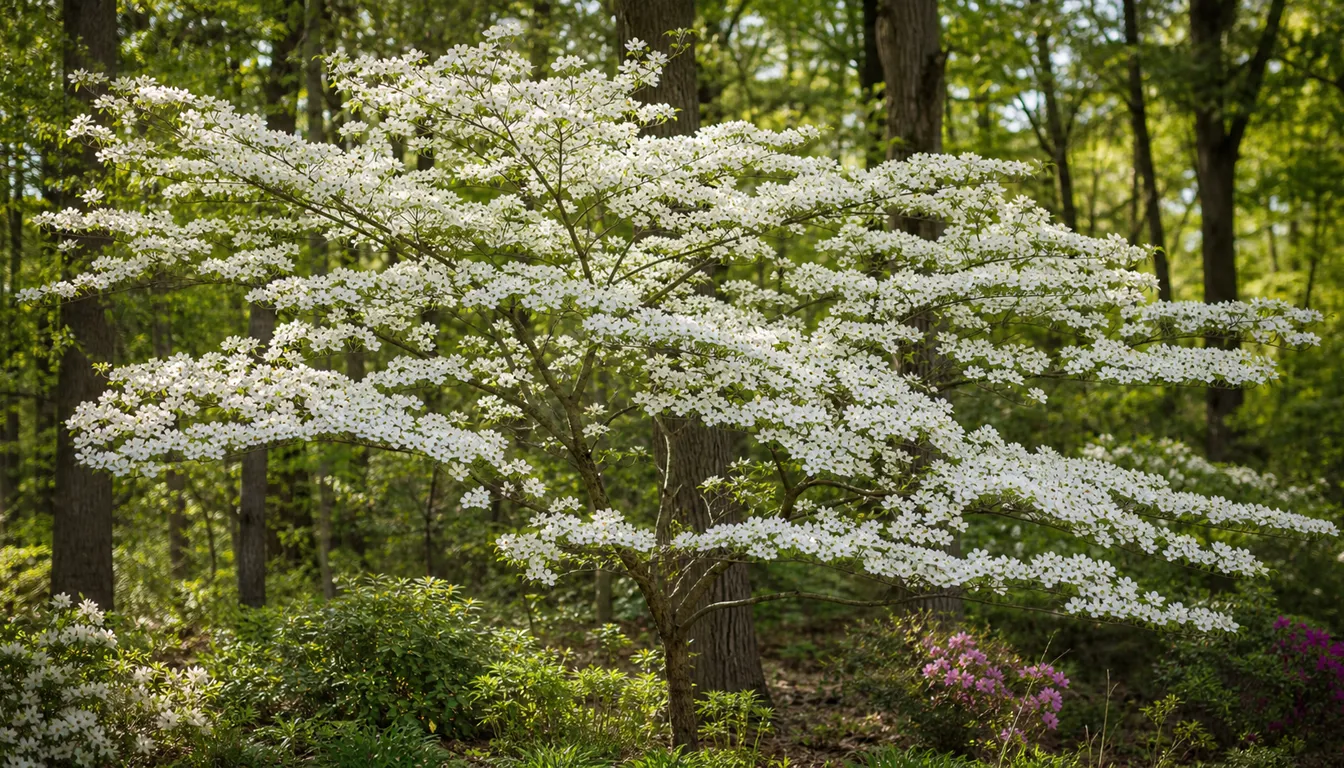
Flowering Dogwood
Another small tree for filtered light, but one grown more for spring bracts than foliage texture.
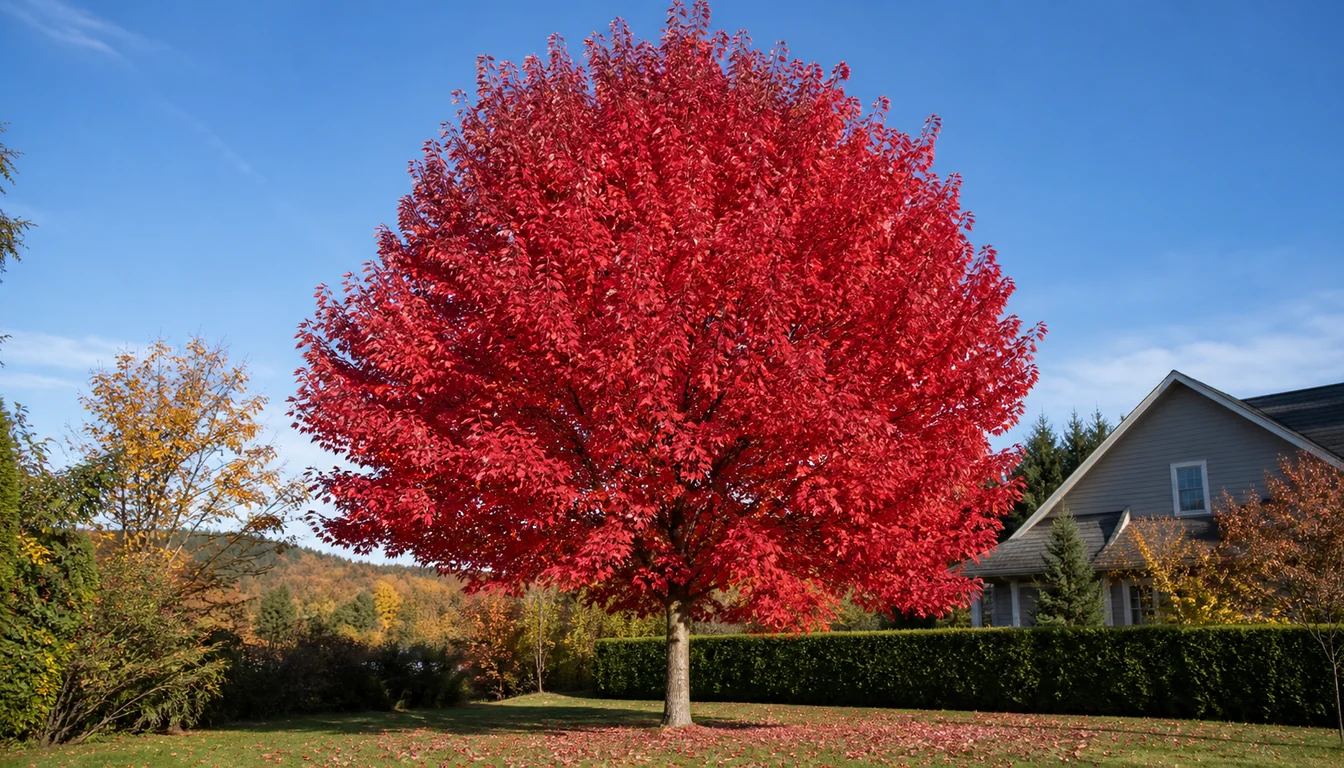
Red Maple
Much larger and tougher, but without the same small-space refinement and leaf detail.
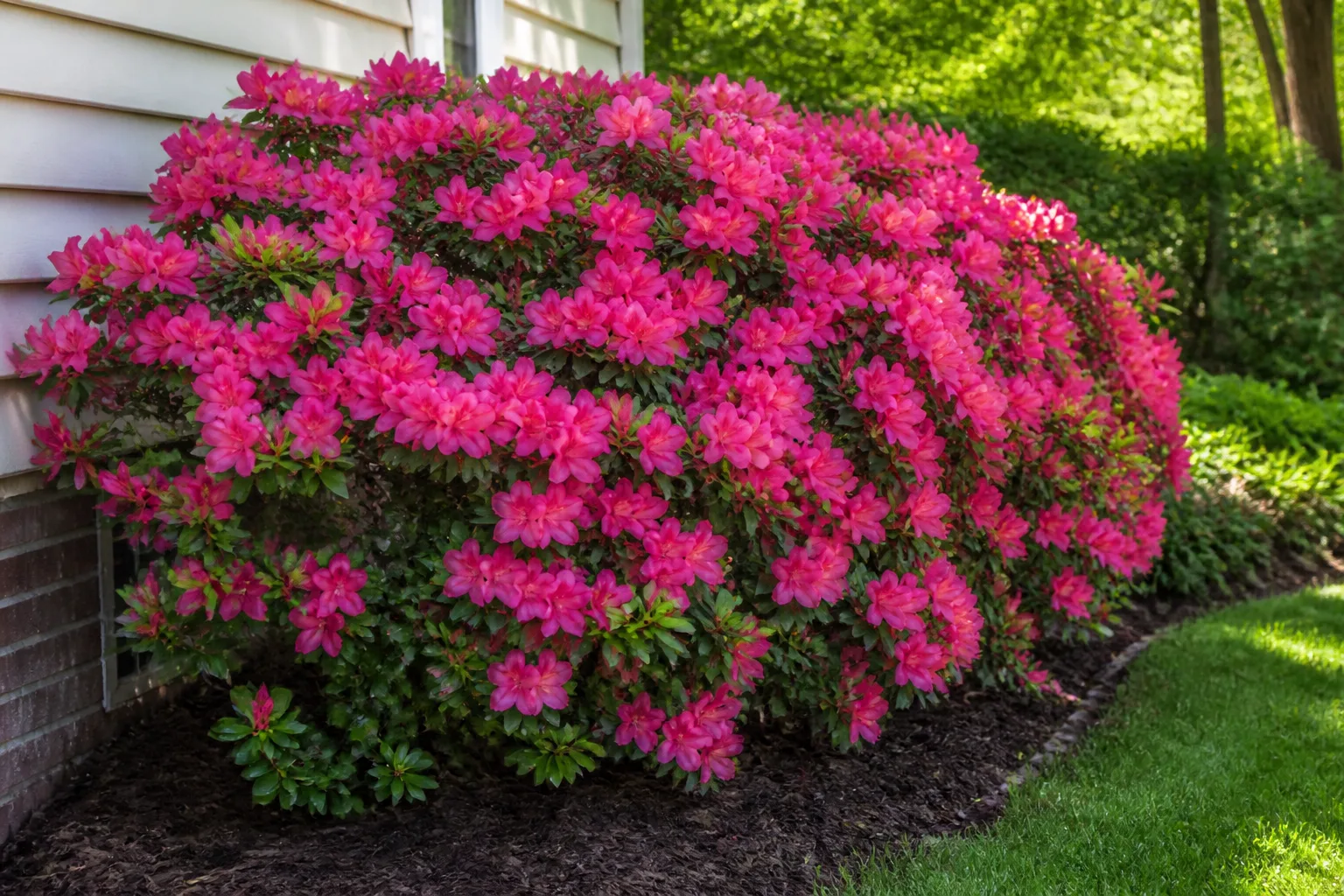
Azalea
Acid-leaning shrub partner that often shares the same sheltered woodland-garden feel.
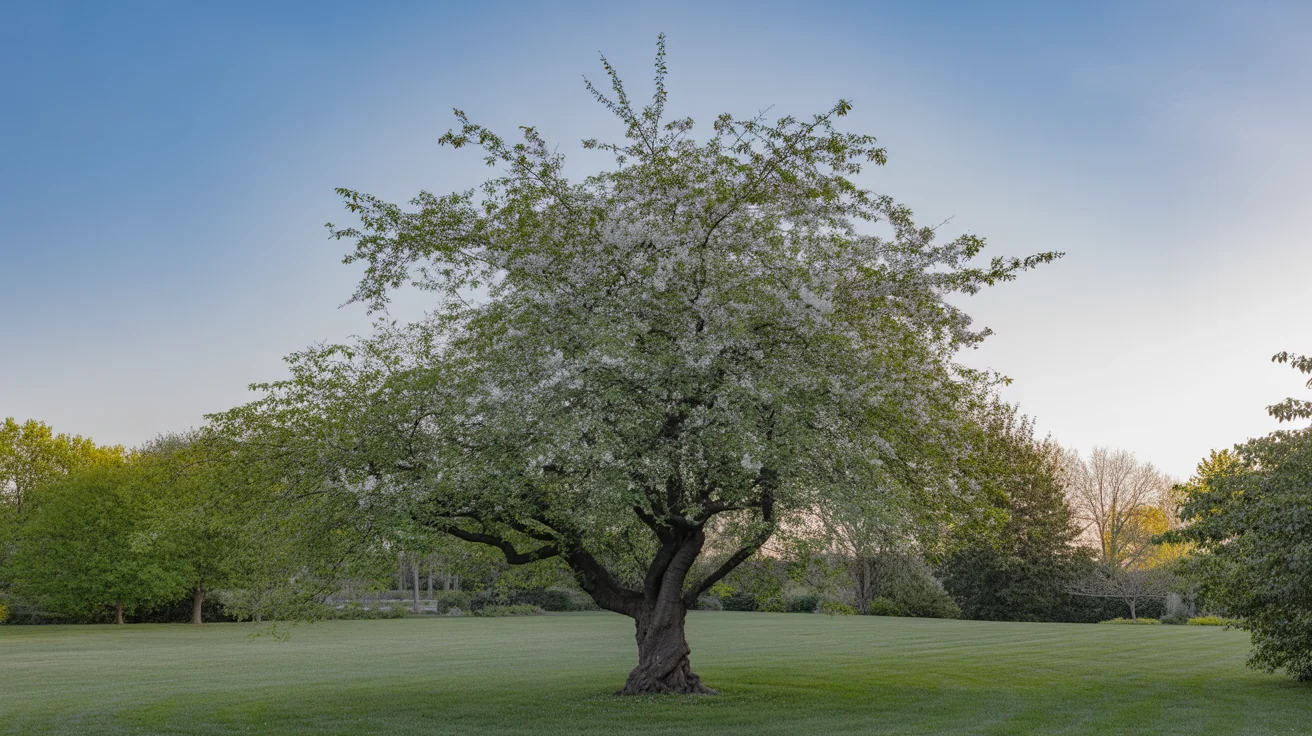
Cherry Blossom Tree
Cherry blossom tree is a common name for ornamental cherries grown for spring flowers rather than a useful fruit crop.
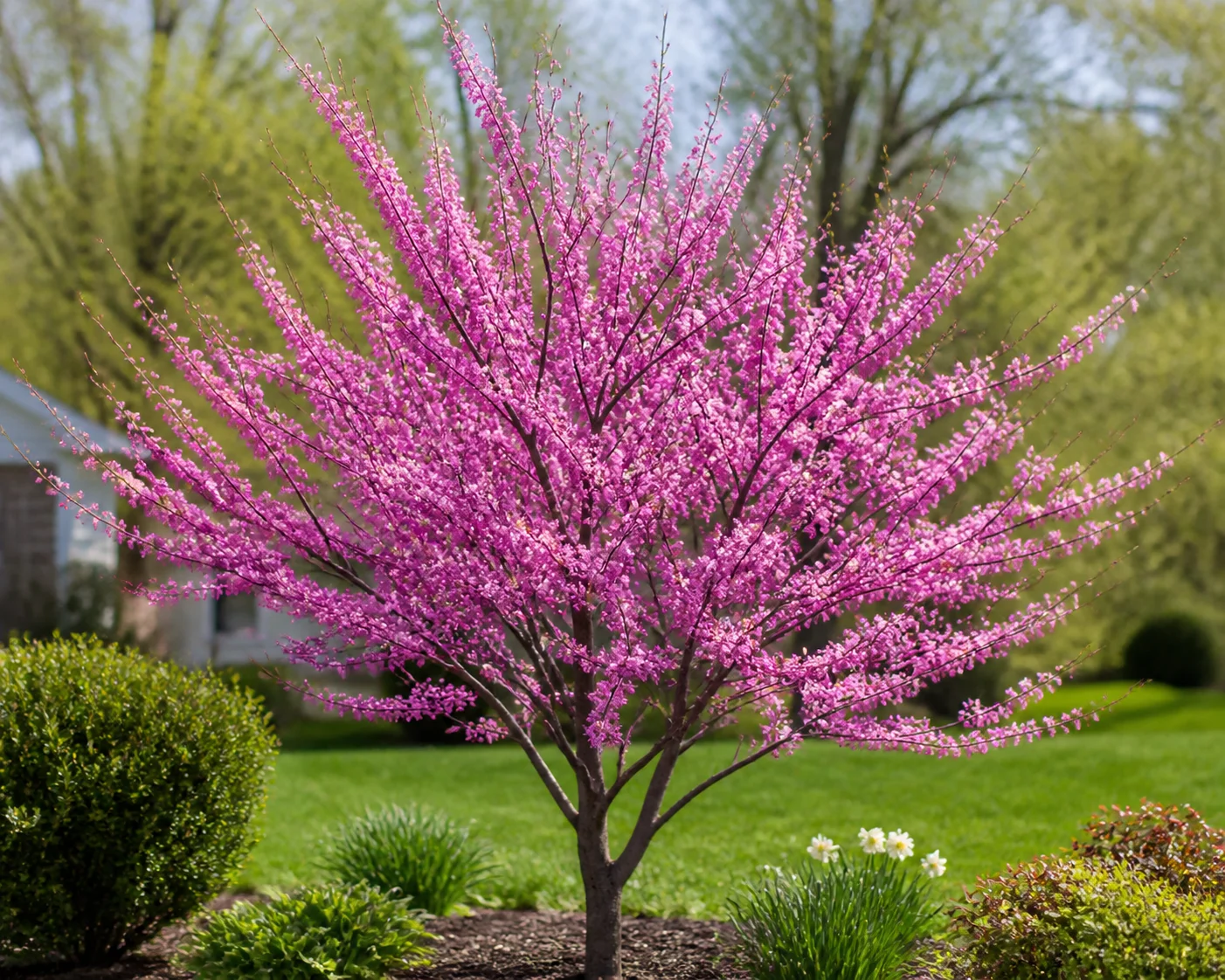
Eastern Redbud
Eastern redbud is a small North American tree with pea-like flowers that open on bare twigs and older wood.
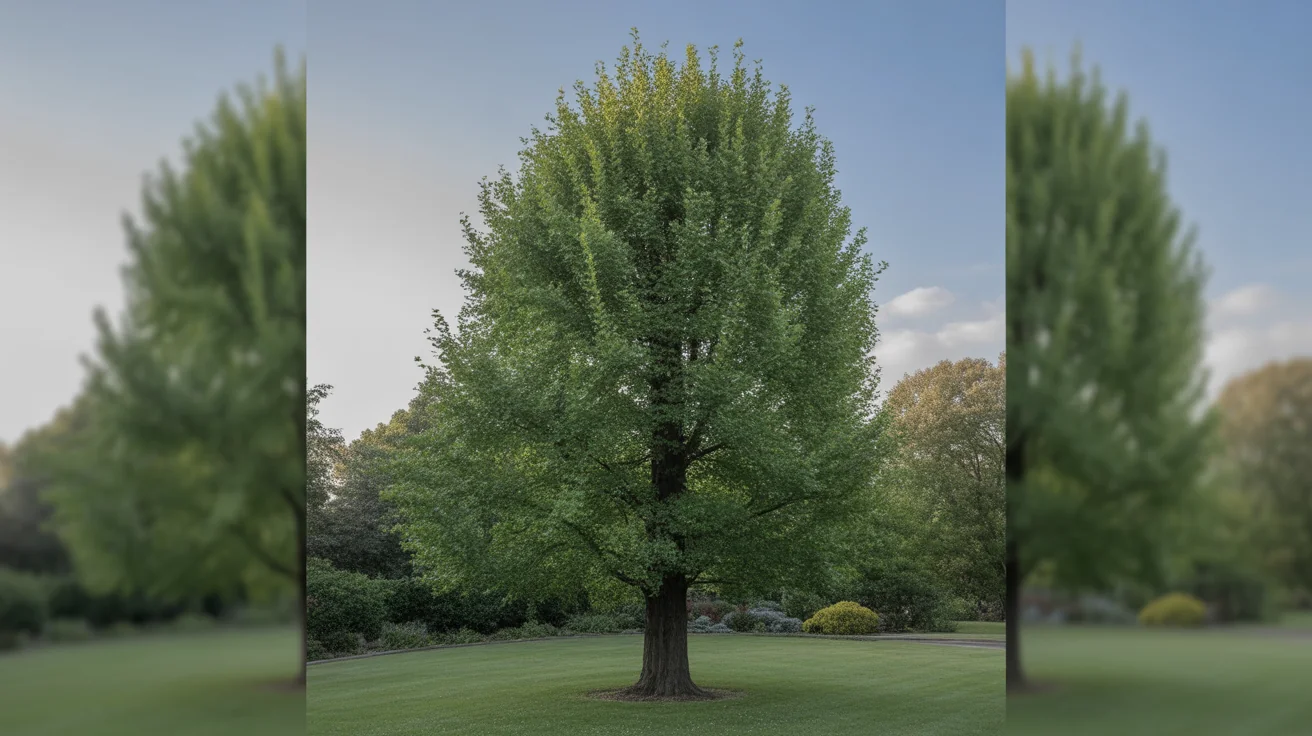
Ginkgo Tree
Ginkgo is not a plant for instant gratification. It is a patient tree that rewards the right buyer decision up front…