
When Should You Mow New Grass for the First Time?
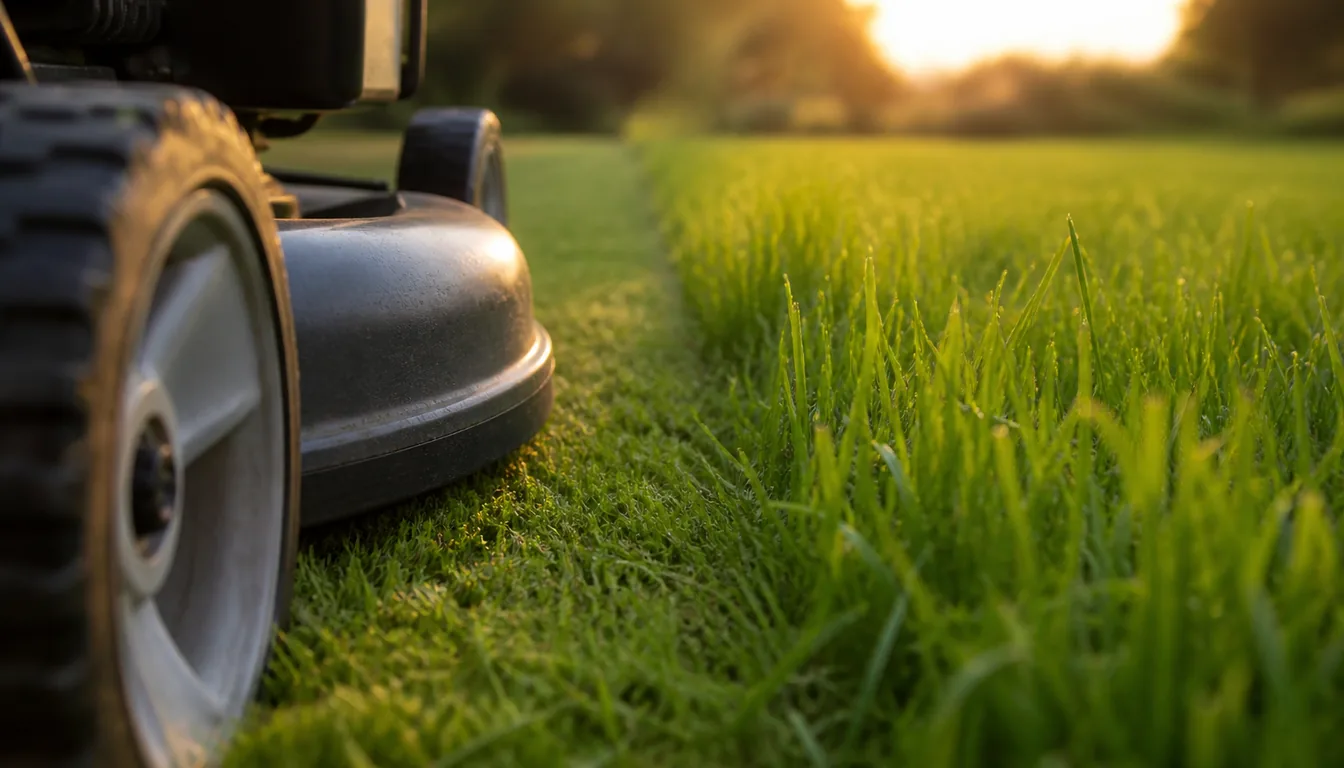
Mow new grass when most plants are no more than one-third taller than the intended cutting height, the seedlings spring upright after you step on them, and the soil is firm enough to carry a lightweight mower without rutting. If the lawn is sod, it must also resist a gentle tug in several places.
For a lawn that will be maintained at 3 inches, begin mowing just before it reaches 4 inches.
This one-third calculation is safer than a fixed number of weeks because germination, rooting, grass species, weather, and soil moisture change the timeline.
Height + recovery + firm soil is the first-mow test.
Pass all three before starting the mower.
At a glance
Know Your Grass Type and Seeding Method
First identify both the grass and how it was installed.
A seeded lawn, overseeded lawn, sod, and a field of plugs may reach mowing height with very different root strength.
Seeded turf is ready when the majority of seedlings have reached the calculated trigger height and recover after light foot pressure. Late-germinating species in a mixture may still be shorter, so judge the stand as a whole rather than waiting for every seed.
Overseeded lawns are different because established grass may need cutting before all new seedlings reach the same height. Follow the overseeding plan and use a light mower so the existing canopy does not shade the new plants.
Sod can look finished while its roots are still confined to the delivered layer.
Plugs and sprigs can show long leaves or runners before each planting point is anchored well enough for mower traffic.
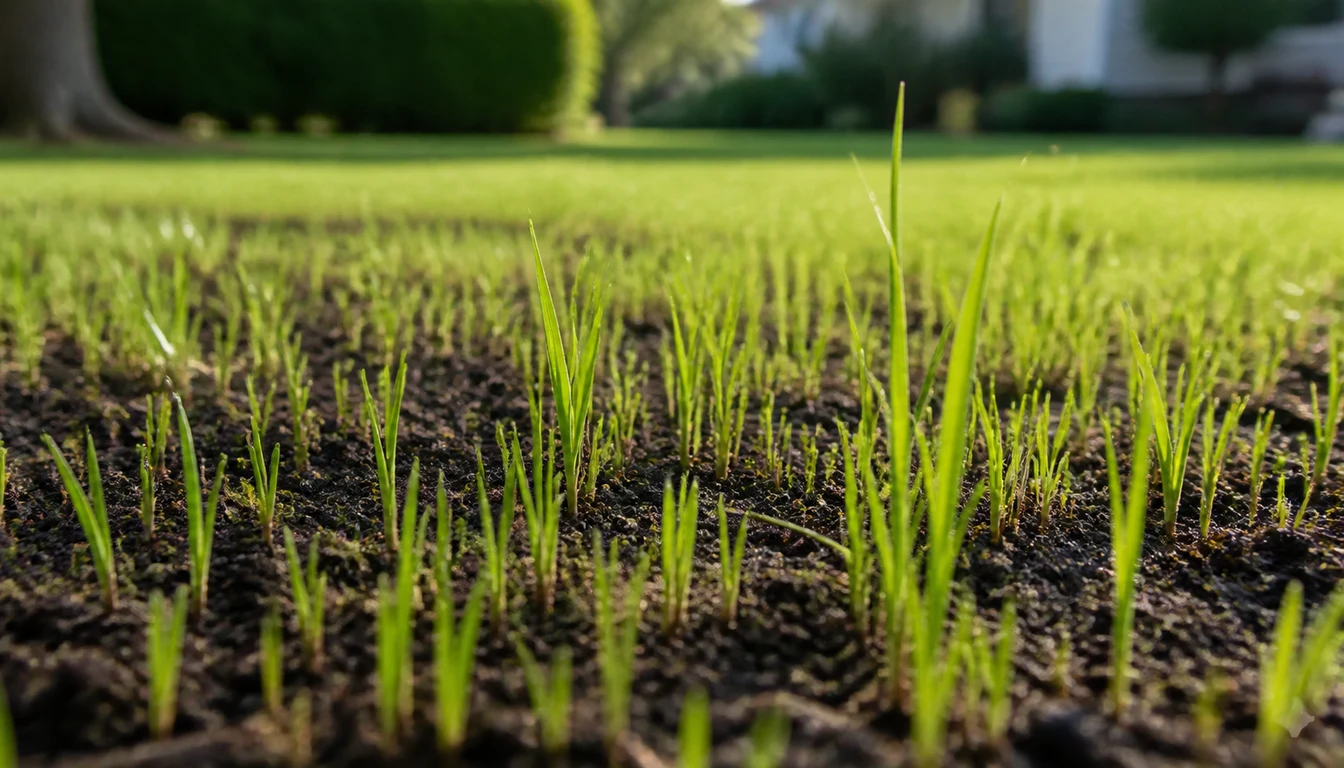
- Seeded lawn: Check majority height, upright recovery, and firm soil.
- Overseeded lawn: Protect seedlings while preventing the old grass from shading them.
- Sod: Add a tug test in several locations before mowing.
- Plugs or sprigs: Wait for anchoring and enough coverage to carry the mower without dislodging plants.
Read the seed tag or sod invoice before setting height. Perennial ryegrass and Kentucky bluegrass differ in germination and fill speed, so a mixed stand rarely reaches one uniform height at once.
Installation method changes the test.
It does not change the need for firm ground and a one-third cut.
How Tall Should New Grass Be Before the First Mow?
Start with the recommended mowing height for the grass species and the site.
Then multiply that height by 1.33 to find the first-mow trigger.
If the desired height is 3 inches, mow just before the stand reaches 4 inches. If the desired height is 2 inches, mow before it reaches about 2⅔ inches.
This calculation keeps the cut within the one-third rule. Removing much more leaf area at once reduces the plant's ability to make energy and exposes young turf to extra stress.
University of Minnesota guidance for dormant-seeded cool-season lawns says to mow when most seedlings are above the normal mowing height, with at least 3 inches being best. Penn State gives the broader rule because recommended height varies by turf type and site.
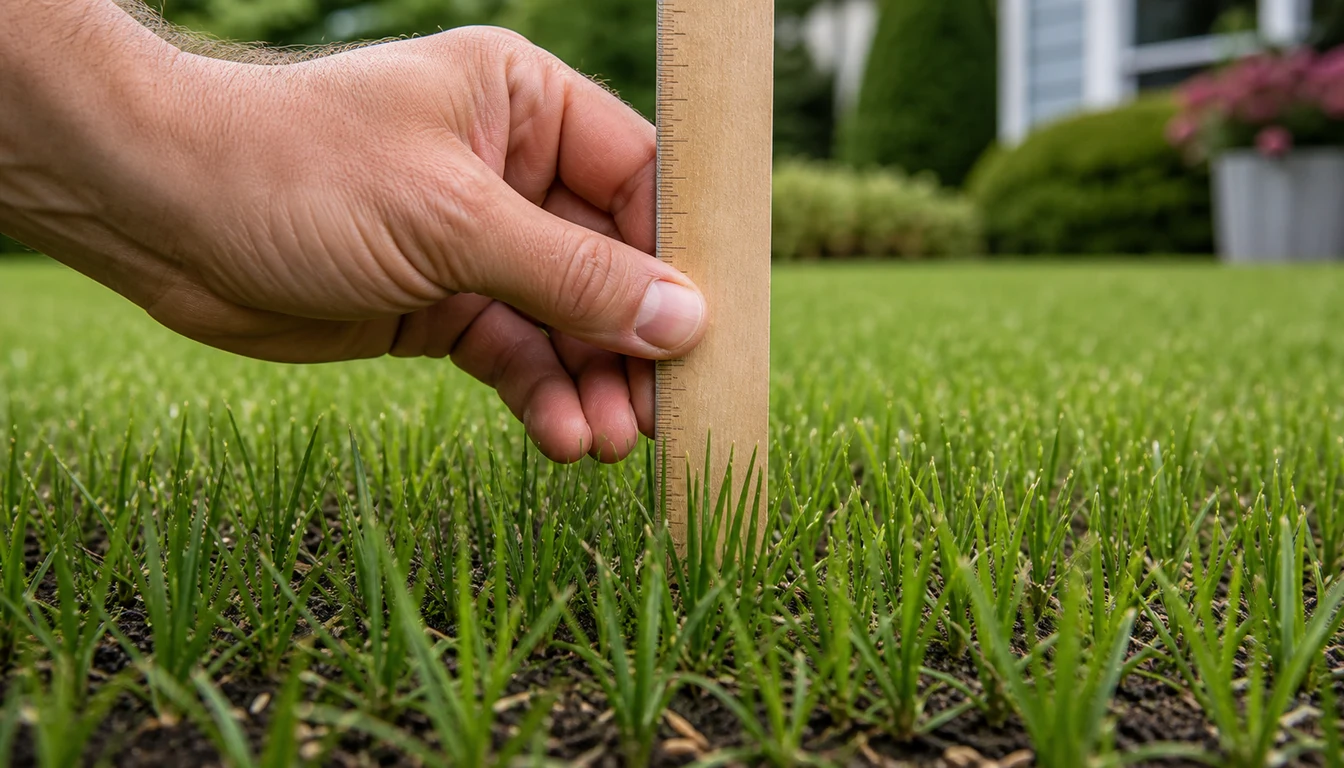
Measure ten or more places rather than choosing the tallest corner.
The shaded edge, thin center, and fast-growing strip near irrigation may reach different heights.
| Intended cut height | First-mow trigger | Maximum removal |
|---|---|---|
| 2 inches | ||
| 2½ inches | ||
| 3 inches | Just under 4 inches | About 1 inch |
| 3½ inches | ||
These are cutting calculations, not a universal species chart.
Confirm the suitable mature height for your specific fescue, Kentucky bluegrass, ryegrass, bermudagrass, zoysiagrass, or St. Augustinegrass.
Remove no more than one-third. If grass has grown far beyond the trigger, lower it over multiple mowings instead of reaching the final height in one pass.
When Is New Sod or Plugged Grass Ready to Mow?
New sod should be mowed by condition, not appearance.
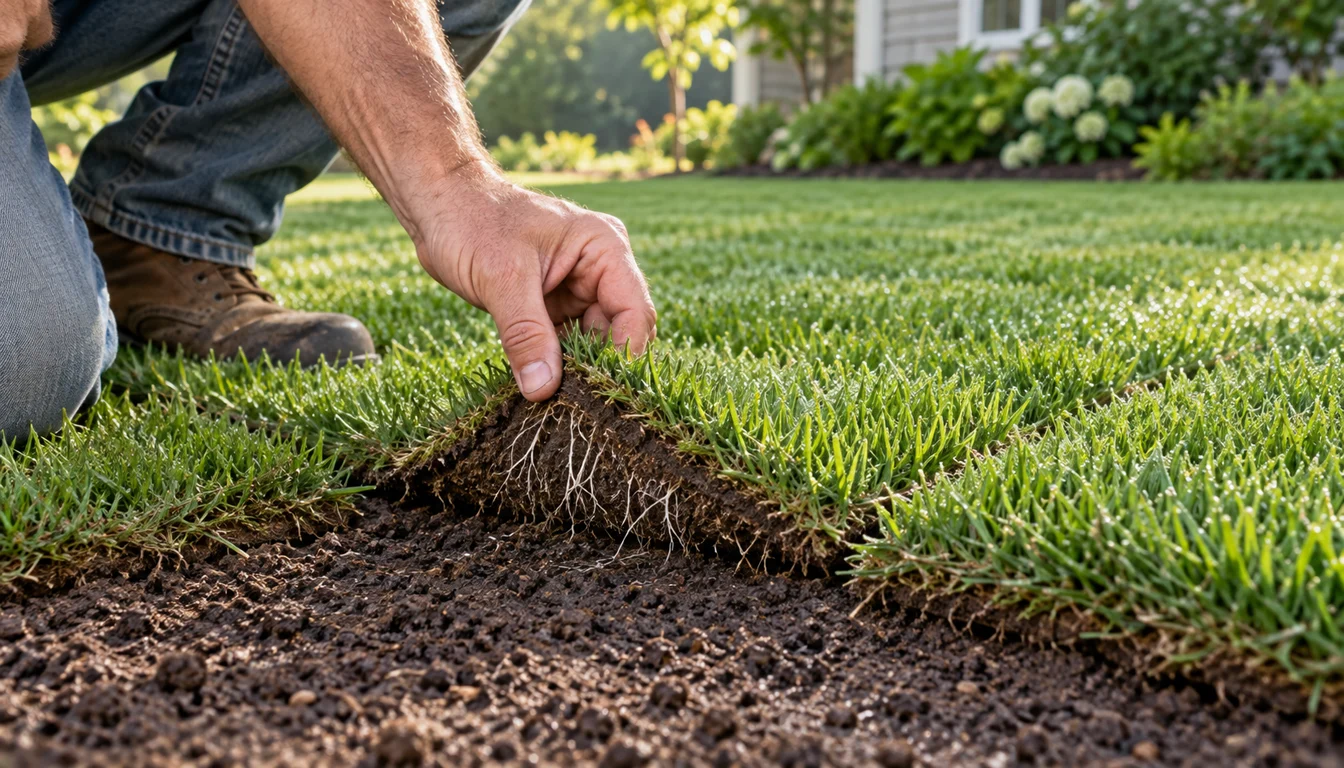
It must resist a gentle tug, the underlying soil must be firm, and the leaves must have reached the one-third trigger for the intended height.
A tug test around 10 to 14 days after installation is a useful checkpoint under favorable conditions, not a guaranteed mowing date. Cooler soil, poor contact, shade, or excess water can delay rooting.
Test several interior pieces as well as edges. If a piece lifts or slides, put it back into contact with moist soil and wait before sending a mower over it.
St. Augustinegrass, bermudagrass, and zoysiagrass sod may be installed in warm weather, when the root zone can dry quickly. Keep it moist but not saturated while roots enter the prepared soil.
Plugs and sprigs need the same basic evidence.
Each planting point must resist gentle sideways pressure, and the surface must carry foot and mower traffic without crushing crowns or pulling runners loose.
- The grass has reached the one-third height trigger.
- Sod resists a gentle tug in several interior and edge locations.
- Plugs or sprigs remain fixed under light sideways pressure.
- The surface feels firm and does not rut under a test walk.
- Leaves are dry enough to cut cleanly.
Resistance beats elapsed days.
A sod lawn that still peels up is not ready, even when two weeks have passed.
What Ground and Weather Conditions Make Mowing Unsafe?
Height alone does not make a lawn ready.
Wet leaves cut unevenly and clump, while soft ground allows wheels and shoes to press seedlings into soil or pull shallow roots loose.
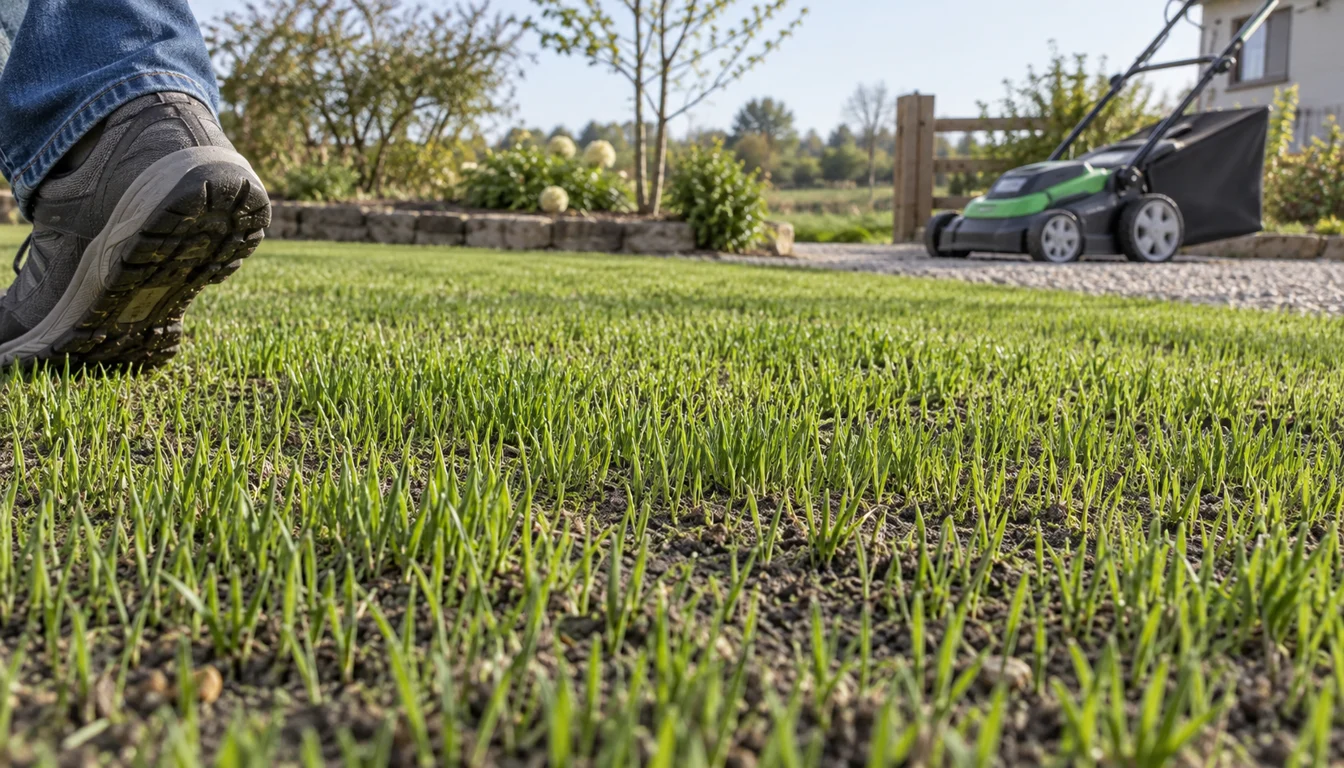
Walk a short test path before mowing. The grass should return upright after your step, and the soil should remain firm without mud sticking to shoes or visible ruts forming.
If the plants stay flattened, Penn State advises waiting because the stand cannot yet tolerate the combined weight of the operator and mower.
Use the lightest suitable mower for the first cuts.
Rain, irrigation, heavy clay, poor grading, and shade can keep one part soft after the rest of the yard is ready. Delay the entire pass or mow only the firm portion without crossing the wet area.
Avoid mowing during heat, drought stress, frost, or another period when growth has slowed sharply.
The first cut is still a wound, and actively growing turf recovers more reliably than stressed turf.
- Wait for dry leaves: Damp clippings stick to the deck and can lie in mats.
- Wait for firm soil: A wheel track means the root zone cannot carry the equipment safely.
- Wait for upright recovery: Seedlings that remain pressed down can be buried or torn.
- Wait through active stress: Frost, wilting, and extreme heat are poor conditions for the first cut.
Dry leaves and firm footing matter more than a forecasted day on the calendar.
How Should You Make the First Three Cuts?
Use a lightweight walk-behind mower with a sharp blade and a clean deck.
Set the cutting height on a hard, level surface before entering the lawn.
Make a short test pass along an edge. Stop and inspect the cut tips, the wheel tracks, and any seedlings or sod seams that moved.
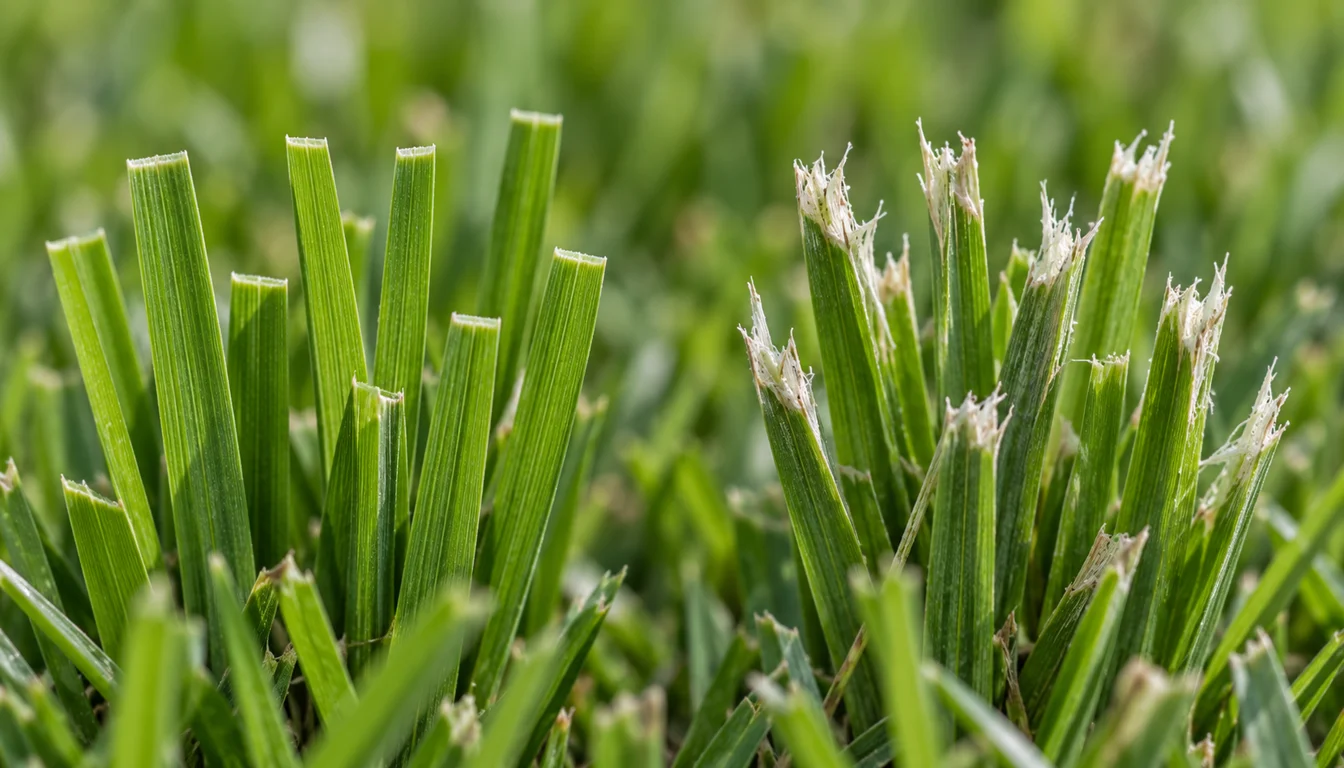
Cleanly cut tips look flat across the blade.
Ragged or whitish torn ends mean the blade needs sharpening before you continue.
Move at a steady walking pace and use wide, gradual turns beyond the young turf when possible. Tight pivots can twist shallow roots or shove sod pieces sideways.
For the second and third mow, repeat the one-third calculation rather than automatically lowering the deck.
Keep the selected maintenance height stable while the stand thickens.
- 1. Set the heightUse the species recommendation and one-third trigger.
- 2. Test one edgeCheck cut quality, footing, wheel tracks, and anchoring.
- 3. Continue in straight passesAvoid sudden acceleration, braking, and tight pivots.
- 4. Inspect before turningStop if seedlings pull, sod shifts, or soil begins to rut.
- 5. Change direction next timeCross the previous pattern only when the ground is firm.
Stop at the first sign of uprooting. One successful strip does not prove a wet or shaded section can carry the same load.
What To Do Right After Each Mow
Inspect the lawn immediately after the test strip and again the next day.
Look for uprooted seedlings, shifted sod, torn tips, scalped crowns, ruts, and grass that stays flattened.
Do not water automatically just because mowing is finished. Continue the establishment schedule based on soil moisture, weather, and root depth, using new-grass watering guidance rather than a fixed post-mow rinse.
If the surface is dry enough to mow but the root zone needs water, irrigate after the inspection and keep traffic off the softened soil.
Avoid runoff and saturation around shallow roots.
A few loose seedlings at the edge may indicate a local weak spot. Widespread pulling or continuous wheel marks mean the lawn was not ready for that mower or that soil condition.
| What you see | Likely issue | Next action |
|---|---|---|
| Flat, clean tips | Sharp blade and suitable speed | Keep the same setup |
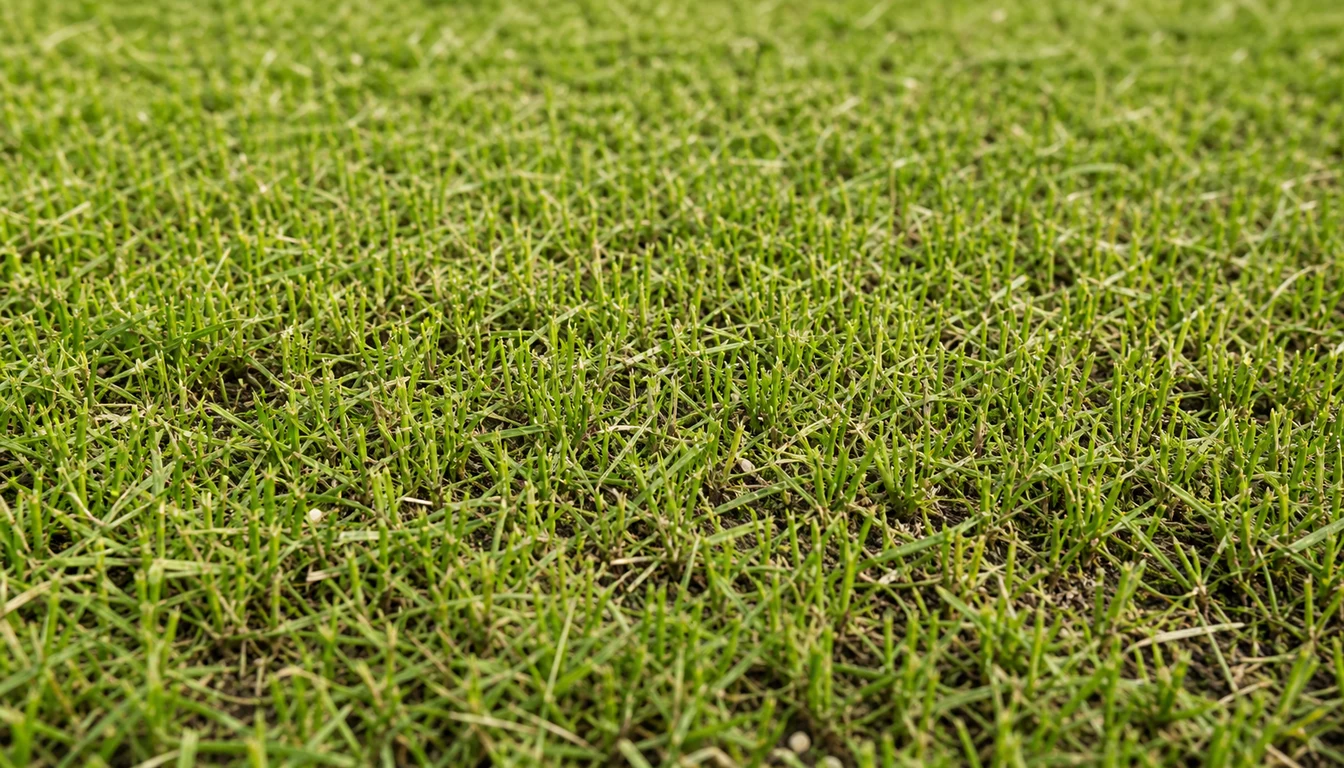
| Ragged white tips | Dull or damaged blade | Sharpen before the next pass |
| Seedlings pulled from soil | Weak anchoring or aggressive turns | Stop and allow more establishment |
| Sod seam shifted | Sod has not rooted firmly | Press it back into contact and wait |
| Wheel ruts | Soil is too soft | Stop traffic until the surface firms |
| Brown stems exposed | Cut was too low | Raise the deck and allow recovery |
Record the measured height and damage notes along with the date, deck setting, and soil condition.
Use that evidence to set the next mow.
Clippings, Bagging, And Mulching On New Lawns
Short, dry clippings can remain when they fall evenly into the canopy.
They decompose and return nutrients rather than creating a meaningful thatch layer by themselves.
Collect clippings when the grass has become so tall that the one-third cut leaves visible piles, when leaves are wet enough to clump, or when disease guidance calls for removal. A mower bag can add weight, so empty it frequently on tender turf.
Do not rake aggressively across seedlings or unrooted sod.
Lift or spread isolated clumps gently without dragging teeth through shallow crowns.
Tall fescue, bluegrass, and established warm-season turf can all receive clippings when the mower creates small pieces and the lawn is dry. The decision depends on clipping size and distribution more than whether the cut is first, second, or third.
- Leave them: Pieces are short, dry, and evenly dispersed.
- Spread them: A few light piles sit on otherwise visible grass.
- Collect them: Heavy or wet clumps cover seedlings or block light.
- Stop and reset: The mower is producing long windrows because too much height is being removed.
Clump size decides bagging.
The first mowing does not automatically require it.
Seasonal Timing And Growth Slowdowns
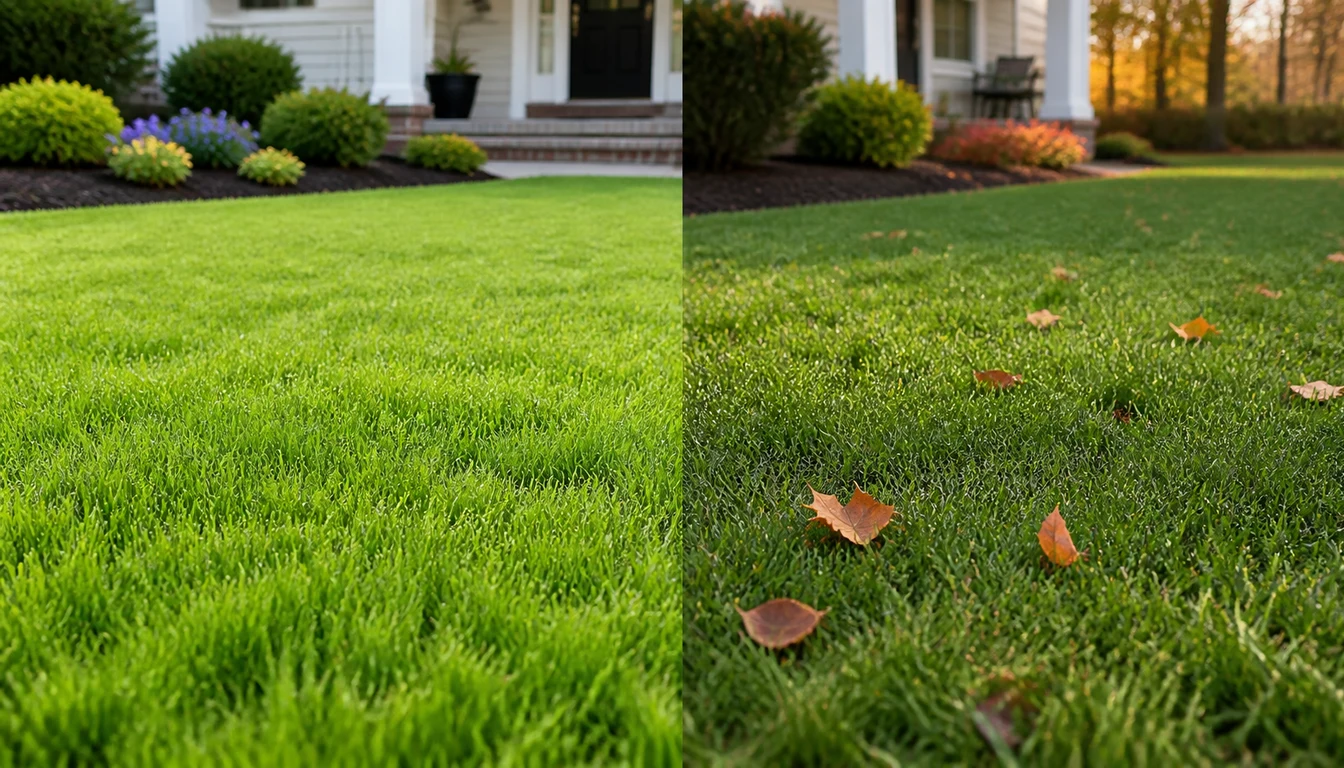
Season changes the speed of growth and recovery, but it does not replace the three readiness tests. Mow when the lawn reaches the calculated height, recovers upright, and stands on firm soil.
Late-summer and early-fall establishment usually gives cool-season seedlings cooler growing conditions and less annual-weed competition than spring. Spring-seeded grass can meet the height trigger as heat and weed pressure are increasing, so avoid adding stress during wilting or slow growth.
Warm-season grasses establish during warmer weather and may reach the trigger quickly once growth is active. Measure rather than setting a weekly routine, because rain, irrigation, fertility, shade, and temperature all change the interval.
Dormant-seeded or late-fall cool-season grass may not be ready until spring. Do not force a mowing before winter merely because the project began in fall.
If new seedlings share a lawn with older turf, use overseeding guidance to keep the existing canopy from shading them while slower species emerge.
Rapid active growth
Check height often and mow whenever the one-third trigger returns.
Heat or drought stress
Wait for active recovery and adequate moisture without mowing saturated ground.
Cold slowdown
Expect longer intervals and judge upright recovery before cutting.
Dormant seeding
Wait until most seedlings are above normal mowing height after emergence.
Growth rate sets frequency. A four-day interval can be right during rapid growth and wrong when the stand is stressed.
Fixing Common First-Mow Mistakes
A poor first cut does not require a fixed seven-day cure or an automatic layer of compost.
Identify whether the cause was height, blade condition, soil softness, mower weight, or weak anchoring.
Scalped streaks mean the deck was too low, the ground was uneven, or the mower bounced. Raise the deck, check the cutting height on level pavement, and allow green leaf area to return before cutting that section again.
Ruts show that the surface could not carry the load.
Stop traffic, let the soil firm naturally, and correct chronic drainage or grading problems only when the ground is workable.
For loose sod, press the piece back into full soil contact without stretching the seam. Resume the moisture schedule needed for rooting and keep the mower away until the piece resists a tug.
For pulled seedlings, avoid raking the area.
Protect the remaining stand, maintain appropriate moisture, and evaluate thin spots after the grass has had time to recover.
| Damage | Immediate response | Proof it is ready again |
|---|---|---|
| Scalped leaves | Raise deck and pause that spot | Green growth has returned above the intended height |
| Ruts | Stop traffic and let soil firm | Test walk leaves no visible depression |
| Shifted sod | Restore soil contact | Piece resists a gentle tug |
| Pulled seedlings | Protect surface and avoid more traffic | Remaining plants stand upright and hold in soil |
| Ragged tips | Sharpen or replace blade | Test strip shows clean cuts |
Broad damage means stop the entire job. Recheck every readiness test before trying again rather than finishing the yard for appearance.
Pro Tips
- Measure grass height with a ruler in several spots instead of guessing from the porch.
- Raise the mower one notch higher than usual for the very first pass over new turf.
- Make the first mow when the lawn is dry on top but soil is still slightly damp underneath.
- Use the lightest mower you have, and avoid riders on very young or soft lawns.
- Mow slow, with sharp blades, so the mower cuts seedlings instead of yanking them sideways.
- Change direction on each mowing so new roots are not pushed the same way every time.
- Keep kids, pets, and heavy foot traffic off new grass until after that first successful mow.
Frequently Asked Questions
How soon after seeding can I mow new grass?
Use the target cutting height rather than a fixed week count. Mow when most seedlings are no more than one-third above that height, spring upright after a test walk, and stand on soil firm enough for a lightweight mower.
Should I bag or mulch clippings on a new lawn?
Leave short, dry, evenly dispersed clippings. Collect or gently spread them only when wet or long pieces form piles that cover seedlings, and remember that a full bag adds mower weight to tender ground.
Can I mow new sod right away?
Check around 10 to 14 days under favorable growing conditions, then trust the tug test rather than the date. If several interior pieces or edges still lift, restore soil contact and wait until they resist before mowing.
What height should I cut newly seeded cool-season grass?
Use the recommended height for the species and site, which is often near 3 inches for home cool-season turf but is not universal. Begin mowing just before the stand becomes one-third taller than that target, and keep the same height through the early cuts.
Is it okay to mow new grass when it is wet?
Avoid it. Wet leaves clump and cut poorly, while saturated soil allows wheels and feet to rut the surface, so wait until leaves are dry and a test walk leaves firm footing.
Sources & References
Related Guides
Best Time to Aerate and Overseed for a Thicker Lawn
Most lawns never reach their potential because aeration and overseeding happen at the wrong time.
11 min read
Best Time to Overseed a Northeast Lawn for Thick Turf
Overseeding in the Northeast is all about catching that short window when soil is warm, air is…
11 min read
Can You Overseed a Lawn Without Aerating It First?
Thin turf and bare patches do not always mean you need to rent an aerator.
11 min read
Dethatching vs Aerating: Which Does Your Lawn Need?
Choose dethatching when a measured layer of thatch has become excessive.
16 min read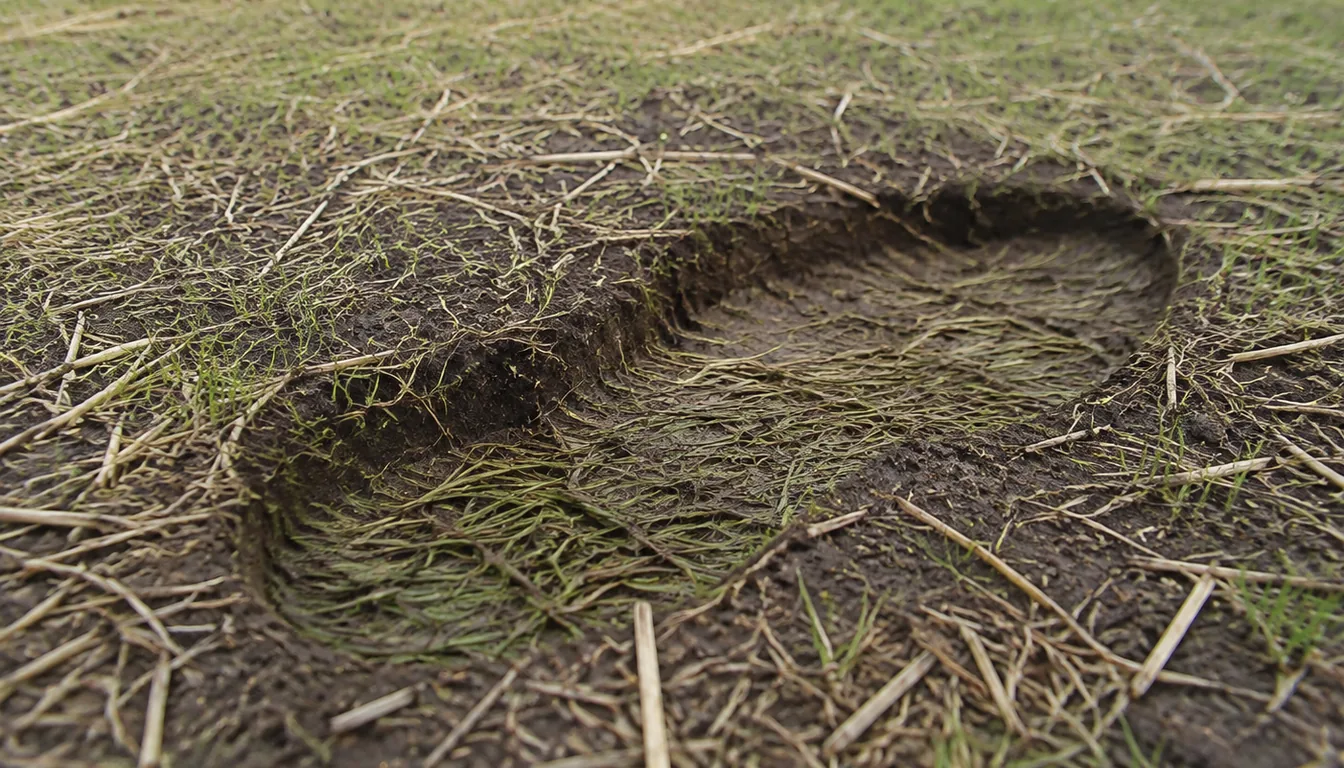
How Long After Planting Grass Seed Can You Walk On It Safely
Most new lawns fail not from bad seed, but from feet, paws, and mower wheels showing up too soon…
11 min read
How to Fertilize a Lawn Without Burning It
Those yellow stripes and crispy patches after fertilizing are almost always user error, not bad…
14 min read