
How to Identify Grass Weeds in Your Lawn
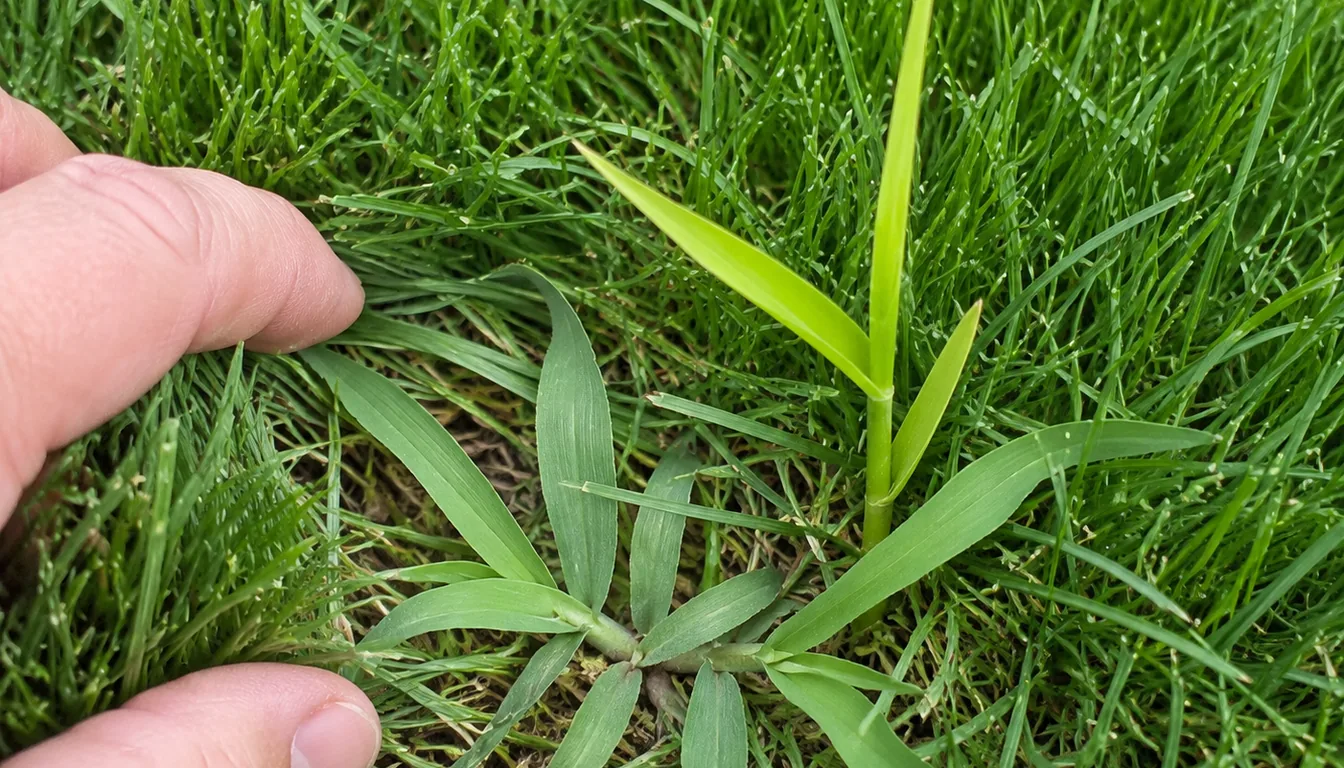
Misidentifying grass weeds leads straight to wasted herbicide and thin turf. Photo-style traits can spot the worst lawn invaders, even when they blend in with your turf at first glance.
Crabgrass, nutsedge, and coarse fescue clumps each show a different leaf width, growth habit, and seed head next to common turf grasses like warm-season bermuda and cool-season fescue.
Use the picture cues and checklists below to decide if you should pull, spot-spray, or change your mowing and watering routine.
Correct ID before you treat is the single biggest weed-control shortcut for home lawns.
How to Use Photos and Traits Together
Phone pictures are a great start, but you need a few field checks too. Many grass weeds look similar in a fast scroll, then show clear differences when you bend down and feel the blades.
Each weed profile below calls out leaf width, color, growth pattern, and seed head shape, the traits that hold up once you are outside with the plant in hand.
Look at the whole clump, not a single blade. Growth habit, such as flat mats versus upright tufts, often separates a weed from your regular turf.
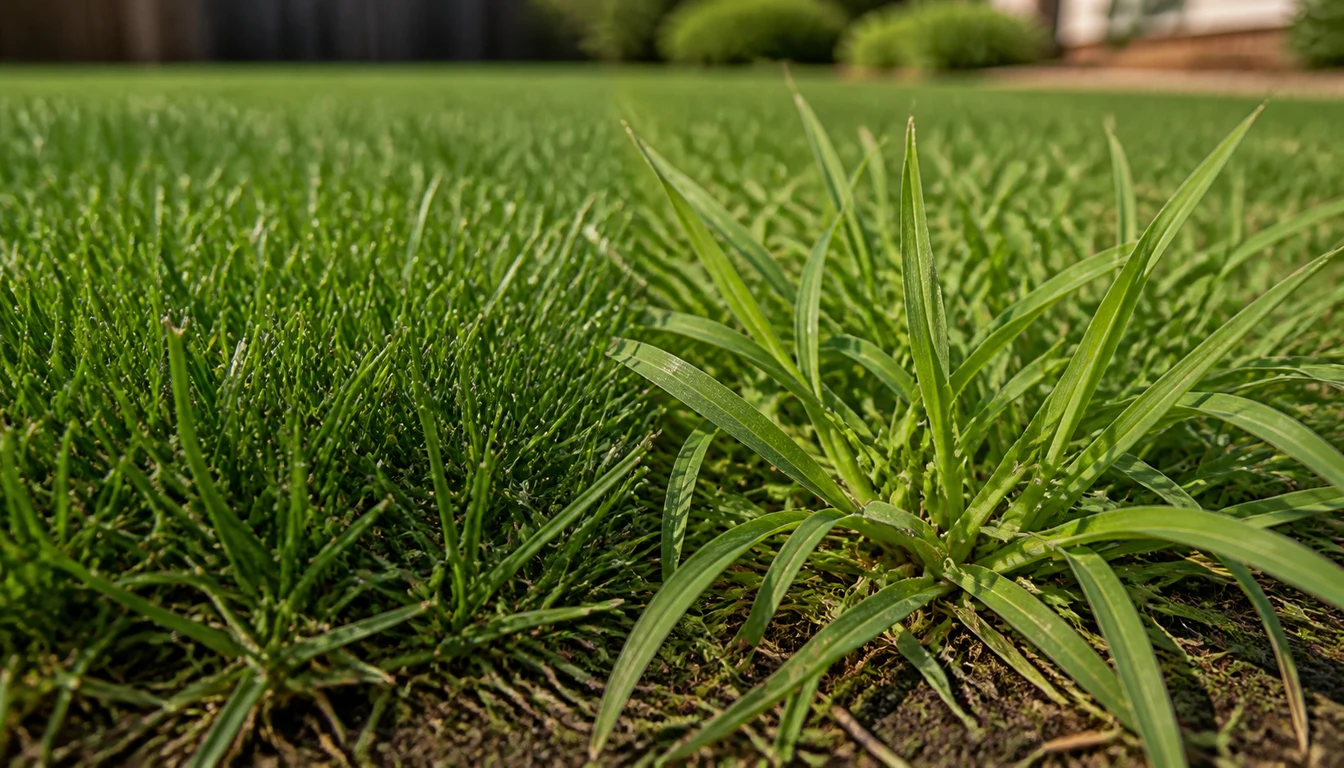
- Blade width
- Thin like hair, medium like your turf, or wide like a spoon
- Color tone
- Gray-green, bright lime, deep blue-green, or yellowish
- Growth habit
- Upright clumps, flat mats, or spreading from runners
- Roots
- Fibrous roots, thick white stolons, or underground tubers
- Seed heads
- Timing, height, and number of branches on each head
Crabgrass vs Your Lawn Grass
Summer is crabgrass season for zones 4–9. It loves thin, hot spots along driveways where cool-season grasses like kentucky bluegrass patches struggle.
Crabgrass seedlings start as small, pale green plants with a noticeable light center where leaves join the stem. By mid-summer, each plant forms a flat, star-shaped mat that sprawls over nearby turf.
Mature crabgrass feels coarse under bare feet.
Blades are wider than fescue but narrower than a typical broadleaf weed.
Seed heads rise above the mat, holding 3–6 finger-like spikes that look like a small, green claw.
Crabgrass dies with frost, leaving bare dirt circles that winter weeds love. Lawns with weak roots from poor watering habits, unlike deeper-rooted zoysia stands, are hit hardest.
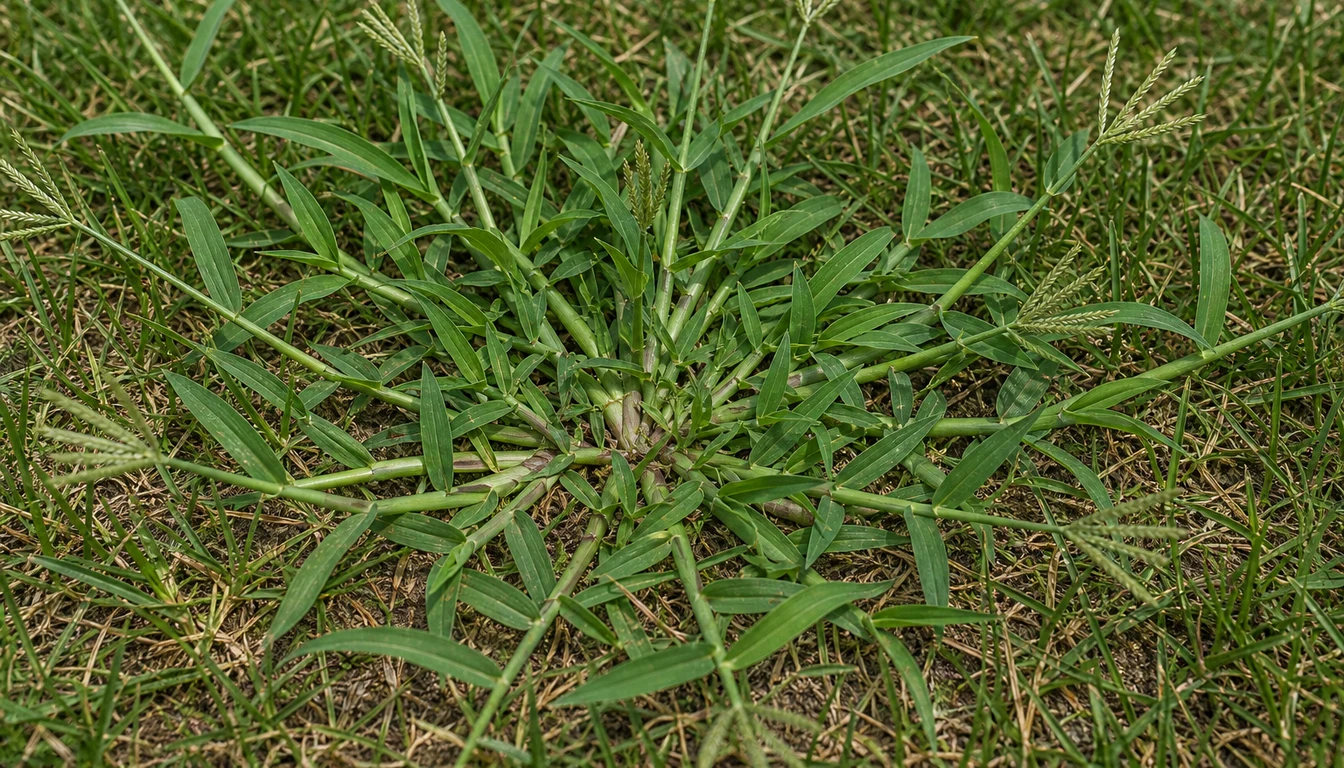
| Trait | Detail |
|---|---|
| Season | Germinates when soil hits 55–60°F, peaks in midsummer |
| Color | Light, yellow-green compared to surrounding turf |
| Growth habit | Low, sprawling, forms single large mats from one crown |
| Seed heads | 3-6 finger-like spikes at the top of tall stems |
| Common confusion | Often mistaken for young bermuda runners at a distance |
Nutsedge: The Shiny, Too-Tall Impostor
Those bright, triangle-stemmed clumps that always seem a little taller than everything else are usually nutsedge. It shows up in wet or compacted spots where you might also see issues like standing water and moss.
Blades are stiff, glossy, and yellow-green or sometimes deeper green compared to nearby turf. Stand a few feet back and you will notice pointed clumps rising above the lawn just a few days after mowing.
Run your fingers around a stem. Nutsedge stems feel triangular, not round like true grasses.
Dig a few inches down and you may find small, brown, peanut-like tubers that help it spread.
Homeowners with irrigation set too often, instead of deep and occasional like in deep watering routines, see the worst nutsedge patches.
Season
Appears late spring, thrives in hot, wet summers.
Color
Shiny yellow-green or bright green, very noticeable after mowing.
Growth habit
Upright clumps, regrows taller than turf within days.
Roots
Underground nut-like tubers spaced along white runners.
Tall Fescue Clumps vs Coarse Weeds
In cool-season lawns, random coarse clumps can be either tall fescue or a lookalike weed. Knowing which you have matters before you reach for a non-selective herbicide.
Tall fescue blades are wide and dark green, with visible veins and a stiff feel. Clumps are upright and dense, but still made of individual blades, not flattened mats like crabgrass.
Older lawns that started as pure kentucky bluegrass often pick up tall fescue over time, especially after cheap mixes or contractor-grade seed. The result is a patchwork of fine and coarse texture.
Coarse weedy grasses, such as orchardgrass or barnyardgrass, usually green up at odd times or go off-color faster in heat compared with managed tall fescue stands.
Check growth habit before treating the clump as an enemy.
- Blade width
- Wider than bluegrass, narrower than broadleaf weeds
- Color
- Deep green in spring, can fade slightly in summer heat
- Growth habit
- Upright, bunch-forming, no above-ground runners
- Seed heads
- Loose, airy panicles, often visible in unmown areas
- Common mix
- Often blended with perennial rye overseeds in cool regions
Seasonal Timing: When Weeds Show Themselves
The calendar is one of the best tools for grass weed ID, right alongside photos. Different weeds appear in different seasons, which narrows your options fast.
Knowing whether your lawn is mostly cool season turf like fescue lawns or warm season turf such as bermuda-type yards also shifts which weeds to expect.
Cool season grassy weeds, like annual bluegrass, pop in fall, stay small all winter, then go pale and seedy in spring. That timing alone separates them from summer invaders such as crabgrass.
Warm season pests like goosegrass and foxtail wait for soil to warm. If a new grass shows up only after you are mowing weekly in shorts, think summer annual weed, not leftover winter grass.
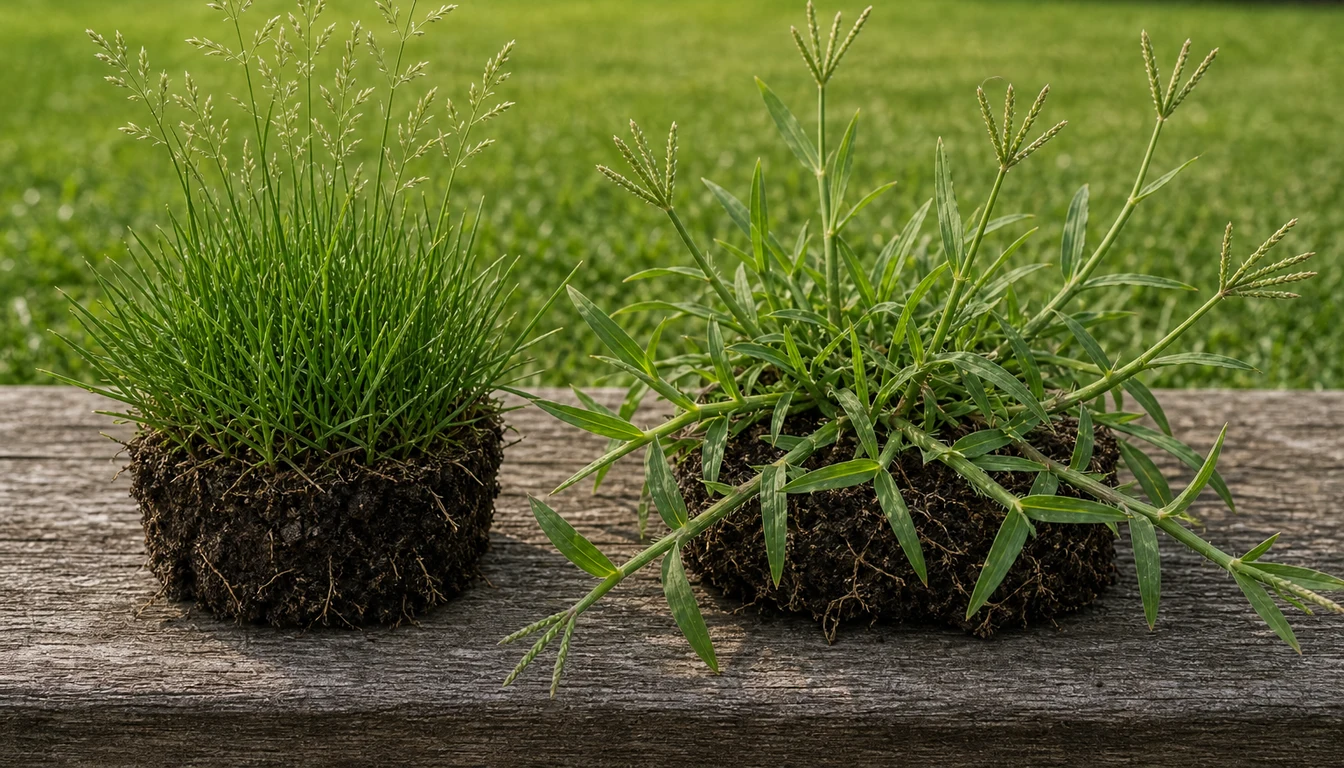
| Category | Behavior |
|---|---|
| Winter annuals | Sprout in fall, stay green through winter, seed and die by early summer |
| Summer annuals | Sprout late spring, thrive in heat, seed heavily, die with first frost |
| Perennial clumps | Reappear from the same spot every year, often thick crowns or rhizomes |
| Overseeded turf | Grows where you spread seed, usually even coverage instead of random patches |
Using Mowing Height To Expose Weeds
The mower is more than a cutting tool.
Mowing height changes what stands out, which makes pictures and ID guides twice as useful.
Weeds that grow taller than your turf, like yellow nutsedge and goosegrass, flag themselves a few days after mowing. Perennial clumps in a bluegrass lawn often look like small islands of darker, taller grass.
Cutting too short, under about 2 inches, scalps cool season lawns and favors weeds. Those bare, thin spots become perfect germination beds for annual grassy weeds that photo guides always show in open soil.
In warm season lawns such as dense zoysia yards, slightly lower mowing helps the turf shade weed seedlings. Matching what you see on the ground with height advice from photos and new grass mowing timing prevents misidentifying stressed turf as a weed.
- Raise bladesSet cool season lawns to 3-4 inches to hide many annual weed seedlings
- Check one patchLet a small test area grow longer and compare leaf width and color
- Note rebound rateWeeds often outgrow turf within 3-4 days after mowing
- Avoid scalpingUneven, brown, shaved areas invite lookalike grassy invaders
Photo-Based ID Mistakes To Avoid
Scrolling through grass weeds identification pictures is helpful, but it can also send you down the wrong path. Many weeds share the same basic color and leaf width.
Photos rarely show scale clearly. A fine fescue blade viewed close up can look like a hulking, stiff weed in a tight crop, just like shade fescue blends do in real life when zoomed.
Lighting in photos also tricks us.
Backlit shots make blades look shiny, which can mimic nutsedge.
Wet morning lawns in pictures exaggerate sheen and color, so compare under similar light in your own yard.
Never rely on a single photo match before you treat an entire lawn. Confirm with at least three traits, like stem shape, seed head form, and seasonal timing.
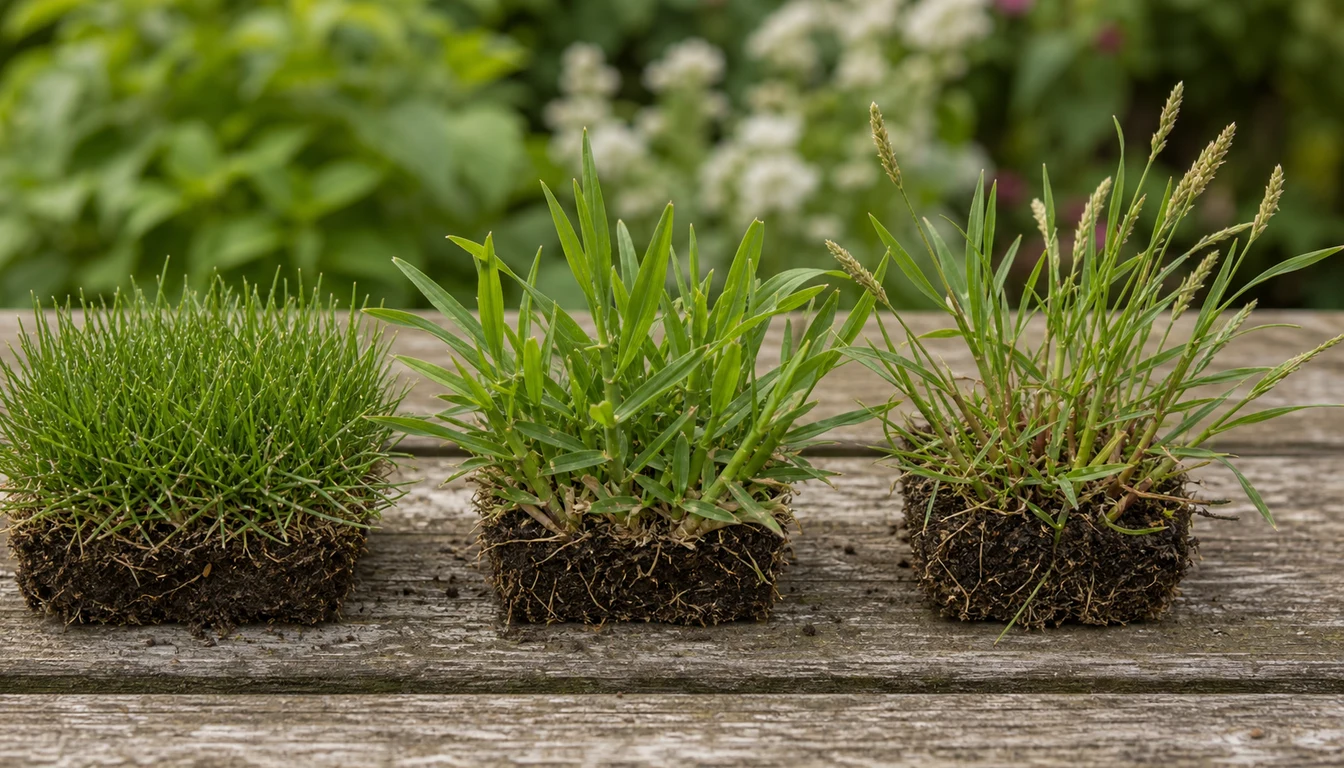
- Ignore color alone, since sun, soil, and fertilizer change turf color more than species do
- Match seed heads: panicles, spikes, or bristled foxtails are better clues than leaf color
- Check stems: round versus triangular stems quickly separate true grasses from sedges
- Revisit in a week, since some ID only becomes obvious once seed heads or height differences appear
After You Identify: Pull, Spray, Or Tolerate
Once you have a match, the real question is what to do about it.
Not every impostor requires chemicals.
Small patches of annual grassy weeds in a healthy ryegrass lawn often disappear after a season of better mowing and watering. Perennial clumps or sedges keep returning unless you dig deep or use the right herbicide.
Hand removal works best when crowns or rhizomes are visible and the soil is moist. Herbicides should match both the weed type and your turf type, just like seed choices differ between warm and cool lawns.
Hand pull
Loosen soil and remove crowns and thick white roots completely.
Spot spray
Use a labeled grassy weed killer safe for your specific turf species.
Overseed thin spots
Fill gaps with matching seed so the yard looks uniform again.
Accept some variety
A few off-type grasses are harmless if the lawn looks even from the sidewalk.
Preventing New Grass Weeds After Treatment
Stopping new weeds is easier than identifying every strange blade that pops up.
Pictures remind you what can happen if the soil stays bare and stressed.
Thick turf of St. Augustine sod or mixed cool season grass stands shades the soil so annual weeds struggle to sprout. Deep, infrequent watering also favors turf roots over shallow weed roots.
Preemergent herbicides target germinating seeds, which is why timing charts almost always sit next to grass weed photos.
Apply just before typical germination windows in your area and water in lightly.
Fertilizer schedules taken from balanced guides, like you would for feeding a lawn without burning, keep turf growing steadily. Hungry, thin lawns match every photo of weed-infested yards you see online.
- Maintain density by reseeding or plugging thin areas early, before weed seeds take over
- Water deeply, aiming for 1 inch of water per week, including rainfall
- Use preemergent, matching product and timing to target summer or winter annual weeds
- Avoid soil disturbance, since aggressive raking and frequent edging create germination cracks
Pro Tips
- Take close-up and wider shots of weeds so you capture both blade details and growth pattern.
- Compare weed color to a healthy patch of your best turf, not a stressed or shaded spot.
- Check leaf width with a ruler or your fingertip to remember measurements when you go back inside.
- Roll stems between your fingers to feel if they are round, flat, or triangular for quick ID.
- Note where weeds thrive, such as soggy low spots or sunny edges, to adjust watering and mowing habits.
- Mark a few weed patches with flags so you can watch how they change over a couple of weeks.
- Match at least two physical traits and the season before choosing any herbicide or removal method.
Frequently Asked Questions
How can I tell grassy weeds from my regular lawn grass?
Match what you see to multiple traits, not just color.
Use grass weeds identification pictures to compare leaf width, growth habit, seed heads, and season.
If it grows taller or spreads differently than the rest, it is usually a weed.
Do I need to identify the exact grass weed species before treating?
You do not need the Latin name, but you should know if it is an annual or perennial and whether it is a true grass or a sedge. Herbicides are labeled by those groups, so rough ID protects your turf from damage.
Can I use the same herbicide on fescue and bermuda grass weeds?
No, always check the label for your turf type. Many products safe on warm season lawns like bermuda turf strips will injure cool season grasses such as tall fescue stands, and vice versa.
Why do some grass weeds keep coming back every year?
Perennial grassy weeds and sedges regrow from crowns, rhizomes, or tubers that survive winter.
Pictures often show thick bases or underground parts.
You must remove or kill those structures, not just mow off the leaves.
Are any grass weeds worth keeping in a home lawn?
Some people tolerate low-growing annuals if the yard still looks even from the street.
But aggressive species like nutsedge and quackgrass usually spread fast.
Use identification photos to decide whether a patch is harmless or likely to take over.
Sources & References
Related Guides
Best Time to Aerate and Overseed for a Thicker Lawn
Most lawns never reach their potential because aeration and overseeding happen at the wrong time.
11 min read
Best Time to Overseed a Northeast Lawn for Thick Turf
Overseeding in the Northeast is all about catching that short window when soil is warm, air is…
11 min read
Can You Overseed a Lawn Without Aerating It First?
Thin turf and bare patches do not always mean you need to rent an aerator.
11 min read
Dethatching vs Aerating: Which Does Your Lawn Need?
Choose dethatching when a measured layer of thatch has become excessive.
16 min read
How Long After Planting Grass Seed Can You Walk On It Safely
Most new lawns fail not from bad seed, but from feet, paws, and mower wheels showing up too soon…
11 min read
How to Fertilize a Lawn Without Burning It
Those yellow stripes and crispy patches after fertilizing are almost always user error, not bad…
14 min read