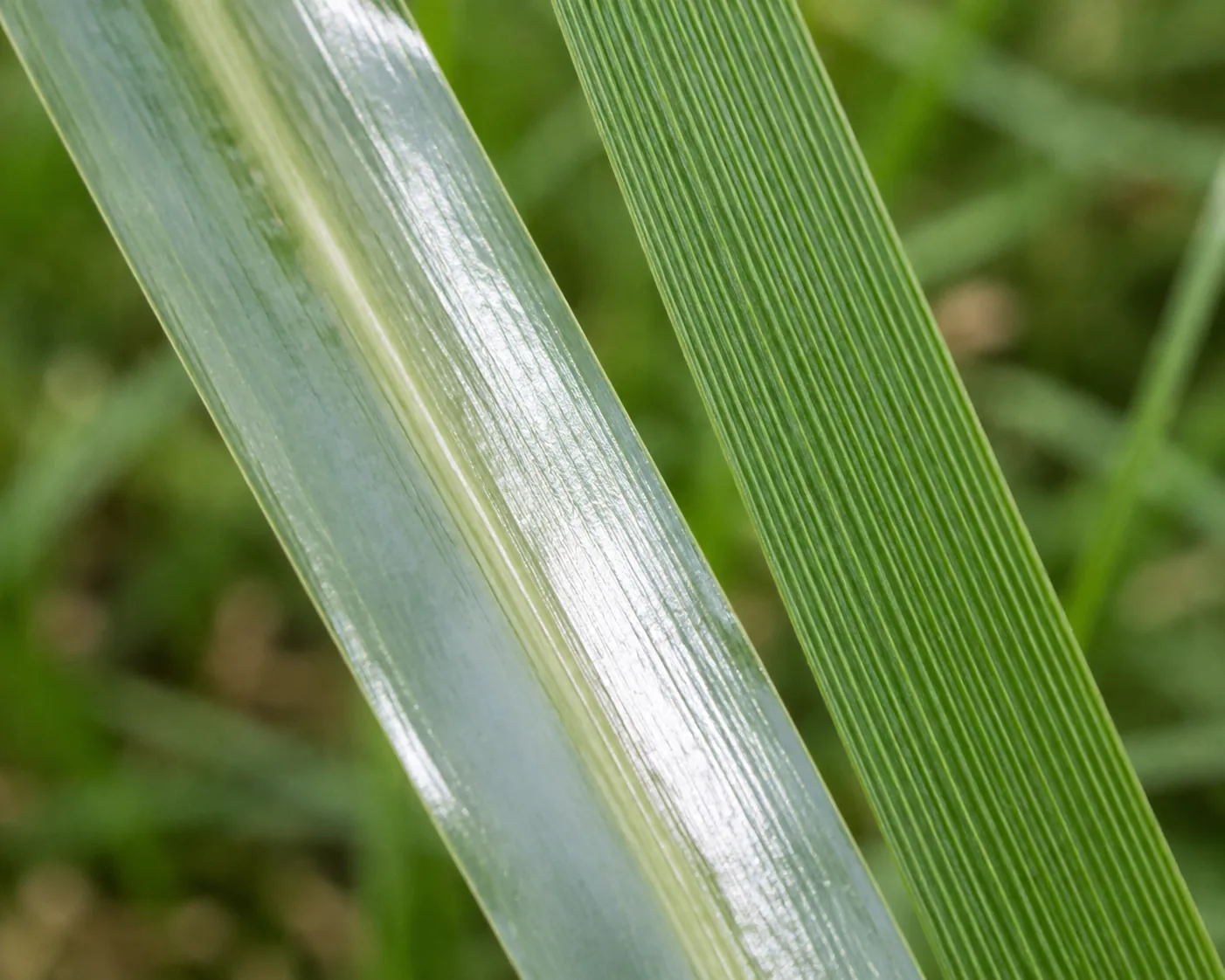
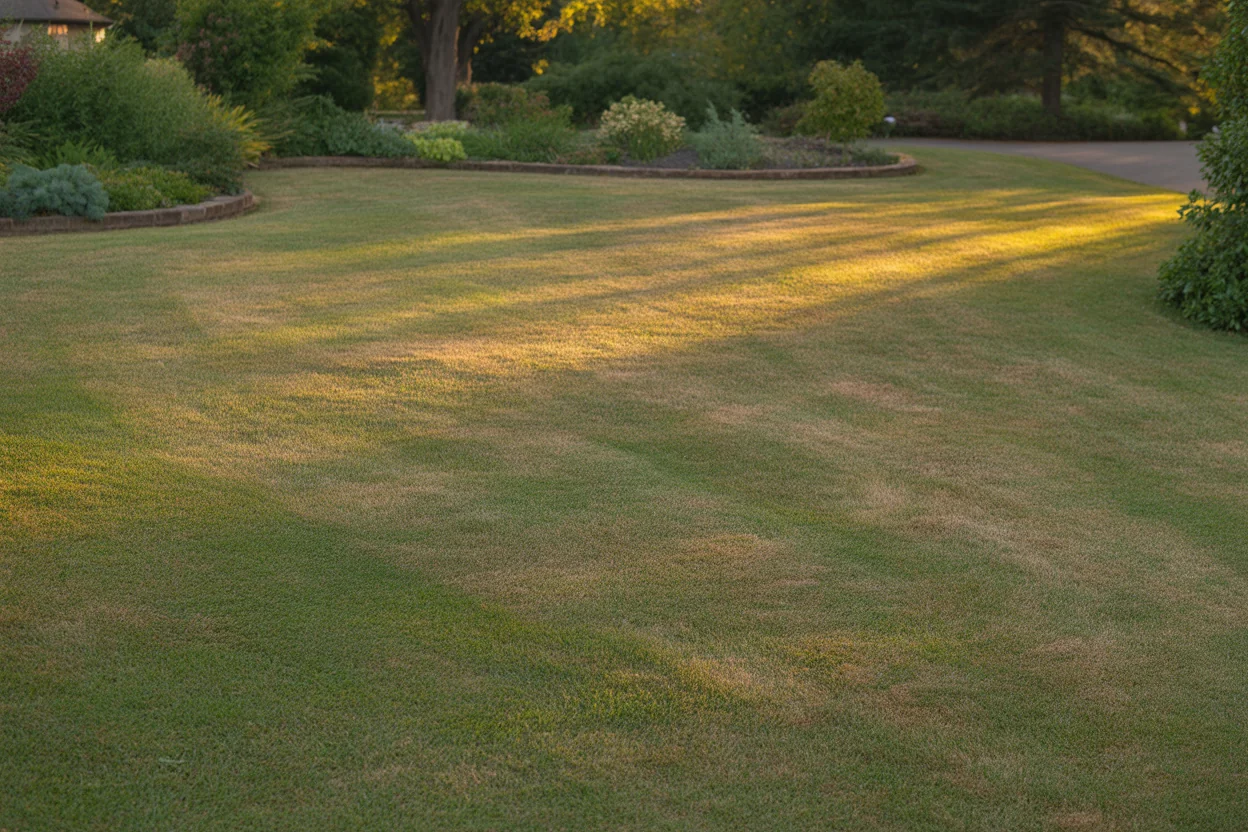
Buffalo Grass vs Bermuda Grass
Buffalograss suits an adapted, sunny site where light use and lower ongoing inputs are the priorities. Bermuda grass is usually the stronger choice for repeated traffic and rapid recovery. Both spread, both need establishment care, and neither offers a guaranteed irrigation schedule.
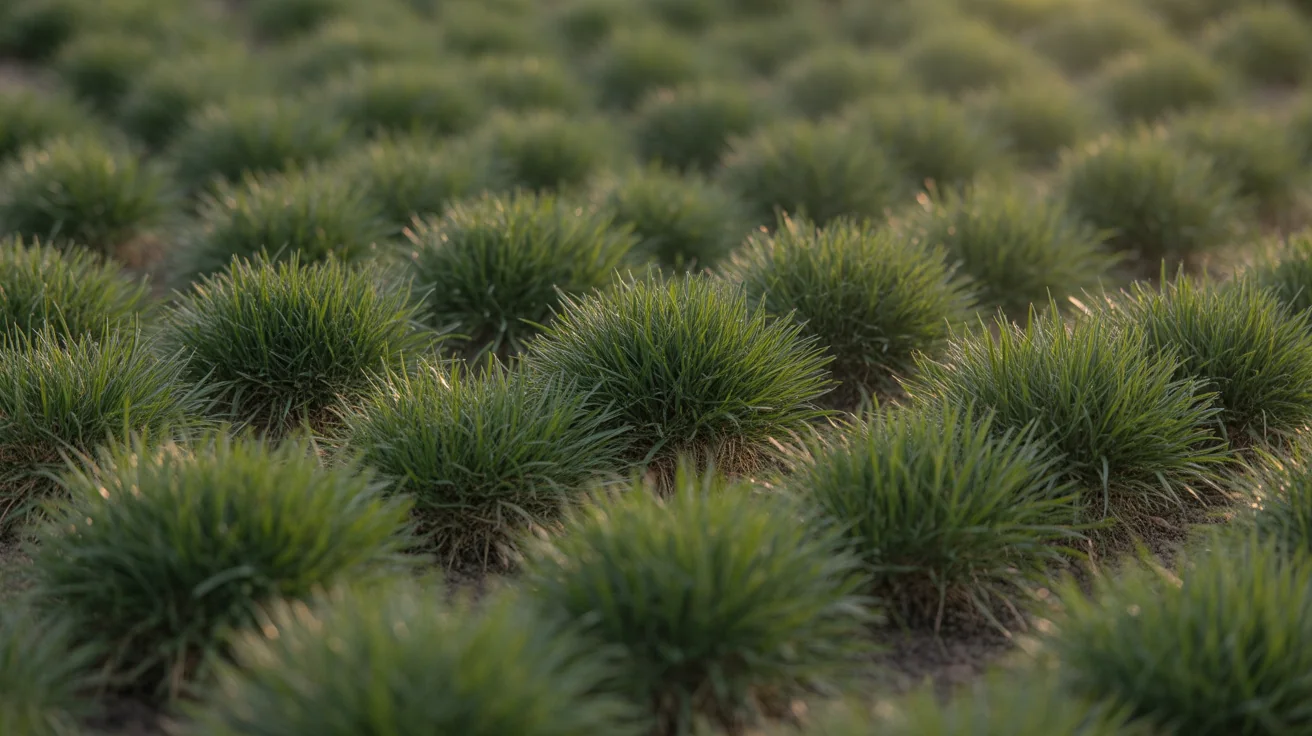
Buffalo Grass
Bouteloua dactyloides
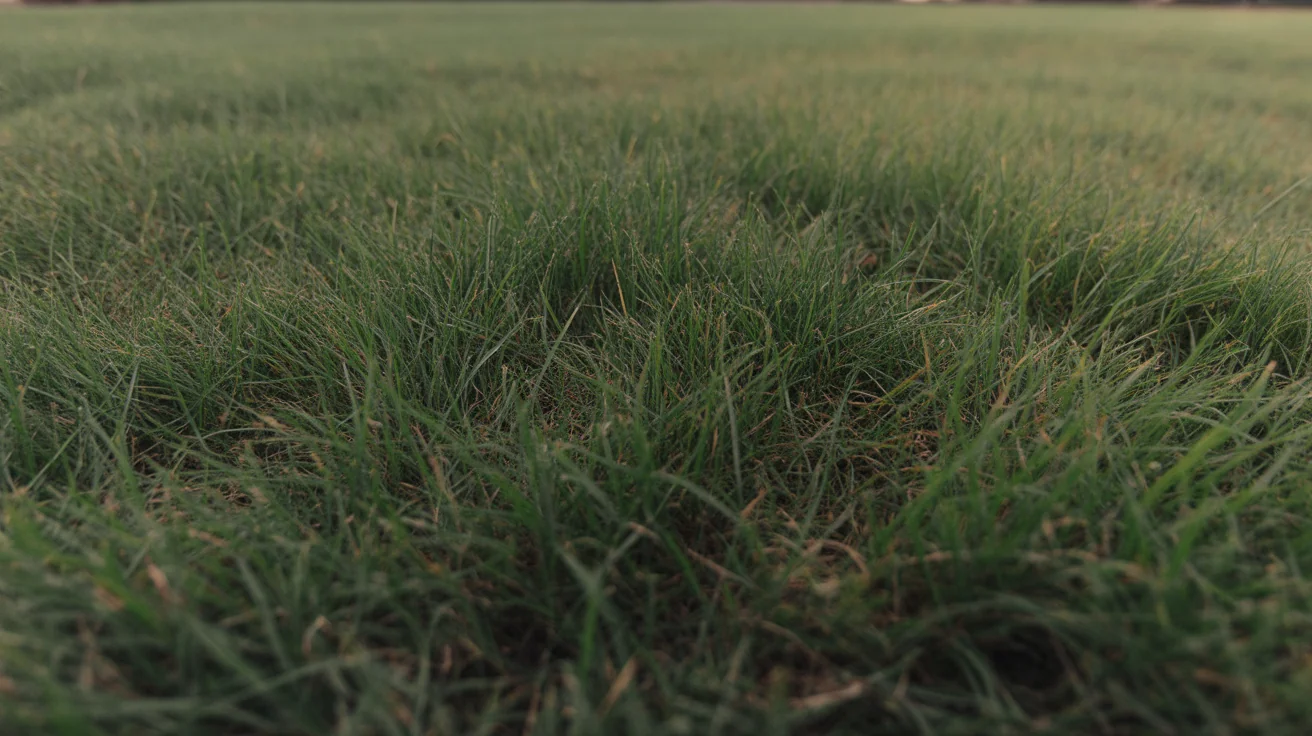
Bermuda Grass
Cynodon species and hybrids
The buffalograss here is the North American species Bouteloua dactyloides. It is a warm-season grass associated with the Great Plains, with a different use pattern from a closely maintained Bermuda lawn.
Buffalograss can reduce ongoing care in the right setting, but low maintenance after establishment does not mean easy establishment or no weed control. Bermuda's stronger recovery suits more intensive use, while its aggressive spread can become unwanted work around beds.
A small lawn used constantly for games and a larger area crossed occasionally ask different things of the grass. That difference is more useful than choosing from a water-saving percentage detached from the grass it was measured against.
Specifications
Compare the traits that change the growing decision.
| Feature | Buffalo Grass | Bermuda Grass |
|---|---|---|
| Best-supported role | Low-input turf with light or intermittent use where adapted | Sunny turf with stronger wear and recovery demands |
| Spread | Aboveground stolons root and form new plants | Aboveground stolons and underground rhizomes |
| Heavy repeated traffic | Concentrated, constant use is a poor fit | Better recovery potential during active growth |
| Shade | Poor choice for substantial shade | Poor shade tolerance |
| Water decision | Establishment needs differ from mature turf needs | Establishment and desired summer color affect irrigation |
| Winter color | Dormant after hard frost | Normally dormant after frost |
| Starting a lawn | Seed, plugs or sod, depending on cultivar and availability | Seeded or vegetatively propagated cultivars |
Neither species stays green through every dry period without water. A lawn can survive by slowing growth or becoming dormant while losing the appearance or recovery rate the owner expects.
Best Use Cases
Choose by the job the planting needs to do.
A lightly used sunny lawn
Lower routine inputs after establishment
Texas A&M describes buffalograss as a low-input, low-use turf. Colorado State also emphasizes its suitability for established lawns with modest demands, while warning that shade, very dry sandy soils and concentrated constant traffic can make it a poor choice.
Bermuda can be a durable lawn, but rapid summer growth and spread may add mowing and containment work that a lightly used site does not need. Its strong recovery is most valuable when the lawn actually receives repeated wear.
Frequent play on a small area
Wear is concentrated rather than occasional
Buffalograss is not limited to purely ornamental lawns. Colorado State distinguishes occasional heavy use or light regular use from traffic that is both heavy and constant. A repeatedly worn route across a small lawn is the harder situation.
Bermuda's wear tolerance and rapid recovery explain its use on athletic fields. That does not make any home lawn indestructible, and recovery still depends on active growth and conditions that allow the grass to replace damaged shoots.
Long periods without irrigation
Survival versus green, active turf
Established buffalograss may survive without supplemental irrigation in adapted conditions, but Colorado State notes summer dormancy and weed invasion can follow. A promise of green turf on a fixed small dose every two weeks removes those conditions.
Bermuda also has strong drought tolerance. Whether it stays green and repairs wear during a dry period depends on the site and available moisture. The species name alone cannot predict a water bill or guarantee that no repair will be needed.
What the water-saving evidence actually compares
Colorado State reports that newer buffalograss varieties can maintain an attractive lawn with 50–75% less irrigation than Kentucky bluegrass in its guidance. That comparison is not a measurement against Bermuda, and it cannot establish the same saving when a Bermuda lawn is replaced.
The starting condition matters too. A mature stand with established roots and a newly planted patch are different water users. The same publication warns that establishing buffalograss can need as much water as establishing bluegrass or tall fescue, and sometimes more.
For a homeowner converting turf, the first-season watering and weed-management work belongs in the decision. Potential savings after establishment do not remove the need to get living plants rooted and growing across the site.
A sunny lawn can still be the wrong site
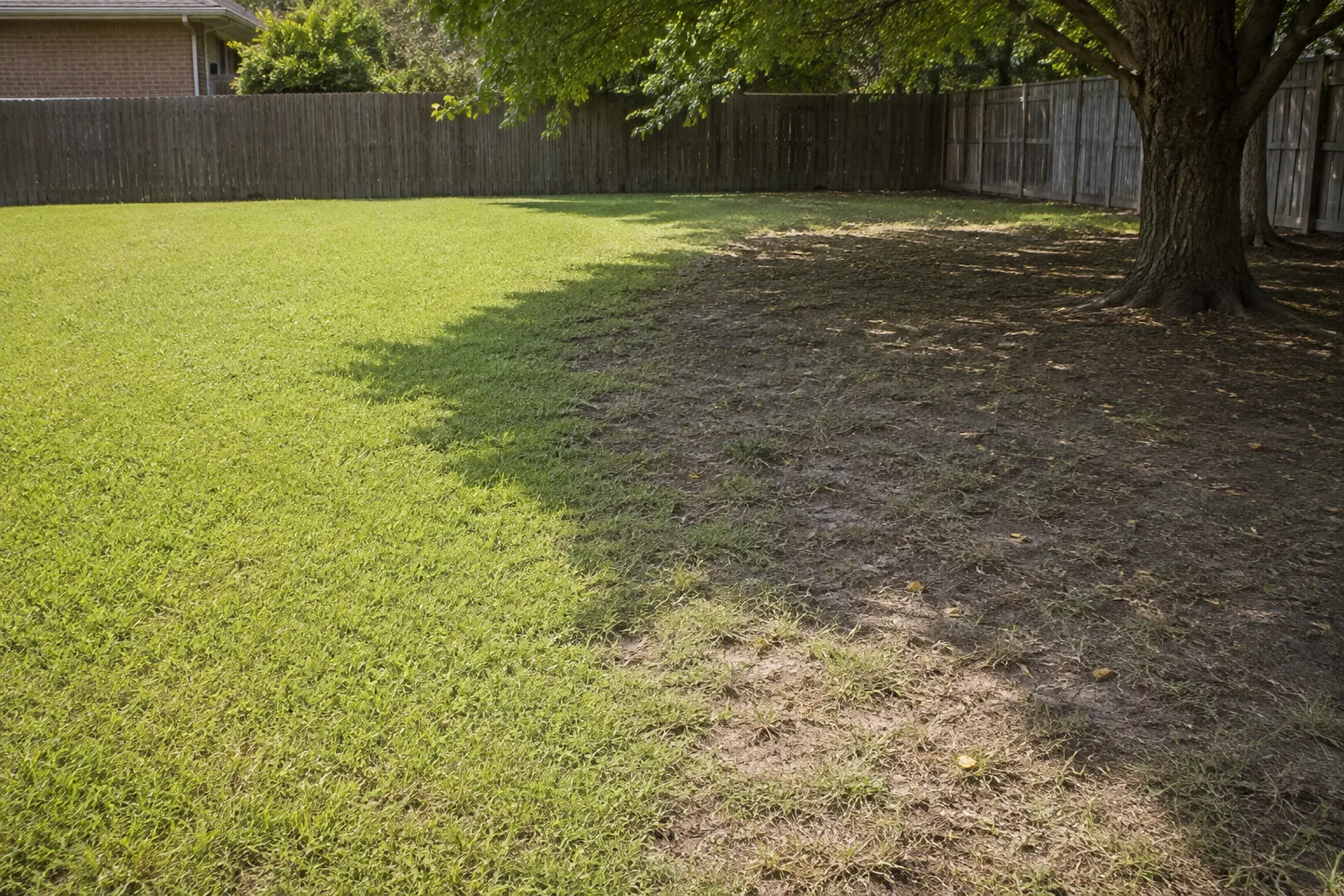
Both grasses have poor shade tolerance. Open sun over part of a yard does not mean the area beside a building or under a tree has the same growing conditions, and more water will not replace light.
For buffalograss, Colorado State also flags very droughty sandy soils without supplemental irrigation, saline soils and high-elevation sites with a short growing season. Its Great Plains origin should not be treated as a promise that it suits every dry garden. Texas A&M also notes poor performance in wetter eastern Texas. Drought tolerance does not mean broad tolerance of every southern growing condition.
A thin strip beneath a tree deserves a site assessment before buying another grass. Shade, competition and repeated foot traffic can overlap, so a bare patch alone does not identify one cause.
Low-input turf still spreads and needs a start
Buffalograss is stolon-forming, not a grass that remains in isolated clumps. Its surface stems root where they contact suitable ground and produce new plants. Bermuda spreads both above and below ground, making containment a more persistent concern in many turf settings.
A fixed edging depth cannot promise complete containment of Bermuda, and buffalograss should not be described as unable to escape a bed edge. The relevant difference is the growth habit and the maintenance it creates at the actual boundary.
Seed, plugs and sod offer different routes to a buffalograss lawn. Colorado State notes that seed establishment can be labor-intensive and vulnerable to weed problems, while sod gives quicker cover at greater initial cost. Local availability and cultivar choice affect which route is practical.
Bermuda cultivars also differ in how they are propagated. Seed is an option for some, while others need vegetative planting material. A general seed price or coverage rate therefore cannot stand in for the installed cost of either lawn.
Weed control is part of the comparison. Some common lawn herbicides can injure actively growing buffalograss, and a product suitable for another lawn is not automatically suitable here. The current label must include the grass and intended use. Extra irrigation or fertilizer to force a darker lawn can also encourage weeds rather than improve the result.
Related Comparisons
Bermuda vs Fescue: Picking a Warm or Cool Lawn
Read Comparison
Bermuda Grass vs Zoysia: Tough Warm‑Season Lawns
Read Comparison
Centipede vs St Augustine: Low‑Input Southern Lawns
Read Comparison