yard
KnowTheYard

databasePlant Database

Browse by category

potted_plant

Houseplants

Indoor & tropical species

nutrition

Vegetables

Edible garden crops

spa

Herbs

Culinary & medicinal

local_florist

Flowers

Ornamental blooms

water_drop

Succulents

Drought-tolerant species

park

Trees

Arboreal species

forest

Shrubs

Bushes & hedges

nature

Perennials

Garden flowers

grass

Lawn Grasses

Turf varieties

local_dining

Fruits

Fruit-bearing plants

Best Indoor Plantsarrow_forwardBest Shade Plantsarrow_forward

menu_bookGarden Guides

Step-by-step guides by task type

grass

Lawn Care

Seasonal checklists and year-round maintenance guides for a championship lawn.

yard

Planting

When, where, and how to plant — from seed to transplant for every garden type.

water_drop

Watering

Deep-watering techniques, schedules by plant type, and drought management.

compost

Fertilizing

Feeding schedules, NPK ratios, and organic vs synthetic options by plant.

pest_control

Pest Control

Identify, prevent, and treat common garden pests without harming beneficial insects.

content_cut

Pruning

Pruning timing, techniques, and tools for trees, shrubs, and flowering plants.

Popular Guides

parkFall Lawn Carelocal_floristSpring Lawn Carecalendar_monthFull Calendar
All Guidesarrow_forwardLawn Care Hubarrow_forward
ToolsCompareRegional GuidesPlant ProblemsPet SafetyAbout
searchPlant Finder
yardKnowTheYard

Published plant profiles, practical care guides, problem diagnosis pages, and side-by-side comparisons for home gardeners.

chatphoto_camera

databaseBrowse Plants

  • arrow_forwardHouseplants
  • arrow_forwardVegetables
  • arrow_forwardHerbs
  • arrow_forwardFlowers
  • arrow_forwardTrees

menu_bookResources

  • arrow_forwardGarden Tools
  • arrow_forwardRegional Guides
  • arrow_forwardPlant Problems
  • arrow_forwardPet Safety
  • arrow_forwardCare Calendar
  • arrow_forwardPlant Finder

infoCompany

  • arrow_forwardAbout Us
  • arrow_forwardOur Team
  • arrow_forwardMethodology
  • arrow_forwardEditorial Policy
  • arrow_forwardContact Us

mailEmail Updates

Join the list for new guides, seasonal notes, and launch updates.

No spam. Request removal anytime.

fact_check

Reviewed Pages

77 pages currently attributed to public review lanes

public

USDA Zone Coverage

Zone-aware recommendations and regional growing context

database

230 Published Plant Profiles

555 public pages across profiles, guides, comparisons, and problem pages

© 2026 KnowTheYard. All rights reserved.

Privacy PolicyTerms of ServiceContactSitemap
Home/houseplants/String of Pearls: Trailing Succulent Houseplant/Shriveled Pearls
scienceEditorial DiagnosisUpdated Feb 20, 2026

String of Pearls - Shriveled Pearls

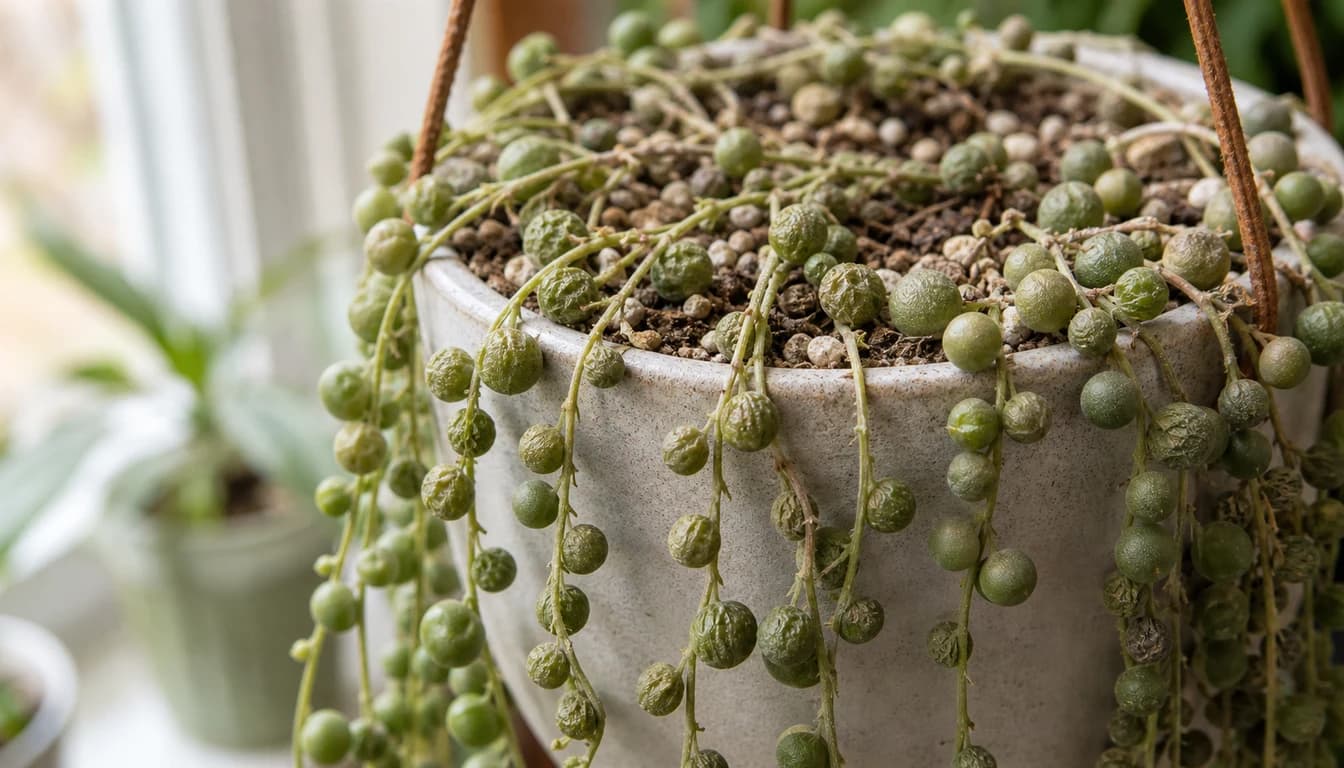
Practical diagnosis and step-by-step fixes for a shriveling Senecio rowleyanus (**String of Pearls**). This guide helps you determine whether beads are dehydrated, suffering root rot, or stretching from low light, then gives clear watering, light, soil, drainage, repotting, pest, and recovery guidance tuned for indoor growers and ==**USDA zones 9-11**==.

String of Pearls plant with wrinkled shriveled beads on trailing stems

String of Pearls plant with wrinkled shriveled beads on trailing stems

lightbulb
bolt

Quick Diagnosis

Most Likely Cause: Underwatering or poor drainage (root rot) - check soil, weight of the pot, and bead texture.

Use bead texture and pot weight together before you assume drought. Low light causes thin, stretched growth rather than true shriveling.

Jump to fix steps arrow_downward

Shriveled String of Pearls beads can point in opposite directions, which is why pot weight matters as much as how the vine looks. Indoors in USDA zones 9-11, it prefers 65-80°F (18-27°C) and average household humidity; winter dormancy slows growth and reduces water needs.

Because pearls store water in their leaves, visible shriveling is a reliable early flag. If the pot feels light and the soil is bone-dry a few inches down, the plant is likely underwatered. If soil is wet and beads are soft or translucent you’re more likely facing root rot from overwatering or poor drainage-fixing that quickly matters more than a schedule tweak, and it often overlaps with mushy stem symptoms.

For location-specific expectations, plants grown in sheltered outdoor spots in zone 9 will behave differently than those in zone 10 sun exposure, so match watering to the microclimate rather than calendar alone and adjust your routine with the same steady indoor watering habits you would use for other hanging houseplants.

menu_book
Guide - See AlsoAir Purifying Plants for Cleaner Indoor Air
chevron_right
psychology

How to tell the difference: underwatering vs root rot vs low light

Compare soil moisture, bead texture, and pot weight. Underwatering shows dry soil, light pot weight, and firm-but-wrinkled beads. Overwatering or root rot shows wet soil, heavy pot weight, soft or translucent beads, and potentially a bad smell.

Low light (etiolation) causes spaced beads and pale stems rather than true shriveling. If you move the plant to brighter light and beads remain plump, the problem was light, not water.

When in doubt, remove the plant gently from the pot and inspect roots: firm white roots mean salvageable plants; dark, mushy roots mean rot. Propagate healthy tips before drastic measures so you don’t lose the plant entirely.

thermostat

Environmental Baseline

Before diagnosing specific failures, confirm your String of Pearls: Trailing Succulent Houseplant's environment matches its core care requirements.

forestString of Pearls: Trailing Succulent Houseplant Care Needs

  • Light: Bright indirect, some gentle direct sun
  • Water: Low, let soil dry deeply
  • Temp: Best at **65–80°F**, never below 50°F

homeTypical Indoor Home

  • Humidity: 30-50% (Low)
  • Temp: 65-72°F variable
  • Light: Often too dim or direct
biotech

Possible Causes

Sorted by likelihood

1. Underwatering (Most likely)

Likelihood: High

String of Pearls stores water in its beads and will wrinkle when the root zone is dry for too long. Indoor owners who forget a trailing pot tucked in a corner or who rely on light misting instead of thorough watering commonly see this.

Identification

  • remove_circle_outlinePot feels noticeably light when lifted; soil pulls away from pot sides
  • remove_circle_outlineBeads are firm but visibly wrinkled and the stem is flexible rather than brittle
  • remove_circle_outlineSoil surface appears dry and crumbly to a depth of 1-2 inches
  • remove_circle_outlineNo soft, mushy tissue present on beads or stems

The Fix

  1. 1Give a deep soak: water until it runs from drainage holes, then allow all excess to drain away; use room-temperature water.
  2. 2Let the soil dry completely between waterings; expect to water roughly every 2-3 weeks in bright indoor light and less in winter.
  3. 3If beads plump after one thorough soak, resume a normal schedule; take note of spot exposure and set a reminder to check pot weight between visits.
  4. 4Consider bottom-watering once monthly: sit the pot in 1-2 inches of water for 20-30 minutes to rehydrate without overwatering the crown
  5. 5Avoid misting as the core hydration method; misting rarely corrects true drought stress

2. Overwatering / Root Rot

Likelihood: Medium

Constantly wet soil or pots without drainage let roots sit in moisture, causing root rot. Early signs can be confused with drought because the plant looks limp and shriveled even though the soil is wet. This is common in heavy mixes, non-draining pots, or when watering frequency isn’t reduced in winter.

Identification

  • remove_circle_outlineSoil is wet or soupy several inches down and pot feels heavy
  • remove_circle_outlineBeads or lower stems are soft, discolored, translucent, or fall off easily
  • remove_circle_outlineRoots look brown/black and mushy when gently removed from the pot; healthy roots are white and firm
  • remove_circle_outlinePlant may develop a sour or musty smell from the root zone

The Fix

  1. 1Do not water. Remove the plant from the pot and inspect roots: trim away rotten, dark, mushy roots with sterilized scissors.
  2. 2Repot into a fresh cactus/succulent mix that includes pumice or coarse sand for sharp drainage and use a pot with drainage holes; see the planting note on using drainage holes in pots.
  3. 3If rot is extensive, take healthy cuttings from the tips to propagate while disposing of the rotted sections.
  4. 4After repotting, wait 3-7 days before lightly watering to let wounds callus; then resume light, careful watering.
  5. 5For active fungal problems consider a diluted fungicide or cultural control; improve airflow and avoid wetting foliage

3. Low Light / Etiolation

Likelihood: Medium

Insufficient bright indirect light doesn’t typically make beads shrivel from a moisture standpoint, but it produces long, spaced-out pearls that look weak and thin and can be mistaken for dehydration. Low light also reduces photosynthesis so the plant uses stored water more slowly but appears unhealthy.

Identification

  • remove_circle_outlineStems are noticeably stretched with larger gaps between beads
  • remove_circle_outlineBeads are pale or smaller than expected but not soft or translucent
  • remove_circle_outlinePlant leans toward the nearest light source and growth is concentrated at tips
  • remove_circle_outlineImprovement in bead plumpness occurs after moving to higher light zones within days to weeks

The Fix

  1. 1Move the pot to bright, indirect light such as an east or west window; a few hours of morning or late afternoon sun is acceptable.
  2. 2Increase light gradually over 1-2 weeks to avoid sunburn-start by moving closer to the window then increase exposure.
  3. 3If indoor light is limited, add a grow light on a 10-12 hour schedule to restore compact growth.
  4. 4Prune long, leggy stems and root the tip cuttings to maintain a dense, plump appearance.
  5. 5Rotate the hanging basket or pot weekly so every side receives equal light
menu_book
Guide - See AlsoBest Herbs to Grow Indoors for Real Harvests, Not Spindly Pots
chevron_right
potted_plant

Root Health Examination

A direct inspection of the root system distinguishes root rot from drought stress - saving weeks of guesswork.

check_circleHealthy Roots

  • Firm to the touch
  • White or light tan color
  • Earthy, pleasant smell

cancelCompromised Roots

  • Mushy or slimy texture
  • Dark brown or black color
  • Sour, rotting odor

Inspection Step: Gently slide the pot off while supporting the base of the stems. The outer root ball gives sufficient clues without disturbing all the soil.

gpp_bad
warning

When to Worry

A few yellow leaves are normal. If more than 20% of foliage turns yellow within a week, or new growth is affected, act immediately - check the roots first.

timeline

Recovery Protocols

Recovery takes time. Once the root cause is corrected, implement a 30-day stabilization window.

0-3 daysImmediate actions and what to expect

If underwatered, a thorough soak will often plump outer beads within 24-72 hours. If overwatered and repotted, expect the plant to sit cold and slow for a few days while roots settle-do not water until the cut roots callus if you trimmed rotten tissue.

1-4 weeksVisible improvement

Stems begin to firm and new beads form on actively growing tips. If you corrected light and watering, compact growth should resume and rootbound issues resolve. For plants recovered from mild rot, new healthy roots and top growth usually appear within this window.

4-12 weeksFull recovery timeline

A fully plump, healthy trailing habit and resumed regular growth can take **4-12 weeks**, depending on severity, light, and temperature. Regular but conservative watering and bright light will speed recovery; persistent rot or severe drought damage can extend recovery or require starting cuttings.

menu_book
Guide - See AlsoBest Indoor Plants for Every Room and Light Level
chevron_right
shield

Preventing Future Issues

Preventing shrivel is mostly habit and hardware: use a fast-draining succulent mix that includes pumice or coarse sand, always choose pots with drainage holes, give bright indirect light, and water deeply but infrequently-check pot weight and soil moisture rather than following a rigid calendar. If your basket still stays wet too long, revisit drainage-hole basics before you change the light. Diagnosis tip: If beads feel firm but the soil is dry, underwatering is likely. If soil is wet and beads look mushy or stems feel soft, root rot from overwatering is likely.

menu_book

Related Reads

menu_book
GuideAir Purifying Plants for Cleaner Indoor Air
chevron_right
menu_book
GuideBest Herbs to Grow Indoors for Real Harvests, Not Spindly Pots
chevron_right
menu_book
GuideBest Indoor Plants for Every Room and Light Level
chevron_right
String of Pearls: Trailing Succulent Houseplant (Senecio rowleyanus) - full care guideSenecio rowleyanus

String of Pearls: Trailing Succulent Houseplant

Asteraceae Family

wb_sunny

Light

Bright indirect, some gentle direct sun

water_drop

Water

Low, let soil dry deeply

thermostat

Temp

Best at **65–80°F**, never below 50°F

yardFull Care Guide

On This Page

boltQuick DiagnosispsychologyUnderstandingthermostatEnvironment CheckbiotechPossible Causespotted_plantRoot ExamwarningWhen to WorrytimelineRecovery PlanshieldPreventionmenu_bookRelated Reads