verifiedSource Reviewed
String of Dolphins
Senecio peregrinus
Family: Asteraceae
wb_sunnyLight
Bright indirect light with a few hours of gentle direct sun
water_dropWater
Low; let soil dry completely between waterings
heightHeight
Trails 1–3 ft from the pot rim
publicZone
Zone 10–12 outdoors; houseplant elsewhere
Native Region
South Africa
wavesThe Dolphin Shape Is the Health Signal
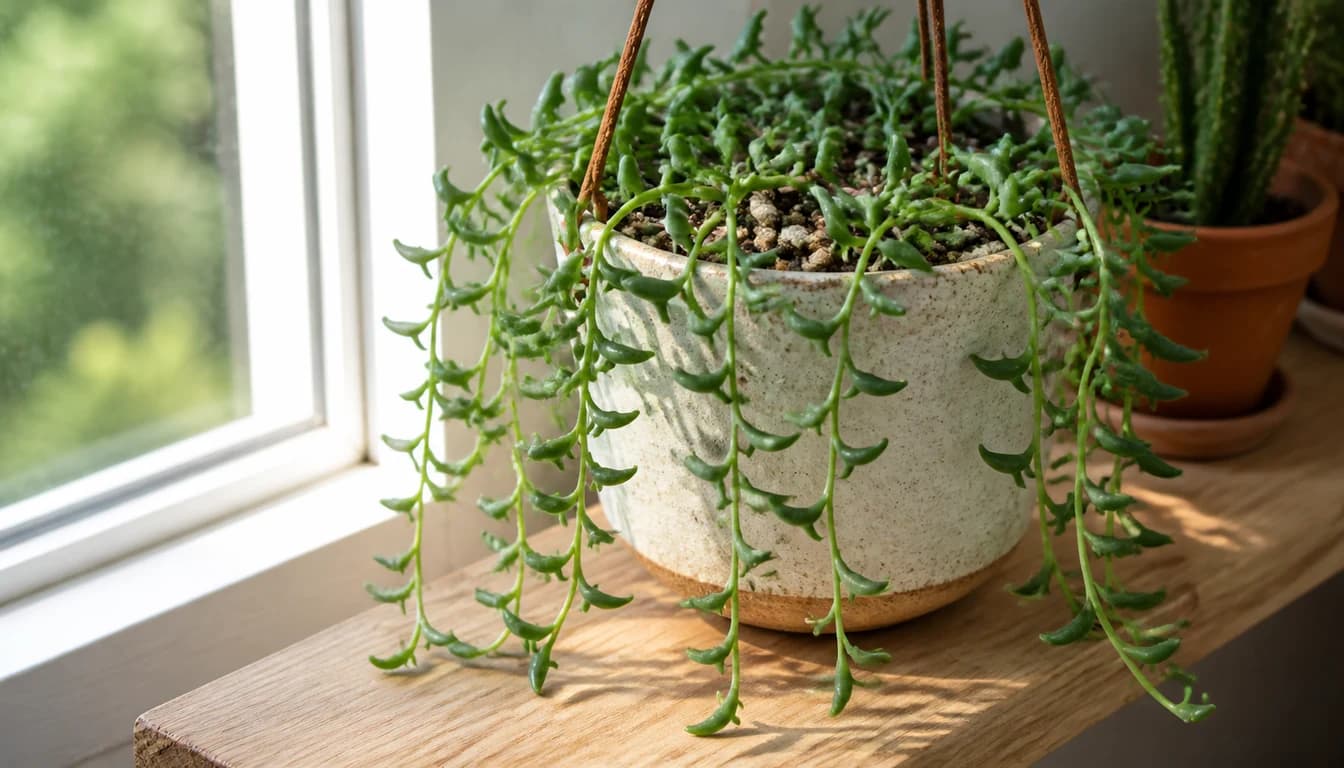
String of Dolphins (Senecio peregrinus) is a trailing succulent in the Asteraceae family, grown for curved water-storing leaves that look like tiny jumping dolphins. It is not a normal leafy vine; the whole display depends on keeping those leaves plump, close, and clearly shaped.
The leaf shape is the care report. Full arched leaves usually mean the crown has enough light and the roots are cycling between wet and dry. Flat, stretched, or wrinkled leaves tell you whether the problem is weak light, poor roots, or water timing.
Read individual leaves before you admire the trail length. A healthy leaf is plump enough to cast a small shadow on the stem, and the dolphins should sit close enough that the strand still looks intentional from the side.
lightbulbWatch shape before length
Long stems do not matter if the leaves lose their dolphin curve. Compact plump growth is better than fast thin growth.
This is the main difference from String of Pearls, where round beads collapse or shrivel. String of Dolphins shows stress by losing the little fin-and-arch shape before the plant looks fully ruined.
shopping_bagBuy Plump Leaves, Not the Longest Trail
The best nursery pot has short-to-medium trails with firm leaves close to the crown. Very long sparse strands often mean weak light or old growth.
Good buyPlump dolphin leaves, firm crown, dry airy soil
Risky buyThin flat leaves, wet peat, bare stems near the pot
Display fitHigh shelf or hanging pot where trails will not be brushed
Check the crown with your fingers, not just your eyes. A dense crown should feel springy and dry at the surface, not like a wet mat of stems.
If the nursery pot is wrapped in foil or sitting inside a no-drain sleeve, remove it as soon as you get home. The plant can look perfect while the hidden crown stays wet.
A pot that looks slightly dry is usually safer than one sitting in a decorative sleeve full of damp mix. Succulent roots need air after watering.
Guide — See AlsoAir Purifying Plants for Cleaner Indoor AirLearn how to pick, place, and care for air purifying plants so they help your indoor air instead of just looking pretty.
chevron_rightwb_sunnyGive Bright Light Without Cooking the Leaves
Bright light keeps the dolphins compact. Aim for bright indirect light with gentle direct sun from an east window or a few soft morning hours.
Weak light makes the gaps stretch and the leaf shape flatten. Hot afternoon glass can scorch plump leaves and dry the crown too fast.
If the top of the pot is bare but the trails are long, light is probably hitting the ends more than the crown. Move the pot so the crown gets the brightest safe light.
A small grow light can fix a winter shelf if the crown sits directly under it. Put the light over the pot, not only over the dangling strands.
Outdoor summer time can help, but use bright shade first. Leaves grown indoors can scar when they meet full sun without a transition.
That crown-light rule also matters for String of Bananas, but String of Dolphins shows sparse crowns sooner because the novelty leaf shape draws the eye.
Email Updates
Join the KnowTheYard update list
Zone-specific advice, seasonal reminders, and new plant guides — no filler.
water_dropLet the Pot Dry, Then Water the Whole Crown
Water only after the mix dries through most of the pot. Then soak fully and let every extra drop drain.
- check_circlePlump leaves and dry mix: wait a little longer.
- check_circleWrinkled leaves plus light pot: water deeply.
- check_circleSoft yellow leaves plus wet mix: stop watering and check roots.
The safe test is a two-part test: the pot feels light and the leaves have lost a little firmness. If only one of those is true, wait and check again tomorrow.
Water at the soil surface with a narrow spout. Spraying the strings makes the plant look cared for but does little for roots and can leave water trapped in the crown.
Frequent small sips are the fastest way to rot the crown. They keep the top damp while deeper roots never get a clean wet-dry cycle.
warningRot starts at the crown
Do not pour water into a tight nest of stems and leave it there. Wet crowns collapse faster than older trailing stems.
Guide — See AlsoBest Herbs to Grow Indoors for Real Harvests, Not Spindly PotsChoose indoor herbs that can actually produce in your light, temperature, and container setup, then match each one to th
chevron_right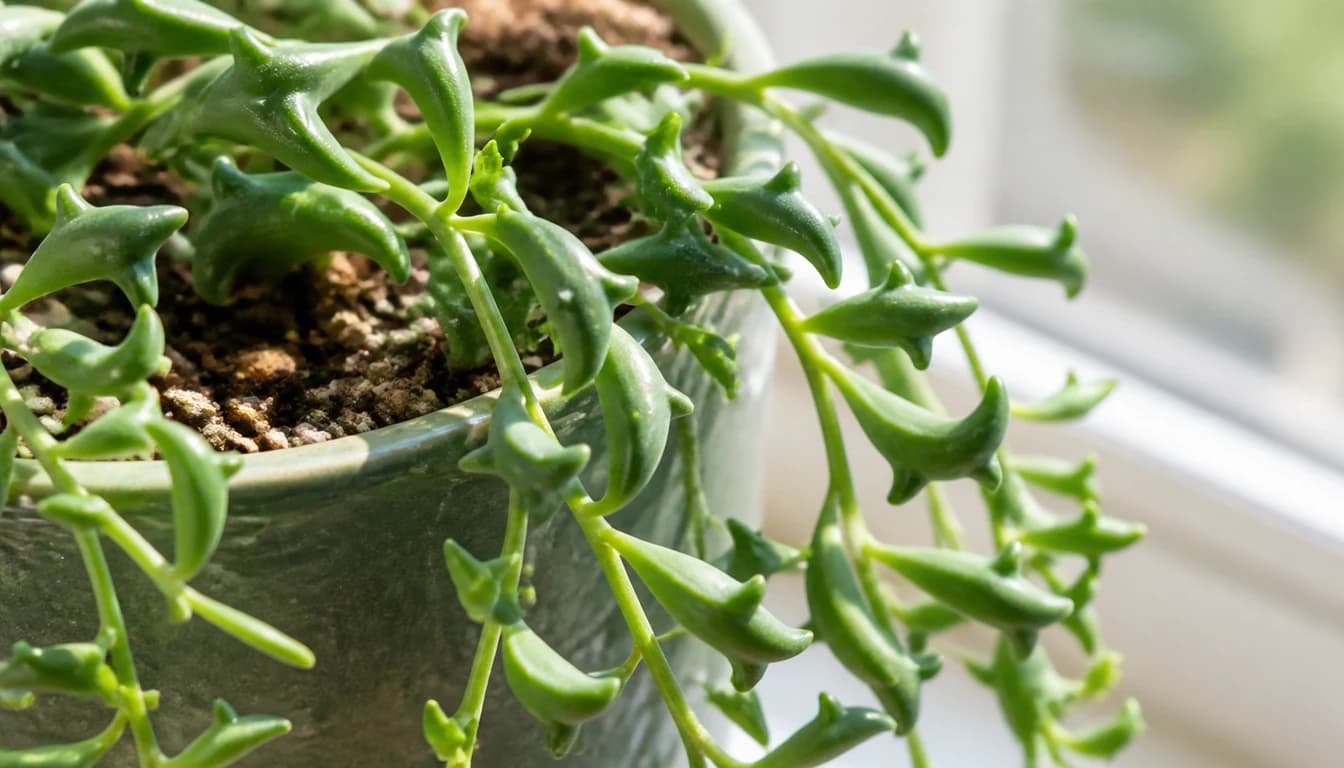
compostUse Grit So the Crown Can Breathe
A gritty succulent mix protects the crown. Use cactus mix improved with pumice, perlite, or coarse sand so water leaves quickly.
A shallow pot often works better than a deep one. Deep wet soil under a small root system makes the top look dry while the bottom stays risky.
If the pot is decorative, use it as an outer cachepot only after water has drained. A hidden puddle ruins the gritty mix you built.
Mix jobFast drainage, air around fine roots, no wet crown
Pot jobDrainage hole, shallow root zone, stable hanging point
Repot signalCrown crowded, soil compacted, or water sitting too long
Top-dress lightly with pumice if the crown stays damp after watering. Do not pile decorative stones against the stems; they hide rot and slow drying right where the plant is weakest.
When repotting, keep the crown at the same height. Burying old bare stems may seem like a shortcut to fullness, but covered succulent stems often soften before they root.
For a tougher upright succulent, Jade Plant is more forgiving. This trailing plant punishes wet mix much sooner.
content_cutRoot Short Strands Before the Crown Goes Bare
Propagation is a maintenance tool, not just a way to make more plants. Short rooted strands can refill the top before the pot becomes a bald ring.
Take a healthy strand, remove a few lower leaves, and lay nodes on barely moist gritty mix. Bright indirect light helps the strand root without drying too fast.
Lay cuttings in a spiral on the soil surface if the goal is crown repair. That gives several nodes contact with the mix and keeps new growth aimed around the pot instead of one direction.
Do not keep the propagation tray wet every day. A barely damp surface plus bright light is slower than a wet tray, but it loses far fewer cuttings.
lightbulbPin, do not bury the whole strand
Press nodes to the mix and leave leaves above the surface. Buried leaves rot before roots can help.
If you are used to String of Turtles, keep this one drier while rooting. Dolphin leaves store more water and rot faster in a wet tray.
- 1Cut a firm strand with several nodes.
- 2Let the cut end dry briefly.
- 3Pin nodes onto gritty mix.
- 4Mist lightly only when the surface dries.
- 5Tug gently after roots form.
Guide — See AlsoBest Indoor Plants for Every Room and Light LevelA practical guide to choosing the best indoor plants for your home, covering beginner-friendly picks, low light champion
chevron_rightbug_reportShriveling Is Usually Care Before Pests
Wrinkled dolphins usually mean dry roots, dead roots, or weak light. Check pot weight and roots before you assume insects.
The order matters because a plant with dead roots can look thirsty while the soil is still wet. If you water again without checking the root zone, the crown can soften before the leaves recover.
A similar dry-root decision comes up with Jade Plant, but the trailing crown on this plant gives you less time to correct rot.
infoPests have a different clue
Mealybugs can hide where trails meet the crown. Look for cottony flecks, sticky spots, or plump leaves declining beside a dirty-looking stem junction.
After that check, sort the problem by moisture and texture instead of treating every shriveled strand the same way.
- fiber_manual_recordShriveled but dry and rooted: water deeply.
- fiber_manual_recordShriveled with wet soil: inspect roots.
- fiber_manual_recordWhite cotton at the crown: isolate and treat mealybugs.
The shriveled pearls problem page is a useful succulent comparison, but this plant's crown rot happens even faster in heavy mix.
calendar_monthSummer Growth Is Useful; Winter Water Is Risky
Use the bright part of the year to rebuild the plant, not just to make longer strings. Longer days help String of Dolphins root cuttings, thicken the crown, and replace old sparse strands.
During bright months, trim the longest strands before they pull the crown open. Shorter repeated trims make a denser pot than one drastic haircut after the top is already bare.
Winter asks for brighter placement and less water. The plant may still look green, but cold windows and slow evaporation make rot easier, so leaf firmness should overrule any fixed date on an indoor plant care calendar.
Bright season jobTrim, root short strands, refresh top grit, and feed only while new plump leaves form
Low-light season jobMove closer to safe light, water less often, and keep the pot away from cold glass
Never forceDo not fertilize a weak, wet plant or push growth from a rotting crown
The seasonal rule is simple: use active growth to thicken the crown, then use low-light months to keep the roots dry and the leaves firm.
Guide — See AlsoHow to Water Succulents Without Rotting the RootsLearn how often to water succulents, what a proper soak-and-dry cycle looks like, and how light, pot type, season, and s
chevron_rightpetsKeep Trails Away From Pets and Hands
Trailing novelty plants invite touching, especially when the leaves look like little animals. Place String of Dolphins where pets and people will not brush the strands every time they pass.
A hanging basket is safer than a shelf edge in homes with curious pets. The strands snap easily, and broken pieces left on the floor are too tempting for cats or dogs that chew houseplants.
- check_circleHang the pot above shoulder-brush height in narrow rooms.
- check_circleWater over a sink, let it drain, then return it to the display hook.
- check_circleRemove broken strands from floors and pet beds right away.
Use a saucer only during watering, then empty it. A permanent saucer under a hanging succulent often becomes the hidden reason the crown collapses.
If you need a trailing plant that handles lower light and more frequent touch, String of Turtles is often easier to display. For a tougher dry-room plant with less fragile trailing growth, Aloe Vera is easier to place.
eco
Keep Exploring
Related Plants
 Houseplants
African Violet
African Violet is a windowsill bloomer that rewards steady, small-pot care. Keep water out of the crown, give bright indirect light, and feed lightly so the
 Houseplants
Parlor Palm
Parlor Palm is the small understory palm for rooms that cannot support a huge tropical tree. It grows slowly, tolerates low to bright filtered light
 Houseplants
Philodendron Brasil
Philodendron Brasil is a heartleaf philodendron with lime and chartreuse streaks. Grow it for color on a forgiving vine, but keep enough light on the nodes
quiz
Frequently Asked Questions
Why are my String of Dolphins leaves flattening?expand_more
Flat leaves usually mean weak light or stressed roots. Move the crown into brighter indirect light and check that the mix dries between waterings.
How often should I water String of Dolphins?expand_more
Water only after most of the pot dries. Soak fully, drain well, and wait longer in winter.
Why is the top of the pot going bald?expand_more
The crown is not getting enough light, or old strands have stretched. Root short cuttings back into the top during active growth.
Can I propagate String of Dolphins in water?expand_more
It is safer to root strands on barely moist gritty mix. Water propagation can rot the succulent leaves.
Is String of Dolphins pet safe?expand_more
Keep it away from chewing pets. It is better treated as a display plant, not a pet-access plant.