
Why Are My Snake Plant Tips Brown? Read the Damage Pattern
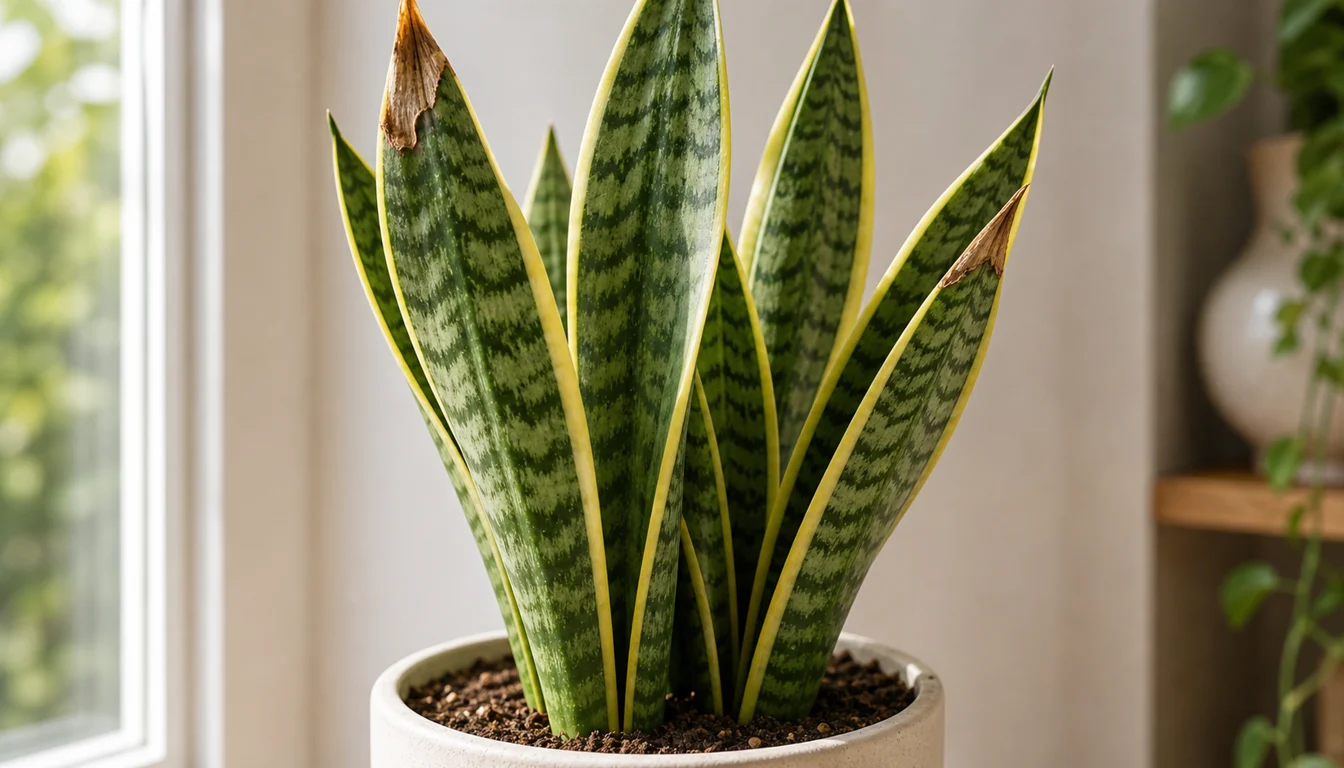
A brown tip on Snake Plant is dead tissue left by an earlier stress, but the shape and texture show whether the cause is still active.
Check the root ball, leaf base, residue, room history, and any crease before changing the watering routine or trimming the leaf.
Quick diagnosis
A past water-balance problem, salt buildup, or localized injury killed the tip
A crisp brown point on an otherwise firm leaf is usually old localized damage rather than proof that the whole plant is dying.
Check the pot before adding water. A very light compact root ball supports drought, white residue supports soluble salts, and damp mix with a soft yellow base supports declining roots.
A crease, torn edge, sun-facing patch, or cold-exposure history points away from a root-zone cause.
Open the full diagnosisWhat You Are Seeing
Snake Plant care starts with understanding that this Dracaena grows stiff water-storing leaves from rhizomes. Those leaves tolerate missed water and dry indoor air better than many tropical houseplants, but the pointed ends can still die when roots swing between extremes, salts accumulate, or the leaf is injured.
The brown part cannot turn green again because its cells are dead, so useful evidence comes from the boundary between brown and green, the condition of newer leaves, and whether the plant remains firm at soil level. Photograph that boundary before trimming to distinguish an old scar from damage that is still advancing.
Treat a dry pointed end differently from a soft base or a spot that began in the middle of a leaf, and use the tip diagnosis only when damage begins at the point. Widespread yellowing, multiple expanding lesions, or whole-leaf collapse requires diagnosis of that broader pattern rather than a tip-only remedy.
Common Causes
01 High likelihood
The root ball dried too far or stayed wet too long
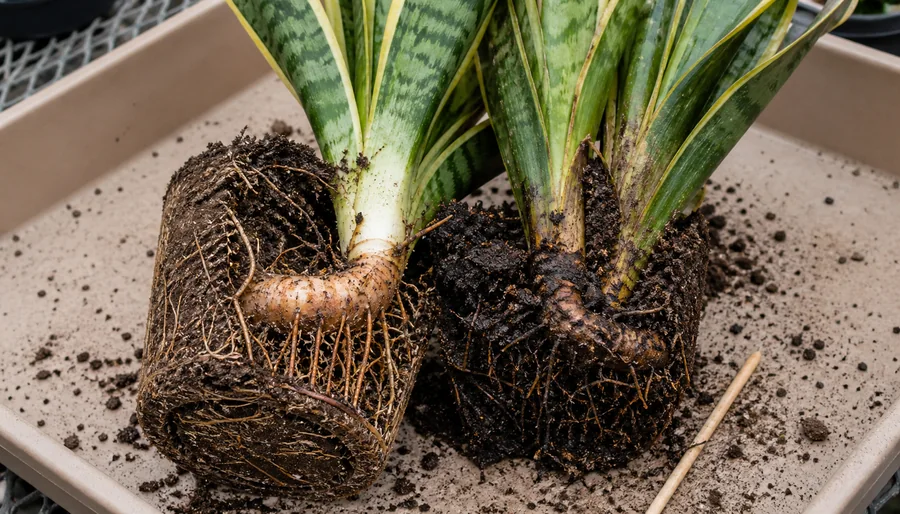
Both extremes interrupt water delivery to the pointed end of a long leaf. Repeated drought produces a light pot, dry shrunken mix, wrinkles, and crisp tissue, while oxygen-poor wet mix damages roots and eventually softens the leaf base.
How to identify it
- A dry root ball pulls from the pot edge, resists wetting, and feels much lighter than it did after a thorough watering.
- Drought-stressed leaves may develop shallow wrinkles or lose some firmness without becoming mushy at soil level.
- Overwatered mix remains cool and damp deep in the pot while lower leaves yellow or soften near the rhizome.
- Rotten roots are dark and soft or shed their outer layer, while viable roots and rhizomes remain firm.
What to do
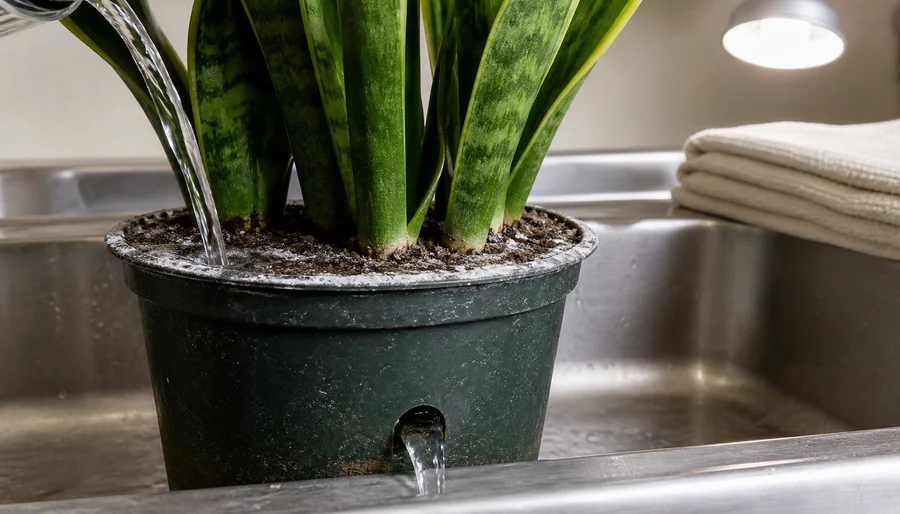
- For a dry firm plant, wet the entire root ball slowly until runoff appears, wait, then wet it again if dry pockets still repel water.
- Let all runoff escape and wait for the mix to dry through the active root zone before the next watering.
- For a wet plant with a soft base or odor, use a root-first overwatering check, remove soft roots and rhizome tissue with a clean blade, and repot only firm divisions in fresh draining mix.
- Do not use a fixed top-inch rule because pot depth, root position, season, and light determine where moisture remains.
02 High likelihood when residue is visible
Fertilizer or mineral salts accumulated in the mix
Fertilizer and irrigation water both contribute dissolved salts.
When water evaporates or small sips never carry those salts out of the pot, the concentration around roots can cause a dry burned margin or tip even while the plant receives water.
How to identify it
- A white or tan crust forms on the soil surface, pot rim, saucer, or drainage hole.
- The plant has received frequent fertilizer, concentrated feed, softened water, or repeated small waterings with little runoff.
- Tips and margins turn crisp while leaf bases remain firm and the mix has no sour odor.
- Several leaves show a similar narrow burn without a crease or one-sided exposure event.
What to do
- Pause fertilizer while the plant is stressed and remove any visible fertilizer pellets that exceed the label rate.
- If the roots are firm and the pot drains freely, leach the mix with clear water and let the runoff leave completely.
- Use fresh mix matched to the roots when compacted or heavily crusted material will not pass water evenly.
- If browning continues after root-zone and fertilizer problems are corrected, compare the response after using rainwater, distilled water, or another low-mineral source.
03 Possible, not the default
Very dry air or a heating vent increased water loss
Low humidity can contribute to crisp tips on houseplants, but Snake Plant tolerates ordinary dry rooms. This branch becomes more convincing when browning began during heated winter conditions and the leaves sit in a stream of warm air while roots remain healthy.
How to identify it
- The affected side faces a radiator, furnace register, space heater, or persistent warm draft.
- Tips and narrow margins are crisp, while the bases, rhizomes, and roots remain firm.
- The pot dries faster near the heat source than it did in the previous location.
- There is no salt crust, wet root zone, sun-bleached patch, cold contact mark, or physical crease to explain the pattern better.
What to do
- Move the plant out of direct heated airflow while keeping it in suitable light.
- Use a room humidifier only when measured room humidity is unusually low and other evidence supports dry air.
- Recheck pot moisture after the move because a cooler location may dry more slowly.
- Do not mist the leaves as a substitute for correcting root-zone watering or persistent hot airflow.
04 Medium likelihood after a location change
A sudden move into direct sun scorched exposed tissue
Snake Plants tolerate a range of light, but leaves formed in dim conditions can scorch after an abrupt move into intense direct sun. The damage usually forms on the exposed face or edge rather than advancing evenly from every tip.
How to identify it
- A pale tan or bleached patch sits on the window-facing surface below or beside the tip.
- Damage appeared after a move, a seasonal increase in sun angle, or removal of a curtain.
- Shaded leaves remain green while leaves nearest the glass carry the strongest marks.
- The root ball and leaf bases remain firm.
What to do
- Move the plant back from intense glass-amplified sun or use a sheer curtain during the strongest hours.
- Increase brighter exposure gradually if direct sun is part of the intended location.
- Leave firm green portions in place because they still support the plant.
- Do not increase watering merely because scorched tissue feels dry.
05 Medium likelihood after cold exposure
Cold glass, a draft, or transport chill injured the tip
A leaf touching winter glass or exposed during cold transport may develop dark or water-soaked tissue that later dries brown. Event history and the exposed side matter more than the final brown color.
How to identify it
- One tall leaf touches the window or sits directly in the path of a cold exterior-door draft.
- The first change was translucent, dark, or softened tissue after a cold night or trip home.
- Damage is limited to exposed tips or one side while protected leaves and roots remain firm.
- No fertilizer change, salt residue, or prolonged moisture problem matches the timing.
What to do
- Move leaf tips away from cold glass and protect the plant during winter transport.
- Keep the plant out of both cold drafts and direct heater flow.
- Wait for the boundary to stop moving before trimming the dead portion.
- Inspect the roots only if the base also softens or the mix remains wet.
06 Common on one or two leaves
The pointed leaf was bent, rubbed, or crushed
A doorway, blind cord, pet, sleeve, or moving box can crease a stiff leaf. Tissue beyond the damaged water-conducting path then dries even though the plant, roots, and care routine are healthy.
How to identify it
- A sharp fold, split edge, bruise, or scuff sits just below the brown portion.
- Only leaves that cross a walkway, touch a blind, or were handled during a move are affected.
- The brown boundary stops at the crease rather than expanding through the leaf.
- New central leaves emerge firm with intact natural points.
What to do
- Move the pot where tall leaves will not brush people, curtains, doors, or furniture.
- Support a recently bent leaf only when it remains attached and firm, but expect a severe crease to stay visible.
- Trim a stable dead tip for appearance or remove a badly split leaf at soil level with a clean blade.
- Do not change watering, fertilizer, or humidity for one clearly injured leaf.
A brown tip records damage that already happened
The pointed tip is the farthest leaf tissue from the rhizome and can be the first area lost when water delivery fails or dissolved salts injure roots. Once that tissue becomes dry and brown, correcting the cause protects remaining green tissue and future growth but does not rebuild the dead point.
Use firmness to set urgency. A firm leaf base and firm rhizome allow time to compare pot weight, deep moisture, residue, and recent events, while softness at soil level requires immediate root inspection because cosmetic trimming cannot stop decay below it.
Mark or photograph the brown boundary and wait before making several care changes.
If it remains fixed and new leaves stay clean, the event may already be over.
If the boundary moves, another tip begins browning, or a base becomes soft, the current root environment or exposure still needs correction.
Match the Damage Pattern Before Changing Care
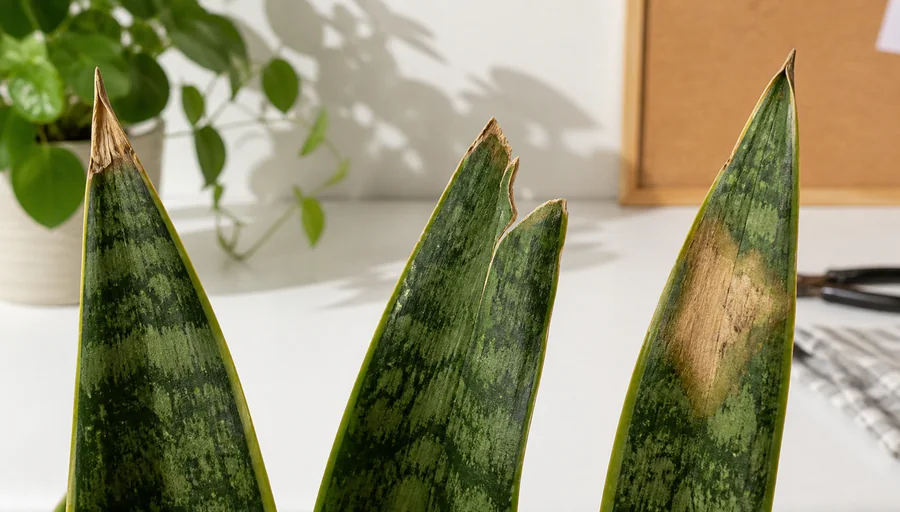
Brown color cannot settle the diagnosis by itself. Combine the shape of the damage with deep moisture, base firmness, residue, and the event that happened before the change appeared.
- Wet roots or rhizome decline
- Deep mix remains damp and a lower leaf or base is yellow, soft, or odorous. Unpot and inspect before adding water.
- Repeated drought or dry pockets
- The pot is very light, mix has shrunk from the wall, and leaves may wrinkle while bases stay firm. Rewet the complete root ball and let runoff escape.
- Soluble salts
- A narrow burned margin or tip occurs with white residue, concentrated fertilizer, or repeated watering without runoff. Pause feed and leach only through a freely draining healthy root ball.
- Warm dry airflow
- Crisp tips face a heater or vent during a dry season, but roots and bases remain firm and no stronger salt or watering evidence appears. Move the plant out of the air stream.
- Sun scorch
- A pale tan patch lies on the exposed face after a sudden light increase, often below an intact tip. Reduce the strongest exposure and acclimate gradually.
- Cold injury
- The affected tip touched cold glass or faced a cold draft and may have looked dark or water-soaked first. Prevent repeat exposure and wait for the boundary to stabilize.
- Handling damage
- A crease, torn edge, or scuff lies directly below the dead tissue on one exposed leaf. Remove the collision point and leave the care routine unchanged.
Inspect roots when pot evidence conflicts or the brown boundary keeps moving. Do not apply insecticide to a clean dry tip because mealybugs and spider mites require visible pests, webbing, cotton, stippling, or feeding damage elsewhere on the leaf.
Trim Only After You Record the Brown Boundary
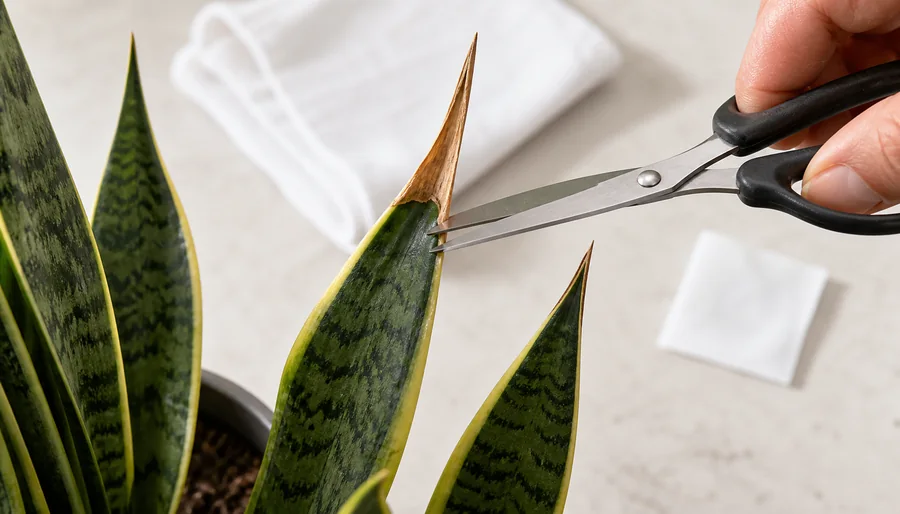
Trimming is optional when the brown tissue is dry and stable.
Take a clear photo first, clean narrow scissors, and wait if the edge is still expanding or the leaf base is soft because those signs still carry diagnostic value.
Follow the two sides of the natural point instead of cutting straight across. Remove the dry portion while leaving a very narrow brown margin, which avoids deliberately cutting a wider band of living green tissue and makes the result less blunt.
Remove an entire leaf at soil level only when it is severely split, largely dead, or soft from the base. Keep firm green leaf area whenever possible because it still captures light, and clean the blade before moving from any soft diseased tissue to a sound leaf.
Judge Recovery From New Tips, Not Old Ones
An old brown tip may look unchanged for years, so the first useful recovery sign is a boundary that stops moving. Keep the plant in one stable location and compare weekly photos instead of repeatedly watering, unpotting, or trimming it.
Longer-term proof comes from a firm rhizome and new leaves that emerge with intact points. Snake Plant grows slowly, especially in lower light or cool seasons, so the absence of a new spear for a few weeks does not prove failure when all existing bases remain firm.
Escalate to a root inspection when softness spreads downward, an odor develops, the pot never dries, or several new tips fail after the original cause was corrected. Continued isolated damage at the same doorway or window instead calls for another look at handling, sun, or temperature exposure.
Recovery Plan
The damage boundary should stabilize
After correcting the supported cause, the line between green and brown should stop advancing and the base should remain firm. The dead point will not turn green.
A moving boundary, new yellowing, odor, or softness means the diagnosis needs a root check rather than another cosmetic cut.
Firm new leaves provide stronger proof
Healthy new spears should emerge firm and retain clean points, although growth speed depends on light, warmth, season, and the condition of the rhizome. Do not increase fertilizer to force a response while roots are recovering or salt buildup is suspected.
Old scars remain part of the leaf
A trimmed tip keeps its cut outline and an untrimmed tip stays brown. Continue monitoring new growth and the original boundary, and remove a whole leaf only if it becomes mostly dead, badly split, or soft from the base.
Let the actual root ball set the watering time. Wet it thoroughly, allow the runoff to leave, and wait until the mix has dried through the root zone before watering again.
Use a container with an open drainage hole and feed only at the labeled rate during active growth. Check the rim for residue, and keep pointed leaves away from walkways, cold glass, heater flow and abrupt intense sun, so any future cause is easier to identify.
Sources
- Snake Plant: A Forgiving, Low-maintenance Houseplant, Penn State Extension
- Dracaena trifasciata, North Carolina Extension Gardener Plant Toolbox
- Keep houseplants happy with simple solutions, University of Illinois Extension
- Why does my houseplant have brown leaf tips and edges?, Iowa State University Extension and Outreach