
How to Grow a Nerve Plant Without Repeated Wet or Dry Wilting
Fittonia albivenis Acanthaceae
Nerve plant care depends on keeping its shallow root ball moist while allowing excess water to drain. Its thin patterned leaves can wilt in dry mix, but a limp plant in a wet pot needs a different response.
Pot weight, moisture below the surface, light and container airflow help explain repeated collapse. A terrarium can slow drying, while an open pot gives easier access to the root zone.
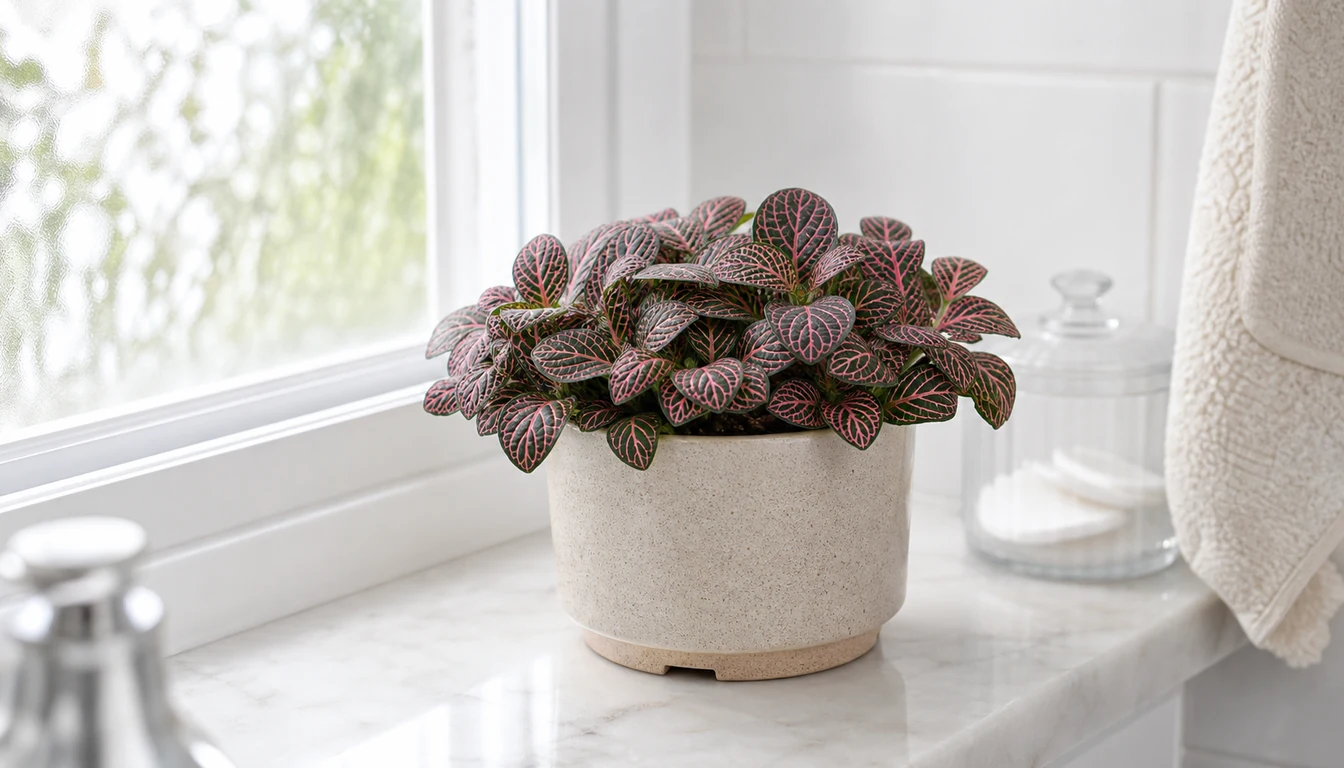
Care snapshot
Which Fittonia Is on the Shelf?
Nerve plant is Fittonia albivenis, a creeping plant from tropical South American forests, including Peru. Mosaic plant and silver nerve plant are other names used for its finely veined foliage.
Its stems spread sideways and can root as they creep, creating a low mat rather than an upright specimen. That habit suits a close-view shelf or terrarium, although the patch can eventually fill its container.
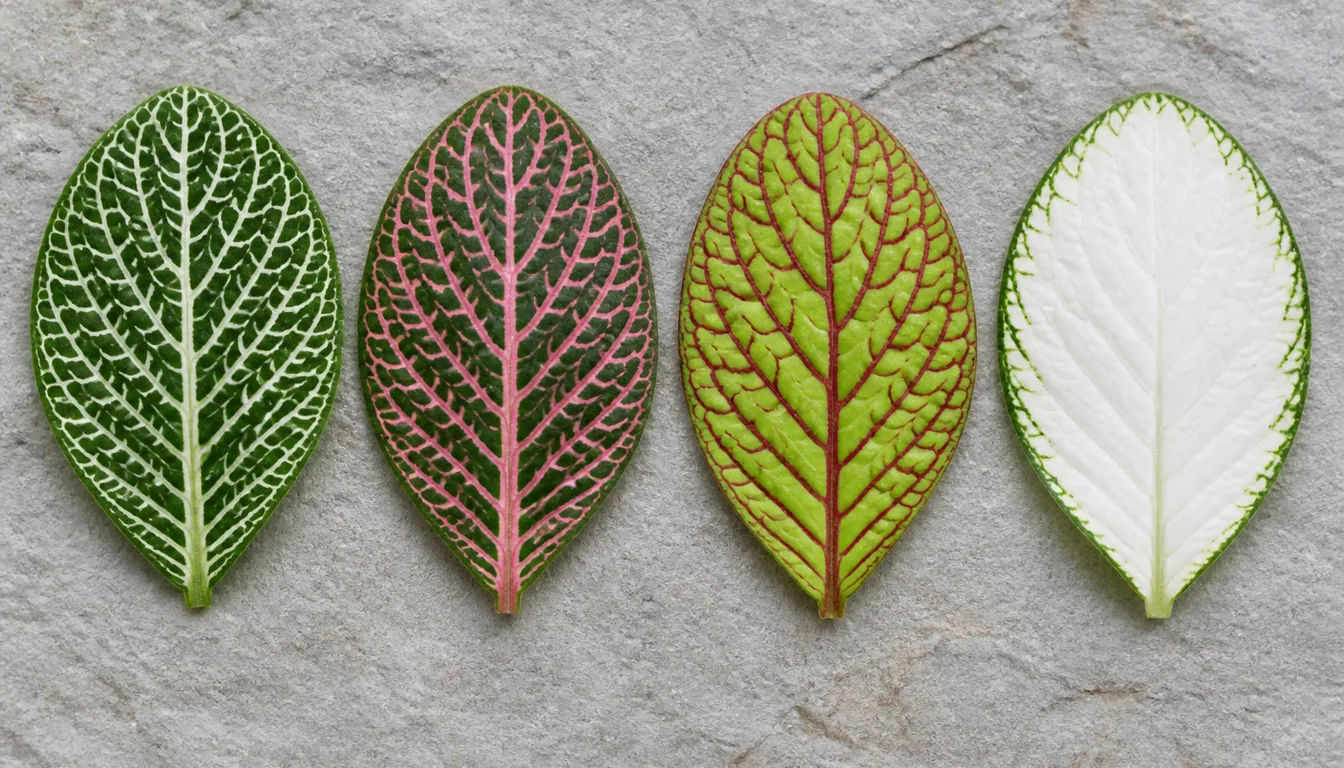
Fittonias are often sold as mixed, unnamed plants. White, pink or red veins help describe a selection, but color alone does not establish its cultivar name. A nursery label is more reliable than matching one leaf to a photograph. The named selections below illustrate the range listed by the RHS.
- White Anne
- Green leaves under bright white veining
- Mistral
- Dark green leaves with narrow pink veins
- Skeleton
- Lime-yellow leaves with red veining
- Lemon
- Lime-green leaves with white veining
- White Star
- Almost white leaves crossed by thin green veins
- Forest Flame
- Red leaves inside a dark green margin
These selections share the broad need for filtered light, suitable warmth and steady root moisture. Their watering intervals still depend on plant size, mix, container and room conditions. Choosing a vein color does not establish a watering schedule.
What Does a Nerve Plant Faint Actually Tell You?
A wilt develops when the leaves lose water faster than the roots replace it. Dry mix can interrupt that supply, but roots impaired by saturation can leave the same limp canopy above a wet pot.
Pot weight and moisture below the surface belong together. A light root ball with a dry center supports rewetting. A heavy, persistently wet pot calls for a drainage check and a look at exposure and plant condition before more water is added.
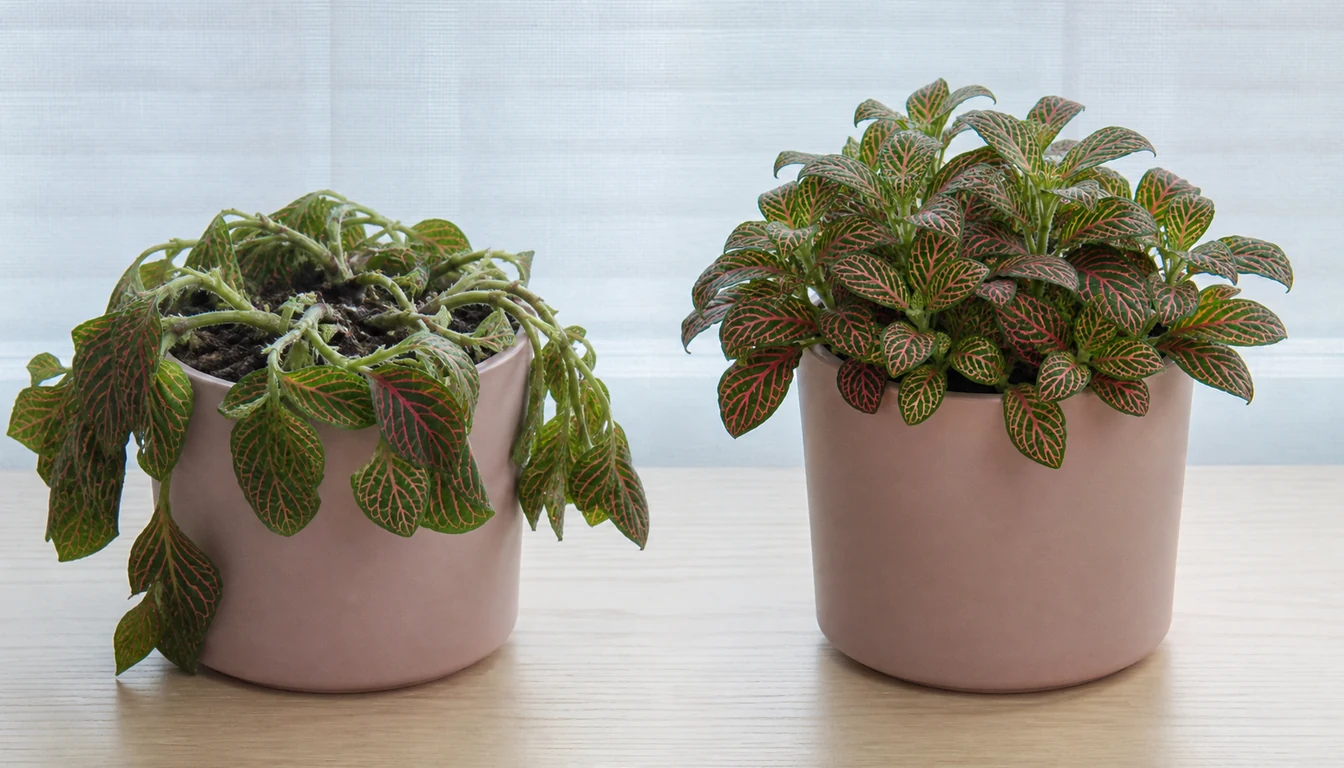
A plant wilted by drying may perk up after the root ball is evenly rewetted and excess water drains away. The response supports water shortage as a contributor, but its speed does not prove that all roots are healthy.
Persistent limpness with yellowing, a deteriorating stem base or prolonged wetness warrants closer root assessment. Cold exposure can also injure leaves, and those symptoms may develop after the plant has returned to a warmer room.
A record of pot weight, moisture and the timing of each collapse helps distinguish recurring drying from a pot that never drains properly. The nerve plant drooping diagnosis explains dry-center rewetting and the signs that justify gentle root inspection.
Why Are the Veins Fading or the Leaf Edges Curling?
Bright filtered light supports patterned growth without exposing thin leaves to strong direct sun. A north- or east-facing window can work, but season, obstructions and distance from the glass change the light that actually reaches the plant.
Long gaps between new leaf pairs can prompt a review of light, especially when growth has become sparse in a dim position. New growth is more useful for following a change than expecting existing stem gaps to shrink. Vein contrast also varies by selection, so it cannot measure light by itself.
Direct sun can leave bleached or scorched areas, while cold glass and drafts can injure thin foliage. The RHS recommends a warm position above about 63°F and avoiding temperatures below 60°F. These are indoor care guidelines, separate from outdoor hardiness zones.
Yellow leaves do not identify one cause. The RHS discusses inadequate light, while NC State also identifies overwatering as a possibility. Moisture history, drainage, exposure and signs of pests help distinguish the next useful check.
Should You Grow Fittonia in an Open Pot or a Terrarium?
An open draining pot offers easy access for moisture checks but can dry quickly in a warm room. A terrarium slows water loss from leaves and mix, which reduces watering frequency and makes excess watering harder to correct.
- Open draining pot
- Direct access to roots and drainage, but faster drying in exposed rooms
- Ventilated terrarium
- Buffered humidity, slower drying, restrained watering
- Self-watering pot
- Steady supply only when roots remain aerated
Condensation varies with temperature as well as moisture. Persistent dripping, standing water or deteriorating foliage calls for a review of watering and ventilation, but fog on the glass alone does not diagnose root trouble.
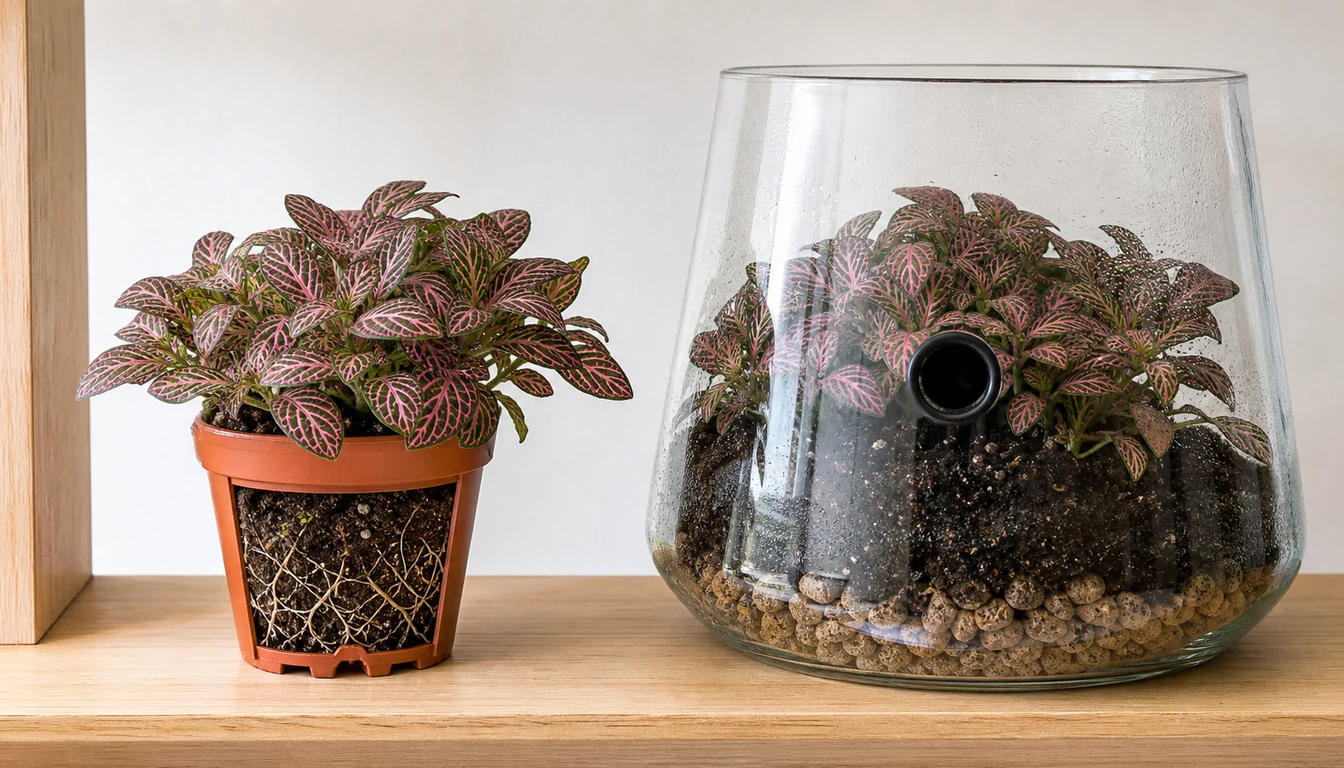
An open pot suits a room with adequate humidity and an owner who can check its small root ball regularly. A terrarium can buffer a drier room, provided the enclosure stays out of direct sun and its moisture is monitored.
A self-watering container still needs an aerated mix and a suitable reservoir design. Its label does not guarantee that the shallow roots avoid saturation, so persistent wetness or declining foliage needs attention rather than an automatic refill.
Compatible terrarium companions share broad light and humidity needs, but their roots may use water at different rates. A larger neighbor can also shade the Fittonia or crowd its leaves. Each plant and its part of the mix still need observation.
Keep the Small Root Ball Moist Without Making It Airless
Evenly moist means the root ball still feels lightly damp and springy before it becomes dusty dry, not that water remains around it continuously. Combine touch just below the surface with pot weight so one dark patch or one dry corner does not decide the whole watering event.
In an open pot, water thoroughly until excess drains, then empty the saucer and check sooner during warm dry weather. In a terrarium, add much less because humidity and enclosed air slow the loss that would normally make room for the next soak.
A wide deep replacement pot leaves unused wet mix beneath a shallow mound, which can keep roots airless while the upper surface looks ready for water. Higher room humidity slows leaf water loss more safely than adding a deeper volume of damp soil.
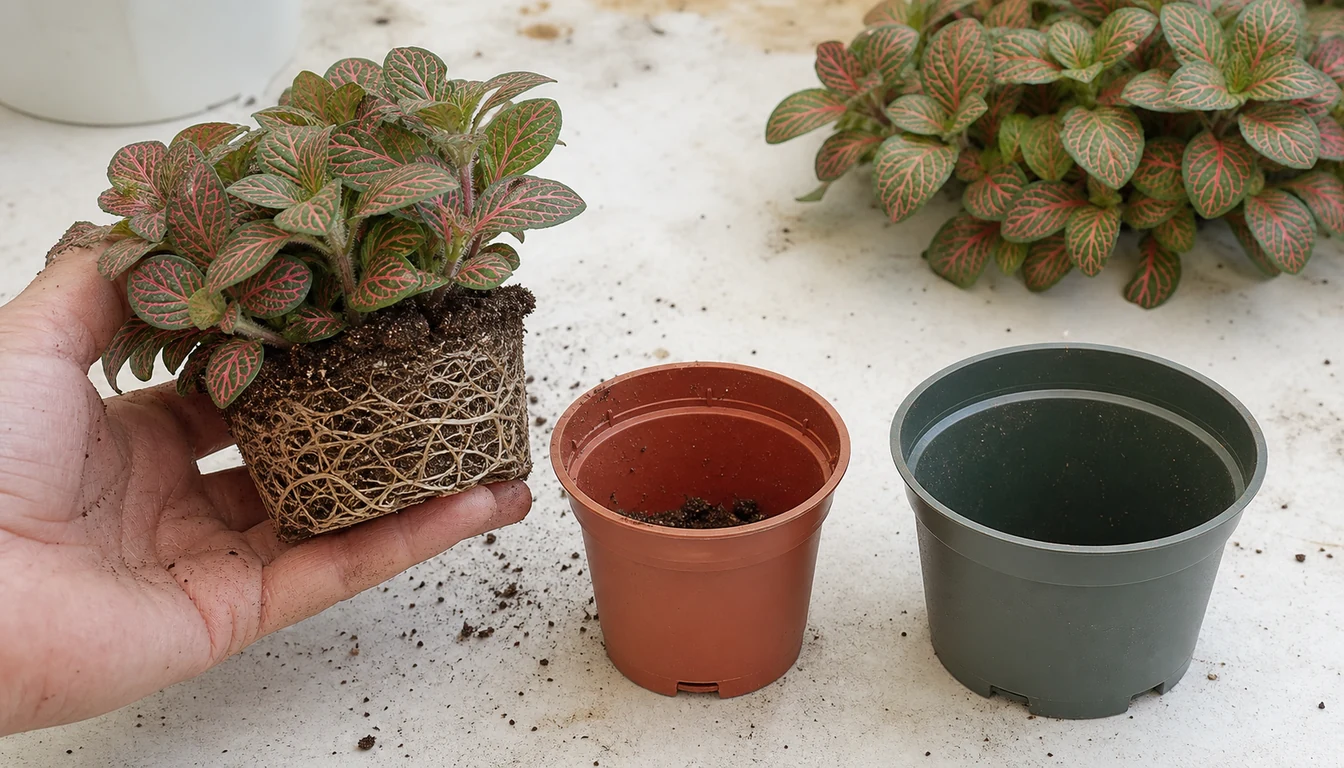
Repotting becomes useful when roots crowd the container or the mix no longer wets and drains evenly. A slightly larger draining pot suits a crowded root mass, while a plant that has lost roots may need the same size or a smaller one. A moisture-retentive houseplant mix needs both water-holding material and pore space for air.
Fittonia does not need heavy feeding. The RHS suggests a half-strength houseplant feed every two or three months, but product directions, existing fertilizer in the mix and active growth affect the amount needed. Added salts cannot correct a dry room or saturated roots.
Crisp Edges, Wet Limp Leaves, and Webbing Need Different Fixes
Texture, stem condition and root moisture help organize the inspection. Crisp margins can follow dry air, uneven moisture, salts or intense light. Root damage can also interrupt water uptake, so a dry-looking leaf edge does not prove that the pot needs more water.
Brown tissue will not turn green after care improves. New leaves without fresh injury are encouraging, while the pattern on older leaves and the history of heat, watering and fertilizer help explain what happened. Improvement alone does not identify a single cause.
Wet translucent leaves, a sour smell or deterioration at the soil line warrant a closer look at roots and recent cold exposure. A root ball can be slipped out gently when decline persists, but pale color or firm tissue alone cannot rule out disease. Extensive crown decay may leave little worth saving.
Crisp edges, firm stems
- Review dry air and heat
- Check salt and moisture swings
- Judge future leaves
Limp leaves, wet mix
- Remove standing runoff
- Inspect roots if decline persists
- Avoid cutting firm tissue just for its color
Pale stippling or webbing
- Inspect leaf undersides
- Isolate after confirmation
- Treat confirmed spider mites
One spent lower leaf
- Check new growth stays clean
- Remove it when fully spent
- Keep the routine stable
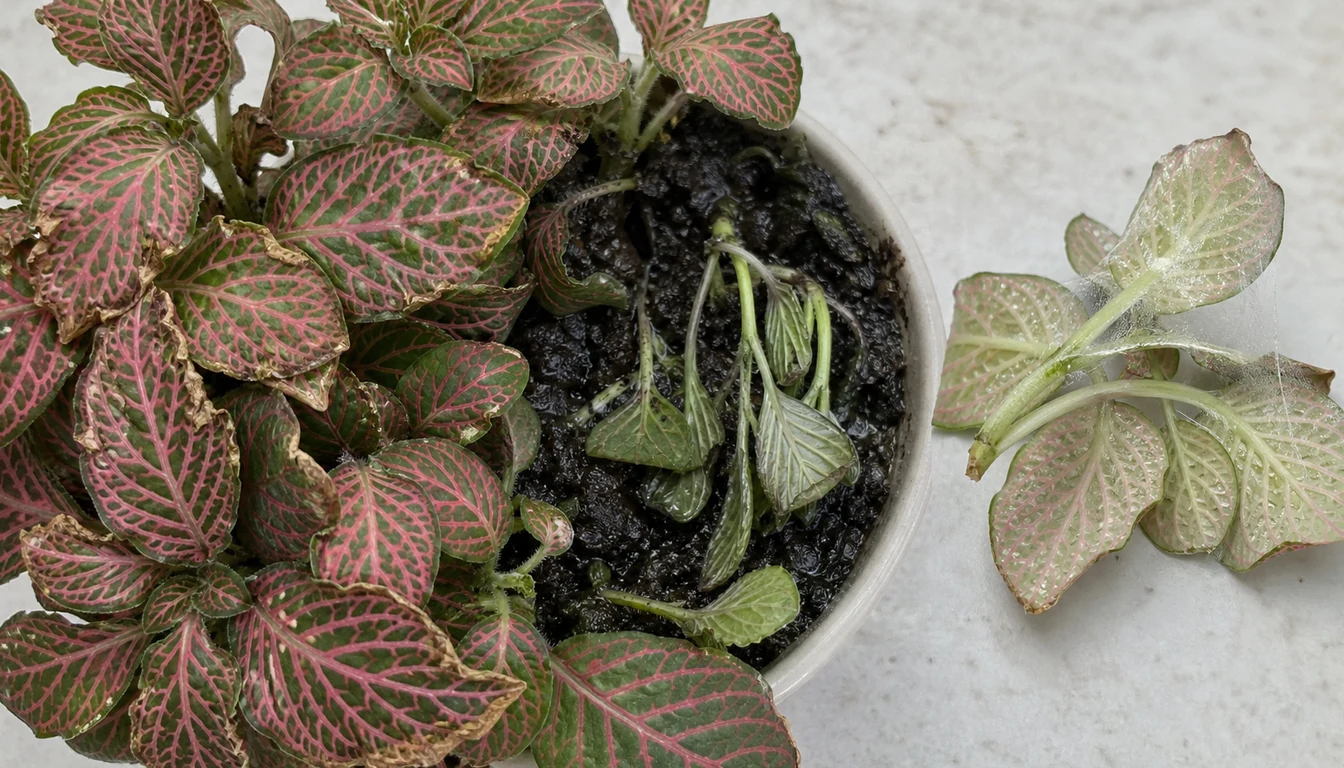
Spider mites can cause pale stippling and fine webbing. Those signs justify magnified inspection for the mites before treatment. Mealybugs may collect at stems and leaf joints, while fuzzy gray growth on declining tissue can require disease assessment.
Use the nerve plant brown-edge guide when crisp damage keeps returning after the root zone stabilizes, or use the drooping diagnosis when the crown stays limp or the moisture evidence conflicts.
Pinch Before the Stems Become a Loose Tangle
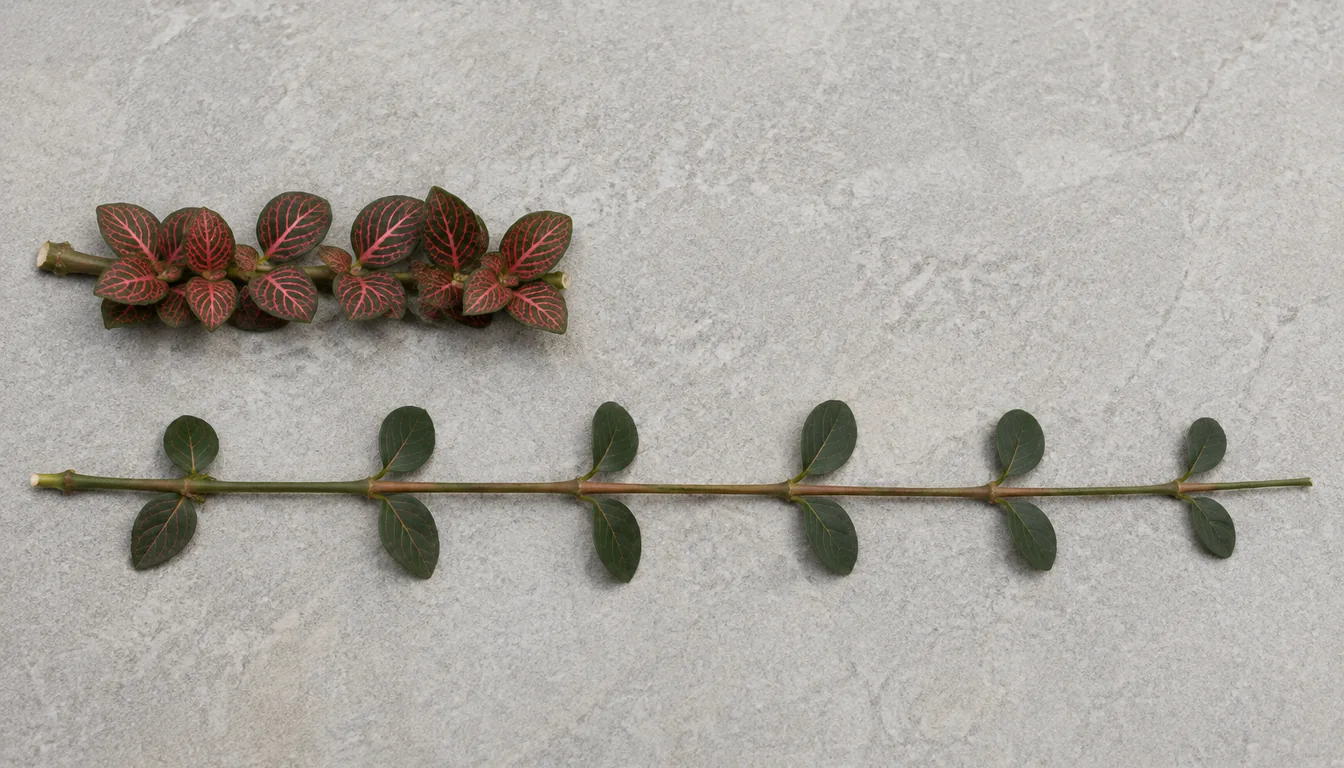
Pinch a firm growing tip just above a visible node while the stem still carries leaves close together so buds below the cut can branch and keep the mound low.
Use healthy removed tips around 2 inches long with two or three nodes, then strip leaves from the lowest node. Several short cuttings rooted together produce a fuller patch than one long stem with bare gaps.
- Select an uninjured leafy tip and cut just below its lowest usable node with a clean tool.
- Remove the lower leaves while retaining foliage above.
- Set the lower node into lightly moist propagation mix, keeping leaves above the surface.
- Keep the cuttings warm and humid without saturating the mix. Transplant after roots have developed.
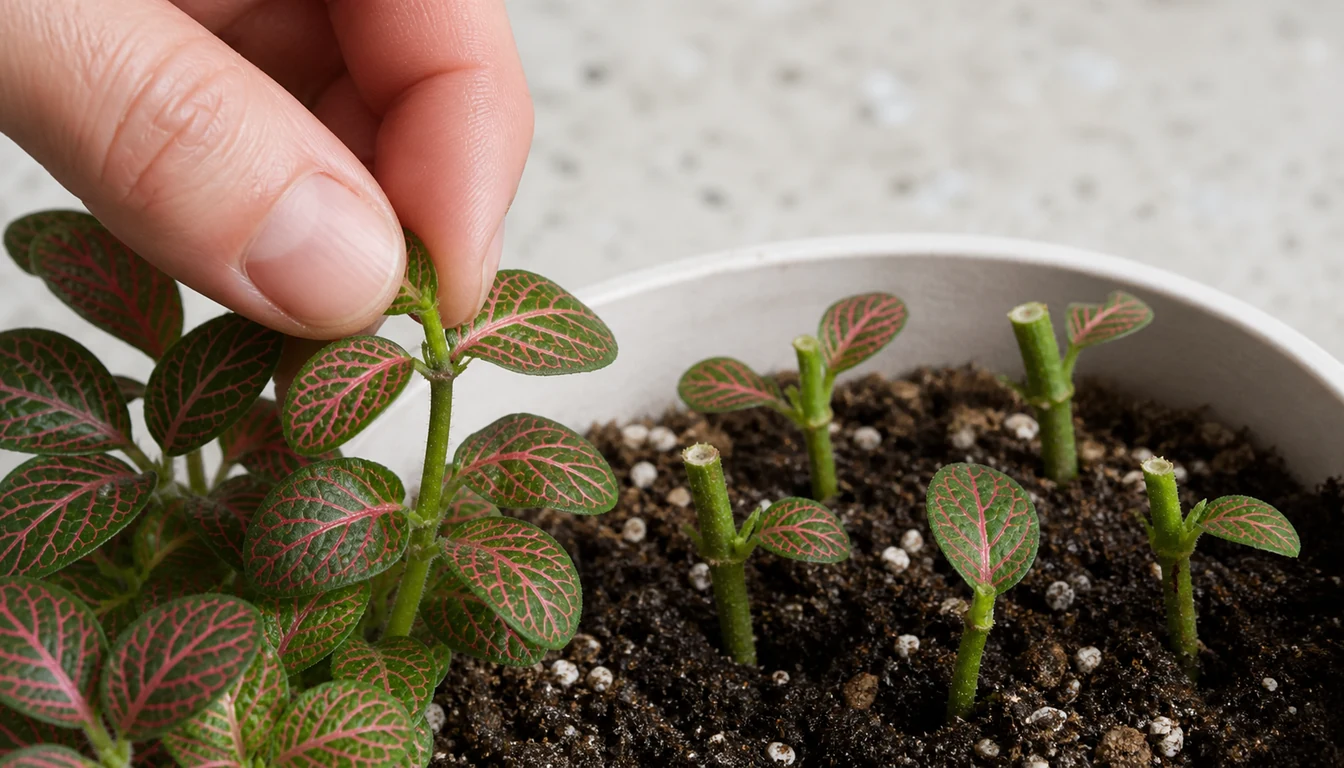
The lower node can root in moist propagation mix under humid, warm conditions. The leaves remain above the mix. A waterlogged rooting medium can damage the buried stem even when humid air helps the remaining foliage retain water.
Existing gaps between nodes will not shrink when light improves, although new branches can fill some space. Rooted tips can also fill sparse areas after they establish roots. Firm leaves alone do not show that an unrooted cutting is ready to transplant.
What Should You Do When the Center Dies Out?
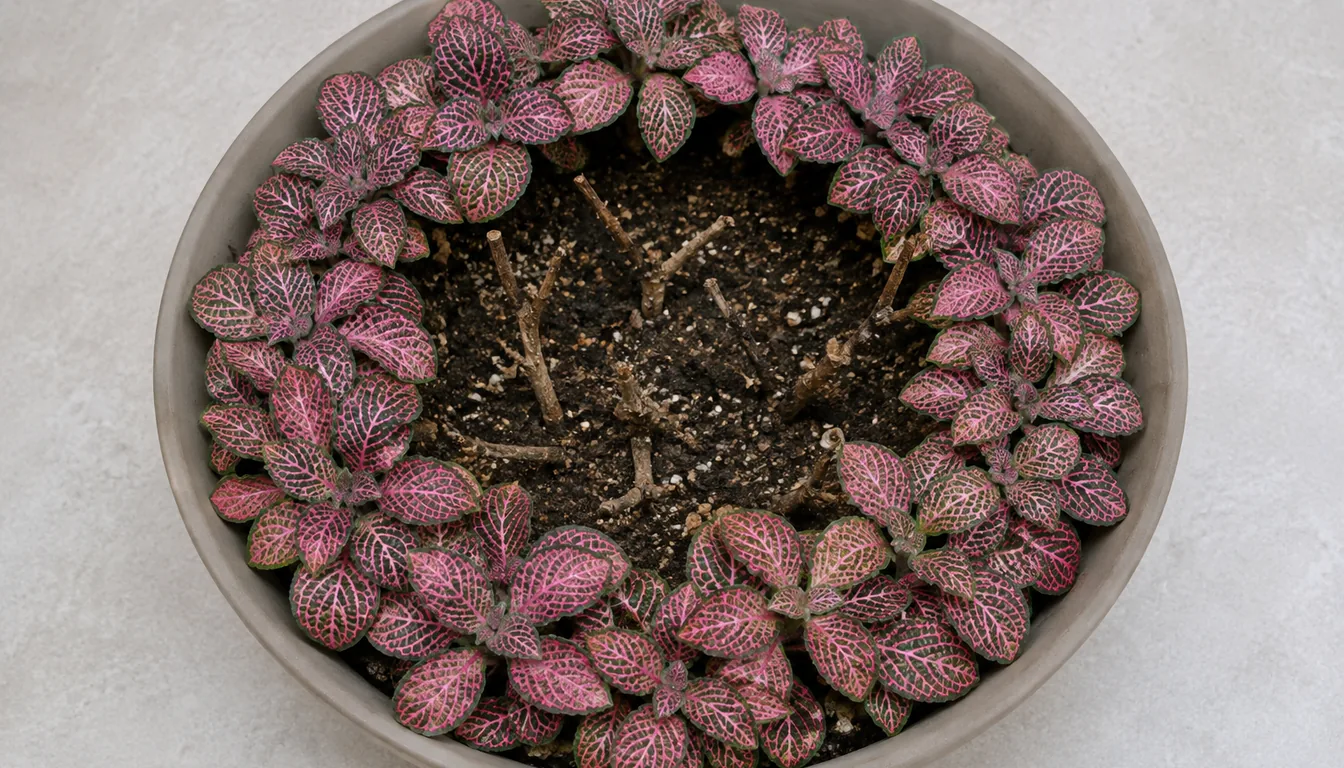
An older Fittonia can spread outward and leave a sparse center. That gradual pattern differs from sudden whole-plant wilting, but an outer ring of green leaves does not prove that the center declined from age. Soft stems, spreading damage or persistently wet mix need investigation first.
For a gradually thinning plant without signs of active decay, rooted outer portions can be divided and replanted. Each division needs its own roots and living stems. A deteriorating crown should not be treated as clean propagation material merely because some tips remain green.
- Check the center for active decay before dividing.
- Select rooted outer portions without visible injury.
- Separate them gently, retaining their root clusters.
- Replant at the original depth with space for new growth.
Set the divisions closer together in the same pot or a modest replacement, then water once to settle the mix. Protect them from direct sun and strong airflow while disturbed roots resume normal uptake.
New tips or rooted cuttings can fill remaining gaps after the divisions stabilize, but keeping the dead center wet will not restart leafless collapsed tissue.
Where Can Nerve Plant Grow Around Pets?
The ASPCA lists nerve plant as non-toxic to dogs, cats and horses under the name Fittonia verschaffeltii, which NC State identifies as a synonym of F. albivenis. That listing does not make the plant edible or cover fertilizers, pesticides or loose potting materials. A protected shelf also prevents pets from chewing or crushing the low mound.
A stable close-view shelf, bright bathroom ledge, or ventilated terrarium shows the vein pattern better than a distant floor position. Keep that spot above 60°F and away from cold glass, heat vents, and direct sun so placement does not restart the moisture swings you solved.
Sources & References
- Royal Horticultural Society - How to Grow Fittonia
- NC State Extension - Fittonia albivenis
- Purdue Extension - Indoor Plant Care
- ASPCA - Nerve Plant Toxicity
- University of Maryland Extension - Diagnose Indoor Plant Problems
- University of Maryland Extension - Winter Indoor Plant Problems
- Managing Houseplant Pests, Colorado State University Extension
Related Plants
Polka Dot Plant
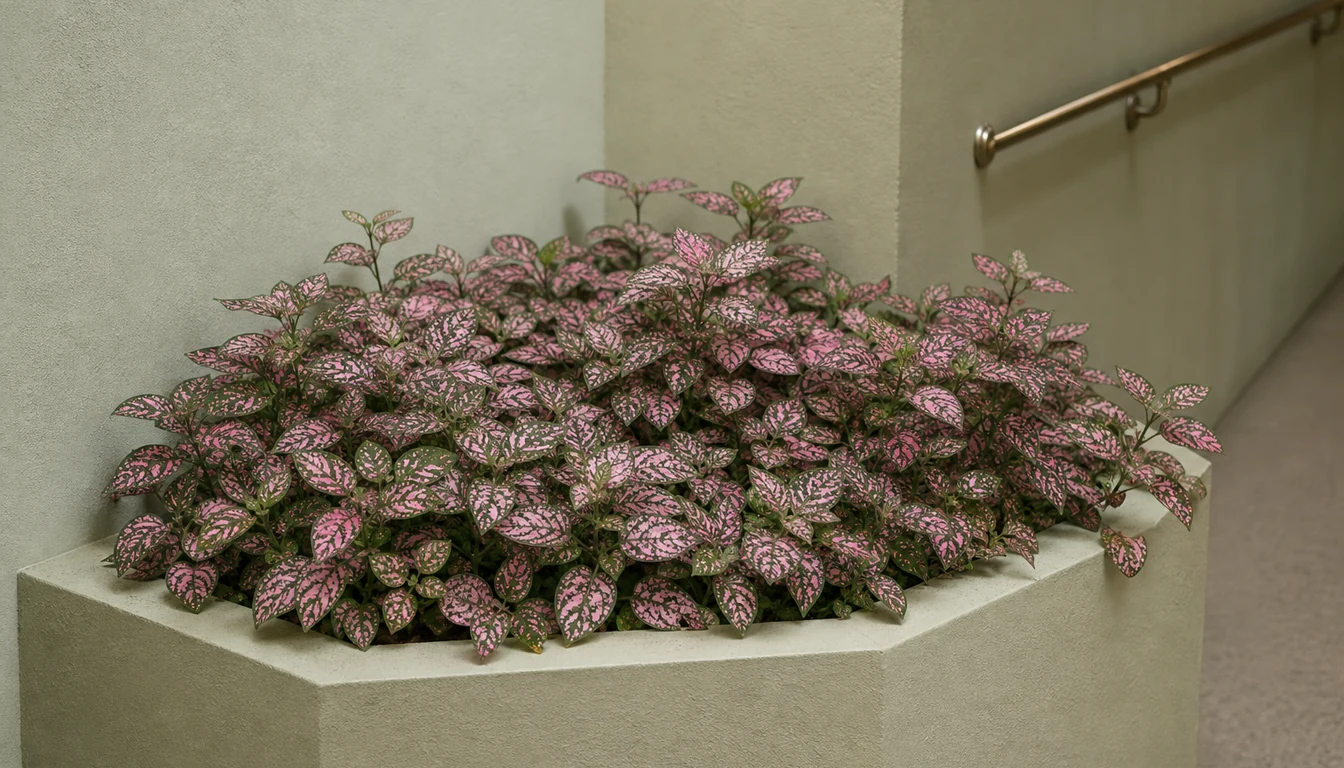
A compact tropical plant with spotted rather than net-veined foliage.
Prayer Plant
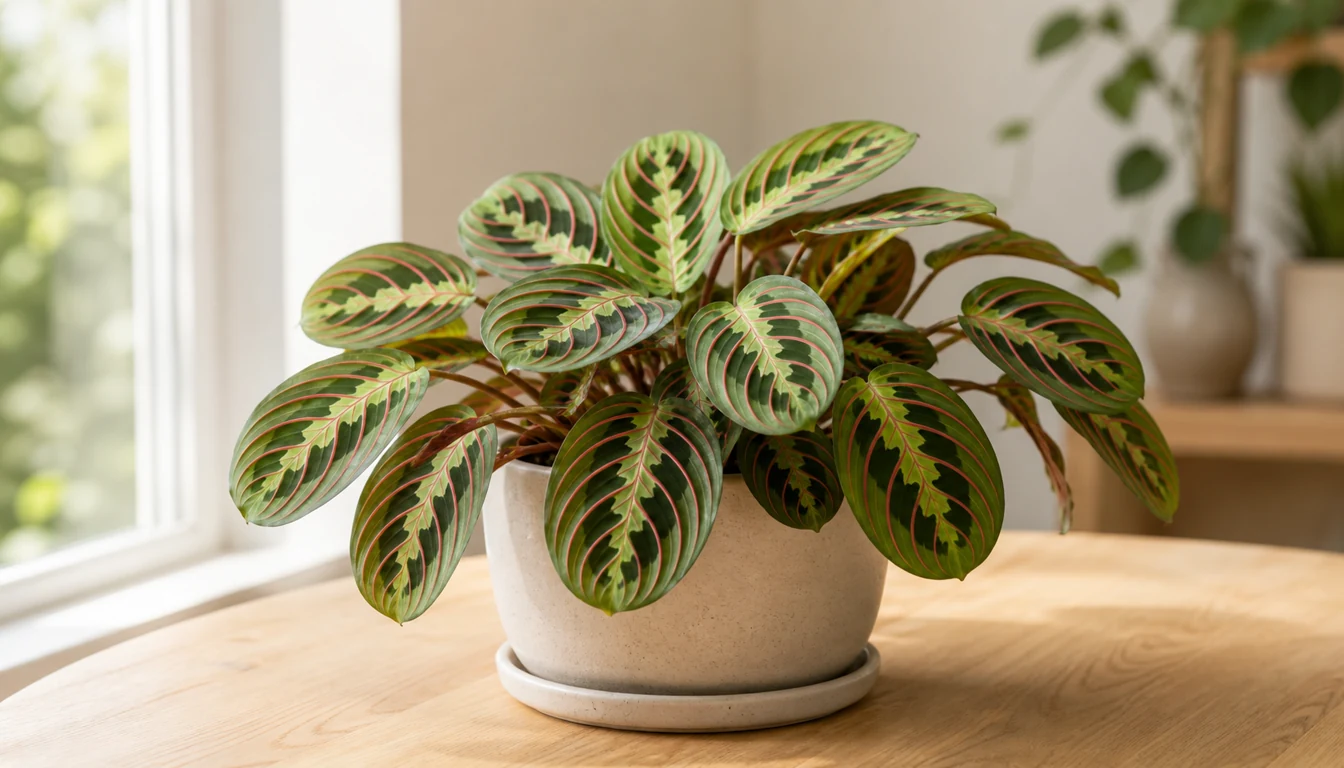
Maranta has larger patterned leaves whose angle can change through the day.
Peperomia
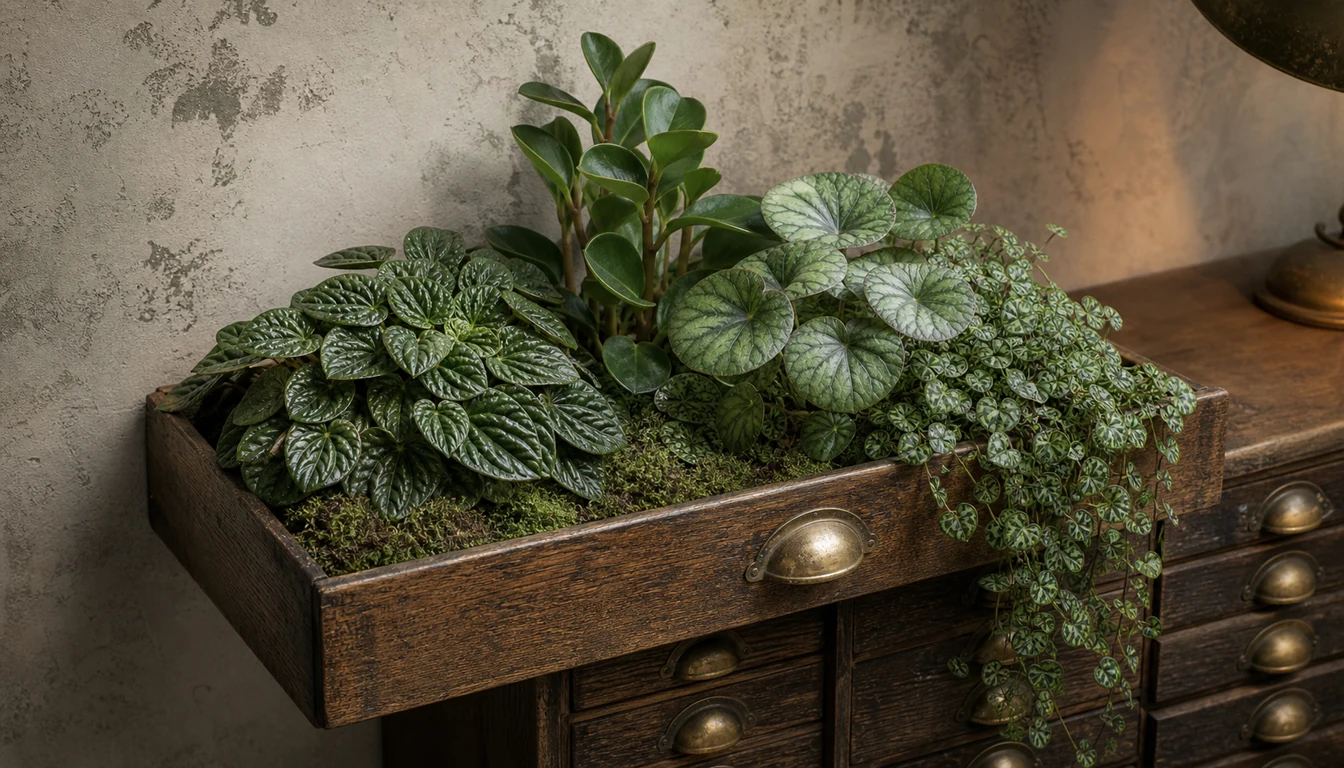
Peperomias offer varied compact forms, often with thicker leaves than Fittonia.
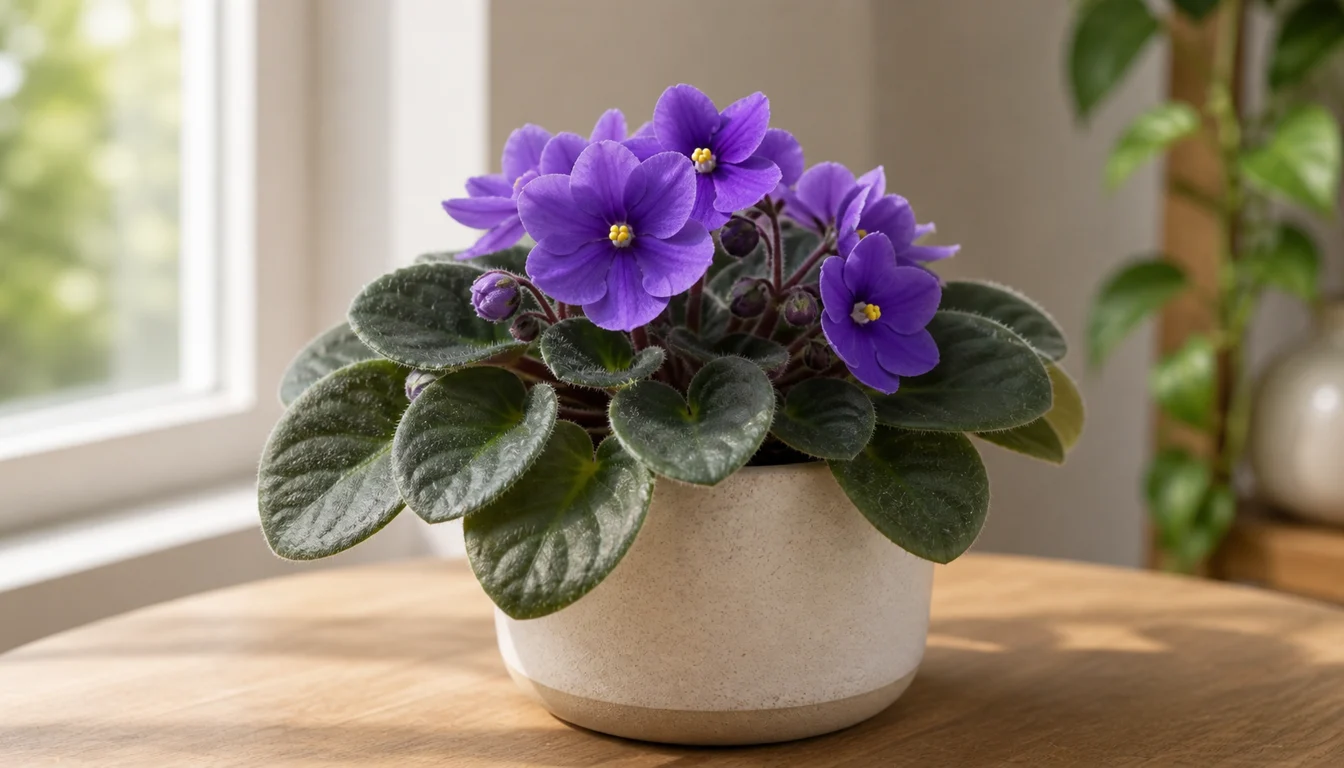
African Violet
African Violet is a windowsill bloomer that rewards steady, small-pot care.
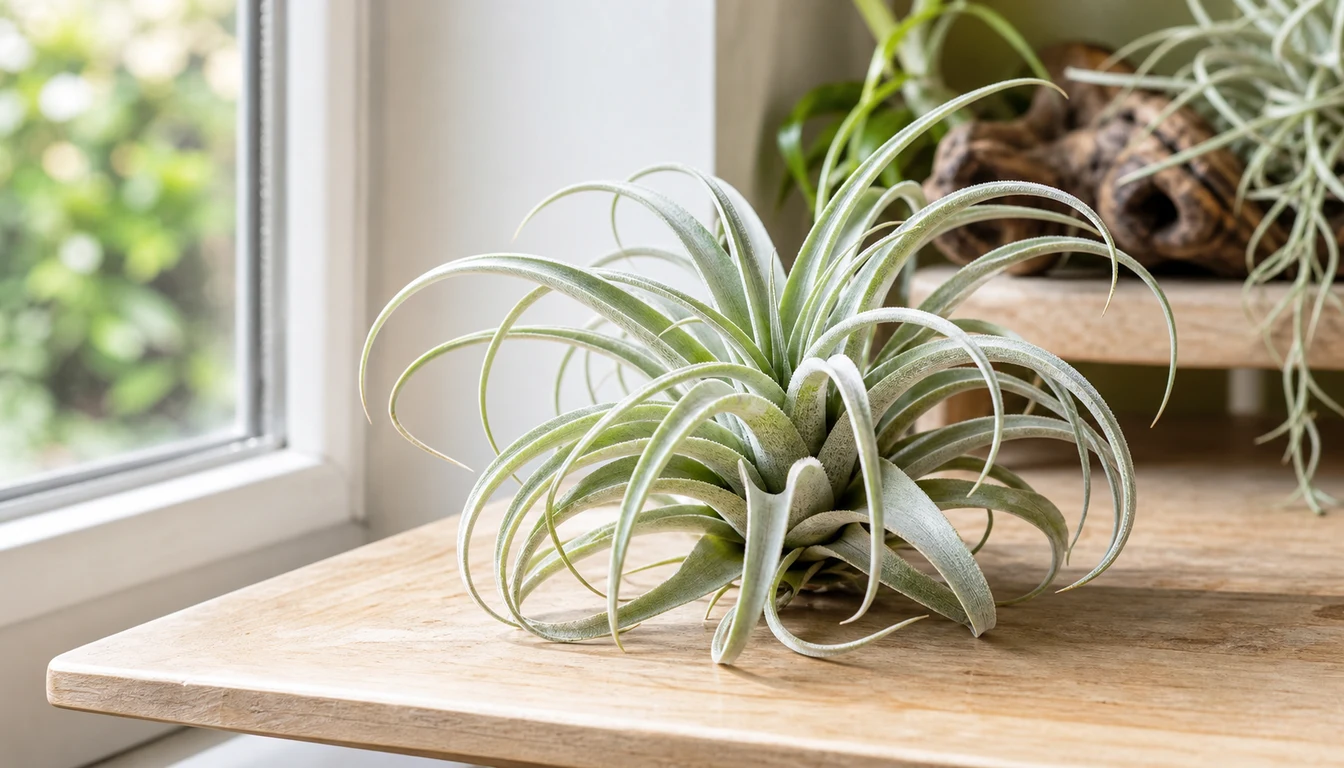
Air Plant
Air plants are living sculptures that thrive without soil, anchoring to driftwood, rocks, or shells while drawing…
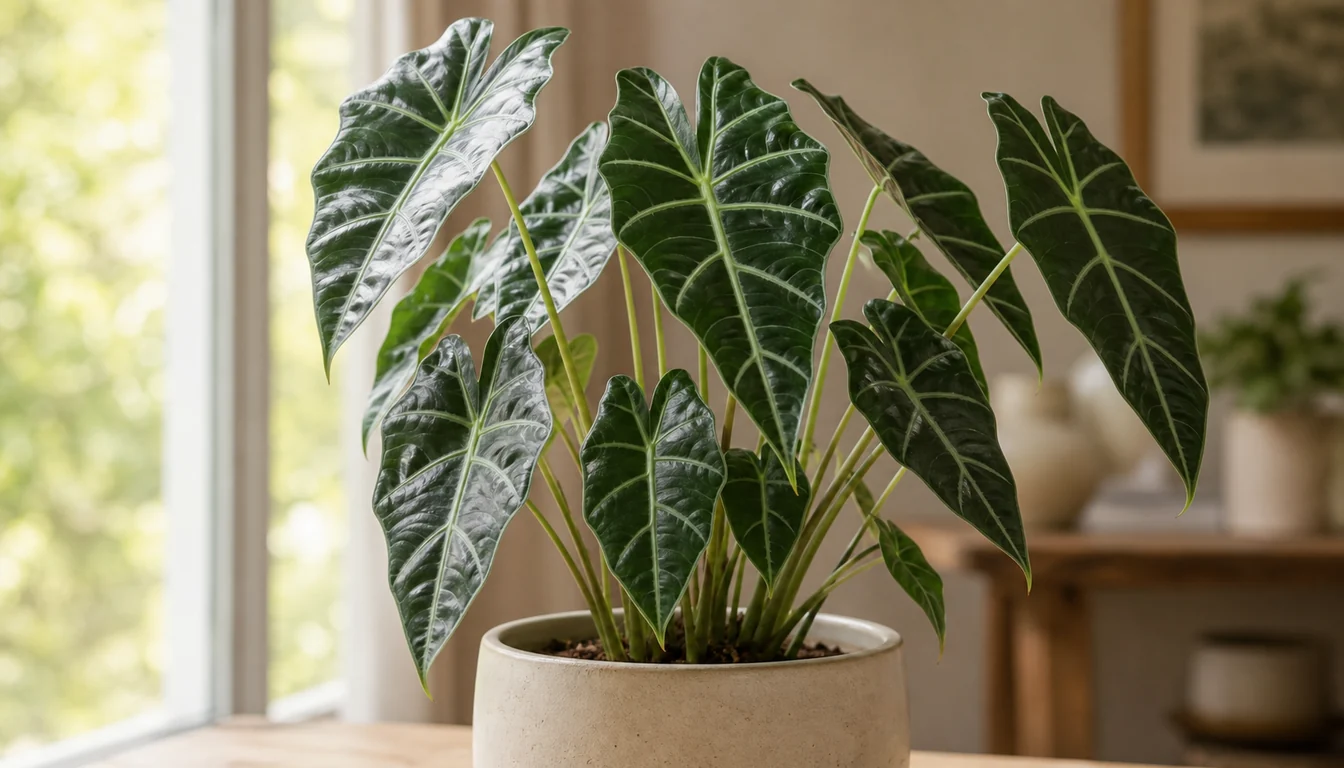
Alocasia
Alocasias include compact, textured houseplants and large elephant ears that need substantial floor space.