
Why Is My Nerve Plant Drooping Even After Watering?
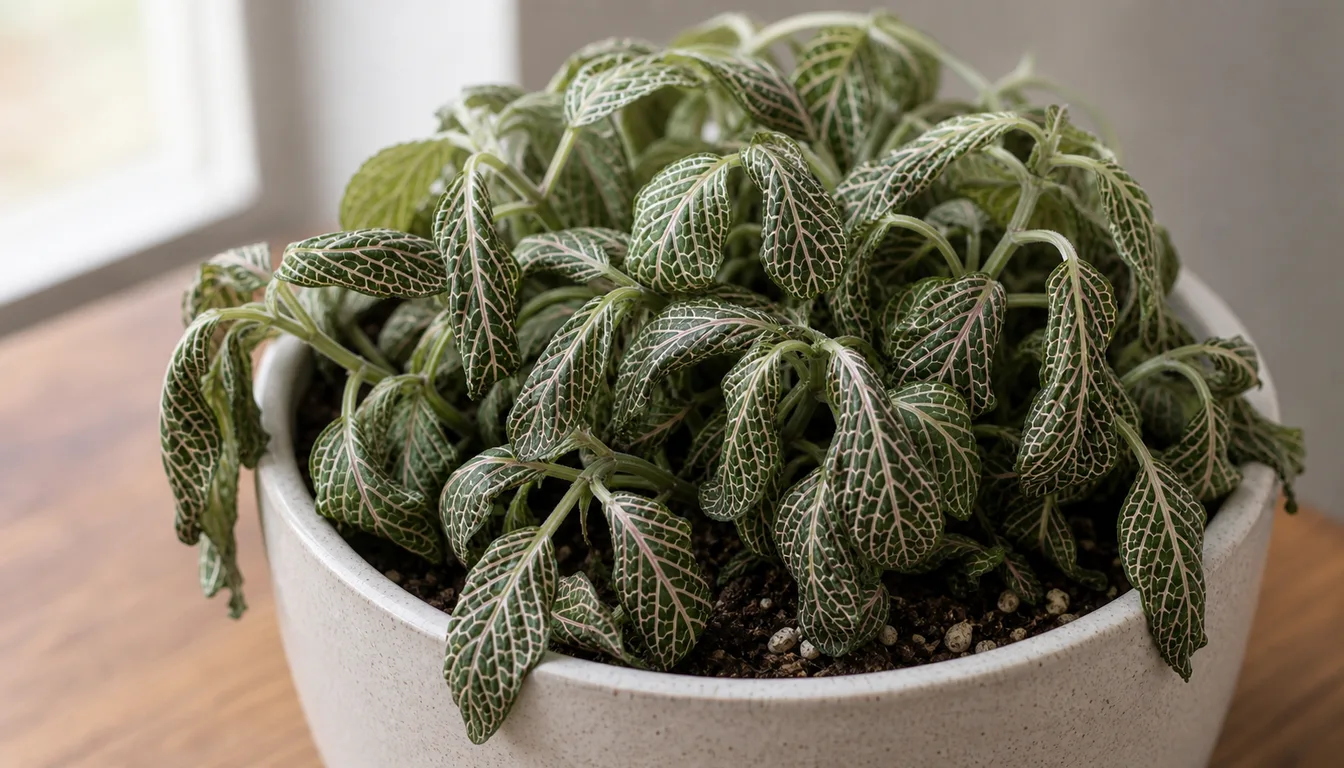
A drooping Nerve Plant needs a root-zone check before another watering. A dry center and a persistently saturated pot can leave similarly limp foliage.
Pot weight, moisture below the surface, exposure history and tissue condition help choose the next step. Neither leaf posture nor recovery speed alone proves a cause.
Quick diagnosis
Check the root ball before adding water
Lift the pot and test the mix below its surface.
A light pot with dry shrunken mix needs complete rewetting, while a heavy wet pot with yellowing or sour odor needs drainage and root triage rather than another drink.
Open the full diagnosisWhat You Are Seeing
Fittonia can wilt dramatically when its shallow root ball dries. Leaves may lift after rewetting, but flexible green tissue is not proof that the roots are undamaged or that drying is the only problem.
Do not pour water into the pot on sight. Drought and damaged wet roots both prevent enough water from reaching the leaves, yet the safe responses are opposite.
This diagnosis covers limp leaves and stems happening now. Permanent crisp margins belong to the brown-edge problem, even when an earlier dry episode produced both symptoms.
A targeted correction is easier to assess when unrelated conditions remain steady. Changing the pot, light, humidity, fertilizer and watering together adds stress and makes the response harder to interpret.
Common Causes
01 Check root moisture
A dry root ball after missed watering
Fittonia loses turgor quickly when its shallow root system runs short of water. The leaves remain mostly green and flexible, the pot becomes conspicuously light, and the whole canopy may hang over the rim before permanent tissue damage develops.
How to identify it
- The pot is much lighter than it was after the last complete watering.
- Mix feels dry below the surface and may pull away from the pot wall.
- Leaves and petioles bend without feeling soft or rotten.
- Collapse followed heat, brighter light, travel, or a longer-than-usual watering interval.
What to do
- Move the plant out of direct heat while you rewet the root ball.
- Apply water slowly in several passes until the center accepts it.
- Let all runoff leave through the drain holes and empty the saucer.
- Recheck leaf posture over the next several hours.
- Resume watering from pot weight and root-zone moisture rather than a rigid weekday.
02 Check after severe drying
Water bypassing a shrunken root ball
Dry peat-based mix can shrink and become difficult to rewet. A quick pour then runs down the gap beside the pot wall and out the bottom, so visible runoff creates the false impression that the dry center received water.
How to identify it
- A clear gap has opened between the root ball and the container.
- Water exits almost immediately while the pot remains light.
- The center feels dry when checked after apparent watering.
- Droop changes little after one fast top watering.
What to do
- Set the nursery pot in shallow lukewarm water so moisture can wick upward.
- Remove it when the center feels evenly moist rather than leaving it submerged indefinitely.
- Drain the pot completely before returning it to a cover pot.
- Check that the root ball has expanded back toward the container wall.
- Replace badly collapsed or water-repellent mix after the plant regains turgor.
03 Check persistent wetness
Saturated mix starving roots of oxygen
Roots need air as well as water. Constant saturation displaces oxygen, stops fine-root growth, and can make the canopy wilt while the pot still feels heavy because impaired roots cannot move water into the leaves.
How to identify it
- The pot stays heavy and the mix remains wet for many days.
- Lower leaves turn yellow while the canopy stays limp.
- Water stands in a saucer or sealed cover pot.
- The container has blocked or absent drainage holes.
What to do
- Empty standing water and clear every drainage opening.
- Pause watering while the active root zone moves toward lightly moist.
- Increase gentle air movement around the pot without blasting the leaves.
- Check the roots only if wilt, wetness, and plant decline persist together.
- Use a freer-draining houseplant mix when the present mix stays dense and saturated.
04 Check when wet wilt persists
Root or crown rot
Rot is more than moist soil. It produces dying tissue that cannot recover simply by drying the surface, and severe damage may continue upward into the crown or lower stems.
How to identify it
- Roots collapse or lose their outer layer when gently handled. Dark color alone cannot establish rot.
- The mix or lower stem smells sour or decayed.
- The crown has soft, collapsing tissue. A firm crown does not exclude fine-root disease.
- Wilt persists with yellowing even after excess water can drain.
What to do
- Isolate the plant and remove it from the pot when the evidence agrees.
- Cut only confirmed soft dead roots with a disinfected tool.
- Preserve firm roots while assessing the whole plant. Color or firmness alone does not certify disease-free tissue.
- Repot the smaller surviving root mass in clean airy mix and a proportional container.
- Do not assume green tips from a decaying crown are clean propagation material. Extensive decay may justify disposal or diagnostic help.
05 Exposure dependent
Heat or intense-light water loss
Hot glass, direct sun or a heating vent can make Fittonia leaves lose water faster than roots replace it. The root ball may still be lightly moist, and foliage closest to the exposure may be affected most.
How to identify it
- Droop is worst during the hottest or brightest part of the day.
- Leaves nearest the window or vent lose posture before protected growth.
- The root ball remains lightly moist, but this does not by itself exclude a root problem.
- Pale or crisp exposed patches appear if the stress continues.
What to do
- Move the plant beyond direct sun or hot moving air.
- Keep it in bright filtered light while posture recovers.
- Do not flood a still-moist pot to compensate for leaf heating.
- Judge the new location across several daytime heat cycles.
06 Exposure dependent
Cold draft or chilling
Fittonia is a warm tropical plant, so contact with cold glass or a sudden draft can disrupt cells and water movement. The effect can appear quickly even though the mix is neither dry nor saturated.
How to identify it
- Collapse followed an open door, cold night, air conditioner, or contact with glass.
- The side nearest the cold source is most affected.
- Pot moisture and weight remain within their usual range.
- Chilled tissue may become translucent or dark after the initial wilt.
What to do
- Move the pot to a stable warm position away from the draft.
- Keep the root zone normally moist without forcing extra water.
- Wait for injured tissue to declare its boundary before trimming.
- Discard a leaf only when it becomes soft, dark, or mostly dead.
07 Timing dependent
Root disturbance after repotting
Fine Fittonia roots can be broken during repotting, divided from their original mass, or left with poor contact against new mix. The damaged root system then supplies less water until surviving roots reconnect and grow.
How to identify it
- Wilt began within a day or two of repotting or division.
- The plant rocks loosely instead of sitting firmly in the new mix.
- The new pot is much larger and its outer mix stays wet.
- Recent root breakage or poor contact with the mix fits the timing, though firmness alone cannot rule out disease.
What to do
- Settle airy mix gently around the existing roots without compacting it hard.
- Keep the plant in stable filtered light while roots recover.
- Water according to moisture around the old root mass, not the wet outer pot alone.
- Avoid fertilizer or repeated repotting while the plant is stressed, unless a continuing drainage or pot-size problem requires correction.
08 Evidence dependent
Heavy sap-feeding pest damage
Spider mites, mealybugs, scale, and other sap feeders can weaken a Fittonia enough to wilt. Pests are not the first assumption because each leaves visible evidence beyond a limp canopy.
How to identify it
- Pale stippling or fine webbing appears under leaves and along veins.
- Cottony insects collect at leaf joints or stems.
- Fixed tan or brown bumps cling to stems or leaf undersides.
- Several nearby plants show related feeding evidence.
What to do
- Isolate the affected pot and inspect neighboring plants.
- Confirm the pest with magnification before choosing a product.
- Rinse or wipe foliage gently when the plant can dry promptly.
- Use an indoor-plant treatment labeled for the confirmed pest and follow its interval.
- Keep moisture stable while damaged foliage and new growth are monitored.
Why Can Dry and Wet Soil Both Make Fittonia Droop?
Leaves stay firm when roots replace the water lost through their surfaces. A dry root ball limits the available water, while persistent saturation can limit oxygen and damage the roots that take it up.
That shared result explains why opposite root conditions can produce similar posture. Weight and moisture below the surface help assess the pot, but they do not identify a pathogen or explain all possible injury.
A response after rewetting is useful evidence, not a timed diagnostic test. Recovery varies with the extent of injury and the conditions around the plant. A slow response does not automatically prove root rot, and a fast response does not certify that all roots are healthy.
Heat, cold, recent disturbance and pest evidence can change the explanation. Those possibilities matter when their timing and physical signs fit, even if a moisture problem is also present.
Is Your Nerve Plant Drooping From Too Much or Too Little Water?
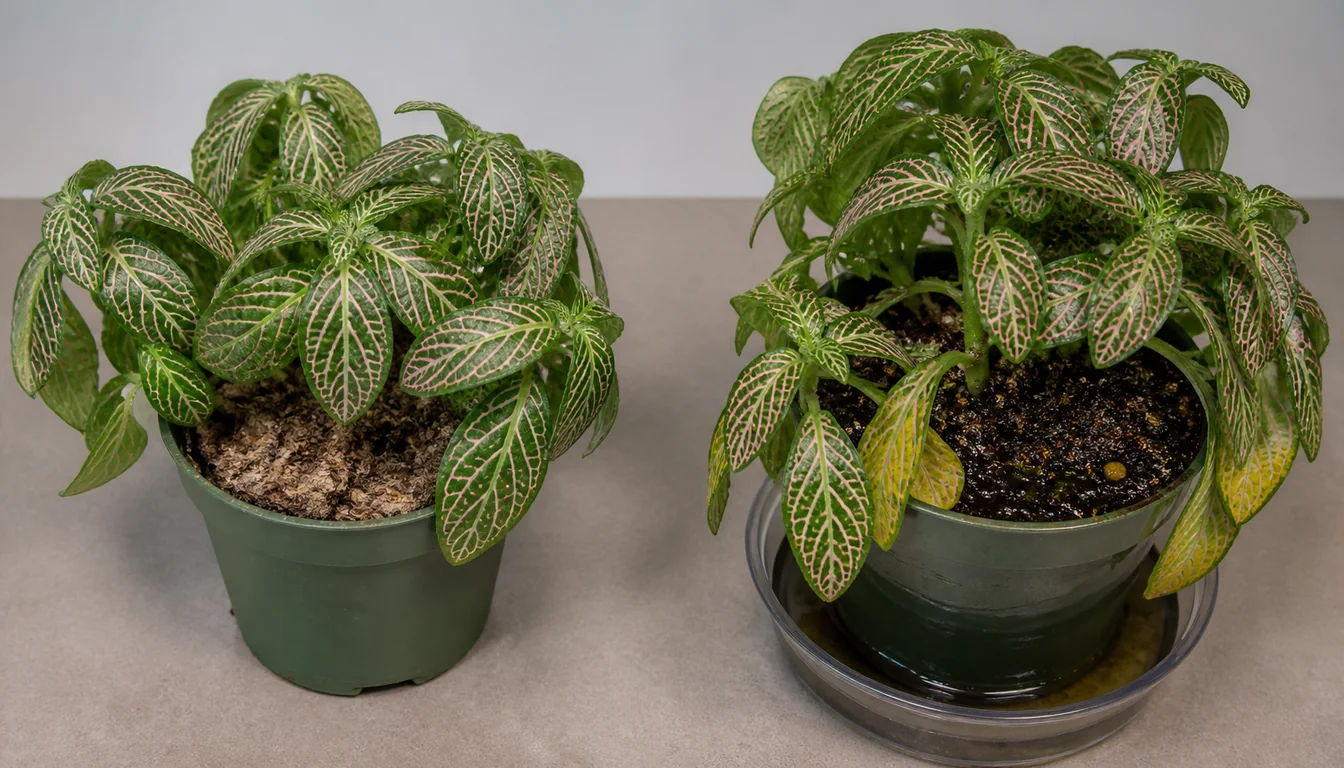
Lift the container before changing anything. Compare its weight with the freshly drained pot if you know that reference, then test the mix near the center instead of relying on the exposed surface.
A very light pot, a gap at the wall, and flexible green leaves make the dry branch coherent. A heavy pot with prolonged wetness makes the wet branch coherent, especially with yellow lower leaves or sour odor.
When the evidence conflicts, push a clean wooden skewer beside the root mass and examine it after several minutes. Damp dark material from below warns against adding water merely because the top looks dry.
Rewet a dry center and remove standing runoff from a wet pot. If the moisture evidence conflicts, another gentle check is preferable to repeated soaking. An uncertain cause is still a reason to remove obvious heat, cold or standing-water exposure.
Dry branch
- Pot unusually light
- Mix shrinks from wall
- Leaves flexible and green
Wet branch
- Pot remains heavy
- Yellowing or odor
- Soft roots or crown
Uncertain branch
- Check below surface
- Review exposure timing
- Remove obvious exposure hazards
How Do You Rewater a Severely Dry Nerve Plant?
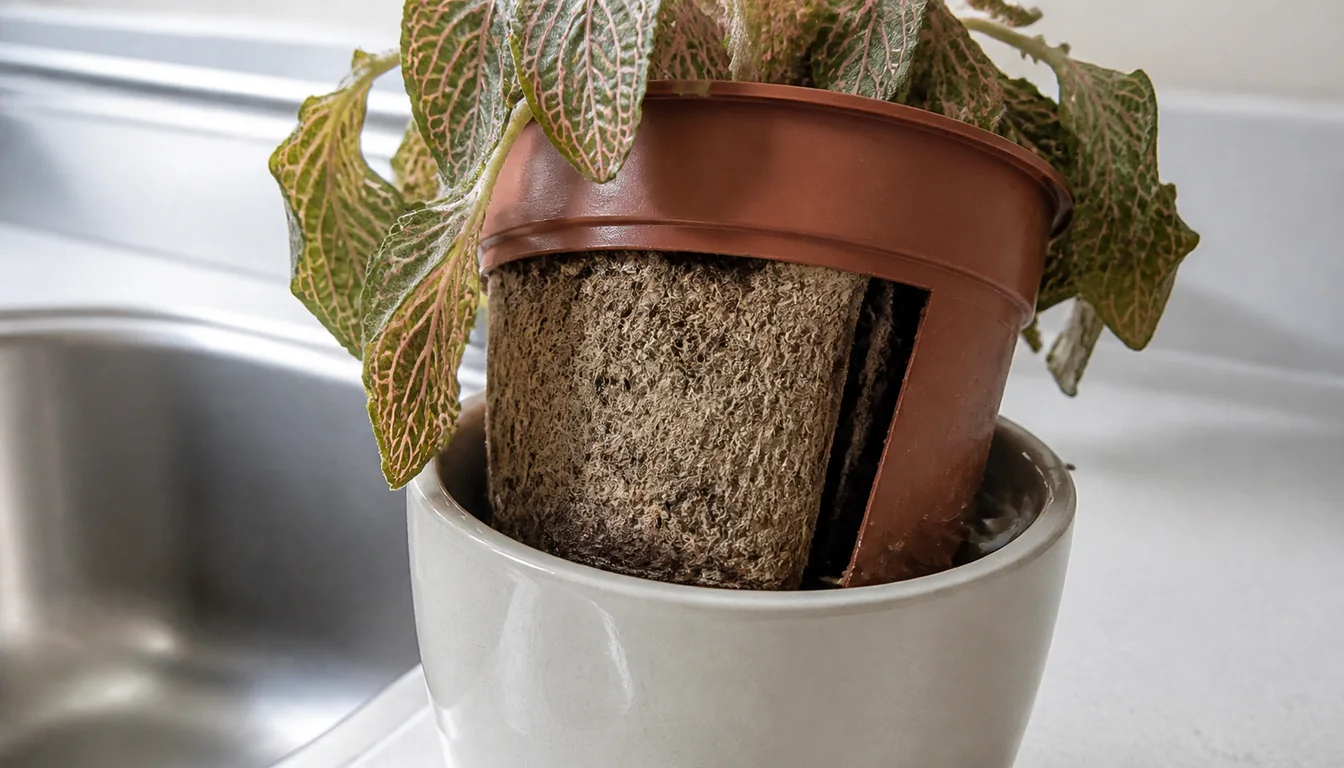
Watch what happens during the first slow pour. Water that disappears along the wall and exits immediately may have bypassed a contracted root ball rather than soaking through it.
Apply several small top passes or place the nursery pot in shallow lukewarm water. Let moisture wick upward until the center feels evenly moist and the pot has gained substantial weight.
Remove the pot from the soaking container and let it drain completely. Bottom soaking can help rewet a water-repellent center, but leaving the pot standing in water risks oxygen loss around the roots.
Follow posture after rewetting without fertilizing or automatically repeating the soak. Improved firmness supports a water-supply problem, but there is no recovery deadline that distinguishes healthy from diseased roots. Persistent decline calls for a review of exposure and root condition.
- Confirm a light pot and a dry center.
- Rewet slowly until the center accepts water.
- Drain every bit of standing runoff.
- Follow root moisture and leaf posture without using a fixed recovery deadline.
When Should You Check a Drooping Fittonia for Root Rot?
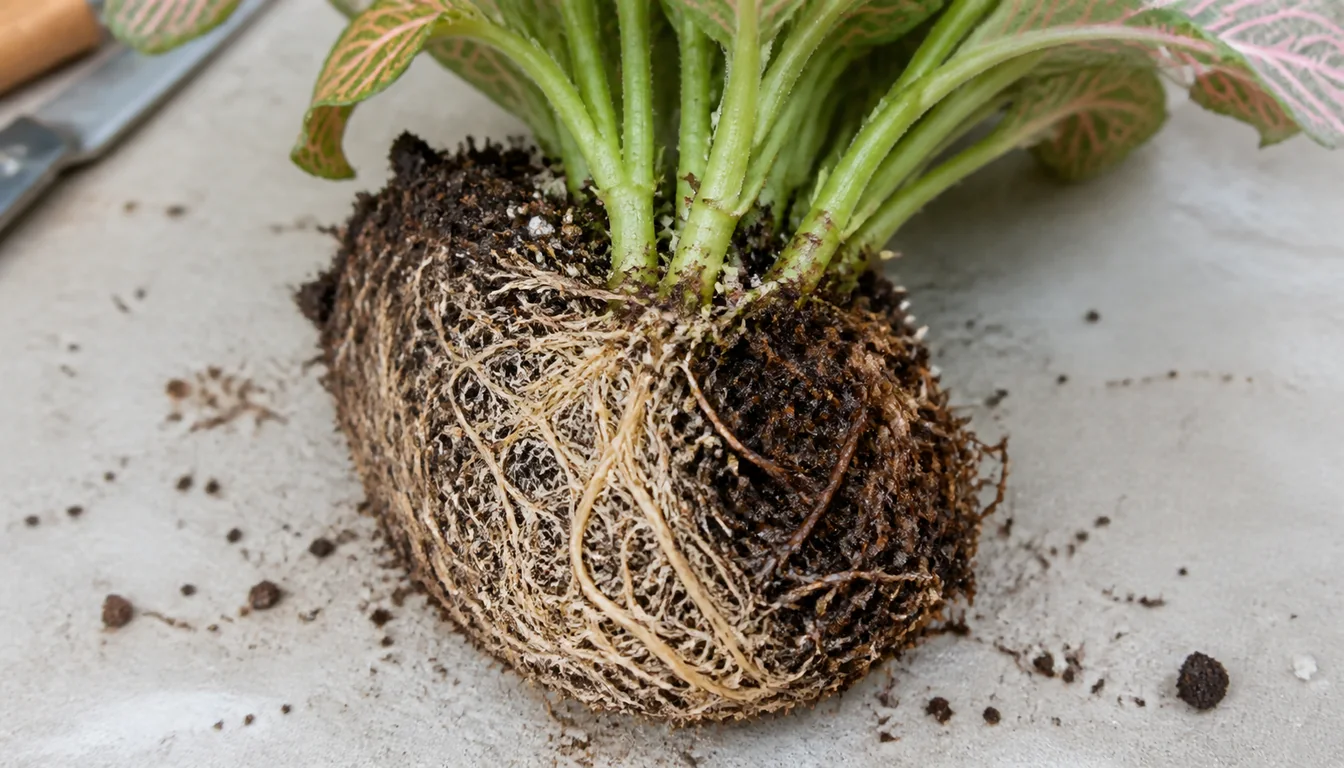
Root inspection is justified when persistent wilt occurs with a heavy pot, yellowing, odor, a soft lower stem, or mix that cannot drain. A single dramatic collapse in a light pot does not justify disturbing Fittonia's shallow roots.
Slide the root mass out and support it from below. Soft roots that collapse or shed their outer tissue raise concern for decay. Firm pale or tan roots are worth preserving, but appearance alone does not rule out early disease, and a firm crown does not clear the finer roots.
A clean tool can remove clearly collapsed tissue without stripping the remaining root network. A clean container and fresh airy mix should fit the surviving roots rather than leave them surrounded by a large wet volume. This may improve conditions but does not identify or guarantee removal of a pathogen.
With extensive crown decay, a local Extension office or plant diagnostic service may help assess whether anything is worth saving. Green tips are not automatically disease-free cuttings. Discarding a severely affected plant can be more appropriate than repeatedly propagating declining material.
Recovery Plan
Choose one moisture branch
Lift the pot and check below the surface. Rewet a confirmed dry center or remove standing water from a confirmed heavy wet pot.
Read the first response
A drought-stressed Fittonia may begin lifting after rewetting. Stable filtered light and suitable warmth support recovery, but the response time does not establish root health.
Protect useful leaves
Flexible green leaves may still be useful. Clearly collapsed or dead tissue can be removed with a clean tool, while spreading damage deserves assessment rather than repeated cosmetic trimming.
Follow the response
Upright new growth supports improvement. Continued collapse, odor, yellowing, pest evidence or crown damage calls for further assessment.
Prevent repeated Fittonia collapse with a draining container, an airy mix that holds even moisture, filtered light, stable warmth, and regular pot-weight checks. Water when the root zone approaches lightly moist rather than waiting for a dramatic wilt or following a fixed calendar.
Sources
- Fittonia albivenis, NC State Extension Plant Toolbox
- Diagnose Indoor Plant Problems, University of Maryland Extension
- Winter Indoor Plant Problems, University of Maryland Extension
- Watering Indoor Plants, University of Maryland Extension
- Growing Media for Containers, University of Maryland Extension
- Managing Houseplant Pests, Colorado State University Extension