
How to Grow a Money Tree With Healthy Roots and Room to Branch
Pachira aquatica Malvaceae
Money Tree (Pachira aquatica) grows well in bright, indirect light and a pot that drains freely. Its braided trunks can support a sizeable canopy, so moisture checks and occasional pruning matter more than a fixed watering calendar.
Care snapshot
The Braided Wetland Tree Behind the Houseplant
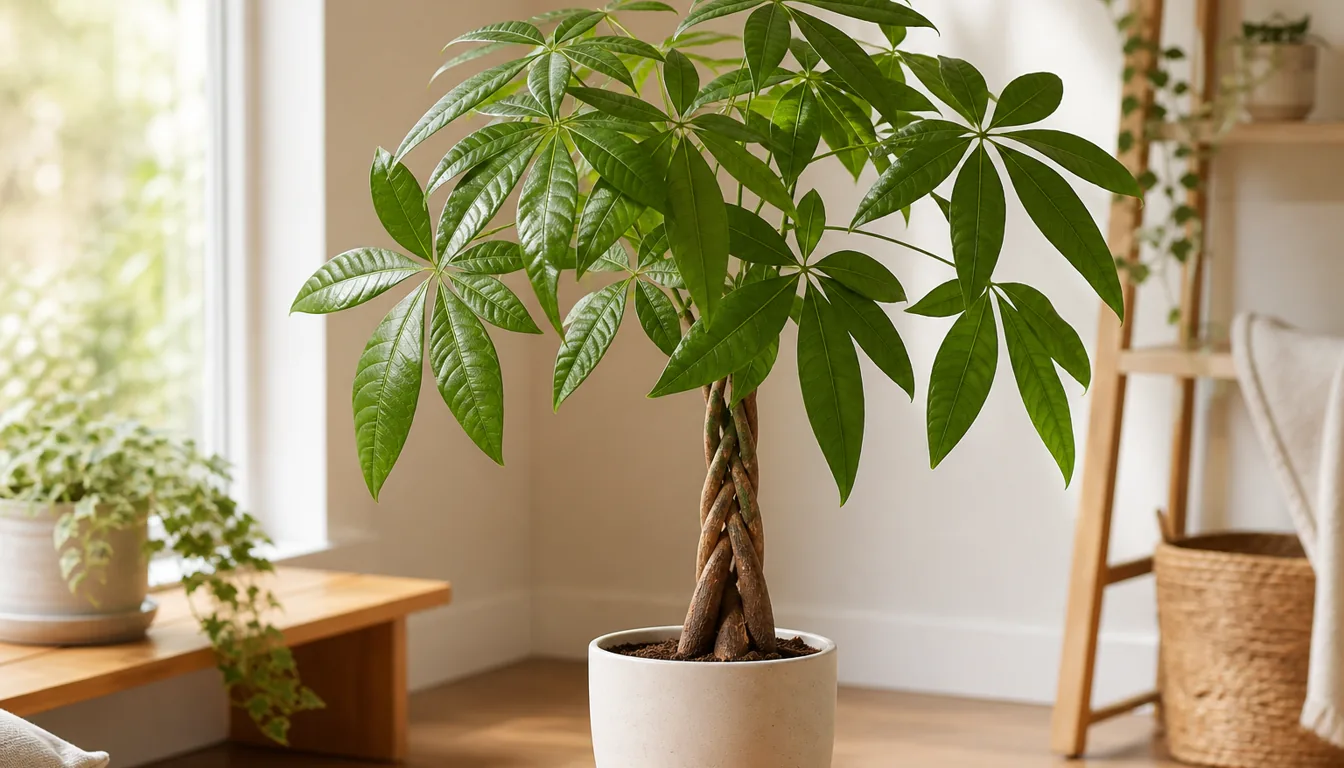
Money Tree is a tropical tree grown indoors for its glossy, hand-shaped leaves. Several young plants are often braided together; the braid is a nursery treatment, not a separate variety.
The leaflets spread from a central point, giving the canopy a different outline from the large single leaves of an indoor rubber tree. This leaf arrangement and the woody stems are more useful identification clues than a label saying “money plant,” which can refer to unrelated plants.
It is not guaranteed to stay small. NC State describes houseplants reaching 6–8 feet, while the RHS describes smaller pot-grown specimens; container conditions and pruning affect the result. A small purchase therefore needs a location with room for future growth.
Young green stems are flexible enough to braid, but older woody stems should not be forced into a new shape. A purchased braid can remain part of the trunk while the shoots above it are pruned to control the canopy.
Flowers and woody seed pods belong mainly to mature outdoor trees. Indoor flowering is unusual, and growing this plant for decoration does not make its seeds a suitable food: published accounts of seed safety conflict.
Soil and Repotting Mix
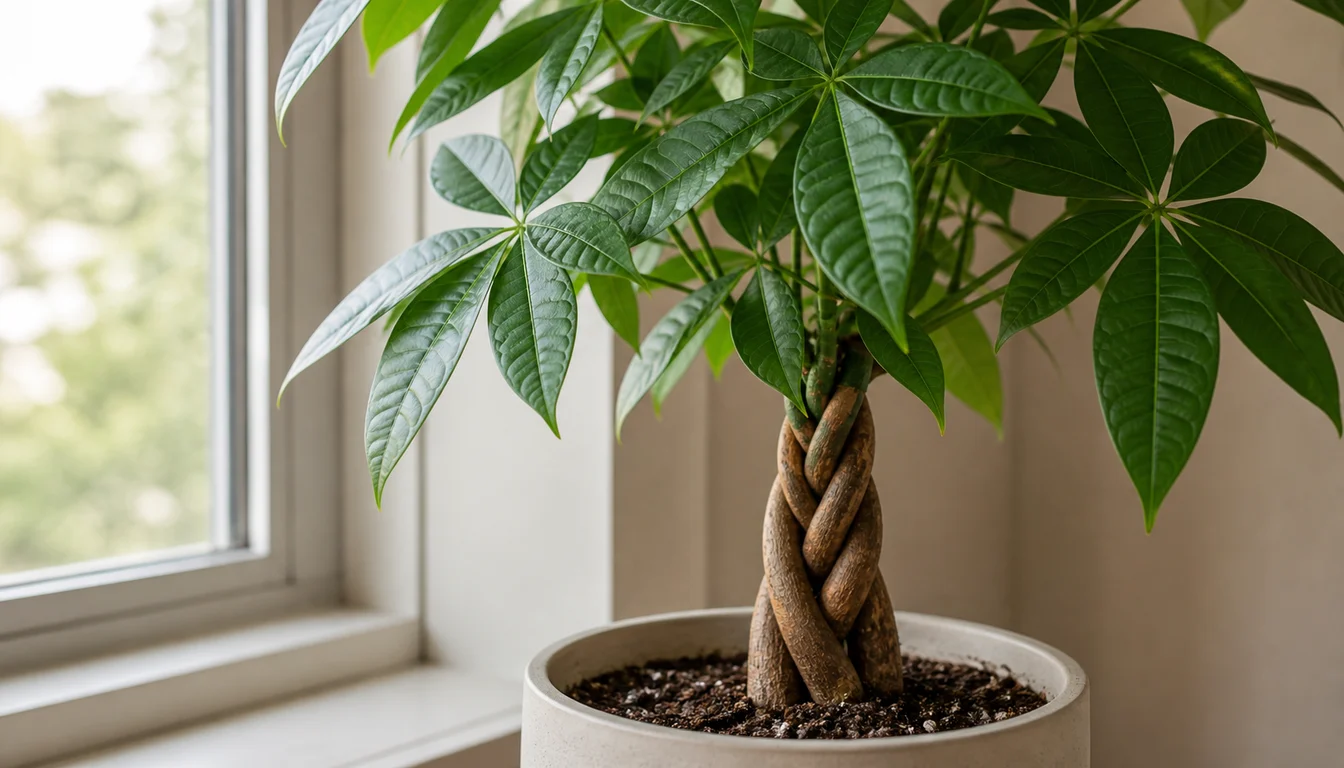
Container-grown Pachira aquatica needs a potting mix that retains some moisture but lets surplus water escape. A commercial houseplant mix with an open texture is appropriate.
A drainage hole and an outlet for runoff matter together. An inner nursery pot can sit inside a decorative cachepot, provided water does not collect around its base. Garden soil brought indoors can also introduce pests.
Repotting is useful when roots have filled the container, rather than automatically on an anniversary. Maryland Extension warns that an oversized pot can leave too much wet mix around a small root system. A modest increase in pot size gives roots room without surrounding them with a large reservoir of damp soil.
Spring is a practical time to assess roots and renew the mix as growth resumes. Slow growth alone does not prove that the pot is too small: changing light, moisture, and temperature can also affect the plant.
Light feeding during active spring and summer growth is supported by Extension guidance. The product label supplies the dilution for a particular fertilizer; adding extra fertilizer to a stressed plant can damage foliage. The indoor plant fertilizer guide explains the difference between feeding an actively growing plant and trying to correct poor growing conditions with fertilizer.
Watering: Avoiding Soggy Roots
The top inch of mix drying is a useful cue to water, not a deadline measured in days. Extension's Money Tree advice pairs that cue with thorough watering and drainage. A warm, bright room and a cooler, dimmer one will not necessarily produce the same drying interval.
Water through the root ball and allow the excess to drain, then empty the saucer or cachepot. A wetland origin does not mean that a container can remain full of standing water.
A dry surface does not tell the whole story when the lower mix stays wet. The pot's drainage, the amount of mix around the roots, and recent watering help explain that mismatch. These are also the variables behind houseplant watering frequency.
Light: Where Money Tree Grows Best Indoors
Bright, indirect light is the starting point. An east-facing window can provide a suitable position; near a strongly sunlit window, a sheer curtain can soften the exposure. Direct sun can scorch foliage, but there is no single number of hours that predicts injury in every room.
A dark corner is a poor substitute for filtered daylight. Window direction, nearby buildings, curtains, and distance from the glass all change what reaches the leaves. A USDA zone describes outdoor winter cold and cannot tell you whether an indoor window is bright enough.
Turning the pot periodically helps distribute window light around the canopy. Keeping it away from heating vents and cold drafts also avoids combining uneven light with sudden temperature changes.
Money Tree by Season: Growth, Slowdown, and Recovery
Seasonal shifts indoors are softer than outdoors, but your Money Tree still reacts to winter heat, summer sun angles, and changing humidity.
Slower winter growth is a reason to reassess watering and feeding, not proof that every declining plant is dormant. Persistent wilting or leaf loss still deserves a look at moisture, drafts, and pests.
Spring pruning can shorten shoots when the canopy outgrows its space. The RHS recommends cutting back as needed to control size; pruning is a separate decision from trying to bend an established woody braid.
Root Money Tree Cuttings From Healthy, Non-Woody Stems
Stem cuttings are one way to propagate Money Tree; seed and layering are also recognized methods. A cutting needs a healthy parent and a suitable rooting environment, so it is not a guaranteed rescue for a plant whose stems are already deteriorating.
- Prepare a clean pot and fresh rooting medium, such as peat with perlite or vermiculite. Disinfect the cutting tool before making the cut.
- Take a shoot near the transition between older wood and soft new growth. Remove leaves that would be buried, and use rooting hormone according to its label.
- Keep the medium moist without saturating it. A clear cover can retain humidity, but it must not press against the leaves; the cutting belongs in a warm, bright place out of direct sun.
- Transplant after roots have developed, preserving them as the cutting moves. A calendar date alone does not show that rooting has succeeded.
Georgia Extension's propagation advice describes this covered-cutting method. The timing of root formation depends on conditions; neither a fixed rooting deadline nor a claimed percentage improvement is established here.
Common Money Tree Pests
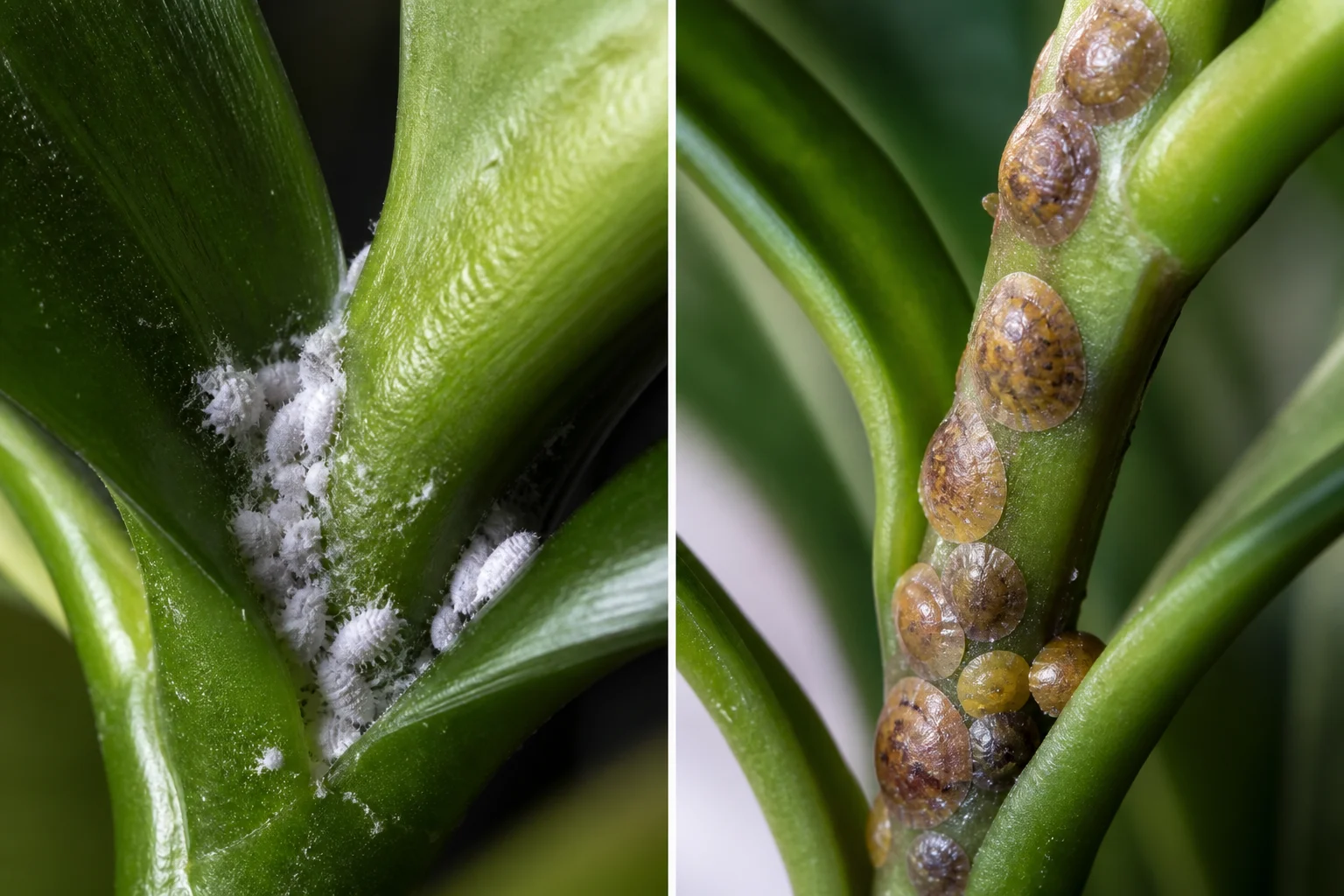
Leaf undersides, leaf joints, and the braided stems are useful places to inspect when foliage becomes sticky, stippled, or distorted. Visible insects and their damage help distinguish an infestation from a watering problem.
Fine webbing and pale stippling can accompany mites; a closer look with magnification helps.
White, waxy clusters often collect in sheltered joints.
Raised covers can remain attached to stems or leaves. Their appearance varies with the insect and life stage.
Small flies around the mix warrant a look at moisture and fungus gnat control; they are not the same problem as insects feeding on leaves.
An affected plant belongs apart from healthy houseplants while the pest is identified and controlled. Washing or removing a small infestation may help; the spider mite treatment guide explains that pest's follow-up care.
Safety and Ecological Notes
Pachira aquatica is not jade plant (Crassula ovata), even though both may be sold as money plants. A common name alone is not enough to assess a pet's exposure.
University of Georgia Extension includes Pachira aquatica in a pet-safe plant list, while NC State notes possible gastrointestinal effects in cats and uncertainty about the seeds. Those accounts do not justify calling every part harmless or ranking it as “less toxic” than another houseplant.
Frequently Asked Questions
Does a braided trunk keep a Money Tree small?
No. The braid shapes several stems; it does not set a permanent height limit. Pot conditions and pruning affect the canopy's size.
Can I use the same watering day every week?
A weekly reminder can prompt a moisture check, but it is not an instruction to water every time. The top inch drying, free drainage, and the condition of the lower mix are more useful than a fixed interval.
Do brown leaf edges prove the room is too dry?
No. Moisture problems, exposure, and fertilizer injury can produce overlapping symptoms. Recent care changes and the condition of the mix help narrow the possibilities; a brown edge alone does not select a treatment.
Can a Money Tree stay outside all year?
NC State lists USDA Zones 10–12 for outdoor growing. A summer stay in a colder region is different from year-round hardiness; the plant needs protection before cold weather returns.
Sources & References
- NC State Extension — Pachira aquatica
- Royal Horticultural Society — Pachira aquatica (record 12078)
- UGA Extension, Ask Extension — House Plant: Money Trees (241528)
- Ask Extension — Money Tree Concerns (855876)
- Maryland HGIC, Ask Extension — Money Tree / Pachira aquatica (385994)
- Clemson Extension — Common Houseplant Insects & Related Pests
- UGA Extension — Pet Safe Plants to Grow Indoors this Fall & Winter
Related Plants
ZZ Plant
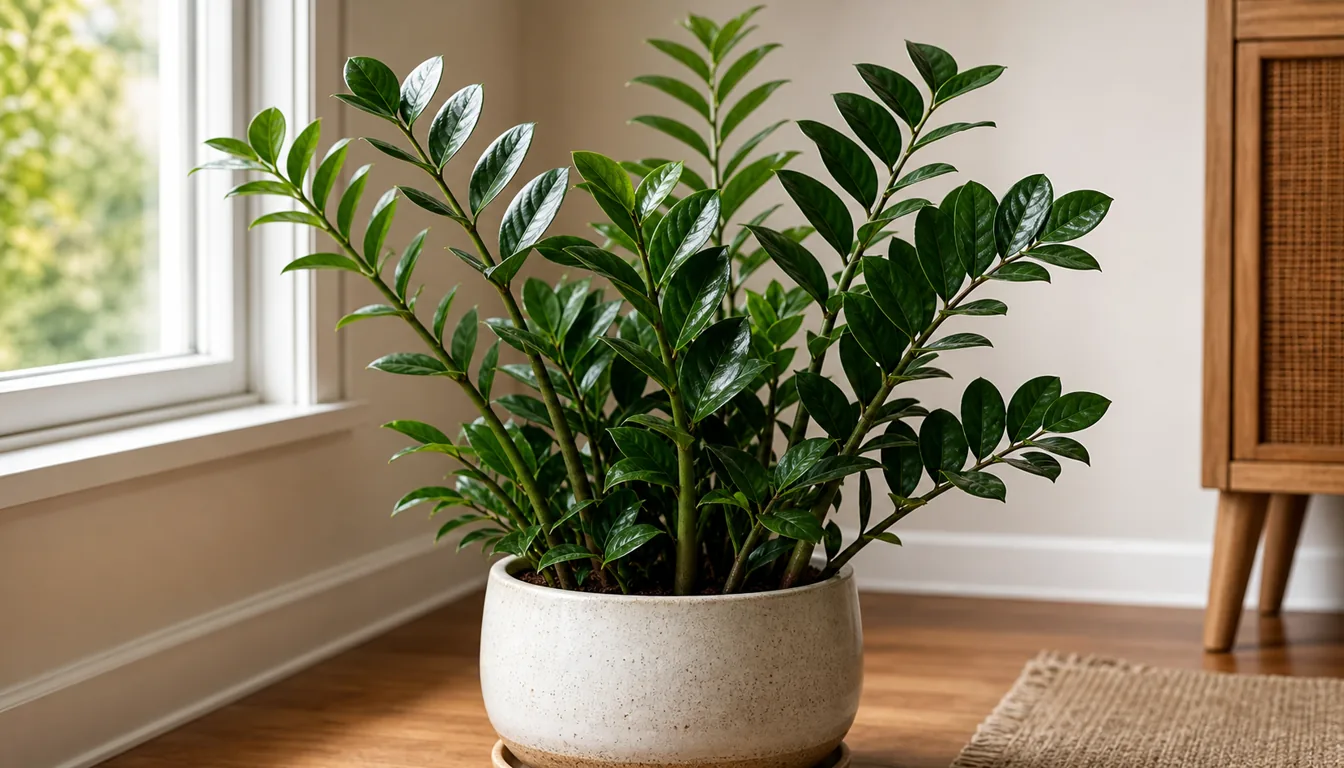
Tough, low‑light houseplant with upright canes and glossy leaflets, good if you want less watering than a Money Tree.
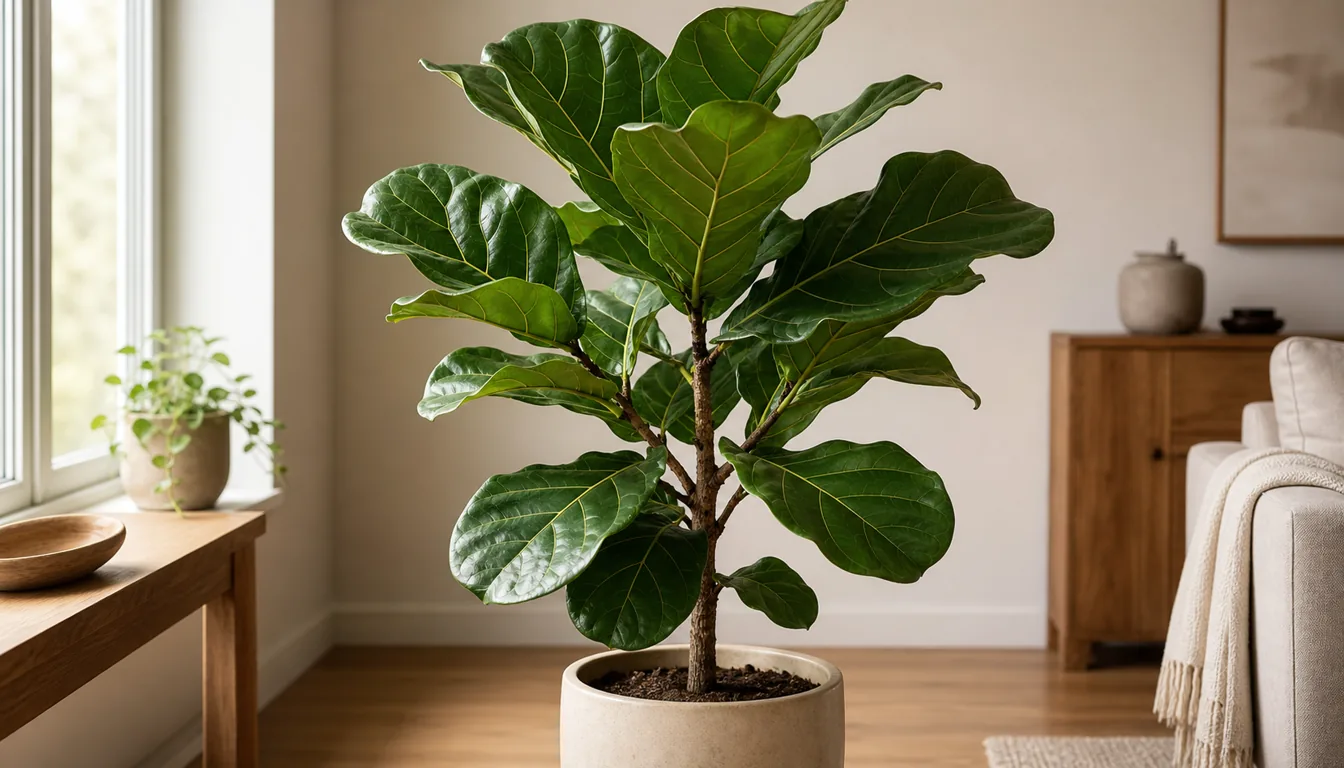
Fiddle Leaf Fig
Another indoor tree, with broad, single leaves rather than the Money Tree's divided leaves.
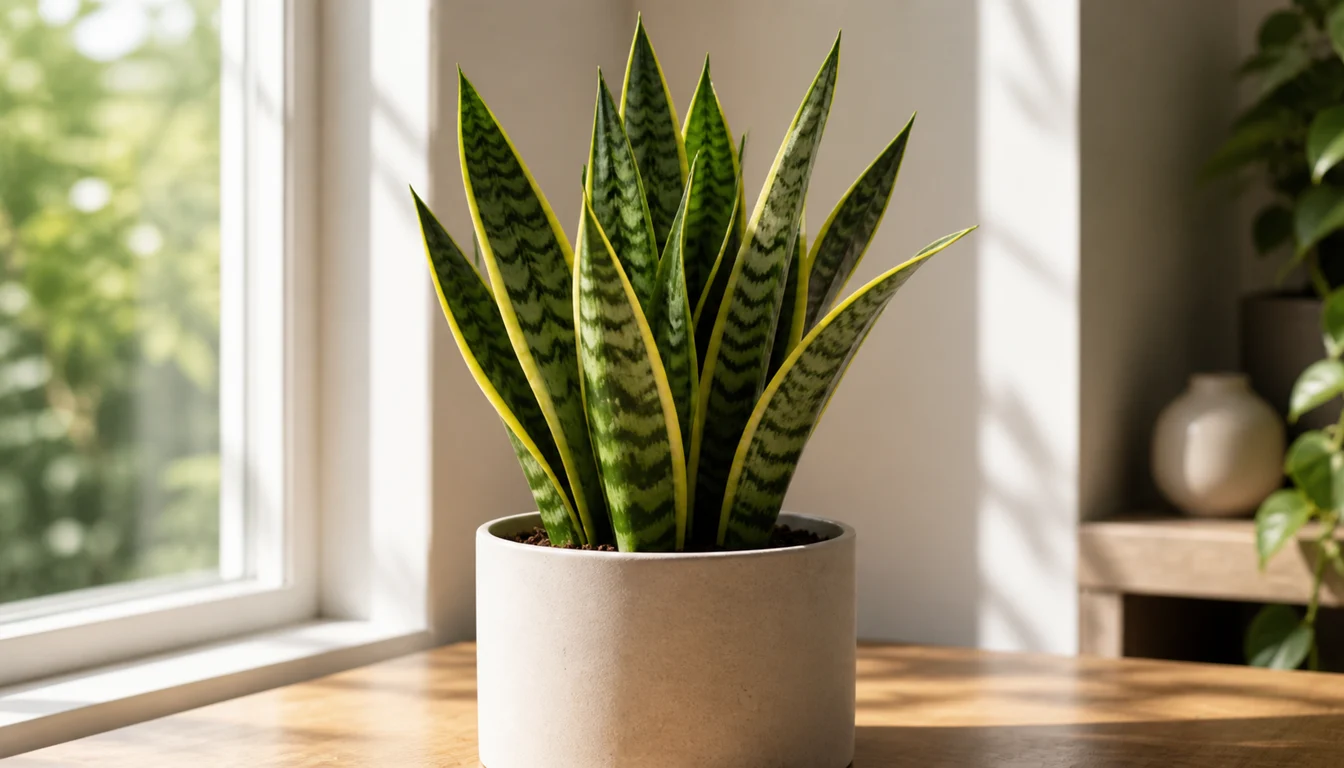
Snake Plant
Upright architectural houseplant that handles much lower light and drier soil than Money Tree.
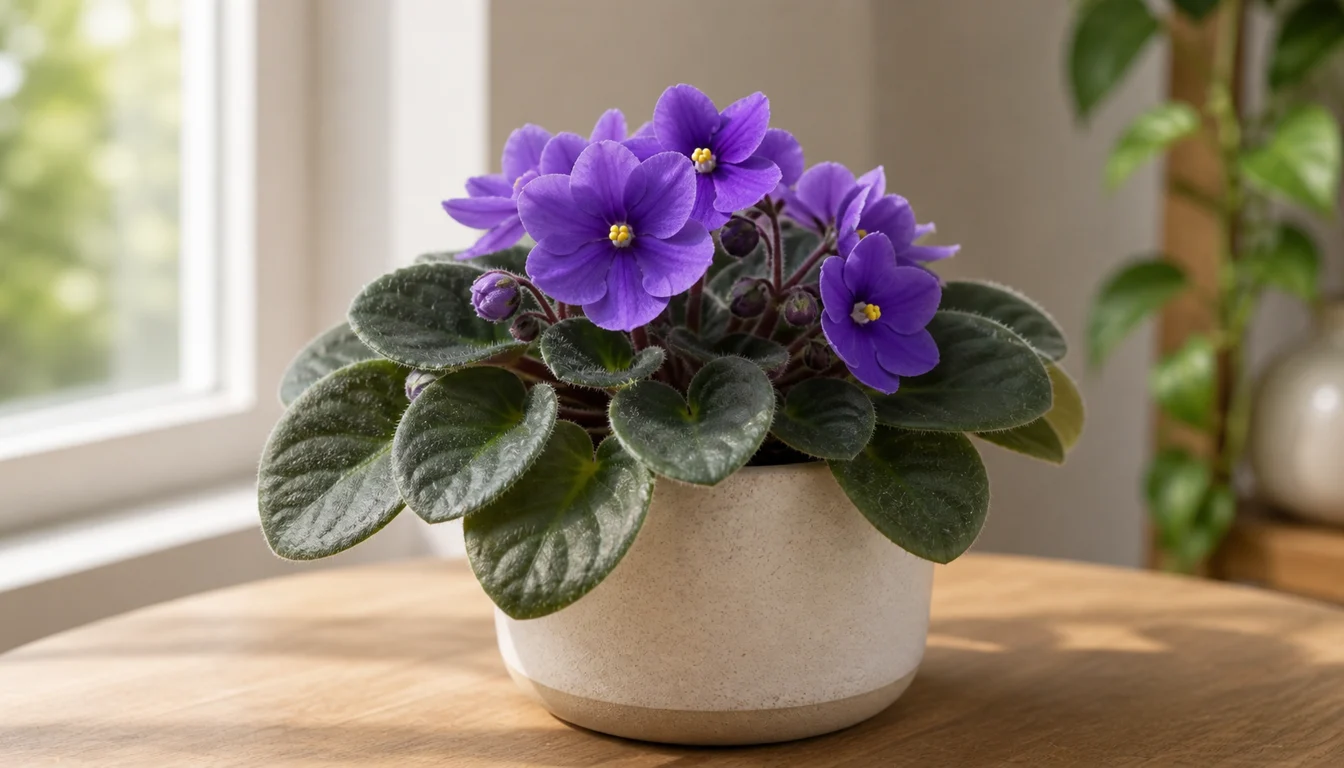
African Violet
African Violet is a windowsill bloomer that rewards steady, small-pot care.
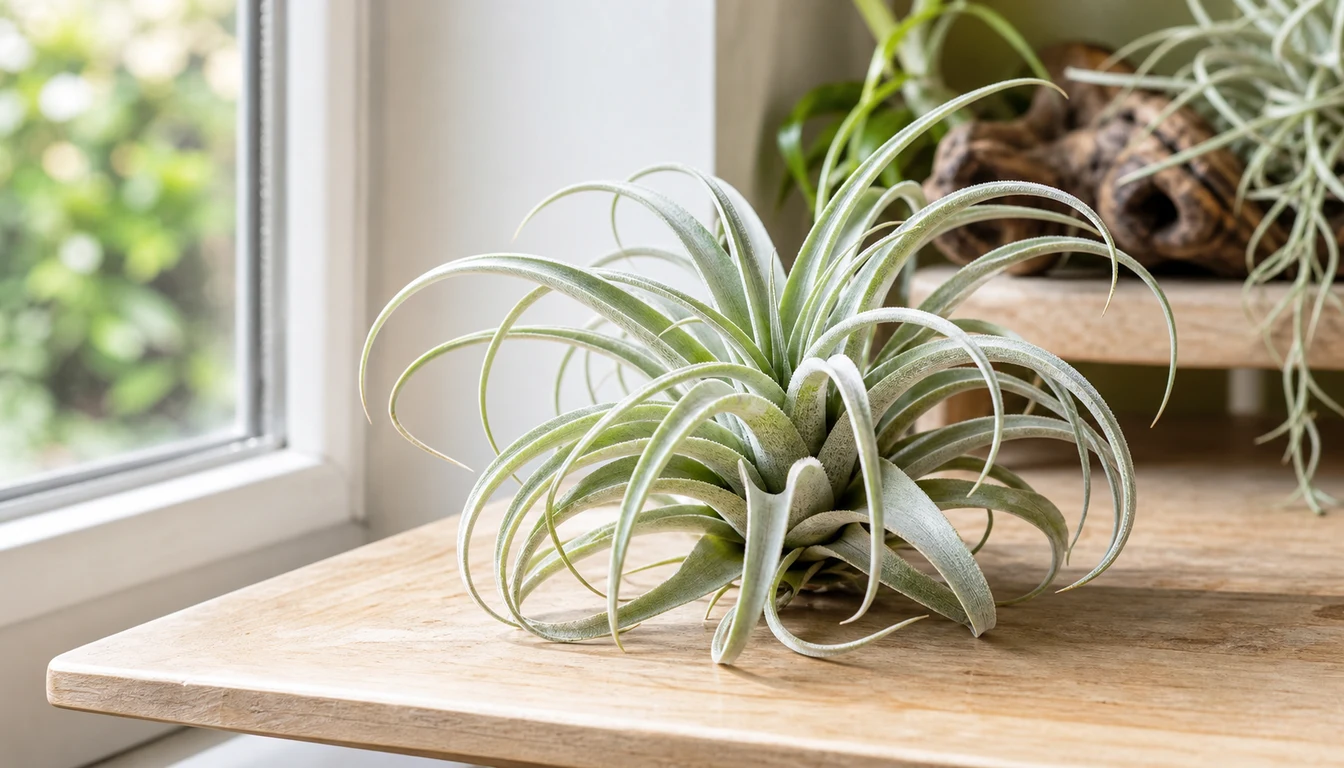
Air Plant
Air plants are living sculptures that thrive without soil, anchoring to driftwood, rocks, or shells while drawing…
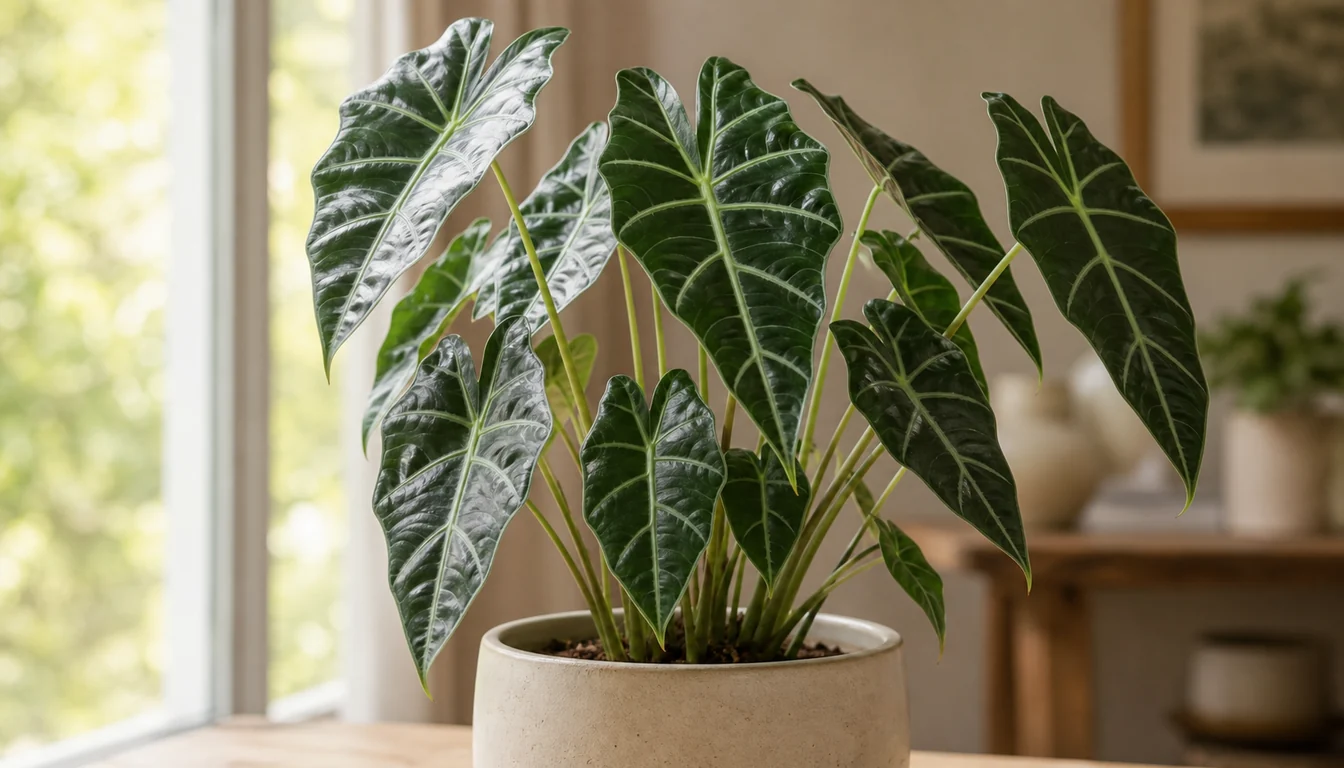
Alocasia
Alocasias include compact, textured houseplants and large elephant ears that need substantial floor space.