verifiedSource Reviewed
Begonia Rex
Begonia rex
Family: Begoniaceae
wb_sunnyLight
Medium to bright indirect light; no direct sun
water_dropWater
Moderate; let top inch of soil dry between waterings
heightHeight
1-2 ft tall at maturity
publicZone
Outdoors in Zone 10-12; indoors anywhere
Native Region
Northeastern India (Assam) and parts of Bangladesh
biotechBotanical Profile and Growth Habit
This begonia is built around a crawling rhizome and painted leaves, not upright canes or long bloom stalks. The foliage is the whole reason the plant earns shelf space.
Begonia Rex is a rhizomatous begonia — it grows from a thick, crawling rhizome that creeps along the soil surface, sending up leaves on thin petioles. It originated in the subtropical forests of Assam, India, where it clings to shaded rock faces and forest floors thick with leaf litter. That wild ancestry explains both its spectacular coloration and its fussiness about humidity.
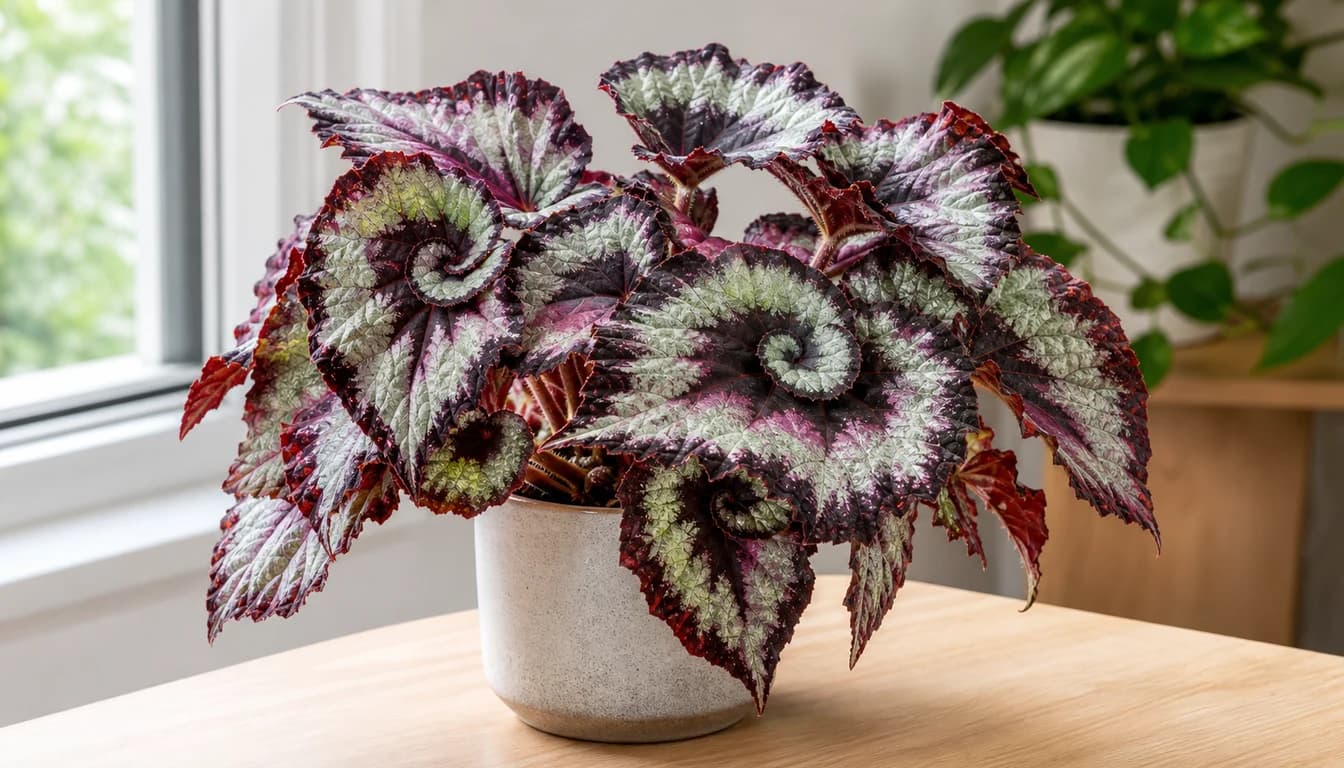
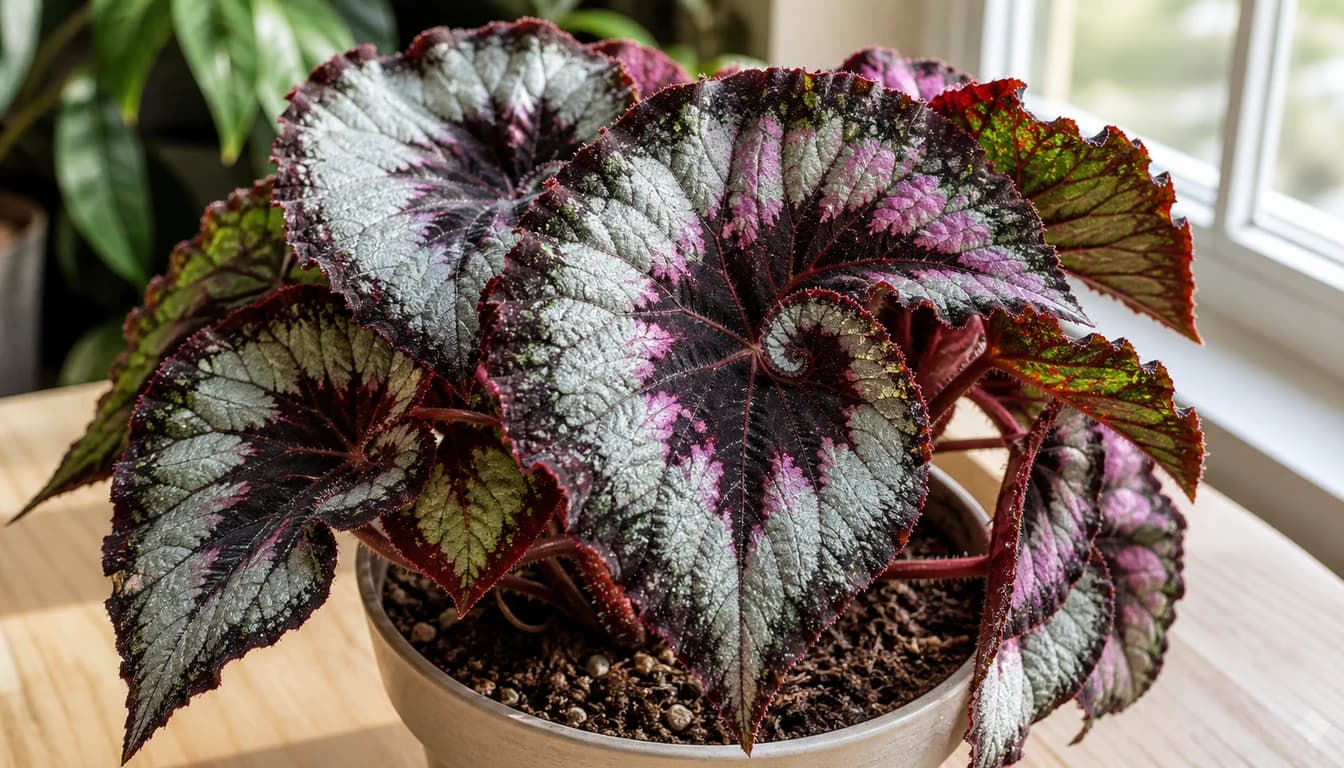
The leaves are the main event. Each one is asymmetric — one side of the blade always larger than the other, a hallmark of the Begonia genus — and spirals outward from the rhizome on stems that can reach 6 to 8 inches long.
Colors range from deep burgundy and metallic silver to hot pink and jade green, often within the same leaf. Some cultivars develop concentric spirals of color that look almost too geometric to be real. If you're drawn to patterned foliage, Begonia Rex pairs beautifully with begonia maculata on a shared plant shelf.
Rex begonias rarely bloom indoors, and that's fine — the small pink flower clusters that appear in spring are insignificant next to the foliage. This is a compact plant; it rarely exceeds 12 to 18 inches tall and spreads to about the same width. New leaves emerge tightly furled and gradually unfurl, revealing their full pattern over a week or two.
- fiber_manual_recordGrowth habit: rhizomatous, clump-forming; thick rhizome crawls along the soil surface
- fiber_manual_recordMature size: 1-2 ft tall and wide; compact, mounding form
- fiber_manual_recordLeaf texture: thin, papery; spiraling asymmetrical shapes; silver, pink, burgundy, and green patterns
- fiber_manual_recordFlowers: small pink clusters in spring; inconsequential next to the foliage
paletteCultivars and How to Choose One
Choosing a Rex type is really choosing a leaf surface: spiral, silver, burgundy, black-edged, ruffled, or metallic. The care stays close, but the visual job changes a room fast.
Begonia Rex has been hybridized extensively since the 1850s, and the cultivar selection is staggering. Some are bred for specific color patterns, others for leaf size or cold tolerance. All share the same care requirements — medium indirect light, consistent moisture, and high humidity — so your choice comes down to which color palette speaks to you.
'Escargot' is the most recognizable cultivar: its leaves spiral outward in a perfect snail-shell pattern, with silver and green bands following the curve. 'Rex-cultorum' hybrids cover a broad range of patterns and are the most commonly available at garden centers. 'Bicolor' features bold splashes of deep red against silver-gray.
If you like the look of patterned foliage but want something pet-safe, our houseplant collection flags toxicity on every profile.
If you're buying your first Begonia Rex, start with an unnamed hybrid from a reputable grower — they tend to be more vigorous than some of the highly specialized cultivars. Once you've nailed the care routine, branch out into the more dramatic varieties. Our houseplant buying guide covers what to look for at the garden center.
'Escargot'Spiral snail-shell pattern; silver and green bands; the most iconic rex cultivar.
'Bicolor'Deep crimson splashes on silver-gray; bold contrast; moderately vigorous.
'Red Tango'Fiery red center fading to dark green margins; compact grower.
'Painted Leaf'Metallic silver overlay with dark green veining; one of the hardier hybrids.
'Merry Christmas'Green and silver with bright red veining; seasonal name, year-round beauty.
wb_sunnyLight and Placement
Leaf color is the light meter. Strong pattern with firm edges means the spot is working; washed-out silver or crispy rims means the window is too harsh.
Begonia Rex wants medium to bright indirect light — think an east-facing window with a sheer curtain, or a spot 4 to 6 feet from a south or west window. The colorful leaf patterns are most vivid in bright, filtered light; too dim and the silver fades, the pink washes out, and the plant stretches toward whatever light source it can find.
Direct sun is a dealbreaker. The thin, papery leaves scorch fast — within a single afternoon of direct exposure, you'll see bleached patches that never recover. If you notice the colors looking washed or the leaf edges turning crispy, pull the plant back from the window or add a layer of diffusion. Our best indoor plants guide walks through light placement strategies.
In lower light, rex begonia survives but loses the qualities that make it worth growing. The leaves stay small, the colors dull to muddy green, and the plant becomes leggy and sparse.
If your best light is a north-facing window, a small grow light on a timer can make the difference between a mediocre plant and a spectacular one. Compare light needs across tropical houseplant picks before you settle on placement.
- fiber_manual_recordIdeal: east window with sheer curtain, or 4-6 ft from a south/west window
- fiber_manual_recordDirect sun: scorches thin leaves within hours — always diffuse or filter
- fiber_manual_recordLow light: plant survives but loses color intensity and becomes leggy
- fiber_manual_recordGrow lights: a small LED panel on a 12-hour timer compensates for dim rooms
Guide — See AlsoAir Purifying Plants for Cleaner Indoor AirLearn how to pick, place, and care for air purifying plants so they help your indoor air instead of just looking pretty.
chevron_rightEmail Updates
Join the KnowTheYard update list
Zone-specific advice, seasonal reminders, and new plant guides — no filler.
water_dropWatering
Begonia Rex needs consistently moist but never waterlogged soil. Water when the top inch feels dry to the touch — that usually lands around every 5 to 7 days during the growing season and 7 to 10 days in winter. The rhizome stores some moisture, which buys you a small buffer, but the thin leaves wilt quickly if the soil dries out completely.
Bottom watering works beautifully for Begonia Rex. Set the pot in a shallow tray of water for 15 to 20 minutes, let the soil wick moisture up through the drainage holes, then remove and drain. This keeps water off the leaves and rhizome — both of which are prone to rot when they stay wet. Our drainage holes guide explains why drainage matters.
Overwatering shows up as mushy rhizomes, yellowing leaves, and eventually a collapsed plant. Underwatering presents as curled, crispy leaf edges and a general droop. Begonia Rex is more forgiving of a missed watering than a drenched rhizome — when in doubt, check the soil an inch down before reaching for the watering can. Our overwatering vs underwatering guide helps you tell the difference.
Use that checklist before watering again; Begonia Rex leaves show both drought and soggy-rhizome stress quickly.
Begonia Rex leaves are thin enough to show water spots permanently. If you do get water on the foliage, blot it immediately with a soft cloth rather than letting it air-dry.
potted_plantSoil and Repotting
The rhizome needs air as much as it needs moisture. A dense, heavy potting mix suffocates the roots and invites rot — you want something light and fluffy that drains quickly but holds enough moisture to keep those thin leaves hydrated. A good starting point: two parts peat-based potting mix, one part perlite, and one part coarse orchid bark.
Orchid bark might seem unusual, but it mimics the loose leaf litter and organic debris that Begonia Rex grows on in its native habitat. The bark pieces create air pockets around the rhizome, preventing the soggy conditions that lead to stem rot. Our soil guide covers mix ratios for tropical houseplants.
Repot every 18 to 24 months in spring, or when the rhizome has filled the pot and is spilling over the edge. Begonia Rex prefers being slightly snug — a pot that's too large holds excess moisture. Go up only one size, and always use a pot with drainage holes. Terra cotta wicks moisture faster than plastic, which is helpful if you tend to overwater.
- fiber_manual_recordSoil mix: 2 parts peat-based mix, 1 part perlite, 1 part orchid bark
- fiber_manual_recordpH preference: slightly acidic, around 5.5-6.5
- fiber_manual_recordPot type: shallow and wide works best — rhizomes spread horizontally
- fiber_manual_recordRepotting frequency: every 18-24 months, or when rhizome overflows the pot
- fiber_manual_recordBest time to repot: spring, when new growth begins
account_treePropagation
The strange part is that one healthy leaf can make several new plants. Rex begonias carry enough growing tissue in the veins and rhizome pieces to propagate in ways cane begonias do not.
Begonia Rex offers three propagation routes: leaf cuttings, division of the rhizome, and stem cuttings. Leaf cuttings are the most satisfying because a single leaf can produce multiple new plants — each vein section has the potential to generate a whole new plantlet.
For leaf cuttings, select a healthy, mature leaf and cut it into wedge-shaped sections, making sure each piece includes a main vein. Pin the sections flat onto moist perlite or sphagnum moss with toothpicks, and cover with a clear dome or plastic bag to maintain humidity.
Keep in bright, indirect light at 70°F. Tiny plantlets emerge from the cut vein edges in 4 to 6 weeks.
Division is faster but requires a mature plant with multiple rhizome sections. Gently separate the rhizome into clumps, each with two or three leaves and healthy roots, and pot into individual containers.
Stem cuttings work too — snip a 4-inch section with a few leaves, let it callous overnight, and insert into moist perlite. For a step-by-step walkthrough of propagation basics, see our houseplant propagation guide.
- check_circleLeaf sections: cut mature leaf into wedges with vein segments; pin flat on moist perlite
- check_circleHumidity dome: cover with clear plastic; open daily for 10 minutes to prevent mold
- check_circleRooting time: 4-6 weeks for leaf sections; 2-3 weeks for stem cuttings
- check_circleDivision: separate rhizome into clumps with 2-3 leaves each; pot immediately
- check_circleLight: bright indirect for all methods — no direct sun on fresh cuttings
After choosing a propagation method, protect the new tissue from swings; Begonia Rex cuttings rot fastest when humidity is high but air is stale.
Leaf propagation is slow but prolific — a single leaf can yield six to eight new plants over a few months. It's the most cost-effective way to build a collection.
Guide — See AlsoBest Herbs to Grow Indoors for Real Harvests, Not Spindly PotsChoose indoor herbs that can actually produce in your light, temperature, and container setup, then match each one to th
chevron_rightpest_controlPests and Common Problems
Powdery mildew is the nemesis of Begonia Rex. The thin leaves and preference for humid conditions create the exact environment that fungal spores love — white, powdery patches that spread across the leaf surface and distort new growth. Good air circulation is the best prevention; a small fan running nearby makes a real difference.
Spider mites and mealybugs show up when humidity drops or the plant is stressed. Spider mites leave fine webbing on the leaf undersides; mealybugs cluster in the leaf axils and along the rhizome as white, cottony masses. Both respond to neem oil — our neem oil guide covers dilution ratios and application frequency.
Botrytis (gray mold) attacks when leaves stay wet overnight, especially in cool conditions. Remove affected tissue immediately and improve airflow. Bacterial leaf spot shows up as water-soaked patches that turn brown and papery — this one can't be treated, only managed by removing affected leaves and keeping foliage dry.
- fiber_manual_recordPowdery mildew: white fungal patches — improve airflow, avoid overhead watering, treat with fungicide if persistent
- fiber_manual_recordSpider mites: fine webbing on leaf undersides — increase humidity, treat with neem oil
- fiber_manual_recordMealybugs: inspect the rhizome line and petiole bases for cottony buildup, then isolate the pot and wipe adults away with alcohol
- fiber_manual_recordBotrytis: gray mold on wet leaves — remove affected tissue, improve air circulation
- fiber_manual_recordBacterial leaf spot: water-soaked brown patches — remove leaves, keep foliage dry
calendar_monthSeasonal Care
Spring kicks off active growth — new leaves unfurl in progressively more dramatic patterns as the days lengthen. This is the time to increase watering, start feeding with a diluted liquid fertilizer every two weeks, and take any cuttings you've been meaning to try.
The warmth and light make rooting significantly faster. If you want to compare seasonal timing across houseplants, our indoor care calendar breaks it down month by month.
Summer brings the biggest growth spurt but also the highest risk of heat stress. Rex begonia struggles above 80°F — the thin leaves wilt and the rhizome can bake in a hot pot. Move it back from windows, increase humidity, and avoid repotting during peak heat. If you're running air conditioning, keep the plant away from the direct blast.
Fall is when you start pulling back. Reduce watering as growth slows, stop fertilizing by October, and move the plant closer to the light source as the sun angle drops. Rex begonia goes semi-dormant in winter — it doesn't lose its leaves like a deciduous plant, but growth nearly stops and the rhizome rests. Water sparingly, maintain humidity, and don't repot until spring.
- fiber_manual_recordSpring: resume feeding every 2 weeks; increase watering; best time to propagate or repot
- fiber_manual_recordSummer: keep below 80°F; increase humidity; avoid repotting in peak heat
- fiber_manual_recordFall: reduce watering and stop fertilizing by October; move closer to light source
- fiber_manual_recordWinter: semi-dormant; water sparingly (every 10-14 days); maintain humidity; no fertilizer
health_and_safetySafety, Pets, and Ecological Impact
Begonia Rex is toxic to cats and dogs — all Begonia species contain calcium oxalate crystals, microscopic needle-shaped structures that embed in the mouth and throat when chewed, causing intense oral pain, drooling, vomiting, and difficulty swallowing. The rhizome concentrates the highest levels of these crystals, but even the leaves can cause reactions in curious pets.
For humans, handling rex begonia rarely causes problems, but the sap can trigger contact dermatitis in sensitive individuals. Wear gloves when dividing the rhizome or taking cuttings, and wash your hands afterward. Avoid touching your eyes after handling the plant — the oxalate crystals are just as irritating to human mucous membranes.
Begonia Rex is not considered an invasive species — unlike some tropical houseplants that have naturalized in warm climates, it rarely escapes cultivation. Its thin leaves and specific moisture needs make it poorly suited to compete outdoors in most environments. For pet-safe alternatives with similarly striking foliage, consider string of turtles.
Begonia Rex contains calcium oxalate crystals that cause oral pain and vomiting in cats and dogs. The rhizome is the most toxic part. Keep out of reach or choose a pet-safe alternative like Calathea Orbifolia.
eco
Keep Exploring
Related Plants
 Houseplants
Neon Pothos
Neon Pothos is the color-first pothos: its bright yellow-green leaves look best in medium to bright indirect light. Grow it like a durable vine, but judge s
 Houseplants
Kalanchoe
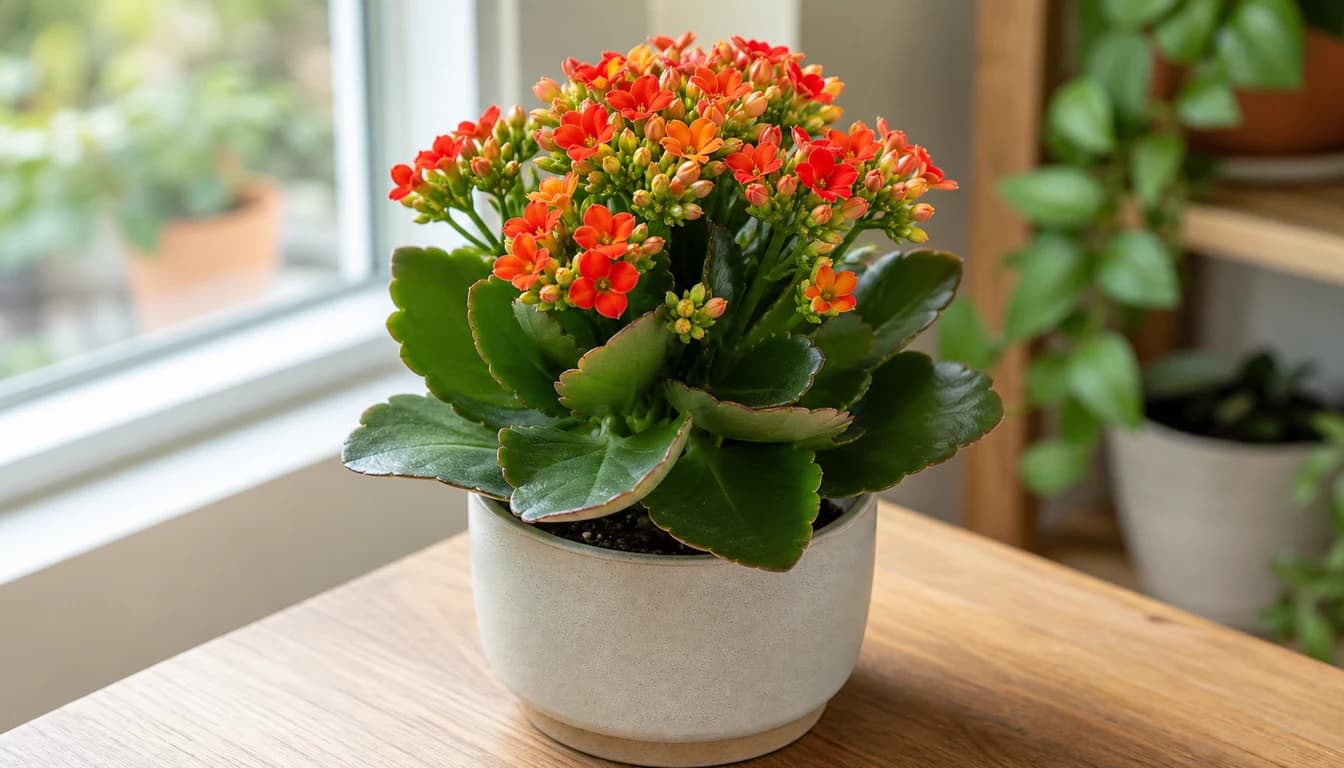
Kalanchoe is a flowering succulent grown for dense winter blooms, not just thick leaves. It needs bright days, dry roots, and a long-night reset to rebloom
 Houseplants
African Violet
African Violet is a windowsill bloomer that rewards steady, small-pot care. Keep water out of the crown, give bright indirect light, and feed lightly so the
quiz
Frequently Asked Questions
How often should I water a begonia rex?expand_more
Water when the top inch of soil feels dry, typically every 5-7 days in spring and summer and every 7-10 days in winter. The thin leaves wilt quickly if the soil dries out completely, but the rhizome rots if it sits in soggy conditions. Bottom watering is ideal — it keeps moisture off the leaves and delivers water directly to the root zone.
Why are my begonia rex leaves losing their color?expand_more
Faded colors almost always point to insufficient light. The metallic silvers and vivid pinks need bright, filtered light to develop fully. If the plant is in a dim corner or more than 6 feet from a window, the new leaves will come in smaller and duller. Move it closer to an east window or add a grow light — you should see improvement in the next batch of new leaves.
Can begonia rex survive winter indoors?expand_more
Begonia Rex doesn't go fully dormant in winter — it slows down and produces fewer new leaves, but it keeps its foliage if conditions are right. Maintain humidity above 40%, water only when the soil is dry an inch down, keep the plant above 55°F, and avoid fertilizing until spring. A cool, bright spot away from heater vents is ideal.
Is begonia rex safe for cats and dogs?expand_more
No. All begonia species contain calcium oxalate crystals that cause oral pain, drooling, and vomiting in pets if chewed. The rhizome has the highest concentration. Place the plant on a high shelf or in a room pets can't access, or swap it for a pet-safe option like calathea orbifolia or string of turtles.
How do I propagate begonia rex from a single leaf?expand_more
Cut a mature leaf into wedge-shaped sections, each with a main vein. Lay them flat on moist perlite, secure with toothpicks, and cover with a clear humidity dome. Keep in bright indirect light at around 70°F and mist the perlite every few days. Tiny plantlets emerge from the cut vein edges in 4-6 weeks — patience is essential here, but a single leaf can yield six to eight new plants.