
How to Grow Dieffenbachia and Manage Its Tall, Aging Canes
Dieffenbachia spp. Araceae
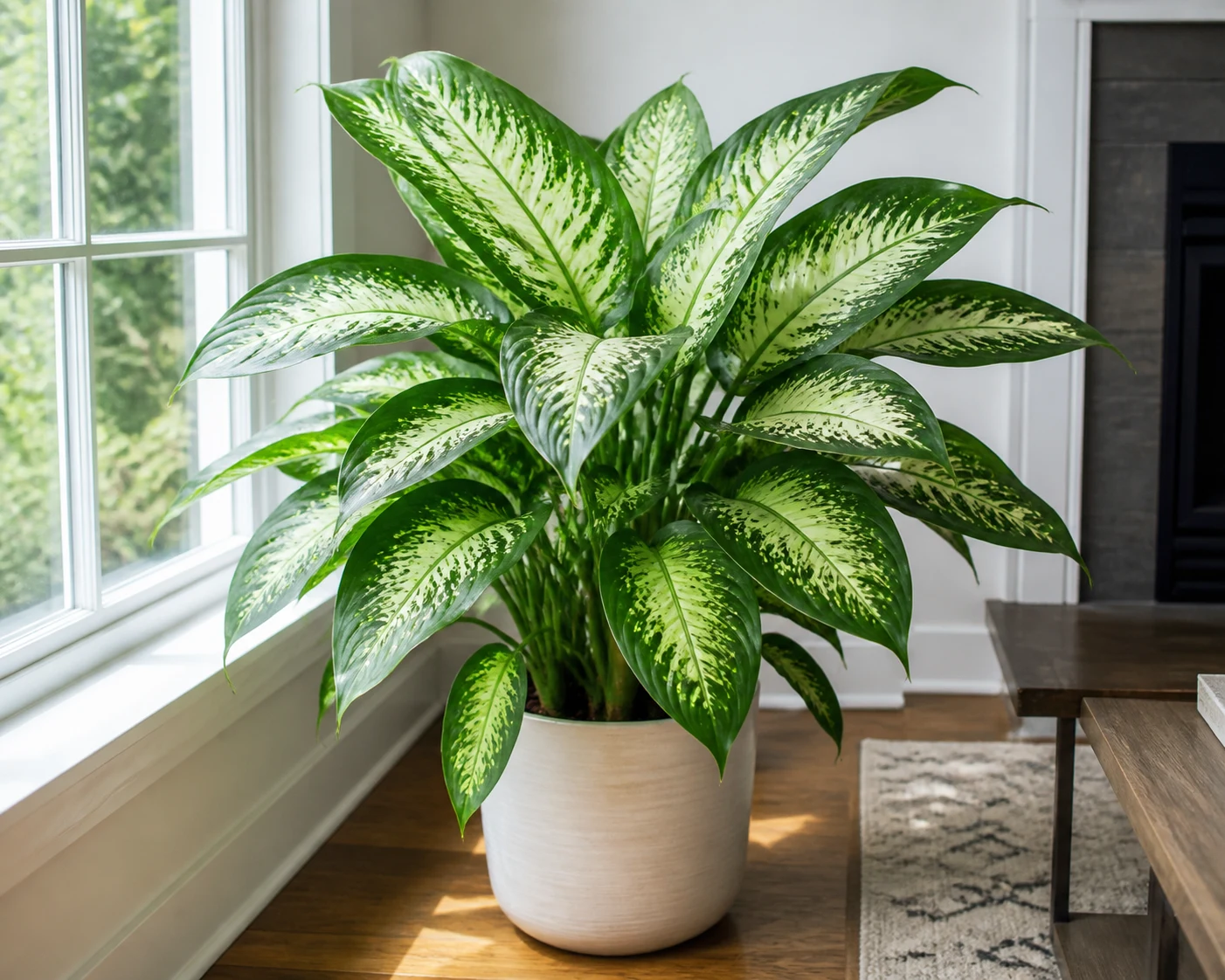
Dieffenbachia grows broad patterned leaves on upright, fleshy canes. Bright indirect light and moisture in a draining mix support the foliage, while an older bare cane may need support or renewal. Its irritating sap and toxicity to pets make access and handling part of the decision to grow it.
Care snapshot
Patterned Leaves on an Upright Cane
Dieffenbachia’s broad leaves emerge along fleshy upright stems. Older canes can become visible as lower leaves are lost, leaving foliage concentrated toward the top. That form is different from a climbing Monstera or a Peace Lily growing as a basal clump.
Many familiar houseplant names fall within Dieffenbachia seguine. NC State places older names such as D. amoena, D. maculata, and D. picta under that species. Older care references may still use those names, so a different label does not necessarily describe a different plant.
The canopy changes the display over time. A young, full pot may eventually have a taller bare section, particularly if growth conditions are poor. Support can stabilize a top-heavy plant, while propagation can renew its form if sound material remains.
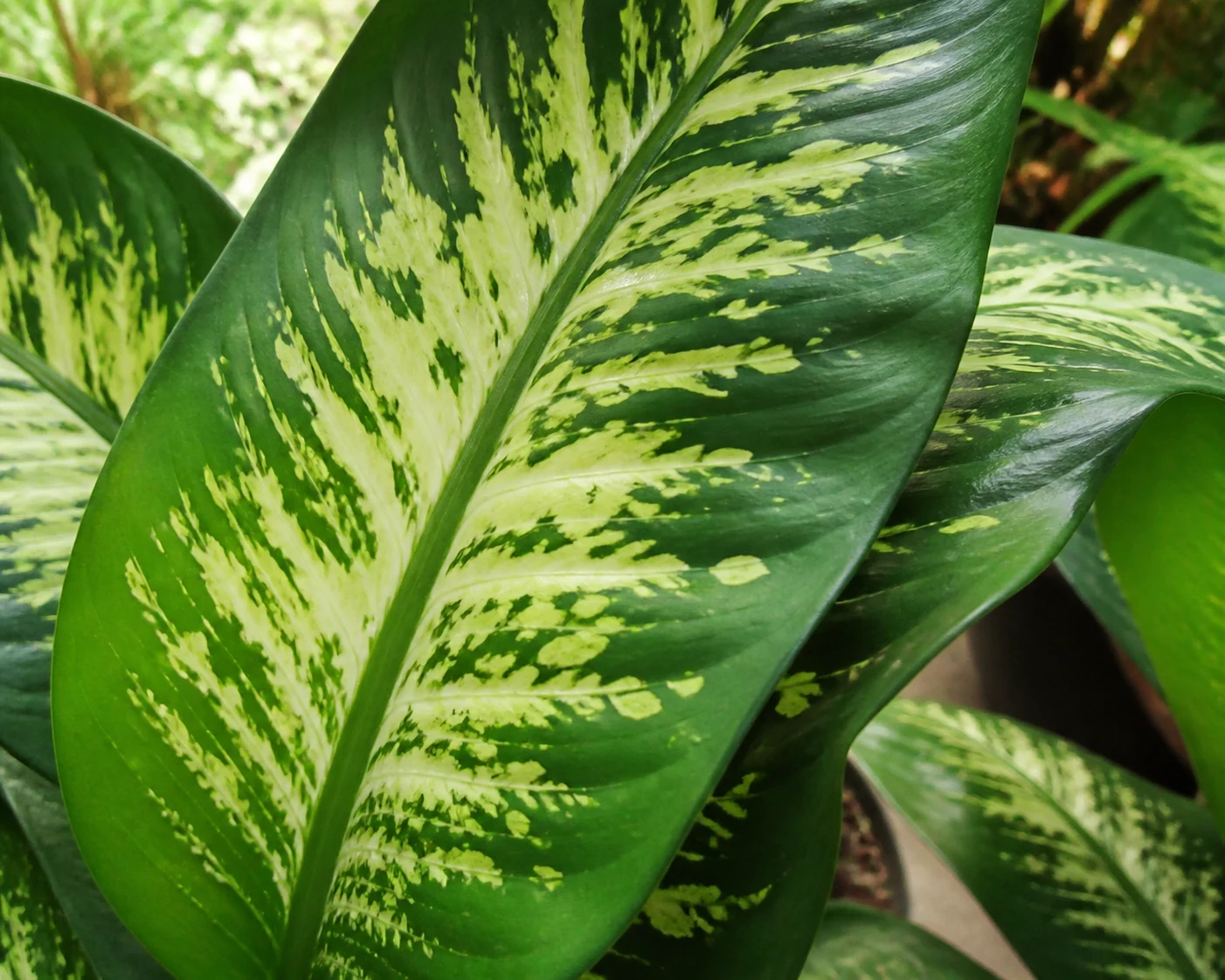
Leaf pattern is a useful identification clue but not sufficient on its own. Chinese Evergreen can also have pale markings. NC State notes that Dieffenbachia generally has more prominent lateral veins and that an older aerial cane helps distinguish it from Peace Lily. Those are clues to combine with the whole plant, not a toxicity test based on a single vein count.
Flowers are uncommon indoors and are not the main reason to grow it. The practical choice is whether its mature cane and canopy fit the available light, space, and safe handling arrangements.
Light That Supports the Canopy
Dieffenbachia can tolerate a range of light conditions, but the University of Connecticut identifies bright indirect light as best for growth. Surviving in a dim corner is different from maintaining a full canopy there. Slower growth can also mean that the pot uses water more slowly.
A window’s direction does not describe its exposure by itself. Trees, nearby buildings, curtains, and the season change the light reaching the plant. A position bright enough to read in comfortably is not a reliable measurement of the light available to the leaves throughout the day.
Direct sunlight can cause discoloration or scorching, especially after an abrupt move from protected conditions. Filtering a strong exposure can help. Existing injured areas will not turn back into undamaged tissue, so later growth provides a better indication of the change.
Longer, weaker growth and loss of lower foliage can accompany inadequate light, but leaf loss also has other causes. Temperature changes, moisture problems, and pests need consideration before moving a declining plant into stronger sun.
A stable position with room for the broad leaves reduces handling damage. The canopy may extend beyond the pot, so a narrow walkway or a window that presses leaves against cold glass can be unsuitable even when the container fits.
Compact Selections and Taller Forms
Named selections vary in both leaf markings and eventual size. NC State describes 'Camille' as reaching about three feet and 'Tropic Snow' as a taller form around six feet. Those are cultivar descriptions, not a height every plant will reach on a schedule.
For a tabletop, mature size matters as much as the pattern on the current leaves. A small nursery plant can still belong to a tall selection. A floor display has more room for a larger canopy but also places foliage and discarded leaves closer to pets and children.
The pattern choices in the comparison below can suit different displays, but they do not establish a complete care ranking. The exact selection, its eventual size, and the conditions available at home belong in the same buying decision.
A plant’s identity and its present health are separate questions. Patterned areas are normal for these selections, while new lesions, distorted growth, or rapid loss across the plant deserve inspection. A pale cultivar is not automatically nutrient deficient.
- Camille
- A relatively compact selection described by NC State at up to about three feet.
- Tropic Snow
- A taller selection with cream-and-green foliage, described around six feet.
- Exotica / Arvida
- Creamy-white markings with green splashes and a narrow green margin.
- Tropical Tiki
- Dark and light green foliage with white markings.
A Stable Pot with Moisture and Air
Dieffenbachia grows in a loose medium that retains moisture and drains well. UConn describes several possible mixes rather than a single required recipe. The important relationship is between the medium’s structure, the container, and the roots occupying it.
A pot much larger than the root system contains extra material that may stay wet. A severely crowded root ball presents a different problem, with less room for roots and potentially uneven wetting. Pot size needs to follow the root system rather than the desired visual size of the canopy.
Drainage holes allow excess water to leave, but an outer decorative container can collect it again. Emptying that trapped water is part of the watering process. Adding gravel or another surface ingredient does not create an exit through a sealed container.
Repotting is useful when roots need space or the medium has deteriorated. It is not an automatic cure for every yellow leaf. Root disturbance also makes it harder to judge recovery if the plant is repeatedly moved into new soil before the original problem is understood.
A tall cane may need a stable, heavier outer arrangement or support. That is a balance issue, separate from whether the roots need a larger volume of wet mix.
Watering and Investigating Leaf Loss
UConn advises watering thoroughly and allowing the surface to dry before watering again. NC State gives a top-inch drying check for D. seguine. Both describe a drying interval, not keeping the top of the pot continuously wet.
Surface moisture is useful alongside the condition deeper in the pot. A dry crust may cover wet media, while a root ball that has dried unevenly can shed water down the sides. Slow watering followed by drainage helps wet the roots, but the result still needs observation.
Drooping and yellowing do not prove one cause. Roots in dry media can lack available water, while injured roots in wet media may fail to take it up. A musty smell or a collapsing base adds concern but does not identify a pathogen from appearance alone.
Lower-leaf loss can also accompany insufficient light or temperature changes. A gradual change on an aging cane differs from rapid collapse across the plant. The pattern and timing help decide whether the issue is display maintenance or an active decline needing closer assessment.
A firm upper cane does not establish that all roots are healthy. UMD’s root-rot guidance explains why root condition matters when decline continues. Repeated watering, fertilizer, or a fresh pot cannot substitute for identifying the affected tissue and conditions.
Renewing a Bare Cane
A tall, bare cane can sometimes provide propagation material if the tissue is sound. UConn describes tip cuttings, cane sections with lateral buds, and air layering. Those methods preserve different parts of the plant and solve different display problems.
A tip cutting retains the leafy top. A cane section uses a bud on a leafless piece to produce a new shoot. Air layering develops roots while the stem is still attached, which can be useful for a lanky or top-heavy plant before the top is separated.
The node and bud are more important than an arbitrary leaf count. A length of stem without viable growth tissue cannot be treated as equivalent to a prepared cane cutting. Decaying or badly injured tissue is also a poor starting point, even when the upper leaves still look attractive.
Sap handling comes before cutting. Wear gloves, avoid contact with the eyes and mouth, and keep cut material away from children and animals. Tools and hands need cleaning after the work.
- Leafy tip
- Retains the canopy while a new root system develops. Useful when the aim is to shorten a sound but lanky plant.
- Cane section
- Needs a viable lateral bud and correct orientation. A leafless piece can produce a new shoot, but it does not retain the old canopy.
- Air layering
- Roots develop before the top is detached. Useful for a sound top-heavy stem when separation can wait.
- Identify sound material and the nodes or lateral buds before making a cut. Keep track of the original upper and lower ends of a cane section.
- Use clean tools while wearing gloves. For a tip cutting, remove only foliage that would otherwise sit in the rooting medium.
- Place the prepared cutting in a suitable open rooting medium with the original lower end down when using an upright cutting. Keep the medium moist without saturation.
- Maintain warm, bright indirect conditions and watch for roots and shoot growth. A new shoot is evidence of activity, not a guarantee that every cutting has established or a reason to expose it abruptly to strong sun.
Seasonal Care Depends on Indoor Conditions
USDA zones describe outdoor winter cold. They do not establish the temperature, humidity, or light inside a house, and they cannot determine which propagation method will work in an air-conditioned room.
The relevant changes are those around the plant. Shorter days can reduce growth and water use, while a heated room may dry the air. A cold windowsill or draft can affect a plant even when the room thermostat appears suitable.
UConn describes best growth around 65–75°F, with protection from colder conditions. That is growing guidance rather than a guarantee that every cultivar tolerates the same exposure. A warm, stable position avoids repeatedly testing the plant’s lower limit.
Fertilizer belongs with active growth and functioning roots. A suitable product label specifies concentration and application method, while nutrients already in the potting mix also matter. More feed does not compensate for inadequate light or injured roots.
Humidity can be influenced by grouping plants or a humidifier, but misting has little lasting effect according to Purdue. Keeping roots standing in water is a separate condition and does not solve dry air safely.
Outdoor moves also change pest exposure, rainfall, wind, and sunlight. A shaded protected position and gradual adjustment address those changes more directly than assuming that every location within a warm USDA zone is suitable.
Pests on Leaves and Cane Joints
Undersides, petiole bases, and cane joints can reveal pest activity that is less obvious from above. Supporting a broad leaf while inspecting it makes those areas easier to see without creasing the blade.
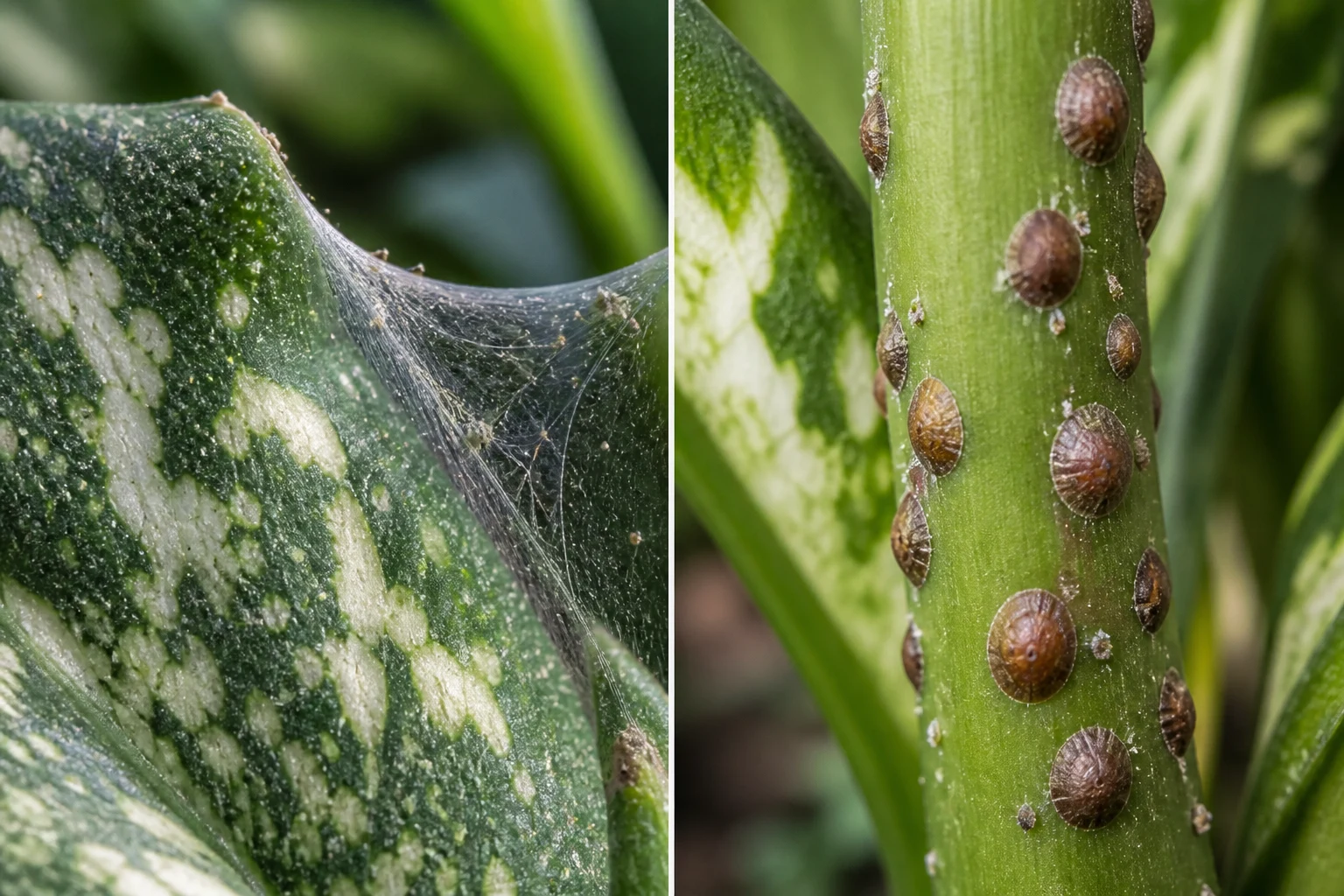
Fine webbing and stippling can accompany spider mites. Magnification helps distinguish moving mites from dust or old marks. White waxy clusters suggest mealybugs, while attached bumps may be scale insects.
Established scales can appear stationary, but their young crawlers are mobile. Soft scales may produce honeydew and armored scales do not. A lack of stickiness therefore cannot clear every scale infestation.
Fungus gnat adults can occur around moist organic media. Their presence does not prove that larvae caused an established plant’s decline. Traps help monitor adults while the moisture conditions and any root injury need their own assessment.
Minnesota recommends plain-water cleaning where suitable and cautions against homemade soap mixtures. Any pesticide must match the plant, pest, and indoor setting on its label. Cleaning and follow-up depend on the observed problem, not a fixed monthly inspection or automatic repeated spray course.
Sap Exposure and Pet Safety
The ASPCA lists Dieffenbachia as toxic to dogs and cats, with insoluble calcium oxalates and a proteolytic enzyme as the toxic principles. Listed signs include oral burning and irritation, drooling, vomiting, and difficulty swallowing.
That ASPCA genus listing does not list horses. Its omission is not evidence that Dieffenbachia is safe for horses, and NC State separately flags D. seguine as a concern for horses. The source’s animal and taxon scope matters more than assuming every listing is identical.
If a pet may have ingested the plant, contact a veterinarian or animal poison service promptly. A small bite is not established as harmless, and placing the pot beside a non-toxic plant does not reduce Dieffenbachia’s toxicity.
Sap can irritate skin and injure eyes. Gloves, avoiding face contact, and cleaning up cut material are practical precautions during pruning and propagation. A suspected human exposure belongs with poison-control or medical advice, not a home treatment inferred from plant-care instructions.
Access changes as a plant grows or sheds leaves. A high pot is only protective while foliage, cuttings, and fallen material remain out of reach. Where that cannot be maintained, a plant with a supported non-toxic listing is a more suitable choice, although non-toxic does not mean edible or guarantee no stomach upset.
Sources & References
- NC State Extension: Dieffenbachia seguine
- ASPCA: Dumbcane
- University of Connecticut: Dieffenbachia
- Purdue Extension HO-39: Indoor Plant Care
- University of Maryland Extension: Diagnose Indoor Plant Problems
- University of Maryland Extension: Root Rots of Indoor Plants
- University of Minnesota Extension: Managing Insects on Indoor Plants
Related Plants
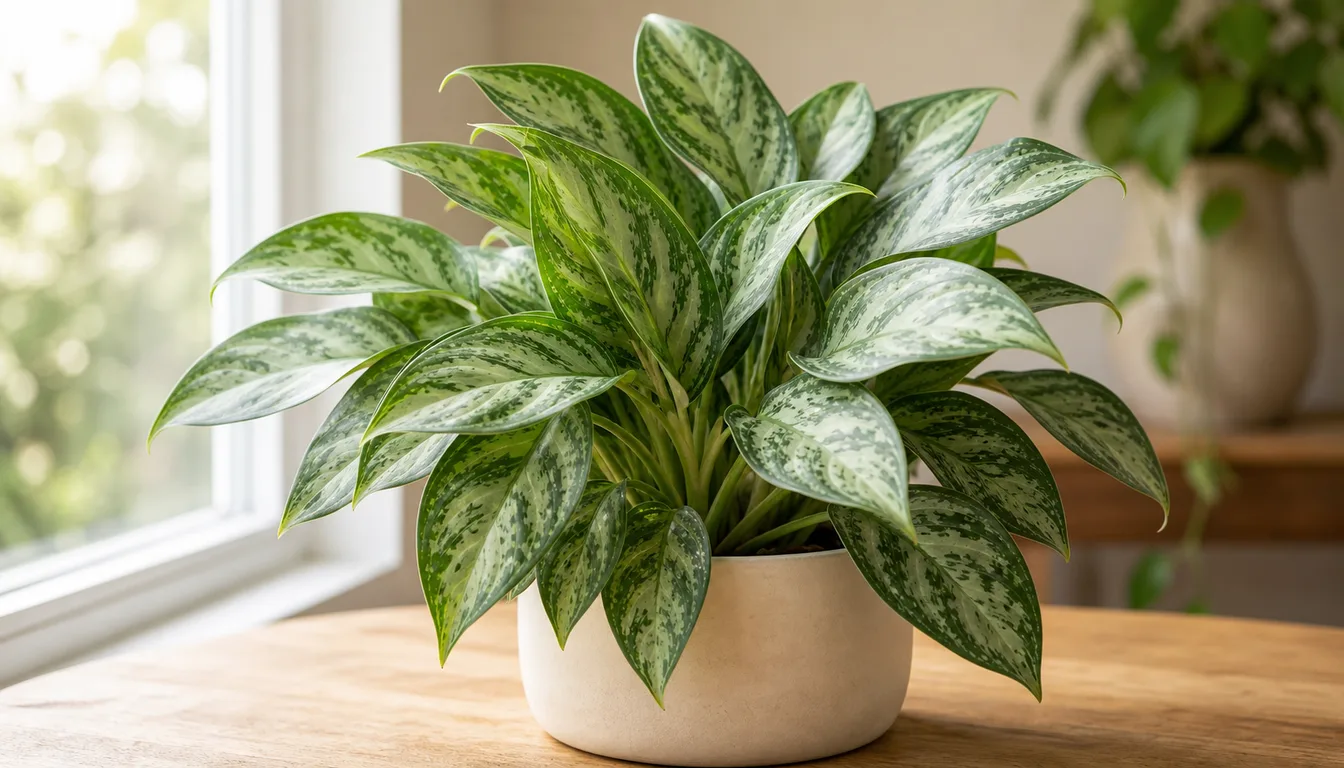
Chinese Evergreen
Compare another patterned foliage plant with a different form and its own care guidance.
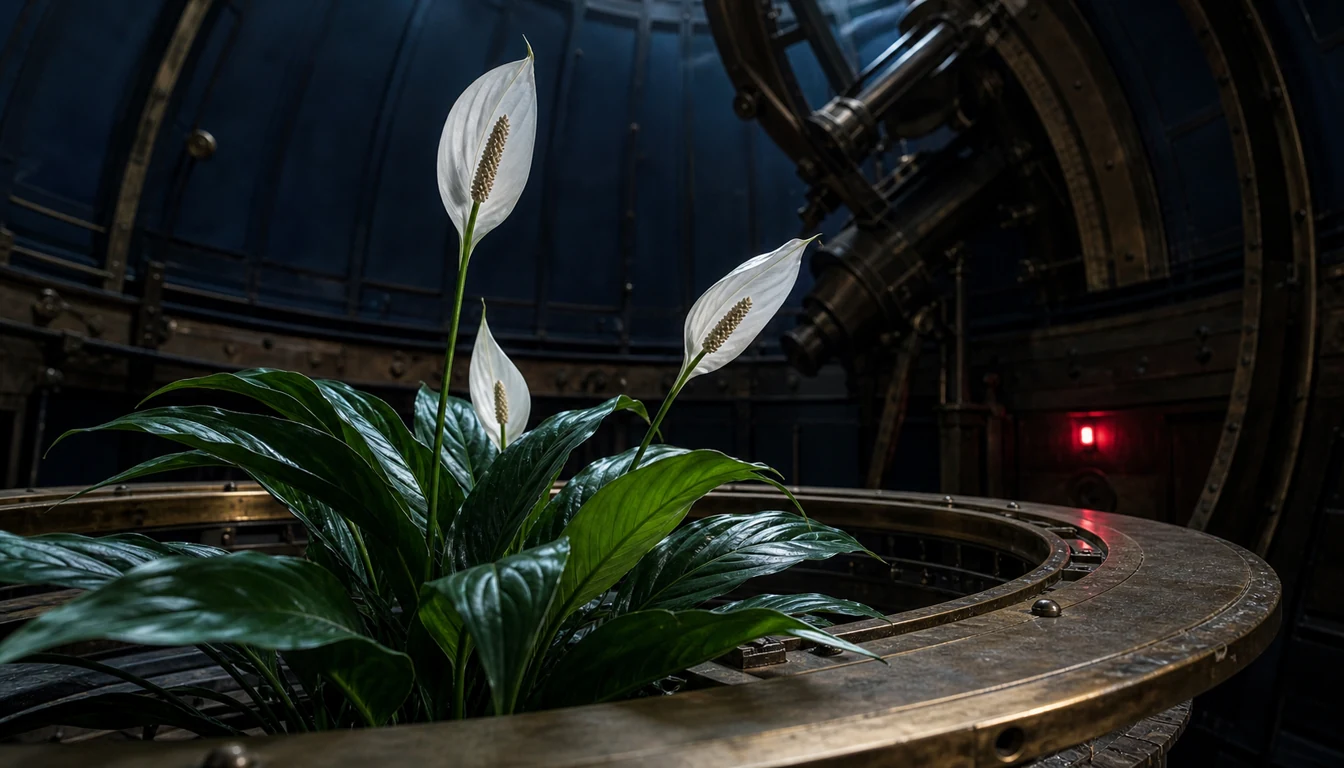
Peace Lily
A basal clump with green leaves and flowering spathes, rather than an exposed cane.
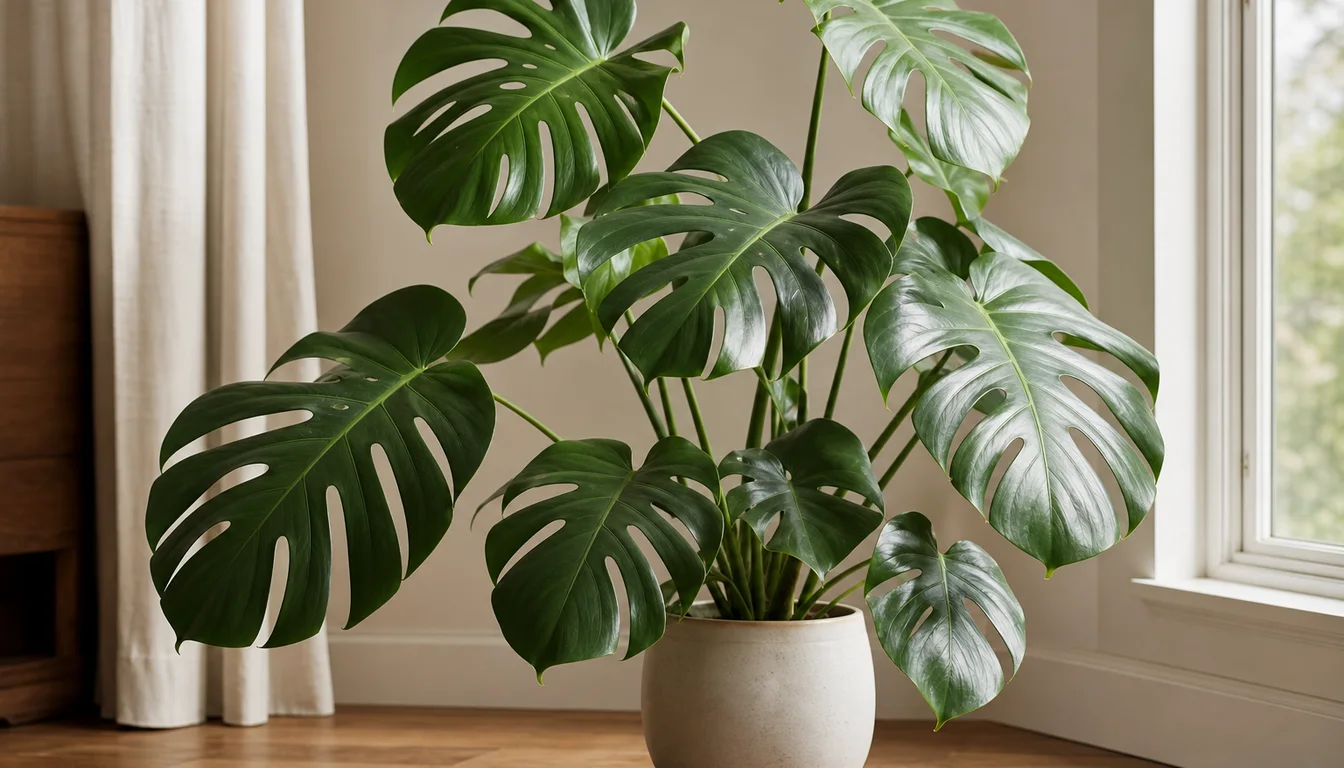
Monstera
A climbing aroid whose support and mature leaf changes differ from Dieffenbachia.
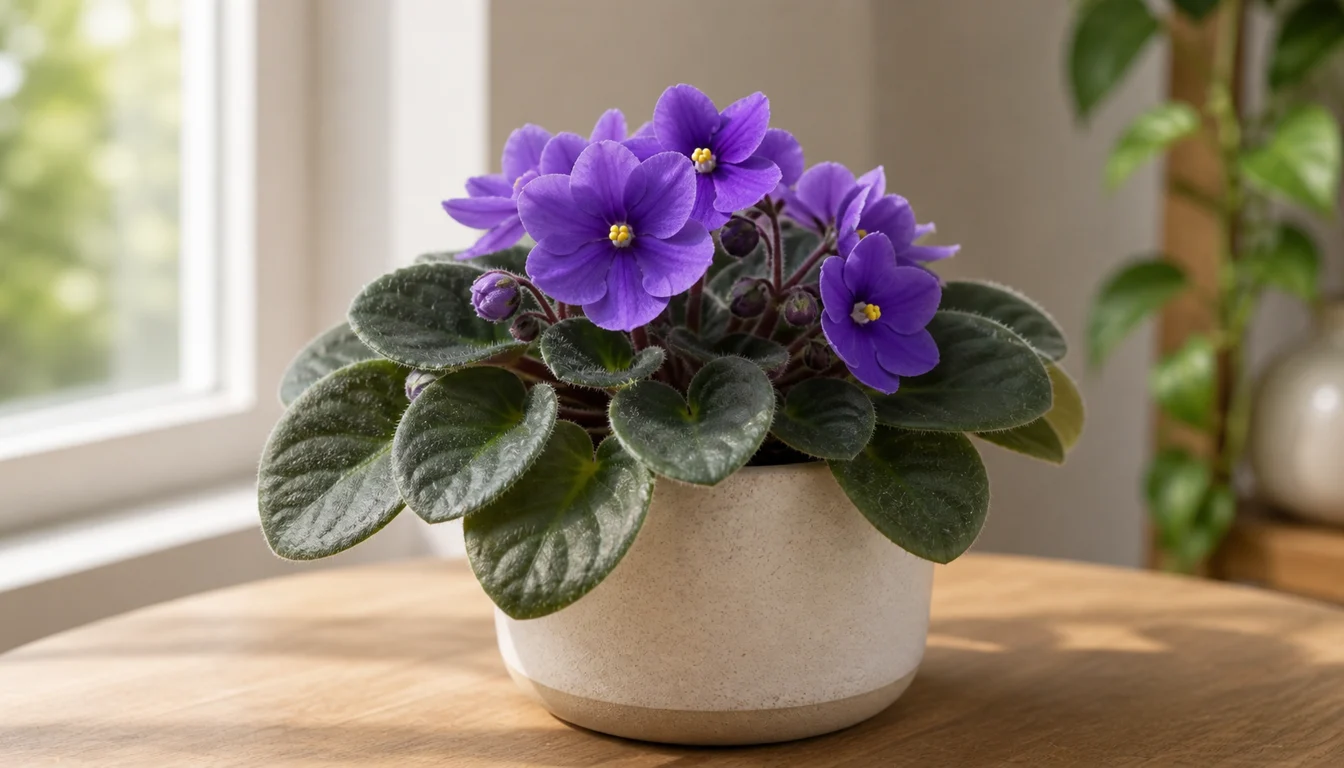
African Violet
African Violet is a windowsill bloomer that rewards steady, small-pot care.
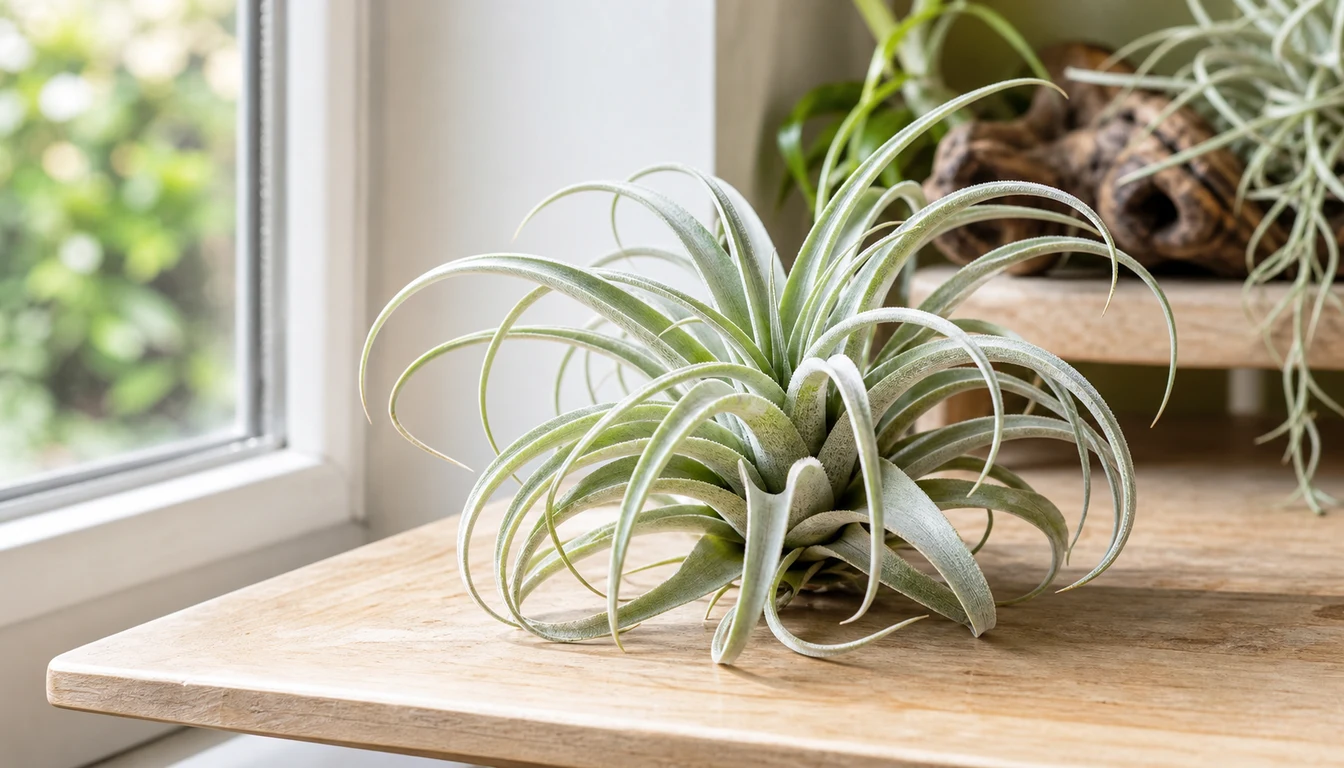
Air Plant
Air plants are living sculptures that thrive without soil, anchoring to driftwood, rocks, or shells while drawing…
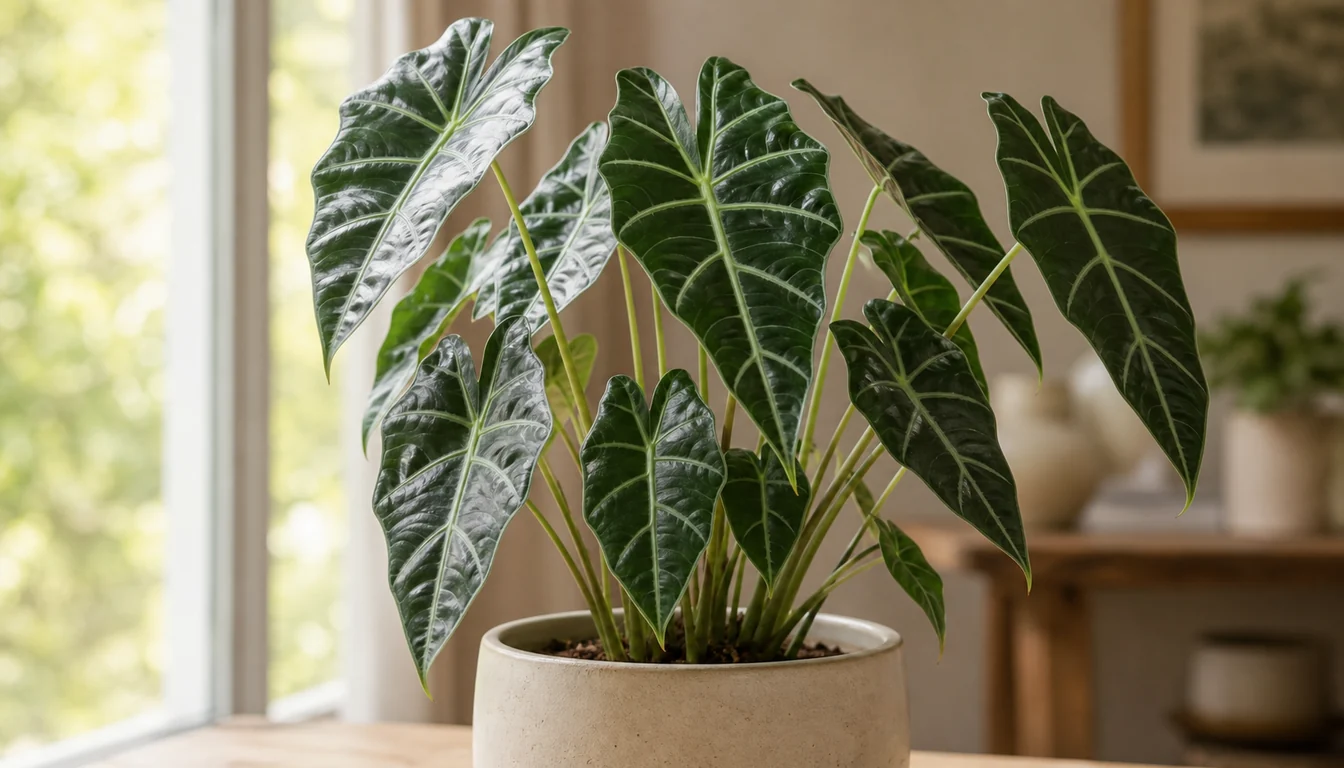
Alocasia
Alocasias include compact, textured houseplants and large elephant ears that need substantial floor space.