
Keep a Chinese Money Plant Upright While It Makes Pups
Pilea peperomioides Urticaceae
Chinese money plant care is mostly about keeping one upright stem balanced while the plant makes round coin leaves and rooted pups.
Give it bright indirect light, rotate the pot often, water by pot weight, and wait for offsets to form their own roots before you remove them.
Care snapshot
Start With the Coin-Leaf Shape You Want
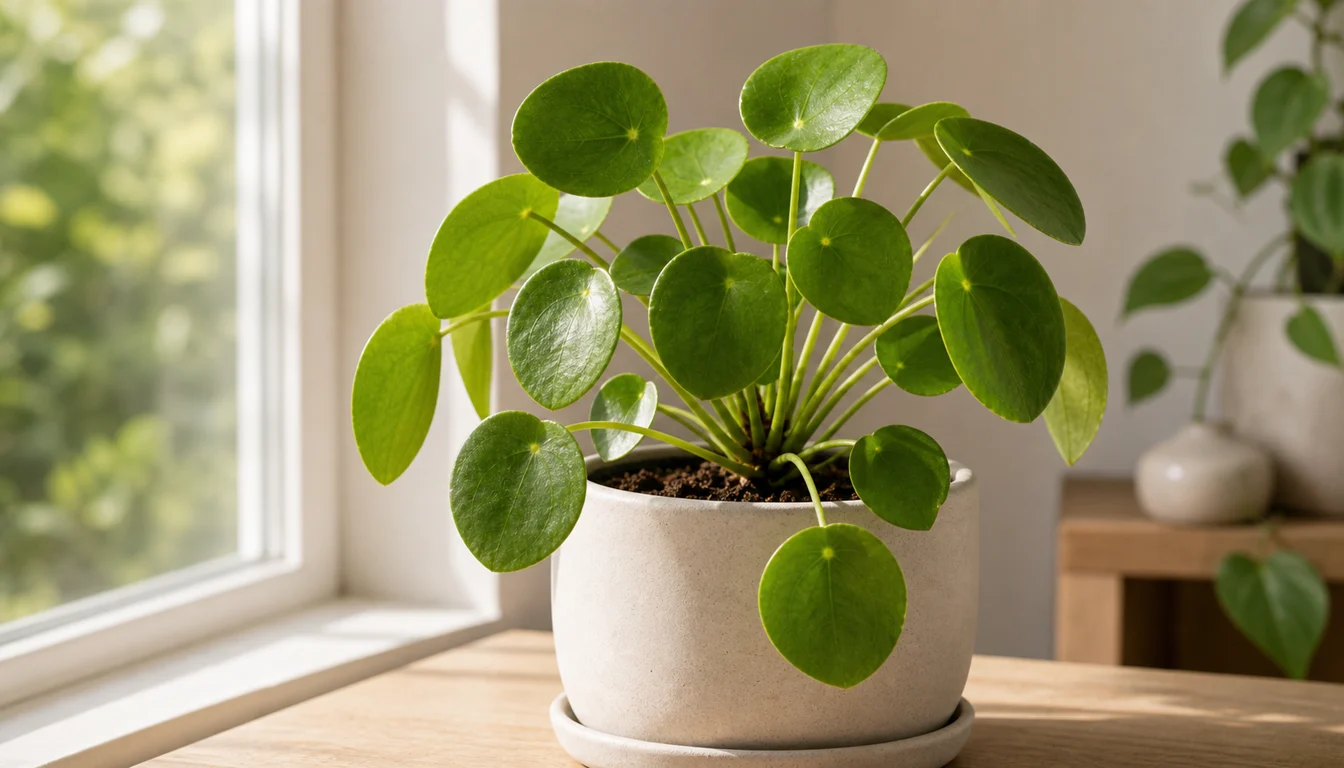
Chinese money plant care starts with shape, not with a long task list. A healthy plant should hold round peltate leaves on long petioles around one upright stem, with new pups appearing from the soil line once the root system is strong enough.
Decide early whether you want a clean specimen or a fuller pot that makes plants to share. A single-stem specimen needs steady rotation and selective pup removal, while a sharing pot can keep two or three rooted pups long enough to fill the surface.
This plant is not trying to cover a shelf the way pothos does. It looks best when the crown reads as a balanced circle, so every light, watering, and repotting choice should protect that upright center.
The leaf attachment is one reason the shape matters.
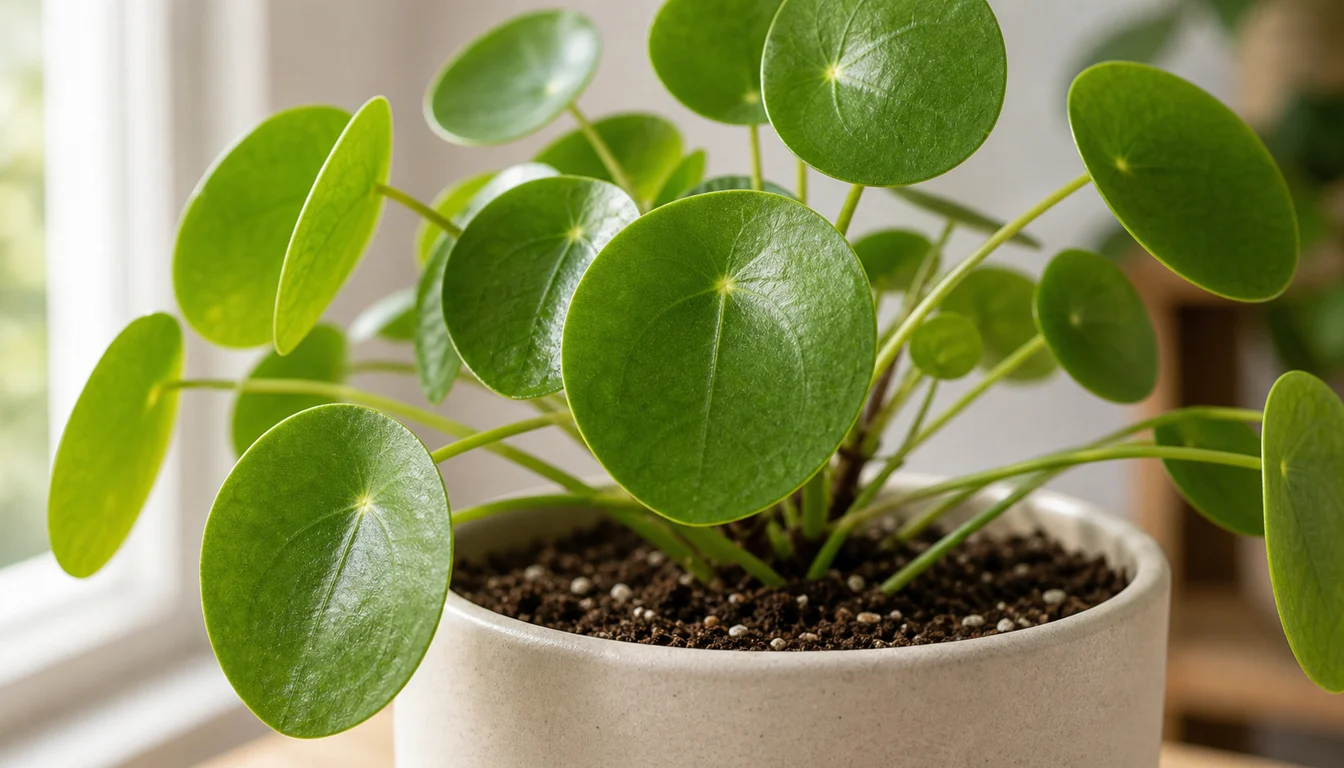
Each leaf attaches near the center of the blade, so the leaf sits like a small coin on a handle instead of hanging from one edge. When the plant is even, those round leaves catch light from several angles and the whole crown looks intentional rather than tangled.
A nursery pot with many small offsets can look fuller on the shelf, but it may not be the best starting point for a clean specimen. Choose a straighter mother stem if you care about the silhouette, and choose a pot with rooted offsets if your first goal is sharing plants.
Use Light and Rotation to Keep the Crown Round
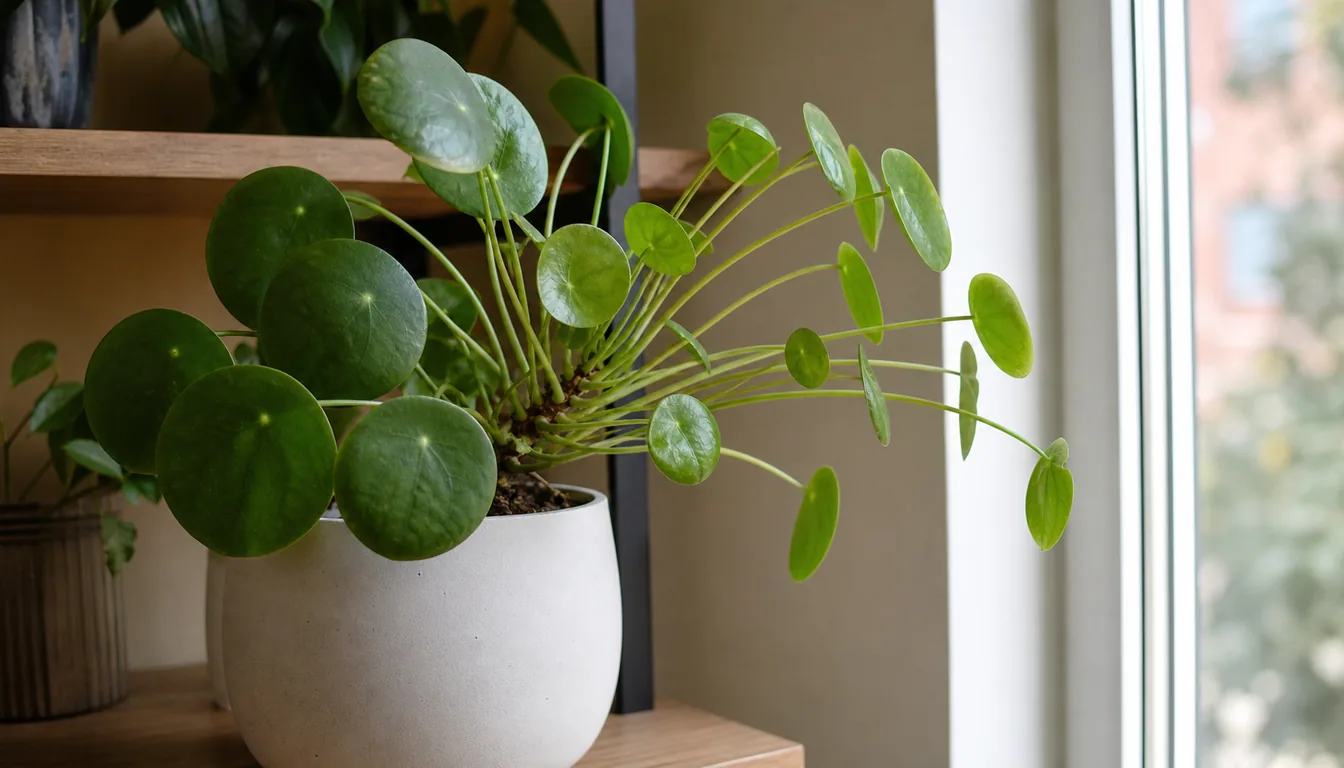
Bright indirect light keeps Chinese money plant compact, but one-sided light makes it lean quickly. If all new leaves face the window, the plant is telling you where the strongest light is before it looks sick.
Set the pot close enough to a bright window that new leaves stay broad, then turn the pot a quarter turn once a week during active growth. Gentle morning sun can work, but harsh afternoon glass can bleach leaves and make the thin petioles droop.
- Check whether the newest leaves are smaller than older leaves.
- Turn the pot before the main stem bends, not after the crown is already one-sided.
- Move the plant closer if the petioles stretch and the leaves point like small plates toward the window.
- Move it back if the leaf surface looks pale, papery, or cupped after direct sun.
A plant such as ZZ plant can sit farther from a window because it grows slowly and tolerates lower light. Chinese money plant can survive medium light, but it loses the neat coin-leaf crown that made you buy it.
If the plant already leans, do not spin it 180 degrees and expect the stem to straighten in a week.
Turn it gradually, support the pot so it sits level, and judge the newest leaves rather than the oldest bend.
Old petioles often keep their angle, while new leaves show whether the plant now receives light evenly.
A north window may be enough in a bright room, but a dark corner across the room usually makes the stem stretch. If you need a plant for that corner, use low light houseplants instead of forcing this pilea to perform there.
Water by Pot Weight, Not by a Calendar
The right watering rhythm changes with pot size, room heat, and root mass. A snug bright pot may dry in days, while an oversized pot can stay wet long enough to yellow lower leaves and soften the base.
Lift the pot before you water. If it feels light and the top layer is dry, water until the mix is evenly moist and empty the saucer after drainage slows.
Do not water again just because the surface looks pale. Peat-heavy mixes can dry on top while the lower half still holds water, and Chinese money plant roots do poorly when that lower layer stays airless.
- Light pot, slight leaf droop
- Water thoroughly, drain the saucer, and check whether leaves recover by the next day.
- Heavy pot, yellow lower leaves
- Wait, check the drainage hole, and let the root ball breathe before the next watering.
- Wet mix, soft stem base
- Slide the plant out and inspect roots before adding more water.
- Dry top, heavy lower pot
- Delay watering and use pot weight instead of the top half inch alone.
The clue is quieter than the dramatic wilt of peace lily. Chinese money plant may only tip its leaves or lose one lower leaf, so pot weight gives you better evidence than waiting for collapse.
Use one full watering instead of many small splashes.
Small splashes wet only the top layer, which encourages shallow roots and leaves dry pockets deeper in the pot. A full watering followed by real drainage gives the whole root ball the same reset, then pot weight tells you when that water has been used.
If the plant wilts again within a day after a correct watering, the root ball may be too tight or too dry inside to absorb water well. Soak the nursery pot once, let it drain fully, and then decide whether the plant needs repotting rather than adding daily water.
Keep the Pot Snug and the Mix Airy
A small Chinese money plant in a large decorative pot usually struggles because the roots cannot use all the wet mix around them. The plant has a shallow indoor root system, so it needs air to return quickly after each full watering.
Use a pot with a real drainage hole and move up only one size when roots circle the current pot.
A heavy cover pot is fine if the nursery pot drains freely inside it and the outer pot is emptied after watering.
A houseplant mix with extra perlite or pumice is usually enough. The goal is not a cactus-dry recipe, but a mix that holds moisture for new roots while releasing extra water before the stem base softens.
- Choose a pot only slightly wider than the root ball.
- Confirm the drainage hole is open before you add the plant.
- Add perlite or pumice if the mix packs into a heavy mass after watering.
- Delay repotting if the plant is leaning from light rather than crowded roots.
This pot logic is closer to peperomia than to monstera. A bigger foliage plant may need room for a larger support system, but this pilea usually wants a modest pot that dries predictably.
Repotting is useful when roots fill the pot, the mix collapses into a dense block, or water runs around the root ball without soaking it. It is not the first fix for a plant that leans only because the window is on one side.
If the current pot has no drainage, fix that before changing the watering routine. The general rules behind drainage holes in pots matter more for pilea because its stem base sits close to the wettest part of the mix.
After repotting, keep the plant in the same light for a couple of weeks so you can read recovery clearly. Moving the plant, changing the pot, and changing the water rhythm on the same day makes the next symptom harder to interpret.
Remove Pups Only After They Can Live Alone
Pups are the reward, but tiny offsets are not free plants yet. Wait until a pup has several leaves and its own roots before you cut it from the mother plant.
Soil pups are usually easier than stem pups because they often form roots while still attached. Stem pups can root, but they dry out faster after cutting and need steadier moisture while they rebuild.
- Leave attached
- One or two tiny leaves, no resistance in the soil, or no visible roots.
- Ready to remove
- Several leaves, firm petioles, and roots that hold a small clump of mix.
- Best cut
- Cut close to the mother connection while keeping as many pup roots as possible.
- Aftercare
- Use a small pot, keep the mix lightly moist, and avoid direct hot sun until new growth appears.
This is different from taking vine cuttings, where a node can root in water or mix with little attached root. If you want that style of propagation, propagating houseplants by cuttings is a separate skill from dividing a rooted pilea pup.
A good pup should resist when you lift it gently from the mix.
That resistance tells you small roots have already gripped the surrounding soil. If the pup slides out with no root or only a pale nub, put it back against the mother plant and wait for stronger growth.
The first pot for a removed pup should be small enough that the mix dries on schedule.
A large pot makes the tiny root system sit in unused wet soil, which is the same mistake that weakens the mother plant.
Do not feed a new pup to make it grow faster. Let new leaves prove that roots have started working, then resume a light houseplant fertilizer routine during active growth.
Read Leaning, Curling, Yellowing, and Soft Stems Separately
Do not treat every odd leaf as a watering problem. Chinese money plant shows different failures in different places, and the location of the symptom usually matters more than the number of leaves involved.
Leaning begins with light direction. Curling and cupping often come from dry roots, heat, or direct sun, while several yellow lower leaves at once often point back to wet mix and weak root air.
A bare lower stem is not always a crisis if the top is firm and new leaves look round. You can let rooted pups rebuild the base, or restart the top only when the old stem is too tall or scarred for the shape you want.
- Whole crown leans one way
- Rotate weekly and give brighter balanced light before changing water.
- Leaves curl down on a light pot
- Water fully, then adjust the interval if the same slump repeats quickly.
- Several yellow lower leaves
- Check pot size, drainage, and lower mix moisture before feeding.
- Soft dark stem base
- Inspect roots and save firm pups or top growth if the base is failing.
- Fine webbing or speckled leaves
- Isolate the plant and check for spider mites, especially in dry warm rooms.
The diagnosis is also different from Pilea cadierei. Aluminum plant is grown for patterned leaves on many stems, while Chinese money plant is judged by one central stem and the timing of its pups.
Work from the least disruptive fix first.
A lean can improve with light and rotation, so do not cut the stem just because it points toward the window. A soft base is more serious because it can move upward through the stem, and waiting too long may leave you with no firm growth to save.
Spider mites are not the first assumption for every speck, but they are worth checking in warm dry rooms. Look under leaves and along petioles before spraying, then use spider mite treatment for houseplants only when the pest evidence is actually there.
Use Spring for Pups and Winter for Holding Shape
Spring is the best time for stronger action because the plant is already building roots and leaves. Pup removal, light repotting, and top-mix refreshes usually recover faster when new growth is active.
Summer care depends on the window.
Warm rooms and small pots can dry faster than your calendar suggests, while hot direct glass can make leaves cup even when the root ball still has moisture.
Winter is mainly for holding shape. Keep the plant bright, rotate it, water less often, and delay removing small pups unless they are already rooted and the room stays warm.
- Spring
- Remove rooted pups, refresh compacted mix, and correct any lean from winter light.
- Summer
- Watch pot weight more often and protect leaves from hot afternoon glass.
- Fall
- Slow feeding and let the plant settle before shorter indoor days.
- Winter
- Hold bright placement, rotate the pot, and avoid major cuts unless rot forces action.
Seasonal care also changes how you judge mistakes.
In spring, a slow pup can turn into a usable offset within weeks because the plant is already active. In winter, the same small pup may sit almost unchanged, so cutting it early only moves a weak start into a separate pot.
If you like a monthly rhythm, use an indoor plant care calendar as a reminder, then let the actual pot decide the water day. The calendar should prompt a check, not replace what the plant and mix show you.
Place It Where Pets and Its Brittle Stem Both Stay Safe
The ASPCA plant database has no entry for Chinese money plant, and NC State gives no pet rating for it, so its safety for cats and dogs is not established. Shelf placement matters either way.
The main stem can snap if the pot falls or a pet chews the crown. Use a stable shelf, a heavier cover pot, or a spot where the leaves can face light without hanging over a walking path.
If toughness matters more, snake plant survives more physical neglect, but the ASPCA lists it as toxic to cats and dogs. For a broader shortlist, use pet-safe houseplants and still check whether the exact plant can handle the shelf, window, and traffic in your room.
Placement also affects watering.
A high warm shelf may dry the pot faster than a table near the same window, while a cool windowsill can keep the lower mix wet longer. Check pot weight after you move the plant, because the old routine may stop matching the new spot.
The best location lets the crown face bright light without putting the pot where it gets bumped. When the plant has both stable footing and steady light, most of the routine becomes simple observation.
Frequently Asked Questions
How often should I water Chinese money plant?
Water when the pot feels light and the upper mix is dry. A small bright pot may dry quickly, but an oversized pot can stay wet long enough to yellow leaves.
Why is my Chinese money plant leaning?
Leaning usually means the strongest light comes from one side. Rotate the pot weekly and move it into brighter indirect light if new leaves are small or stretched.
When can I remove Chinese money plant pups?
Remove pups once they have several leaves and their own roots. Tiny offsets recover better if they stay attached until they can hold a small clump of mix.
Is Chinese money plant safe for cats and dogs?
The ASPCA plant database has no entry for Chinese money plant, and NC State gives no pet rating for it, so its safety for cats and dogs is not established. Place it where pets cannot knock the brittle stem or pot.
Can Chinese money plant grow in low light?
It may survive in medium light, but low light usually makes it lean, stretch, and produce smaller leaves. Bright indirect light gives the roundest crown.
Sources & References
Related Plants
Golden Pothos
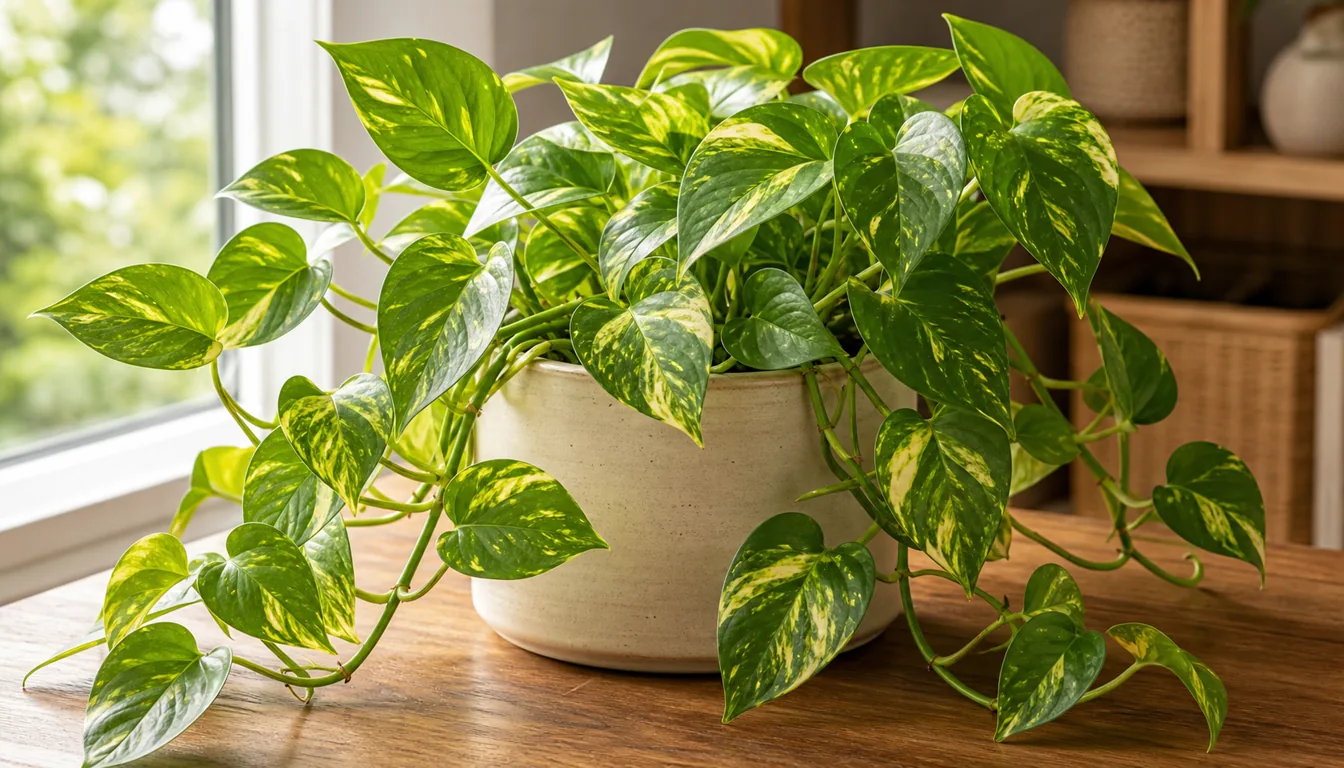
A trailing shelf plant that solves a different indoor display problem.
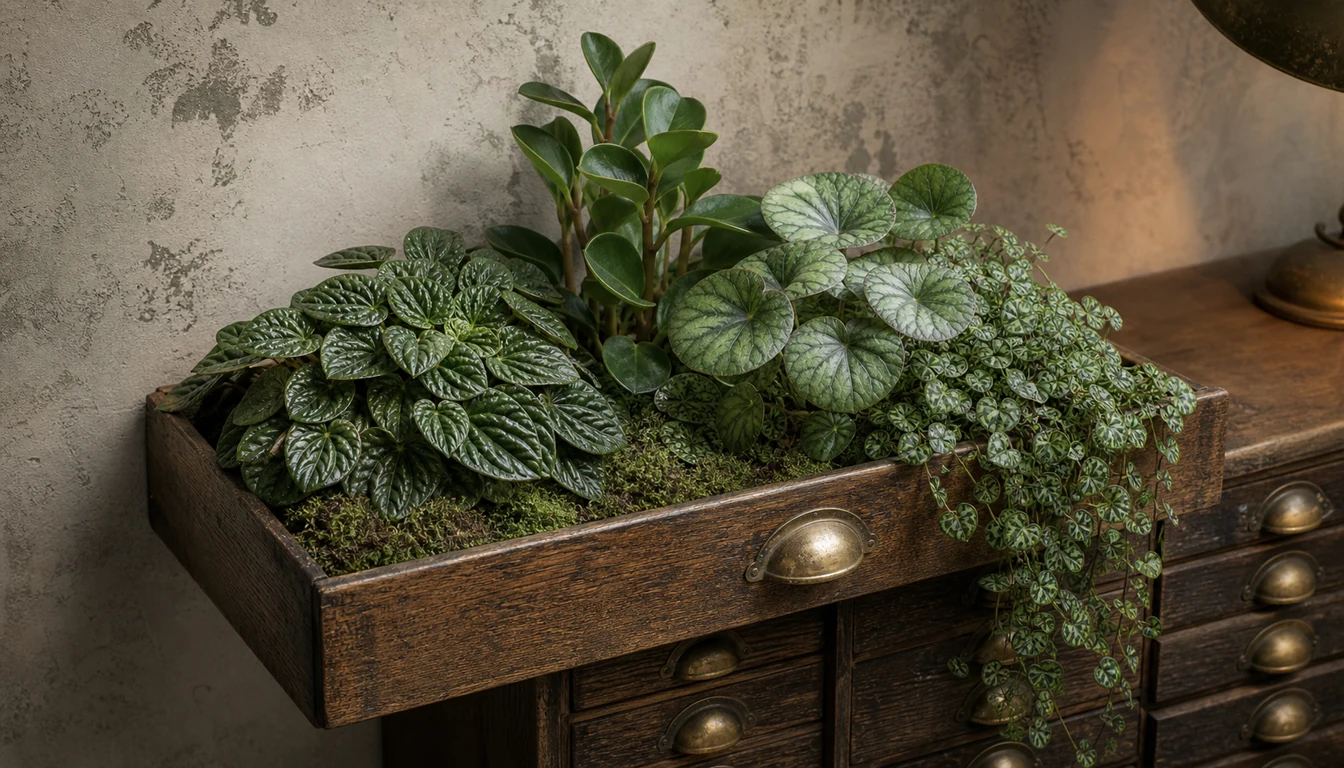
Peperomia
A compact pet-safe plant with a similar tabletop scale.
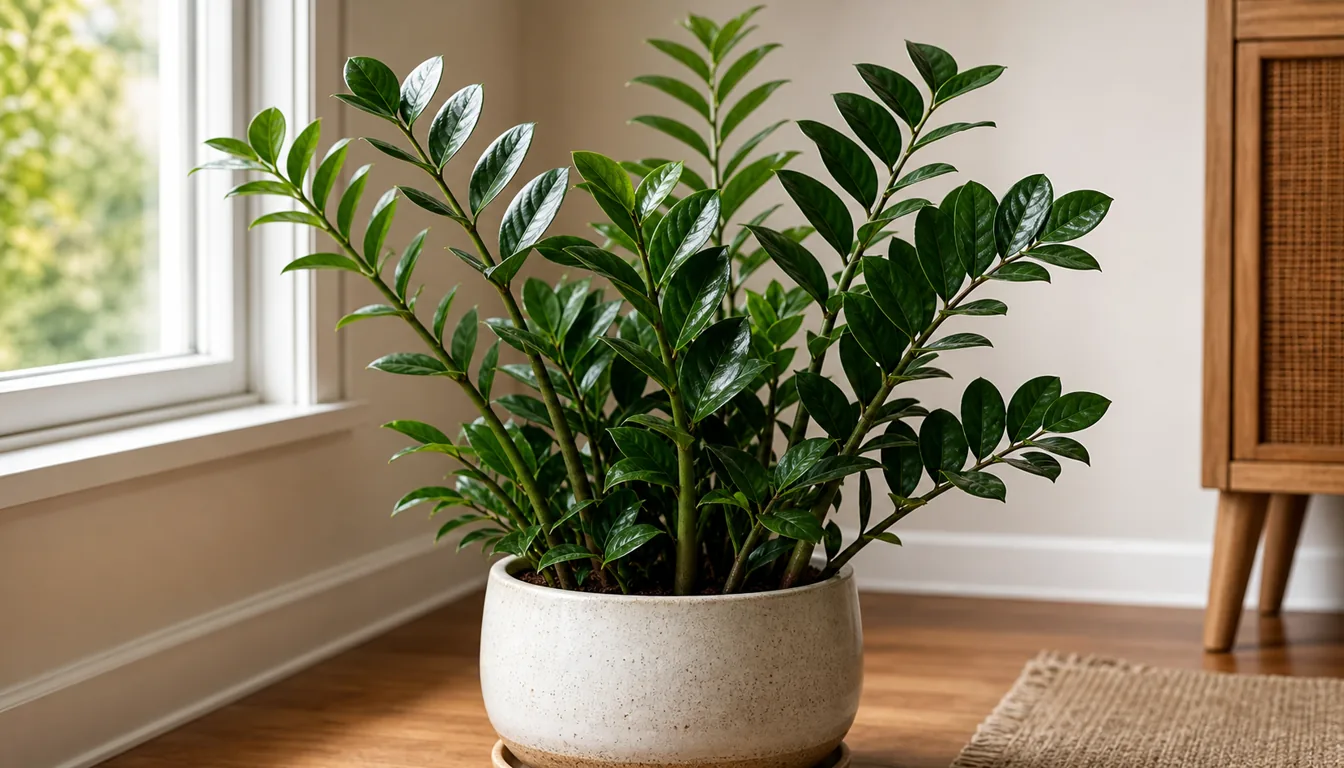
ZZ Plant
A tougher low-light houseplant for places where pilea would stretch.
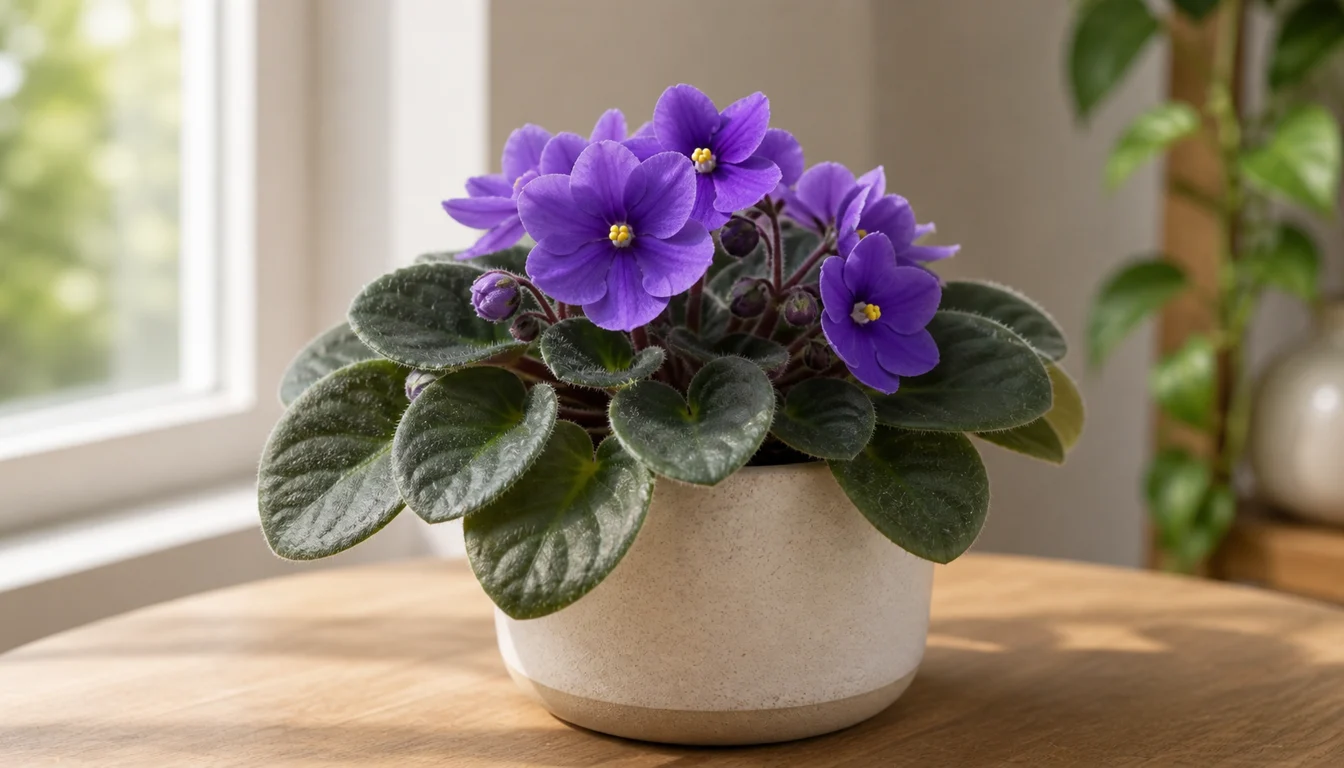
African Violet
African Violet is a windowsill bloomer that rewards steady, small-pot care.
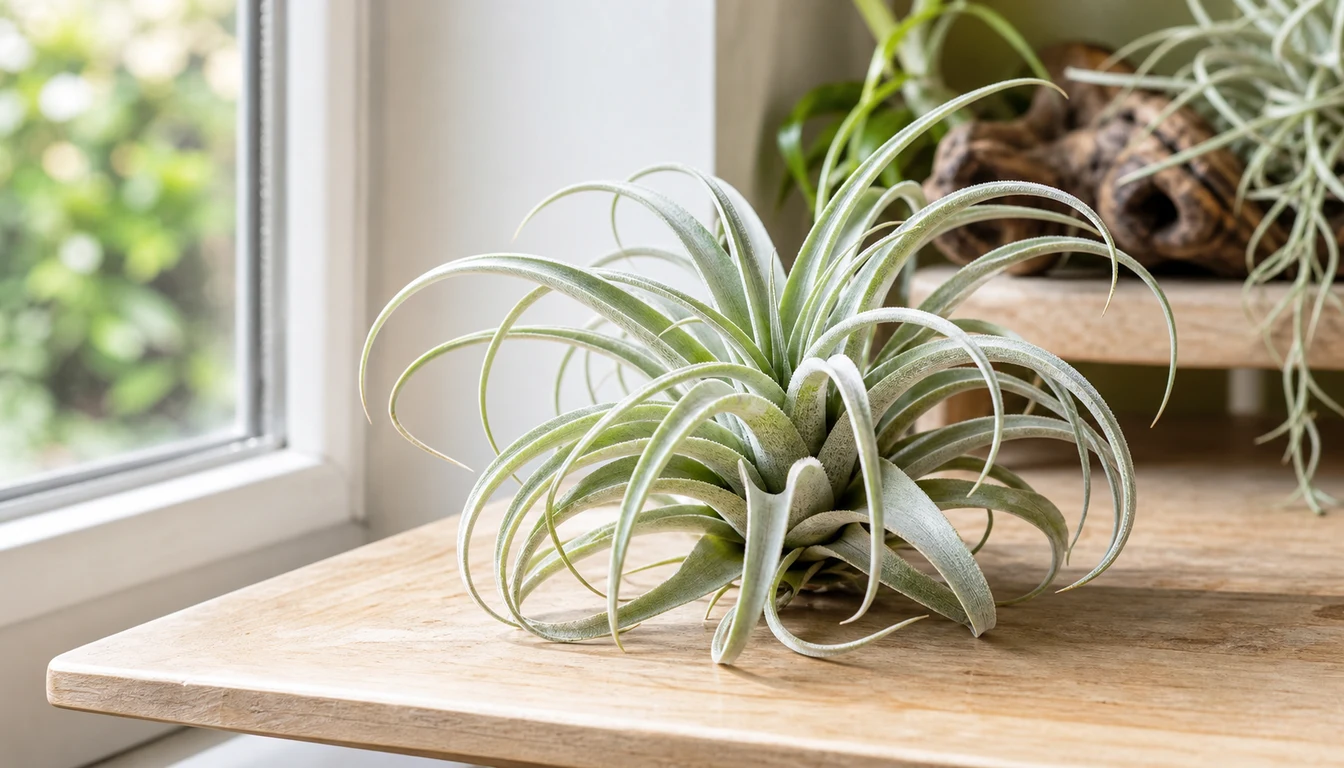
Air Plant
Air plants are living sculptures that thrive without soil, anchoring to driftwood, rocks, or shells while drawing…
Alocasia
Alocasias include compact, textured houseplants and large elephant ears that need substantial floor space.