Plantingschedule10 min read
Overwatering vs Underwatering: How to Tell the Difference Fast
Learn the fastest signs that separate overwatering from underwatering so you stop guessing and start fixing the right problem.
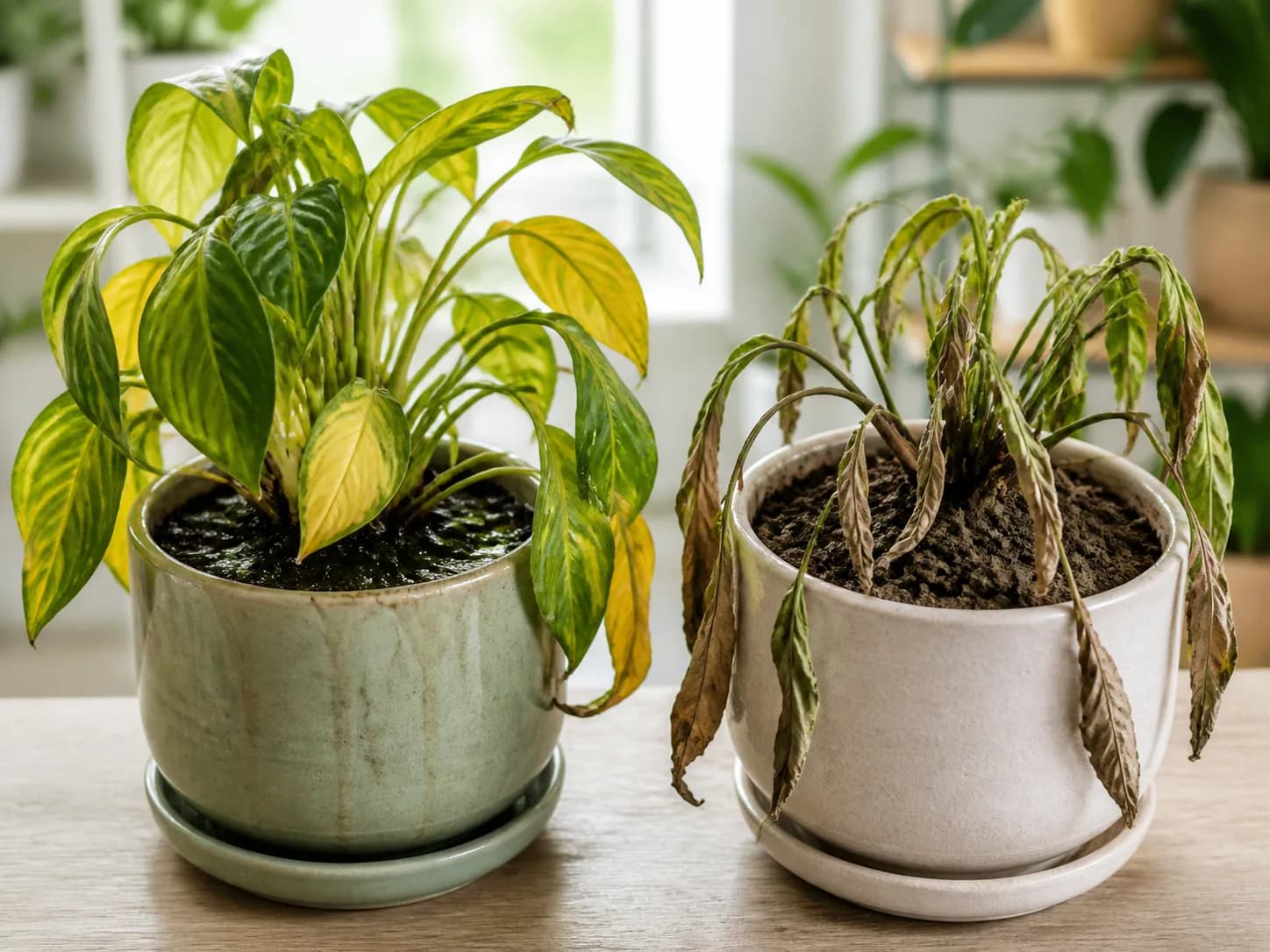
A drooping plant does not automatically mean it needs water. That assumption is how a dry spell turns into root rot; people see wilt, add more water, and bury the real problem one step deeper.
The clean way to separate the two is to look at the whole pattern: leaf texture, pot weight, soil feel, smell, and how long the mix has stayed wet or dry. Once you read those clues together, the difference between stress from too much water and stress from too little water gets a lot easier to see.
potted_plantStart with pot weight and soil feel
The fastest field check is still the pot. A heavy pot with wet soil points toward overwatering; a light pot with dry soil points toward underwatering. Do that check before you stare at leaf color.
Plants like Snake Plant and ZZ Plant may stay firm for a while even when they are too wet, so the soil tells the truth earlier than the foliage. Plants like Peace Lily or Spider Plant show wilt faster when they dry out, but you still need to verify the root zone instead of reacting to posture alone.
If the mix is staying wet far longer than expected, compare your routine with houseplant watering frequency.
opacityWhat overwatering usually looks like
Overwatered plants often look dull, swollen, or soft rather than crisp. Yellowing lower leaves, mushy stems, sour-smelling soil, fungus gnats, and a pot that stays heavy for days are classic signals.
This pattern shows up fast on Peace Lily, Pothos, and Monstera when drainage is weak or the pot is oversized. On drought-tolerant plants like Snake Plant and ZZ Plant, damage can hide below the surface until roots are already compromised.
For Pothos, the wet-soil clue matters more than one yellow leaf.
When the plant has been sitting wet, go straight to overwatered plant recovery instead of adding more water out of panic.
Guide — See AlsoNo Dig Gardening Method for Easy Productive BedsStep‑by‑step no dig gardening method instructions so you can build fertile, low‑weed beds without ever turning the soil.
chevron_rightwb_sunnyWhat underwatering usually looks like
Underwatered plants usually feel crisp, thin, or papery. Leaf tips dry first, edges curl, the pot becomes noticeably light, and the soil may pull away from the container wall.
You will see that faster on Spider Plant, Peace Lily, and thirsty foliage plants in small pots. Even a forgiving Pothos starts losing bounce when the root ball stays dry too long.
Dry soil can still repel water on the first pour, so rewet slowly and evenly instead of letting all the water race through and calling that fixed.
Email Updates
Join the KnowTheYard update list
Zone-specific advice, seasonal reminders, and new plant guides — no filler.
ecoWhere people confuse the two most often
The biggest trap is wilt. Both wet roots and dry roots can produce drooping leaves because both interfere with water movement through the plant. That is why visual symptoms without a soil check are not enough.
Another trap is yellowing. New growers often treat all yellow leaves as thirst, but yellowing plus a wet pot and soft stems is much closer to overwatering. Yellowing plus a dry pot and crispy edges leans the other way.
If the potting mix is old, compacted, or wrong for the plant, the line gets blurrier. In that case, combine diagnosis with repotting guidance before the stress cycle repeats.
Guide — See AlsoBest Shade Plants for Gardens That Get Little SunA practical guide to choosing the best shade plants for outdoor gardens, covering perennials, shrubs, ground covers, and
chevron_rightpaletteHow plant type changes the reading
Plant type matters because some roots are built to coast and some are not. ZZ Plant and Snake Plant store more moisture, so frequent watering creates damage faster than missing a single round. Peace Lily and Spider Plant complain sooner when they dry.
That is why one fixed schedule fails across a mixed collection. A room full of different plants needs soil checks, not a calendar alarm that treats every pot the same. Large-leaf plants such as Monstera also hide root stress until the pot tells you what is happening.
checklistThe clean correction for each problem
For underwatering, rewet the root ball fully, let excess drain, and then return to normal checks. For overwatering, stop adding water, improve airflow and light if possible, and inspect whether the pot or soil structure is trapping too much moisture.
If gnats show up along with constant wetness, pair the fix with fungus gnat cleanup. If the mix is collapsing or the pot is too big, move to a controlled repot instead of repeating the same watering mistake.
The point is simple: fix the cause, not just the symptom.
Guide — See AlsoHow to Start Seeds Indoors for Stronger TransplantsStep-by-step guide to starting seeds indoors so you get stout, healthy transplants instead of weak, leggy seedlings.
chevron_righttips_and_updates
Pro Tips
- check_circleCheck pot weight before you decide the plant is thirsty.
- check_circleWilt is a clue, not a diagnosis.
- check_circleSoft stems and sour soil lean wet; crispy edges and a light pot lean dry.
- check_circleDo not use one schedule for plants with very different root behavior.
- check_circleIf the mix stays wrong for too long, fix the soil and container, not just the watering date.
quiz
Frequently Asked Questions
Can an overwatered plant look dry?expand_more
Yes. Roots damaged by constant wetness stop moving water properly, so the top growth can droop even while the soil is still soaked.
What is the fastest way to tell the difference?expand_more
Check the pot weight and soil moisture first. That is usually more reliable than leaf posture by itself.
Should I water a drooping peace lily immediately?expand_more
Only after you confirm the soil is actually dry. Peace Lily wilts quickly, but it can also suffer if you keep watering an already wet pot.
Why does the problem keep coming back?expand_more
Usually because the routine is fighting the wrong setup: weak drainage, compacted mix, oversized pots, or a schedule that ignores plant type.
Related Guides

Air Purifying Plants for Cleaner Indoor Air
Learn how to pick, place, and care for air purifying plants so they help your indoor air instead of just looking pretty.
11 min read
Best Herbs to Grow Indoors for Real Harvests, Not Spindly Pots
Choose indoor herbs that can actually produce in your light, temperature, and container setup, then match each one to the right harvest rhythm and watering style.
10 min read
Best Indoor Plants for Every Room and Light Level
A practical guide to choosing the best indoor plants for your home, covering beginner-friendly picks, low light champions, bright light lovers, watering basics, and how to avoid the most common mistakes.
13 min read