verifiedSource Reviewed
Areca Palm
Dypsis lutescens
Family: Arecaceae
wb_sunnyLight
Bright indirect to medium light; tolerates some direct morning sun
water_dropWater
Moderate; keep soil evenly moist but not soggy
heightHeight
4-7 ft indoors depending on conditions
publicZone
Outdoors in Zone 10-12; indoors anywhere
petsPet Safety
Pet Safe
airAir Quality
Air Quality Note
Native Region
Madagascar (eastern rainforests)
ecoJudge Areca Palm by the New Fronds
The first read on Areca Palm is not the oldest brown tip at the edge of the clump; it is the next frond opening from the cane cluster. A clean new spear with only small dry points means the plant is adapting, while a new frond that opens pale, brittle, or already spotted points to a current care problem.
That matters because this palm carries old damage for a long time. If you chase every brown leaflet with more water, you can drown the roots while the plant was only reacting to dry room air or mineral-heavy tap water.
- check_circleNew fronds opening green: keep the routine steady and trim only fully dry leaflet tips.
- check_circleNew fronds opening yellow: check drainage and root oxygen before adding fertilizer.
- check_circleNew fronds opening crispy: raise humidity or soften the water before changing the pot.
This is where Areca Palm separates from tougher upright plants like Snake Plant. Plants like ZZ Plant can hide neglect for weeks; areca shows room stress at the leaflet edge first.
wb_sunnySet the Clump Where Fronds Can Arch
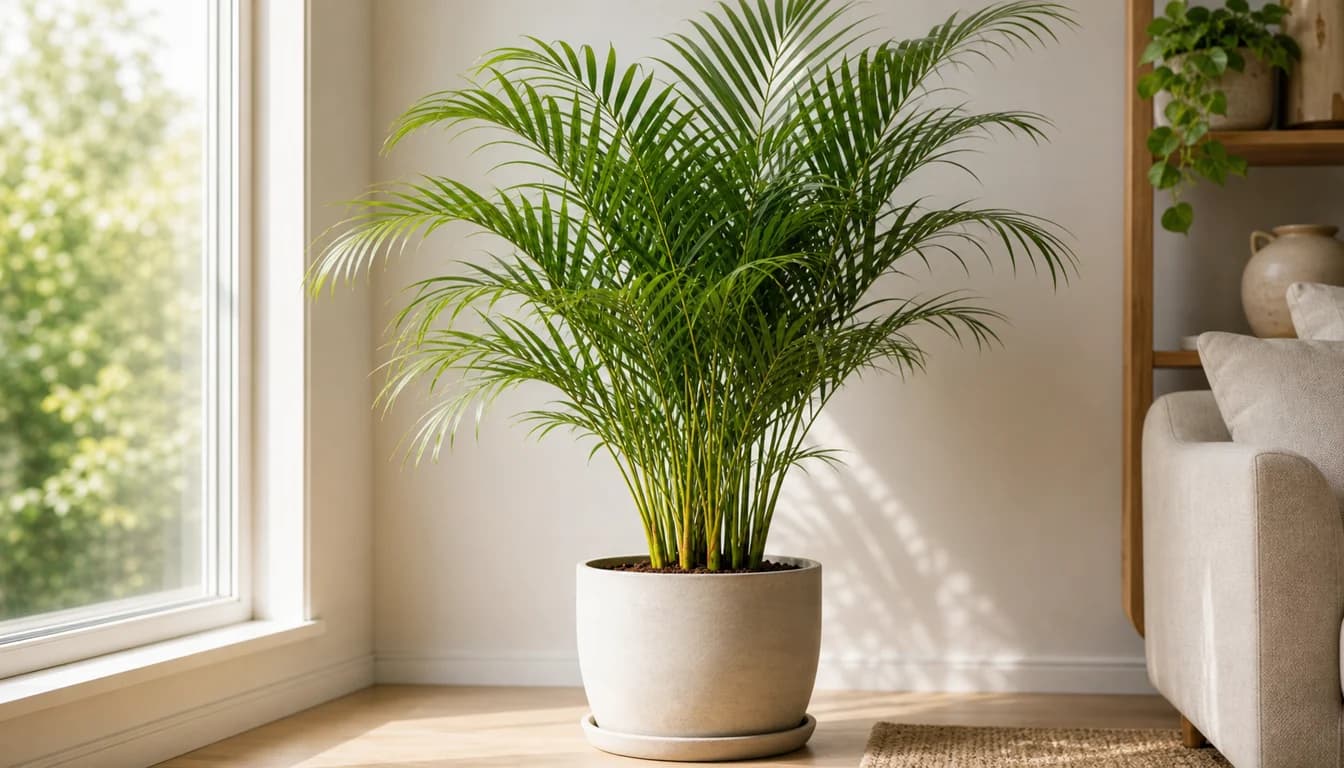
Place Areca Palm for its spread, not just its height. The plant looks graceful when the canes sit slightly back from the walkway and the fronds lean into open air; it looks ragged when every leaf brushes a wall, curtain, or chair arm.
Bright filtered light near an east or lightly shaded south window is the easiest setup. In medium light the palm can survive, but new fronds arrive slower and the lower leaflets thin out sooner.
Best spotA bright room with filtered sun and 2-3 ft of side clearance
Risky spotA hot west window where fronds bleach and the pot dries unevenly
Acceptable compromiseMedium light if you want a slower, smaller palm and can keep humidity steady
If you want a smaller palm for a darker corner, Parlor Palm is the cleaner choice. If you want the same resort look at a bigger scale, compare areca against Majesty Palm before buying the largest pot in the store.
Guide — See AlsoAir Purifying Plants for Cleaner Indoor AirLearn how to pick, place, and care for air purifying plants so they help your indoor air instead of just looking pretty.
chevron_rightwater_dropWater for a Damp Core, Not a Wet Saucer
Areca roots should not dry to dust, but they also cannot sit in a saucer that stays wet after every watering. The useful target is a damp inner root ball with air returning to the top inch between waterings.
Use pot weight more than the calendar. A large nursery pot can feel dry on top while the center is still wet, especially in winter or in a decorative cachepot with poor airflow.
warningDo not fix brown tips by watering twice as often
Brown tips are often caused by dry air, mineral buildup, or old shipping stress. If the pot is still heavy, more water only pushes the cane roots toward rot.
A houseplant watering routine that works for Peace Lily may be too wet for areca because peace lily wilts loudly and rebounds fast. Areca declines more quietly; the lower canes yellow after the root zone has already stayed wet too long.
Email Updates
Join the KnowTheYard update list
Zone-specific advice, seasonal reminders, and new plant guides — no filler.
yardBuild a Mix That Keeps Canes Upright
A mature areca is top-heavy in a different way than a single-stem tree. Several canes pull the root ball in different directions, so the mix needs enough weight to anchor the clump and enough coarse material to let water leave the lower half of the pot.
- fiber_manual_recordUse a peat- or coir-based indoor potting mix amended with perlite, bark, or pumice.
- fiber_manual_recordKeep the crown of the cane cluster at the same depth after repotting.
- fiber_manual_recordMove up one pot size only when roots circle the outside of the root ball.
- fiber_manual_recordAvoid deep decorative pots with no drainage hole, even if the palm looks stable in them.
This is not the same pot logic as a compact desk plant such as Peperomia. The palm needs a stable base and steady moisture, not a tiny fast-drying pot.
Guide — See AlsoBest Herbs to Grow Indoors for Real Harvests, Not Spindly PotsChoose indoor herbs that can actually produce in your light, temperature, and container setup, then match each one to th
chevron_right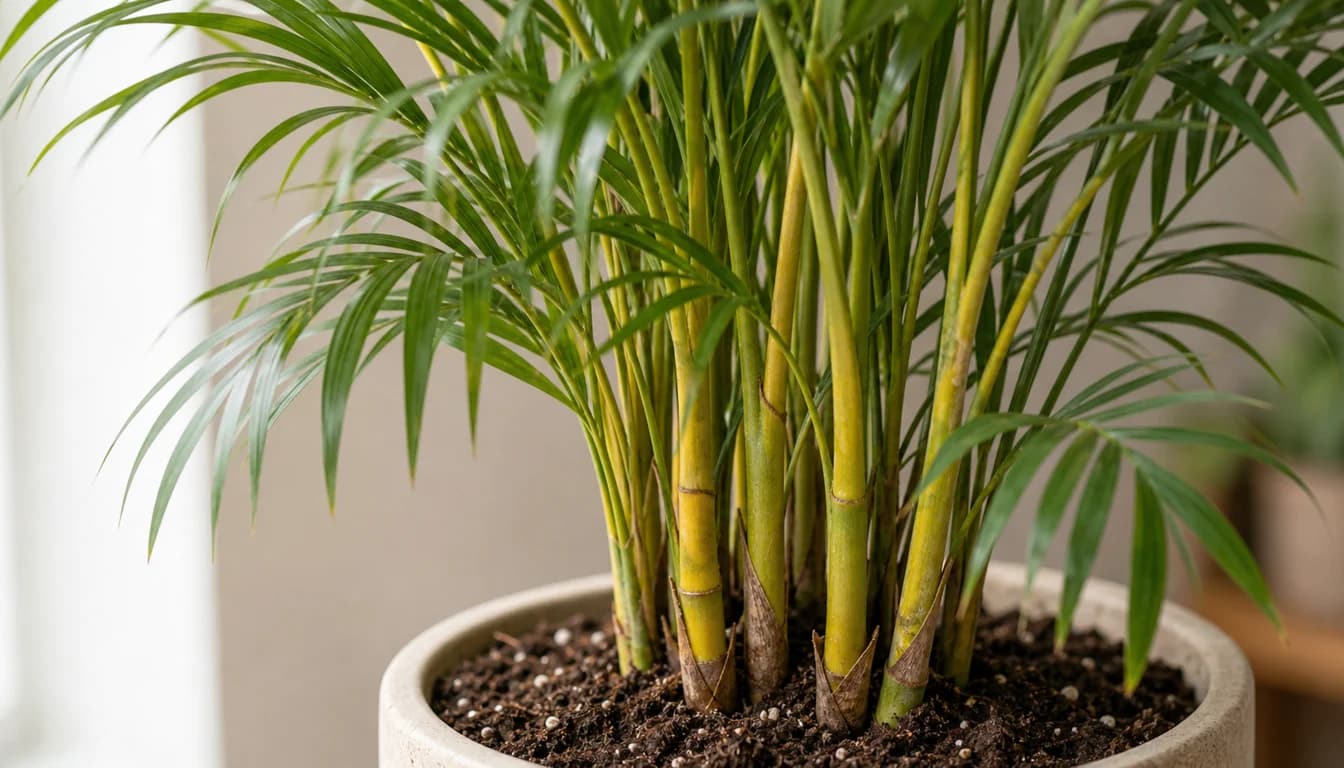
humidity_midHumidity, Minerals, and Brown Tips
Brown tips on Areca Palm usually ask a narrower question: what dried or salted the leaflet edge? A room that drops near forced-air heat, a pot that dries hard between waterings, and water with dissolved minerals can all leave the same tan point.
Do not cut into green tissue when trimming. Follow the brown shape and leave a fine dry margin; cutting fresh green leaf creates a new wound that browns again.
Humidity trays rarely change a full room, but grouping plants can soften the air right around the fronds. If your areca sits beside Calathea Orbifolia, use the calathea leaves as the stricter humidity gauge.
- check_circleCrisp tips only: improve humidity or water quality first.
- check_circleYellow lower canes plus wet soil: inspect roots and drainage.
- check_circleSilvery stippling under leaflets: check for spider mites before changing water.
content_cutDivide Canes Only When the Clump Can Spare Them
Areca is propagated indoors by division, not by a simple leaf or stem cutting. The only good candidate is a crowded clump with several healthy canes, enough roots around each division, and active spring growth ahead.
A division that leaves both halves thin often creates two weak palms instead of one full plant. If the plant is already sparse, let it rebuild density before separating canes.
Guide — See AlsoBest Indoor Plants for Every Room and Light LevelA practical guide to choosing the best indoor plants for your home, covering beginner-friendly picks, low light champion
chevron_rightpest_controlWinter, Pests, and Pet Safety
Winter is when areca problems stack together: lower light slows water use, indoor heat dries the leaflets, and spider mites find the undersides of the narrow fronds. Rinse foliage gently or wipe canes when you see fine webbing or dusty stippling.
The plant is considered pet-safe, but the fronds are easy for cats to chew and shred. A safer placement is a bright room corner where the pot can sit behind a low table or stand, not a narrow hallway where every person and pet brushes through it.
If pet safety matters more than the palm look, Chinese Money Plant gives you non-toxic shelf foliage. Calathea gives you the same pet-safe direction with more humidity demand with less floor-space demand.
local_floristPick the Right Palm Look
Buy the palm by cane density and frond condition, not by the tallest leaf in the pot. A medium plant with many firm canes fills in more reliably than a tall, thin clump that already lost its lower leaflets.
Areca PalmBest for a soft screen in bright filtered light with steady moisture
Parlor PalmBetter for tabletops, lower light, and slower growth
Majesty PalmBigger tropical statement, but less forgiving indoors
Dragon TreeUse Dracaena Marginata when you want height with much less humidity demand
eco
Keep Exploring
Related Plants
 Houseplants
Ficus Audrey
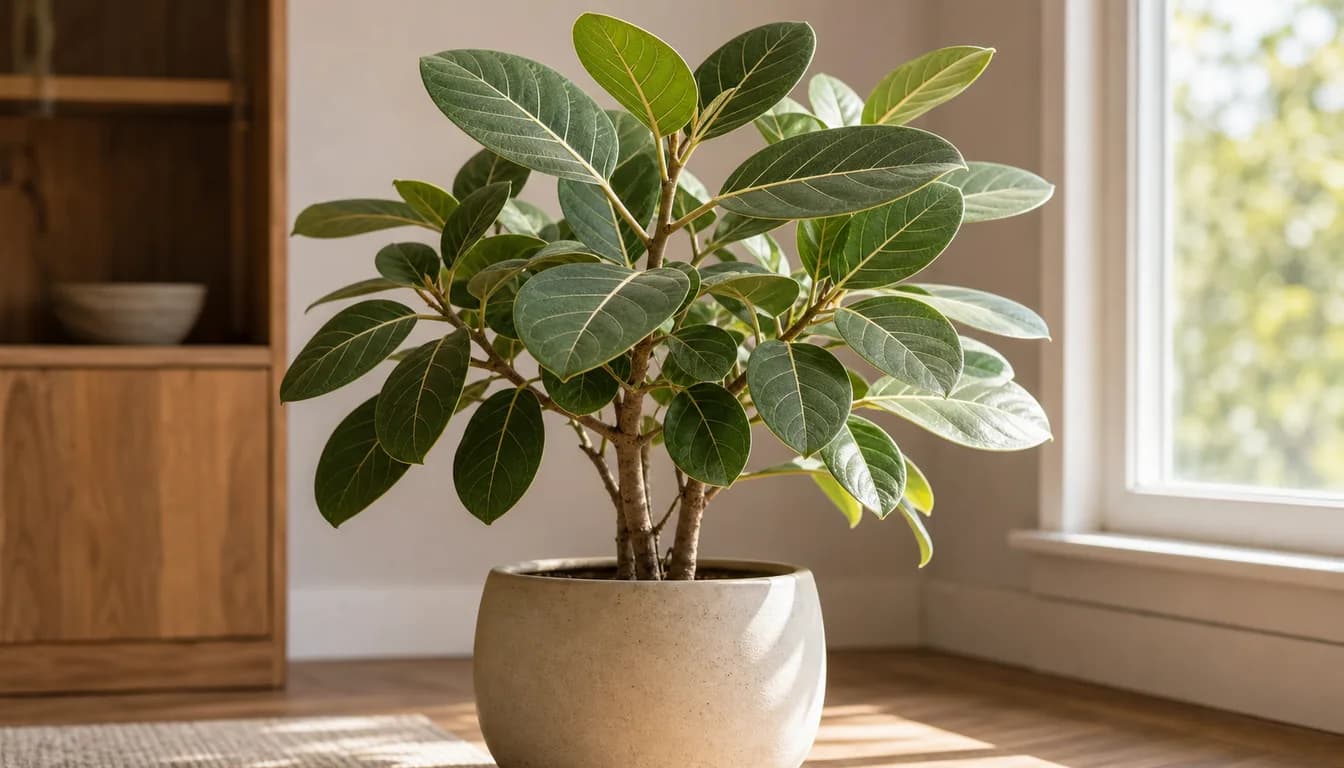
Ficus Audrey is a banyan-type indoor tree with velvety leaves and a thickening trunk. Give it stable bright placement before you judge water, pruning, or le
 Houseplants
String Of Pearls
Zone 10–12 gardeners can grow String of Pearls outdoors all year, but most of us keep it as an indoor trailing succulent. Those bead-like leaves hold water,
 Houseplants
Neon Pothos
Neon Pothos is the color-first pothos: its bright yellow-green leaves look best in medium to bright indirect light. Grow it like a durable vine, but judge s
quiz
Frequently Asked Questions
How often should I water an Areca Palm?expand_more
Water Areca Palm when the top inch starts to dry but the pot still has slight weight. In a bright warm room that may be weekly; in winter it can be much less often.
Why are my Areca Palm tips turning brown?expand_more
Brown tips usually come from dry indoor air, mineral-heavy water, hard drying between waterings, or old stress. Check new fronds and pot weight before adding more water.
Is Areca Palm safe for pets?expand_more
Yes, Areca Palm is treated as non-toxic to cats and dogs, but the fronds are easy to chew and damage. Keep the pot where pets cannot shred the new leaflets.
Can Areca Palm live in low light?expand_more
It can survive in medium light, but low light makes the clump thinner and slower. Choose Parlor Palm for darker rooms.
Should I divide my Areca Palm?expand_more
Divide only a crowded, healthy clump in active growth. If the palm is already thin or stressed, division usually weakens it.