verifiedGarden Guides
Watering
Overwatering kills more plants than underwatering. These guides teach you to read plant signals, measure soil moisture accurately, and build watering schedules based on species needs, pot size, humidity, and seasonal light levels.
menu_book20Guides
potted_plant44Plants Covered
schedule11 minAvg Read Time
help105FAQs Answered
Watering Guides
20 Guides Availableinfo
About This Hub
Overwatering kills more plants than underwatering. These guides teach you to read plant signals, measure soil moisture accurately, and build watering schedules based on species needs, pot size, humidity, and seasonal light levels. These guides are maintained from published references, practical garden context, and internal editorial review.
water_drop
Why Most Watering Advice Fails
Generic advice like "water once a week" ignores every variable that actually matters: pot size, soil type, humidity, light intensity, and seasonal growth rate. A pothos in a 4-inch pot near a south window dries out in 3 days. The same plant in a 10-inch pot in a dim corner stays wet for 2 weeks.
Effective watering requires reading the soil, not following a calendar. The finger test (dry to 1–2 inches deep) works for most houseplants. A moisture meter provides more precision for plants sensitive to overwatering.
Our guides teach soil-reading techniques specific to each plant type so you develop the diagnostic skill rather than memorizing schedules.
water_drop
Deep Watering vs. Frequent Watering
Deep, infrequent watering promotes root growth downward into the soil profile, building drought resilience. Frequent shallow watering keeps roots near the surface where they dry out fastest.
For outdoor gardens, one inch of water penetrates roughly 6‒8 inches into loamy soil. Most vegetable roots extend 12–18 inches deep. Two deep sessions per week typically outperform daily light sprinkles.
For houseplants, water until it runs from drainage holes, then allow the top layer to dry before the next watering. This top-to-bottom flush prevents mineral salt buildup that causes brown leaf tips.
pest_control
Reading Plant Stress Signals
Plants communicate water needs through visible symptoms, but many signs overlap. Drooping can indicate both overwatering and underwatering. Yellow leaves result from both too much and too little water.
The key differentiator is soil moisture at the time of symptoms. Drooping with wet soil means root rot is likely — stop watering. Drooping with dry soil means the plant needs water immediately.
Crispy brown leaf edges usually indicate underwatering or low humidity. Soft, mushy stems always indicate overwatering. Learning to check soil before diagnosing prevents the most common correction mistake: watering an overwatered plant.
science
Water Quality Matters
Municipal tap water contains chlorine and chloramine at levels most plants tolerate. But sensitive species — calatheas, carnivorous plants, and orchids — develop brown tips from fluoride and mineral accumulation.
Letting water sit overnight removes chlorine but not chloramine. For sensitive plants, filtered water, rainwater, or distilled water prevents mineral damage.
Hard water (above 200 ppm TDS) leaves white mineral deposits on soil and pot surfaces. If your water is hard, flush pots monthly with excess water to prevent salt buildup in the root zone.
calendar_monthSeasonal Watering Tips
local_floristSpring
Increase watering frequency as daylight hours extend and plants enter active growth. Watch for the first signs of new leaves — that's when water demand spikes.
wb_sunnySummer
Water outdoor gardens early morning before 10 AM. Evaporation rates peak midday. Indoor plants near windows may need watering twice as often as winter schedules.
parkFall
Gradually reduce watering as growth slows and daylight decreases. Most houseplants shift from weekly to every 10–14 days. Outdoor irrigation should stop before the first freeze.
ac_unitWinter
Overwatering is the number one winter plant killer. Reduced light means reduced water uptake. Let soil dry more deeply between waterings and move plants away from cold, drafty windows.
 Watering
How to Water Potted Plants Without Guessing
Learn a simple, repeatable way to water potted plants based on soil and pot size, not random schedules, so you avoid root rot and constant drooping.
schedule11 min readsignal_cellular_altAll Levels
Read Guide arrow_forward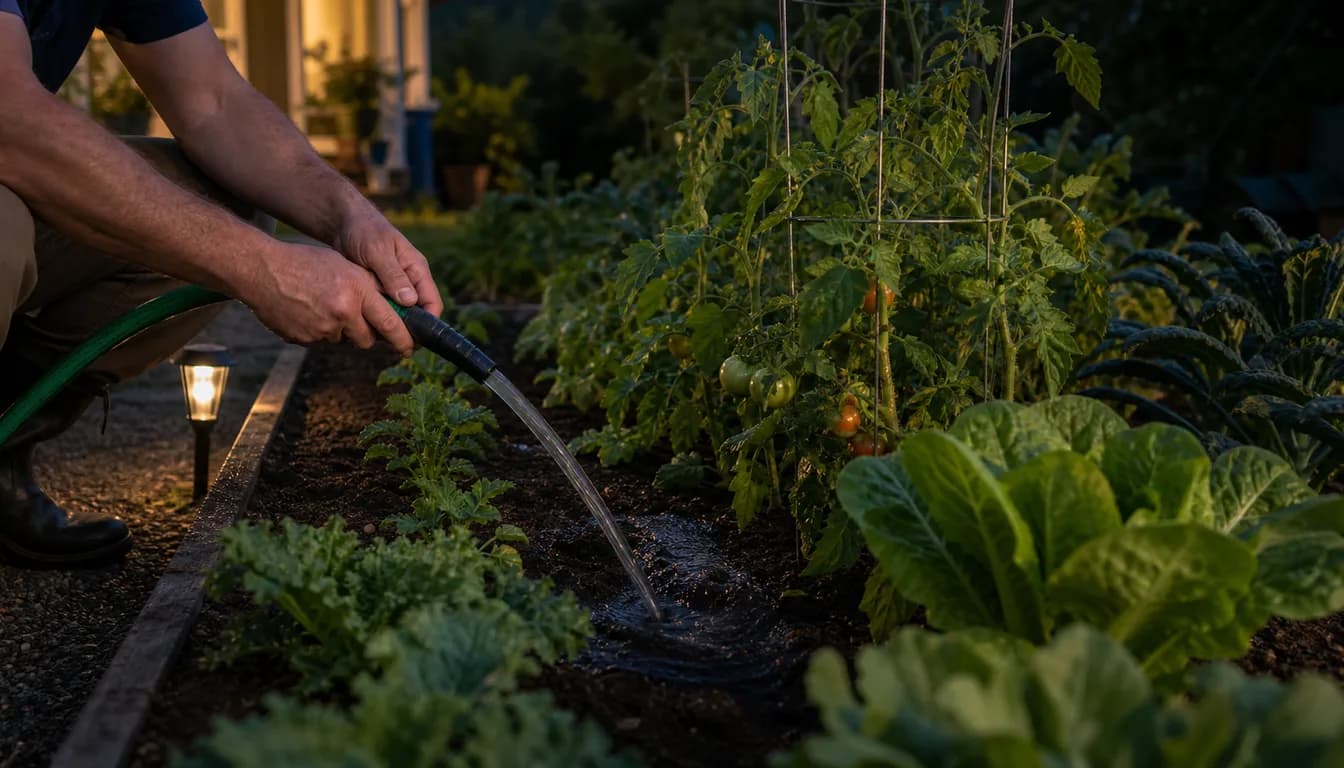 Watering
Is It Bad to Water Plants at Night? What Actually Matters
Wondering if it is bad to water plants at night? We break down when evening watering is fine, when it causes disease, and how to time watering for lawns, gardens, and houseplants.
schedule11 min readsignal_cellular_altAll Levels
Read Guide arrow_forward Watering
Signs of Overwatering Grass and How to Fix Them
Learn how to spot the real signs of overwatering grass, stop the damage, and reset your watering schedule before the lawn thins out or dies.
schedule11 min readsignal_cellular_altAll Levels
Read Guide arrow_forward Watering
Signs of Overwatering Plants and How to Catch Them Early
Learn the real signs of overwatering plants, how they differ from underwatering, and simple checks you can use to fix your watering routine before roots rot.
schedule11 min readsignal_cellular_altAll Levels
Read Guide arrow_forward Watering
Signs of Overwatering Trees and How to Respond
Learn how to spot early and advanced signs of overwatering in trees, what is normal vs. trouble, and how to adjust your watering before roots suffocate.
schedule11 min readsignal_cellular_altAll Levels
Read Guide arrow_forwardhelpFrequently Asked Questions
How do I know if I'm overwatering my plants?expand_more
Signs include yellowing lower leaves, soft or mushy stems, fungus gnats hovering near soil, and a musty smell from the pot. The definitive test: if soil is consistently wet 2+ inches deep, you're watering too frequently. Let soil dry out before resuming.
Should I water plants on a schedule?expand_more
No. Watering needs change with seasons, temperature, humidity, and growth rate. Instead, check soil moisture before each watering. In summer, you may water every 3 days. In winter, the same plant may need water only every 10–14 days.
Is it better to water in the morning or evening?expand_more
Morning is best for outdoor plants — foliage dries quickly, reducing fungal disease risk. For houseplants, timing matters less since they're in stable indoor conditions. Avoid evening outdoor watering in humid climates where wet foliage persists overnight.
Can I use ice cubes to water orchids?expand_more
This is a popular myth. Ice cubes deliver too little water and the cold temperature can damage tropical roots. Instead, soak orchid bark in room-temperature water for 10–15 minutes weekly, then drain completely. Orchid roots need thorough soaking followed by drying.
How much water do vegetable gardens need?expand_more
Most vegetable gardens need 1–1.5 inches of water per week from rain and irrigation combined. Use a rain gauge to track. Tomatoes and squash need the most; root vegetables need consistent moisture but not waterlogging. Drip irrigation is more efficient than overhead sprinklers.
Why do my plant's leaf tips turn brown?expand_more
Brown leaf tips most commonly result from low humidity, inconsistent watering, or mineral buildup from tap water. For humidity-sensitive plants like calatheas, group plants together or use a pebble tray. Flush soil monthly with distilled water to remove accumulated salts.