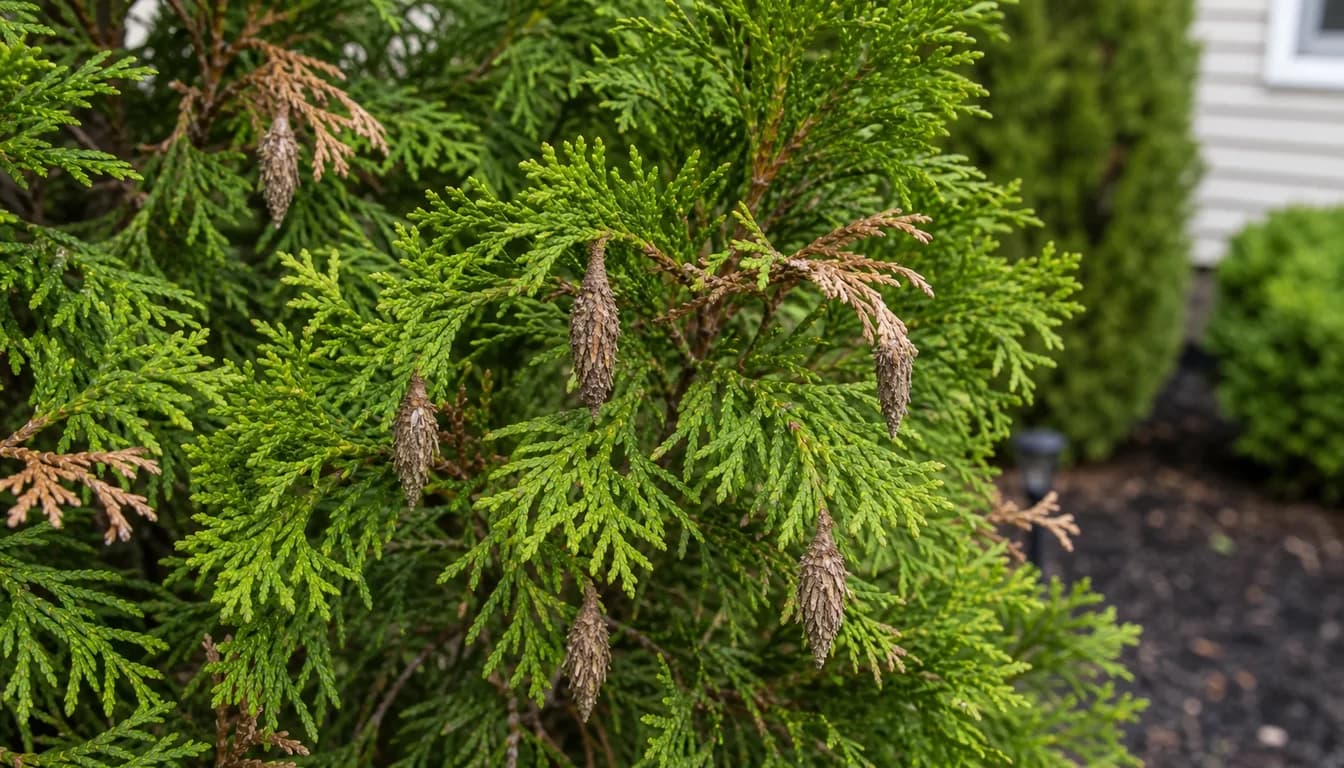
1. Active bagworm larvae feeding
Likelihood: HighFeeding larvae inside protective bags defoliate foliage quickly in late spring and early summer. Young larvae are easiest to control; once they're large and well protected in heavy bags, mechanical control becomes slower and insecticide efficacy drops.
Identification
- remove_circle_outlineSmall to large hanging silk bags on branches lined with trimmed foliage fragments.
- remove_circle_outlineProgressive browning starting at tips or localized patches of bare stems.
- remove_circle_outlineLive caterpillars visible when you open a bag carefully during the growing season.
- remove_circle_outlineNew damage appears in late spring or summer while bags are still attached to green sprays.
The Fix
- 1If infestation is light, handpick all bags and drop them into a bucket of soapy water; do not leave picked bags under the hedge.
- 2For early larval stages, spray Bacillus thuringiensis kurstaki (Btk) thoroughly over foliage following label rates.
- 3Repeat scouting 7-10 days later because small larvae can be hidden deep in dense evergreen sprays.
- 4For heavy infestations after significant defoliation, combine manual removal with a targeted insecticide labeled for bagworms and Arborvitae; follow all safety directions.