
How Deep Can You Cut a Spent Lavender Spike?
Deadheading lavender is the lightest cut you will ever make on the plant, and the one place people still manage to kill it. The whole risk is in how deep you go, because lavender will not resprout from the bare wood at its base.
This guide places the cut first and explains the rest afterwards, from how the technique changes between English and stoechas types to why deadheading alone will not fix a plant that has already gone woody.
Turning a leggy old mound around is a different job, and the deeper shaping prune covers it. The Spanish type leans on shearing for rebloom instead.
At a glance
Where to Cut a Spent Lavender Spike
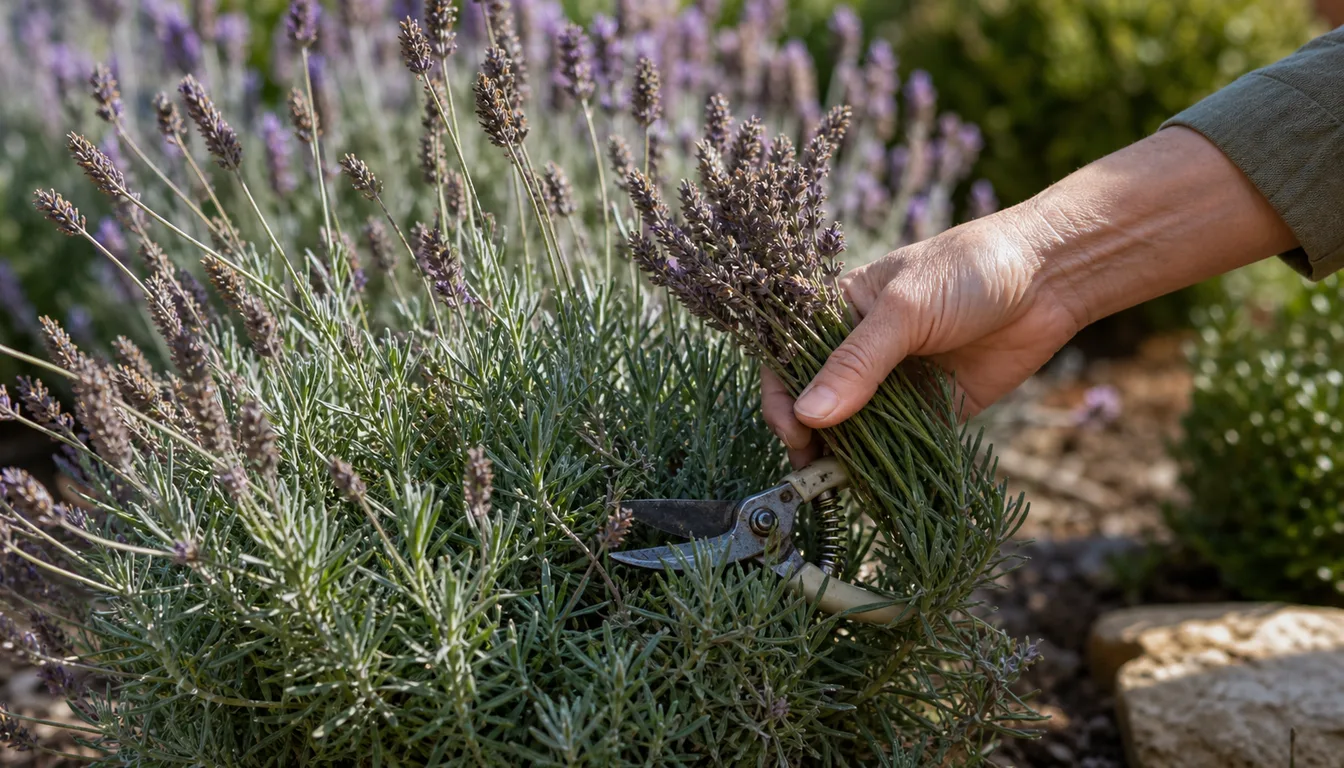
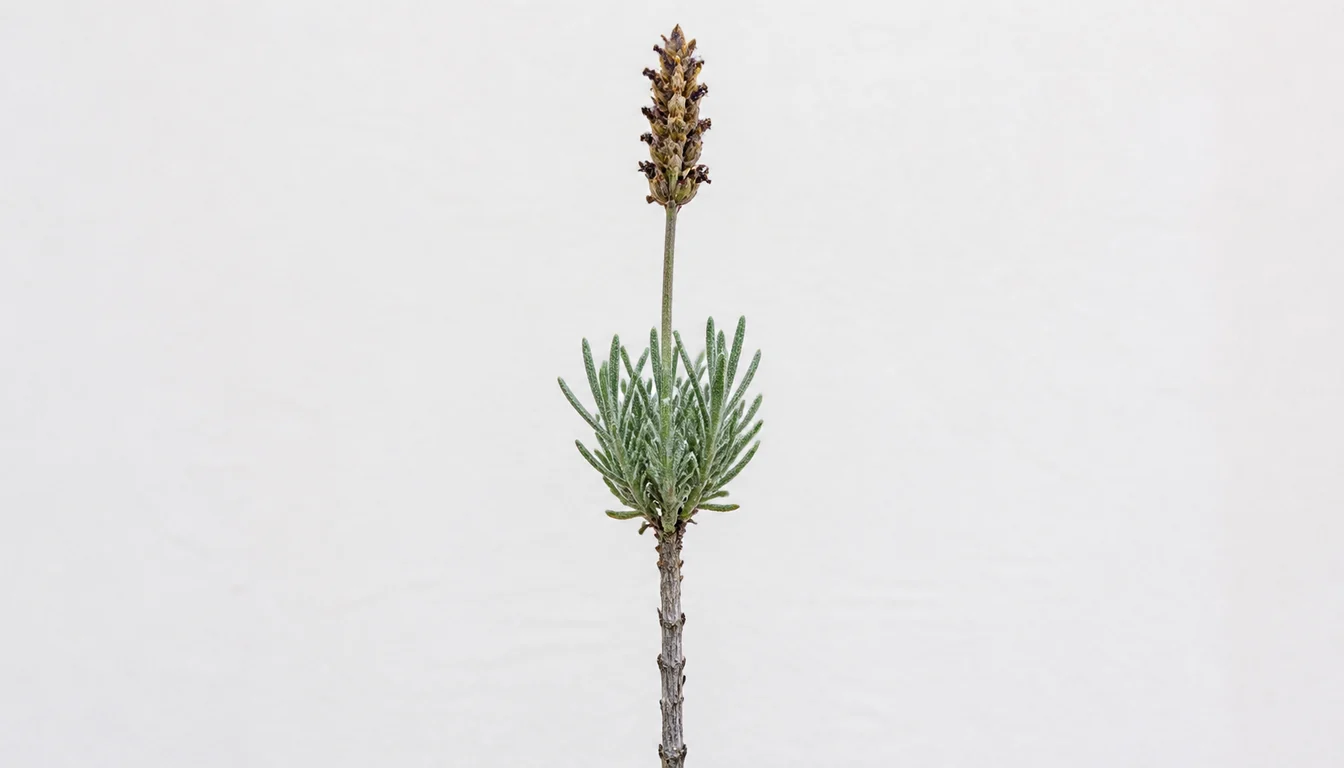
A spent lavender spike rides on a slim green stem above a cushion of leaves, and that leafy cushion is your floor. Follow the browning spike down until you reach the first pair of healthy leaves and cut just above them.
That usually means taking the flower plus an inch or two of stem and no more, because below the leaves the stem turns to gray leafless wood that rarely pushes new growth and can kill the whole branch back.
Run your fingers down through the mound before the blades come out and you will feel where soft foliage gives way to hard bare stem, which is faster and more reliable than trying to see it from above.
English Types Take a Shear, French and Spanish Want Snips
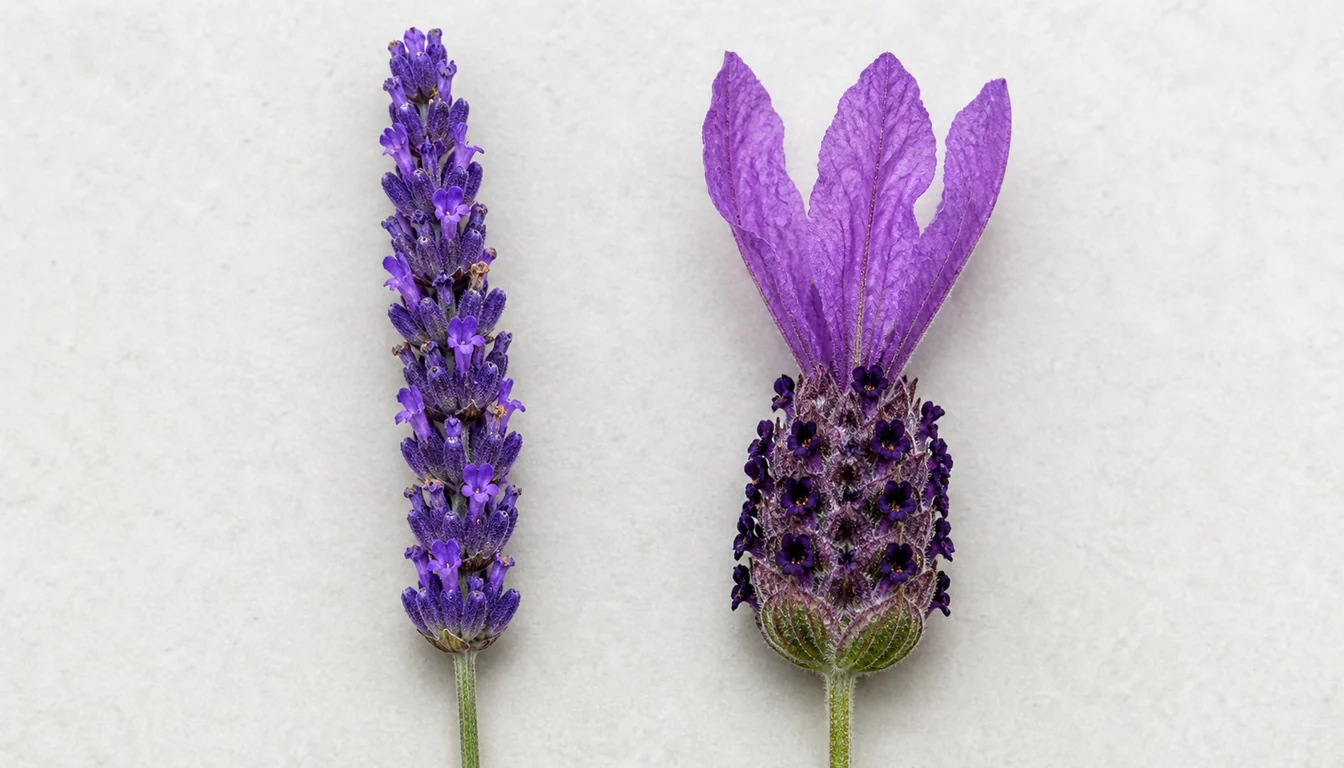
How hard you can go depends on which lavender you grow, and the difference is easy to see once you know it. English types carry tight, narrow spikes on a dense mound, while French and Spanish stoechas types show wide showy bracts like little rabbit ears.
English lavender is dense and forgiving enough that you can grab a handful of spent spikes and shear the whole mound into a soft dome at once. The stoechas types grow looser and woodier, so they do better with individual snips down to each stem's leaves than with a blind shear across the top.
If your tag is long gone the winter answers it, because a plant that sails through a zone 5 winter is almost certainly English.
| Your lavender | How to deadhead | Why |
|---|---|---|
| English, tight narrow spikes | Grab a handful and shear the mound | Dense growth hides the cuts and refills evenly |
| French or Spanish, eared bracts | Snip each spent stem to its leaves | Looser, woodier growth splits if sheared blind |
When a Prompt Deadhead Earns a Second Flush
Timing decides whether deadheading is just tidy or actually buys more flowers. Wait until roughly half to two thirds of the florets on a spike have browned, since cutting at the first fade wastes bloom and waiting for the last floret wastes the plant's energy on seed.
Be honest with yourself about whether your plant reblooms at all. Repeat-flowering cultivars answer a prompt cut with a lighter second show, the same reward you get from staying on top of a catmint or a salvia, while the classic English cultivars grown for oil and hedging often give little or nothing however well you time it.
Growth pushed within six weeks of your first frost cannot harden before the cold arrives, and soft tissue on a lavender crown through winter is how plants are lost.
- Main flush fades and half the florets have browned, which is the moment to cut.
- A few weeks later a lighter second flush often follows, on repeat cultivars only.
- Six weeks before frost stop deadheading entirely so late growth can harden.
- In deep cold zones leave the last spikes standing to catch insulating snow over the crown.
Deadhead or Harvest? Decide Before You Cut
Deadheading and harvesting take the same spike at opposite moments, so decide what you want before the blades touch the plant. If you only want a tidy plant, wait until the spike is mostly brown and cut it off.
Fragrant stems for drying or sachets have to be cut far earlier, while most buds are still closed and the oils are at their peak. Waiting until the deadheading stage leaves faded, low-scent flowers fit only for the compost.
Cut the best stems early for scent and let whatever is left to brown on the plant become your deadheading later in the season, which gets you both from one plant.
Cutting to use the flowers is a different job with its own timing. When scent and stem length matter, follow the lavender harvesting cut instead.
Why a Deadheaded Lavender Still Went Woody
Deadheading keeps a healthy lavender tidy, and it cannot rebuild a plant that has already split open and gone bare in the middle. Those two problems get confused constantly, and more spike removal does nothing for the second one.
A mound that flops outward with a hole in the center needs structural shaping instead, made in stages across two or three seasons so you never cut past the green.
A plant that is gray wood almost to the tips, with only a thin green cap left, is usually faster to replace than to rescue. Other drought lovers like Russian sage or a woody rosemary fill the same spot without the wait.
- Tidy but blooming less over the years means the plant is simply aging and deadheading is fine.
- Flopped open with a bare center needs staged shaping rather than more deadheading.
- Gray wood with a thin green cap is usually past rescue, so plan a replacement.
- Brown brittle stems after a cut mean the blade went below the leaves into dead wood.
Pro Tips
- Run a hand over the mound first to find the line where green leaves give way to gray wood, then stay above it.
- On English lavender, shear a handful of spikes at once, but keep the blade in the leafy dome.
- Snip French and Spanish types stem by stem instead of shearing, so the looser growth does not split.
- Deadhead once half the florets on a spike have browned, not at the first faded flower.
- Leave a few late spikes standing in cold zones so they catch insulating snow over the crown.
- If you want the flowers for sachets, cut them early for scent and let the leftovers count as deadheading.
- Stop deadheading about six weeks before your first frost so late growth has time to harden.
Frequently Asked Questions
How far down should I cut a spent lavender flower?
Take the flower plus about an inch or two of stem, cutting just above the first pair of healthy green leaves. Never cut below the leaves into the bare gray wood, since lavender rarely resprouts from dead wood.
Can I shear my whole lavender plant to deadhead it?
You can on dense English types, grabbing a handful of spikes and shearing the mound into a soft dome, as long as you stay in the leafy growth. French and Spanish types grow looser and woodier, so snip each spent stem individually instead of shearing blind.
Will deadheading make my lavender bloom again?
Only on repeat-flowering cultivars, which push a lighter second show if you deadhead promptly after the main bloom. Cut once about half the florets on a spike have browned, and stop about six weeks before your first frost.
My lavender is woody in the middle. Will deadheading fix it?
No, because deadheading only removes spent flowers. A plant that has split open with a bare woody center needs staged structural shaping over two or three seasons, and one that is gray wood almost to the tips is usually faster to replace.
Should I deadhead lavender if I want to dry the flowers?
Cut earlier for drying, while most buds are still closed and the scent is strongest. If you wait until the deadheading stage the flowers are faded and low in oil, so harvest first for use and let the leftover spent spikes serve as your deadheading.
Sources & References
Related Guides
Cutting Back a Leggy Houseplant Does Not Fix It
Most people cut a houseplant back because it has gone long and bare.
11 min read
Deadheading Daffodils Matters Less Than the Six Weeks After
Almost every page about spent daffodils tells you to remove the seed pod so the bulb is not…
11 min read
French Lavender Pruning Depends on the Plant and Season
French lavender needs light trimming within its leafy growth, rather than a hard cut into bare…
6 min read
Fruit Tree Pruning Starts With Where the Crop Forms
A fruit tree that gives small, crowded, scabby fruit is usually not underfed.
11 min read
How Do You Prune Spanish Lavender for a Second Flush?
Spanish lavender is the one that flowers first and the one that keeps going.
7 min read
How to Deadhead Daisies for More Blooms
To deadhead a daisy, wait until the petals have faded or collapsed, then follow the flower stem…
12 min read