
How Do You Prune Spanish Lavender for a Second Flush?
Spanish lavender is the one that flowers first and the one that keeps going.
Shear it the moment a flush fades and it produces another, two or three times through a warm season. Leave it a fortnight and that flush is gone rather than delayed.
Two things decide whether that cycle is available to you. Whether the plant survives your winter at all, since this is a narrower species than the lavender most advice describes, and whether every cut stays above the bare wood at its base.
The second one is not a matter of vigor. Cut this plant into the wood and the stub stays a stub, and cut it to the ground and it dies.
At a glance
Why Is Spanish Lavender Pruned Before the Other Lavenders?
It wakes up first.
Spanish lavender flowers from mid spring, often while English lavender is still weeks from budding, which moves its entire pruning calendar ahead of the one most lavender advice assumes.
It also runs long rather than in one burst, flowering from mid spring through to late summer.
That is the real difference. English lavender is cut once after its flowering, and advice written for it produces one shear a year on a plant that is capable of several.
The timing here is therefore not a date in a calendar. It is a response to the plant, and the plant moves faster than the advice most people have read.
Will Spanish Lavender Survive Your Winter?
Answer this before you commit a season to shearing it.
Spanish lavender is hardy in USDA zones 8a to 9b, a far narrower band than English lavender covers, and it is described as the more fragile of the two. Winter is where that shows.
- Hardy in
- USDA zones 8a to 9b
- Size
- 2 to 3 ft tall and wide
- Flowers
- Mid spring to late summer
- Sun
- Full sun, six hours or more
Outside that range it is a container plant that overwinters under cover, or an annual you replace. Both are reasonable, and neither is what somebody thinks they are buying.
At two to three feet each way it takes a pot comfortably, which is the practical answer for anyone in zone 7 and colder who wants the long flowering season.
A plant in the ground in a cold zone is a purchase rather than a planting, and worth knowing that before rather than in March.
How Do You Read the Flower to Know When to Shear?
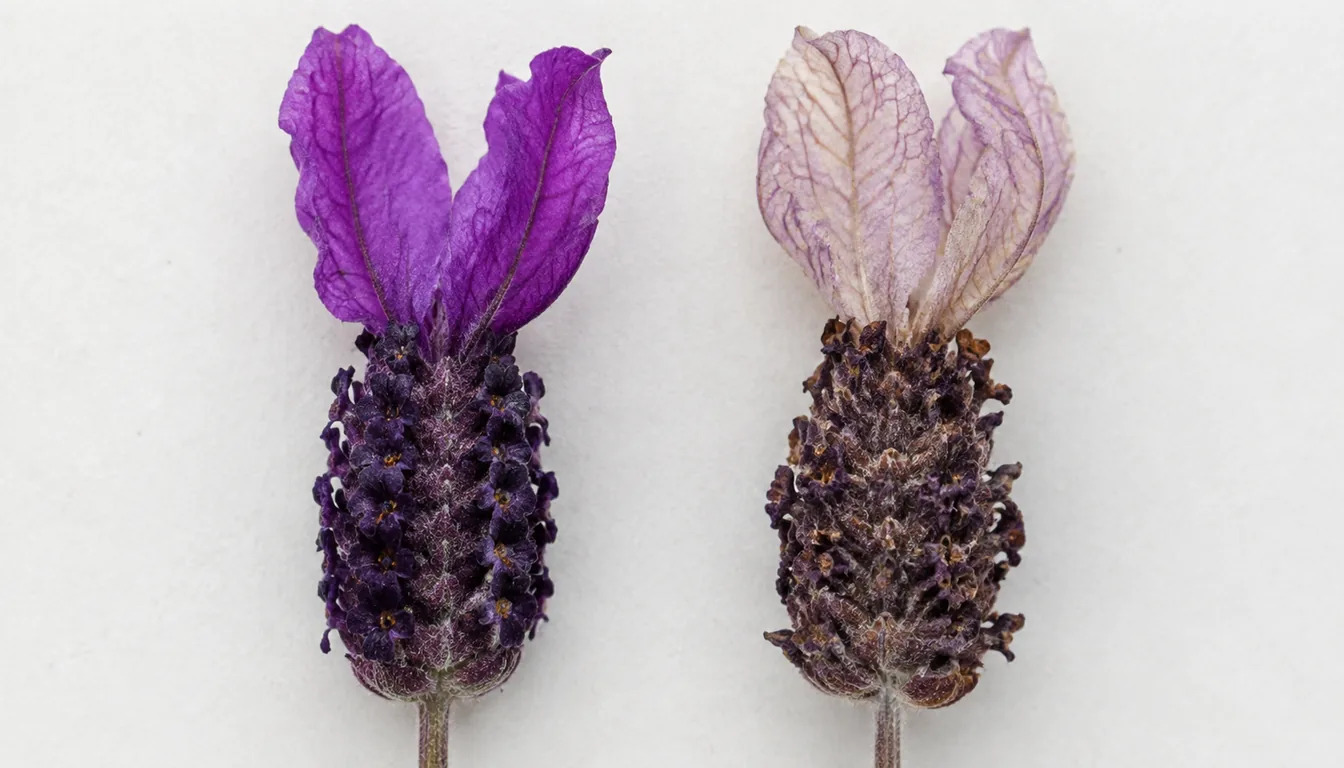
The colored ears on top are bracts rather than petals, and they are the gauge.
A fresh head carries plump brightly colored bracts standing crisp above a tight flower spike. That flush is still working.
A spent head has bracts gone thin and papery with the color drained out of them, and the spike below has started to loosen. That flush is over, and the plant is waiting for the signal.
Prompt is the whole trick. Shearing as the flush fades is what triggers the next one, and leaving it a fortnight usually costs that flush entirely rather than pushing it back.
The awkward part is that the plant still looks acceptable from the path well past that point. Reading the bracts up close is what stops you waiting until it looks untidy, by which time you have lost a round of flowers.
How Far Down Can You Shear Without Killing It?
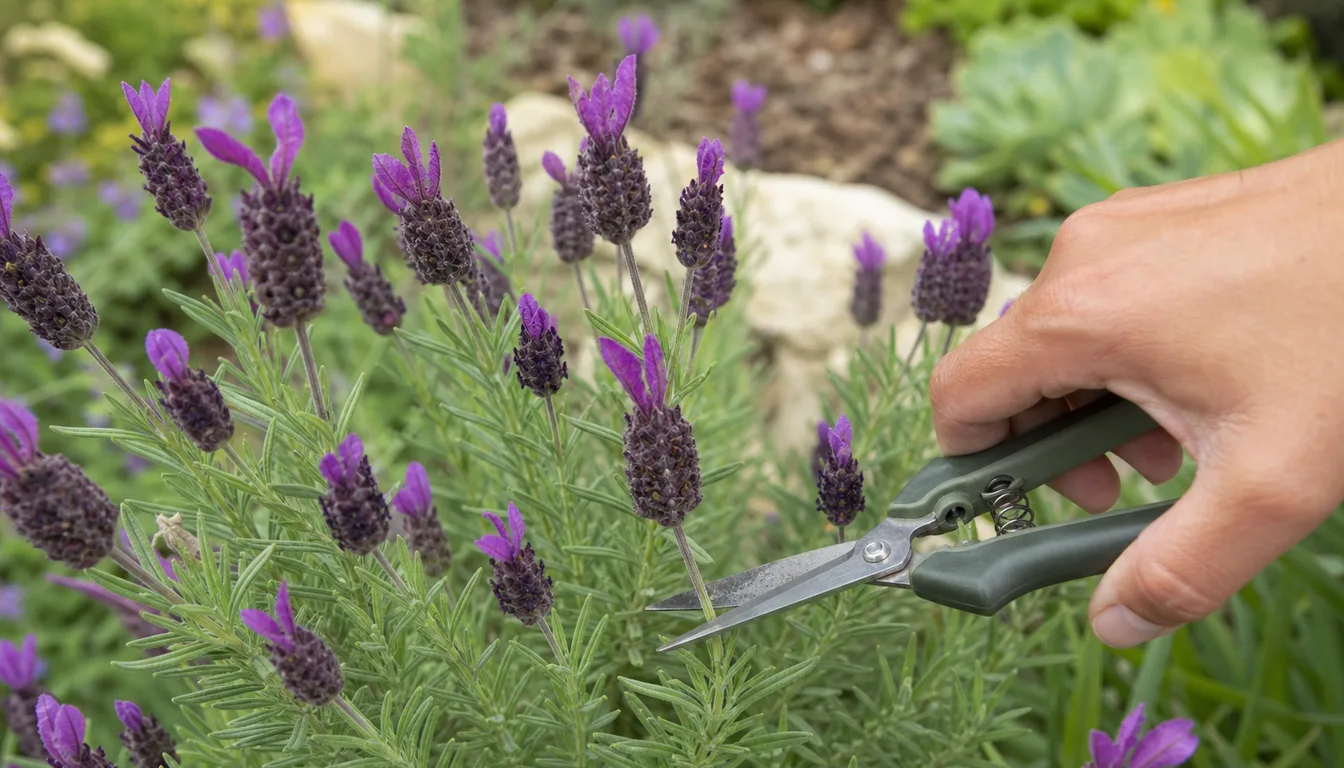
Every cut stays in the soft leafy growth.
Below that, the stems turn gray and leafless, and a cut into that bare wood rarely resprouts. The stub simply stays a stub for the life of the plant.
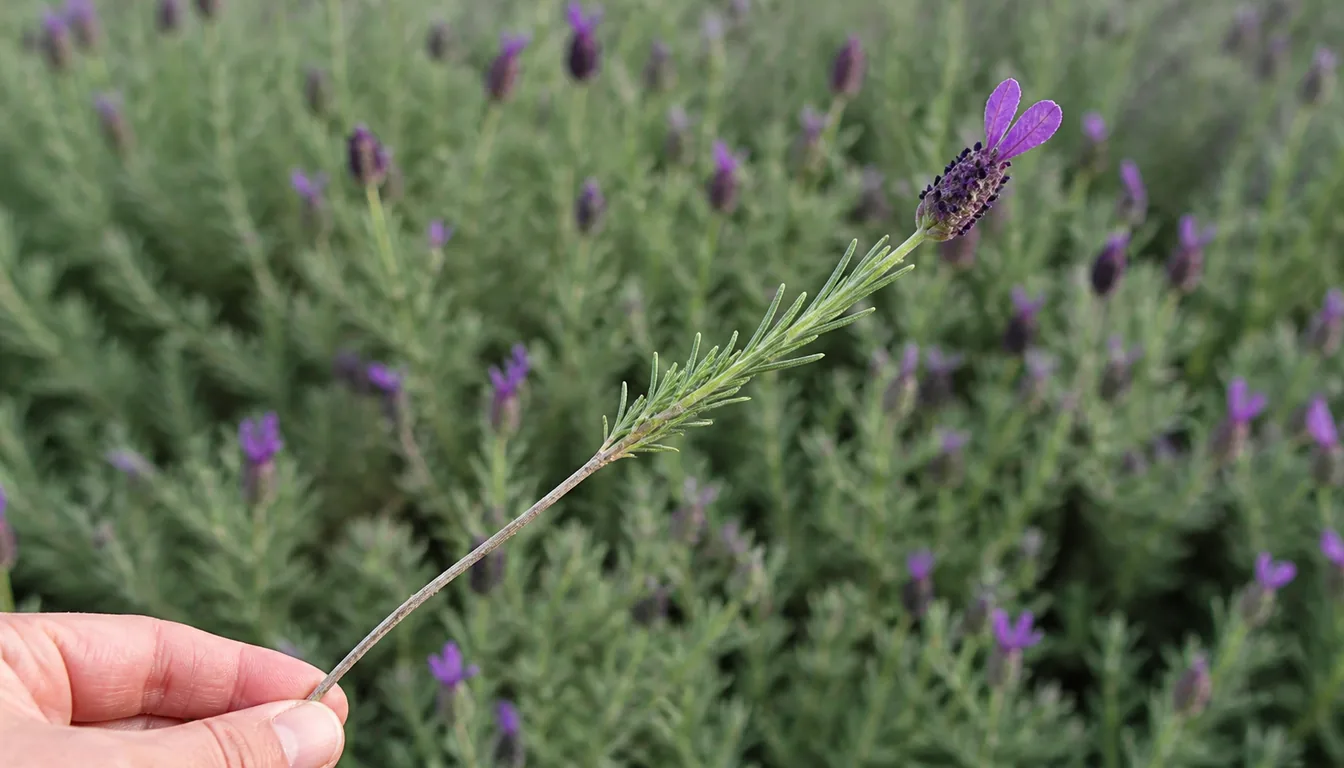
Grab the spent flower stems and cut back into the leafy top growth, taking the flower and a little of the green below it and no more.
Shearing lightly and often is what keeps this safe. A plant cut every few weeks always has enough green that the wood never becomes the only place left to cut.
A plant left alone for years grows out of reach of a safe cut. At that point replacing it costs less than the attempt to renovate it, which on this species is likely to kill it.
How Many Flushes Can You Get in a Season?
Two or three, on a plant sheared promptly each time.
The season runs shear, rest, rebloom rather than bloom once and tidy afterwards, and each prompt cut is what sets up the round after it.
Give it a little water and a few weeks after each shear. The plant is pushing fresh growth to carry the next flush, and that is the one point in the cycle where it wants something from you.
Expect the flushes to shorten as the season cools. The last is a smaller show than the first, and that is the plant winding down rather than anything going wrong.
A missed shear is the expensive mistake. It does not delay the next flush, it usually removes it, and the plant sits in leaf until the following spring.
When Should the Last Shear of the Year Be?
Several weeks before your first expected frost.
A shear pushes soft new growth, and soft growth meeting frost is damaged where hardened growth would have come through it. The last cut therefore needs time to firm up.
Leave the final flowers standing rather than cutting them. The top growth gives the crown a little protection through winter, and the tidy-up belongs to spring.
A container plant that comes under cover is on a different calendar entirely, because it is not meeting the frost at all.
Where Does Spanish Lavender Sit in a Border?
Near the front, in full sun.
At two to three feet each way it is a front-of-border plant, and its early flowering is the strongest argument for giving it that position. It fills the spring gap before the summer perennials get going.
It wants six hours or more of direct sun and sharp drainage. A damp shaded corner is the wrong place for it whatever the planting scheme says, and no amount of shearing compensates.
Regular cutting is what keeps it a good neighbor. Sheared through the season it stays low and domed, and left alone it opens out in the middle and flops across whatever is planted beside it.
The same cutting that keeps it flowering keeps it in shape. That is unusual, and it is the reason this plant rewards attention more than most.
Pro Tips
- Walk past it every couple of weeks in the growing season with the shears in your hand. This is a plant that repays being noticed rather than being scheduled.
- Shear the whole plant in one pass rather than picking off individual heads. An even cut gives an even flush, and a plant deadheaded piecemeal reblooms in patches.
- If you garden colder than zone 8, buy it in a pot from the start. Moving an established plant out of the ground in autumn is far harder than never planting it there.
Frequently Asked Questions
Is Spanish lavender the same as English lavender?
No, and they are pruned differently. Spanish lavender is Lavandula stoechas, carries the upright colored bracts on top, flowers earlier and longer, and is less cold hardy than the English Lavandula angustifolia.
What happens if I cut into the woody base?
That stem usually does not regrow and stays a bare stub. Cutting the whole plant back to the ground can kill it outright, which is why this species has no renovation option.
Can I still shear it if it is growing in a pot?
Yes, and the cycle is the same. The difference is winter, since a pot can come under cover, which is what makes this plant workable well outside its hardiness range.
My Spanish lavender is woody and open in the middle. Can I fix it?
Not by cutting. Once the leafy growth has moved beyond reach of a safe cut, replacing the plant is more reliable than a hard prune that this species often does not survive.
Should I feed it after each shear?
Water rather than feed. It wants a drink and a few weeks to push the next flush, and rich feeding on a Mediterranean plant produces soft growth and fewer flowers.
Sources & References
Related Guides
Cutting Back a Leggy Houseplant Does Not Fix It
Most people cut a houseplant back because it has gone long and bare.
11 min read
Deadheading Daffodils Matters Less Than the Six Weeks After
Almost every page about spent daffodils tells you to remove the seed pod so the bulb is not…
11 min read
French Lavender Pruning Depends on the Plant and Season
French lavender needs light trimming within its leafy growth, rather than a hard cut into bare…
6 min read
Fruit Tree Pruning Starts With Where the Crop Forms
A fruit tree that gives small, crowded, scabby fruit is usually not underfed.
11 min read
How Deep Can You Cut a Spent Lavender Spike?
Deadheading lavender is the lightest cut you will ever make on the plant, and the one place people…
7 min read
How to Deadhead Daisies for More Blooms
To deadhead a daisy, wait until the petals have faded or collapsed, then follow the flower stem…
12 min read