
How to Deadhead Geraniums Without Removing New Buds
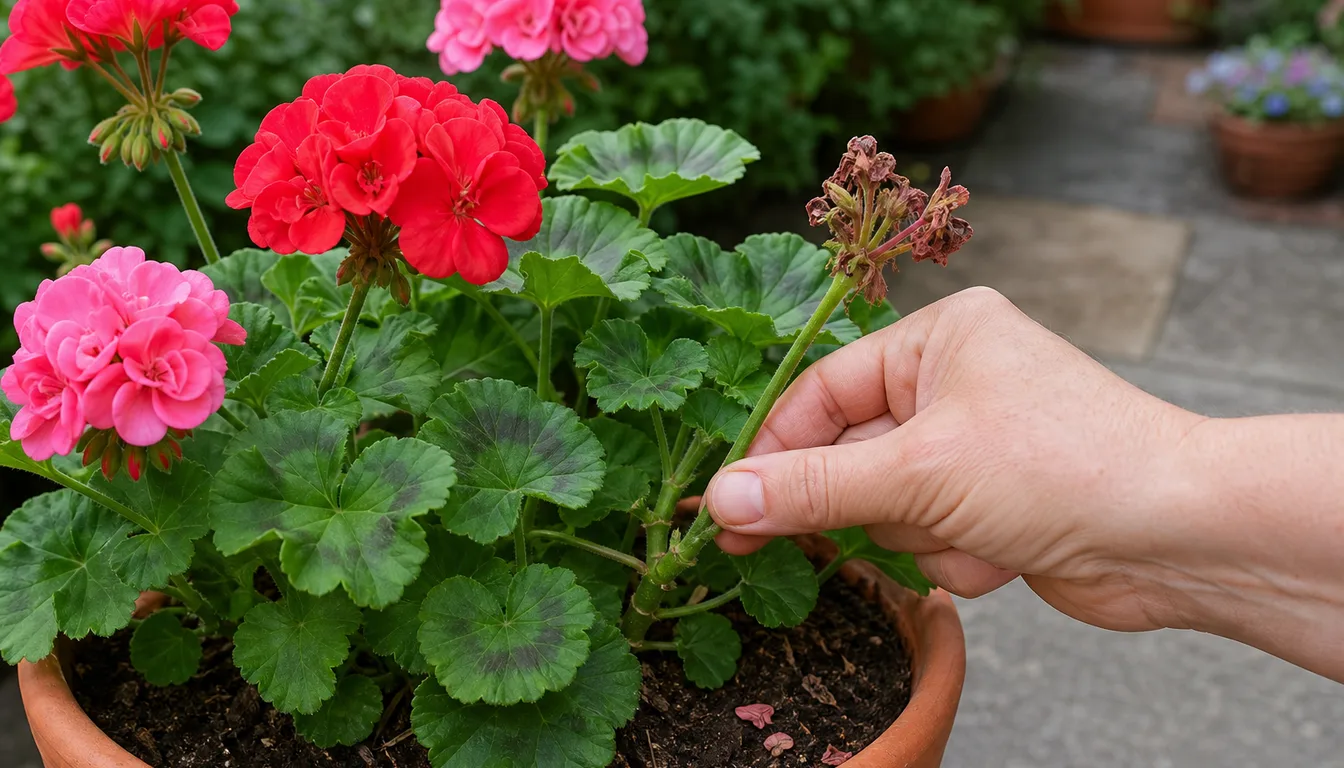
Deadhead a bedding geranium by following the faded flower cluster down its leafless stalk and removing that stalk where it joins the main stem. Keep every firm green bud and healthy leaf below the cut.
Taking only the petals leaves a bare stalk that will not flower again. Taking a piece of the leafy stem can remove future shoots.
This method is for the tender pelargoniums commonly sold as zonal, ivy, regal, and scented geraniums. A hardy cranesbill is a true Geranium and usually responds better to a broader trim after its main flush.
At a glance
Find the spent stalk before you cut
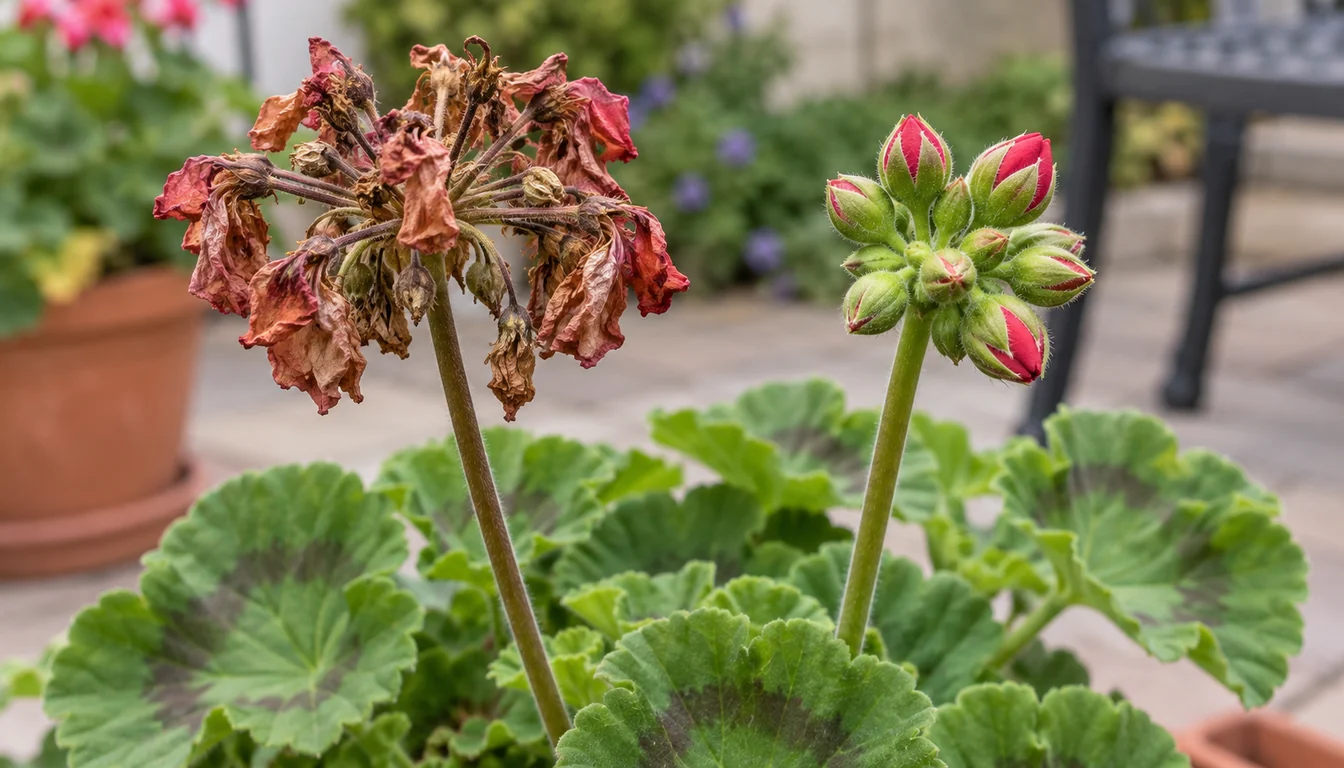
A pelargonium flower head is an umbel made from many small florets. The cluster is ready to remove when most florets have faded, dropped, or turned soft and brown, even if one late floret still looks presentable.
Do not confuse the spent head with a new bud cluster.\n\nFresh buds feel firm, hold a clear green or colored tip, and sit on their own developing stalk.
The stalk beneath an old head may still be green because the flowers age before the stem does.\n\nColor alone is therefore a poor test.
- Remove
- Faded cluster plus its entire leafless flower stalk
- Keep
- Firm buds, green leaves, and leafy shoots
- Wait
- A cluster with several unopened healthy buds
- Discard
- Soft, moldy, or spotted flower material
Look into the plant from the side rather than pulling the head upward. That view reveals whether a nearby bud belongs to the spent stalk or to a separate shoot.
Remove the whole flower stalk at its joint
Trace the smooth, leafless flower stalk from the spent cluster down to its attachment point. The target is the stalk joint, not the top of the flower head and not an arbitrary point halfway down.
Soft pelargonium stalks often release cleanly when bent sideways at that joint. If the stalk resists, has become woody, or sits among crowded stems, use clean snips instead of twisting harder.
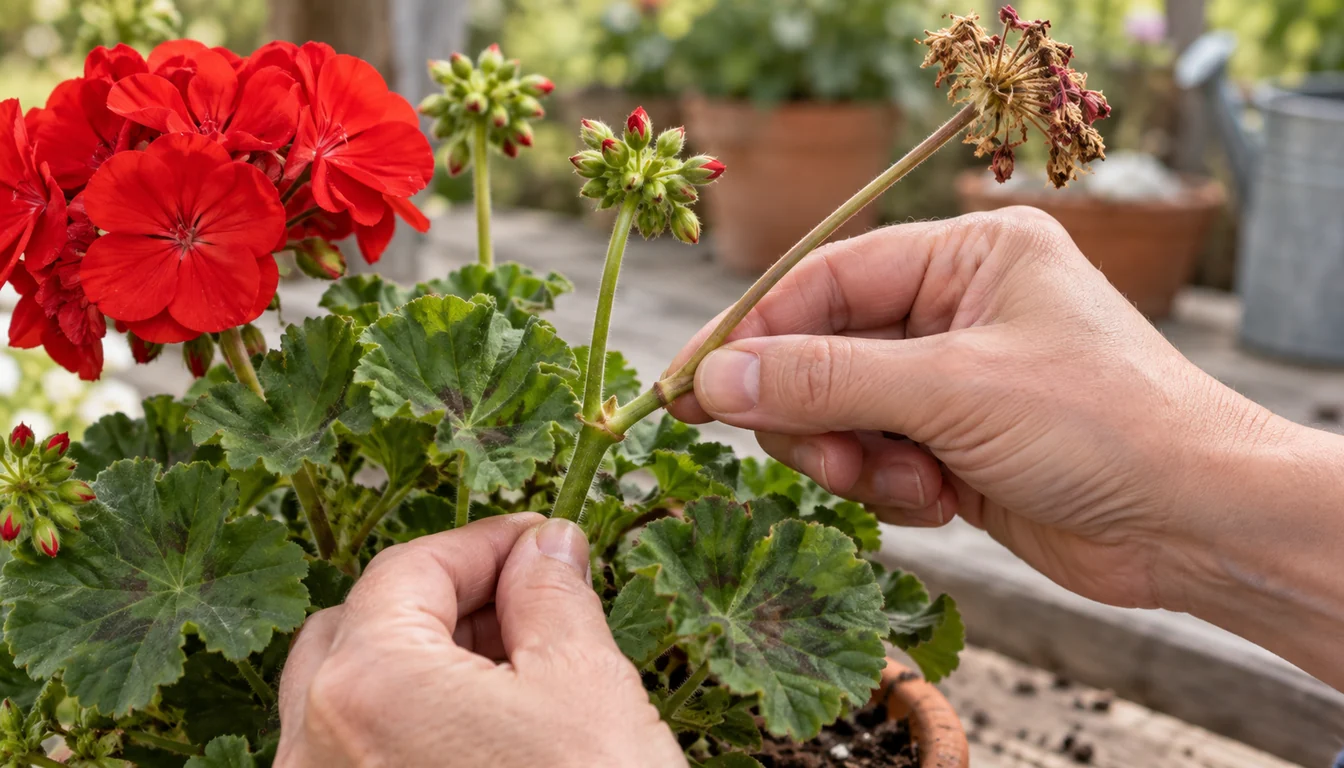
- Support the plantHold the main stem lightly so a pull cannot uproot a small container plant or tear a neighboring shoot.
- Follow one stalkTrace the faded cluster down to the point where its leafless stalk meets a larger leafy stem.
- Check both sidesMove leaves aside and confirm that no firm bud cluster is caught with the old stalk.
- Snap or snipBend a soft stalk sideways at the joint, or cut it close to the joint with clean blades.
- Clear the debrisRemove fallen petals from leaves and potting mix, especially after rain or overhead watering.
A tiny clean remnant is less important than avoiding a torn main stem.\n\nStop pulling when the plant moves with the stalk, then make a controlled cut.
Deadheading removes a structure that has finished flowering and may otherwise begin seed development. It does not create flowers by itself, so light, nutrition, temperature, and water still decide whether the plant produces another flush.
Is it a pelargonium or a hardy cranesbill?
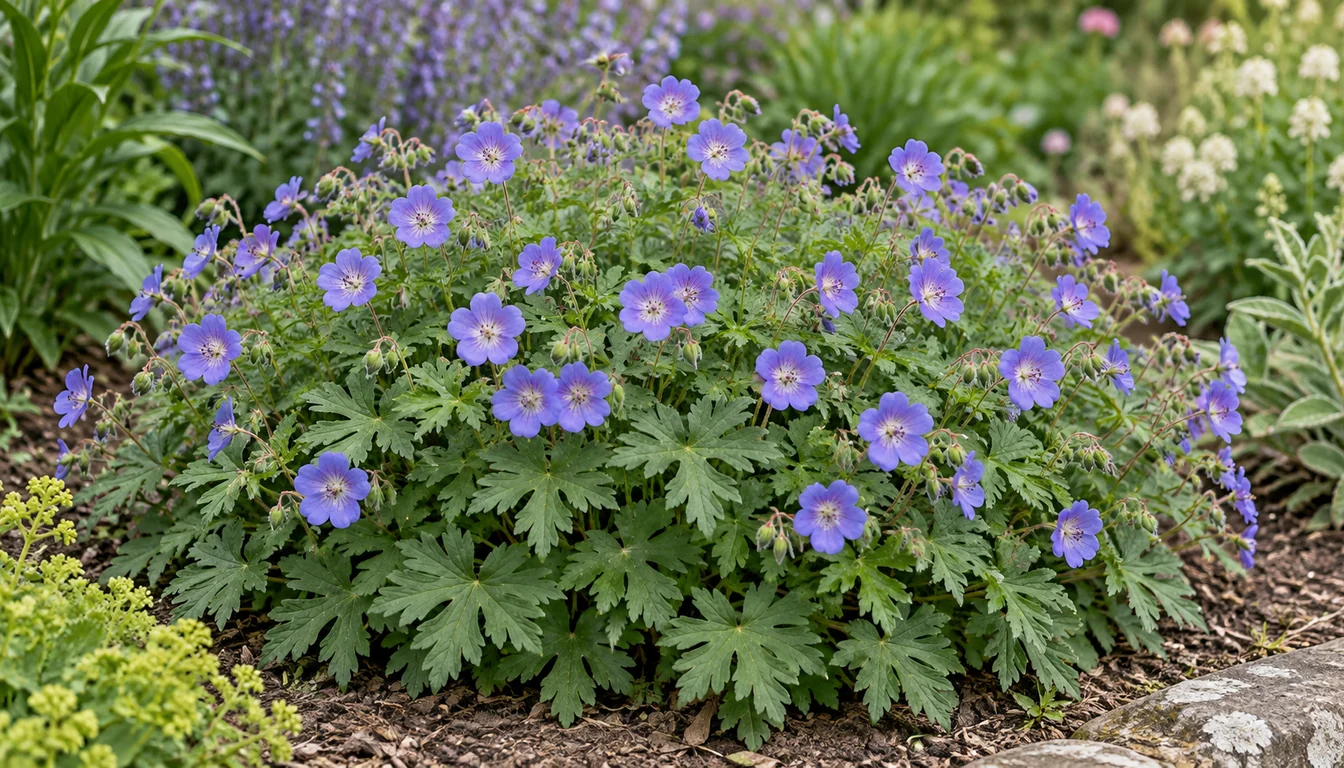
The common name geranium covers two different groups. Bedding geraniums are Pelargonium species and hybrids, while hardy cranesbills belong to the genus Geranium.
That difference changes the useful scale of the job. Pelargoniums carry distinct clusters on long stalks, so you can remove them one at a time.
Many hardy cranesbills make a low mass of stems and small flowers. Picking every faded bloom is slow and often adds little, while a midseason trim after the first large flush can tidy the plant and encourage fresh foliage or some later flowers.
| Plant | What you see | Best approach |
|---|---|---|
| Bedding pelargonium | Rounded clusters on bare stalks | Remove each spent stalk at its joint |
| Ivy pelargonium | Trailing stems with raised clusters | Support each runner and remove stalks singly |
| Regal pelargonium | Large flowers in a shorter spring display | Deadhead gently and keep healthy shoots |
| Hardy cranesbill | Low mound with many small flowers | Trim the clump after the main flush if needed |
Check the botanical name on the label when the habit is unclear. The distinction also affects winter care because hardy cranesbills can remain outdoors where suited, while tender pelargoniums need frost protection.
Adjust your hand to the geranium type
The removal point stays the same across tender pelargoniums, but access and stem strength change.\n\nUpright zonal plants usually present thick stalks clearly above the foliage.
Ivy-leaved plants produce thinner trailing growth that can knot around another stem or a hanger. Support the runner with one hand and cut the flower stalk with the other so the basket is not pulled out of shape.
Regal pelargoniums often bloom most heavily over a shorter period than zonal types.\n\nRemoving old flowers keeps them tidy, but deadheading cannot turn warm midsummer conditions into the cool flowering conditions some regals prefer.
Scented pelargoniums are often grown for foliage.\n\nRemove their flower stalks when untidy, then treat any separate pinching of leafy shoot tips as a shaping cut rather than deadheading.
What actually keeps new flowers coming
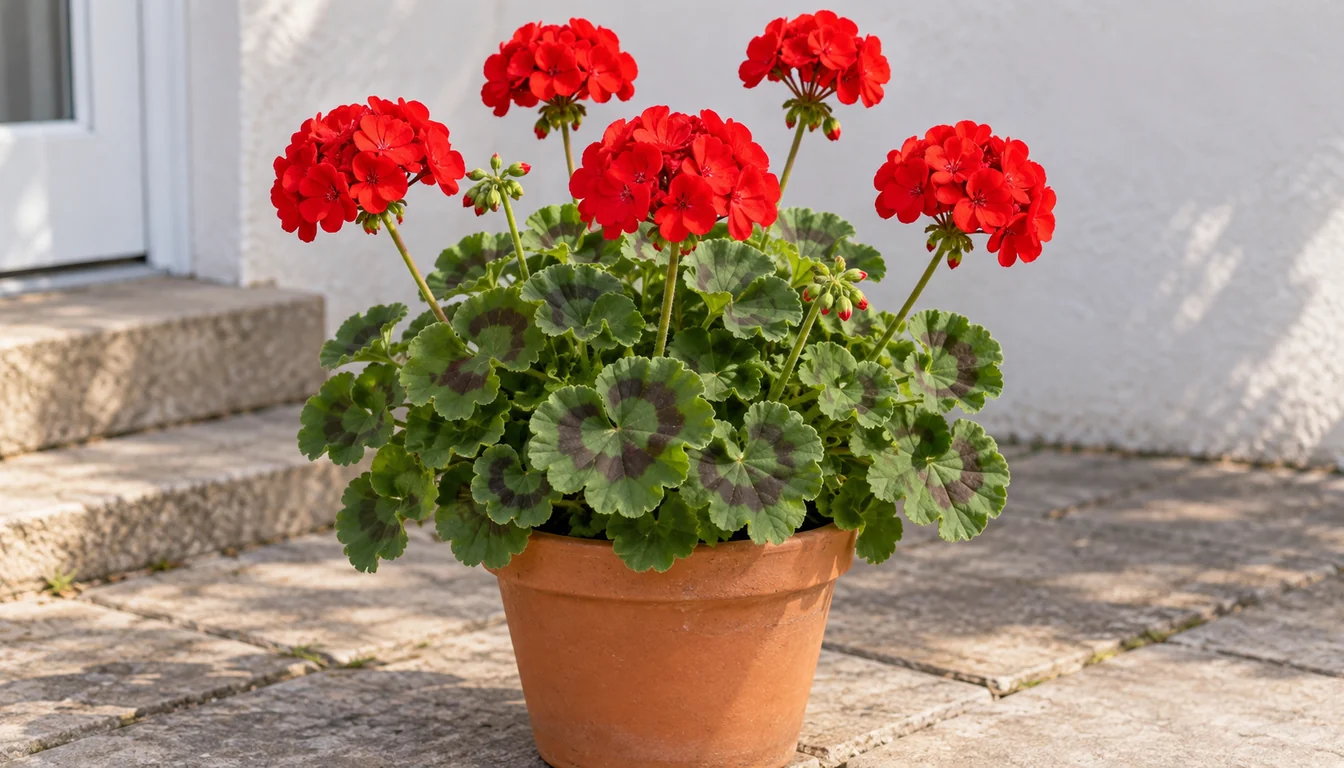
Regular deadheading prevents a plant from carrying old flower heads, but repeat bloom depends on the growing conditions that build the next buds. Tender pelargoniums generally flower best with strong light, free-draining mix, moderate watering, and appropriate feeding during active growth.
Give the plant as much direct sun as its cultivar and local heat allow without scorching or repeatedly drying the root ball. A shaded plant may stay leafy and healthy while producing few clusters.
Water the mix thoroughly, let surplus escape, and allow the compost to dry to the degree recommended for pelargoniums before watering again. A saucer that remains full can keep roots wet even though the top looks dry.
Follow the fertilizer label rather than adding a strong dose after every deadheading pass. Excess nitrogen can favor soft leafy growth, while neglected container plants can run short of nutrients because repeated watering carries them from the pot.
- Strong useful light without repeated scorch
- Drainage holes that release surplus water
- No standing water left in a cover pot or saucer
- Feeding matched to active growth and the product label
- Enough space for air to move through crowded foliage
If the plant grows well but will not flower, check light and feeding before cutting more stem. If growth has stopped or leaves are failing, investigate the root zone, temperature, pests, and disease.
Keep pots and window boxes clean as you work
A small container can move when a tough stalk is pulled, so steady the main stem and switch to snips early. Work around the pot in sections instead of reaching through the center and breaking unseen buds.
Spent petals can lodge on broad leaves, at branch forks, and on damp potting mix. Remove them during the same pass because decaying flowers hold moisture and make it harder to see gray mold or stem problems beginning underneath.
Clean blades before the job and again before moving away from a plant with suspicious spots or soft tissue. Healthy dry flower material can enter a managed compost system, while diseased material belongs in the disposal stream recommended locally.
Dry spent head
Remove the full stalk and collect loose petals.
Soft gray growth
Bag affected flowers, improve airflow, and avoid spreading debris.
Broken main stem
Make one clean corrective cut below torn tissue rather than leaving a ragged wound.
Crowded mixed planter
Separate neighboring stems before cutting so one plant is not pulled with another.
A quick inspection two or three times a week may suit a heavily flowering summer container. Cooler weather or a plant between flushes may need much less attention, so remove what is finished rather than following a fixed calendar.
When should you stop deadheading geraniums?
You can continue removing spent pelargonium flowers while the plant is actively growing and you still want a tidy display. Stop expecting deadheading to restart bloom when cold, short days, heat stress, or poor care has paused growth.
If you plan to take cuttings, choose healthy nonflowering shoot tips in late summer or at the time recommended for your climate. You do not need to preserve old flower stalks for cuttings because propagation uses leafy stem growth.
Before frost, move a plant you intend to keep into the appropriate bright, frost-free conditions or take cuttings.\n\nRHS guidance notes that tender pelargoniums do not tolerate frost and can be overwintered in several ways.
A hardy cranesbill follows another timetable. Leave attractive seedheads if you value them, or trim the plant after its main bloom when the foliage has become open and untidy.
The late-season priority becomes frost protection for healthy plant tissue. A final deadheading pass should never delay that plan.
Why are the buds browning or the flowers stopping?
Buds that brown before opening do not prove that the plant was deadheaded incorrectly. Check the pattern and the recent conditions before making another cut.
| What you see | Likely direction | First check |
|---|---|---|
| Few buds, long soft growth | Light or excess nitrogen | Daily light and feeding history |
| Wilt with dry mix | Water shortage | Moisture through the root ball |
| Wilt with wet mix | Root stress | Drainage and standing runoff |
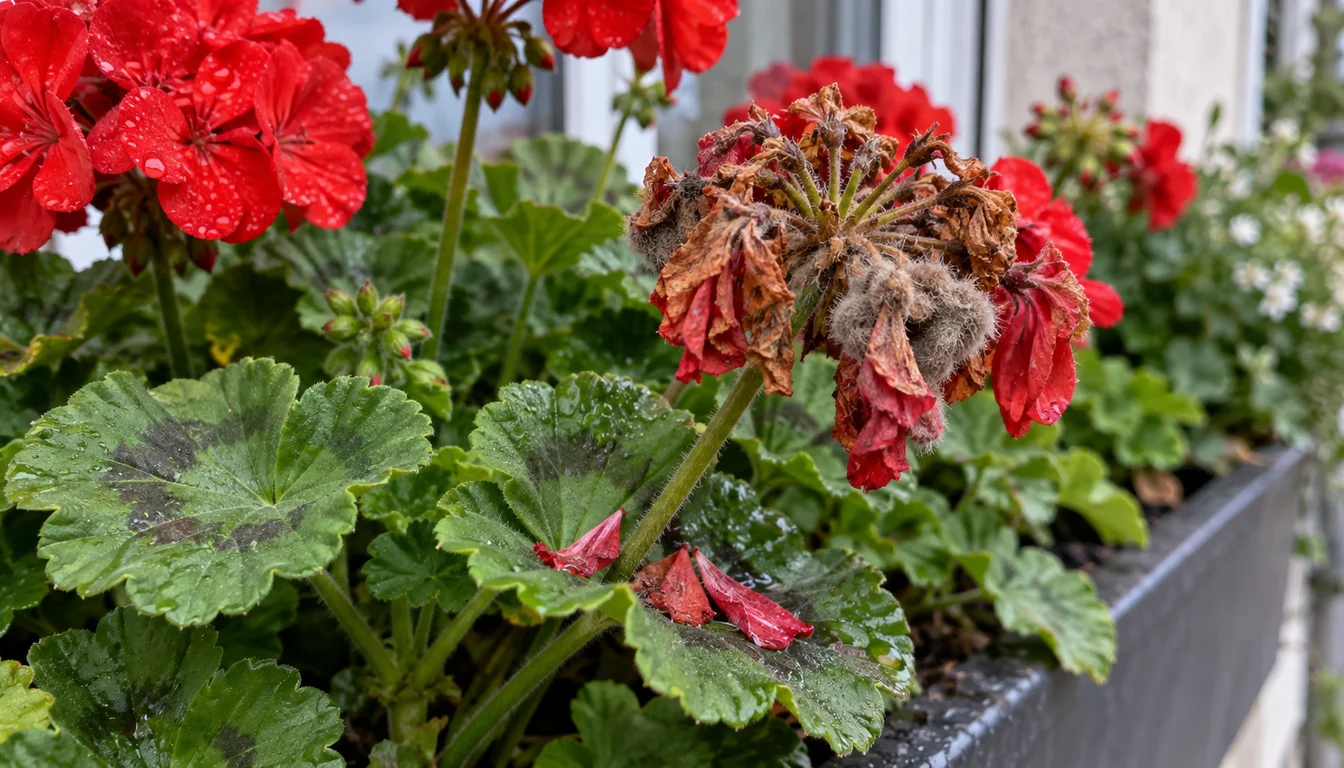
| Brown fuzzy flowers | Gray mold risk | Crowding, wet petals, and airflow |
| Distorted new growth | Pest feeding | Buds, leaf undersides, and stem joints |
Heat and severe drying can shorten a flower display even when the plant later recovers. Wet crowded flowers can develop Botrytis, which is why cleanup and airflow matter more than spraying an unidentified problem.
Remove affected flower material, correct the condition you can verify, and watch the next developing cluster. Dead tissue will not turn green again, so judge recovery by new growth rather than by the old damaged bud.
Pro Tips
- Trace one leafless stalk all the way to its joint before cutting.
- Use snips when a stalk resists instead of twisting the main stem.
- Keep firm buds and every healthy leafy shoot below the cut.
- Remove fallen petals from leaves and potting mix during the same pass.
- Treat pinching, shaping, and overwintering cuts as separate jobs.
- Check light, drainage, and feeding when flowers stop instead of cutting harder.
Frequently Asked Questions
Should you cut or snap off dead geranium flowers?
Either method works when it removes the entire flower stalk without tearing the main stem. Snap a soft stalk sideways at its joint, and use clean snips when the stalk is woody, crowded, or resistant.
Where do you cut a geranium after flowering?
Follow the bare flower stalk down to the point where it joins a larger leafy stem. Cut close to that joint while keeping nearby buds, leaves, and leafy shoots intact.
Will geraniums bloom again after deadheading?
Tender pelargoniums can continue flowering during active growth, and regular deadheading keeps spent clusters from remaining on the plant. New bloom still depends on suitable light, temperature, water, root health, and feeding.
Do hardy geraniums need individual deadheading?
Usually not. Many hardy cranesbills are easier to trim as a clump after the main flush, while tender bedding pelargoniums are suited to stalk-by-stalk deadheading.
Should you stop deadheading before taking geranium cuttings?
You do not need old flower stalks for propagation. Select healthy leafy shoots at the recommended time, and make the frost-protection or overwintering plan before cold weather arrives.
Sources & References
Related Guides
Cutting Back a Leggy Houseplant Does Not Fix It
Most people cut a houseplant back because it has gone long and bare.
11 min read
Deadheading Daffodils Matters Less Than the Six Weeks After
Almost every page about spent daffodils tells you to remove the seed pod so the bulb is not…
11 min read
French Lavender Pruning Depends on the Plant and Season
French lavender needs light trimming within its leafy growth, rather than a hard cut into bare…
6 min read
Fruit Tree Pruning Starts With Where the Crop Forms
A fruit tree that gives small, crowded, scabby fruit is usually not underfed.
11 min read
How Deep Can You Cut a Spent Lavender Spike?
Deadheading lavender is the lightest cut you will ever make on the plant, and the one place people…
7 min read
How Do You Prune Spanish Lavender for a Second Flush?
Spanish lavender is the one that flowers first and the one that keeps going.
7 min read