
Yellow Leaves on Tomato Plants: Read the Pattern to Find the Cause
Yellow leaves on a tomato plant are a symptom with several causes, and where the yellow starts is the quickest way to sort them. Brown spots ringed in yellow on the lowest leaves point to early blight or Septoria leaf spot. Yellowing on one side of a leaf or one side of the plant, with wilting, points to Fusarium or Verticillium wilt in the soil. Even paling across the plant, yellow between the veins, or yellow leaf edges point to nutrients, and a few shaded bottom leaves turning yellow late in the season is normal aging.
Each pattern leads somewhere different. Leaf spot diseases call for removing spotted leaves and keeping soil off the foliage, the wilts have no chemical cure and are managed with resistant varieties, and nutrient yellowing is settled with a soil test rather than an extra dose of fertilizer.
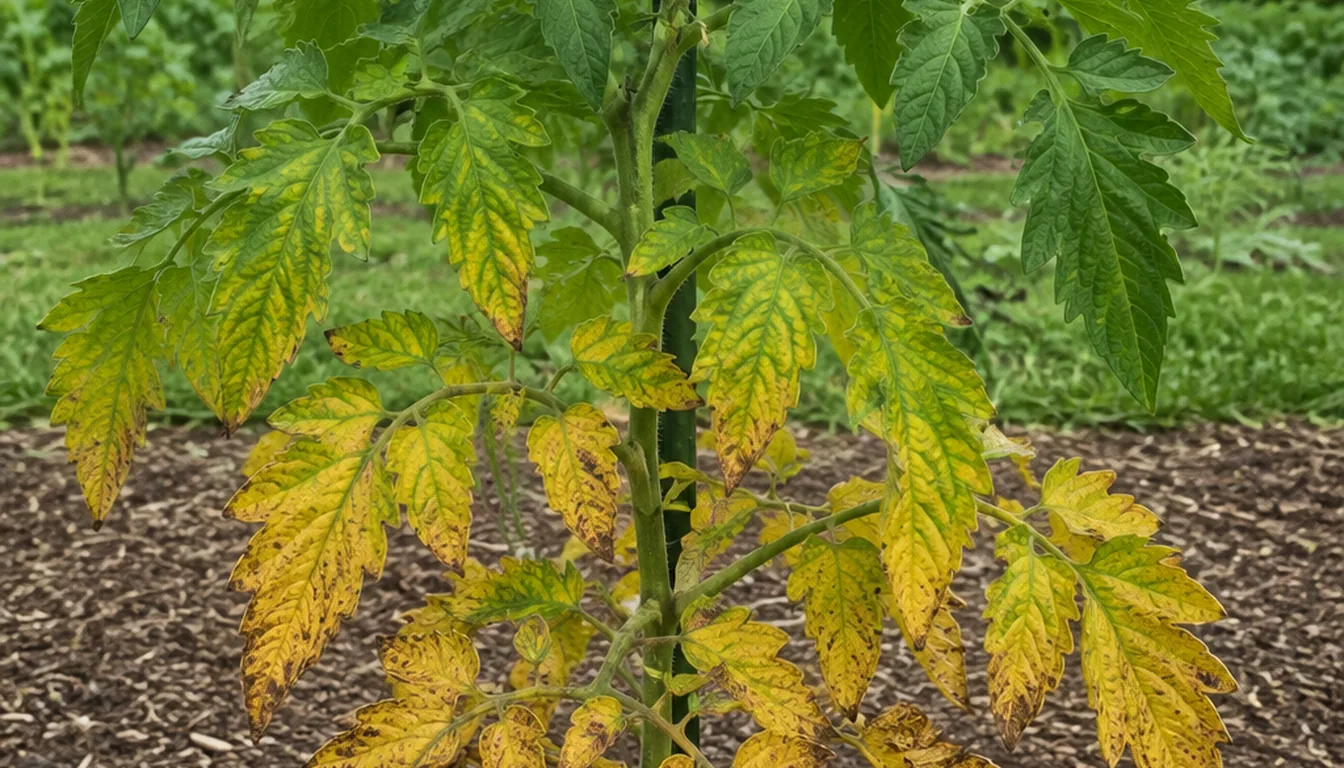
Where Is the Yellow on Your Tomato Plant?
Start with three observations before changing water, fertilizer, or sprays. Note which leaves are yellow, old ones near the soil or new ones at the top. Look at the yellow tissue for spots, rings, or black specks. Then check whether the plant wilts in the afternoon even when the soil is moist.
| What you see | Likely cause | How to confirm |
|---|---|---|
| Brown spots up to 1/2 inch with target-like rings, yellow tissue around them, starting on the lowest leaves | Early blight | Look for ringed lesions on stems and leathery black spots near the stem end of fruit |
| Many spots under 1/8 inch with a dark edge and a tan or gray center on older leaves | Septoria leaf spot | Tiny black specks appear in the spot centers about 8 days after the spot forms |
| Leaves yellow and wilt on one side of the plant or one side of a leaf, lower leaves first | Fusarium wilt | Brown streaks inside the stem when it is cut lengthwise near the soil line, in weather above 80°F |
| Yellow V-shaped wedges on the leaf, often with a brown center, plus one-sided wilting | Verticillium wilt | Tan streaks inside the lower stem, in cool weather of 68 to 75°F |
| Yellow and light green mottling with long, thin, or curled leaves on a stunted plant | Virus | Neighboring plants of the same age look healthy and tall |
| Whole plant pale and yellowish | Nitrogen shortage | No spots, and a soil test or feeding history to compare against |
| Yellow between the veins of older leaves | Low magnesium | No spots, and a soil test result |
| Bright yellow leaf edges on otherwise green leaves | Low potassium | No spots, and a soil test result |
| A few heavily shaded bottom leaves turning yellow on a mature plant | Normal aging | Upper growth stays green and the yellowing does not climb |
The first five rows come from University of Minnesota Extension's tomato diagnosis keys and its early blight fact sheet. The nutrient and aging rows come from Mississippi State University Extension, which notes that heavily shaded bottom leaves on a maturing plant yellow as they age and that this is not a problem.
Aphids belong on the list too. Minnesota Extension notes that large colonies can cause curling, discoloration, and sticky leaves, so a yellowed leaf with a sticky surface deserves a look at its underside before any disease is assumed. The reasons colonies rebuild are covered in why aphids keep coming back.
Is It Early Blight or Septoria Leaf Spot?
Both fungal diseases start low and climb, which is why the oldest leaves yellow first. The spots tell them apart.
Early blight makes round brown spots that grow up to half an inch across, with target-like concentric rings in the larger ones and yellow tissue around them. Minnesota Extension describes it starting on older foliage near the ground, spreading in warm, wet weather or heavy dew, and showing up from mid to late June in that state. The same fungi infect potatoes and peppers, and they overwinter in infected plant debris and soil.
Septoria leaf spot makes many more, much smaller spots, each under an eighth of an inch with a dark edge and a tan or gray center. About 8 days after a spot appears, tiny black dots form in its center, and those specks are the clearest sign that the problem is Septoria. Clemson Home & Garden Information Center notes that badly affected leaves yellow, die, and drop.
Both diseases reach the leaves the same way. Spores in the soil land on the lowest leaves by direct contact or when raindrops splash soil upward, so the management for both starts at the soil line.
- Remove spotted leaves earlyMinnesota Extension says removing up to one-third of the plant's leaves is fine when the disease is caught early, and no more than that.
- Keep soil off the foliageMulch the soil under the plants with straw, fabric, plastic, or dried leaves, and prune the bottom leaves so splash has less to land on.
- Water the soil, not the leavesDrip irrigation, a soaker hose, or careful hand watering at the base keeps foliage dry.
- Open up the plantsStaking or trellising, weeding, and wider spacing let leaves dry faster after rain.
- Clean hands and toolsWash hands and sanitize pruners after touching infected plants before moving to healthy ones.
- Rotate next yearMinnesota suggests two years before tomatoes or peppers return to the spot, and Clemson recommends a three-year rotation for Septoria.
Removed leaves can be buried or burned. Minnesota Extension allows burying them in a home compost pile only when that pile is managed according to its composting guidance, and in the fall it recommends removing or burying infected plants so the fungus is less likely to survive into the next year.
Fungicide is rarely the deciding step for a home garden. Minnesota's early blight fact sheet says most home gardeners do not need to treat tomatoes with a fungicide, because the plants can tolerate a lot of early blight without producing fewer tomatoes. Clemson lists chlorothalonil, copper, and mancozeb products for these diseases, and any of them is used only as its label directs for tomatoes. For future plantings, Minnesota points to early blight resistant varieties, often marked EB in seed catalogs, which still show some spots but suffer less damage.
What Does One-Sided Yellowing and Wilting Mean?
Yellowing that stays on one side is the signature of the two soilborne wilts. Clemson describes Fusarium wilt as often turning the leaves on only one side of the stem golden yellow at first, and Minnesota's keys describe both wilts the same way. Leaves yellow and wilt, often on one side only, the lower leaves go first, and eventually the whole plant wilts.
A cut stem separates them from simple drought. Slice the lower stem lengthwise near the soil line. Fusarium leaves brown streaks in the water-conducting tissue around a green center, and Verticillium leaves tan streaks. Streaks inside the stem point to a wilt disease rather than a dry root zone.
Temperature and the leaf mark narrow it further. Minnesota links Fusarium wilt to air and soil temperatures above 80°F and Verticillium wilt to cooler weather of 68 to 75°F, and Verticillium often makes a yellow V-shaped wedge on the leaf with a brown center.
Minnesota notes that Fusarium wilt is mainly a problem in heirloom varieties, since most modern cultivars are resistant. On a seed packet or plant tag, F, FF, or FFF mark Fusarium resistance, with more letters covering more races of the fungus, while V marks Verticillium resistance. Clemson adds disease-free transplants, a soil pH of 6.5 to 7.0, and nitrate rather than ammoniacal nitrogen fertilizer to its Fusarium recommendations. The tomato profile explains the full set of resistance letters printed on tags.
Which Nutrient Shortages Turn Tomato Leaves Yellow?
Nutrient yellowing has no spots, rings, or black specks. Mississippi State University Extension describes three patterns.
- Nitrogen
- A general yellowing of the entire plant
- Magnesium
- Yellowing between the veins on older leaves
- Potassium
- Bright yellow leaf edges on otherwise green leaves
A soil test is what turns a guess into a decision. Minnesota Extension advises adding phosphorus and potassium according to soil test recommendations, and it warns that too much nitrogen makes tomato plants bushy, leafy, and slow to bear fruit. Its early blight guidance for farms ties feeding to disease as well. Plants are fertilized to keep growth vigorous, without over-fertilizing with potassium and with adequate nitrogen and phosphorus.
Because each shortage leaves a different pattern, a bag of balanced fertilizer is not a safe default for every yellow leaf. Minnesota's timing for a tomato side-dressing is when the first fruits start to enlarge, and the rates, container differences, and the case for Epsom salt only after a test are covered in how to fertilize tomatoes without overfeeding.
When Is Yellowing Just Age or a Watering Problem?
Some yellowing needs no treatment. Mississippi State Extension notes that as tomato plants mature, the bottom leaves become heavily shaded and naturally turn yellow as they age. That pattern stays low, has no spots, and does not climb into the upper canopy, and the leaves can simply be removed.
Watering affects the roots that feed every leaf. Minnesota Extension recommends about 1 inch of rainfall or irrigation per week, applied as a thorough soak rather than a light sprinkle, because light watering builds shallow roots and leaves the plant more exposed to heat and drought. An inch of water wets sandy soil about 10 inches deep and heavy clay about 6 inches deep, so a trowel pushed into the bed after watering shows whether the water reached the roots. If the soil is wet only an inch or two down, the watering was too short.
Overhead sprinkling works against the leaf-spot diseases in the earlier section. Minnesota points out that wet leaves are more disease-prone and that splashing soil can carry spores onto them, which is why watering at the base helps both the roots and the foliage. The difference between frequent shallow watering and slower deep watering is laid out in deep watering versus frequent watering.
Pro Tips
- Check the oldest leaves first and note whether the yellow carries spots, rings, or black specks.
- Cut the lower stem of a wilting plant lengthwise to look for brown or tan streaks before blaming water.
- Remove spotted lower leaves early, but take no more than one-third of the plant's foliage.
- Mulch under tomato plants so rain does not splash soil and fungal spores onto the lowest leaves.
- Get a soil test before adding magnesium or potassium for yellow leaves.
- Plant varieties marked F, FF, V, or EB in beds where wilts or early blight have appeared.
Frequently Asked Questions
Should I cut off yellow tomato leaves?
Remove leaves with spots, especially low ones near the soil, because that slows early blight and Septoria. Minnesota Extension advises taking no more than one-third of a plant's leaves, and leaves yellowing from normal aging at the shaded base can be removed without harm.
Is it normal for the bottom leaves of a tomato plant to turn yellow?
A few shaded bottom leaves yellowing on a mature plant is normal aging, according to Mississippi State Extension. Yellowing that climbs the plant, carries spots or rings, or comes with wilting points to disease instead.
Do I need to spray fungicide for yellow tomato leaves?
Usually not in a home garden. Minnesota Extension says tomato plants tolerate a lot of early blight without producing fewer tomatoes. If a fungicide is used, it must be labeled for tomatoes and that disease, and the label sets the rate and the days before harvest.
Can a tomato plant with Fusarium wilt be saved?
Clemson Extension states there is no chemical treatment for Fusarium wilt. The practical response is to plant resistant varieties marked F, FF, or FFF in the future and to use disease-free transplants.
Can I compost tomato leaves with early blight?
Minnesota Extension suggests burying or burning them, and it allows a home compost pile only when the pile is managed according to its composting guidance. Infected plants are removed or buried in the fall.
Sources & References
- University of Minnesota Extension, Early Blight in Tomato and Potato
- University of Minnesota Extension, What's Wrong With My Plant? Tomato: Spots on Leaves
- University of Minnesota Extension, What's Wrong With My Plant? Tomato: Plant Wilts
- University of Minnesota Extension, What's Wrong With My Plant? Tomato: Discolored Leaves
- University of Minnesota Extension, Growing Tomatoes in Home Gardens
- Clemson Cooperative Extension Home & Garden Information Center, Tomato Diseases & Disorders
- Mississippi State University Extension, Some of the Leaves on My Plants Are Turning Yellow. What Is Causing This?
Related Guides
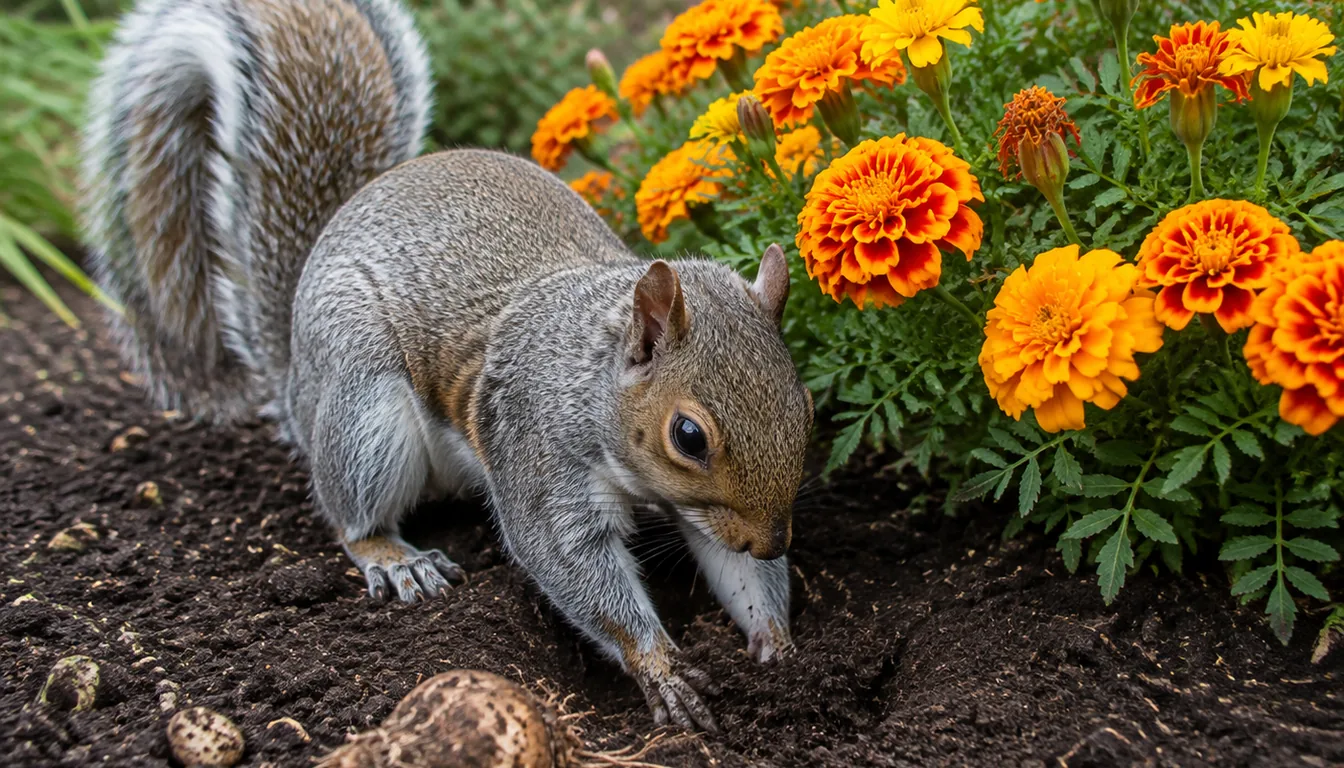
Do Marigolds Keep Squirrels Away From Your Garden?
Squirrels can strip a bed of seedlings or freshly planted bulbs in a single morning.
11 min read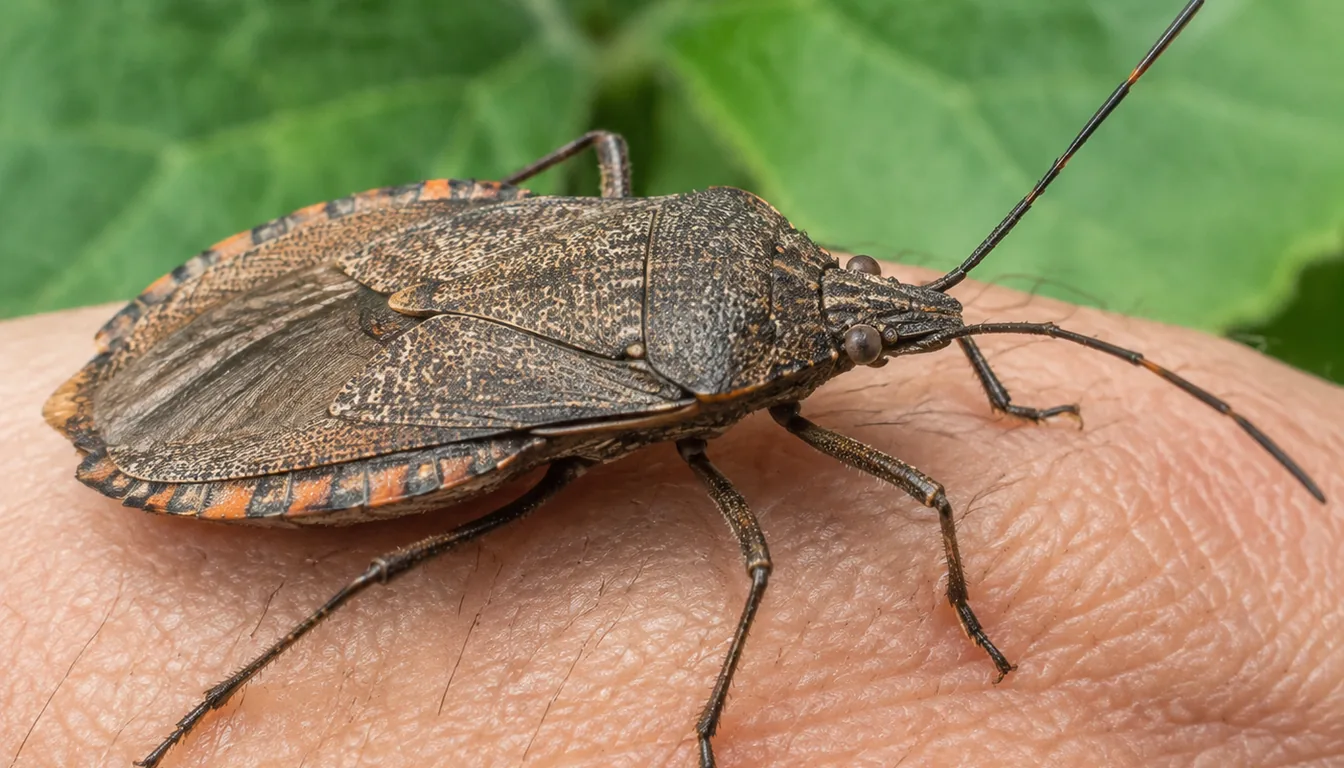
Do Squash Bugs Bite People?
No. A squash bug cannot bite you. Its mouthparts are a slender stylet built to pierce plant tissue…
9 min read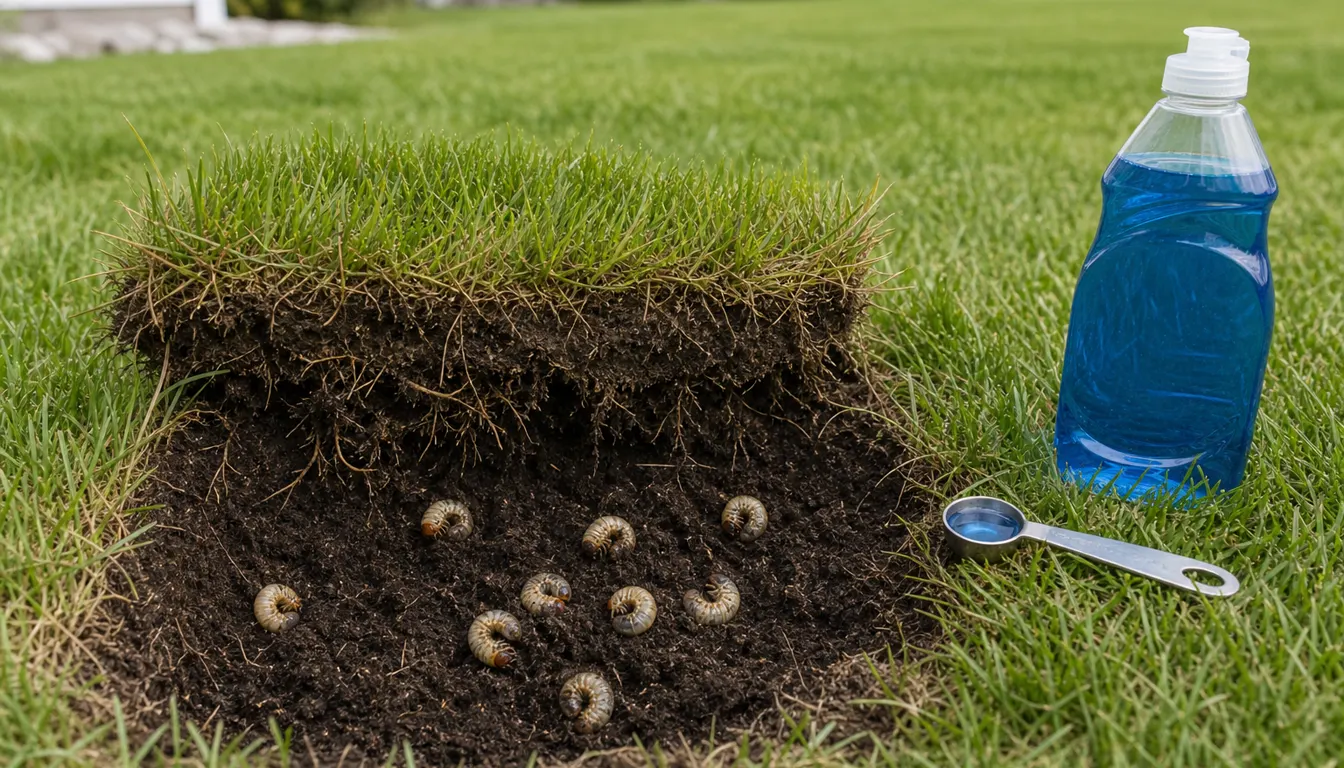
Does Dawn Dish Soap Kill Grubs? Why It Fails and What Works Instead
No. Dawn and other dish detergents do not bring white grubs to the surface, and they do not kill…
9 min read
How Do You Get Rid of Spider Mites on Houseplants?
Spider mites on houseplants often can be reduced by repeatedly washing the leaf undersides.
11 min read
How Much Neem Oil Per Gallon? Read and Scale the Label Rate
There is no universal amount of neem oil per gallon. The rate belongs to the exact product and its…
11 min read
How to Control Fungus Gnats in Houseplant Soil
Fungus gnat control works best when it addresses the larvae in potting mix as well as the adults…
15 min read