
What's a Potato Plant? How to Grow Tubers, Not Just Tops
Solanum tuberosum Solanaceae
Potatoes form tubers on underground stems, so loose soil, hilling and even moisture decide the yield more than heavy feeding.
Plant certified seed pieces of about 2 ounces once the soil reaches 50 F, set them 10 to 12 inches apart, hill within about 4 weeks, give 1 to 2 inches of water a week, and cure the harvest at 55 to 60 F before storage.
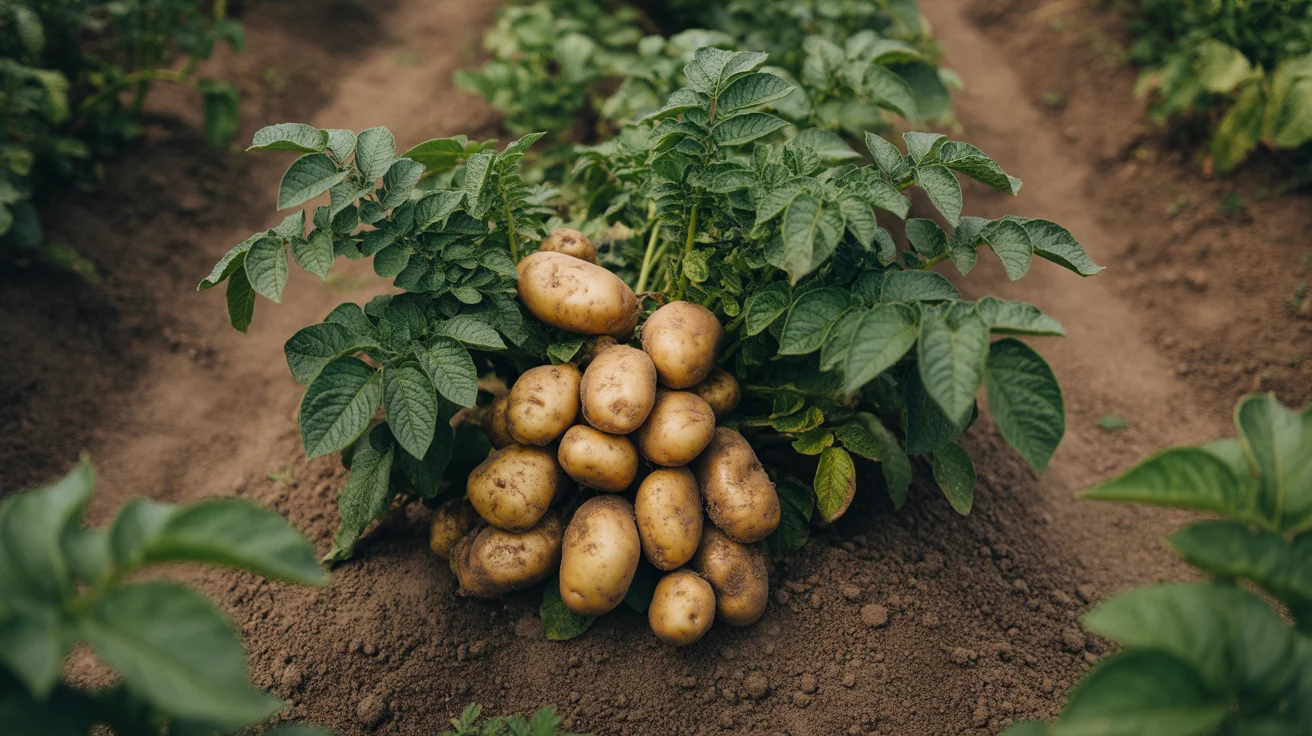
Care snapshot
Are Potatoes Roots or Stems?
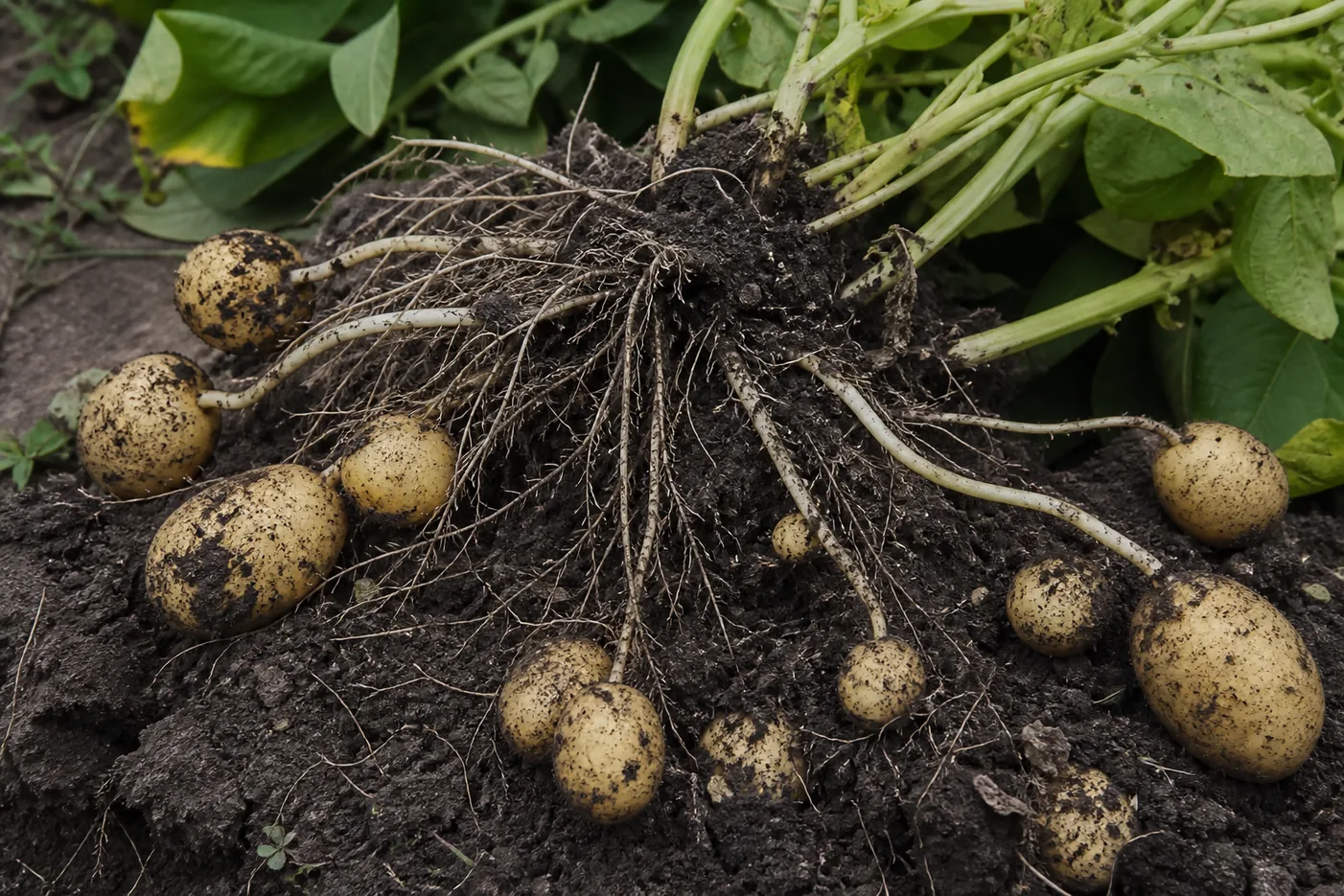
Potatoes store their energy in tubers, which are swollen underground stems rather than roots. Each eye on a tuber is a bud that can sprout into a new plant, which is why a cut piece with one good eye grows a full plant.
The tubers form on sideways underground stems called stolons. That is the reason hilling matters. Utah State hills to give the tubers room to develop, improve drainage, and keep developing potatoes from turning green in the light.
Solanum tuberosum is a perennial in its native range but is grown as an annual. Clemson notes that plants resist a light frost while hard frosts and freezes set back growth, so planting follows the soil temperature and the last frost date.
Cool soil helps the crop. Clemson explains that potatoes keep growing for longer when soil temperatures stay low, which gives a bigger harvest, and uses mulch partly to hold soil temperatures down.
Which Potato Type Should You Grow?
Clemson puts the average potato at 100 to 120 days to maturity, and splits varieties by purpose. Early varieties are dug young as new potatoes, while medium to late varieties make the crop for storage. Planting one of each spreads the harvest.
Disease tolerance is the other reason to choose by variety name. University of Maine Extension notes that no variety is truly resistant to late blight, but Kennebec and Sebago tolerate it better than most. Clemson lists Kennebec, Rosa, and Sebago as resistant to early blight.
Scab is a third filter. Clemson names Superior, Dark Red Norland, Red LaSoda, Russet Burbank, and Sebago among scab-tolerant varieties, and University of Maine recommends a scab-resistant variety such as Russet Burbank where soil pH runs high.
- Early varieties: dug as new potatoes before the vines die.
- Late varieties: harvested after vine dieback and cured for winter storage.
- Late blight tolerance: Kennebec and Sebago.
- Scab tolerance: Superior, Dark Red Norland, Red LaSoda, Russet Burbank, Sebago.
How Much Sun and Heat Can Potatoes Take?
Potatoes are grown in full sun, and the light feeds the leaves that fill the tubers. A spot shaded for part of the day by trees, buildings, or tall neighbors such as corn gives smaller plants and a smaller harvest.
Heat works against them through the soil rather than the leaves. Clemson notes that potatoes prefer a cool spring and keep growing longer while soil temperatures stay low. Where summers are hot, the crop is planted early so the tubers fill before the soil warms.
Mulch is the practical tool for this. Clemson uses it to conserve water, reduce weeds, and keep soil temperatures lower, and also describes growing potatoes entirely in a 12 to 18 inch layer of straw or pine needles, where the tubers form in the mulch and are easy to harvest.
- Pick the sunniest open bed available.
- Plant early enough that tubers fill before summer heat.
- Mulch around the plants to keep soil cooler and moisture steadier.
How Often Should You Water Potatoes?
Utah State gives potatoes 1 to 2 inches of water per week, and warns that irregular watering, either too much or too little, causes knobby and cracked tubers.
Clemson adds two details. Water is most critical when the plants are forming blossoms, and alternating wet and dry conditions cause hollow heart, a cavity inside large tubers.
Steady moisture also limits scab. Clemson notes that scab is favored by dry soil and keeps the soil moist through the period of active tuber growth, particularly 4 to 9 weeks after planting.
Water at soil level rather than overhead. Clemson's disease guidance avoids overhead sprinklers and keeps the leaves dry to limit blight.
- Aim for 1 to 2 inches of water a week from rain and irrigation together.
- Keep soil evenly moist from 4 to 9 weeks after planting, while tubers form.
- Do not let the bed dry hard and then flood it, which causes knobs, cracks, and hollow heart.
- Use drip or a soaker hose so the foliage stays dry.
What Soil Do Potatoes Need, and Why Hill Them?
Potatoes need loose, well-drained soil so tubers can swell evenly. Clemson keeps soil pH between 5.8 and 6.5 in general, and between 5.0 and 5.3 in gardens where scab is a problem, because scab is most severe in soil above pH 5.5.
That is why lime, wood ash, and manure are risky in a potato bed. Clemson notes that lime and wood ash raise pH, and that manure can carry scab spores. University of Maine Extension makes the same point from the other side, that higher soil pH favors scab.
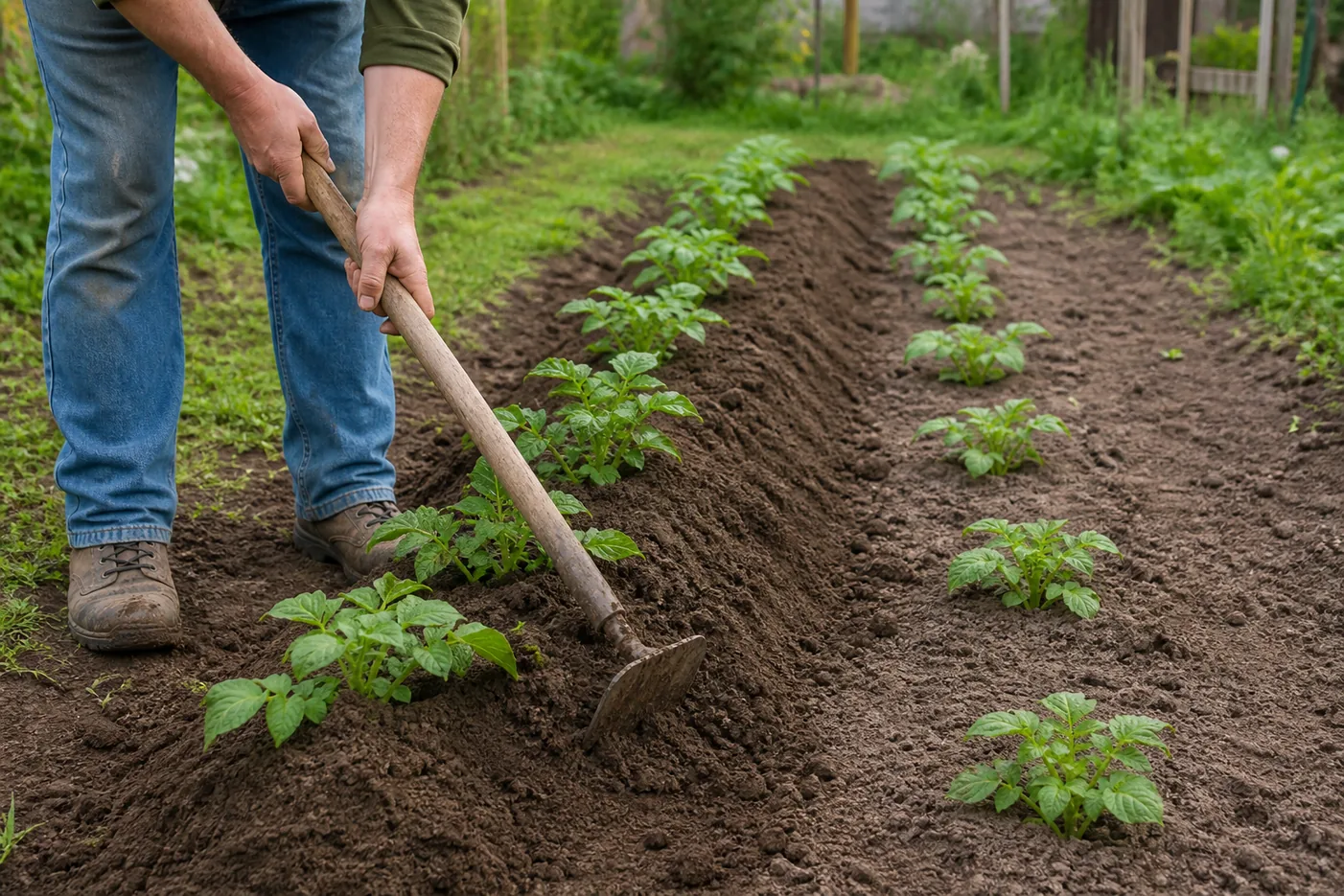
Hilling starts early. University of Maine hills once plants are about 6 inches tall and allows up to three hillings, while Utah State hills within 4 weeks of planting. Each hilling covers more stem, gives the tubers room, and keeps light off them. In heavy clay, raised rows drain better and warm faster in spring.
- Soil texture
- Loose and well drained so tubers swell evenly and excess water runs off
- pH target
- 5.8 to 6.5, or 5.0 to 5.3 where scab has been a problem
- Avoid
- Lime, wood ash, and manure in scab-prone beds
- Hilling
- First hilling at about 6 inches tall or within 4 weeks of planting, up to three times
- Rotation
- Same bed no more than once every 3 to 4 years, and not after tomatoes or scab-prone root crops
How Do You Plant Seed Potatoes?
Start from certified seed potatoes. Clemson notes that saving your own seed is generally not worthwhile because viruses and other diseases often show up the next year, and University of Maine advises against planting saved tubers because they can carry late blight into the garden.
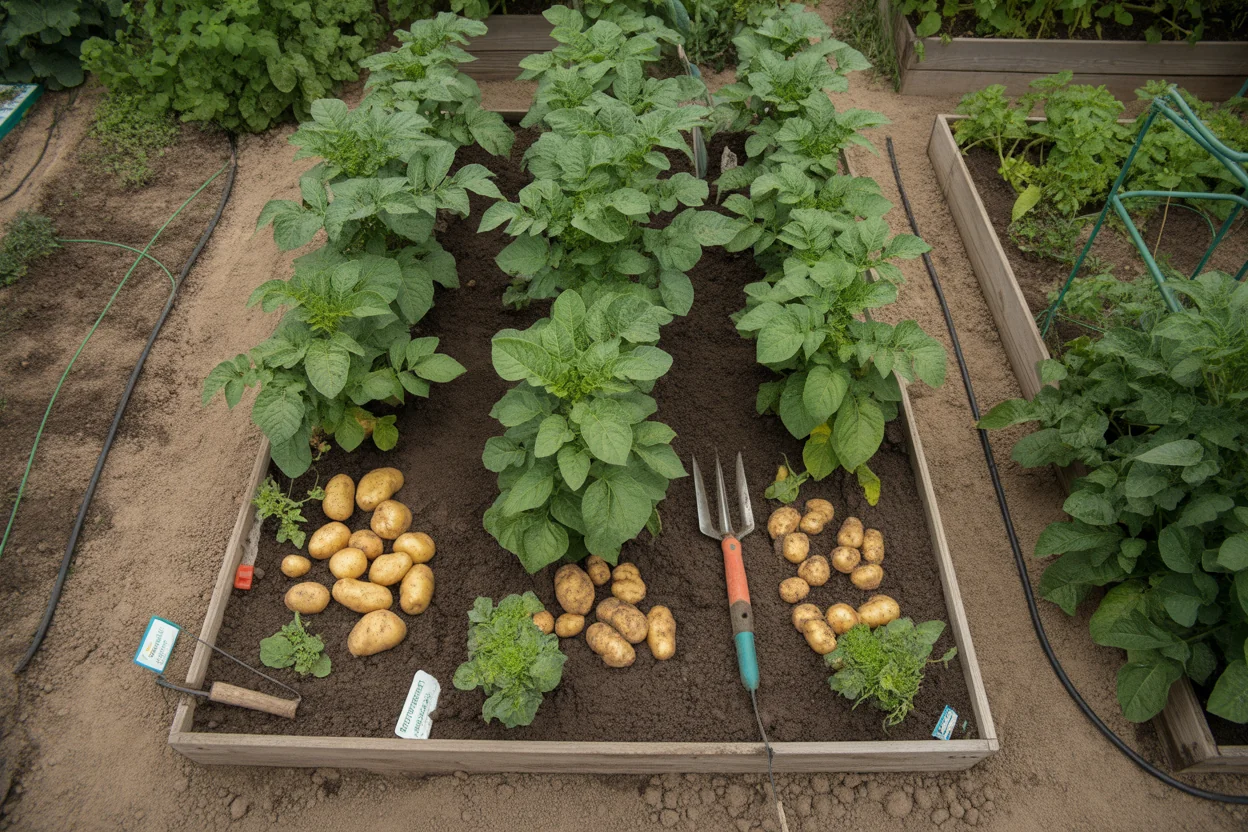
Cut seed pieces to about 2 ounces, each with at least one good eye. University of Maine gives 1¾ to 2¼ ounces, Utah State at least 2 ounces, and Clemson describes pieces about the size of 1 to 2 inch cubes.
Let the cut faces heal before planting. Clemson cuts pieces three to five days ahead, and University of Maine holds them at 50 to 55 F with humidity above 90 percent while they heal, which lowers the chance of rot in cold soil.
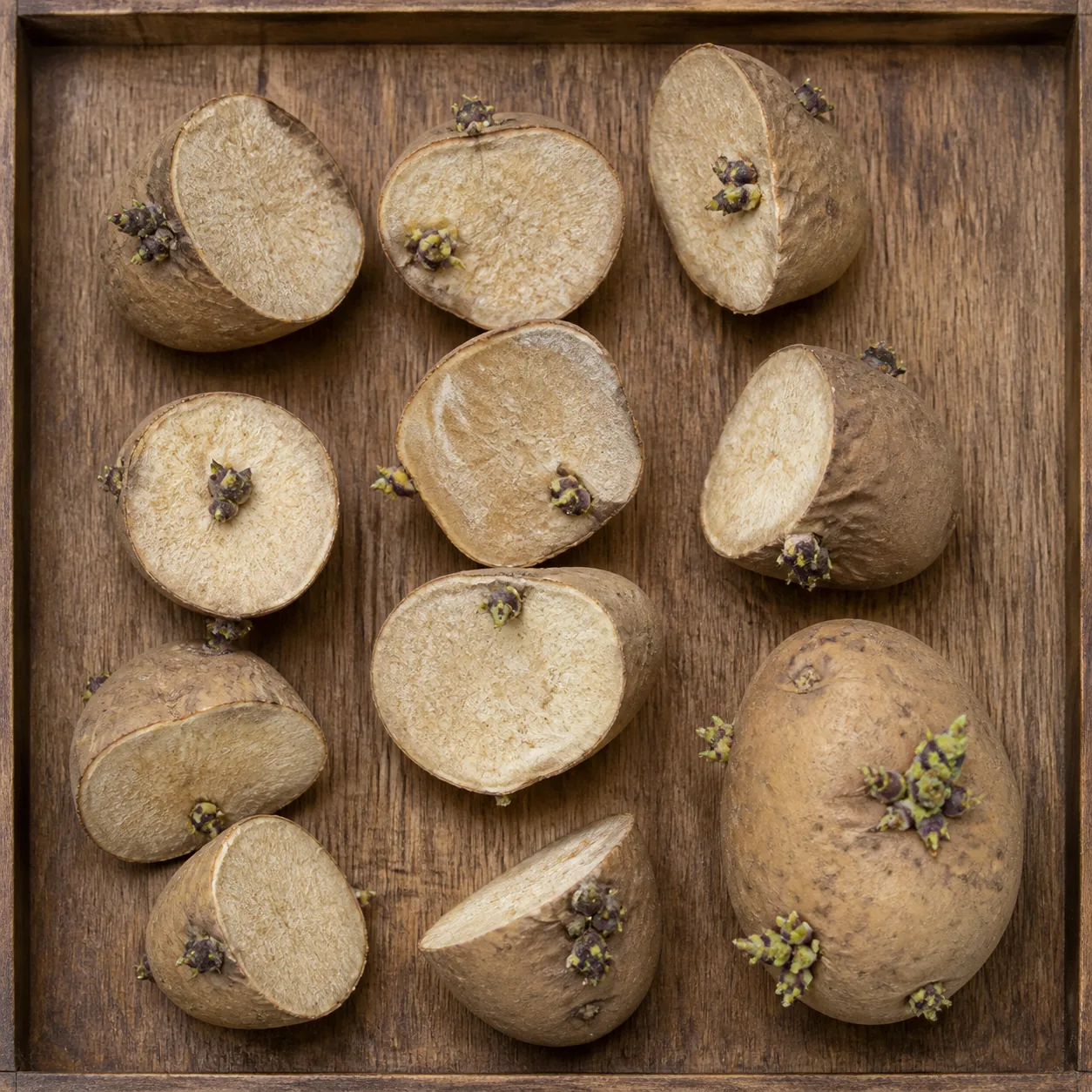
- Wait until the soil has warmed to 50 F, about 14 to 21 days before the last frost.
- Open a furrow 4 to 6 inches deep, as Utah State and University of Maine both do.
- Set pieces cut side down 10 to 12 inches apart, in rows 30 to 36 inches apart.
- Cover with about 2 inches of soil, then fill in as the shoots grow.
- Hill soil around the stems once plants are about 6 inches tall.
What Is Eating or Spotting Your Potato Leaves?
Clemson lists Colorado potato beetle, wireworm, flea beetle, and potato leafhopper as the main insects, and early blight, late blight, common scab, brown rot, and soft rot among the diseases. The two problems most gardeners meet first look alike from a distance but need different responses.
Colorado potato beetle adults and larvae chew leaves into ragged holes. Utah State hand-picks the adults and rubs out the egg masses as they appear. Early blight instead starts as small black spots on older leaves, and Clemson describes the spots enlarging into a bull's-eye pattern of concentric rings with yellowing around them.
Late blight is the serious one, and it favors cool, wet weather. University of Maine describes ideal conditions as nights in the 50s and days in the 70s with rain, fog, or heavy dew. Clemson adds that daytime temperatures in the mid-70s with high humidity are ideal for infection, and hot, dry weather slows it down.
Late blight leaves start as pale to dark green water-soaked spots that turn brown to purplish black. In humid weather a white growth appears at the edges on the leaf undersides. Clemson notes that plants can be completely defoliated within 14 days of the first symptoms, and infected tubers develop a dry, corky, reddish-brown rot that often shows up in storage.
Prevention does more than any spray. University of Maine notes that the late blight pathogen does not overwinter in garden soil under its conditions and instead survives on living plant tissue such as saved tubers, so certified seed, removing cull piles, and pulling volunteer potatoes break the cycle. Clemson rotates potatoes away from tomatoes, removes plant debris after harvest, and keeps the foliage dry.
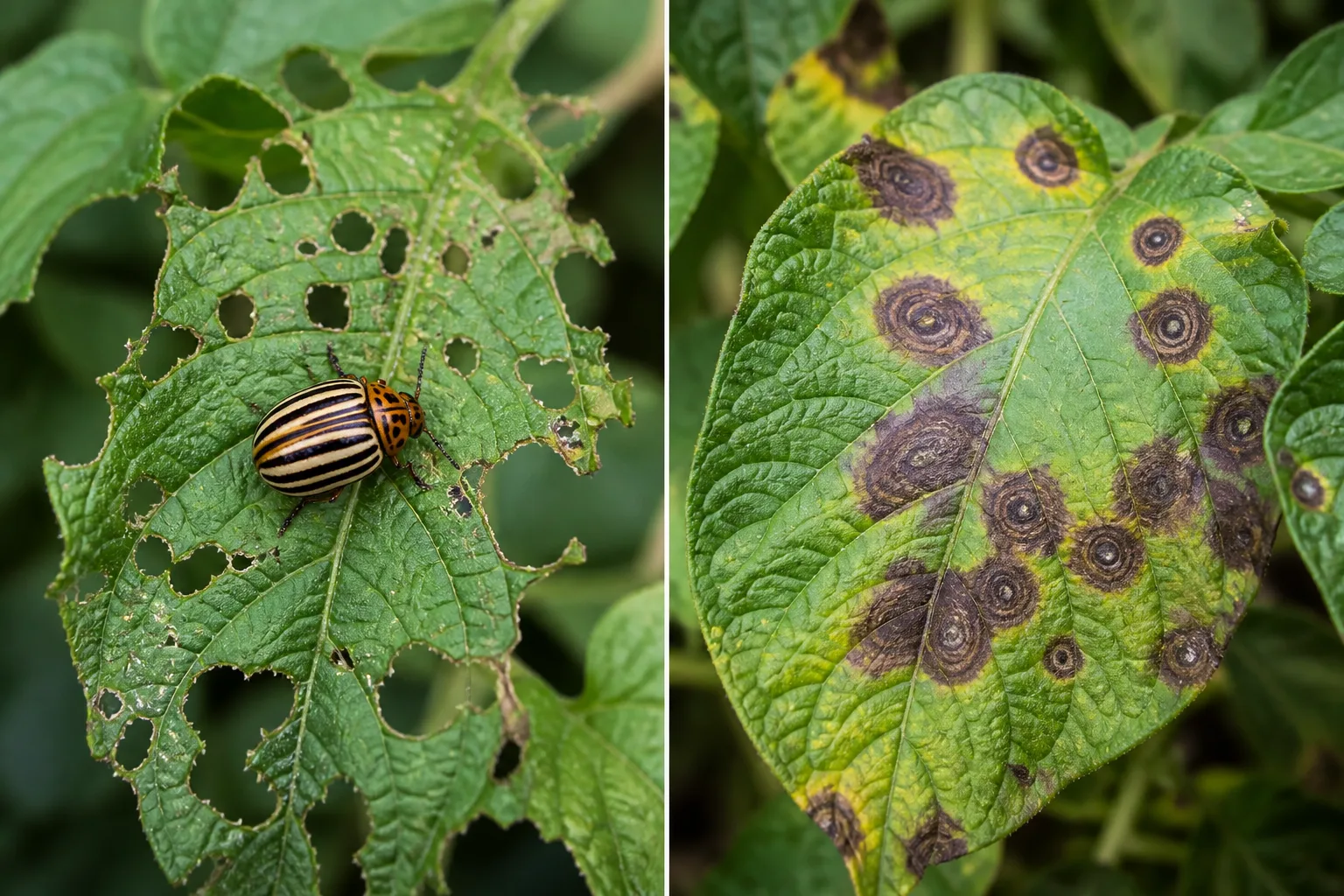
Adults and larvae strip leaves. Hand-pick adults and rub out the orange egg masses on leaf undersides as they appear.
Small black spots with concentric rings on older leaves first. Rotate crops, remove volunteer plants, and clear debris after harvest. Kennebec, Rosa, and Sebago are listed as resistant.
Water-soaked spots that spread fast in cool, wet weather, with white growth underneath. Remove infected plants and tubers, and plant certified seed next season.
Corky scabs on tubers, worst in dry soil above pH 5.5. Scabbed tubers are edible once peeled, but much of the potato may be lost.
When Do You Plant, Dig, and Store Potatoes?
Utah State plants seed pieces 14 to 21 days before the last frost, once the soil has reached at least 50 F, and University of Maine warns that seed pieces in colder soil can decay. In hot-summer regions planting starts in late winter. Clemson plants from February through April in South Carolina and does not recommend fall plantings there because of the higher pest and disease risk.
New potatoes can be dug before the vines die, once the tubers are large enough to eat. For storage, Clemson waits until most vines have died and digs about two weeks after dieback, so the skins have time to firm.
Dig gently and keep the tubers out of the light. Clemson leaves them in the sun only long enough for the soil to dry and fall off, usually one to two hours, and avoids skinning them, since bruised and wounded tubers rot in storage.
Curing comes next. Utah State cures tubers at 55 to 60 F with high humidity for 2 to 3 weeks, then stores them in the dark at 40 to 45 F. University of Maine gives 38 F with 95 percent humidity as ideal, and Clemson stores potatoes at 40 to 50 F and 90 percent relative humidity for six to eight months, noting that warmer storage makes them sprout. A straw or mulch layer over the bed during the season also keeps the soil cool, which Clemson links to a longer growing period.
- Plant
- Soil at 50 F, about 14 to 21 days before the last frost
- New potatoes
- Dig before vines die, once tubers are large enough to eat
- Storage harvest
- About 2 weeks after the vines die back
- Cure
- 55 to 60 F with high humidity for 2 to 3 weeks
- Store
- Dark, about 38 to 45 F with high humidity
Are Green Potatoes Safe to Eat?
Only the tuber is food. NC State's plant toolbox lists the fruits, leaves, roots, and stems of the potato plant as toxic, with solanine and other alkaloids as the toxic principle, and describes the small green berries the plant sometimes sets as extremely toxic.
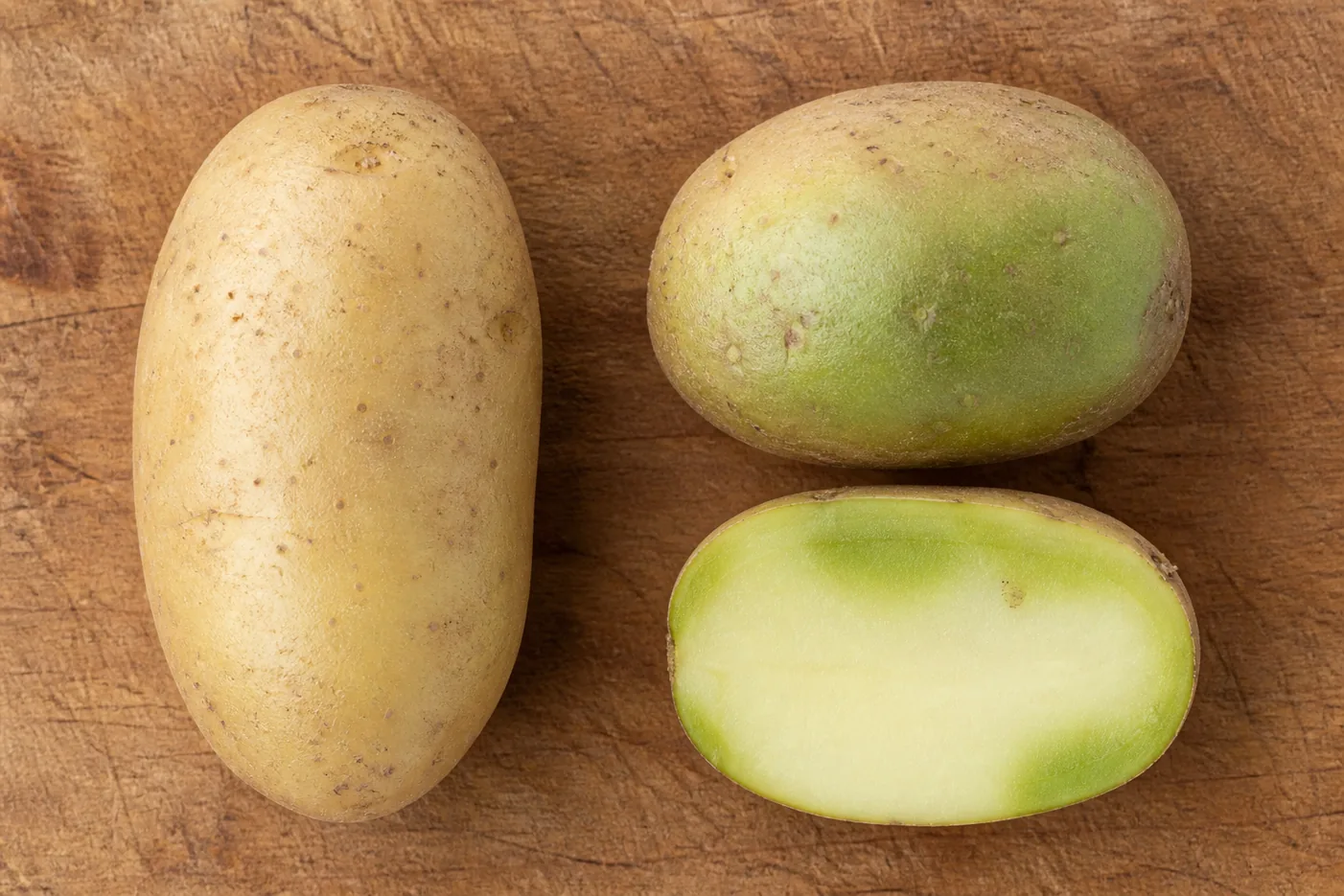
Green skin is a warning sign. Clemson states that green portions of potatoes are poisonous, taste bitter, and contain an alkaloid, and advises cutting off and discarding green areas before use. NC State adds that sprouts should be discarded and that tubers that look green below the skin should not be eaten.
Greening is a light problem, so it is prevented in the bed. Clemson throws soil over the rows at the final cultivation to keep tubers out of the sun, Utah State keeps tubers covered with soil in the garden and stores them in the dark, and University of Maine moves harvested potatoes out of the light.
Potatoes share pests and diseases with their relatives. University of Maine notes that late blight can also infect pepper and eggplant, and Clemson rotates potatoes with crops other than tomatoes. Moving the whole group to a new bed each year keeps those problems from building up.
Frequently Asked Questions
When should I plant potatoes?
Utah State plants 14 to 21 days before the last frost, once the soil reaches at least 50 F. University of Maine warns that seed pieces in colder soil can rot.
How far apart should potatoes be planted?
Utah State sets seed pieces 10 to 12 inches apart in rows 30 to 36 inches apart, and University of Maine uses 8 to 12 inches in the row. Wide rows leave soil for hilling.
Are potatoes annuals or perennials in home gardens?
Potatoes are perennial in their native range but are grown as annuals. Gardeners plant certified seed pieces each year and dig the whole crop rather than relying on leftover tubers.
Can I plant store-bought potatoes in my garden?
Certified seed potatoes are the safer choice. Clemson notes that saved potatoes often carry viruses and other diseases into the next year, and University of Maine advises against planting saved tubers because they can carry late blight.
Are potato leaves or flowers edible?
No. NC State lists the leaves, stems, roots, and fruits of the potato plant as toxic, with solanine and other alkaloids as the cause. Only the tubers are eaten, and green parts of tubers should be cut away or discarded.
Why are my potatoes knobby or hollow inside?
Utah State links knobs and cracks to irregular watering, and Clemson links hollow heart to alternating wet and dry soil. Even moisture through tuber set and growth prevents both.
Sources & References
- Bulletin #2077, Potato Facts: Growing Potatoes in the Home Garden, University of Maine Cooperative Extension
- Bulletin #2427, Tomato and Potato Late Blight Information for the Upcoming Growing Season, University of Maine Cooperative Extension
- How to Grow Potatoes in Your Garden, Utah State University Extension
- Potato, Clemson Cooperative Extension Home & Garden Information Center (HGIC 1317)
- Irish Potato & Sweetpotato Diseases, Clemson Cooperative Extension Home & Garden Information Center (HGIC 2214)
- Solanum tuberosum, North Carolina Extension Gardener Plant Toolbox
Related Plants
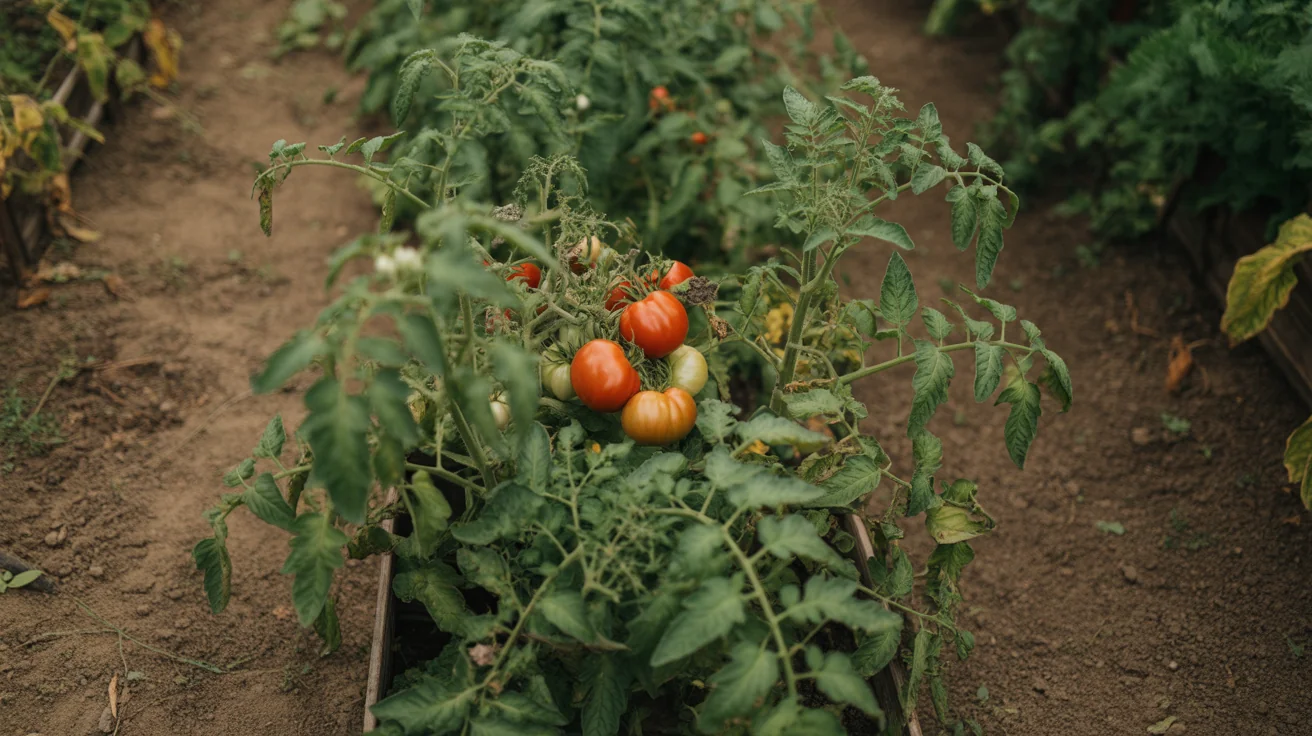
Tomato
Warm-season cousin in the nightshade family grown for fruit.
Carrot
Cool-season root vegetable that shares similar soil prep needs.
Beans
Nitrogen-fixing vegetable that pairs well in rotation with potatoes.
Asparagus
Asparagus rewards careful establishment with spring harvests for many years.
Beet
Beet care starts with one unusual fact. Each seed ball can make several seedlings, so the crop needs early thinning…
Bell Pepper
Bell Pepper rewards growers who manage flowers, roots, and heat together.